Authors: Luke Leasure & Nick Carpinito
Compiled by: Deep Chao TechFlow
Deep Chao Guide: Nockchain's Logos upgrade embeds AI inference directly into Proof of Work, attempting to allow the same computing power to earn customer payments while also capturing blockchain rewards. This is a bold experiment for miner revenue and public chain security budgets. However, the first paying client comes from a company built by the founder, and audit independence is questionable. Whether the flywheel can truly spin remains to be proven. Post-upgrade tomorrow, the actual inference demand and token performance deserve close attention from crypto investors.
GM, Happy Thursday! After Wednesday's CPI increased 0.1% month-over-month, equities continued to outperform cryptocurrencies, a trend that persists, while ETF flows show mild optimism. Let's delve into tomorrow's launch of Nockchain's Logos upgrade and the next evolution of Useful Proof of Work.
Wednesday's CPI rose 0.1% MoM, matching the median forecast and rebounding from the previous month's 0.4% decline. A 0.1% change in housing prices contributed to roughly two-thirds of the monthly increase, while energy prices fell another 1.5%, dragged down primarily by a 2.9% drop in gasoline prices. Overall, this report likely won't alter the Fed's rate path. Equities outperformed crypto on the day, with the Nasdaq up 0.56% and the S&P 500 up 0.23%, while crypto-related stocks performed even better, rising 2.19%.
BTC underperformed, down 0.25%, and most of the crypto indices we track fared worse. Equities outperforming tokens remains an ongoing theme. The Perps sector was the biggest winner, up 3% driven by HYPE strength, while the Decentralized Exchange sector was the biggest loser, down 4.7% due to UNI weakness, offering little signal on sector rotation direction.
BTC ETF flows show a slight change in trajectory. Phases of mild accumulation are interrupted by single-day outflows, echoing weakness in BTC's daily price action. Since early July, net inflows have been positive, indicating a mild return of optimism for these products and a clear shift from the significant outflows seen in May and June. If this trend continues, the re-accumulation by these products should provide a floor for BTC.
Computing Power Earning Two Incomes
Making Proof of Work do something useful isn't a new idea. Bitcoin miners burn hash power without any other output. Inference service providers sell GPU time to customers. Tomorrow, at block height 126,000, with the launch of Nockchain's Logos upgrade, this separation will end.
Logos adds a second mining puzzle alongside the original ZK Proof of Work: integer matrix multiplication, a core operation for AI inference, with its own independent difficulty target. Upon activation, the network allocates 30% of block production to the AI puzzle and 70% to ZK-PoW. Miners perform matrix multiplication, and if the result meets the target, that miner wins the block. When this computation is also running for a paying inference client, the same computing power becomes a lottery ticket to win block rewards.
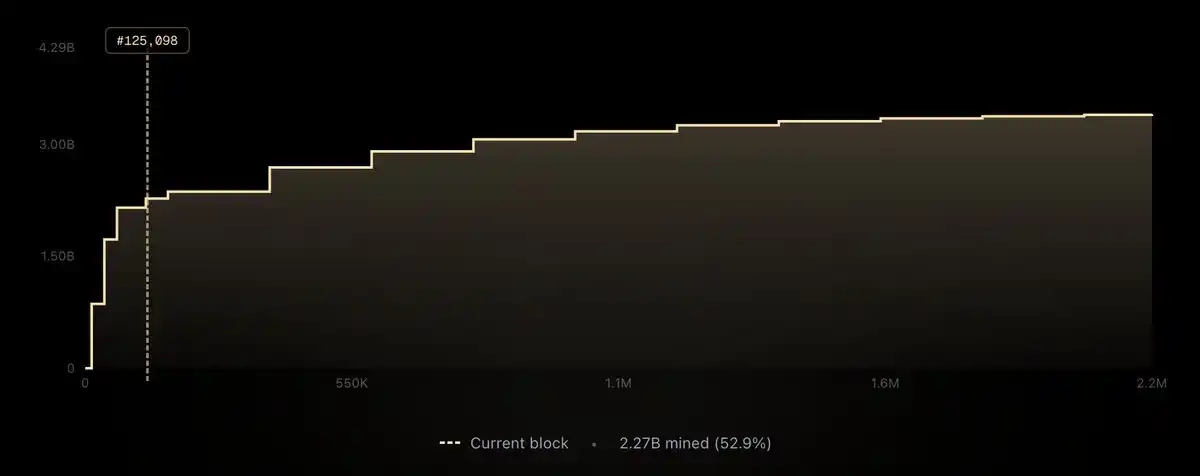
Nockchain's founder describes this as a security budget that scales with AI economic growth: as inference demand rises, more GPUs point at the chain, and the cost to attack it climbs. But this claim relies on demand that hasn't materialized at scale yet. Nockchain needs paying inference clients to spin the flywheel, and its founder has separately founded a company, National Compute, to provide the first batch of clients. This company authored the Logos proposal and conducted an internal audit, meaning the protocol's biggest upgrade yet and its first anchor client come from the same person.
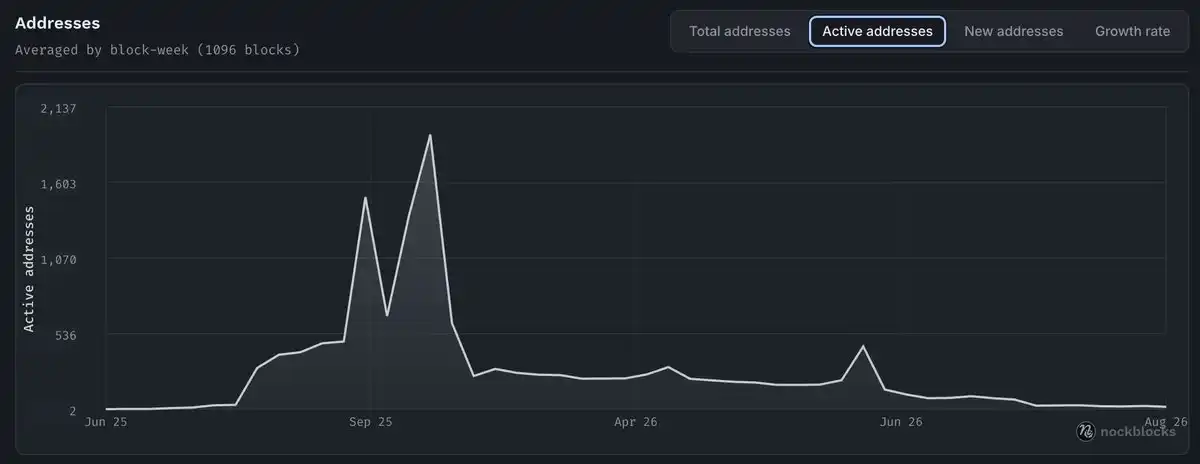
This launch comes just weeks after Zorp's shutdown. Zorp, the research firm that developed Nockchain, has transferred trademarks and code repositories to Nock Community Co., a non-stock corporation managing 20% of the protocol's treasury. Logos is the first upgrade to follow the newly promised process: public testnet, third-party cryptographic audit, a bug bounty of up to 1 million NOCK, and an announced activation height. The dual-puzzle code ran on a public testnet for 20 days before merging to mainnet.
Two things deserve a skeptical eye. The activation height has changed more than once: from block 114,300 in late July to 122,000 post-testnet, to 126,000 this Friday, so this date carries the uncertainty typical of any re-targeted launch. The security argument rests on a puzzle with no track record. Nockchain patched a trace reuse mining exploit via the Zoe upgrade at block 119,400 in early August, a reminder the proving mechanism is early-stage, though the fix didn't change the ZK scheme or touch anything beyond block reward capture. The AI puzzle itself has reliability questions, which is why there's an audit and bounty.
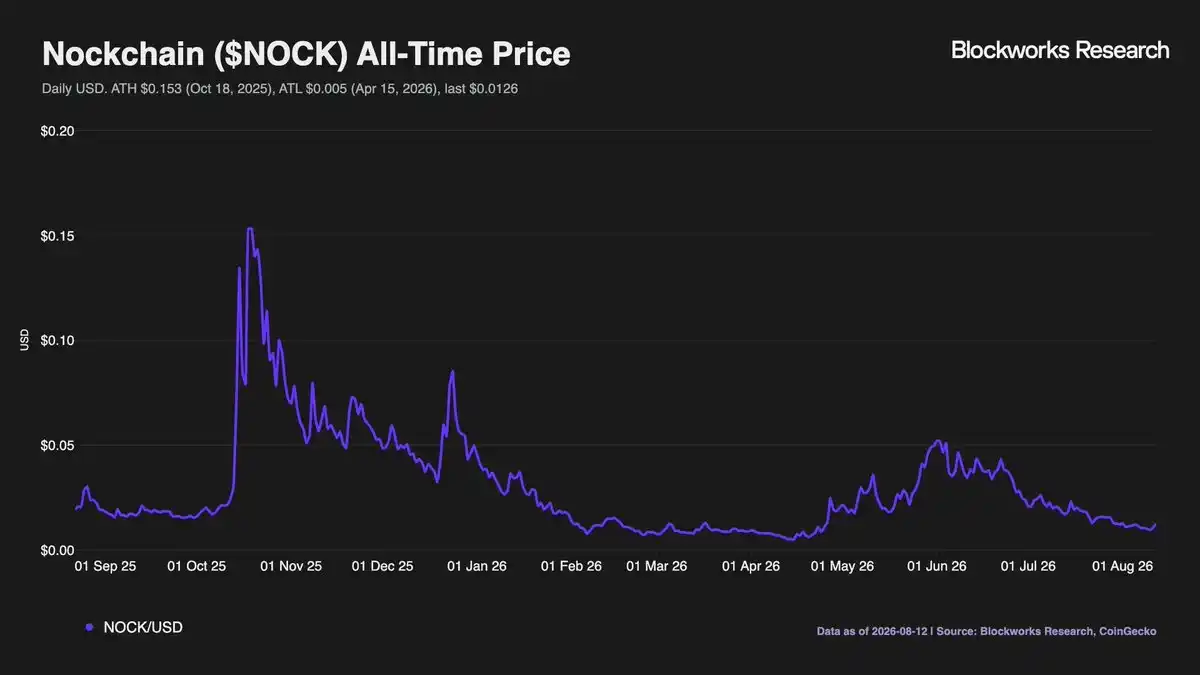
NOCK trades around $0.009, with a market cap of about $22 million and a fully diluted valuation nearing $41 million—a fraction of the attention it attracted during its fair launch last spring. For holders, Friday's mechanism is less important than whether National Compute can route enough paid inference through its compute clusters to turn the "security as revenue" narrative into cash flow. Nockchain has delivered the harder engineering part; the market it needs is not yet built.