SEC cancels key crypto regulatory meeting

cointelegraphPubblicato 2026-08-14Pubblicato ultima volta 2026-08-14

Introduzione

The U.S. Securities and Exchange Commission (SEC) has canceled a key open meeting scheduled for Friday where it was expected to propose new rules for cryptocurrency. The meeting was to consider a "tailored offering regime for certain investment contracts involving crypto assets." The SEC cited an "unforeseen scheduling issue" as the reason for the cancellation. This development follows the Senate's recess without voting on the Digital Asset Market Clarity Act, which aims to establish a regulatory framework for the crypto industry. SEC Chair Paul Atkins had previously stated the agency was prepared to issue its own rules if the Senate failed to pass the act.

The US Securities and Exchange Commission (SEC) has cancelled an open meeting scheduled for Friday that was expected to consider new cryptocurrency rules.

The SEC said Thursday that the meeting had been cancelled. The commission had been expected to consider whether to propose a “tailored offering regime for certain investment contracts involving crypto assets.”

The SEC told Reuters that the meeting would be moved due to “an unforeseen scheduling issue.” The agency did not immediately respond to Cointelegraph’s request to comment.

The Senate left for its August recess without voting on the Digital Asset Market Clarity Act, which would provide a comprehensive framework for financial regulators overseeing the crypto industry.

SEC Chair Paul Atkins told CNBC on July 27 that the agency was “ready, willing, and able to come out with rules“ on digital assets if the Senate failed to pass the CLARITY Act.

Magazine: How the EU’s crypto tax rules are expected to work for users and platforms

Crypto di tendenza

Domande pertinenti

QWhat was the main reason given by the SEC for canceling the open meeting on cryptocurrency rules?

AThe SEC said the meeting was cancelled and would be moved due to "an unforeseen scheduling issue."

QWhat specific regulatory proposal was the SEC meeting expected to consider?

AThe meeting was expected to consider whether to propose a "tailored offering regime for certain investment contracts involving crypto assets."

QWhat legislative action did the US Senate fail to take before its August recess, according to the article?

AThe Senate left for its August recess without voting on the Digital Asset Market Clarity Act, which would provide a comprehensive framework for regulators overseeing the crypto industry.

QAccording to SEC Chair Paul Atkins, what was the agency prepared to do if the Senate did not pass the CLARITY Act?

ASEC Chair Paul Atkins said the agency was "ready, willing, and able to come out with rules" on digital assets if the Senate failed to pass the CLARITY Act.

QWhich news outlets did the article mention the SEC responded to or did not respond to regarding the meeting cancellation?

AThe SEC told Reuters about the cancellation due to a scheduling issue but did not immediately respond to Cointelegraph's request for comment.

Letture associate

New ChatGPT Feature: AI Begins Monitoring Users

OpenAI has launched "Computer History," a new feature for its ChatGPT desktop app on macOS, designed to track user activity across applications and websites. This allows the AI model to use this data to provide more accurate and personalized responses in subsequent conversations. The feature, released on August 13th, is available to Pro, Business, and Enterprise subscribers. However, its rollout in the European Economic Area, the UK, and Switzerland is delayed as OpenAI works to align the tool with local data processing regulations. Computer History operates in the background, logging user activity into a temporary timeline. Users can review, manage, or delete this history via the app's interface or macOS menu bar. The feature is opt-in and requires explicit user activation in the settings. This release replaces and expands upon an earlier experimental project called Chronicle. OpenAI states the new version is more computationally efficient and offers improved privacy controls. The launch coincides with other AI advancements from the company, including a high-speed GPT-5.6 model. The article notes potential technical risks associated with the predecessor, Chronicle, such as prompt injection vulnerabilities and unencrypted local data storage. It also highlights the competitive landscape, where similar memory features are being developed by rivals like Anthropic's Claude and Google's Gemini. The delayed European rollout underscores the ongoing challenge of balancing deep personalization with stringent data protection laws.

cryptonews.ru51 min fa

New ChatGPT Feature: AI Begins Monitoring Users

cryptonews.ru51 min fa

GPT-5 Also Has Tip-of-the-Tongue Moments, Google Tested 4.5 Million Times: The Keys Are Lost

Google researchers have discovered that advanced AI models like GPT-5 and Gemini 3 experience a phenomenon akin to the human "tip-of-the-tongue" state, where they possess knowledge but fail to retrieve it. Their study, "Empty Shelves or Lost Keys?" (ICML 2026), introduces the "Knowledge Portrait" framework to analyze factual knowledge in models, distinguishing between failure to encode a fact versus failure to recall it. Testing on 13 models across 2.15 million queries from the WikiProfile benchmark revealed that state-of-the-art models successfully encode 95-98% of facts into their parameters. However, when asked directly, they fail to recall 26-34% of these known facts. Enabling chain-of-thought ("thinking") reasoning reduces this recall failure to 11-12%, recovering 40-65% of the previously unrecalled but encoded facts. The research identifies two key bottlenecks: recalling obscure ("long-tail") facts and answering reversed queries (e.g., "Who is Tom Cruise's mother?" vs. "Whose son is Tom Cruise?"). While scaling model size effectively reduces encoding failures, it does little to improve recall rates. In larger models, recall failure becomes the dominant source of factual errors, accounting for over 70% of mistakes in GPT-5.2. The findings suggest that for top models, the primary challenge is no longer storing knowledge but accessing it efficiently. Future accuracy gains may depend more on improved inference-time methods and "meta-cognitive" abilities, enabling models to recognize when they need to engage in deeper reasoning to retrieve information they already know.

marsbit1 h fa

GPT-5 Also Has Tip-of-the-Tongue Moments, Google Tested 4.5 Million Times: The Keys Are Lost

marsbit1 h fa

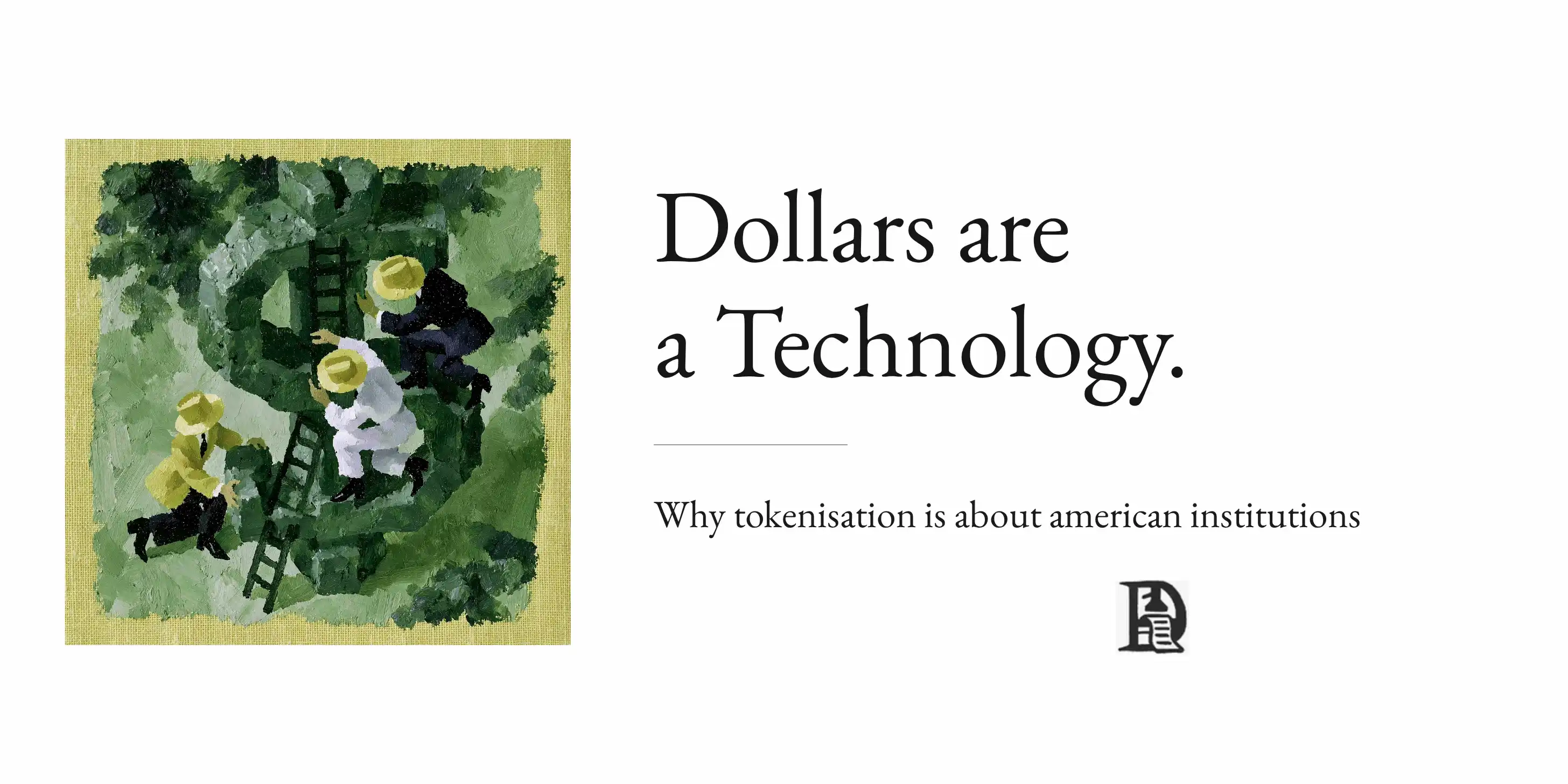
The Dollar is a Technology: Stablecoins Are Exporting U.S. Institutions to the World

This article argues that stablecoins and blockchain infrastructure are becoming a vehicle for exporting American financial systems globally. The core thesis is that the U.S. dollar, as a "technology," is increasingly embedded in blockchain rails, moving beyond a reserve currency to represent the institutional stability of the United States itself. The piece highlights three key areas where this is happening: 1. **Cross-border payments and trade finance:** Companies like Keyrails use stablecoins and blockchain to streamline and secure trade finance for emerging markets (e.g., Nigeria-China trade), offering faster, often cheaper dollar liquidity than traditional systems. 2. **Programmable collateral and credit:** Platforms like SemiLiquid allow institutions to use tokenized assets (e.g., treasuries, stocks) as "programmable collateral" for loans without moving them from custody, unlocking capital efficiency and improving transparency in institutional lending. 3. **Financing real-world assets:** Protocols like USD.AI create lending markets for productive, hard-to-finance assets like AI GPUs, connecting global stablecoin liquidity to physical capital. The author concludes that the true value of these new blockchain-based financial platforms lies not just in transaction volume, but in the deep, hard-to-replicate "context" (data, trust, operational knowledge) they build around specific economic activities like trade and asset finance. This represents crypto's evolution into an operating system for real-world capital formation, moving beyond speculation.

marsbit1 h fa

The Dollar is a Technology: Stablecoins Are Exporting U.S. Institutions to the World

marsbit1 h fa

Trading

Spot

Articoli Popolari

Come comprare SC

Benvenuto in HTX.com! Abbiamo reso l'acquisto di Siacoin (SC) semplice e conveniente. Segui la nostra guida passo passo per intraprendere il tuo viaggio nel mondo delle criptovalute.Step 1: Crea il tuo Account HTXUsa la tua email o numero di telefono per registrarti il tuo account gratuito su HTX. Vivi un'esperienza facile e sblocca tutte le funzionalità,Crea il mio accountStep 2: Vai in Acquista crypto e seleziona il tuo metodo di pagamentoCarta di credito/debito: utilizza la tua Visa o Mastercard per acquistare immediatamente SiacoinSC.Bilancio: Usa i fondi dal bilancio del tuo account HTX per fare trading senza problemi.Terze parti: abbiamo aggiunto metodi di pagamento molto utilizzati come Google Pay e Apple Pay per maggiore comodità.P2P: Fai trading direttamente con altri utenti HTX.Over-the-Counter (OTC): Offriamo servizi su misura e tassi di cambio competitivi per i trader.Step 3: Conserva Siacoin (SC)Dopo aver acquistato Siacoin (SC), conserva nel tuo account HTX. In alternativa, puoi inviare tramite trasferimento blockchain o scambiare per altre criptovalute.Step 4: Scambia Siacoin (SC)Scambia facilmente Siacoin (SC) nel mercato spot di HTX. Accedi al tuo account, seleziona la tua coppia di trading, esegui le tue operazioni e monitora in tempo reale. Offriamo un'esperienza user-friendly sia per chi ha appena iniziato che per i trader più esperti.

145 Totale visualizzazioniPubblicato il 2024.12.12Aggiornato il 2026.06.02

Come comprare SC

Discussioni

Benvenuto nella Community HTX. Qui puoi rimanere informato sugli ultimi sviluppi della piattaforma e accedere ad approfondimenti esperti sul mercato. Le opinioni degli utenti sul prezzo di SC SC sono presentate come di seguito.

活动图片