Analytical platform Santiment reports that the opinion that 'cryptocurrencies are dead' is rapidly spreading among investors! Is this a signal that the market has bottomed? Here...

cryptonews.ruPubblicato 2026-08-14Pubblicato ultima volta 2026-08-14

Introduzione

The analytical platform Santiment has reported a rapid spread of the sentiment that "cryptocurrency is dead" among investors, raising the question of whether this is a signal of a market bottom. Persistent price pressure and low trading volumes continue to negatively impact investor morale. Santiment observed a significant increase in this negative rhetoric on platforms like Reddit and Telegram, noting such phrases typically emerge when retail investor patience wears thin. Historically, periods of extreme pessimism often occur near major market turning points. When public conviction in an upward trend vanishes, markets frequently react contrary to expectations with strong recoveries. Santiment advises contrarian investors to monitor such widespread "crypto is dead" narratives, as they may signal potential opportunities for patient, long-term investors. While fear may exert short-term pressure, past cycles show excessively negative sentiment has coincided with significant lows. Social media sentiment remains a key indicator for assessing market direction.

Continuous price pressure and low trading volumes in cryptocurrency markets continue to negatively affect the morale of individual investors. Santiment, a platform providing blockchain data and analytical tools for the market, reported a significant increase in the spread of the phrase 'cryptocurrency is dead' on social media in recent days.

According to the company's analysis, negative expressions such as 'dead', 'finished', and similar terms are spreading rapidly on platforms actively used by crypto communities, such as Reddit and Telegram. Santiment noted that such rhetoric typically appears when the patience of private investors begins to run out.

According to the analytical company, investors may begin to view temporary market slowdowns as final failures, as prices remain at certain levels for extended periods and the anticipated growth does not materialize. This situation leads to a rise in pessimistic views on cryptocurrency markets.

Santiment stated that historical data shows that such periods of extreme pessimism often occur near important market turning points. According to the company, when the public forms a firm conviction that the possibility of an upward trend has completely disappeared, markets often react contrary to expectations and show a strong recovery.

Therefore, Santiment emphasized that investors adhering to a countercyclical approach should closely monitor periods when narratives of 'cryptocurrency's death' become widespread. A contrarian approach implies taking a position against the general market trend.

Analysts acknowledge that the current atmosphere of fear may continue to exert pressure in the short term, but they also note that excessively negative sentiments have coincided with significant lows in past cycles.

In Santiment's view, periods when investor psychology reaches its peak of pessimism can present potential opportunities for patient and long-term thinking investors. Therefore, social media sentiments are still considered one of the important indicators when assessing the market's direction of movement.

*This is not investment advice.

end-content

Domande pertinenti

QWhat phrase has seen a significant increase in usage on social media recently according to Santiment, and what does it suggest about investor sentiment?

AAccording to Santiment, the phrase "cryptocurrency is dead" has seen a significant increase in usage on social media recently. This suggests a peak in investor pessimism and a loss of patience among retail investors.

QBased on Santiment's historical data, what often happens following periods of extreme public pessimism in the cryptocurrency market?

ABased on Santiment's historical data, periods of extreme public pessimism often occur near important market turning points. When the public becomes firmly convinced that an upward trend is impossible, markets frequently react contrary to expectations and show strong recoveries.

QWhat investment approach does Santiment recommend investors monitor during the widespread spread of "crypto is dead" narratives, and what does this approach entail?

ASantiment recommends that investors following a contrarian approach should closely monitor periods when "crypto is dead" narratives become widespread. A contrarian approach entails taking a position against the prevailing market trend.

QHow does Santiment view the current atmosphere of fear regarding its short-term and potential long-term implications?

ASantiment analysts acknowledge that the current atmosphere of fear may continue to exert pressure in the short term. However, they also note that excessively negative sentiment has coincided with significant market bottoms in past cycles, suggesting potential long-term opportunities.

QWhat role does social media sentiment play in Santiment's analysis of market direction?

ASantiment views social media sentiment as one of the important indicators when assessing potential market direction shifts, particularly as a gauge of extreme crowd psychology that can signal contrarian opportunities.

Letture associate

New ChatGPT Feature: AI Begins Monitoring Users

OpenAI has launched "Computer History," a new feature for its ChatGPT desktop app on macOS, designed to track user activity across applications and websites. This allows the AI model to use this data to provide more accurate and personalized responses in subsequent conversations. The feature, released on August 13th, is available to Pro, Business, and Enterprise subscribers. However, its rollout in the European Economic Area, the UK, and Switzerland is delayed as OpenAI works to align the tool with local data processing regulations. Computer History operates in the background, logging user activity into a temporary timeline. Users can review, manage, or delete this history via the app's interface or macOS menu bar. The feature is opt-in and requires explicit user activation in the settings. This release replaces and expands upon an earlier experimental project called Chronicle. OpenAI states the new version is more computationally efficient and offers improved privacy controls. The launch coincides with other AI advancements from the company, including a high-speed GPT-5.6 model. The article notes potential technical risks associated with the predecessor, Chronicle, such as prompt injection vulnerabilities and unencrypted local data storage. It also highlights the competitive landscape, where similar memory features are being developed by rivals like Anthropic's Claude and Google's Gemini. The delayed European rollout underscores the ongoing challenge of balancing deep personalization with stringent data protection laws.

cryptonews.ru51 min fa

New ChatGPT Feature: AI Begins Monitoring Users

cryptonews.ru51 min fa

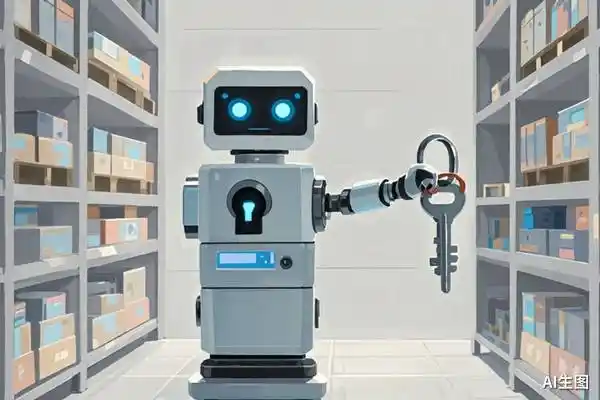
GPT-5 Also Has Tip-of-the-Tongue Moments, Google Tested 4.5 Million Times: The Keys Are Lost

Google researchers have discovered that advanced AI models like GPT-5 and Gemini 3 experience a phenomenon akin to the human "tip-of-the-tongue" state, where they possess knowledge but fail to retrieve it. Their study, "Empty Shelves or Lost Keys?" (ICML 2026), introduces the "Knowledge Portrait" framework to analyze factual knowledge in models, distinguishing between failure to encode a fact versus failure to recall it. Testing on 13 models across 2.15 million queries from the WikiProfile benchmark revealed that state-of-the-art models successfully encode 95-98% of facts into their parameters. However, when asked directly, they fail to recall 26-34% of these known facts. Enabling chain-of-thought ("thinking") reasoning reduces this recall failure to 11-12%, recovering 40-65% of the previously unrecalled but encoded facts. The research identifies two key bottlenecks: recalling obscure ("long-tail") facts and answering reversed queries (e.g., "Who is Tom Cruise's mother?" vs. "Whose son is Tom Cruise?"). While scaling model size effectively reduces encoding failures, it does little to improve recall rates. In larger models, recall failure becomes the dominant source of factual errors, accounting for over 70% of mistakes in GPT-5.2. The findings suggest that for top models, the primary challenge is no longer storing knowledge but accessing it efficiently. Future accuracy gains may depend more on improved inference-time methods and "meta-cognitive" abilities, enabling models to recognize when they need to engage in deeper reasoning to retrieve information they already know.

marsbit1 h fa

GPT-5 Also Has Tip-of-the-Tongue Moments, Google Tested 4.5 Million Times: The Keys Are Lost

marsbit1 h fa

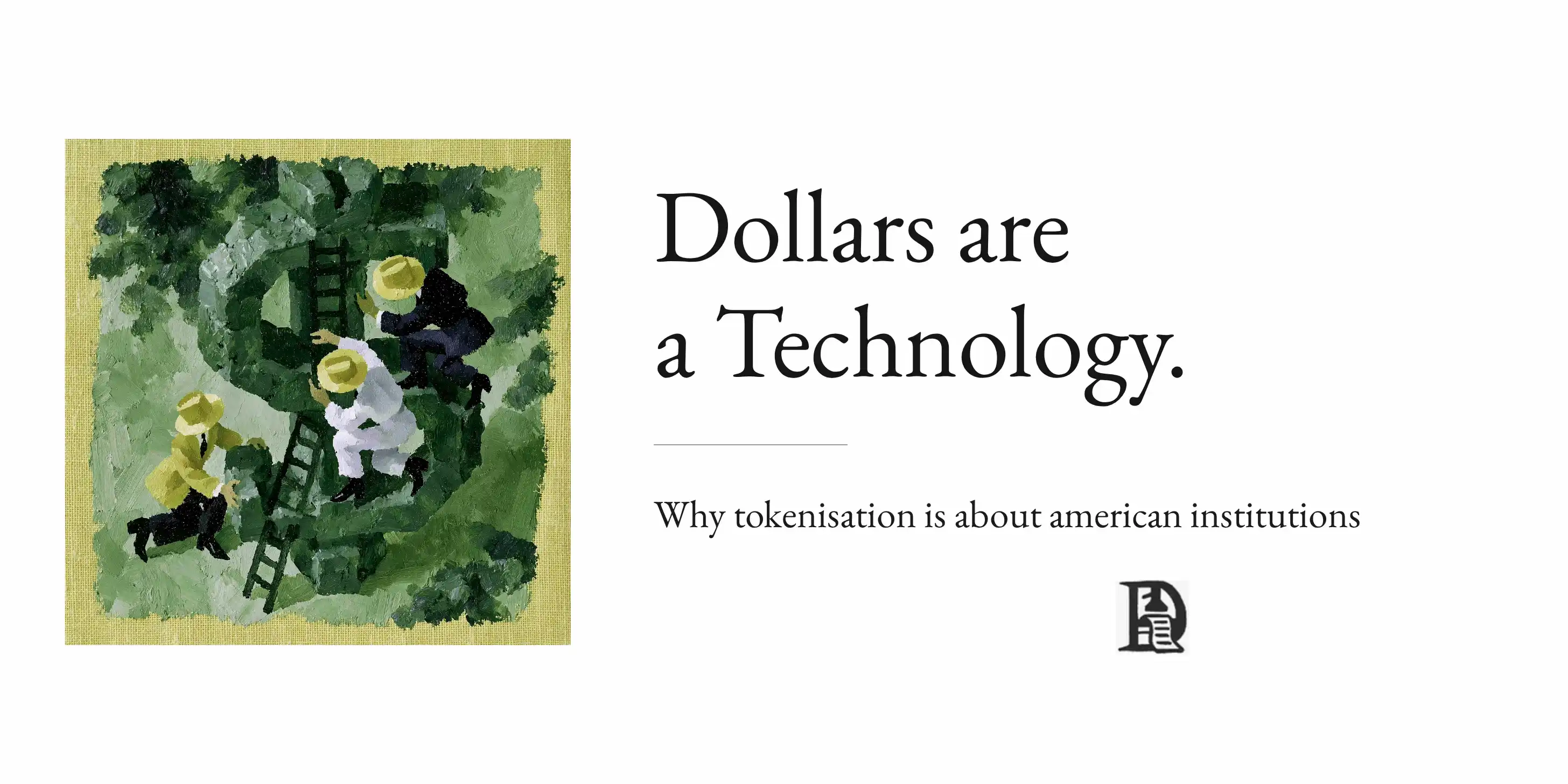
The Dollar is a Technology: Stablecoins Are Exporting U.S. Institutions to the World

This article argues that stablecoins and blockchain infrastructure are becoming a vehicle for exporting American financial systems globally. The core thesis is that the U.S. dollar, as a "technology," is increasingly embedded in blockchain rails, moving beyond a reserve currency to represent the institutional stability of the United States itself. The piece highlights three key areas where this is happening: 1. **Cross-border payments and trade finance:** Companies like Keyrails use stablecoins and blockchain to streamline and secure trade finance for emerging markets (e.g., Nigeria-China trade), offering faster, often cheaper dollar liquidity than traditional systems. 2. **Programmable collateral and credit:** Platforms like SemiLiquid allow institutions to use tokenized assets (e.g., treasuries, stocks) as "programmable collateral" for loans without moving them from custody, unlocking capital efficiency and improving transparency in institutional lending. 3. **Financing real-world assets:** Protocols like USD.AI create lending markets for productive, hard-to-finance assets like AI GPUs, connecting global stablecoin liquidity to physical capital. The author concludes that the true value of these new blockchain-based financial platforms lies not just in transaction volume, but in the deep, hard-to-replicate "context" (data, trust, operational knowledge) they build around specific economic activities like trade and asset finance. This represents crypto's evolution into an operating system for real-world capital formation, moving beyond speculation.

marsbit1 h fa

The Dollar is a Technology: Stablecoins Are Exporting U.S. Institutions to the World

marsbit1 h fa

Trading

Spot
活动图片