Bitroot Public Chain Invited to Attend Tencent Cloud Singapore AI Conference, Discussing the Future Alongside Solana

marsbitPubblicato 2026-05-27Pubblicato ultima volta 2026-05-27

Introduzione

On May 19, Bitroot, an emerging Layer 1 blockchain, participated in the Tencent Cloud AI Summit in Singapore alongside key industry players like Solana Foundation. The event explored the intersection of AI infrastructure, enterprise applications, AI Agents, and Web3. Bitroot's invitation, despite being pre-mainnet, highlights industry interest in its focus on high-performance, AI-native architecture tailored for future AI Agent execution and verifiable on-chain automation. Bitroot CEO Juan Jose emphasized that AI competition is shifting from model performance to data, real-world application scenarios, and trust infrastructure. He argued that for AI Agents to evolve from assistants to autonomous executors managing transactions and assets, they require low-latency, low-cost, and high-throughput blockchain environments. Bitroot aims to address this through its EVM-compatible design, optimistic parallel execution, and a consensus mechanism targeting high scalability. Currently in its Testnet 5.0 phase, Bitroot reports metrics like over 50,000 peak TPS and sub-0.3 second average block time. Its narrative positions it within a growing landscape where next-generation Layer 1s like Monad and Aptos also compete on performance, while Bitroot differentiates by integrating AI computational capabilities natively across its stack. The summit underscored that the fusion of AI and Web3 is moving from concept to infrastructure competition, where networks balancing performance, security, and...

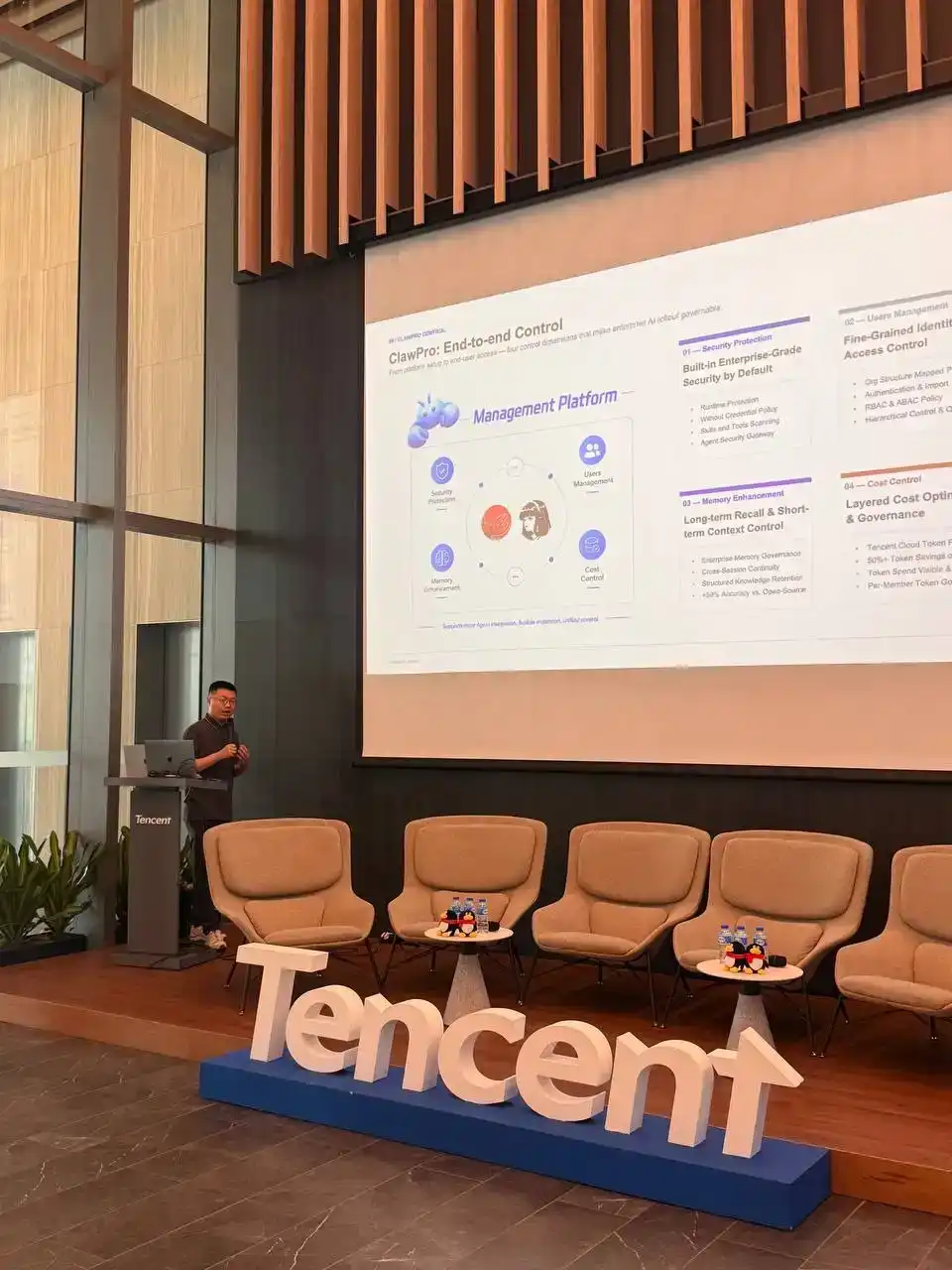
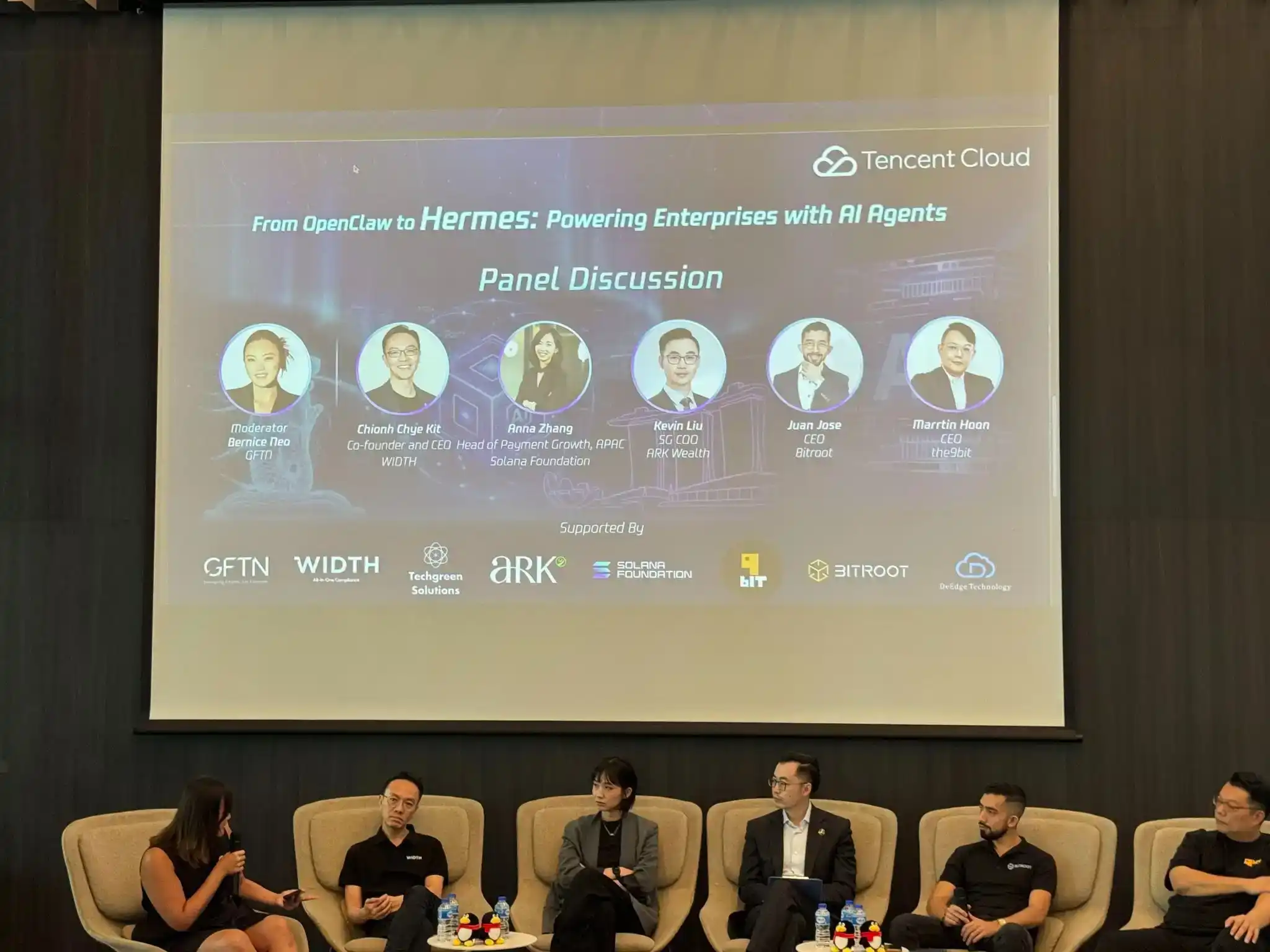
On May 19th, an AI-themed event hosted by Tencent Cloud was held in Singapore. The event focused on topics such as AI infrastructure, enterprise-level AI implementation, AI Agents, Web3 verifiable computing, and fintech, bringing together industry representatives from cloud services, public chain ecosystems, payment networks, financial technology, and investment institutions.

As a significant financial and technological hub in Asia, Singapore has increasingly become a crucial node for AI, Web3, and digital finance companies looking to expand into the Southeast Asian market. Tencent Cloud's choice to host its AI event in Singapore also reflects how major cloud service providers are paying more attention to the integration of AI application implementation, computing power services, enterprise-level solutions, and new digital infrastructure.
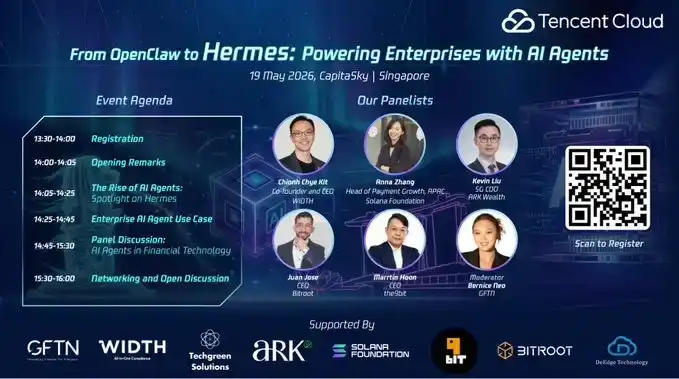

According to event information, attendees included Kevin Zhou, Director of Tencent Cloud Computing; Anna Zhang, Head of Payments Growth, APAC at Solana Foundation; Juan Jose, CEO of Bitroot; Chionh Chye Kit, Co-founder and CEO of WIDTH; Martin Hoon, CEO of the9bit; and Kevin Liu, COO of ARK Wealth Singapore, among others.

Judging by the lineup, this event was not merely a single AI product showcase but a cross-domain discussion centered on "how AI integrates with cloud services, payment networks, on-chain infrastructure, and financial technology." Tencent Cloud represents Web2 cloud computing and enterprise-level service capabilities, Solana represents a mature public chain ecosystem and on-chain payment exploration, while fintech and wealth management institutions represent the application demands of AI in real business scenarios. Against this backdrop, Bitroot, as an emerging public chain project focusing on high-performance Layer 1 and AI-native architecture, was invited to participate, making it one of the noteworthy Web3 infrastructure representatives at this event.

Behind the High-Profile AI Event, Web3 Infrastructure Re-enters the Discussion

Over the past year, the focus in the AI industry has gradually shifted from model capability competition to enterprise implementation, data governance, Agent workflows, and automated decision-making. For cloud service providers and fintech institutions, the commercialization of AI depends not only on the model itself but also on a complete set of infrastructure capabilities including computing power, data, permissions, security, and auditing mechanisms.

This explains why Web3 infrastructure is beginning to be included in AI discussions. As AI Agents evolve from "conversational tools" to "execution entities," they may need to call APIs, initiate payments, manage assets, complete settlements, and even participate in multi-party collaborative workflows in the future. In these scenarios, traditional centralized systems and on-chain verifiable infrastructure may complement each other.

The programmable assets, automated settlement, state verifiability, and on-chain auditing capabilities provided by blockchain precisely address the trust issues faced by AI Agents in financial, payment, and enterprise collaboration scenarios. Therefore, Tencent Cloud's Singapore AI event, by placing public chain ecosystems, cloud services, payment growth, and fintech representatives in the same discussion space, itself sends a signal: the next phase of AI competition is shifting from single-point technological capabilities to composite infrastructure competition.
Why Was Bitroot, Yet to Launch, Invited?

For Bitroot, being invited to this event holds certain representativeness. Unlike public chains like Solana, which already have a mature mainnet and a large ecosystem, Bitroot is currently still in the testnet and ecosystem expansion phase before its mainnet launch. The fact that an emerging Web3 project, yet to launch its mainnet, could make it onto the participant list of Tencent Cloud's Singapore AI event indicates that its technical direction and narrative approach have at least attracted the attention of some industry players.

From an industry logic perspective, the reason for Bitroot's invitation may not lie in its current ecosystem scale, but rather in the alignment of the infrastructure direction it is betting on with the demands of the AI era.

First, AI Agents and on-chain automated execution require higher-performance underlying networks. Traditional public chains still have certain limitations in throughput, latency, and cost, while AI Agents may bring about more frequent, continuous, and automated interaction demands in the future. This means the underlying chain needs to have stronger concurrent processing capabilities and lower execution costs.

Second, developer compatibility remains key to whether a new public chain can establish an ecosystem. Bitroot's choice of an EVM-compatible route means it does not attempt to completely migrate developers to an unfamiliar environment. Instead, it aims to provide a higher-performance execution environment while retaining the Ethereum developer toolchain. For a new public chain still in its early stages, this approach helps reduce the difficulty of ecosystem cold-start.

Third, AI-native architecture is becoming an important differentiating direction for next-generation infrastructure projects. Compared to simply emphasizing TPS or transaction fees, Bitroot emphasizes AI Agent, on-chain automated application, and verifiable execution scenarios. This positioning makes it easier to enter discussions about the convergence of AI and Web3, rather than being seen as just another high-performance public chain.

Therefore, from an industry observation perspective, it at least indicates that some participants in cloud services, fintech, and the Web3 ecosystem are paying attention to new infrastructure projects yet to launch their mainnets, especially those Layer 1 networks designed around AI-native features, high-performance execution, and developer compatibility.
Sharing the Stage with Solana, Enhancing the Observational Value of Emerging Layer 1s

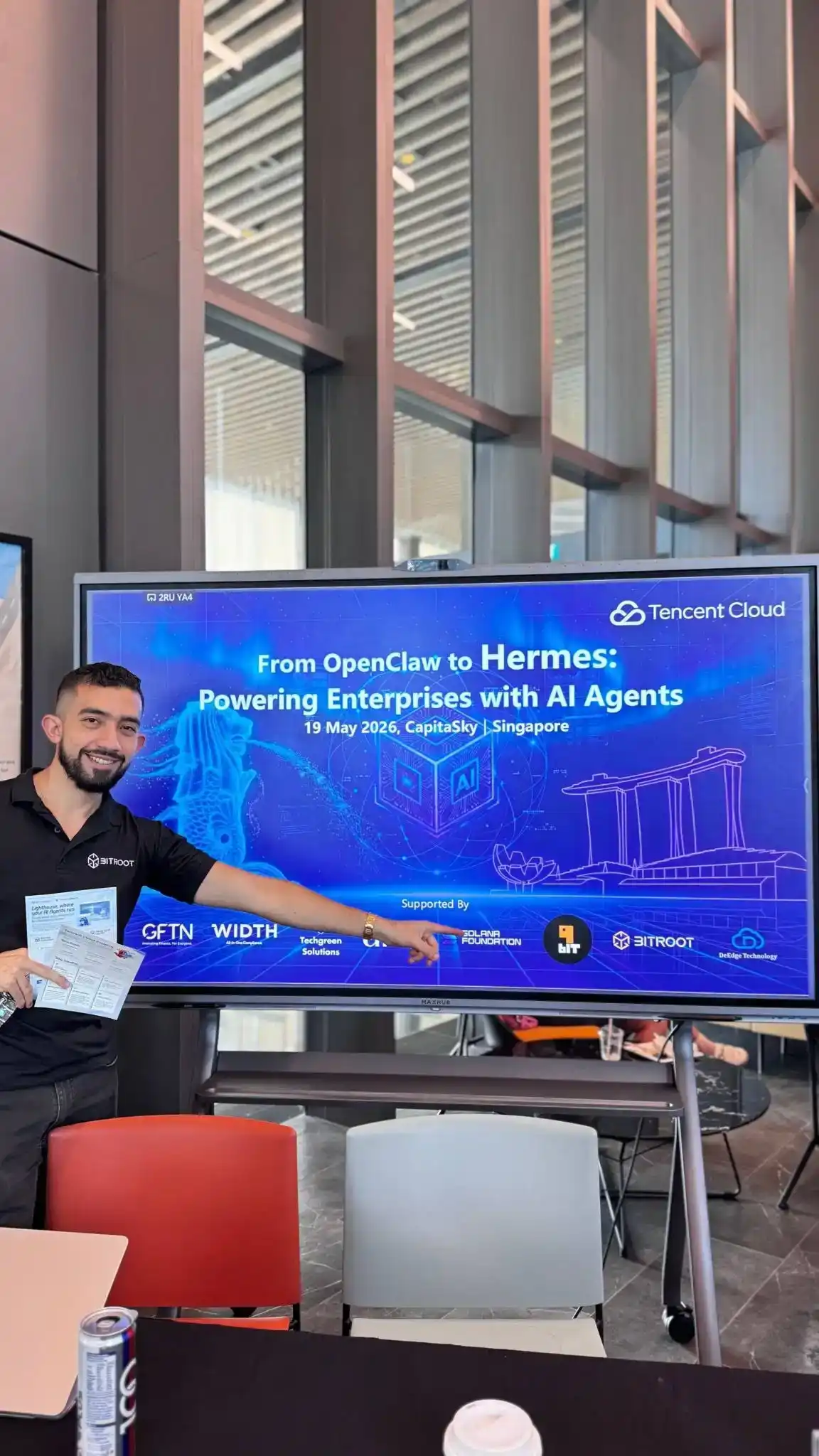
At this event, the participation of Anna Zhang, Head of Payments Growth, APAC at Solana Foundation, added perspectives from a mature public chain ecosystem and on-chain payments. Solana has been continuously advancing in the direction of high-performance public chains, payments, and consumer-grade applications in recent years, establishing itself as a key example in the Web3 infrastructure domain.

The fact that Bitroot shared the stage with representatives of mature ecosystems like Solana for discussions is itself noteworthy. It reflects that in the broader context of AI-Web3 convergence, the industry is not only focused on public chains that have already achieved scale but is also paying attention to new variables that may emerge in the next generation of infrastructure.

For an emerging Layer 1 like Bitroot, the fact that its mainnet is not yet launched means its technical roadmap is still malleable. If its parallel execution, EVM compatibility, and AI-native design can be validated in subsequent testnets and the mainnet, then it has the opportunity to carve out a differentiated position in scenarios like AI Agents, on-chain automated execution, and high-frequency applications.

Especially as AI gradually becomes a central industry theme, market requirements for public chains may change. Past public chain competition largely revolved around DeFi, NFTs, GameFi, and asset issuance. Future competition may increasingly focus on Agent execution, on-chain settlement, automated finance, data invocation, and verifiable computing. Bitroot entering industry discussions at this juncture is precisely why it deserves attention.

Juan Jose: AI Competition Will Shift from Models to Data, Scenarios, and Trust

During the panel discussion, Juan Jose, CEO of Bitroot, stated that the future gap between AI companies may no longer be just about model performance or parameter scale, but rather a comprehensive competition of data, scenarios, and trust mechanisms.
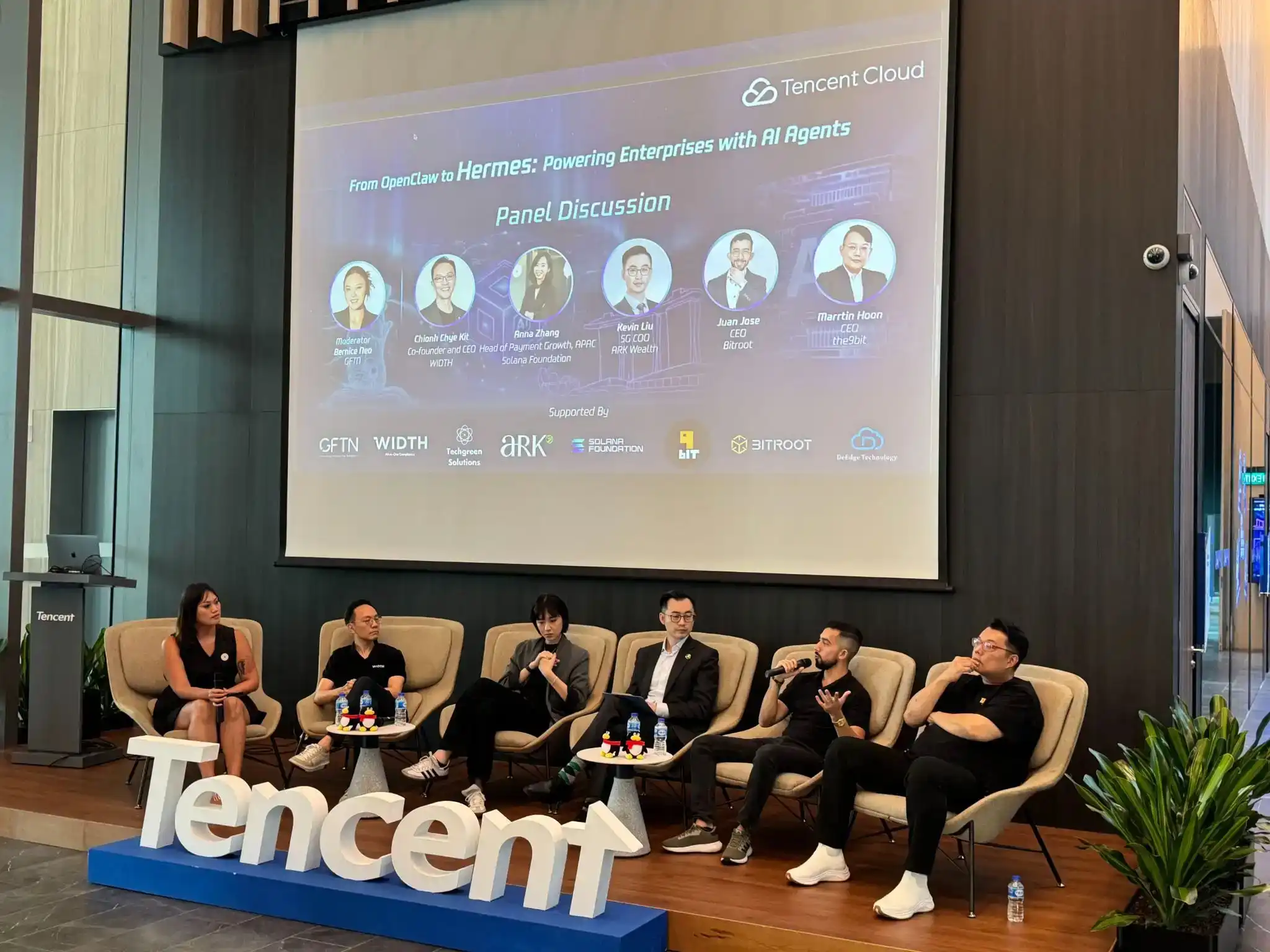
He believes that as both open-source and closed-source models continue to iterate, model capabilities themselves are accelerating in commoditization. The truly long-term, effective moat for enterprises comes from whether they possess high-quality industry data, whether they can deeply integrate into specific business processes, and whether they can establish long-term trust at both user and institutional levels.

This assessment aligns with current AI industry trends. More and more companies are realizing that the value of AI lies not only in generating content or completing simple Q&A, but in whether it can enter real business processes and consistently produce results in a controllable, auditable, and evaluable environment.

Juan Jose further pointed out that enterprise-level AI implementation still faces challenges in reliability, data infrastructure, and organizational change. Especially in high-risk scenarios like finance, payments, and auditing, AI systems must not only pursue capability ceilings but also meet stability, permission control, and auditing requirements.

AI Agents Require High-Performance and Verifiable Execution Environments

AI Agents were another important direction discussed at this event. Juan Jose stated that the industry is still in the "assistive Agent" stage, and there is still time before truly enterprise-level autonomy is achieved. The reason is that once Agents enter enterprise systems, they will face issues like multi-step task error accumulation, security permissions, legal liability, and explainability.

However, in the long term, the direction for AI Agents is relatively clear. Future Agents will not just provide suggestions; they may call services, manage accounts, initiate transactions, execute strategies, and complete settlements. This means the underlying infrastructure must support higher-frequency interactions and more trustworthy execution.

In this regard, Bitroot's technical narrative strongly correlates with industry needs. According to project information, Bitroot adopts an EVM-compatible route and enhances on-chain execution efficiency through designs like optimistic parallel EVM and the Pipeline BFT consensus mechanism, aiming to provide a high-performance, low-cost on-chain execution environment for AI Agents, DeFi, and Web3 applications.

For AI + Web3 scenarios, performance is not merely a technical metric but a prerequisite for whether applications can be viable. If an Agent requires high fees and long confirmation times for every operation, many automation scenarios will struggle to scale. Conversely, an on-chain environment with low latency, low cost, and high throughput could become an important foundation for AI Agents moving towards real-world applications.
The Testnet Phase Will Be a Crucial Validation Window for Bitroot

Bitroot is also advancing its testnet and ecosystem infrastructure development. According to project information, its testnet has entered version 5.0, with related upgrades covering network performance, cross-chain components, ecosystem application deployment, and node optimization.

Judging from testnet data, Bitroot has demonstrated technical implementation capability: the test network address count exceeds 1 million+, daily on-chain transaction volume exceeds 50,000+, peak TPS reaches 50,000+, and average block time is approximately <0.3 seconds.

For an emerging public chain yet to launch its mainnet, the testnet phase holds dual significance. On one hand, it is a validation window for the technical roadmap, where developers can observe network performance, contract compatibility, toolchain maturity, and node stability. On the other hand, it is also an important phase for ecosystem cold-start, allowing community users and developers to participate in network building through early interaction.

Industry Observation: The Competitive Landscape of High-Performance AI-Native Public Chains

From the discussions at this summit, it is evident that the convergence of AI and Web3 is shifting from conceptual narratives to specific infrastructure-level issues. In this track, different projects have chosen different technical paths:

Solana is known for its high-speed execution and mature ecosystem, having established a large developer community and DeFi ecosystem; Monad focuses on performance optimization of parallel EVM; Aptos achieves optimistic parallel execution through Block-STM. The differentiation of Bitroot lies in that it not only pursues extreme breakthroughs in public chain performance but also natively integrates AI computing capabilities into the underlying architecture of the chain—from the useful Proof-of-Work at the consensus layer, to the parallelized EVM at the execution layer, and to the distributed training and inference network at the application layer, constructing a complete decentralized AI Stack.

For next-generation infrastructure projects, how to support more complex AI application invocations while maintaining security and decentralization characteristics will become a core competitive proposition in the future.

Conclusion

Judging from the signals released at the Singapore AI-themed summit, AI is becoming the main theme for the next phase of the technology industry's evolution. The new demands arising around AI Agents, automated finance, on-chain data, and verifiable execution are placing higher requirements on the underlying infrastructure.

High-performance infrastructure is not merely a narrative choice for a single project but an inevitable direction in the process of scaling AI and Web3 applications. Bitroot's entry into this track with its full-stack architecture of "parallelized EVM + AI-native computing network," sharing the stage with mature ecosystems like Solana at the Tencent Cloud summit, demonstrates the technical depth and industry ambition of a new generation of AI public chains.

In the future, underlying networks that can simultaneously balance performance, compatibility, security, and verifiability will have a greater opportunity to host next-generation application scenarios and occupy key positions in the long-term trend of AI and blockchain convergence. Bitroot's performance is worth continued attention.

About Bitroot

Bitroot is a Layer 1 public chain project focused on parallel execution and AI-native architecture. Bitroot adopts an EVM-compatible technical route and explores providing a high-performance, low-cost on-chain execution environment for AI Agents, DeFi, and Web3 applications through parallel execution mechanisms, consensus optimization, and AI-related interface design.

Domande pertinenti

QWhat was the main theme of the Tencent Cloud AI event in Singapore that Bitroot was invited to?

AThe event focused on AI infrastructure, enterprise AI implementation, AI Agents, Web3 verifiable computing, and fintech. It explored the integration of AI with cloud services, payment networks, on-chain infrastructure, and financial technology.

QAccording to the article, why was Bitroot, an unreleased Layer 1 blockchain, invited to such a high-profile event?

ABitroot was invited primarily due to its focus on an AI-native infrastructure and high-performance execution architecture, which aligns with the future needs of AI Agent operations and verifiable on-chain execution, rather than its current ecosystem size.

QWhat is Bitroot's core technical approach as a new Layer 1 project?

ABitroot's core technical approach is an EVM-compatible, high-performance Layer 1 architecture featuring optimistic parallel EVM execution, a Pipeline BFT consensus mechanism, and an AI-native stack designed to provide a low-cost, high-throughput environment for AI Agents and Web3 applications.

QWhat key point did Bitroot CEO Juan Jose make about the future of AI competition during the panel discussion?

AJuan Jose stated that the future gap between AI companies will shift from competing on model performance or parameter scale to a comprehensive competition based on data quality, integration into specific business scenarios, and establishing trust mechanisms.

QWhat is a key potential advantage of integrating high-performance blockchains like Bitroot with AI, as discussed in the article?

AHigh-performance, low-cost, and low-latency blockchain environments can provide the verifiable execution, automated settlement, and trust mechanisms necessary for AI Agents to scale into real-world applications, especially in areas like automated finance, payments, and multi-party workflows.

Letture associate

Agentized OS: It's Not About AI, It's About the Foundation

The Agentic OS: Beyond AI, It's About the Foundational Stack In 2026, major operating systems like Android, iOS, HarmonyOS, and Windows are entering the "Agentic" era, integrating proactive AI assistants deeply into the system layer. However, the real competition lies not in the flashy AI features showcased at events, but in the three-layer foundational stack that enables them: the system-level AI Runtime, proprietary/controllable chips, and the on-device/cloud model matrix. The AI Runtime acts as the central scheduler, managing model inference, resource allocation, and exposing capabilities to apps. Controllable chips (e.g., Apple Silicon, Google Tensor, Huawei Kirin) are crucial for deep hardware-software co-optimization, determining the efficiency and experience limits of on-device Agents. The on-device/cloud model matrix provides the "intelligence," with proprietary, chip-optimized small models (like Gemini Nano, Apple's ~3B model) handling daily tasks locally for low latency, privacy, and reliability, while cloud models tackle complex requests. Deep synergy between these three layers enables key Agent differentiators: ultra-low latency and power efficiency, genuine "on-device first" privacy, access to system-level personal context across apps, and reliable performance as a system service even offline. OS vendors with strong integration across this stack (like Apple, Google, and Huawei) build a deeper moat. Beyond this core stack, long-term competitiveness depends on variables like structured App integration (e.g., App Intents/AppFunctions) for reliable multi-step workflows, and robust privacy frameworks that build user trust. This shift towards Agentic OS extends beyond phones and PCs to IoT, cars, and XR glasses via existing multi-device ecosystems. The race is won not in a keynote, but through generations of meticulously co-developed chips, models, and system software.

marsbit18 min fa

Agentized OS: It's Not About AI, It's About the Foundation

marsbit18 min fa

Why Sam Altman's 'Water and Electricity Theory' Sparks Copyright Controversy

OpenAI CEO Sam Altman's recent statement that "intelligence will become a utility like electricity or water" has sparked significant controversy, primarily around copyright issues and the nature of AI development. While positioning AI as a utility serves as a compelling narrative for infrastructure investors, critics argue the analogy is flawed in three key areas. First, there's a fundamental "property gap." Traditional utilities like water and power create new, physical infrastructure from scratch. In contrast, major AI models are trained by reorganizing vast amounts of existing human-created content—books, articles, code, etc.—often scraped from the web without explicit permission or compensation to creators. This "free acquisition, paid resale" model is seen by many as ethically problematic. Second, there's a "pricing gap." True public utilities are typically regulated to ensure universal service with non-discriminatory, cost-plus pricing. AI's token-based pricing, however, involves significant price discrimination (e.g., output tokens costing much more than input tokens) and is designed for revenue maximization, not equitable access. Third, a "governance gap" exists. Utilities operate under public oversight, while AI pricing and development are currently controlled by a few private companies. Furthermore, the industry's own shift toward buying licensed training data (e.g., deals with Reddit or news publishers) undermines its previous legal reliance on "fair use" for freely scraped data. In conclusion, while AI is indeed becoming a foundational technology, calling it a public utility remains contentious. The title requires not just scale and a pay-per-use model, but also credible solutions for data provenance, equitable pricing, and public governance.

marsbit34 min fa

Why Sam Altman's 'Water and Electricity Theory' Sparks Copyright Controversy

marsbit34 min fa

From ZEC's Surge to Vitalik's Support: Will the Privacy Narrative Resurface?

From ZEC's surge to Vitalik's endorsement, is privacy making a comeback? The recent rally in ZEC has refocused attention on the crypto privacy sector. This resurgence stems from a growing market realization: while blockchain transparency builds trust, full exposure of user balances, trading strategies, and risk positions can become a vulnerability, especially for large traders and institutions on platforms like Hyperliquid. The privacy landscape has evolved beyond classic anonymity coins like ZEC, XMR, and DASH. It now encompasses privacy infrastructure projects such as Railgun (bringing privacy to DeFi) and Aztec (a privacy-focused L2), as well as newer entrants like Genius Terminal, SilentSwap, and 0xBow that emphasize transaction privacy while attempting to balance compliance. Industry trends confirm privacy is becoming integrated, not a niche feature. Perp DEX Aster has introduced a "Shield Mode," and Vitalik has discussed the need for native privacy at the Ethereum protocol level, including proposals like EIP-8182 for standardized private transfers. In conclusion, this revival is more than a simple sector rotation. It reflects a critical reassessment of transparency's limits. As on-chain finance matures, the challenge is finding a sustainable balance between necessary transparency for trust and essential privacy for protecting assets and strategies, making privacy a potential cornerstone of next-generation infrastructure.

marsbit44 min fa

From ZEC's Surge to Vitalik's Support: Will the Privacy Narrative Resurface?

marsbit44 min fa

Trading

Spot
Futures

Articoli Popolari

Cosa è SOLANA

HarryPotterWifHatMyroWynn10Inu,$solana: Un’Immersione nel Trendy Meme Coin Project Introduzione Nel panorama in continua evoluzione delle criptovalute, progetti innovativi emergono continuamente, catturando l'immaginazione di investitori ed appassionati. Uno di questi progetti è HarryPotterWifHatMyroWynn10Inu,$solana, una meme coin che ha iniziato a ritagliarsi una sua nicchia all'interno della comunità crypto. Questo articolo ha l'obiettivo di fornirti una panoramica completa del progetto, spiegandone lo scopo, l'architettura, il creatore, gli investitori e i traguardi significativi lungo il percorso. Cos'è HarryPotterWifHatMyroWynn10Inu,$solana? Panoramica HarryPotterWifHatMyroWynn10Inu,$solana è un progetto di meme coin strutturato sulla blockchain di Solana – una piattaforma rinomata per la sua scalabilità e velocità. Con l'intento di portare gioia e creatività nello spazio crypto, questo progetto non solo funge da token di scambio ma anche come catalizzatore per la generazione e la condivisione di contenuti meme. La comunità al suo interno è incoraggiata a partecipare attivamente, fornendo un ecosistema dinamico dove la creatività e la collaborazione prosperano. Obiettivi e Scopi Nella sua essenza, il progetto mira a favorire un ambiente dove gli appassionati di meme possano riunirsi, condividere e creare nuovi contenuti meme. Questo approccio narrativo infonde entusiasmo nella comunità, promuovendo il coinvolgimento e allo stesso tempo evidenziando le robuste funzionalità insite nella blockchain di Solana. Costruendo un progetto incentrato sulla comunità, HarryPotterWifHatMyroWynn10Inu,$solana desidera inoltre esplorare l'impatto sociale delle valute digitali come mezzo di espressione. Chi è il Creatore di HarryPotterWifHatMyroWynn10Inu,$solana? L'identità del creatore dietro HarryPotterWifHatMyroWynn10Inu,$solana rimane avvolta nel mistero. Il progetto è stato strutturato in modo tale che la proprietà sia stata rinunciata; pertanto, prospera come un'iniziativa guidata dalla comunità. Questa decentralizzazione promuove la trasparenza e la partecipazione democratica tra tutti i soggetti coinvolti. Tale approccio è sempre più popolare nel mondo delle meme coin, dove il coinvolgimento della comunità regna sovrano. Chi sono gli Investitori di HarryPotterWifHatMyroWynn10Inu,$solana? Attualmente, non ci sono informazioni pubblicamente disponibili riguardo agli specifici investitori o fondazioni che supportano HarryPotterWifHatMyroWynn10Inu,$solana. L'assenza di investitori noti sottolinea ulteriormente l'etica orientata alla comunità del progetto, che si mantiene indipendente dai tradizionali schemi finanziari. Questa indipendenza consente al progetto di sviluppare la propria identità libera da pressioni esterne, facendo affidamento invece sull'interesse collettivo della sua base utenti. Come Funziona HarryPotterWifHatMyroWynn10Inu,$solana? Modello Economico Il progetto impiega un modello economico unico che sostiene la sua funzionalità e il coinvolgimento degli utenti. Le transazioni all'interno di HarryPotterWifHatMyroWynn10Inu,$solana sono progettate per essere vantaggiose per tutte le parti coinvolte. Ogni operazione comporta una commissione, che viene successivamente redistribuita tra gli attuali possessori, aumentando al contempo il pool di liquidità. I componenti chiave di questo modello includono: Meccanismo di Riflesso: Una parte delle commissioni di transazione viene restituita ai possessori, promuovendo l'investimento a lungo termine nel token. Acquisizione di Pool di Liquidità: I fondi sono destinati a migliorare la liquidità, garantendo che le operazioni di acquisto e vendita possano essere eseguite senza intoppi. Meccanismi di Bruciatura: Una parte dei token potrebbe essere bruciata per creare scarsità, aumentando potenzialmente il valore man mano che la domanda cresce. Questo design incoraggia un ecosistema autosufficiente che prospera grazie alle interazioni e agli investimenti della comunità. Coinvolgimento della Comunità Nel cuore di HarryPotterWifHatMyroWynn10Inu,$solana c'è il valore attribuito al coinvolgimento della comunità. Permettendo agli utenti di partecipare allo sviluppo del progetto attraverso varie attività, come la creazione di meme e promozioni, il progetto favorisce un ecosistema vibrante dove la creatività può fiorire. Cronologia di HarryPotterWifHatMyroWynn10Inu,$solana La traiettoria di HarryPotterWifHatMyroWynn10Inu,$solana presenta diversi eventi degni di nota che hanno plasmato la sua posizione attuale nella comunità crypto: Creazione: La data specifica di creazione rimane non divulgata, ma l'ideazione del progetto è radicata nella cultura meme che permea l'era digitale. Passaggio alla Comunità: Dopo la rinuncia alla proprietà da parte del suo creatore, il progetto è passato a un modello guidato dalla comunità, permettendo a tutti i partecipanti di avere una parte nel suo successo. Audit e Collezione NFT: In un tentativo di aumentare la credibilità, il progetto ha completato un audit approfondito, lanciando simultaneamente una collezione NFT che serve a incarnare la sua etica centrata sui meme. Partnership e Sviluppo: Il progetto è attualmente impegnato a esplorare potenziali partnership con altri token e a organizzare lo sviluppo di un sito web unico e opzioni di merchandising basate sui suoi leggendari meme. Punti Chiave In sintesi, HarryPotterWifHatMyroWynn10Inu,$solana si presenta come un attore notevole nel settore delle meme coin delle criptovalute. Ecco alcuni dei punti salienti: Iniziativa Guidata dalla Comunità: Il progetto prospera come uno sforzo collaborativo, incoraggiando contributi attivi da parte dei membri della comunità mentre si distacca da pretese di proprietà. Modello Economico Innovativo: Utilizzando meccanismi di riflesso, acquisizione di liquidità e bruciatura, crea un ambiente finanziario robusto e coinvolgente per gli utenti. Coinvolgimento con NFT e Merchandising: Con il lancio di una collezione NFT, il progetto mira a approfondire il coinvolgimento all'interno della sua comunità, rafforzando il legame tra cultura meme e valuta digitale. Esplorazione di Partnership: L'iniziativa non è stagnante – lo sviluppo in corso e le potenziali partnership indicano un approccio lungimirante volto alla crescita sostenuta. Conclusione Mentre HarryPotterWifHatMyroWynn10Inu,$solana continua a guadagnare slancio all'interno del panorama delle criptovalute, la sua combinazione unica di coinvolgimento della comunità, strutture economiche innovative e integrazione della cultura meme delineano il suo potenziale percorso futuro. Anche con il mistero che circonda le sue origini e le affiliazioni degli investitori, il progetto cattura una storia intrigante che parla dell'essenza dell'innovazione decentralizzata. In un mondo dove le criptovalute sono spesso viste attraverso una lente puramente finanziaria, HarryPotterWifHatMyroWynn10Inu,$solana dimostra che il movimento crypto incorpora creatività, comunità e collaborazione. Che tu sia un investitore esperto o un neofita, il percorso che si sta sviluppando di questo progetto di meme coin rappresenta sicuramente uno studio di caso coinvolgente degno di attenzione.

449 Totale visualizzazioniPubblicato il 2024.04.04Aggiornato il 2024.12.03

Cosa è SOLANA

Cosa è SOLANA 2.0

BarbieCrashBandicootRFK777Inu, $SOLANA 2.0: Un Nuovo Giocatore nel Paesaggio Cripto Introduzione a BarbieCrashBandicootRFK777Inu, $SOLANA 2.0 Nel paesaggio in continua evoluzione delle criptovalute, nuovi entrant catturano costantemente l'attenzione di investitori ed entusiasti. Tra questi progetti emergenti c'è BarbieCrashBandicootRFK777Inu, rappresentato dal simbolo della criptovaluta $SOLANA 2.0. Questa iniziativa unica combina elementi di glamour, avventura e cultura meme, proponendosi di sfidare le aspettative in un'area estremamente competitiva. Con aspirazioni di crescita e innovazione, questo progetto cattura lo spirito di un underdog che lotta contro giganti affermati. Che cos'è BarbieCrashBandicootRFK777Inu, $SOLANA 2.0? Alla sua essenza, BarbieCrashBandicootRFK777Inu è un progetto di criptovaluta che trae ispirazione da varie riferimenti culturali iconici. Includendo l'eleganza e il fascino associati a Barbie, l'energia dinamica di Crash Bandicoot e la spinta instancabile rappresentata da RFK, il progetto mira a offrire un'esperienza multifattoriale nel mondo delle criptovalute. Il principale obiettivo del progetto BarbieCrashBandicootRFK777Inu è quello di unire questi elementi disparati in un ecosistema coeso che attragga un vasto pubblico. Abbracciando la fantasia della cultura meme, rimanendo però ancorato ai principi di decentralizzazione e empowerment finanziario, il progetto si è posizionato come un'opzione convincente sia per investitori esperti che per neofiti del mondo cripto. Chi è il Creatore di BarbieCrashBandicootRFK777Inu, $SOLANA 2.0? Nonostante l'interesse crescente per BarbieCrashBandicootRFK777Inu, le informazioni riguardanti il suo creatore rimangono per lo più sconosciute. L'anonimato del suo fondatore o team di sviluppo solleva interrogativi sulla struttura e governance del progetto. Nel mondo delle criptovalute, non è raro che i progetti operino senza creatori pubblici. Questa mancanza di informazioni potrebbe scoraggiare alcuni potenziali investitori, mentre altri potrebbero vederla come un'opportunità per abbracciare lo spirito di decentralizzazione che sottende molte iniziative nel campo delle criptovalute. Chi sono gli Investitori di BarbieCrashBandicootRFK777Inu, $SOLANA 2.0? Attualmente, ci sono poche informazioni disponibili riguardo ai fondamenti d'investimento o alle organizzazioni che supportano BarbieCrashBandicootRFK777Inu. La mancanza di un sostegno d'investimento dettagliato per il progetto evidenzia la natura indipendente di numerose criptovalute. In questo caso, resta da vedere se il finanziamento del progetto provenga da un supporto della comunità a livello locale o dal supporto di entità finanziarie più grandi. Come Funziona BarbieCrashBandicootRFK777Inu, $SOLANA 2.0? BarbieCrashBandicootRFK777Inu è progettato con una serie di funzionalità che contribuiscono alla sua unicità all'interno dello spazio cripto affollato. Sebbene i dettagli tecnici specifici rimangano segreti, si prevede che il progetto incorpori funzionalità volte a migliorare il coinvolgimento degli utenti e a promuovere la crescita della comunità. La combinazione di influenze variegate—dalla moda e avventura ai giochi—incoraggia un'atmosfera inclusiva che si rivolge a interessi diversi. Inoltre, i legami del progetto con l'ecosistema $SOLANA 2.0 suggeriscono potenziali vantaggi tecnologici. Questo potrebbe includere velocità di transazione innovative, scalabilità e costi contenuti, allineandosi con le capacità tecniche della blockchain di Solana. I fondatori del progetto sembrano voler sfruttare questa base tecnologica per creare un'esperienza comunitaria duratura e un'offerta di prodotto sostanziale. Timeline di BarbieCrashBandicootRFK777Inu, $SOLANA 2.0 Il percorso di BarbieCrashBandicootRFK777Inu contiene diverse tappe chiave, fornendo spunti sullo sviluppo del progetto fino ad ora: Concettualizzazione del Progetto: Sono emerse idee iniziali riguardo alla fusione di glamour, avventura e cultura meme, dando forma al concetto unico del progetto. Creazione del Token: È stato istituito il token simbolico $SOLANA 2.0, progettato per incarnare le aspirazioni del progetto e attrarre l'interesse di potenziali investitori. Sviluppo del Progetto: Attualmente, il progetto è in fase di ulteriore sviluppo, con un'enfasi sulla sfida ai player consolidati nel campo delle criptovalute e sulla fornitura di offerte innovative. Queste tappe riflettono la traiettoria di crescita del progetto, evidenziando il suo impegno a sviluppare un'esperienza pionieristica nel campo delle criptovalute. Punti Chiave su BarbieCrashBandicootRFK777Inu, $SOLANA 2.0 Concetto Unico: BarbieCrashBandicootRFK777Inu si distingue per la fusione di elementi di glamour, avventura e cultura meme in un unico progetto di criptovaluta. Spirito da Underdog: Il progetto abbraccia una persona underdog, mirante a sfidare progetti di criptovaluta consolidati e ritagliarsi una nicchia nell'industria. Fase di Sviluppo: Sono in corso sforzi di sviluppo attivi, con l'intenzione di fornire offerte fresche e innovative in linea con le aspettative della comunità e degli investitori. Conclusione BarbieCrashBandicootRFK777Inu, rappresentato dal simbolo $SOLANA 2.0, è un nuovo e interessante entrant nel mercato delle criptovalute. La sua combinazione unica di riferimenti culturali e visione ambiziosa potrebbe risuonare con coloro che cercano valori alternativi nei progetti cripto. Sebbene lo stato sconosciuto del suo creatore e degli investitori possa sollevare sopracciglia, l'enfasi del progetto su fascino e avventura presenta una narrativa affascinante che espande i confini di ciò che le criptovalute possono incarnare. Man mano che il progetto continua a svilupparsi, sarà interessante osservare la sua evoluzione all'interno del più ampio paesaggio cripto e come si posizioni tra i suoi concorrenti. Per coloro che vi sono coinvolti, BarbieCrashBandicootRFK777Inu potrebbe svelare esperienze sorprendenti che ridefiniscono l'interazione con gli asset digitali. Per ora, mentre il progetto avanza, il suo percorso rimane un promemoria che l'innovazione nel settore cripto non conosce limiti, offrendo tutto, dall'eccitazione e intrattenimento alla possibilità di empowerment finanziario.

154 Totale visualizzazioniPubblicato il 2024.04.05Aggiornato il 2024.12.03

Cosa è SOLANA 2.0

Come comprare SOL

Benvenuto in HTX.com! Abbiamo reso l'acquisto di Solana (SOL) semplice e conveniente. Segui la nostra guida passo passo per intraprendere il tuo viaggio nel mondo delle criptovalute.Step 1: Crea il tuo Account HTXUsa la tua email o numero di telefono per registrarti il tuo account gratuito su HTX. Vivi un'esperienza facile e sblocca tutte le funzionalità,Crea il mio accountStep 2: Vai in Acquista crypto e seleziona il tuo metodo di pagamentoCarta di credito/debito: utilizza la tua Visa o Mastercard per acquistare immediatamente SolanaSOL.Bilancio: Usa i fondi dal bilancio del tuo account HTX per fare trading senza problemi.Terze parti: abbiamo aggiunto metodi di pagamento molto utilizzati come Google Pay e Apple Pay per maggiore comodità.P2P: Fai trading direttamente con altri utenti HTX.Over-the-Counter (OTC): Offriamo servizi su misura e tassi di cambio competitivi per i trader.Step 3: Conserva Solana (SOL)Dopo aver acquistato Solana (SOL), conserva nel tuo account HTX. In alternativa, puoi inviare tramite trasferimento blockchain o scambiare per altre criptovalute.Step 4: Scambia Solana (SOL)Scambia facilmente Solana (SOL) nel mercato spot di HTX. Accedi al tuo account, seleziona la tua coppia di trading, esegui le tue operazioni e monitora in tempo reale. Offriamo un'esperienza user-friendly sia per chi ha appena iniziato che per i trader più esperti.

1.8k Totale visualizzazioniPubblicato il 2024.12.12Aggiornato il 2025.03.21

Come comprare SOL

Discussioni

Benvenuto nella Community HTX. Qui puoi rimanere informato sugli ultimi sviluppi della piattaforma e accedere ad approfondimenti esperti sul mercato. Le opinioni degli utenti sul prezzo di SOL SOL sono presentate come di seguito.

活动图片