57 Million Massive Token Burn Completed, WBS Enters a New Valuation Range

深潮Pubblicato 2025-12-23Pubblicato ultima volta 2025-12-23

Introduzione

Websea has announced the large-scale burn of 57 million WBS tokens, drawing significant market attention and triggering a price surge of over 15%. The tokens were burned from unlocked portions of ecosystem, team, foundation, and strategic investment allocations, effectively removing 38% of the locked supply. This brings the total burned WBS to 132.7 million, reducing circulating supply and enhancing long-term scarcity. The move is seen as a structural adjustment following Hony Capital’s strategic investment and reflects Websea’s commitment to long-term ecosystem growth. By verifiably reducing sell pressure, the burn strengthens WBS's value foundation and shifts market expectations toward scarcity-driven appreciation. Beyond the burn, WBS’s value is supported by Websea’s broader growth strategy, including compliance efforts, product expansion, global user acquisition, and institutional backing. The platform is transitioning from a pure exchange to an ecosystem, with WBS evolving into a utility and governance asset. This event marks the beginning of a reevaluation phase for WBS, driven by tangible supply reduction and expanding demand within Websea’s growing financial and social ecosystem.

Today, Websea announced the completion of a large-scale burn of 57 million WBS tokens. This move quickly became a focal point in the industry, with the price of WBS surging by over 15% in a short period. Its outstanding performance in a relatively sluggish market environment has once again drawn market attention to the long-term value logic of exchange platform tokens.

Similar to most platform tokens, the price of WBS has never climbed linearly but has instead shown a "step-like" structural upward trend—accumulating steadily in the early stages and building gradually, with key events often triggering accelerated jumps. This concentrated burn is one of the key milestones that can alter the medium- to long-term expectations for WBS. Following the platform's strategic investment from the traditional trillion-level industrial capital firm Hony Capital, this marks the first structural adjustment to the token model and is regarded by the industry as a significant step in Websea's long-term ecological development.

Massive WBS Burn Triggers Market Repricing

According to officially disclosed data, the 57 million WBS tokens burned in this round came from unlocked portions of locked contracts, including those for ecological construction, team holdings, foundation, and strategic investments. Notably, Websea chose to burn all the unlocked portions of the locked contracts, effectively removing half of the overall 38% locked share from the supply system. This action has made the token structure more lightweight and significantly reduced circulation pressure.

To date, WBS has cumulatively burned 132.7 million tokens, further increasing the proportion of the total supply. As the supply side continues to shrink, the market widely believes that the long-term scarcity of WBS will be significantly enhanced, making its price model more supportive.

Websea previously announced that its ecological plan will enter a comprehensive acceleration phase in 2026. Hony Capital's involvement not only brings traditional capital governance experience to the platform but also strengthens Websea's ability to drive the closed loop of "platform growth—ecological feedback—token value enhancement." This token burn is an important step completed in this context.

It is worth noting that these 57 million WBS tokens were not symbolically burned but came from actual circulating筹码 unlocked from on-chain contracts, accounting for a significant proportion of the overall on-chain locked tokens. The action is real, verifiable, and directly reduces potential selling pressure, leading to a significant shift in the market's perception of future supply structure.

In the economic model of platform tokens, "changes in the supply curve" often have a greater impact on long-term trends than short-term trading behaviors. This accelerated deflation has made the path of WBS's total supply contraction clearer and further strengthened expectations of scarcity.

WBS's Value Foundation Stems from Long-Term Development, Not Isolated Actions

From an industry perspective, proactive, large-scale, and on-chain verifiable token burns are often seen as a clear expression of a platform's commitment to long-term value. This not only means the platform reduces potential selling pressure but also indicates its confidence in future ecological growth and its willingness to transfer more value to token holders.

The WBS community generally believes that this burn will significantly enhance the token's scarcity and improve future market expectations. More importantly, following Hony's strategic investment, Websea is expected to further expand its global presence and accelerate innovations in trading, asset management, social finance, and other areas, thereby enabling WBS to play a more critical role in a broader ecological system. For WBS holders, this burn is not the end but rather the starting point of a value revaluation cycle.

After this massive burn, the upside potential of WBS is no longer dependent on market sentiment but is supported by three consensus points: the platform's development has entered a mature stage; ecological demand is accelerating; and WBS deflation path has become predictable. This allows the market to重新imagine its long-term value. The value of WBS did not suddenly appear; instead, after a long development cycle, it has entered a moment of being "seen" by the market.

Supply Contraction and Ecological Expansion: WBS Enters a New Era of Value Symbiosis

The outside world is not only focused on this burn action but also on the two years of cultivation and planning behind it—Websea's transition from an exchange to an ecological entity and the redrawing of WBS's value map:

  • Ongoing compliance progress

  • Improvement of the product matrix (including copy trading with capital protection, contract insurance, Yongying Fund, game ecosystem, etc.)

  • Overseas market expansion and user growth

  • Development momentum brought by strategic capital involvement

Based on the development experience of global exchanges, when a platform completes its transition from a "single trading platform" to an "ecological operation platform," its main token often takes on more roles. WBS is currently at a critical juncture of this stage: transforming from a platform equity token to a core ecological asset. Supply-side contraction and demand-side growth make its long-term value framework clearer.

In summary, Websea's massive token burn is not an isolated event but a phased集中embodiment of the platform's long-term strategy in terms of token economics. It has altered the supply structure, strengthened scarcity expectations, and given the market new imagination for WBS's future growth curve.


Crypto di tendenza

Domande pertinenti

QWhat was the immediate market reaction to the 57 million WBS token burn announced by Websea?

AThe WBS price quickly surged by over 15% in a short period of time.

QFrom which sources were the 57 million WBS tokens that were burned primarily drawn?

AThe tokens burned came from the released portions of locked contracts allocated for ecosystem construction, team holdings, the foundation, and strategic investments.

QWhat is the total number of WBS tokens that have been burned to date, according to the article?

AA total of 132.7 million WBS tokens have been burned to date.

QWhich major traditional investment firm made a strategic investment in Websea, as mentioned in the article?

AHony Capital, a traditional multi-billion dollar industrial capital firm, made the strategic investment.

QAccording to the article, what are the three key consensuses that now underpin WBS's value after the burn?

AThe three consensuses are: the platform's construction has entered a mature stage, ecological demand is accelerating, and WBS's deflationary path has become predictable.

Letture associate

Analysis of the Latest Portfolio Adjustment by the "Top Player" in the U.S. Stock Market: $9 Billion Short on NVIDIA, Shifting Focus to Power and Memory Sectors

AI investor Leopold Aschenbrenner has made a significant portfolio shift, taking a $9 billion nominal short position against top AI infrastructure stocks like NVIDIA, ASML, and Oracle. Simultaneously, he is redirecting capital towards what he sees as the next critical bottlenecks in the AI boom: power, memory, and data center networking, alongside private investments in AI model companies like Anthropic. This move is interpreted not as a call that the AI bubble has burst, but as a rotation within the infrastructure stack. The analysis highlights NVIDIA's recent $25 billion bond issuance as a potential signal, questioning why a cash-rich company would seek external debt despite high profits and increased dividends/buybacks. The core investment thesis is that the initial, crowded "picks and shovels" trade in semiconductors is maturing. The next wave of capital is expected to flow into the physical and logistical constraints of AI expansion: electricity supply, memory chip capacity, data center construction, and enabling technologies like optical networking (fiber) for high-bandwidth communication, where copper remains crucial for short distances. Aschenbrenner's substantial (approx. 20% of fund) private stake in Anthropic is noted as a key part of his strategy—investing directly in the "mine" (AI models) rather than just the "shovels." The discussion concludes that while certain segments may be overvalued, the overarching AI infrastructure demand driven by real product usage remains robust. The most promising long-term investments are seen in essential, non-sexy infrastructure—particularly energy and power companies—whose demand is viewed as a global constant irrespective of AI's cyclicality.

marsbit19 min fa

Analysis of the Latest Portfolio Adjustment by the "Top Player" in the U.S. Stock Market: $9 Billion Short on NVIDIA, Shifting Focus to Power and Memory Sectors

marsbit19 min fa

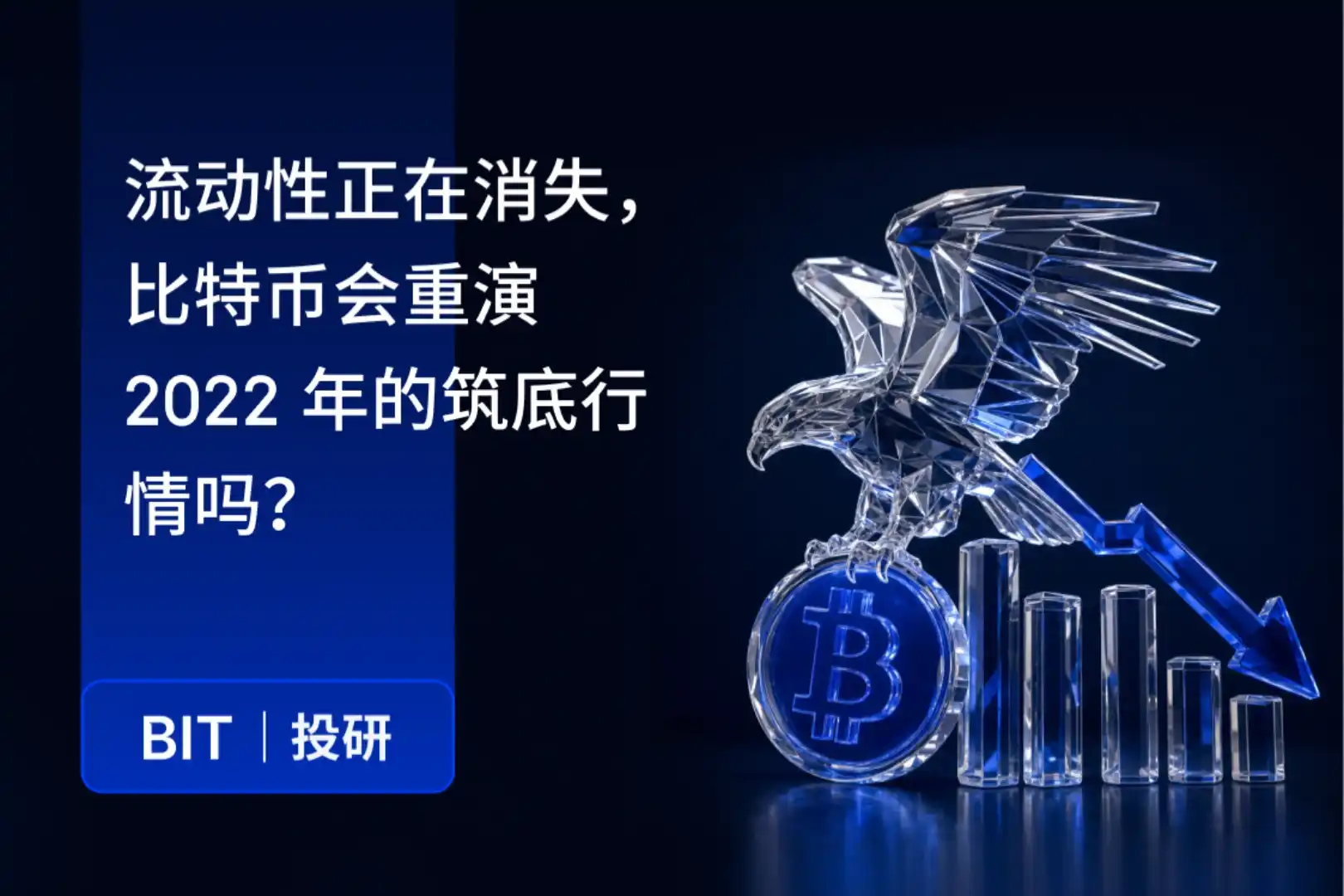
BIT Research: Liquidity is Disappearing, Will Bitcoin Replay the Bottoming Pattern of 2022?

The crypto market is currently in an adjustment phase driven by policy expectations and liquidity shifts. Despite a brief rebound fueled by geopolitical easing and SpaceX's strong IPO performance, unexpectedly hawkish signals from new Fed Chair Kevin Warsh have removed anticipated easing support. Concurrently, stablecoin liquidity is shrinking, with insufficient new capital inflows, pushing the market into a typically quiet summer period. Pricing lacks catalysts for a sustained rally. Daily trading volume has significantly contracted, stablecoin growth has slowed markedly, and the supportive effect of Strategy's (formerly MicroStrategy) STRC preferred stock-financed Bitcoin purchases is fading. Amid policy uncertainty, seasonal weakness, and liquidity contraction, Bitcoin faces near-term downward pressure. Warsh's hawkish pivot and refusal to provide a clear policy outlook have increased risk premiums, historically unfavorable for Bitcoin. Technically, the trend remains bearish below $73,700, with $62,446 as critical support. A break below could accelerate declines, though a prolonged consolidation phase, similar to 2022's bottoming process, is possible. Liquidity is a core constraint. Current daily volume is around $500 billion, roughly 25% of the peak during the July-Oct 2025 rally. The 12-month growth rates for USDT and USDC have fallen to ~20%, with 6-month growth near zero, indicating weak new inflows. Bitcoin ETF and Strategy-driven inflows have also weakened, with a 30-day rolling net outflow. With inflation at 4.2% above the Fed's target, combined hawkish policy, seasonal factors, and liquidity shortages challenge Bitcoin's ability to hold above $60,000. However, this adjustment phase may be forming a cyclical low this summer, potentially setting the stage for the next bull cycle.

marsbit48 min fa

BIT Research: Liquidity is Disappearing, Will Bitcoin Replay the Bottoming Pattern of 2022?

marsbit48 min fa

Who Makes the Best Use of Claude Code? The Answer Might Not Be Programmers

Claude Code Usage Report Summary (Based on ~400k sessions) Core Finding: In agentic programming with Claude Code, a clear division of labor has emerged: humans primarily decide *what* to build (planning decisions), while Claude decides *how* to build it (execution decisions). Key Insights: 1. **Effectiveness is not limited to programmers.** In code-generation tasks, success rates for users in non-technical fields (law, finance, management, research) are nearing those of software engineers. What matters most is the user's domain expertise and understanding of the problem to be solved. 2. **Domain expertise drives success and efficiency.** Sessions where users exhibited "expert" proficiency in the task's domain saw verified success rates double compared to "novice" sessions. Experts also delegated more work per instruction, with Claude executing more actions and producing more output. 3. **AI is amplifying, not replacing, domain knowledge.** Claude Code lowers the *implementation* barrier, not the *judgment* barrier. The value of knowing the "what" and "why" is increasing relative to just knowing the "how" to code. 4. **Usage is evolving.** Over a 7-month period (Oct '25 - Apr '26), the share of sessions for debugging halved, while use for software operations, data analysis, and non-code writing roughly doubled. The estimated economic value of typical tasks increased by ~25%. Conclusion: The data suggests coding agents are making programming background less critical for completing technical tasks. However, they reward and amplify deep domain understanding. The ability to successfully direct an AI agent stems more from mastery of a specific field than from coding skill itself. The primary gains come from being competent in a domain; deep specialization adds only marginal additional advantage. This may signal a shift where software creation becomes integrated into various professions.

marsbit1 h fa

Who Makes the Best Use of Claude Code? The Answer Might Not Be Programmers

marsbit1 h fa

Trading

Spot
Futures

Articoli Popolari

Cosa è XAG

Il contratto perpetuo XAGUSDT è il simbolo di trading per l'argento quotato in dollari statunitensi, che rappresenta 1 oncia troy di argento.

4 Totale visualizzazioniPubblicato il 2026.06.18Aggiornato il 2026.06.18

Cosa è XAG

Come comprare XAG

Benvenuto in HTX.com! Abbiamo reso l'acquisto di Silver (XAG) semplice e conveniente. Segui la nostra guida passo passo per intraprendere il tuo viaggio nel mondo delle criptovalute.Step 1: Crea il tuo Account HTXUsa la tua email o numero di telefono per registrarti il tuo account gratuito su HTX. Vivi un'esperienza facile e sblocca tutte le funzionalità,Crea il mio accountStep 2: Vai in Acquista crypto e seleziona il tuo metodo di pagamentoCarta di credito/debito: utilizza la tua Visa o Mastercard per acquistare immediatamente SilverXAG.Bilancio: Usa i fondi dal bilancio del tuo account HTX per fare trading senza problemi.Terze parti: abbiamo aggiunto metodi di pagamento molto utilizzati come Google Pay e Apple Pay per maggiore comodità.P2P: Fai trading direttamente con altri utenti HTX.Over-the-Counter (OTC): Offriamo servizi su misura e tassi di cambio competitivi per i trader.Step 3: Conserva Silver (XAG)Dopo aver acquistato Silver (XAG), conserva nel tuo account HTX. In alternativa, puoi inviare tramite trasferimento blockchain o scambiare per altre criptovalute.Step 4: Scambia Silver (XAG)Scambia facilmente Silver (XAG) nel mercato spot di HTX. Accedi al tuo account, seleziona la tua coppia di trading, esegui le tue operazioni e monitora in tempo reale. Offriamo un'esperienza user-friendly sia per chi ha appena iniziato che per i trader più esperti.

3 Totale visualizzazioniPubblicato il 2026.06.18Aggiornato il 2026.06.18

Come comprare XAG

Come comprare XAU

Benvenuto in HTX.com! Abbiamo reso l'acquisto di Gold (XAU) semplice e conveniente. Segui la nostra guida passo passo per intraprendere il tuo viaggio nel mondo delle criptovalute.Step 1: Crea il tuo Account HTXUsa la tua email o numero di telefono per registrarti il tuo account gratuito su HTX. Vivi un'esperienza facile e sblocca tutte le funzionalità,Crea il mio accountStep 2: Vai in Acquista crypto e seleziona il tuo metodo di pagamentoCarta di credito/debito: utilizza la tua Visa o Mastercard per acquistare immediatamente GoldXAU.Bilancio: Usa i fondi dal bilancio del tuo account HTX per fare trading senza problemi.Terze parti: abbiamo aggiunto metodi di pagamento molto utilizzati come Google Pay e Apple Pay per maggiore comodità.P2P: Fai trading direttamente con altri utenti HTX.Over-the-Counter (OTC): Offriamo servizi su misura e tassi di cambio competitivi per i trader.Step 3: Conserva Gold (XAU)Dopo aver acquistato Gold (XAU), conserva nel tuo account HTX. In alternativa, puoi inviare tramite trasferimento blockchain o scambiare per altre criptovalute.Step 4: Scambia Gold (XAU)Scambia facilmente Gold (XAU) nel mercato spot di HTX. Accedi al tuo account, seleziona la tua coppia di trading, esegui le tue operazioni e monitora in tempo reale. Offriamo un'esperienza user-friendly sia per chi ha appena iniziato che per i trader più esperti.

7 Totale visualizzazioniPubblicato il 2026.06.18Aggiornato il 2026.06.18

Come comprare XAU

Discussioni

Benvenuto nella Community HTX. Qui puoi rimanere informato sugli ultimi sviluppi della piattaforma e accedere ad approfondimenti esperti sul mercato. Le opinioni degli utenti sul prezzo di A A sono presentate come di seguito.

活动图片