Telegram founder Pavel Durov internationally wanted, Russia’s FSB says

cointelegraphPubblicato 2026-07-29Pubblicato ultima volta 2026-07-29

Introduzione

Russian authorities have placed Telegram founder Pavel Durov on an international wanted list, escalating a criminal case. The Federal Security Service (FSB) charged him with facilitating terrorist activity for allegedly failing to remove channels and bots used by Ukrainian intelligence, terrorist groups, and extremists to coordinate attacks and recruit operatives. Durov, who confirmed an earlier case in February, accused Russia of using investigations to pressure Telegram and restrict access. Separately, he faces an ongoing criminal probe in France over alleged illegal activity on the platform, though travel restrictions there have been lifted.

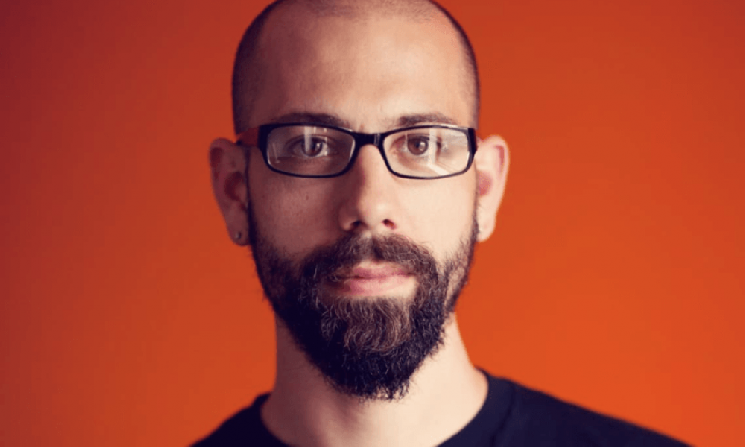
Russian authorities have placed Telegram founder Pavel Durov on an international wanted list as they escalate a criminal case accusing him of facilitating terrorist activity.

Russia’s Federal Security Service (FSB) said on Wednesday that it had charged Durov with facilitating terrorist activity and issued an international warrant for his arrest, local news agency Interfax reported.

The FSB alleged that Telegram failed to remove channels, chats and bots that Ukrainian intelligence services, terrorist groups and extremist organizations used to coordinate attacks, recruit operatives and conduct cyber fraud.

The development follows reports in February that Russian authorities had opened a criminal case against Durov. At the time, Durov confirmed the case in a post on X and accused Russian authorities of using the investigation to pressure Telegram, writing: “Each day, the authorities fabricate new pretexts to restrict Russians’ access to Telegram as they seek to suppress the right to privacy and free speech.”

Separately, Durov still faces an ongoing criminal investigation in France over alleged illegal activity on Telegram, although French authorities lifted travel restrictions earlier this year, allowing him to leave the country.

Related: Pavel Durov says Telegram to roll out native Gram crypto wallet

Domande pertinenti

QWhat are the specific allegations against Pavel Durov made by Russia's FSB?

ARussia's FSB alleges that Pavel Durov facilitated terrorist activity. Specifically, they accuse Telegram of failing to remove channels, chats, and bots that were used by Ukrainian intelligence services, terrorist groups, and extremist organizations to coordinate attacks, recruit operatives, and conduct cyber fraud.

QWhat action did the FSB take regarding Pavel Durov's case according to the article?

ARussia's Federal Security Service (FSB) charged Pavel Durov with facilitating terrorist activity and issued an international warrant for his arrest, placing him on an international wanted list.

QWhat was Pavel Durov's response to the initial criminal case opened against him by Russian authorities in February?

AIn a post on X, Pavel Durov accused Russian authorities of using the investigation to pressure Telegram. He stated that authorities were fabricating new pretexts each day to restrict Russians' access to Telegram in an attempt to suppress the right to privacy and free speech.

QBesides Russia, which other country is mentioned as having a criminal investigation involving Pavel Durov and Telegram?

APavel Durov also faces an ongoing criminal investigation in France over alleged illegal activity on Telegram, although French authorities lifted travel restrictions earlier this year.

QWhat related topic involving Telegram was mentioned at the end of the article?

AThe article mentions a related topic: "Pavel Durov says Telegram to roll out native Gram crypto wallet."

Letture associate

Cardano Price Forecast for August 2026: Will ADA Triangle Breakout Happen Before or After the CLARITY Act Deadline?

Cardano (ADA) is trading at $0.1642, testing the apex of a symmetrical triangle pattern on the daily chart, which signals an impending directional move. Technical analysis identifies key resistance at the 20-day EMA ($0.1650) and the triangle's upper trendline. A breakout above could target the 50-day EMA at $0.1732, with a cup-and-handle pattern potentially forming. Support lies at the SuperTrend indicator ($0.1536) and the June low of $0.1386. Historically, August has been a weak month for ADA, with a median return of -12.8%. A weekly forecast outlines a volatile month influenced by the imminent August 8th deadline for the U.S. CLARITY Act vote, potential SEC regulatory action, and renewed geopolitical tensions following Iran's missile strike. Key bullish catalysts include the potential passage of the CLARITY Act and a major upgrade integrating Cardano's developer documentation and tools into AI coding assistants like Claude, which could significantly boost developer adoption. On-chain data also shows whale accumulation, a potential Wyckoff accumulation signal. The price forecast presents two scenarios: a bullish breakout above $0.1650 targeting $0.17-$0.1732 if the CLARITY Act passes and AI integration fuels momentum, or a bearish break below $0.1536 toward $0.1386 if the bill fails, seasonal weakness persists, and risk appetite diminishes.

cryptonews.ru12 min fa

Cardano Price Forecast for August 2026: Will ADA Triangle Breakout Happen Before or After the CLARITY Act Deadline?

cryptonews.ru12 min fa

Coinbase Vice President: The Wars Over Cryptocurrency Regulation Are Over

Coinbase's new Vice President, Ryan VanGrak, declared that regulatory wars in the cryptocurrency sector are over. Since taking office on July 9, 2026, he has shifted the company's approach from litigation and sanctions to focusing on growth and innovation. The industry can now concentrate on development rather than fighting for its right to exist. He highlighted that the Digital Asset Market Clarity Act (CLARITY Act), which aims to establish a clear federal regulatory framework dividing oversight between the SEC and CFTC, has gained significant momentum. This framework is intended to provide proper supervision, investor protection, and maintain U.S. leadership in digital assets. VanGrak's appointment marks a strategic shift from a "wartime" to a "peacetime" advisor, replacing former Chief Legal Officer Paul Grewal, who oversaw major litigation, including a dismissed 2023 SEC lawsuit. With his background at Citadel Securities and the SEC, VanGrak brings deep regulatory and institutional finance expertise as Coinbase expands beyond a simple exchange into a broader financial services provider, offering stocks, futures, prediction markets, and AI tools. For investors, bipartisan support for crypto legislation like the CLARITY Act represents a major shift from the enforcement-focused environment of 2023-2024. Lawmakers are now focused on *how* to regulate crypto, not *if* it should exist. However, risks remain, as the bill's passage is not yet guaranteed.

cryptonews.ru1 h fa

Coinbase Vice President: The Wars Over Cryptocurrency Regulation Are Over

cryptonews.ru1 h fa

Deep Dive into FWA: An Intriguing Experiment Turning NFTs into "On-Chain Gachapon"

A Deep Dive into FWA: The “On-Chain Gacha” Experiment for NFTs Fake World Assets (FWA), created by TokenWorks, introduces an innovative “NFT gacha machine” fully operating on-chain. Users can deposit eligible NFTs paired with ETH (called Backing) to create a Position, acting as a prize pool. Others can then pay a uniform Acquisition Price for a chance to win a random NFT from the pool. The core mechanism features a reverse probability system: Positions with lower Backing have a higher chance of being selected, serving as common prizes, while high-Backing Positions are rare “jackpots.” The acquisition price is calculated based on the harmonic mean of all Backings, keeping entry costs low. When a Position is won, the purchaser must choose: keep the NFT or accept the Standing Bid (85% of the Backing, claimable in ETH or $FWA tokens), returning the NFT to the original depositor. The protocol involves two main roles. Depositors provide liquidity (NFT + ETH), earning a share of fees from each draw, distributed equally per active Position, plus potential $FWA rewards. Purchasers pay to spin the gacha, receiving $FWA rewards for participation. A special “Crown” reward goes to the Position with the highest Backing. The $FWA token has a fixed supply and is initially obtainable only through protocol participation (depositing or purchasing), with external buying disabled early on to reduce sell pressure. Its value is supported by a built-in buy pressure: when purchasers opt for the $FWA settlement on a Standing Bid, the protocol uses the backing ETH to buy $FWA from the market. Revenue for the protocol comes from a 1% fee on each draw, a 1% settlement fee when an NFT is kept, and the 15% discount from Standing Bid settlements (currently allocated to the protocol). The design cleverly blends Uniswap-style liquidity provision, gacha mechanics, and tokenomics to create a novel, self-regulating marketplace for NFT liquidity and engagement.

marsbit1 h fa

Deep Dive into FWA: An Intriguing Experiment Turning NFTs into "On-Chain Gachapon"

marsbit1 h fa

Trading

Spot
活动图片