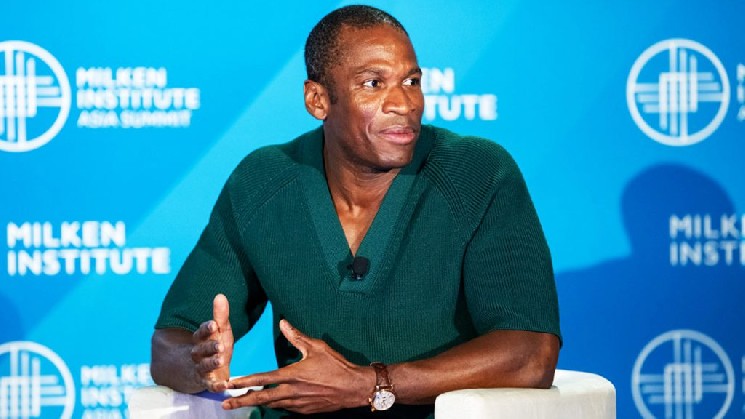
Coinbase Vice President: The Wars Over Cryptocurrency Regulation Are Over

cryptonews.ruPubblicato 2026-07-30Pubblicato ultima volta 2026-07-30

Introduzione

Coinbase's new Vice President, Ryan VanGrak, declared that regulatory wars in the cryptocurrency sector are over. Since taking office on July 9, 2026, he has shifted the company's approach from litigation and sanctions to focusing on growth and innovation. The industry can now concentrate on development rather than fighting for its right to exist. He highlighted that the Digital Asset Market Clarity Act (CLARITY Act), which aims to establish a clear federal regulatory framework dividing oversight between the SEC and CFTC, has gained significant momentum. This framework is intended to provide proper supervision, investor protection, and maintain U.S. leadership in digital assets. VanGrak's appointment marks a strategic shift from a "wartime" to a "peacetime" advisor, replacing former Chief Legal Officer Paul Grewal, who oversaw major litigation, including a dismissed 2023 SEC lawsuit. With his background at Citadel Securities and the SEC, VanGrak brings deep regulatory and institutional finance expertise as Coinbase expands beyond a simple exchange into a broader financial services provider, offering stocks, futures, prediction markets, and AI tools. For investors, bipartisan support for crypto legislation like the CLARITY Act represents a major shift from the enforcement-focused environment of 2023-2024. Lawmakers are now focused on *how* to regulate crypto, not *if* it should exist. However, risks remain, as the bill's passage is not yet guaranteed.

Coinbase's new Vice President, Ryan VanGrack, declared that the regulatory battles in the cryptocurrency sector are over. Since assuming his position on July 9, 2026, VanGrack has approached the company's regulatory issues from a different perspective. Instead of litigation and sanctions, the focus is now on growth and innovation. The cryptocurrency industry can now concentrate on development without fighting for its right to exist.

The Clarity Act and the Regulatory Framework

VanGrack stated that the Digital Asset Market Clarity Act, also known as the CLARITY Act, has received a "huge boost." This law aims to create a federal regulatory framework that clearly delineates the authority of the SEC and CFTC over digital assets. VanGrack emphasized that these clear federal rules will ensure proper oversight, investor protection, and U.S. leadership in the digital asset space.

The Growth Period and Its Costs

The outgoing Chief Legal Officer of Coinbase, Paul Grewal, was involved in one of the most significant legal battles in cryptocurrency history during his tenure. In June 2023, the Securities and Exchange Commission (SEC) filed a lawsuit against Coinbase, alleging that the company offered unregistered securities, but the case was dismissed. VanGrack's appointment signals that the company has replaced its wartime advisor with a peacetime diplomat.

VanGrack's Strategy and Coinbase's Expansion

VanGrack, who previously worked at Citadel Securities and held a position at the U.S. Securities and Exchange Commission (SEC), possesses a deep understanding of the regulatory machinery and the world of institutional finance, which is of increasing interest to Coinbase. Coinbase aims to move beyond being a simple cryptocurrency exchange to become a full-fledged financial services provider, expanding its offerings into areas such as stock trading, futures, prediction markets, and AI tools.

What This Means for Investors

The fact that cryptocurrency legislation would receive bipartisan support was almost unthinkable during the wave of SEC enforcement actions in 2023 and 2024. The bipartisan support for the CLARITY Act shows that lawmakers have stopped questioning whether cryptocurrencies should exist and are now focused on how to regulate them. However, risks still remain. The fact that the law is "on the verge of passage" means it is not yet complete. VanGrack's football metaphor serves as a reminder that many drives can stall in the red zone.


Domande pertinenti

QAccording to the article, what major shift in regulatory approach did Coinbase's new Vice President announce?

ARyan VanGrak, the new Vice President, announced that regulatory battles in the cryptocurrency sector have ended. The focus has shifted from lawsuits and enforcement actions to growth and innovation, allowing the industry to develop without fighting for its right to exist.

QWhat is the CLARITY Act, and what is its primary goal as described in the text?

AThe CLARITY Act, or the Digital Asset Market Clarity Act, is a legislative initiative that aims to create a federal regulatory framework. Its primary goal is to clearly delineate the authority of the SEC and the CFTC over digital assets.

QHow does the appointment of Ryan VanGrak symbolize a change in Coinbase's strategy?

AThe appointment of Ryan VanGrak, who has a deep understanding of regulation and institutional finance, symbolizes the company replacing a 'wartime' advisor with a 'peacetime' diplomat. This reflects a strategic shift towards building and expanding services rather than focusing on legal defense.

QWhat areas is Coinbase looking to expand into beyond being a cryptocurrency exchange?

ACoinbase aims to become a comprehensive financial services provider by expanding its offerings to include areas such as stock trading, futures, prediction markets, and AI-powered tools.

QWhat does the article say about the current political support for cryptocurrency regulation in the US?

AThe article states that bipartisan support for cryptocurrency legislation, particularly for the CLARITY Act, has become a reality. This shows legislators are no longer questioning whether cryptocurrencies should exist, but are focused on how to regulate them, although the bill is not yet finalized.

Letture associate

Goldman Sachs: July Smashes Through Crowded Trades, U.S. Stock Bull Market Not Broken but Harder to Navigate

Goldman Sachs: July Sees Crowded Trades Unwound, U.S. Bull Market Intact but Getting Tougher. The U.S. stock market in July did not see an index-level crash, but rather a significant unwinding of speculative positions. While the S&P 500 remained stable—trading within a narrow 3.5% range and staying within 2% of its high—underlying market dynamics were volatile. Heavily crowded trades, particularly in high-momentum tech, AI-linked stocks, and Asian strategies, faced severe pressure and forced deleveraging. Data indicates this was a meaningful cleanse, not a minor adjustment. Global tech exposure saw its largest sell-off in over five years, leverage in Korean equity ETFs plummeted, and Goldman's prime brokerage recorded the largest gross exposure reduction since late 2022. Leverage on momentum factors among fundamental long/short clients fell to the 28th percentile of its one-year range. The AI trade narrative shifted from pure potential to a focus on tangible returns. While Meta failed to show clear AI monetization, Microsoft and Amazon provided evidence that massive capital expenditure is translating into scalable revenue and product growth, preventing a blanket sell-off of the AI sector. The Federal Reserve's more opaque communication style and volatility in long-end Treasury yields have introduced new friction, particularly for rate-sensitive growth and tech stocks. The broader outlook for U.S. equities remains favorable, supported by a strong economy, robust earnings, and substantial AI capital expenditure. However, risk/reward is no longer cheap, and the market's upward elasticity has weakened. The Nasdaq 100's trajectory—up 12% year-to-date despite significant pullbacks—illustrates that the bull trend persists but the path is becoming more difficult. The key lesson from July is that the market no longer rewards crowded, highly leveraged trades, requiring more disciplined and liquid portfolio approaches.

marsbit3 h fa

Goldman Sachs: July Smashes Through Crowded Trades, U.S. Stock Bull Market Not Broken but Harder to Navigate

marsbit3 h fa

Trading

Spot
活动图片