Мнение: переход к третьей импульсной волне подбросит курс биткоина выше $200 000

cryptonews.ruPubblicato 2025-04-11Pubblicato ultima volta 2025-11-12

Главное:

  • Развитие третьей волны способно подтолкнуть котировки к $200 000–240 000.

  • Долгосрочная ценовая структура остается оптимистичной, невзирая на отсутствие роста активности на рынке фьючерсов.

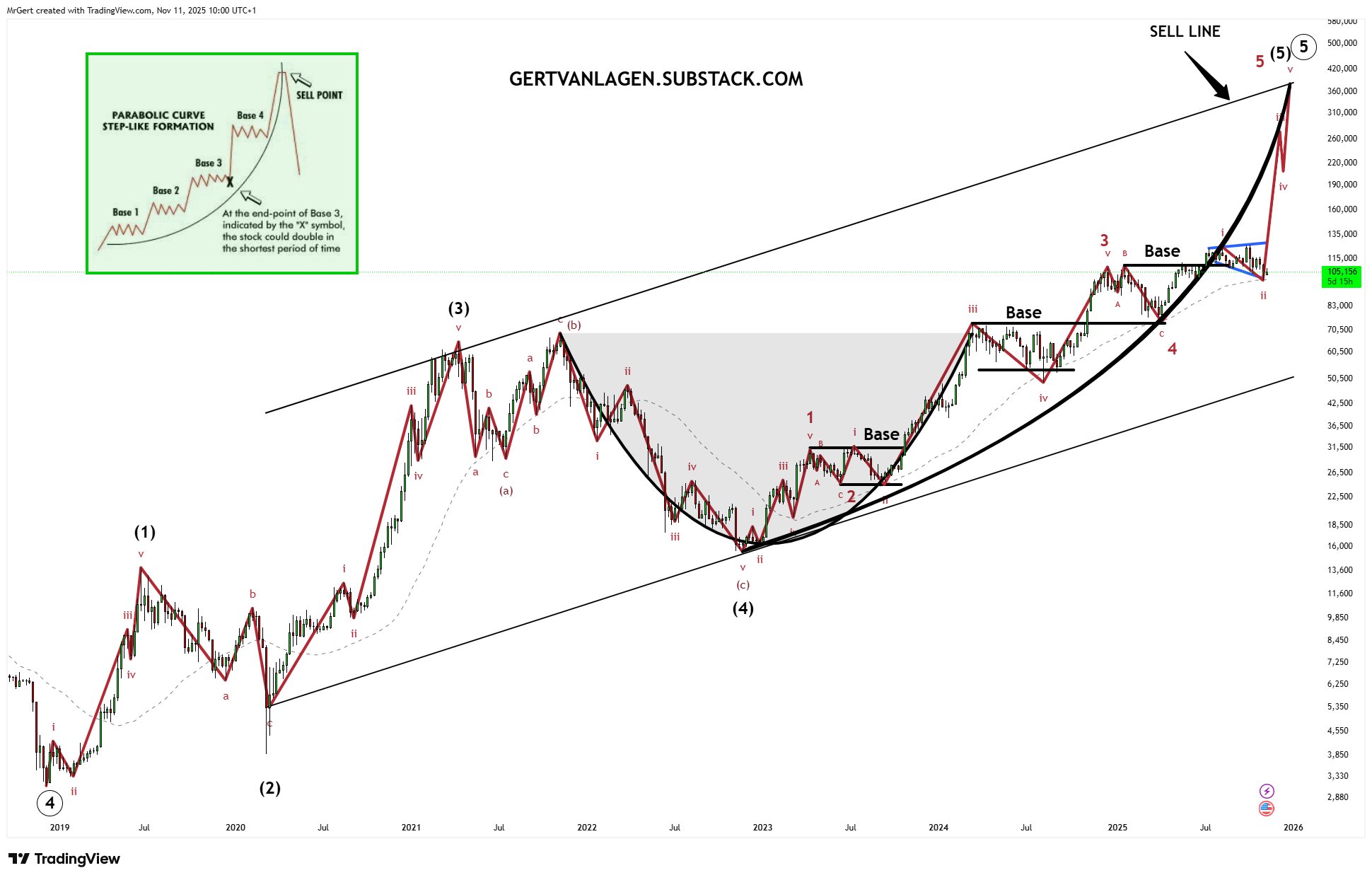
Долгосрочная ценовая структура биткоина (BTC) остается благоприятной и сулит переход к параболическому взлету. Такого мнения придерживается аналитик Герт ван Лаген.

Специалист сослался на очередной отскок курса от 40-недельной простой скользящей средней.

По мнению ван Лагена, коррекционная вторая волна близится к завершению и готовится уступить импульсной третьей с потенциалом повышения до $200 000–240 000 в ближайшие месяцы.
Источник: Герт ван Лаген.

«Ступенчатая» модель Эллиотта предполагает, что биткоин формирует прочную базу перед каждым крупным прорывом.

Такая же ситуация в 2019 и 2023 годах предшествовала резкому скачку. Это позволяет предположить, что текущая консолидация может стать отправной точкой для следующего параболического роста.

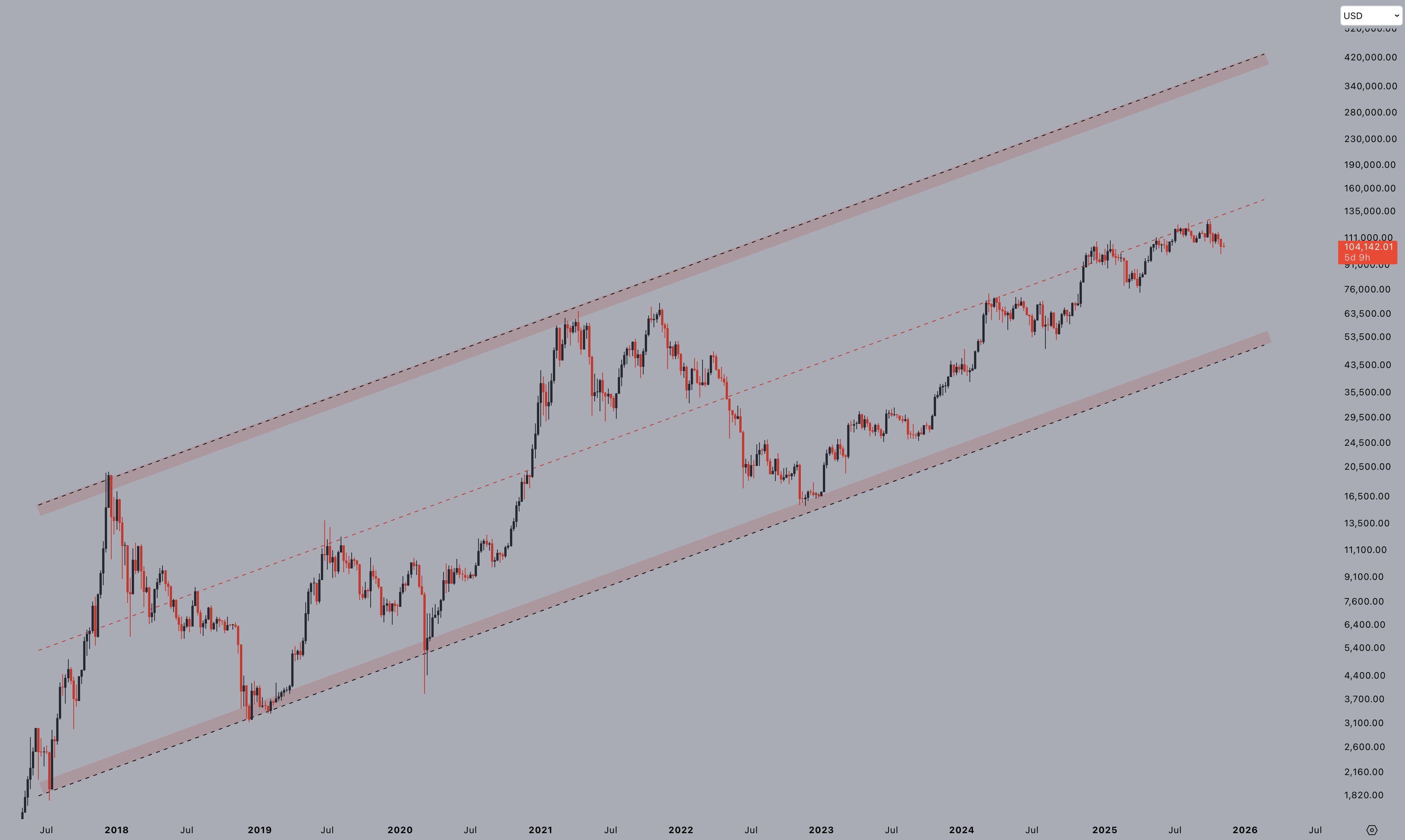
Трейдер под ником Jelle согласился с подобной точкой зрения. По его мнению, котировки первой криптовалюты по-прежнему сталкиваются с сопротивлением вблизи середины своего долгосрочного восходящего ценового канала. Как только этот уровень будет пройден, станет актуальным движение к верхней границе у ~$350 000.
Источник: Jelle.

По теме: биткоин потерял ключевую поддержку на $107 000

Сигналы восстановления

На краткосрочной дистанции все еще требуется наличие подтверждения разворота. 11 ноября курс закрыл гэп на Чикагской товарной бирже (CME), который сформировался в выходные.

По данным Glassnode, открытый интерес (ОИ) во фьючерсах снизился после дампа 10 октября, а активность на рынке деривативов на биржах ослабевает.

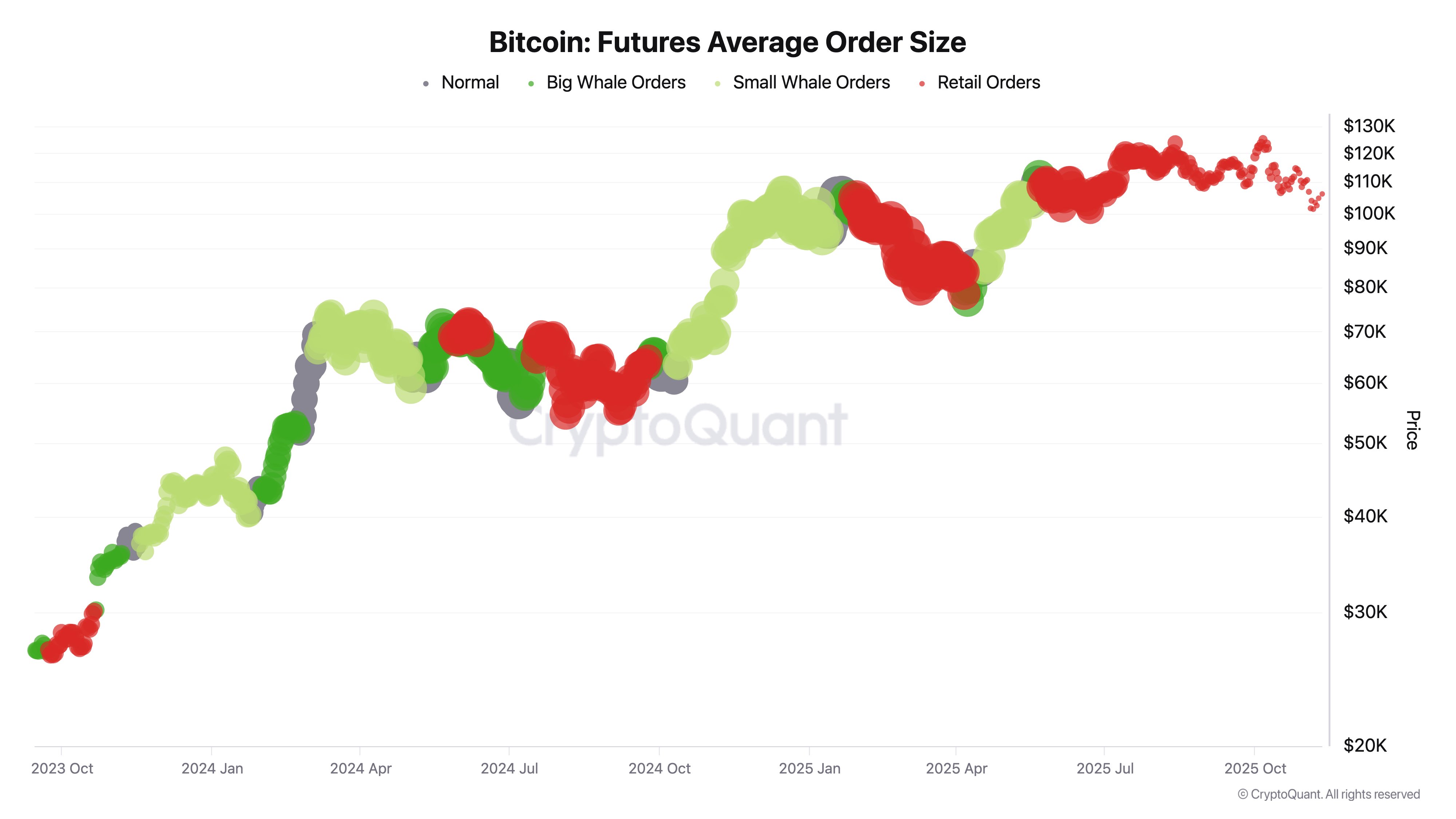
На рынке фьючерсов сократился средний объем ордеров, что отражает снижение участия крупных инвесторов и увеличение влияния розничных игроков, указали в CryptoQuant.
Динамика среднего размера ордера в биткоин-фьючерсах. Источник: CryptoQuant.

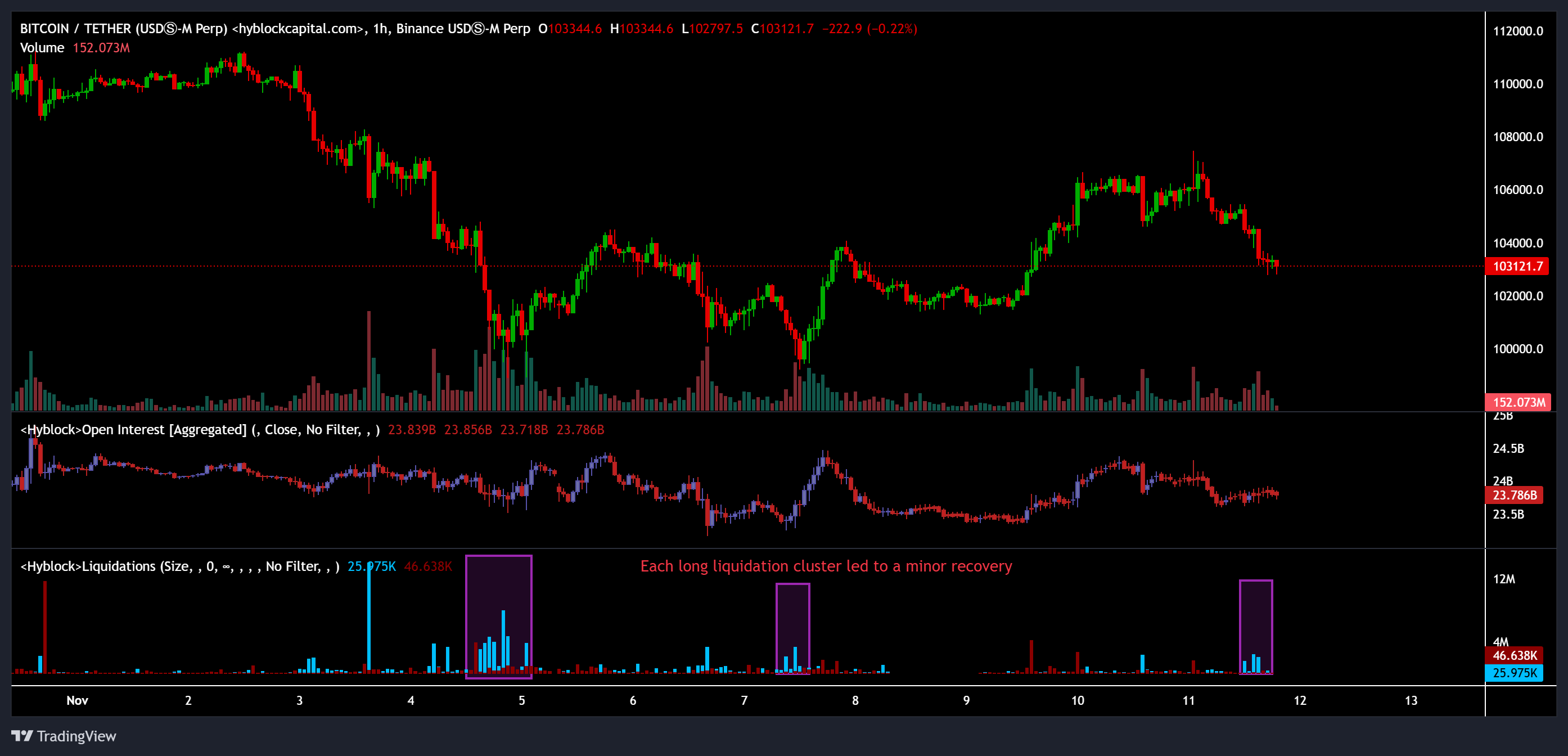
В то же время паттерны ликвидаций могут сигнализировать о бычьем развороте. Данные Hyblock Capital показали, что кластеры принудительного закрытия лонгов 4 и 7 ноября предшествовали незначительным восстановлениям с локальным возвратом к среднему значению.
Цена, совокупный ОИ и уровни ликвидации. Источник: Hyblock.

Если новые волны принудительного закрытия вокруг гэпа CME приведут к очередному отскоку, то у цифрового золота будет новый шанс на формирование разворота выше $105 000 с подтверждением выхода на траекторию роста на среднесрочную перспективу.

По теме: в Glassnode зафиксировали первые признаки восстановления биткоина после октябрьского обвала

Эта статья не содержит инвестиционных советов или рекомендаций. Каждое инвестиционное и торговое решение связано с риском, читатели должны самостоятельно проводить исследование перед принятием решений.

Letture associate

IOSG Founder: Ethereum Doesn't Need Another Leap of Technical Faith, It Needs a Musk-style Compromise

Jocy, founder of IOSG Ventures, argues that Ethereum does not need renewed technological faith but a "Musk-like compromise." The recent formation of ETHLabs—funded by major ETH holders like BitMine and Lubin—highlights a market-driven move to fill a gap left by the Ethereum Foundation (EF), signaling a loss of confidence in its decentralized, hands-off approach. The core critique contrasts Vitalik Buterin's (V) idealistic, technology-first vision with Elon Musk's pragmatic, business-driven execution. The author asserts Ethereum's current shortage is not another technical roadmap but a clear, real-world application narrative and a leader willing to engage directly with commercial realities—like Musk. Internal issues are emphasized, citing EF's management problems and talent drain. While the new decentralized model with independent nodes like ETHLabs addresses the single foundation's limitations, it risks fragmentation without cohesive direction. True cohesion, the author suggests, must come from a shared, compelling narrative around ETH's value, not just from aligned financial interests. Independence claims for new entities are seen as aspirational, needing years of transparency to build trust. The ultimate threat is not competitors like Solana, but the broader shift of attention and talent toward AI. Ethereum has a limited window—12 to 18 months—to recapture focus by delivering tangible, real-world applications. The conclusion urges V to shift from abstract ideals to grounded, pragmatic leadership. The time for this crucial pivot is running out.

marsbit55 min fa

IOSG Founder: Ethereum Doesn't Need Another Leap of Technical Faith, It Needs a Musk-style Compromise

marsbit55 min fa

Google Starts Selling TPUs, Big Tech Aims to Produce "Low-Cost Tokens" with AI Chips

Google has begun selling its proprietary TPU chips and AI computing hardware directly to third-party data centers and clients, marking a strategic shift. Previously only accessible via cloud rentals, TPUs are specialized processors designed for the matrix and tensor operations central to AI models. By combining thousands into supercomputing clusters managed by CPUs, Google achieves high-efficiency AI processing. This move enables Google’s Gemini AI to offer competitive token pricing, challenging rivals like OpenAI. It also signals a broader industry trend where AI compute is becoming a commoditized resource like electricity. While NVIDIA remains dominant with its CUDA ecosystem and high-performance GPUs, the focus is shifting from raw power to cost efficiency and system integration. Google’s approach mirrors NVIDIA’s by selling an entire ecosystem—hardware, software, and data center expertise—rather than just chips. This threatens NVIDIA’s grip on the mid-range inference market, where lower-cost, efficient solutions are increasingly demanded. Similarly, cloud providers like Huawei Cloud and Alibaba Cloud in China are developing their own AI chip ecosystems (e.g., Ascend, Zhenwu), packaging chips, clusters, and tools into full-stack solutions. They aim to reduce token costs and capture market share through integrated systems. In summary, the AI infrastructure race is evolving from a competition for the strongest chips to a contest for the most efficient and cost-effective systems. Google’s TPU sales highlight this transition, emphasizing that future success lies in delivering affordable, scalable AI compute as a foundational service.

marsbit1 h fa

Google Starts Selling TPUs, Big Tech Aims to Produce "Low-Cost Tokens" with AI Chips

marsbit1 h fa

Trading

Spot
Futures
活动图片