新手避免亏损,项目调研需关注哪些核心要素?

比推Pubblicato 2025-10-27Pubblicato ultima volta 2025-10-27

作者:le.hl

编译:Luffy,Foresight News

原标题:新手如何做项目调研?


作为投资者,最容易亏钱的方式就是盲目跟风,对项目一无所知,却仅凭他人建议就贸然入场。我曾有过这样的经历,因此在此分享自己的项目调研经验。

如果你是加密货币新手,正需要靠谱的实战方法,这篇文章就是为你准备的。

明确项目叙事
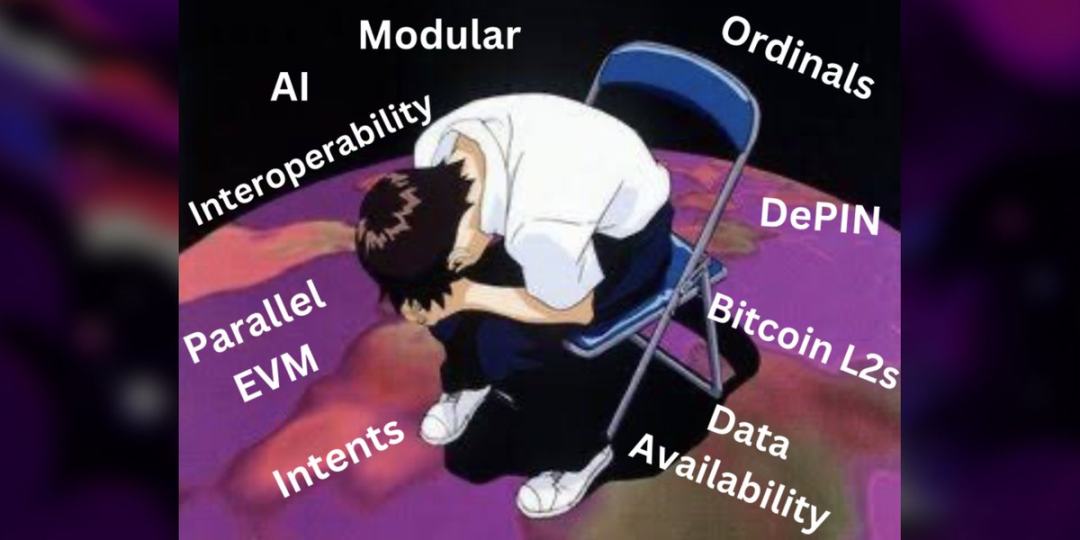
叙事是加密货币行业的核心要素之一,市场走势往往围绕叙事展开。如果想投资某个项目,首先要理解它背后的叙事逻辑。如果项目还停留在元宇宙、GameFi 这类过时叙事上,大概率很难成功。

我通常在 CoinMarketCap 和 CoinGecko 平台查询项目叙事。

操作步骤:

  1. 访问网址:https://coinmarketcap.com/cryptocurrency-category/

  2. 输入项目名称;

  3. 下拉至 「标签」 板块,即可查看项目所属叙事。

了解叙事后,下一步要找出该赛道的龙头项目。观察其近期交易量变化,判断动态;同时评估你关注的项目是否有能力与龙头竞争。记住,投资龙头的竞争对手往往比追逐已经暴涨的龙头更有机会。

选择当下热门的叙事(比如 AI、预测市场 InfoFi 等),是盈利的最佳路径。

核查项目投资方
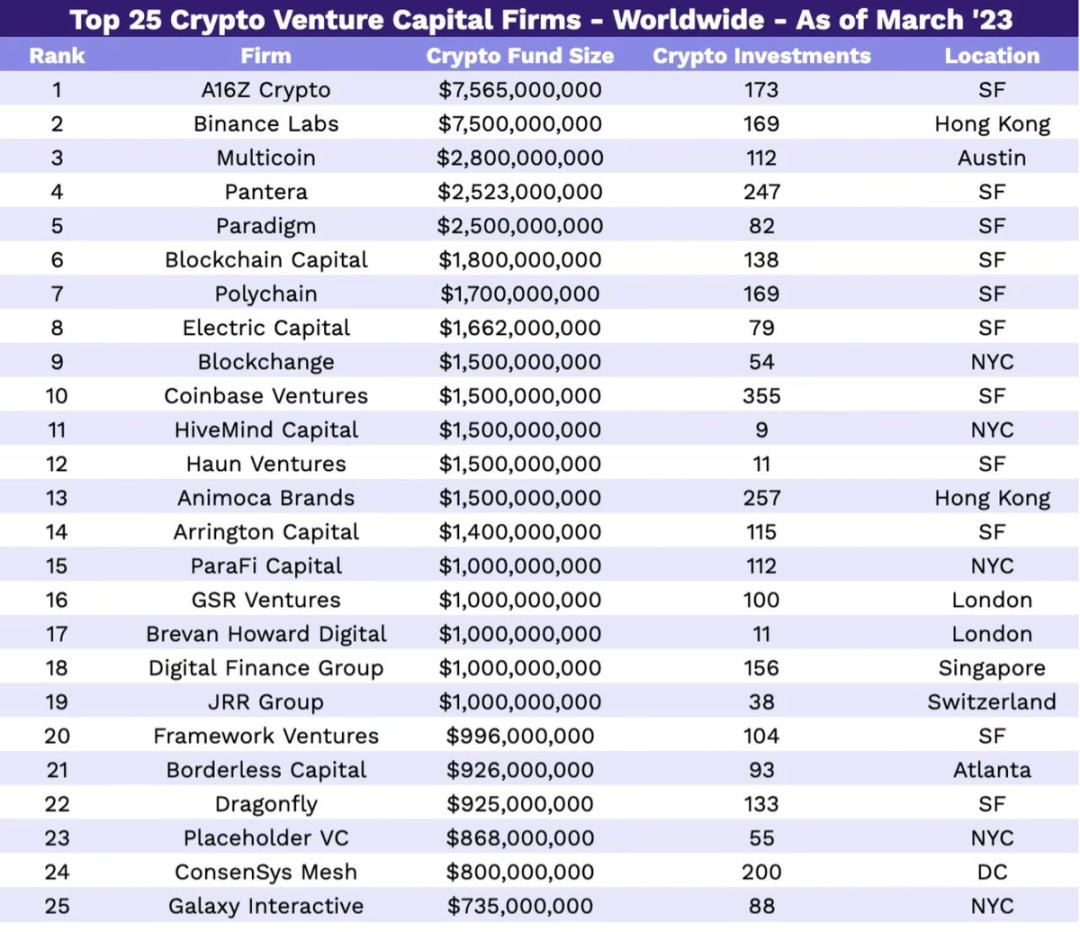
如今很多人反感 「风投」这个词,更青睐自筹资金的项目,但事实是:如果一个项目产品不够优秀、团队实力一般、也不是任何叙事的龙头,就需要靠谱的投资方推动其发展。

我最常用的查询项目投资方的平台是 CryptoFundraising,它能显示项目的投资方、团队、社交账号、官网等所有关键信息,且完全免费。

操作步骤:

  1. 访问网址:https://crypto-fundraising.info/

  2. 搜索目标项目;

  3. 查看融资金额与风投等级。

我发现,融资金额较少、仅有 2-3 家风投支持的项目,通常比有 20 多家风投参与的项目表现更好。这就像一块蛋糕被太多人分,团队做决策时需要获得所有风投同意,反而束手束脚。

风投的等级也至关重要,我个人偏好这些风投支持的项目:Coinbase VC、a16z、Polychain Capital、Paradigm、GSR。

考察项目社交动态

这一步非常关键。如果项目关闭评论功能或频繁更改社交账号昵称,请直接避开。想查询项目之前的昵称,可在 Telegram 上使用 Rick 机器人:

  1. 登录 Telegram;

  2. 给 Rickburpbot 发送消息;

  3. 输入指令:/twit 项目当前昵称,即可查询历史昵称。

「互相关注的知名人士数量」 也值得参考:如果有 20 位以上行业知名人士关注该项目,通常是积极信号。
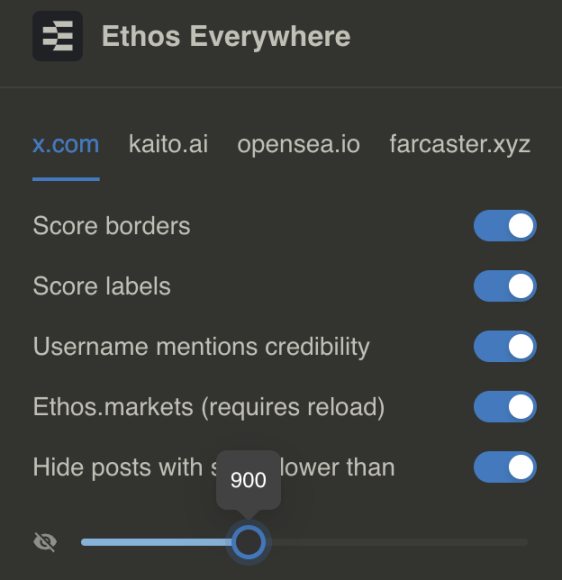
核查项目合法性,还可以使用 Ethos Network:

  1. 访问网址:https://app.ethos.network/

  2. 安装 Chrome 浏览器插件;

  3. 进行如下设置:若项目有负面评价,将其屏蔽,避免在 X 上看到相关干扰信息。

无需 Ethos 邀请码,你也能免费使用该插件。

深度调研核心维度

创始人

我更倾向于投资创始人每天在加密货币社区活跃、与社区互动的项目。优秀的创始人坚信自己的项目,且愿意承认错误。

避免那些声称社区就是一切但又表现得高高在上、脱离用户的创始人或匿名创始人。

创始人的行为,往往决定了项目上线后的发展方向。

产品

易用性是我最看重的指标。只有简单、用户友好的产品,才能获得真实用户的采用,进而产生收入。

再炫酷的概念(比如 「量子区块链解决全球饥饿」),如果操作复杂、难以使用,也不会有人关注。

代币经济模型

对于已发行代币的项目,如果出现以下情况,则需需警惕:向与项目无关的群体分配代币(比如为了短期炒作,给币安 Alpha 等平台分配代币,却未获得任何实质支持)。这种行为通常会导致 TGE 失败,后续价格走势惨淡。

代币经济模型不需要把所有代币都分配给社区,但必须为所有利益相关者(包括团队)制定清晰、透明的解锁时间表。团队的透明度永远是重中之重。

查询代币经济模型与解锁计划,可使用 Dropstab:

  1. 访问网址:https://dropstab.com/vesting

  2. 搜索目标项目;

  3. 查看项目上一轮代币解锁后的价格走势,判断解锁对价格的影响。


Twitter:https://twitter.com/BitpushNewsCN

比推 TG 交流群:https://t.me/BitPushCommunity

比推 TG 订阅: https://t.me/bitpush

说明: 比推所有文章只代表作者观点,不构成投资建议

Letture associate

$2 Trillion: Countdown to AI's Largest IPO in History

The countdown for the largest IPO in AI history, a potential $2 trillion listing for Anthropic, is underway for October. The staggering valuation, reportedly projected by several investors, contrasts with the company's own internal restraint on setting a public target. Founded five years ago by former OpenAI core members, Anthropic's growth has been meteoric. Annual recurring revenue (ARR) surged from ~$9B in late 2025 to $47B by May 2026, with Q2 2026 revenue of $11.5B marking a 14x year-over-year increase. Bank valuations are even based on internal 2028 revenue forecasts of $190-200B. A key growth driver is Claude Code, its AI coding assistant. Its ARR quintupled in five months to $2.5B by February 2026, now constituting nearly 20% of total revenue. Surveys indicate Anthropic commands roughly 40% of enterprise LLM spending, doubling OpenAI's share in programming-specific use. However, alongside this explosive growth, reports detail significant internal cultural strife. Critics describe a divisive "priesthood" of PhD executives, led by CEO Dario Amodei, who promote a "save humanity" narrative that some employees find cult-like and alienating. This has reportedly created a demoralized workforce and a covert "underground network" of dissent among engineers torn between lucrative pre-IPO equity and a toxic work environment. Anthropic now faces a pivotal paradox: pursuing its mission of "safe" AI requires immense capital for compute, yet that capital demands relentless commercial growth. As it approaches its historic IPO, the company must navigate intense regulatory scrutiny, soaring operational costs, and internal tensions—any of which could destabilize its post-listing trajectory, much like SpaceX's significant post-IPO stock drop. The stage is set for a defining moment in tech history.

marsbit56 min fa

$2 Trillion: Countdown to AI's Largest IPO in History

marsbit56 min fa

AI Boosting Efficiency and Cutting Costs Makes VC Increasingly Expensive

"AI for Cost Reduction Makes VC Funding More Expensive" Despite the "cost-reduction and efficiency" narrative of AI, venture capital (VC) investment in the AI sector is becoming increasingly costly. While AI tools lower the initial costs for many startups—with team sizes shrinking across funding stages—the market is polarizing. For top-tier AI teams, especially those from leading companies like Google and OpenAI, funding rounds are now larger and valuations are higher than ever at the seed and early stages. For example, new ventures by prominent researchers are securing billions in funding with valuations reaching tens of billions before having a mature product. This creates a "barbell" market: lightweight startups need less capital, while elite AI firms attract massive investments early on. This dynamic raises the cost for VCs to acquire and maintain meaningful ownership stakes. As valuations soar early, securing the same equity percentage requires significantly larger capital commitments. VCs must now invest more upfront and reserve substantial funds for follow-on rounds to avoid dilution, prompting large firms like Accel and a16z to raise massive new funds. Consequently, capital is concentrating intensely in a few perceived winners like OpenAI and Anthropic, widening the gap between large and small VC funds. While high valuations bake in future growth expectations, they also compress potential returns, demanding that portfolio companies achieve unprecedented scale. For major VCs, the core strategy is clear: secure early positions in potential winners and maintain the capital to keep investing as valuations rapidly escalate.

marsbit1 h fa

AI Boosting Efficiency and Cutting Costs Makes VC Increasingly Expensive

marsbit1 h fa

An Eight-Year Investment Takes a Sharp Turn: Why Did Ethereum Suddenly Abandon Poseidon?

On August 13, Ethereum researcher Justin Drake announced a significant shift in Ethereum's Layer-1 cryptographic roadmap: abandoning the SNARK-friendly hash function Poseidon in favor of traditional functions like SHA2 or BLAKE2. This decision ends eight years of research and investment, marking a major revision to the post-quantum security strategy. Poseidon, introduced in 2019, was highly efficient for zkRollups and zkVMs within SNARK circuits. However, its need for prolonged cryptanalysis and the pressing timeline for quantum resistance revealed limitations. Recent breakthroughs in SNARK design, specifically using binary fields, now enable traditional, battle-tested hash functions to perform as efficiently as Poseidon within SNARKs. Benchmarks show modern laptops can now verify over a million traditional hash calls per second. This change is partly driven by accelerated concerns over quantum computing threats. Reports warn that "Cryptographically Relevant Quantum Computers" could break current blockchain signatures like ECDSA by the early 2030s, risking trillions in assets. Ethereum's response focuses on hash-based post-quantum signature schemes, deemed more quantum-resistant than some lattice-based alternatives under pressure from AI cryptanalysis. Ethereum's updated post-quantum roadmap targets a production-ready "leanVM" for signature aggregation by 2027, with full deployment across consensus, execution, and data layers by 2028. The shift to mature hash functions like SHA2 reduces reliance on newer algorithms and aligns with the goal of using widely analyzed cryptographic primitives. Other major blockchains are also preparing. Solana's core teams have independently chosen the NIST-standardized Falcon signature scheme for its compact size. Starknet plans a phased migration, starting with replacing its Pedersen hash with BLAKE2. Ethereum's move signifies a strategic pivot towards proven security foundations for the quantum era.

marsbit2 h fa

An Eight-Year Investment Takes a Sharp Turn: Why Did Ethereum Suddenly Abandon Poseidon?

marsbit2 h fa

Programmers Worldwide Are Wasting Money on Anthropic! The Company Can't Stand It Anymore

Anthropic recently published guidelines to help developers using Claude Code reduce unnecessary token costs. The key recommendations include: 1) Clear (/clear) conversations after completing a task to avoid carrying irrelevant file reads and command outputs into the next task. 2) Set the model and reasoning effort level at the start of a session, as switching mid-session invalidates the prompt cache, requiring a full-price recalculation of the entire dialog history. 3) Attach files using @ references instead of typing paths manually to avoid extra tool calls and searches that bloat the context. 4) Add quiet flags to verbose commands (e.g., in CLAUDE.md) to minimize lengthy output in the dialog history. 5) Use /compact while the session cache is still warm (before breaks) to compress the dialog at one-tenth the cost. 6) Offload large-output tasks to a sub-agent, which runs in an isolated context and only returns conclusions, preventing intermediate outputs from polluting the main dialog. The article explains token pricing: input tokens (prefill) are processed in parallel, while output tokens (decode) are generated serially, making output tokens five times more expensive. Caching is crucial for savings—if a request's prefix (system prompt, CLAUDE.md, dialog history) matches the previous one byte-for-byte, reading it costs only 10% of the standard input price. However, cache invalidation occurs when changing models, effort levels, fast mode, compressing dialogs, after cache expiration, or when resuming old sessions. Dialog history also grows quadratically (O(n²)) as file contents and command outputs accumulate, increasing costs per round. Proactive context management—like isolating noisy tasks, using /rewind to trim unproductive turns, and task-based session clearing—is becoming an essential skill for cost-effective AI-assisted development.

marsbit4 h fa

Programmers Worldwide Are Wasting Money on Anthropic! The Company Can't Stand It Anymore

marsbit4 h fa

Pax Silica vs. WAICO: The US Wants to Prohibit Europe from Using Chinese Artificial Intelligence

The United States is preparing to demand that European and other partners abandon Chinese artificial intelligence initiatives, threatening exclusion from the American-led "Pax Silica" coalition, according to a leaked U.S. State Department document. This ultimatum forces signatories of the "AI Opportunity Statement" to choose between the Western technological ecosystem and alternative frameworks, with China not explicitly named but clearly targeted. Pax Silica is a U.S. strategy for AI and semiconductor hegemony, launched in late 2025. Its European presence expanded significantly in mid-2026. Concurrently, China, Russia, and 27 other nations established the World AI Cooperation Organization (WAICO) in July 2026 as an independent intergovernmental platform promoting AI governance based on UN principles. This situation creates a difficult choice, especially for European nations balancing strategic autonomy with dependence on U.S. tech and security. It also pressures Global South countries with pragmatic ties to both Washington and Beijing. The formation of competing blocks risks fragmenting the global tech landscape, forcing companies to split supply chains, increasing costs, and potentially leading to incompatible standards and protocols. The era of open globalization in AI may be ending, replaced by geopolitical confrontation where technological sovereignty trumps economic efficiency. The decisions made will shape the global digital economy for decades.

cryptonews.ru6 h fa

Pax Silica vs. WAICO: The US Wants to Prohibit Europe from Using Chinese Artificial Intelligence

cryptonews.ru6 h fa

Trading

Spot
活动图片