AI Boosting Efficiency and Cutting Costs Makes VC Increasingly Expensive

marsbitPubblicato 2026-08-16Pubblicato ultima volta 2026-08-16

Introduzione

"AI for Cost Reduction Makes VC Funding More Expensive" Despite the "cost-reduction and efficiency" narrative of AI, venture capital (VC) investment in the AI sector is becoming increasingly costly. While AI tools lower the initial costs for many startups—with team sizes shrinking across funding stages—the market is polarizing. For top-tier AI teams, especially those from leading companies like Google and OpenAI, funding rounds are now larger and valuations are higher than ever at the seed and early stages. For example, new ventures by prominent researchers are securing billions in funding with valuations reaching tens of billions before having a mature product. This creates a "barbell" market: lightweight startups need less capital, while elite AI firms attract massive investments early on. This dynamic raises the cost for VCs to acquire and maintain meaningful ownership stakes. As valuations soar early, securing the same equity percentage requires significantly larger capital commitments. VCs must now invest more upfront and reserve substantial funds for follow-on rounds to avoid dilution, prompting large firms like Accel and a16z to raise massive new funds. Consequently, capital is concentrating intensely in a few perceived winners like OpenAI and Anthropic, widening the gap between large and small VC funds. While high valuations bake in future growth expectations, they also compress potential returns, demanding that portfolio companies achieve unprecedented scale. For maj...

Author: Zen, PANews

On August 11th, the veteran venture capital firm Accel announced the completion of a new $3.5 billion fundraising round. Earlier in April, the firm had just raised a $5 billion late-stage investment fund. Within a mere four months, Accel has loaded $8.5 billion into its arsenal.

Accel views AI as a technological "super cycle" still in its early stages. In their assessment, AI is significantly compressing the timeline for startups to progress from product conception to scaling.

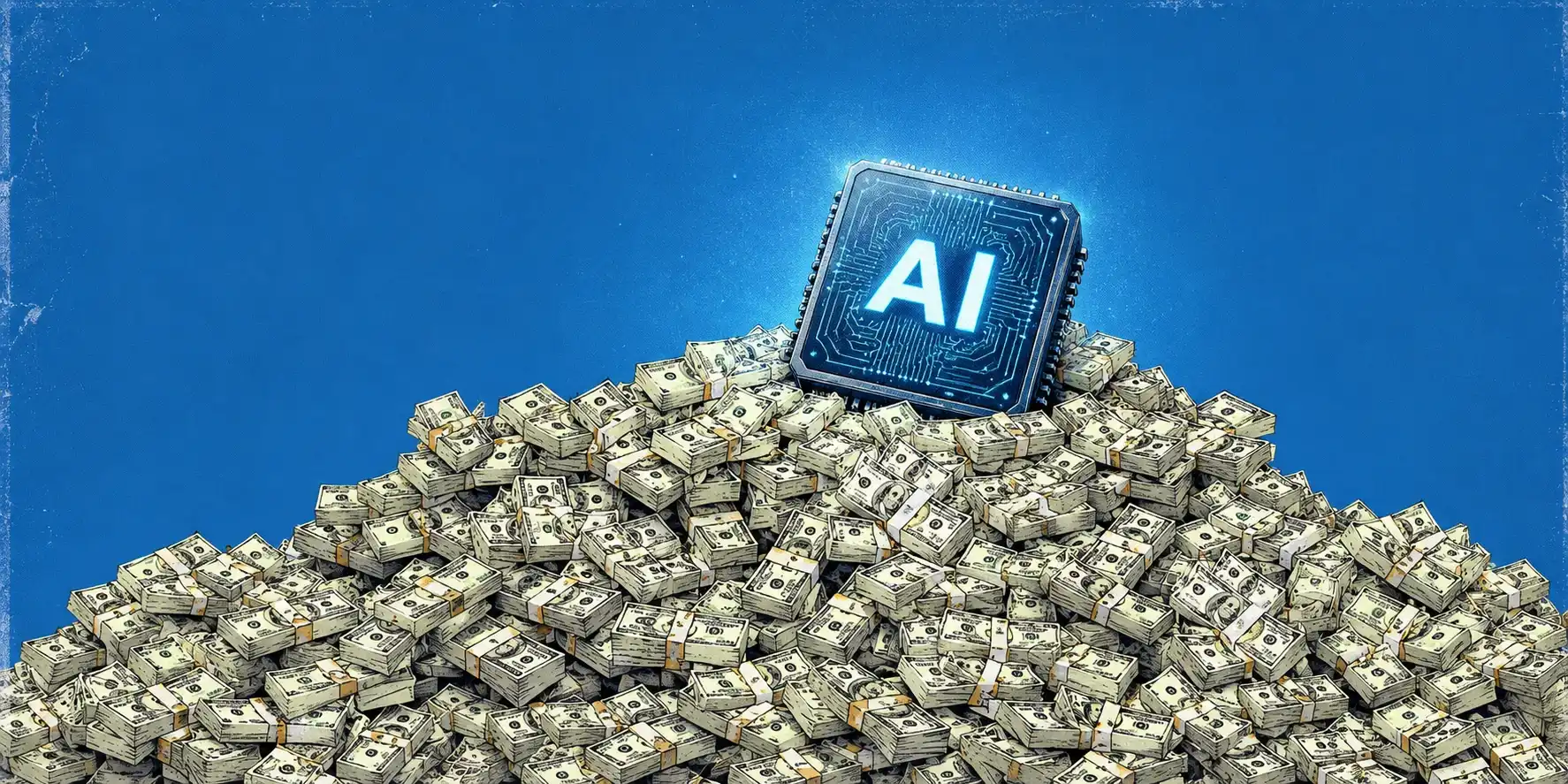
However, in contrast to the "efficiency and cost-cutting" narrative of the technology, the AI primary market is becoming increasingly expensive. Seed funding rounds are growing larger, early-stage valuations are continually rising, and some AI companies without mature products or revenue models are already able to secure capital that was once reserved for growth-stage enterprises.

AI has reduced some of the costs of starting a company, but it has simultaneously driven up the price of acquiring equity in promising AI firms.

Startup Costs Fall, Capital Bets Rise

AI tools are enabling some software, SaaS, and fintech startups to complete product development and early validation with less capital. A team of limited size can now accomplish work that previously required many more engineers, sales, and operational staff.

According to research data from equity management service provider Carta, the median team size for seed-stage startups in the US is currently just 4 people; the average employee count for Series B rounds has decreased from 53 in 2023 to 45, and Series D has dropped 29% from its peak to 131.

In terms of startup financing structures, AI is pushing the primary market towards polarization, with the fundraising market gradually showing a clear "barbell" structure.

On one hand, for lightweight startups that significantly reduce fixed costs by relying on AI tools, the initial capital required for product development and business validation is noticeably decreasing. On the other hand, a handful of startups with top-tier teams and technical backgrounds are experiencing a comprehensive increase in fundraising scale, securing far more capital and higher valuations than ordinary startups in their early stages.

Carta statistics show that in Q1 2026, approximately 3,000 startups in the US completed Pre-Seed funding, with a final estimated fundraising amount of about $2.9 billion, remaining roughly flat compared to past quarters. AI startups' share of this funding has already reached 50%, whereas this proportion was about 30% a few years ago.

In terms of capital distribution, mid-sized rounds between $1 million and $2.5 million have decreased from 24% in Q1 2023 to 18%, smaller rounds under $1 million are more common, while the share of large rounds over $2.5 million has remained stable.

Furthermore, valuations for top projects are widening the gap further. Among SAFE transactions with fundraising amounts exceeding $2.5 million tracked by Carta, the top 10% of startups by valuation now have valuation caps exceeding $100 million. In Q2 2026, the top 5% of seed round valuations tracked by Carta reached approximately $200 million, a 177% increase from $72.2 million in the same period of 2025.

AI is redefining the traditional concept of "early-stage funding," a change that has been particularly pronounced in recent months.

A group of core researchers and executives from top AI companies like Google and OpenAI have recently left to start their own ventures. While these projects are still in their very early stages, capital valuations have rapidly entered the range of hundreds of millions or even billions of dollars.

In early August, Jeff Dean, who worked at Google for nearly 27 years and served as Chief Scientist, along with several other key researchers from Google and DeepMind including Sanjay Ghemawat, Quoc Le, and Oriol Vinyals, left to found the AI scientific research company Discovery Loop.

At the time of its official establishment, the company hadn't even completed team assembly and office setup, but it had already secured support from institutions like Radical Ventures, Khosla Ventures, Lightspeed, and Kleiner Perkins, with Alphabet also participating as a founding investor. Subsequent reports indicated that Discovery Loop was in discussions for a funding round of approximately $10 billion, with a corresponding valuation of around $100 billion.

Former OpenAI Chief Product Officer Kevin Weil, after leaving this year, is preparing an AI science company whose name and product have not yet been disclosed. According to the latest report in August, this project is seeking about $150 million in funding, with a corresponding valuation of at least $750 million.

In April of this year, Ineffable Intelligence, founded by former DeepMind core reinforcement learning researcher David Silver, completed an $11 billion seed round at a $5.1 billion valuation, becoming one of the largest Seed financings in Europe.

In this era of AI entrepreneurship, capital is effectively "cashing out" the future potential of top-tier teams in one go.

Rising Valuations Increase VC's Cost of Ownership

In the past, product capabilities, user growth, and revenue were often key bases for gradual valuation increases. Today, for teams hailing from top labs like OpenAI and Google DeepMind, research track records, talent composition, and the potential to build a platform company in the future can themselves be capitalized on in the early stages of a company's founding.

Venture capital has a rather straightforward business model; its returns depend significantly on entry price and ownership stake. For early-stage funds, building a sufficiently large initial position when company valuations are still low and maintaining a corresponding equity share through subsequent funding rounds is a crucial foundation for achieving outsized returns.

However, in the current AI investment frenzy, the window to acquire equity in high-quality projects at low prices is rapidly closing.

The latest data released by Carta in July this year further shows that over the past six months, equity dilution percentages in US software company fundings continued to decline. The median dilution percentage for seed and Series A rounds was about 18% each, dropping to 12% for Series B, and falling below 10% for Series C. During the same period, the median seed round valuation reached $24.3 million, with Series A and B reaching $80 million and $191 million respectively.

In other words, while fundraising amounts and company valuations continue to rise, the equity share given up by founding teams has not increased proportionally. For VCs hoping to acquire or maintain a relatively high ownership percentage, the capital required to obtain the same equity share is rising significantly.

Suppose a startup has a pre-money valuation of $90 million. A VC investing $10 million could roughly secure a 10% stake. If the valuation for a company at the same stage rises to $490 million, obtaining a similar 10% stake would require an investment of approximately $50 million.

This also means that VCs need both the ability to get in and the capacity to keep up. This requires large VCs to possess two capabilities simultaneously: securing sufficient initial ownership in the early stages, while also reserving ample capital for follow-on investments as company valuations skyrocket.

This trend has become a consensus among all top VCs. In Accel's recently raised $3.5 billion, $1.35 billion was allocated to a global expansion fund, a key purpose of which is to support larger initial early-stage investments and rapid follow-ons. The $5 billion late-stage fund raised in April provides Accel with the capital to maintain investment capacity as portfolio companies enter the growth stage.

In January of this year, a16z completed a fundraising of over $15 billion in one go, with $6.75 billion earmarked for growth-stage investments and $1.7 billion specifically allocated to AI infrastructure.

B Capital subsequently closed a $500 million early-stage fund, doubling the size of its previous fund of the same type. Its management pointed out that with massive capital entering the early-stage market, valuations and deal sizes for some early-stage financings are increasingly resembling those of past growth stages.

Matthew Effect: Capital Further Concentrates on a Few Top AI Projects

Primary market capital is increasingly concentrating in a handful of top projects.

The latest data from Carta shows that in the first half of 2026, the companies it covers completed a total of $58.7 billion in venture funding, higher than the $56.5 billion in the same period last year. However, the divergence between different funding stages has significantly widened. Seed round funding dropped from $6.5 billion to $3.8 billion, Series B decreased from $13.5 billion to $10.4 billion, Series A remained roughly flat at $12.7 billion, while Series C and later stages grew from $23.9 billion to $31.8 billion.

Crunchbase statistics show that in Q2 2026, over 70% of global startup funding flowed to AI companies, a significant increase from less than 50% in the same period last year. During that quarter, 16 companies completed funding rounds exceeding $10 billion, totaling $108.6 billion and accounting for 53% of the quarter's total venture capital.

The capital attraction effect of leading companies is even more pronounced. In the first half of this year, OpenAI and Anthropic alone raised a combined $217 billion, constituting 43% of the total fundraising amount for global startups. This indicates that the current AI investment boom is not a diffusion of capital evenly across many startups, but rather an increasing concentration on a few foundational model companies and market-recognized top projects.

This concentration further intensifies the competition among large funds for these top projects.

If ultimately only a handful of AI companies can become global platforms, then a large fund's failure to enter the shareholder list of these companies could directly impact the return performance of the entire fund cycle. Compared to expanding the number of investments, an increasing number of institutions are opting to reduce investment targets and deploy larger amounts into a few high-conviction projects.

This has created a self-reinforcing mechanism: high-quality AI companies grow faster, prompting VCs to compete for entry earlier. Mutual competition drives up early-stage valuations, increasing the capital required to maintain ownership stakes. Subsequently, capital further concentrates on top projects, strengthening the advantage of large funds in follow-on rounds.

Ultimately, AI is not only widening the funding gap between startups but also reshaping the competitive landscape within the VC industry itself. Smaller-scale funds are particularly affected.

A $100 million fund could previously spread investments across dozens of seed projects. But if a single round for a top AI project reaches tens of millions of dollars, and investing institutions also need to reserve capital for subsequent rounds, the ability of small funds to participate in hot AI projects will significantly decline.

Large institutions, however, can cover a company's entire capital cycle through funds at different stages: early-stage funds establish positions, growth funds continue follow-ons, and late-stage funds further maintain ownership stakes. Accel raising $8.5 billion within four months is a typical microcosm of this trend.

High Valuations Are Pricing in Future Growth Expectations Early

However, the expansion of VC fundraising does not necessarily mean achieving returns will be easier. In fact, higher entry valuations impose greater demands on a company's future growth and exit scale.

If a startup receives investment at a $100 million valuation, growing to $1 billion brings a tenfold increase in valuation. But if a company's early-stage valuation is already $10 billion, achieving the same tenfold growth requires a final valuation of $100 billion.

Thinking Machines' first funding round already reached a $12 billion valuation; SSI's valuation rose to $32 billion in less than a year since its founding. These valuations reflect the scarcity of top AI teams, but also mean that a significant portion of future growth expectations has already been priced in.

The risk in the current AI primary market lies precisely here. If several platform companies emerge in the future with revenue and profit scales substantial enough to support multi-hundred-billion-dollar market caps, today's high valuations might still be digested. However, if most AI companies ultimately fail to build sufficiently strong technological and commercial moats, excessively high entry prices will directly compress the potential return space for investment firms.

For now, this investment model still appears healthy on paper. Carta data shows that some VC funds established in 2023 and 2024 currently exhibit better paper internal rate of return (IRR) performance than some older funds from 2017-2020. But a considerable portion of these returns comes from valuation mark-ups driven by subsequent funding rounds, rather than actual cash returns from IPOs or M&As. Today's ever-rising primary market valuations will ultimately need to be validated by future revenue growth and exit prices.

But for large VCs like Accel, the more immediate concern is not waiting for valuations to rationalize, but how to avoid missing the potential few winners that may emerge in this technological cycle.

This is also one of the reasons why large funds continue to expand. The growth and fundraising cycles of AI companies are visibly shortening. Once a project gains market recognition, its valuation can rapidly increase over consecutive funding rounds. For a VC hoping to acquire sufficient equity early on and maintain its stake through subsequent rounds, it needs to prepare capital reserves far exceeding those of the past.

Accel defines AI as a technological "super cycle" still in its early stages. Under the premise that this judgment holds, the $3.5 billion early-stage and expansion fund, along with the previously raised $5 billion in late-stage capital, essentially correspond to the same strategy: enter potential winners as early as possible, and reserve space for continuous follow-on investment as their valuations rise rapidly.

This constitutes the most apparent paradox in the current AI investment frenzy: AI reduces some costs of starting a business, but does not reduce the cost of investing in promising AI companies.

For VCs, what has truly become expensive is not just the capital needed to support a startup's growth, but the price required to acquire and maintain a sufficient ownership stake in a quality project within an increasingly shrinking window of opportunity.


Crypto di tendenza

Domande pertinenti

QAccording to the article, what is the main paradox in the current AI venture capital market?

AThe main paradox is that AI lowers the cost of starting and operating a company (e.g., through tools that reduce team size and development costs), yet simultaneously makes it more expensive for venture capitalists to acquire equity stakes in high-quality AI startups due to soaring valuations at very early stages.

QHow is the startup financing market structure changing according to Carta's data, as described in the text?

AThe financing market is moving towards a 'barbell' structure. There is a rise in small funding rounds below $1 million, a decrease in medium-sized rounds ($1-2.5M), while large rounds above $2.5 million remain stable. This shows a polarization where very lean startups need less capital, while elite AI startups secure massive funding from the start.

QWhy are ownership stakes becoming more expensive for VCs to obtain and maintain in AI startups?

AValuations are rising rapidly, especially for elite teams, while the percentage of equity dilution (the portion of the company founders give up) in early funding rounds is not increasing proportionally. This means VCs must invest significantly larger amounts of capital to secure or maintain the same level of ownership stake they would have gotten for less money previously.

QWhat self-reinforcing mechanism is concentrating capital in the AI sector, according to the article?

AThe mechanism is: 1) Elite AI startups grow faster, attracting VC competition earlier. 2) This competition drives up early-stage valuations. 3) High valuations require VCs to deploy more capital to maintain ownership, favoring large funds. 4) Capital then further concentrates on a few perceived 'winner' projects, which strengthens the advantage of large funds in subsequent funding rounds, creating a cycle.

QWhat is the core strategic reason behind Accel's rapid fundraising of $8.5 billion in four months, as implied in the article?

AThe core strategy is to ensure the firm can 'get in early' on potential AI winners and have the financial reserves to continue investing in subsequent, likely high-priced, funding rounds to maintain a meaningful ownership stake throughout the company's accelerated growth and valuation cycle.

Letture associate

$2 Trillion: Countdown to AI's Largest IPO in History

The countdown for the largest IPO in AI history, a potential $2 trillion listing for Anthropic, is underway for October. The staggering valuation, reportedly projected by several investors, contrasts with the company's own internal restraint on setting a public target. Founded five years ago by former OpenAI core members, Anthropic's growth has been meteoric. Annual recurring revenue (ARR) surged from ~$9B in late 2025 to $47B by May 2026, with Q2 2026 revenue of $11.5B marking a 14x year-over-year increase. Bank valuations are even based on internal 2028 revenue forecasts of $190-200B. A key growth driver is Claude Code, its AI coding assistant. Its ARR quintupled in five months to $2.5B by February 2026, now constituting nearly 20% of total revenue. Surveys indicate Anthropic commands roughly 40% of enterprise LLM spending, doubling OpenAI's share in programming-specific use. However, alongside this explosive growth, reports detail significant internal cultural strife. Critics describe a divisive "priesthood" of PhD executives, led by CEO Dario Amodei, who promote a "save humanity" narrative that some employees find cult-like and alienating. This has reportedly created a demoralized workforce and a covert "underground network" of dissent among engineers torn between lucrative pre-IPO equity and a toxic work environment. Anthropic now faces a pivotal paradox: pursuing its mission of "safe" AI requires immense capital for compute, yet that capital demands relentless commercial growth. As it approaches its historic IPO, the company must navigate intense regulatory scrutiny, soaring operational costs, and internal tensions—any of which could destabilize its post-listing trajectory, much like SpaceX's significant post-IPO stock drop. The stage is set for a defining moment in tech history.

marsbit41 min fa

$2 Trillion: Countdown to AI's Largest IPO in History

marsbit41 min fa

An Eight-Year Investment Takes a Sharp Turn: Why Did Ethereum Suddenly Abandon Poseidon?

On August 13, Ethereum researcher Justin Drake announced a significant shift in Ethereum's Layer-1 cryptographic roadmap: abandoning the SNARK-friendly hash function Poseidon in favor of traditional functions like SHA2 or BLAKE2. This decision ends eight years of research and investment, marking a major revision to the post-quantum security strategy. Poseidon, introduced in 2019, was highly efficient for zkRollups and zkVMs within SNARK circuits. However, its need for prolonged cryptanalysis and the pressing timeline for quantum resistance revealed limitations. Recent breakthroughs in SNARK design, specifically using binary fields, now enable traditional, battle-tested hash functions to perform as efficiently as Poseidon within SNARKs. Benchmarks show modern laptops can now verify over a million traditional hash calls per second. This change is partly driven by accelerated concerns over quantum computing threats. Reports warn that "Cryptographically Relevant Quantum Computers" could break current blockchain signatures like ECDSA by the early 2030s, risking trillions in assets. Ethereum's response focuses on hash-based post-quantum signature schemes, deemed more quantum-resistant than some lattice-based alternatives under pressure from AI cryptanalysis. Ethereum's updated post-quantum roadmap targets a production-ready "leanVM" for signature aggregation by 2027, with full deployment across consensus, execution, and data layers by 2028. The shift to mature hash functions like SHA2 reduces reliance on newer algorithms and aligns with the goal of using widely analyzed cryptographic primitives. Other major blockchains are also preparing. Solana's core teams have independently chosen the NIST-standardized Falcon signature scheme for its compact size. Starknet plans a phased migration, starting with replacing its Pedersen hash with BLAKE2. Ethereum's move signifies a strategic pivot towards proven security foundations for the quantum era.

marsbit2 h fa

An Eight-Year Investment Takes a Sharp Turn: Why Did Ethereum Suddenly Abandon Poseidon?

marsbit2 h fa

Programmers Worldwide Are Wasting Money on Anthropic! The Company Can't Stand It Anymore

Anthropic recently published guidelines to help developers using Claude Code reduce unnecessary token costs. The key recommendations include: 1) Clear (/clear) conversations after completing a task to avoid carrying irrelevant file reads and command outputs into the next task. 2) Set the model and reasoning effort level at the start of a session, as switching mid-session invalidates the prompt cache, requiring a full-price recalculation of the entire dialog history. 3) Attach files using @ references instead of typing paths manually to avoid extra tool calls and searches that bloat the context. 4) Add quiet flags to verbose commands (e.g., in CLAUDE.md) to minimize lengthy output in the dialog history. 5) Use /compact while the session cache is still warm (before breaks) to compress the dialog at one-tenth the cost. 6) Offload large-output tasks to a sub-agent, which runs in an isolated context and only returns conclusions, preventing intermediate outputs from polluting the main dialog. The article explains token pricing: input tokens (prefill) are processed in parallel, while output tokens (decode) are generated serially, making output tokens five times more expensive. Caching is crucial for savings—if a request's prefix (system prompt, CLAUDE.md, dialog history) matches the previous one byte-for-byte, reading it costs only 10% of the standard input price. However, cache invalidation occurs when changing models, effort levels, fast mode, compressing dialogs, after cache expiration, or when resuming old sessions. Dialog history also grows quadratically (O(n²)) as file contents and command outputs accumulate, increasing costs per round. Proactive context management—like isolating noisy tasks, using /rewind to trim unproductive turns, and task-based session clearing—is becoming an essential skill for cost-effective AI-assisted development.

marsbit4 h fa

Programmers Worldwide Are Wasting Money on Anthropic! The Company Can't Stand It Anymore

marsbit4 h fa

Pax Silica vs. WAICO: The US Wants to Prohibit Europe from Using Chinese Artificial Intelligence

The United States is preparing to demand that European and other partners abandon Chinese artificial intelligence initiatives, threatening exclusion from the American-led "Pax Silica" coalition, according to a leaked U.S. State Department document. This ultimatum forces signatories of the "AI Opportunity Statement" to choose between the Western technological ecosystem and alternative frameworks, with China not explicitly named but clearly targeted. Pax Silica is a U.S. strategy for AI and semiconductor hegemony, launched in late 2025. Its European presence expanded significantly in mid-2026. Concurrently, China, Russia, and 27 other nations established the World AI Cooperation Organization (WAICO) in July 2026 as an independent intergovernmental platform promoting AI governance based on UN principles. This situation creates a difficult choice, especially for European nations balancing strategic autonomy with dependence on U.S. tech and security. It also pressures Global South countries with pragmatic ties to both Washington and Beijing. The formation of competing blocks risks fragmenting the global tech landscape, forcing companies to split supply chains, increasing costs, and potentially leading to incompatible standards and protocols. The era of open globalization in AI may be ending, replaced by geopolitical confrontation where technological sovereignty trumps economic efficiency. The decisions made will shape the global digital economy for decades.

cryptonews.ru6 h fa

Pax Silica vs. WAICO: The US Wants to Prohibit Europe from Using Chinese Artificial Intelligence

cryptonews.ru6 h fa

Trading

Spot

Articoli Popolari

Cosa è GROK AI

Grok AI: Rivoluzionare la Tecnologia Conversazionale nell'Era Web3 Introduzione Nel panorama in rapida evoluzione dell'intelligenza artificiale, Grok AI si distingue come un progetto notevole che collega i domini della tecnologia avanzata e dell'interazione con l'utente. Sviluppato da xAI, un'azienda guidata dal rinomato imprenditore Elon Musk, Grok AI cerca di ridefinire il modo in cui interagiamo con l'intelligenza artificiale. Mentre il movimento Web3 continua a prosperare, Grok AI mira a sfruttare il potere dell'IA conversazionale per rispondere a query complesse, offrendo agli utenti un'esperienza che è non solo informativa ma anche divertente. Cos'è Grok AI? Grok AI è un sofisticato chatbot di intelligenza artificiale conversazionale progettato per interagire dinamicamente con gli utenti. A differenza di molti sistemi di intelligenza artificiale tradizionali, Grok AI abbraccia un'ampia gamma di domande, comprese quelle tipicamente considerate inappropriate o al di fuori delle risposte standard. Gli obiettivi principali del progetto includono: Ragionamento Affidabile: Grok AI enfatizza il ragionamento di buon senso per fornire risposte logiche basate sulla comprensione contestuale. Supervisione Scalabile: L'integrazione dell'assistenza degli strumenti garantisce che le interazioni degli utenti siano sia monitorate che ottimizzate per la qualità. Verifica Formale: La sicurezza è fondamentale; Grok AI incorpora metodi di verifica formale per migliorare l'affidabilità delle sue uscite. Comprensione del Lungo Contesto: Il modello di IA eccelle nel trattenere e richiamare una vasta storia di conversazione, facilitando discussioni significative e consapevoli del contesto. Robustezza Adversariale: Concentrandosi sul miglioramento delle sue difese contro input manipolati o malevoli, Grok AI mira a mantenere l'integrità delle interazioni degli utenti. In sostanza, Grok AI non è solo un dispositivo di recupero informazioni; è un partner conversazionale immersivo che incoraggia un dialogo dinamico. Creatore di Grok AI Il cervello dietro Grok AI non è altri che Elon Musk, un individuo sinonimo di innovazione in vari campi, tra cui automotive, viaggi spaziali e tecnologia. Sotto l'egida di xAI, un'azienda focalizzata sull'avanzamento della tecnologia AI in modi benefici, la visione di Musk mira a rimodellare la comprensione delle interazioni con l'IA. La leadership e l'etica fondamentale sono profondamente influenzate dall'impegno di Musk nel superare i confini tecnologici. Investitori di Grok AI Sebbene i dettagli specifici riguardanti gli investitori che sostengono Grok AI rimangano limitati, è pubblicamente riconosciuto che xAI, l'incubatore del progetto, è fondato e supportato principalmente dallo stesso Elon Musk. Le precedenti imprese e partecipazioni di Musk forniscono un robusto sostegno, rafforzando ulteriormente la credibilità e il potenziale di crescita di Grok AI. Tuttavia, al momento, le informazioni riguardanti ulteriori fondazioni di investimento o organizzazioni che supportano Grok AI non sono facilmente accessibili, segnando un'area per potenziali esplorazioni future. Come Funziona Grok AI? Le meccaniche operative di Grok AI sono innovative quanto il suo framework concettuale. Il progetto integra diverse tecnologie all'avanguardia che facilitano le sue funzionalità uniche: Infrastruttura Robusta: Grok AI è costruito utilizzando Kubernetes per l'orchestrazione dei container, Rust per prestazioni e sicurezza, e JAX per il calcolo numerico ad alte prestazioni. Questo trio garantisce che il chatbot operi in modo efficiente, si scaldi efficacemente e serva gli utenti prontamente. Accesso alla Conoscenza in Tempo Reale: Una delle caratteristiche distintive di Grok AI è la sua capacità di attingere a dati in tempo reale attraverso la piattaforma X—precedentemente nota come Twitter. Questa capacità consente all'IA di accedere alle informazioni più recenti, permettendole di fornire risposte e raccomandazioni tempestive che altri modelli di IA potrebbero perdere. Due Modalità di Interazione: Grok AI offre agli utenti la scelta tra “Modalità Divertente” e “Modalità Normale”. La Modalità Divertente consente uno stile di interazione più giocoso e umoristico, mentre la Modalità Normale si concentra sulla fornitura di risposte precise e accurate. Questa versatilità garantisce un'esperienza su misura che soddisfa varie preferenze degli utenti. In sostanza, Grok AI sposa prestazioni con coinvolgimento, creando un'esperienza che è sia arricchente che divertente. Cronologia di Grok AI Il viaggio di Grok AI è segnato da traguardi fondamentali che riflettono le sue fasi di sviluppo e distribuzione: Sviluppo Iniziale: La fase fondamentale di Grok AI si è svolta in circa due mesi, durante i quali sono stati condotti l'addestramento iniziale e il perfezionamento del modello. Rilascio Beta di Grok-2: In un significativo avanzamento, è stata annunciata la beta di Grok-2. Questo rilascio ha introdotto due versioni del chatbot—Grok-2 e Grok-2 mini—ognuna dotata delle capacità per chattare, programmare e ragionare. Accesso Pubblico: Dopo lo sviluppo beta, Grok AI è diventato disponibile per gli utenti della piattaforma X. Coloro che hanno account verificati tramite un numero di telefono e attivi per almeno sette giorni possono accedere a una versione limitata, rendendo la tecnologia disponibile a un pubblico più ampio. Questa cronologia racchiude la crescita sistematica di Grok AI dall'inizio all'impegno pubblico, enfatizzando il suo impegno per il miglioramento continuo e l'interazione con gli utenti. Caratteristiche Chiave di Grok AI Grok AI comprende diverse caratteristiche chiave che contribuiscono alla sua identità innovativa: Integrazione della Conoscenza in Tempo Reale: L'accesso a informazioni attuali e rilevanti differenzia Grok AI da molti modelli statici, consentendo un'esperienza utente coinvolgente e accurata. Stili di Interazione Versatili: Offrendo modalità di interazione distinte, Grok AI soddisfa varie preferenze degli utenti, invitando alla creatività e alla personalizzazione nella conversazione con l'IA. Avanzata Struttura Tecnologica: L'utilizzo di Kubernetes, Rust e JAX fornisce al progetto un solido framework per garantire affidabilità e prestazioni ottimali. Considerazione del Discorso Etico: L'inclusione di una funzione di generazione di immagini mette in mostra lo spirito innovativo del progetto. Tuttavia, solleva anche considerazioni etiche riguardanti il copyright e la rappresentazione rispettosa di figure riconoscibili—una discussione in corso all'interno della comunità AI. Conclusione Come entità pionieristica nel campo dell'IA conversazionale, Grok AI incarna il potenziale per esperienze utente trasformative nell'era digitale. Sviluppato da xAI e guidato dall'approccio visionario di Elon Musk, Grok AI integra conoscenze in tempo reale con capacità di interazione avanzate. Si sforza di spingere i confini di ciò che l'intelligenza artificiale può realizzare, mantenendo un focus su considerazioni etiche e sicurezza degli utenti. Grok AI non solo incarna il progresso tecnologico, ma rappresenta anche un nuovo paradigma conversazionale nel panorama Web3, promettendo di coinvolgere gli utenti con sia conoscenze esperte che interazioni giocose. Man mano che il progetto continua a evolversi, si erge come testimonianza di ciò che l'incrocio tra tecnologia, creatività e interazione simile a quella umana può realizzare.

676 Totale visualizzazioniPubblicato il 2024.12.26Aggiornato il 2024.12.26

Cosa è GROK AI

Cosa è ERC AI

Euruka Tech: Una Panoramica di $erc ai e delle sue Ambizioni in Web3 Introduzione Nel panorama in rapida evoluzione della tecnologia blockchain e delle applicazioni decentralizzate, nuovi progetti emergono frequentemente, ciascuno con obiettivi e metodologie uniche. Uno di questi progetti è Euruka Tech, che opera nel vasto dominio delle criptovalute e del Web3. L'obiettivo principale di Euruka Tech, in particolare del suo token $erc ai, è presentare soluzioni innovative progettate per sfruttare le crescenti capacità della tecnologia decentralizzata. Questo articolo si propone di fornire una panoramica completa di Euruka Tech, un'esplorazione dei suoi obiettivi, della funzionalità, dell'identità del suo creatore, dei potenziali investitori e della sua importanza nel contesto più ampio del Web3. Cos'è Euruka Tech, $erc ai? Euruka Tech è caratterizzato come un progetto che sfrutta gli strumenti e le funzionalità offerte dall'ambiente Web3, concentrandosi sull'integrazione dell'intelligenza artificiale nelle sue operazioni. Sebbene i dettagli specifici sul framework del progetto siano piuttosto sfuggenti, è progettato per migliorare l'engagement degli utenti e automatizzare i processi nello spazio crypto. Il progetto mira a creare un ecosistema decentralizzato che non solo faciliti le transazioni, ma incorpori anche funzionalità predittive attraverso l'intelligenza artificiale, da cui il nome del suo token, $erc ai. L'obiettivo è fornire una piattaforma intuitiva che faciliti interazioni più intelligenti e un'elaborazione delle transazioni più efficiente all'interno della crescente sfera del Web3. Chi è il Creatore di Euruka Tech, $erc ai? Attualmente, le informazioni riguardanti il creatore o il team fondatore di Euruka Tech rimangono non specificate e piuttosto opache. Questa assenza di dati solleva preoccupazioni, poiché la conoscenza del background del team è spesso essenziale per stabilire credibilità nel settore blockchain. Pertanto, abbiamo classificato queste informazioni come sconosciute fino a quando dettagli concreti non saranno resi disponibili nel dominio pubblico. Chi sono gli Investitori di Euruka Tech, $erc ai? Allo stesso modo, l'identificazione degli investitori o delle organizzazioni di supporto per il progetto Euruka Tech non è prontamente fornita attraverso la ricerca disponibile. Un aspetto cruciale per i potenziali stakeholder o utenti che considerano di impegnarsi con Euruka Tech è la garanzia che deriva da partnership finanziarie consolidate o dal supporto di società di investimento rispettabili. Senza divulgazioni sulle affiliazioni di investimento, è difficile trarre conclusioni complete sulla sicurezza finanziaria o sulla longevità del progetto. In linea con le informazioni trovate, anche questa sezione rimane allo stato di sconosciuto. Come funziona Euruka Tech, $erc ai? Nonostante la mancanza di specifiche tecniche dettagliate per Euruka Tech, è essenziale considerare le sue ambizioni innovative. Il progetto cerca di sfruttare la potenza computazionale dell'intelligenza artificiale per automatizzare e migliorare l'esperienza dell'utente all'interno dell'ambiente delle criptovalute. Integrando l'IA con la tecnologia blockchain, Euruka Tech mira a fornire funzionalità come operazioni automatizzate, valutazioni del rischio e interfacce utente personalizzate. L'essenza innovativa di Euruka Tech risiede nel suo obiettivo di creare una connessione fluida tra gli utenti e le vaste possibilità presentate dalle reti decentralizzate. Attraverso l'utilizzo di algoritmi di apprendimento automatico e IA, mira a ridurre le sfide degli utenti alle prime armi e semplificare le esperienze transazionali all'interno del framework Web3. Questa simbiosi tra IA e blockchain sottolinea l'importanza del token $erc ai, fungendo da ponte tra le interfacce utente tradizionali e le avanzate capacità delle tecnologie decentralizzate. Cronologia di Euruka Tech, $erc ai Sfortunatamente, a causa delle limitate informazioni disponibili riguardo a Euruka Tech, non siamo in grado di presentare una cronologia dettagliata dei principali sviluppi o traguardi nel percorso del progetto. Questa cronologia, tipicamente preziosa per tracciare l'evoluzione di un progetto e comprendere la sua traiettoria di crescita, non è attualmente disponibile. Man mano che le informazioni su eventi notevoli, partnership o aggiunte funzionali diventano evidenti, gli aggiornamenti miglioreranno sicuramente la visibilità di Euruka Tech nella sfera crypto. Chiarimento su Altri Progetti “Eureka” È importante sottolineare che più progetti e aziende condividono una nomenclatura simile con “Eureka.” La ricerca ha identificato iniziative come un agente IA della NVIDIA Research, che si concentra sull'insegnamento ai robot di compiti complessi utilizzando metodi generativi, così come Eureka Labs ed Eureka AI, che migliorano l'esperienza utente nell'istruzione e nell'analisi del servizio clienti, rispettivamente. Tuttavia, questi progetti sono distinti da Euruka Tech e non dovrebbero essere confusi con i suoi obiettivi o funzionalità. Conclusione Euruka Tech, insieme al suo token $erc ai, rappresenta un attore promettente ma attualmente oscuro nel panorama del Web3. Sebbene i dettagli sul suo creatore e sugli investitori rimangano non divulgati, l'ambizione centrale di combinare intelligenza artificiale e tecnologia blockchain si erge come un punto focale di interesse. Gli approcci unici del progetto nel promuovere l'engagement degli utenti attraverso l'automazione avanzata potrebbero distinguerlo mentre l'ecosistema Web3 progredisce. Con l'evoluzione continua del mercato crypto, gli stakeholder dovrebbero tenere d'occhio gli sviluppi riguardanti Euruka Tech, poiché lo sviluppo di innovazioni documentate, partnership o una roadmap definita potrebbe presentare opportunità significative nel prossimo futuro. Così com'è, attendiamo ulteriori approfondimenti sostanziali che potrebbero svelare il potenziale di Euruka Tech e la sua posizione nel competitivo panorama crypto.

711 Totale visualizzazioniPubblicato il 2025.01.02Aggiornato il 2025.01.02

Cosa è ERC AI

Cosa è DUOLINGO AI

DUOLINGO AI: Integrare l'apprendimento delle lingue con Web3 e innovazione AI In un'era in cui la tecnologia rimodella l'istruzione, l'integrazione dell'intelligenza artificiale (AI) e delle reti blockchain annuncia una nuova frontiera per l'apprendimento delle lingue. Entra in scena DUOLINGO AI e la sua criptovaluta associata, $DUOLINGO AI. Questo progetto aspira a fondere la potenza educativa delle principali piattaforme di apprendimento delle lingue con i benefici della tecnologia decentralizzata Web3. Questo articolo esplora gli aspetti chiave di DUOLINGO AI, esaminando i suoi obiettivi, il framework tecnologico, lo sviluppo storico e il potenziale futuro, mantenendo chiarezza tra la risorsa educativa originale e questa iniziativa indipendente di criptovaluta. Panoramica di DUOLINGO AI Alla sua base, DUOLINGO AI cerca di stabilire un ambiente decentralizzato in cui gli studenti possono guadagnare ricompense crittografiche per il raggiungimento di traguardi educativi nella competenza linguistica. Applicando smart contracts, il progetto mira ad automatizzare i processi di verifica delle competenze e le allocazioni di token, aderendo ai principi di Web3 che enfatizzano la trasparenza e la proprietà da parte degli utenti. Il modello si discosta dagli approcci tradizionali all'acquisizione linguistica, facendo forte affidamento su una struttura di governance guidata dalla comunità, che consente ai detentori di token di suggerire miglioramenti ai contenuti dei corsi e alle distribuzioni delle ricompense. Alcuni degli obiettivi notevoli di DUOLINGO AI includono: Apprendimento Gamificato: Il progetto integra traguardi blockchain e token non fungibili (NFT) per rappresentare i livelli di competenza linguistica, promuovendo la motivazione attraverso ricompense digitali coinvolgenti. Creazione di Contenuti Decentralizzati: Apre opportunità per educatori e appassionati di lingue di contribuire con i propri corsi, facilitando un modello di condivisione dei ricavi che beneficia tutti i collaboratori. Personalizzazione Guidata dall'AI: Utilizzando modelli avanzati di machine learning, DUOLINGO AI personalizza le lezioni per adattarsi ai progressi individuali, simile alle funzionalità adattive presenti nelle piattaforme consolidate. Creatori del Progetto e Governance A partire da aprile 2025, il team dietro $DUOLINGO AI rimane pseudonimo, una pratica comune nel panorama decentralizzato delle criptovalute. Questa anonimato è inteso a promuovere la crescita collettiva e il coinvolgimento degli stakeholder piuttosto che concentrarsi su sviluppatori individuali. Lo smart contract distribuito sulla blockchain di Solana annota l'indirizzo del wallet dello sviluppatore, che segna l'impegno verso la trasparenza riguardo alle transazioni, nonostante l'identità dei creatori sia sconosciuta. Secondo la sua roadmap, DUOLINGO AI mira a evolversi in un'Organizzazione Autonoma Decentralizzata (DAO). Questa struttura di governance consente ai detentori di token di votare su questioni critiche come l'implementazione di funzionalità e le allocazioni del tesoro. Questo modello si allinea con l'etica dell'empowerment della comunità presente in varie applicazioni decentralizzate, enfatizzando l'importanza del processo decisionale collettivo. Investitori e Partnership Strategiche Attualmente, non ci sono investitori istituzionali o capitalisti di rischio identificabili pubblicamente legati a $DUOLINGO AI. Invece, la liquidità del progetto proviene principalmente da scambi decentralizzati (DEX), segnando un netto contrasto con le strategie di finanziamento delle aziende tradizionali di tecnologia educativa. Questo modello di base indica un approccio guidato dalla comunità, riflettendo l'impegno del progetto verso la decentralizzazione. Nel suo whitepaper, DUOLINGO AI menziona la formazione di collaborazioni con “piattaforme educative blockchain” non specificate, mirate ad arricchire la sua offerta di corsi. Sebbene partnership specifiche non siano ancora state divulgate, questi sforzi collaborativi suggeriscono una strategia per mescolare innovazione blockchain con iniziative educative, ampliando l'accesso e il coinvolgimento degli utenti attraverso diverse vie di apprendimento. Architettura Tecnologica Integrazione AI DUOLINGO AI incorpora due componenti principali guidate dall'AI per migliorare la sua offerta educativa: Motore di Apprendimento Adattivo: Questo sofisticato motore apprende dalle interazioni degli utenti, simile ai modelli proprietari delle principali piattaforme educative. Regola dinamicamente la difficoltà delle lezioni per affrontare le sfide specifiche degli studenti, rinforzando le aree deboli attraverso esercizi mirati. Agenti Conversazionali: Utilizzando chatbot alimentati da GPT-4, DUOLINGO AI offre una piattaforma per gli utenti per impegnarsi in conversazioni simulate, promuovendo un'esperienza di apprendimento linguistico più interattiva e pratica. Infrastruttura Blockchain Costruito sulla blockchain di Solana, $DUOLINGO AI utilizza un framework tecnologico completo che include: Smart Contracts per la Verifica delle Competenze: Questa funzionalità assegna automaticamente token agli utenti che superano con successo i test di competenza, rinforzando la struttura di incentivi per risultati di apprendimento genuini. Badge NFT: Questi token digitali significano vari traguardi che gli studenti raggiungono, come completare una sezione del loro corso o padroneggiare competenze specifiche, consentendo loro di scambiare o mostrare digitalmente i loro successi. Governance DAO: I membri della comunità dotati di token possono partecipare alla governance votando su proposte chiave, facilitando una cultura partecipativa che incoraggia l'innovazione nell'offerta di corsi e nelle funzionalità della piattaforma. Cronologia Storica 2022–2023: Concettualizzazione I lavori per DUOLINGO AI iniziano con la creazione di un whitepaper, evidenziando la sinergia tra i progressi dell'AI nell'apprendimento delle lingue e il potenziale decentralizzato della tecnologia blockchain. 2024: Lancio Beta Un lancio beta limitato introduce offerte in lingue popolari, premiando i primi utenti con incentivi in token come parte della strategia di coinvolgimento della comunità del progetto. 2025: Transizione DAO Ad aprile, avviene un lancio completo della mainnet con la circolazione di token, stimolando discussioni nella comunità riguardo a possibili espansioni nelle lingue asiatiche e ad altri sviluppi dei corsi. Sfide e Direzioni Future Ostacoli Tecnici Nonostante i suoi obiettivi ambiziosi, DUOLINGO AI affronta sfide significative. La scalabilità rimane una preoccupazione costante, in particolare nel bilanciare i costi associati all'elaborazione dell'AI e nel mantenere una rete decentralizzata reattiva. Inoltre, garantire la creazione e la moderazione di contenuti di qualità in un'offerta decentralizzata presenta complessità nel mantenere standard educativi. Opportunità Strategiche Guardando al futuro, DUOLINGO AI ha il potenziale per sfruttare partnership di micro-credentialing con istituzioni accademiche, fornendo validazioni verificate dalla blockchain delle competenze linguistiche. Inoltre, l'espansione cross-chain potrebbe consentire al progetto di attingere a basi utenti più ampie e a ulteriori ecosistemi blockchain, migliorando la sua interoperabilità e portata. Conclusione DUOLINGO AI rappresenta una fusione innovativa di intelligenza artificiale e tecnologia blockchain, presentando un'alternativa focalizzata sulla comunità ai sistemi tradizionali di apprendimento delle lingue. Sebbene il suo sviluppo pseudonimo e il modello economico emergente comportino alcuni rischi, l'impegno del progetto verso l'apprendimento gamificato, l'istruzione personalizzata e la governance decentralizzata illumina un percorso per la tecnologia educativa nel regno di Web3. Man mano che l'AI continua a progredire e l'ecosistema blockchain evolve, iniziative come DUOLINGO AI potrebbero ridefinire il modo in cui gli utenti interagiscono con l'istruzione linguistica, potenziando le comunità e premiando il coinvolgimento attraverso meccanismi di apprendimento innovativi.

660 Totale visualizzazioniPubblicato il 2025.04.11Aggiornato il 2025.04.11

Cosa è DUOLINGO AI

Discussioni

Benvenuto nella Community HTX. Qui puoi rimanere informato sugli ultimi sviluppi della piattaforma e accedere ad approfondimenti esperti sul mercato. Le opinioni degli utenti sul prezzo di AI AI sono presentate come di seguito.

活动图片