An Eight-Year Investment Takes a Sharp Turn: Why Did Ethereum Suddenly Abandon Poseidon?

marsbitPubblicato 2026-08-16Pubblicato ultima volta 2026-08-16

Introduzione

On August 13, Ethereum researcher Justin Drake announced a significant shift in Ethereum's Layer-1 cryptographic roadmap: abandoning the SNARK-friendly hash function Poseidon in favor of traditional functions like SHA2 or BLAKE2. This decision ends eight years of research and investment, marking a major revision to the post-quantum security strategy. Poseidon, introduced in 2019, was highly efficient for zkRollups and zkVMs within SNARK circuits. However, its need for prolonged cryptanalysis and the pressing timeline for quantum resistance revealed limitations. Recent breakthroughs in SNARK design, specifically using binary fields, now enable traditional, battle-tested hash functions to perform as efficiently as Poseidon within SNARKs. Benchmarks show modern laptops can now verify over a million traditional hash calls per second. This change is partly driven by accelerated concerns over quantum computing threats. Reports warn that "Cryptographically Relevant Quantum Computers" could break current blockchain signatures like ECDSA by the early 2030s, risking trillions in assets. Ethereum's response focuses on hash-based post-quantum signature schemes, deemed more quantum-resistant than some lattice-based alternatives under pressure from AI cryptanalysis. Ethereum's updated post-quantum roadmap targets a production-ready "leanVM" for signature aggregation by 2027, with full deployment across consensus, execution, and data layers by 2028. The shift to mature hash functions lik...

On August 13th, Ethereum researcher Justin Drake posted on X, stating that the Ethereum Foundation has decided to abandon the SNARK-friendly hash algorithm Poseidon at the L1 layer in favor of traditional hash functions like SHA2 or BLAKE2.

This decision stems from eight years of research, tens of millions of dollars in investment, and a major revision to the post-quantum cryptography roadmap.

Since its introduction in 2019, Poseidon has been considered the ideal hash scheme for applications like zkRollups and zkVMs. Its structure makes it cheaper and more efficient in SNARK circuits compared to traditional hash functions based on binary operations. However, when post-quantum security became a hard requirement for Ethereum, Poseidon's limitations began to surface.

Justin Drake stated that this shift is thanks to breakthrough progress in SNARK design, specifically through a "binary field" operational approach. This makes the performance of traditional hash functions in SNARK circuits comparable to that of Poseidon, which was previously optimized for SNARKs. A single laptop can now verify about 1 million traditional hash invocations per second.

The article notes that since its 2019 launch, Poseidon has been a mainstream SNARK-friendly hash scheme, providing security for applications like zkRollups and zkVMs. Justin Drake mentioned that plans indicate a production-ready leanVM is expected by 2027, with deployment for the consensus, data, and execution layers targeted for 2028. The Ethereum Foundation's post-quantum team is also accelerating research related to binary fields.

Why Now?

Traditional hashes have long struggled to be incorporated into SNARKs, primarily due to computational language differences. SHA2, BLAKE2s, and Keccak heavily use Boolean operations like XOR and bit shifts. Traditional SNARKs typically operate over large prime fields, simulating each bit operation at a high constraint cost. Poseidon was designed directly around prime field arithmetic, achieving higher proving speed with fewer constraints at the cost of a shorter algorithm history, requiring ongoing cryptanalysis.

The binary field shifts the underlying mathematics to the smallest prime field containing only 0 and 1, using binary extension fields to handle larger data. Bit operations can thus enter the proof system directly. SNARKs are now adapting to traditional hashes, shifting the technical focus from designing SNARK-friendly hashes to designing hash-friendly SNARKs.

Binius, proposed by Jim Posen and Benjamin Diamond in 2023, demonstrated a path for SNARKs using binary tower fields. The Flock paper by Benedikt Bünz, Ron Rothblum, and William Wang was uploaded to arXiv on July 29, 2026. Its M4 Max benchmark showed single-core performance of 82,000 BLAKE3 compressions, 42,000 SHA-256 compressions, and 30,000 Keccak permutations per second. The 10-core BLAKE3 throughput exceeded 660,000 operations.

Drake noted that a laptop can now prove about 1 million traditional hash invocations per second, with an overhead roughly 100 times that of native CPU Boolean computation. SNARK.fast recently achieved 1.8 million BLAKE3 operations per second on an M3 Max.

leanVM in 2027, Three-Layer Deployment in 2028

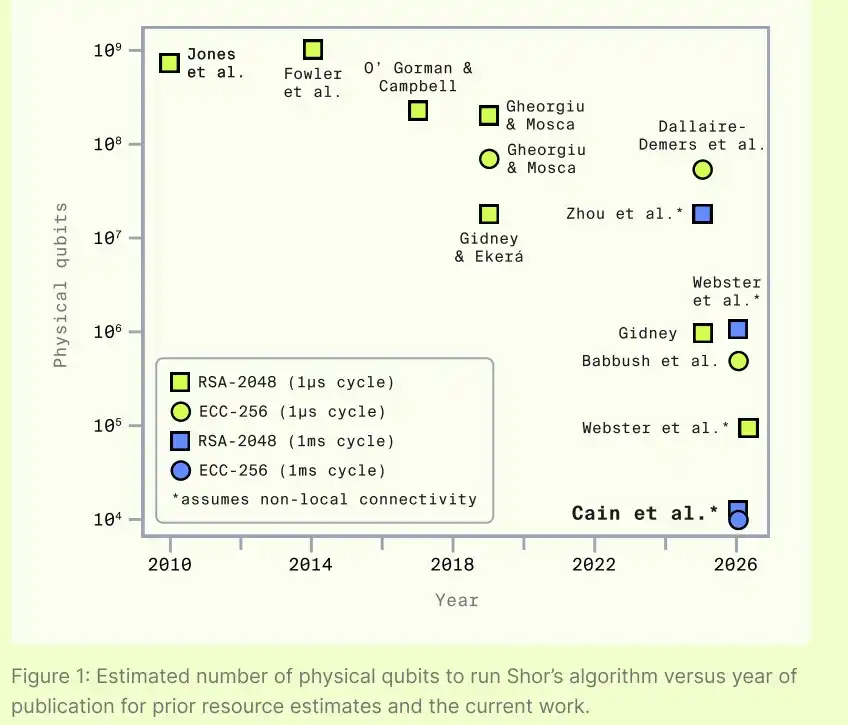
Another key reason for abandoning Poseidon is the accelerating timeline for post-quantum security. The report "The Quantum Threat to Blockchains - 2026 Report" by Project Eleven points out that the rapid development of quantum computers poses a serious threat to blockchain security. Once a "cryptographically relevant quantum computer" (CRQC) emerges, Shor's algorithm could quickly break asymmetric encryption like ECDSA (used by Bitcoin and most public chains) and RSA. Q-Day (Quantum Decryption Day) is projected to arrive between 2030 and 2033, potentially putting trillions of dollars in on-chain assets at risk.

Since blockchain public keys are long-lived and static, and rollbacks are impossible, migration is extremely difficult. The report recommends immediately initiating Post-Quantum Cryptography (PQC) migration, including quantum-resistant signature schemes based on lattices and hashes, and transitioning gradually through hybrid schemes to avoid the full impact of the quantum threat.
Justin Drake warned that the increasing capabilities of AI in cryptanalysis have already impacted lattice-based scheme HAWK and isogeny-based scheme SQIsign. This has forced the Ethereum Foundation to place its bets on hash-based schemes, which are considered more resistant to quantum attacks.

Previously, Ethereum announced its post-quantum roadmap, including deploying a production-ready leanVM in 2027 and completing deployment on the consensus, execution, and data availability layers by 2028. leanVM is a minimalistic zero-knowledge virtual machine specifically for post-quantum signature aggregation, seen as the core component of the entire strategy.

In March 2026, the Ethereum Foundation launched pq.ethereum.org as a post-quantum security resource center. Over 10 client teams have begun running weekly post-quantum interoperability devnets. The Foundation also established a $1 million Poseidon Prize and an equal Proximity Prize to advance post-quantum cryptography research. Vitalik Buterin himself has repeatedly emphasized that post-quantum security is a necessary condition for Ethereum's "walkaway test"—Ethereum cannot "ossify" unless it achieves quantum security.

The switch in hash functions does not alter the overall structure of Ethereum's post-quantum roadmap. The BLS signatures currently used by validators rely on elliptic curves. Future schemes will still be based on hash signatures like leanXMSS, with leanVM compressing a large number of signatures into a single small proof per block. A comparison previously provided on Ethereum's official page shows that a leanXMSS signature is about 3000 bytes, while a BLS signature is only 96 bytes. leanVM aims for a data compression target of about 250x.

SHA2 or BLAKE2s have longer histories of public analysis, allowing the EF to reduce the time spent waiting for Poseidon parameters to undergo years of cryptanalysis. Drake's suggested roadmap points to a production-ready leanVM in 2027 and deployment on the consensus, data, and execution layers in 2028.

Competition: Solana Chooses Falcon

Ethereum is not the only major public chain preparing for the post-quantum era. The Solana Foundation released its post-quantum security roadmap in April 2026. Its core developer teams, Anza and Jump Crypto's Firedancer, independently researched and converged on the same post-quantum signature scheme: Falcon.

Falcon is one of the NIST-standardized post-quantum signature schemes. Its signatures are compact, making it suitable for high-throughput blockchain environments like Solana.

The two major validator client development teams, Anza and Firedancer, after independent research, both selected the post-quantum digital signature scheme Falcon. They have publicly shared preliminary implementation code on GitHub. The current roadmap involves three steps: continuously evaluating Falcon and alternatives; adopting a post-quantum scheme for new wallets when the quantum threat materializes; and finally, migrating all existing wallets. Additionally, Blueshift's Solana Winternitz Vault has been operating within the ecosystem for over two years and was cited earlier this year as an industry-leading case in a Google Quantum AI whitepaper.

The Solana Foundation stated that a material threat from quantum computing is still years away, so immediate migration is not necessary. However, research, infrastructure, and ecosystem coordination are ready, allowing for a rapid start when the time comes. It is expected that this will not significantly impact network performance.

Starknet is currently the closest reference point to the EF's new direction. StarkWare's roadmap, announced on June 30th, is divided into three phases. The first phase will replace the Pedersen hash algorithm with BLAKE2 for state commitments, contract addresses, and network configurations, while also introducing post-quantum consensus signatures like Falcon-512. The second phase focuses on migration tools for traditional contracts. The final phase addresses remaining external dependencies still tied to Ethereum, including bridge system calls and blob data availability. The third phase depends on Ethereum's own migration path.

Compared to other public chains, Ethereum has chosen a path of "establishing standards first, then implementing code." Abandoning Poseidon in favor of SHA2/BLAKE2 is essentially a choice for more mature, widely-vetted cryptographic primitives in the post-quantum era.


Crypto di tendenza

Domande pertinenti

QWhy did the Ethereum Foundation decide to abandon the Poseidon hash algorithm after eight years of investment and research?

AThe Ethereum Foundation decided to abandon the Poseidon hash algorithm at the L1 layer primarily due to the evolving requirements for post-quantum security. While Poseidon was SNARK-friendly and efficient for applications like zkRollups, new SNARK design breakthroughs using binary fields have made traditional hash functions like SHA2 or BLAKE2 perform comparably well in SNARK circuits. Additionally, these traditional functions have a longer history of public cryptographic analysis, offering greater security assurance in the face of the quantum computing threat and advanced AI cryptanalysis.

QWhat technological breakthrough enabled traditional hash functions to become viable for use in SNARK circuits, challenging Poseidon's advantage?

AThe key breakthrough was the shift to using binary fields (fields with elements 0 and 1) in SNARK construction. Traditional hash functions like SHA2 rely heavily on bitwise operations (XOR, shifts), which were expensive to simulate in older SNARKs based on large prime fields. Binary field-based SNARKs can handle these bitwise operations natively and efficiently. This allows traditional hash functions to be proven in SNARKs with performance rivaling that of SNARK-optimized designs like Poseidon, as demonstrated by projects like Binius and Flock.

QWhat is the significance of the planned 'leanVM' in Ethereum's post-quantum roadmap, and when is it expected?

AThe 'leanVM' (a minimal zero-knowledge virtual machine for post-quantum signature aggregation) is a core component of Ethereum's post-quantum strategy. Its significance lies in compressing a large number of large post-quantum signatures (e.g., ~3000 bytes for leanXMSS) into a single, small proof per block (aiming for ~250x compression). This is crucial for maintaining blockchain scalability and efficiency. The production-ready leanVM is currently targeted for 2027, with full deployment across the consensus, execution, and data availability layers planned for 2028.

QHow does Solana's approach to post-quantum security differ from Ethereum's new direction, and what scheme did it choose?

ASolana's approach differs by focusing on a specific, compact post-quantum signature scheme suitable for its high-throughput environment. Both its major client development teams (Anza and Firedancer) independently selected Falcon, a NIST-standardized lattice-based signature scheme known for its small signature size. Solana's plan is more incremental: assess schemes, adopt for new wallets when needed, and eventually migrate existing wallets. In contrast, Ethereum is taking a broader 'standards-first' approach, opting for widely analyzed traditional hash functions (SHA2/BLAKE2) as base cryptographic primitives within its new SNARK framework to build its post-quantum ecosystem.

QAccording to the article, what major external factor is accelerating the need for post-quantum cryptography in blockchain?

AThe major external factor is the rapid advancement of quantum computing and the growing threat it poses to current cryptographic systems. Reports like 'The Quantum Threat to Blockchains - 2026' warn of a potential 'Q-Day' (when quantum computers can break current encryption) between 2030 and 2033. Quantum computers running Shor's algorithm could crack the elliptic-curve cryptography (like ECDSA and BLS) that secures billions in blockchain assets. Furthermore, enhanced AI cryptanalysis has already compromised some post-quantum candidates (like HAWK and SQIsign), increasing urgency and pushing projects like Ethereum towards hash-based schemes considered more quantum-resistant.

Letture associate

Programmers Worldwide Are Wasting Money on Anthropic! The Company Can't Stand It Anymore

Anthropic recently published guidelines to help developers using Claude Code reduce unnecessary token costs. The key recommendations include: 1) Clear (/clear) conversations after completing a task to avoid carrying irrelevant file reads and command outputs into the next task. 2) Set the model and reasoning effort level at the start of a session, as switching mid-session invalidates the prompt cache, requiring a full-price recalculation of the entire dialog history. 3) Attach files using @ references instead of typing paths manually to avoid extra tool calls and searches that bloat the context. 4) Add quiet flags to verbose commands (e.g., in CLAUDE.md) to minimize lengthy output in the dialog history. 5) Use /compact while the session cache is still warm (before breaks) to compress the dialog at one-tenth the cost. 6) Offload large-output tasks to a sub-agent, which runs in an isolated context and only returns conclusions, preventing intermediate outputs from polluting the main dialog. The article explains token pricing: input tokens (prefill) are processed in parallel, while output tokens (decode) are generated serially, making output tokens five times more expensive. Caching is crucial for savings—if a request's prefix (system prompt, CLAUDE.md, dialog history) matches the previous one byte-for-byte, reading it costs only 10% of the standard input price. However, cache invalidation occurs when changing models, effort levels, fast mode, compressing dialogs, after cache expiration, or when resuming old sessions. Dialog history also grows quadratically (O(n²)) as file contents and command outputs accumulate, increasing costs per round. Proactive context management—like isolating noisy tasks, using /rewind to trim unproductive turns, and task-based session clearing—is becoming an essential skill for cost-effective AI-assisted development.

marsbit3 h fa

Programmers Worldwide Are Wasting Money on Anthropic! The Company Can't Stand It Anymore

marsbit3 h fa

Pax Silica vs. WAICO: The US Wants to Prohibit Europe from Using Chinese Artificial Intelligence

The United States is preparing to demand that European and other partners abandon Chinese artificial intelligence initiatives, threatening exclusion from the American-led "Pax Silica" coalition, according to a leaked U.S. State Department document. This ultimatum forces signatories of the "AI Opportunity Statement" to choose between the Western technological ecosystem and alternative frameworks, with China not explicitly named but clearly targeted. Pax Silica is a U.S. strategy for AI and semiconductor hegemony, launched in late 2025. Its European presence expanded significantly in mid-2026. Concurrently, China, Russia, and 27 other nations established the World AI Cooperation Organization (WAICO) in July 2026 as an independent intergovernmental platform promoting AI governance based on UN principles. This situation creates a difficult choice, especially for European nations balancing strategic autonomy with dependence on U.S. tech and security. It also pressures Global South countries with pragmatic ties to both Washington and Beijing. The formation of competing blocks risks fragmenting the global tech landscape, forcing companies to split supply chains, increasing costs, and potentially leading to incompatible standards and protocols. The era of open globalization in AI may be ending, replaced by geopolitical confrontation where technological sovereignty trumps economic efficiency. The decisions made will shape the global digital economy for decades.

cryptonews.ru5 h fa

Pax Silica vs. WAICO: The US Wants to Prohibit Europe from Using Chinese Artificial Intelligence

cryptonews.ru5 h fa

Robert Kiyosaki Shares His Mentor's Predictions About the Emergence of Bitcoin and AI

American entrepreneur and author of "Rich Dad Poor Dad," Robert Kiyosaki, discussed the influence of futurist R. Buckminster Fuller on his worldview, linking Fuller's past technological predictions to the emergence of Bitcoin and the development of artificial intelligence. In an X post, Kiyosaki also reflected on personal purpose, sharing his journey from the music business—where he worked with bands like The Police and Iron Maiden—to creating the "Cashflow" board game and writing his famous book. He described feeling an inner emptiness despite his success, a turning point that came after meeting Fuller, whom he studied with for three summers. Kiyosaki described Fuller as a "friendly genius" who foresaw world-changing developments like Bitcoin and AI. However, the core of his post focused on Fuller's philosophical impact, particularly a quote about belonging to the universe and finding purpose by dedicating one's life to the maximum benefit of others. The entrepreneur remains a vocal advocate for cryptocurrencies. He regularly advises buying Bitcoin during market panics, viewing it and assets like Ethereum, gold, and silver as hedges against traditional financial system failures. Kiyosaki has predicted a major market crash by 2026, seeing it as an opportunity for prepared investors, with long-term price targets including $750,000 for Bitcoin and $95,000 for Ethereum.

cryptonews.ru7 h fa

Robert Kiyosaki Shares His Mentor's Predictions About the Emergence of Bitcoin and AI

cryptonews.ru7 h fa

Etherealize CEO Calls Wall Street's Private Blockchains a 'Race to the Bottom'

Etherealize co-founder and CEO Vivek Raman criticized Wall Street's growing interest in private, permissioned blockchains, calling them a "race to the bottom." In an interview with CoinDesk, Raman argued that consortium networks fragment liquidity and return the industry to the siloed systems that blockchain technology was meant to overcome. He stated that closed networks do not interoperate, undermining two key advantages of the technology: system compatibility and liquidity concentration. Etherealize promotes Ethereum as an open, foundational layer for institutional players. Raman insists that privacy and access restrictions should be built on top of public infrastructure—at the application or L2 level—rather than creating separate, closed networks. He compared Ethereum to HTTP as a base layer, with additional permissioned and private layers akin to HTTPS. Examples of this new wave of "closed" solutions mentioned include Canton Network from Digital Asset, Circle's Arc project, and Stripe's Tempo. Raman termed this trend "consortium chains 2.0," recalling earlier initiatives like the R3 interbank consortium and the Hyperledger corporate ecosystem from 2016 that failed to gain significant traction. He reiterated his firm belief that a global, open, permissionless infrastructure is necessary as a foundational base layer. Raman previously noted in June that traditional financial institutions had begun implementing Ethereum-based solutions into real business processes.

cryptonews.ru7 h fa

Etherealize CEO Calls Wall Street's Private Blockchains a 'Race to the Bottom'

cryptonews.ru7 h fa

Trading

Spot

Articoli Popolari

Cosa è ETH 3.0

ETH3.0 e $eth 3.0: Un'Analisi Approfondita del Futuro di Ethereum Introduzione Nel panorama in rapida evoluzione delle criptovalute e della tecnologia blockchain, ETH3.0, spesso indicato come $eth 3.0, è emerso come un argomento di considerevole interesse e speculazione. Il termine comprende due concetti principali che warrantono chiarimenti: Ethereum 3.0: Questo rappresenta un potenziale futuro aggiornamento volto ad aumentare le capacità dell'attuale blockchain di Ethereum, concentrandosi principalmente sul miglioramento della scalabilità e delle prestazioni. ETH3.0 Meme Token: Questo progetto di criptovaluta distinto cerca di sfruttare la blockchain di Ethereum per creare un ecosistema incentrato sui meme, promuovendo il coinvolgimento all'interno della comunità delle criptovalute. Comprendere questi aspetti di ETH3.0 è essenziale non solo per gli appassionati di criptovalute, ma anche per coloro che osservano tendenze tecnologiche più ampie nello spazio digitale. Che cos'è ETH3.0? Ethereum 3.0 Ethereum 3.0 è pubblicizzato come un aggiornamento proposto per la rete Ethereum già stabilita, che è stata la spina dorsale di molte applicazioni decentralizzate (dApps) e contratti smart sin dalla sua nascita. I miglioramenti previsti si concentrano principalmente sulla scalabilità, integrando tecnologie avanzate come lo sharding e le prove a conoscenza zero (zk-proofs). Queste innovazioni tecnologiche mirano a facilitare un numero senza precedenti di transazioni al secondo (TPS), potenzialmente raggiungendo milioni, affrontando così una delle limitazioni più significative della tecnologia blockchain attuale. Il miglioramento non è meramente tecnico, ma anche strategico; è volto a preparare la rete Ethereum per un'adozione e un'utilità diffuse in un futuro contrassegnato da un aumento della domanda di soluzioni decentralizzate. ETH3.0 Meme Token Al contrario di Ethereum 3.0, l'ETH3.0 Meme Token si avventura in un dominio più leggero e giocoso, combinando la cultura dei meme di internet con la dinamica delle criptovalute. Questo progetto consente agli utenti di acquistare, vendere e scambiare meme sulla blockchain di Ethereum, fornendo una piattaforma che promuove il coinvolgimento della comunità attraverso la creatività e interessi condivisi. L'ETH3.0 Meme Token mira a dimostrare come la tecnologia blockchain possa intersecarsi con la cultura digitale, creando casi d'uso che siano sia divertenti che finanziariamente praticabili. Chi è il Creatore di ETH3.0? Ethereum 3.0 L'iniziativa verso Ethereum 3.0 è principalmente propulsa da un consorzio di sviluppatori e ricercatori all'interno della comunità di Ethereum, tra cui Justin Drake. Conosciuto per le sue intuizioni e contributi all'evoluzione di Ethereum, Drake è stato una figura di spicco nelle discussioni riguardanti la transizione di Ethereum verso un nuovo livello di consenso, chiamato “Beam Chain.” Questo approccio collaborativo allo sviluppo significa che Ethereum 3.0 non è il prodotto di un creatore singolo, ma piuttosto una manifestazione di ingegno collettivo focalizzato sul progresso della tecnologia blockchain. ETH3.0 Meme Token I dettagli riguardanti il creatore dell'ETH3.0 Meme Token sono attualmente non rintracciabili. La natura dei token meme conduce spesso a una struttura più decentralizzata e guidata dalla comunità, il che potrebbe spiegare la mancanza di attribuzione specifica. Questo si allinea con l'etica della comunità crypto più ampia, dove l'innovazione spesso nasce da sforzi collaborativi piuttosto che individuali. Chi sono gli Investitori di ETH3.0? Ethereum 3.0 Il supporto per Ethereum 3.0 proviene principalmente dalla Ethereum Foundation insieme a una comunità entusiasta di sviluppatori e investitori. Questa associazione fondamentale fornisce un considerevole grado di legittimità e migliora le prospettive di implementazione di successo poiché sfrutta la fiducia e la credibilità costruite nel corso degli anni di operazioni della rete. Nel clima in rapida evoluzione delle criptovalute, il supporto della comunità gioca un ruolo cruciale nello sviluppo e nell'adozione, posizionando Ethereum 3.0 come un serio contenditore per i futuri progressi della blockchain. ETH3.0 Meme Token Sebbene le fonti attualmente disponibili non forniscano informazioni esplicite riguardo ai fondamenti o alle organizzazioni di investimento che sostengono l'ETH3.0 Meme Token, ciò è indicativo del modello di finanziamento tipico per i token meme, che spesso si basa sul supporto di base e sul coinvolgimento della comunità. Gli investitori in tali progetti sono tipicamente individui motivati dal potenziale per innovazioni guidate dalla comunità e dallo spirito di cooperazione trovato all'interno della comunità crypto. Come Funziona ETH3.0? Ethereum 3.0 Le caratteristiche distintive dell'Ethereum 3.0 risiedono nella sua proposta di implementazione della tecnologia di sharding e zk-proof. Lo sharding è un metodo di partizionamento della blockchain in pezzi più piccoli e gestibili o “shard,” che possono elaborare transazioni in modo concorrente piuttosto che sequenziale. Questa decentralizzazione dell'elaborazione aiuta a prevenire la congestione e garantisce che la rete rimanga reattiva anche sotto un carico pesante. La tecnologia delle prove a conoscenza zero (zk-proof) contribuisce con un ulteriore livello di sofisticazione consentendo la validazione delle transazioni senza rivelare i dati sottostanti coinvolti. Questo aspetto non solo migliora la privacy, ma aumenta anche l'efficienza complessiva della rete. Si parla anche di incorporare una macchina virtuale Ethereum a conoscenza zero (zkEVM) in questo aggiornamento, amplificando ulteriormente le capacità e l'utilità della rete. ETH3.0 Meme Token L'ETH3.0 Meme Token si distingue capitalizzando sulla popolarità della cultura dei meme. Stabilisce un mercato per gli utenti che desiderano partecipare al trading di meme, non solo per divertimento, ma anche per potenziale guadagno economico. Integrando funzioni come lo staking, la fornitura di liquidità e meccanismi di governance, il progetto promuove un ambiente che incentiva l'interazione e la partecipazione della comunità. Offrendo una miscela unica di intrattenimento e opportunità economica, l'ETH3.0 Meme Token mira ad attrarre un pubblico variegato, che va dagli appassionati di crypto ai semplici intenditori di meme. Timeline di ETH3.0 Ethereum 3.0 11 Novembre 2024: Justin Drake accenna al prossimo aggiornamento ETH 3.0, incentrato sui miglioramenti della scalabilità. Questo annuncio segna l'inizio delle discussioni formali riguardo l'architettura futura di Ethereum. 12 Novembre 2024: La proposta attesa per Ethereum 3.0 dovrebbe essere svelata a Devcon a Bangkok, preparando il terreno per un feedback più ampio della comunità e potenziali passi successivi nello sviluppo. ETH3.0 Meme Token 21 Marzo 2024: L'ETH3.0 Meme Token viene ufficialmente elencato su CoinMarketCap, segnando il suo ingresso nel dominio pubblico delle criptovalute e aumentando la visibilità per il suo ecosistema basato sui meme. Punti Chiave In conclusione, Ethereum 3.0 rappresenta una significativa evoluzione all'interno della rete Ethereum, concentrandosi sul superamento delle limitazioni riguardanti scalabilità e prestazioni attraverso tecnologie avanzate. I suoi aggiornamenti proposti riflettono un approccio proattivo alle future esigenze e usabilità. D'altra parte, l'ETH3.0 Meme Token incarna l'essenza della cultura guidata dalla comunità nello spazio delle criptovalute, sfruttando la cultura dei meme per creare piattaforme coinvolgenti che incoraggiano la creatività e la partecipazione degli utenti. Comprendere gli scopi e le funzionalità distinte di ETH3.0 e $eth 3.0 è fondamentale per chiunque sia interessato ai continui sviluppi nello spazio crypto. Con entrambe le iniziative che tracciano percorsi unici, esse sottolineano collettivamente la natura dinamica e multifacetica dell'innovazione blockchain.

332 Totale visualizzazioniPubblicato il 2024.04.04Aggiornato il 2024.12.03

Cosa è ETH 3.0

Cosa è ETHEREUM

HarryPotterTrumpHomerSimpson777Inu: Panoramica di un Progetto Crypto Web3 Introduzione Nel mondo in rapida evoluzione delle criptovalute e della finanza decentralizzata, progetti innovativi emergono frequentemente, catturando l'interesse della comunità degli investitori e degli appassionati di crypto. Uno di questi progetti è HarryPotterTrumpHomerSimpson777Inu, una criptovaluta che si trova all'incrocio tra cultura popolare e tecnologia blockchain. Questo token guidato dalla comunità mescola personaggi e figure politiche ben noti, con l'obiettivo di creare una piattaforma coinvolgente e promuovere un'adozione diffusa. Che cos'è HarryPotterTrumpHomerSimpson777Inu? HarryPotterTrumpHomerSimpson777Inu è un token costruito sulla blockchain di Ethereum, progettato per essere accessibile e divertente per un pubblico diversificato. L'unicità di questo progetto deriva dal suo approccio tematico, che intreccia elementi di fantasia, politica e intrattenimento. Sfruttando il fascino nostalgico di personaggi amati, il progetto cerca di creare un'esperienza di criptovaluta coinvolgente, incoraggiando il coinvolgimento e la partecipazione della comunità. L'obiettivo principale di HarryPotterTrumpHomerSimpson777Inu è stabilire un token che risuoni con gli utenti a livello personale, promuovendo sia il divertimento che il coinvolgimento nell'ambito crypto. Questo branding distintivo mira ad attrarre individui che in precedenza potrebbero non essersi interessati alle criptovalute, facilitando un nuovo punto di ingresso per utenti potenziali. Creatore di HarryPotterTrumpHomerSimpson777Inu L'identità del creatore dietro HarryPotterTrumpHomerSimpson777Inu rimane sconosciuta. Questa non è una pratica rara nel dominio delle criptovalute, dove l'anonimato è spesso preferito dai fondatori come mezzo di protezione della privacy e promozione di un ethos decentralizzato. Questa oscurità non diminuisce il valore del progetto; al contrario, riflette una tendenza più ampia all'interno del settore, dove molti progetti di successo sono emersi da origini anonime. Investitori di HarryPotterTrumpHomerSimpson777Inu Le informazioni pubbliche riguardo agli investitori di HarryPotterTrumpHomerSimpson777Inu sono limitate. La natura del progetto, incentrata sul coinvolgimento della comunità, suggerisce una dipendenza da investimenti di piccole dimensioni da parte di singoli appassionati piuttosto che da sostegni sostanziali da fondazioni di investimento consolidate o corporation. Questo livello di trasparenza nel finanziamento è tipico di molti progetti di criptovaluta guidati dalla comunità, dove il supporto spesso proviene da movimenti di base piuttosto che da investitori istituzionali. Come Funziona HarryPotterTrumpHomerSimpson777Inu? Operando sulla blockchain di Ethereum, HarryPotterTrumpHomerSimpson777Inu sfrutta la sua solida infrastruttura per facilitare transazioni e promuovere interazioni tra gli utenti all'interno della comunità. Ciò che distingue questo progetto è il suo posizionamento tematico: canalizzando il carisma di personaggi iconici provenienti da diversi ambiti culturali, crea un'identità di marca distintiva. Questo approccio non solo attrae gli utenti, ma coltiva anche una comunità fedele attorno al token. Le meccaniche operative del progetto si concentrano sul coinvolgimento della comunità. Adotta un modello decentralizzato che incoraggia la partecipazione, consentendo agli utenti di interagire attraverso vari canali mentre promuovono lo scambio di idee e esperienze. Inoltre, il progetto abbraccia i principi del Web3, privilegiando la sovranità degli utenti e la decentralizzazione, che sono i pilastri del futuro di Internet. Timeline di HarryPotterTrumpHomerSimpson777Inu La storia di HarryPotterTrumpHomerSimpson777Inu è segnata da diversi eventi decisivi: 12 agosto 2023: L'inizio di HarryPotterTrumpHomerSimpson777Inu, segnando il suo ingresso nell'ecosistema delle criptovalute. Fase di Sviluppo: Un periodo focalizzato sulla costruzione di una strategia completa per stimolare la crescita guidata dalla comunità e il coinvolgimento degli utenti. Listing sugli Scambi: Sebbene i dettagli specifici di listing non siano stati divulgati, il progetto è stato reso accessibile su vari scambi di criptovalute, migliorando la sua visibilità nel mercato. Coinvolgimento della Comunità: Sforzi continui per coinvolgere attivamente la comunità, stabilendo canali di dialogo e promuovendo la partecipazione attraverso varie attività, tra cui concorsi, discussioni e votazioni comunitarie. Aspetti Chiave di HarryPotterTrumpHomerSimpson777Inu Focus sulla Comunità Un tratto distintivo di HarryPotterTrumpHomerSimpson777Inu è la sua forte enfasi sul coinvolgimento della comunità. Il progetto incoraggia attivamente gli utenti a partecipare a discussioni, condividere idee e contribuire all'evoluzione del progetto. Questa interazione coltiva un senso di appartenenza e di ownership tra i membri della comunità, essenziale per la sostenibilità a lungo termine del token. Utilizzo della Blockchain di Ethereum La scelta di costruire sulla blockchain di Ethereum consente a HarryPotterTrumpHomerSimpson777Inu di sfruttare le sue caratteristiche di sicurezza ben consolidate e architettura decentralizzata. Questa base garantisce affidabilità per le transazioni e fornisce un framework affidabile su cui sviluppare varie funzionalità. Approccio Tematico Unico Fusione di elementi della cultura pop nella sua identità, HarryPotterTrumpHomerSimpson777Inu crea una narrazione coinvolgente che lo differenzia da altre criptovalute. L'amalgama di personaggi e temi genera riconoscimento e intrigo immediati, rendendo il token relazionabile a un'ampia gamma di utenti potenziali. Anonimato nello Sviluppo Il creatore anonimo del progetto rimane una caratteristica ricorrente in molte iniziative di criptovaluta. Questo aspetto evidenzia un ethos di decentralizzazione, introducendo anche un livello di mistero che potrebbe affascinare un segmento della comunità crypto, attirando l'attenzione sul progetto e invitando l'impegno da parte di utenti che supportano l'idea di un'iniziativa decentralizzata e gestita dalla comunità. Conclusione HarryPotterTrumpHomerSimpson777Inu si presenta come un'aggiunta distintiva al panorama delle criptovalute, combinando il fascino della cultura popolare con le meccaniche innovative della tecnologia blockchain. Sebbene i dettagli riguardanti il creatore e gli investitori specifici rimangano non divulgati, il focus del progetto sulla comunità e il suo approccio tematico lo contraddistinguono come un potenziale attore influente nel contesto del Web3 e delle criptovalute. Man mano che l'ecosistema delle criptovalute continua ad espandersi, iniziative come HarryPotterTrumpHomerSimpson777Inu ci ricordano le molteplici modalità in cui la blockchain può connettere le comunità globali attraverso narrazioni e valori condivisi.

1.3k Totale visualizzazioniPubblicato il 2024.04.06Aggiornato il 2024.12.03

Cosa è ETHEREUM

Come comprare ETH

Benvenuto in HTX.com! Abbiamo reso l'acquisto di Ethereum (ETH) semplice e conveniente. Segui la nostra guida passo passo per intraprendere il tuo viaggio nel mondo delle criptovalute.Step 1: Crea il tuo Account HTXUsa la tua email o numero di telefono per registrarti il tuo account gratuito su HTX. Vivi un'esperienza facile e sblocca tutte le funzionalità,Crea il mio accountStep 2: Vai in Acquista crypto e seleziona il tuo metodo di pagamentoCarta di credito/debito: utilizza la tua Visa o Mastercard per acquistare immediatamente EthereumETH.Bilancio: Usa i fondi dal bilancio del tuo account HTX per fare trading senza problemi.Terze parti: abbiamo aggiunto metodi di pagamento molto utilizzati come Google Pay e Apple Pay per maggiore comodità.P2P: Fai trading direttamente con altri utenti HTX.Over-the-Counter (OTC): Offriamo servizi su misura e tassi di cambio competitivi per i trader.Step 3: Conserva Ethereum (ETH)Dopo aver acquistato Ethereum (ETH), conserva nel tuo account HTX. In alternativa, puoi inviare tramite trasferimento blockchain o scambiare per altre criptovalute.Step 4: Scambia Ethereum (ETH)Scambia facilmente Ethereum (ETH) nel mercato spot di HTX. Accedi al tuo account, seleziona la tua coppia di trading, esegui le tue operazioni e monitora in tempo reale. Offriamo un'esperienza user-friendly sia per chi ha appena iniziato che per i trader più esperti.

3.3k Totale visualizzazioniPubblicato il 2024.12.10Aggiornato il 2026.06.02

Come comprare ETH

Discussioni

Benvenuto nella Community HTX. Qui puoi rimanere informato sugli ultimi sviluppi della piattaforma e accedere ad approfondimenti esperti sul mercato. Le opinioni degli utenti sul prezzo di ETH ETH sono presentate come di seguito.

活动图片