真的alpha不是你苦苦找寻标的,而是熟谙这套心法的你

Odaily星球日报Pubblicato 2025-04-24Pubblicato ultima volta 2025-04-24

Introduzione

掌握八大思维模型,成为加密市场的少数赢家。

原文标题:Mind-shifts Amidst The Chaos

原文作者:The Learning Pill(@thelearningpill

编译:Asher(@Asher_ 0210 

真的alpha不是你苦苦找寻标的,而是熟谙这套心法的你

在加密市场这个充满不确定性的世界里,技术分析和代币经济学提供的支持是有限的。真正的竞争优势源于思维方式:即在复杂市场条件下,能够影响决策的心理模型。换言之,成功的加密投资不仅仅依赖于基本面分析或市场趋势,而是要掌握如何以概率的角度进行思考、深刻理解市场的二阶效应、寻求那些回报远大于风险的不对称投资机会、构建能够在动荡中反而获得更强韧性的抗脆弱策略、清晰评估每一笔投资的机会成本、识别并跟随新兴的市场叙事、有效管理自己的注意力以避开噪音、保持长远的投资视角、避免将个人身份与投资表现挂钩,并且专注于投资过程的优化而非单一的交易结果。

一、概率思维:用赔率替代确定性

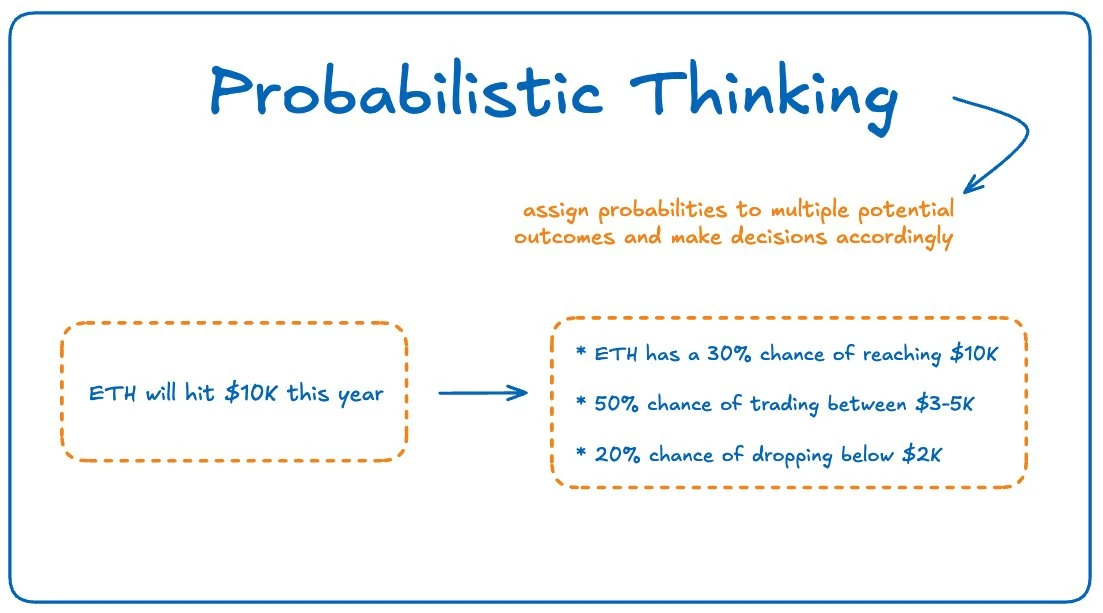
大多数加密投资者会陷入二元思维:“这个项目肯定会涨 10 倍”或“市场肯定会崩盘”。这种绝对主义的思维方式会导致过度自信、错误的仓位配置,以及在预测失败时的情绪崩溃。高效的加密投资者则不同,他们会为多种可能的结果赋予概率,并据此做出决策。与其说“ETH 今年一定会涨到 1 万美元”,不如说“ETH 有 30% 的概率涨到 1 万美元,50% 的概率会在 3000 至 5000 美元之间波动,20% 的概率会跌破 2000 美元”。
真的alpha不是你苦苦找寻标的,而是熟谙这套心法的你

概率思维让人能够:

  • 根据风险合理地配置仓位;

  • 为多种可能的情境准备应对计划;

  • 在不确定中做出理性决策;

  • 在市场极端波动时保持情绪平稳。

当使用概率思维时,投资者永远不会完全错,只是会随着新信息的到来调整概率分布。

二、二阶效应:洞察表面之外

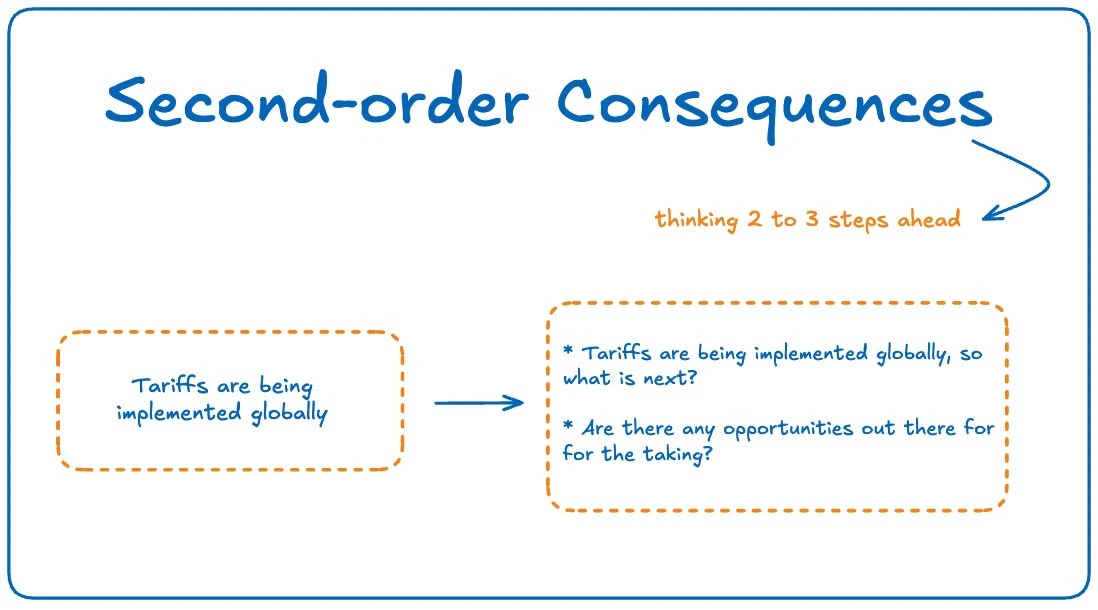
普通投资者往往只会对新闻做出直观反应,而高效的加密投资者会问:“接下来会发生什么?”例如,当中国禁令加密矿业时,很多人恐慌性抛售。但那些从二阶效应角度思考的人意识到,这会导致矿业的去中心化,可能会增强比特币长期的抗风险能力,从而做好了相应的布局。
真的alpha不是你苦苦找寻标的,而是熟谙这套心法的你

二阶效应可以训练自动性地思考两步或三步,帮助:

  • 提前预测市场走向;

  • 识别看似积极的新闻背后的隐藏风险;

  • 在看似负面的新闻中发现被掩盖的机会;

  • 在大众反应之前提前布局。

最有利可图的见解往往存在于这些二阶或三阶效应中,很多投资者对此完全忽视。

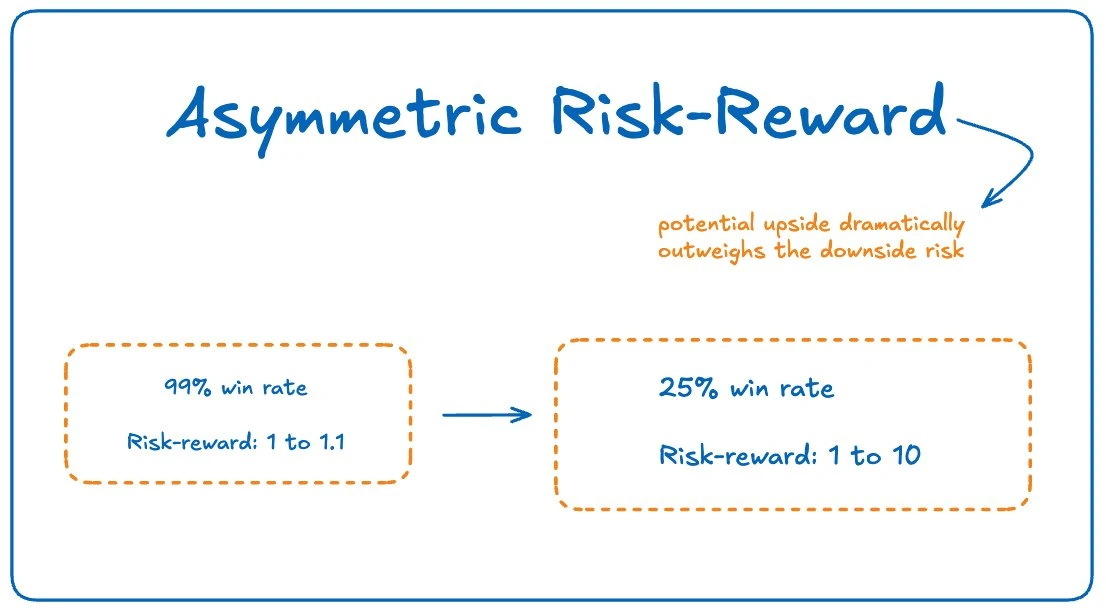
三、不对称风险回报:唯一值得玩的游戏

传统智慧让你寻找“好投资”,但高效的加密投资者则是寻找不对称的投资机会,在这些机会中,潜在的收益大幅超出下行风险。不对称风险回报意味着投资组合应该能承受无数次的小亏损,但同时也能抓住偶尔出现的巨大收益,这包括:

  • 调整仓位大小,即使完全失败也不会对你的投资组合造成重大损害;

  • 寻找可能失去 1 倍但能赚 10 倍、50 倍甚至 100 倍的机会;

  • 以较低的成功率换取更大的收益;

  • 避免那些适度收益却伴随着灾难性下行风险的情况。

真的alpha不是你苦苦找寻标的,而是熟谙这套心法的你

尤其在加密领域,回报的分布遵循幂律,一个改变人生的赢家可以超过几十年的“安全”传统投资。

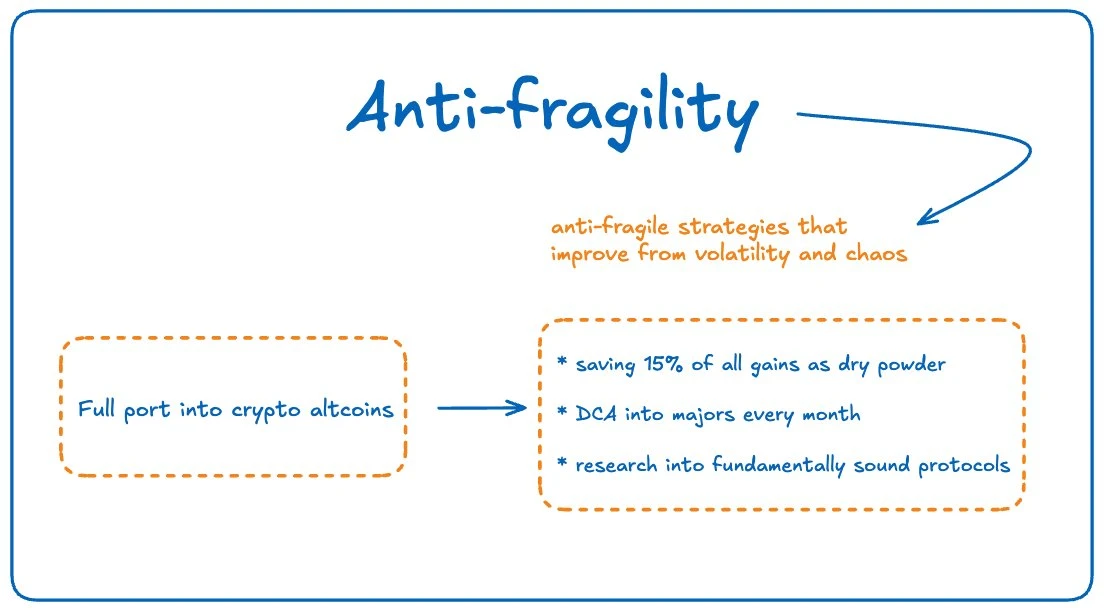
四、抗脆弱性:从混乱中受益

大多数投资者的目标是韧性,即能够在波动中生存。但高效的加密投资者则构建抗脆弱的策略,让自己在市场的混乱中变得更强,其中,抗脆弱性包括:

  • 保持足够的现金储备,在市场崩盘时使用;

  • 在下行趋势中加速进行定投(DCA);

  • 关注那些在市场压力期间能够吸引用户/增加收入的协议;

  • 利用波动性本身作为策略的一部分(如期权策略)。

真的alpha不是你苦苦找寻标的,而是熟谙这套心法的你

当其他人只是在努力抵御风暴时,抗脆弱的投资者却在悄悄地借此机会加强自己的地位。

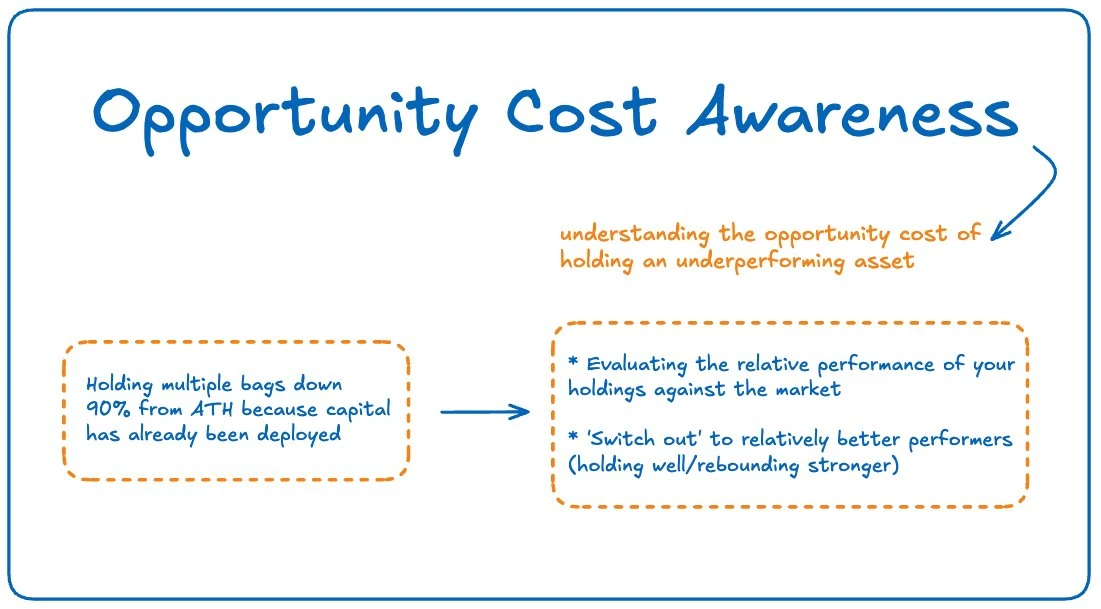
五、机会成本意识:错误决策的隐性税

每一个投资决策都有一个阴影成本,即“本可以用这些资金做哪些更有利的事”,高效的加密投资者会密切计算机会成本,从而提高投资组合的效率。机会成本意识意味着:

  • 定期评估仓位,看看有没有更好的机会;

  • 在资本可以用得更高效的地方时,敢于止损;

  • 理解持有表现不佳的资产不是“中立的”,而是正在浪费资本;

  • 设置明确的止损标准,对于未达到目标表现的仓位及时清仓。

真的alpha不是你苦苦找寻标的,而是熟谙这套心法的你

一个平庸投资的真正成本,不仅是回报低于预期,更是投资者错过了那些本可以创造卓越回报的机会。

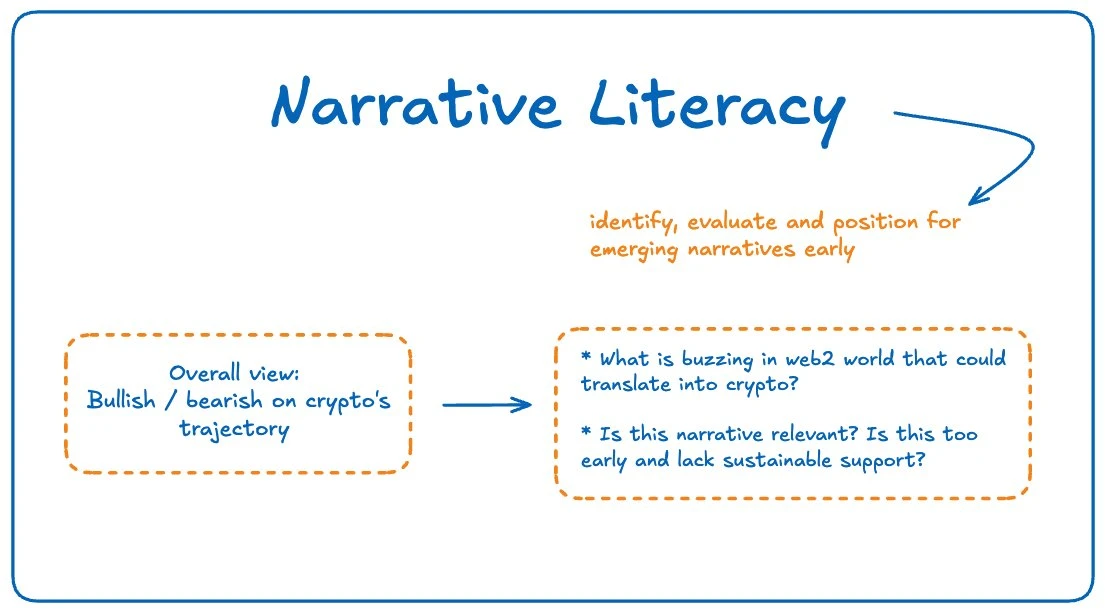
六、叙事素养:在故事写成之前解读市场

市场在吸引资金流动时,会先依据叙事而非基本面发生波动。能够早期识别、评估并布局即将到来的市场叙事,可能是加密市场中最大的竞争优势。叙事素养意味着:

  • 区分短期炒作和具有持久性的故事;

  • 理解哪些叙事能够真正推动持续的资金流动;

  • 识别叙事是否已经接近饱和或枯竭;

  • 在叙事转变之前提前布局,而不是追逐已成的趋势。

真的alpha不是你苦苦找寻标的,而是熟谙这套心法的你

这不仅仅是跟随炒作,而是深入理解为什么某些观点能够吸引市场的集体想象,以及这对资本流动意味着什么。

七、认知专注:保护好自己的注意力

在加密世界这个 24/7 的信息流中,投资者最稀缺的资源不是资本,而是注意力。高效的加密投资者会尽可能做到对项目的专注,因为他们知道,大多数“新闻”其实是噪音,阻碍了专注分析,具体包括:

  • 创建信息过滤器,排除低信号的输入;

  • 确立明确的标准,决定什么值得注意;

  • 构建系统,帮助投资者从噪音中识别真正的信号;

  • 为研究和分析安排专门的深度工作时间。

真的alpha不是你苦苦找寻标的,而是熟谙这套心法的你

最高的回报来自于在少数几件事上深度思考,而不是对所有事情肤浅的关注。

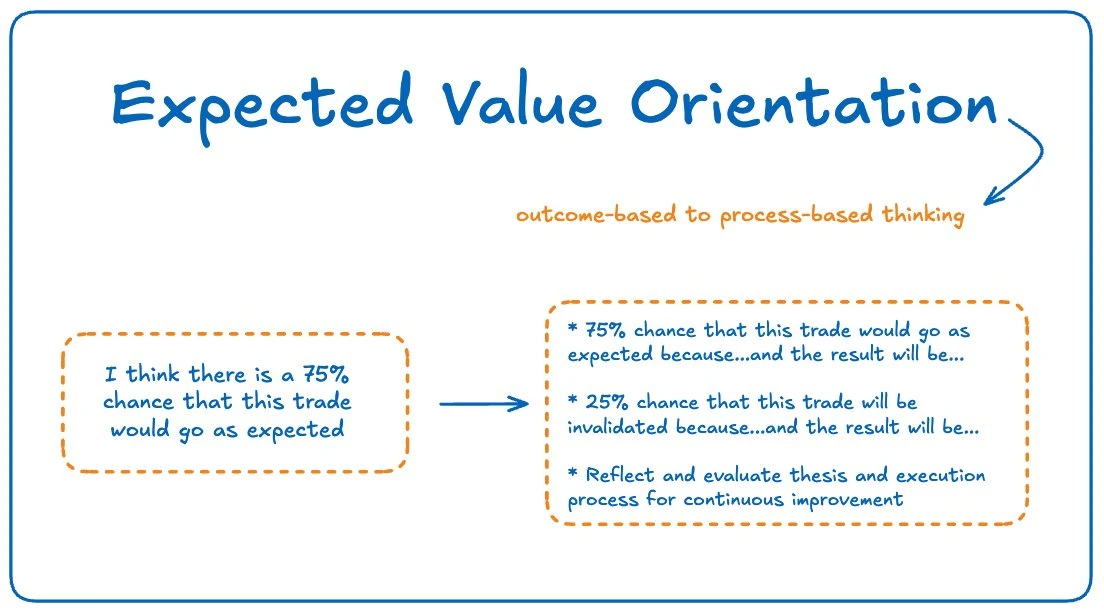
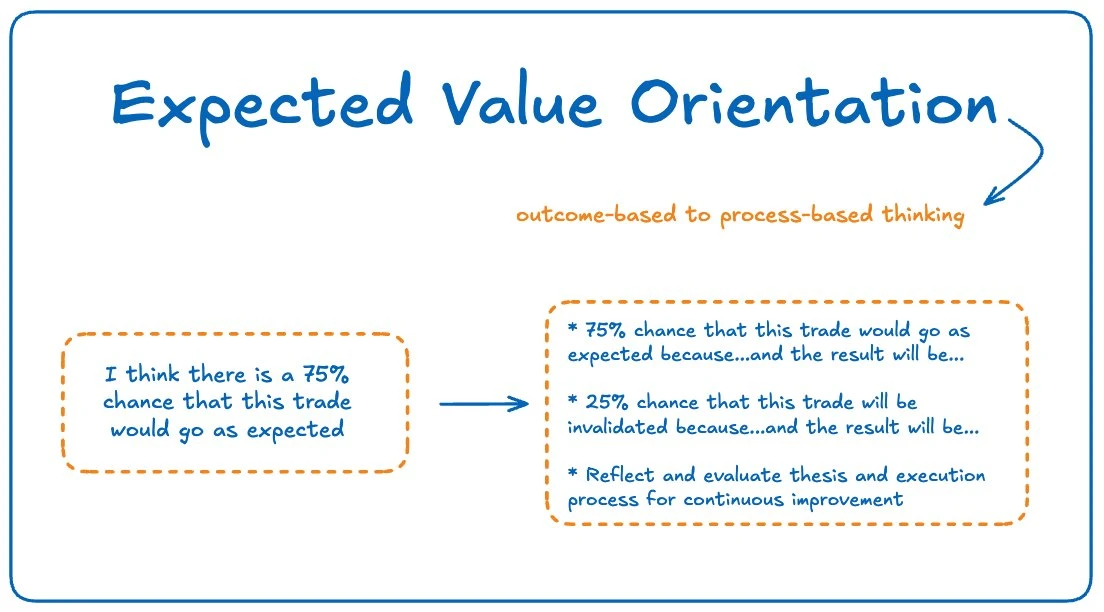
八、期望值导向:关注过程,而非结果

大部分投资者总是过于关注单一的交易结果,而高效的加密投资者则关注自己的决策系统在多次迭代中的正期望值,从结果导向转变为过程导向意味着:

  • 不会因为不可避免的亏损而气馁;

  • 根据当时可用的信息来评估决策,而非事后看待;

  • 持续改进决策过程,而不是纠结于个别交易;

  • 理解即使做出好的决策,短期内可能也会导致不理想的结果。

真的alpha不是你苦苦找寻标的,而是熟谙这套心法的你

通过关注多次决策中的期望值,而非单一交易的结果,能建立一个随着时间积累的可持续方法。

真正的 Alpha 在于个人思考方式

随着加密市场的成熟,投资者最大的竞争优势将是其思维方式。上述的思维模型不仅仅是抽象的概念,它们是实用的思考工具,能够帮助投资者与那些在 FOMO 和恐慌中徘徊的投资者区分开来。

好消息是,尽管市场难以预测,但思维方式是可以掌控的。通过有意识地培养这些思维方式的转变,投资者能在市场最动荡时也保持清晰和信心,这是大多数参与者所欠缺的。不要仅仅为了应对当前的市场周期而更新交易策略、思维方式。
Letture associate

The Most Hidden AI Winners

"The Most Under-the-Radar AI Winners" While core AI giants and their direct suppliers have dominated headlines, a group of seemingly unrelated, decades-old manufacturing companies have emerged as major beneficiaries. A key example is Japan's TOTO, famous for bathroom fixtures. Its stock soared 145% in a year, driven not by its mainstay toilet business but by its nearly 40-year-old semiconductor ceramic component unit. Specifically, TOTO manufactures electrostatic chucks—critical, hard-to-replace parts for advanced chip manufacturing processes like etching and EUV lithography. This segment, though only 9% of revenue, contributed over 54% of operating profit in FY2025 with a 43% margin. High barriers to entry, including deep know-how in high-purity ceramic sintering and long supplier certification cycles (5+ years), secure its position. This pattern repeats across industries. Nitto Boseki, a 128-year-old glass fiber maker, saw its stock rise 325% due to near-monopoly supply of T-glass, an essential low-expansion material for AI chip substrates. Similarly, Ajinomoto, the global MSG leader, commands 80-95% of the market for ABF film, a vital insulating layer in chip packaging. These "hidden" segments, often born from deep materials science expertise, are now bottleneck supplies in the AI hardware chain, enjoying pricing power and high margins. In China's A-share market, the theme combines this AI-driven demand with domestic substitution. Companies like Zhongci Electronic (advancing in electrostatic chucks) and Honghe Technology & Feilihua (in high-end electronic glass fabrics) are gaining traction. The investment thesis hinges on whether these domestic players can rapidly scale qualified capacity to capture the supply gap within the critical time window. Ultimately, these cases show that in the AI supply chain, high-profit concentrations exist not only at the cutting-edge tech frontier but also in indispensable, difficult-to-replicate materials and components. Market recognition often lags behind fundamental profit shifts, creating potential for significant re-ratings as traditional industrial firms are re-evaluated as key enablers of advanced semiconductor manufacturing.

marsbit7 min fa

The Most Hidden AI Winners

marsbit7 min fa

The Most Secretive Winners of the AI Boom

"The Most Hidden AI Winners" An unlikely group of companies are emerging as major beneficiaries of the AI boom, not from designing chips, but from supplying critical materials and components essential for advanced semiconductor manufacturing. These 'hidden winners' are traditional manufacturers whose deep expertise in materials science has become indispensable. Japanese companies are leading this trend. Toto, globally known for bathroom fixtures, has seen its stock surge 145% over the past year, driven by its 40-year-old semiconductor ceramics business, which now contributes over half of its operating profit. Its electrostatic chucks are vital for advanced chip production and require years of expertise to manufacture. Similarly, Nittobo, a 128-year-old textile firm, controls 90% of the market for T-glass, a low-expansion glass fiber essential for AI chip substrates. Ajinomoto, the world's largest MSG producer, dominates the market (80-95% share) for ABF insulating film used in chip packaging. The core insight is that chasing "advanced" chips paradoxically increases reliance on traditional, high-precision material science where supply cannot be quickly replicated. These materials are now critical bottlenecks in the AI supply chain. This trend is mirrored in China's A股 market, framed by the theme of 'import substitution'. Companies like Zhongci Dianzi (electrostatic chucks) and Honghe Technology (ultra-thin electronic cloth) are making progress, but face the test of scaling production and matching Japanese rivals' quality. The key tension lies in the slow change of market perception. While profit structures rapidly shift towards high-margin tech components, these firms retain their traditional industry classifications, creating a valuation gap that is gradually closing as their roles in the AI ecosystem become undeniable.

链捕手14 min fa

The Most Secretive Winners of the AI Boom

链捕手14 min fa

DeFi Enters a Moment of Value Reassessment: Risks and Opportunities Behind the $70 Billion TVL

DeFi Enters a Moment of Value Reassessment: Peril and Opportunity Behind $70 Billion TVL On July 1st, the total value locked (TVL) across all DeFi protocols fell below $70 billion to approximately $69.358 billion, hitting its lowest point since February 2024. This decline signals a significant contraction in DeFi liquidity and marks a new adjustment phase for the industry, far from its 2021 peak of over $180 billion. The primary drivers of this TVL drop are a general decrease in crypto market risk appetite, which leads capital to exit volatile sectors like DeFi first, and the fading effectiveness of the high-yield liquidity incentive models that fueled the initial DeFi boom. Many protocols' high TVL figures were built on temporary subsidy-driven capital rather than genuine demand. Furthermore, capital is migrating to newer narratives like AI, RWA, and modular infrastructure. This cooldown exposes DeFi's growth bottlenecks: innovation has slowed with rampant protocol copycats, real yields have normalized to single digits, and poor user experience continues to hinder mass adoption beyond crypto-natives. However, the TVL decline does not spell the end for DeFi. The metric itself is limited, as it fluctuates with underlying asset prices. The industry is shifting from capital accumulation to efficiency competition, leveraging Layer 2 solutions and modular architecture to do more with less locked value. Crucially, DeFi is expanding into real-world financial use cases like the tokenization of real-world assets (RWA) and the growth of the stablecoin ecosystem, moving its value proposition from speculative token subsidies to real cash flows. In conclusion, while short-term pressures from liquidity contraction and user growth stagnation persist, the sector is undergoing a necessary value reassessment. DeFi is transitioning from a subsidy-driven, hype-based era toward a more mature, rational, and efficiency-focused phase, with long-term growth hinging on meeting real-world financial needs through RWA, stablecoins, and robust infrastructure.

marsbit34 min fa

DeFi Enters a Moment of Value Reassessment: Risks and Opportunities Behind the $70 Billion TVL

marsbit34 min fa

Trading

Spot
活动图片