The most surreal scene in the tech world in 2026 has just unfolded.
The protagonist is Justin Poehnelt, a veteran employee with nearly 7 years at Google, belonging to the Workspace Developer Relations (DevRel) team.
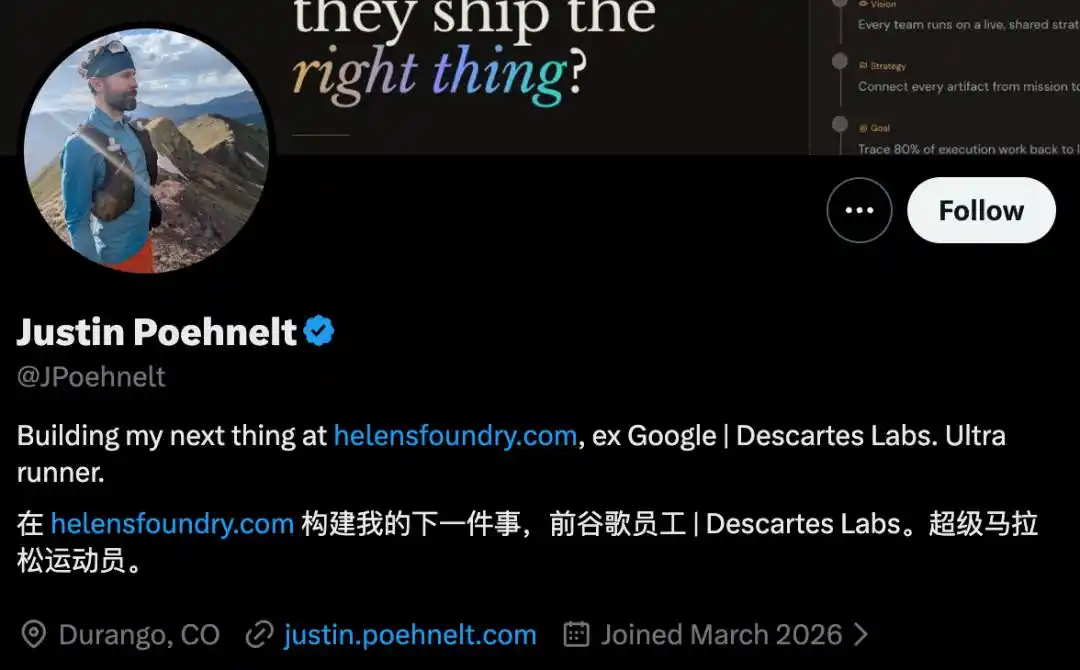
Simply put, the team's purpose is to create open-source tools and abstraction layers for Google's various APIs, making them easier for external developers to use.
Two months ago, he personally created a CLI for Google Workspace called gws—a command-line tool written in Rust that allows direct operation of the Google ecosystem from the terminal: Gmail, Drive, Calendar, Sheets, Docs, Chat......
It covers all Workspace services you can think of.
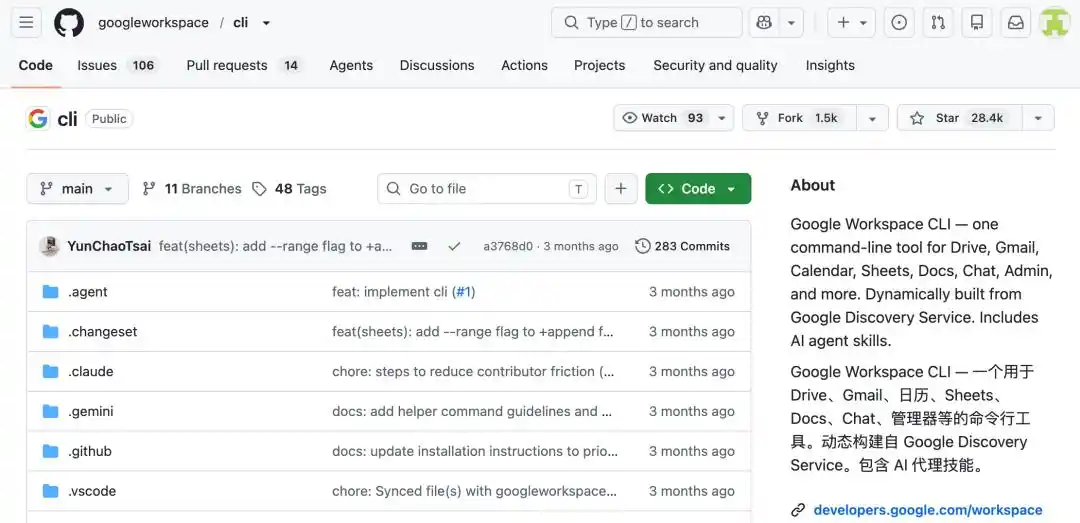
What's even more impressive is that this isn't a static list of commands. It dynamically generates all commands at runtime by reading Google's own Discovery Service—if Google adds a new API tomorrow, it supports it automatically the day after, requiring zero maintenance.
Moreover, it was designed for AI Agents from day one. Built-in with over 40 Agent skill files, its outputs are all structured JSON, ready for AI to use.
The result upon release was explosive.
Within just a few days, gws topped the Hacker News charts (953 points, 285 comments), GitHub stars soared to over 28,000, and tens of thousands of real users poured in.
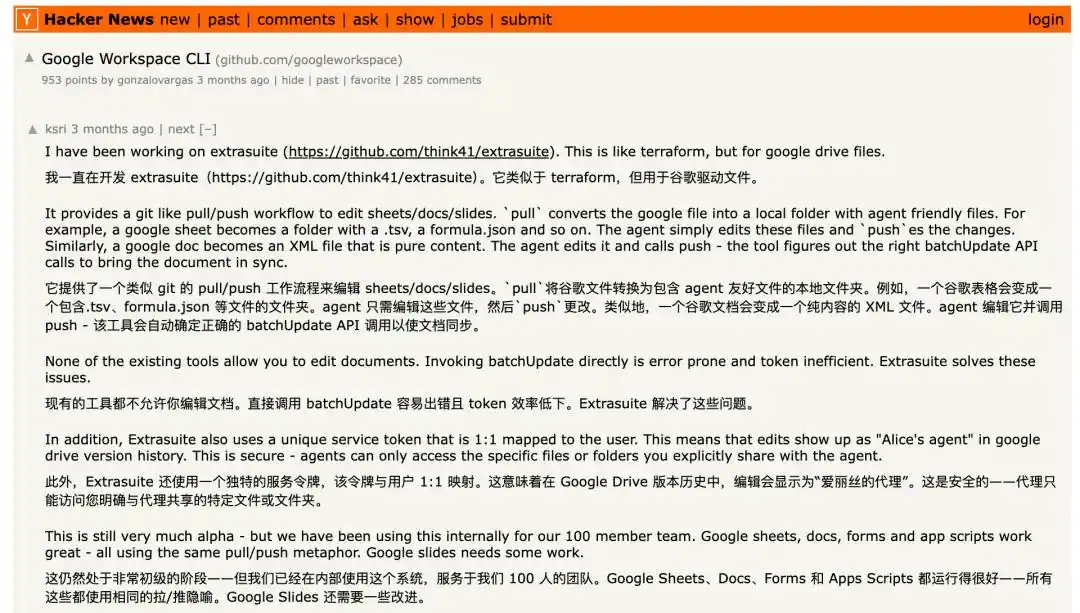
Managers and Directors flocked to learn about the design philosophy behind this tool.
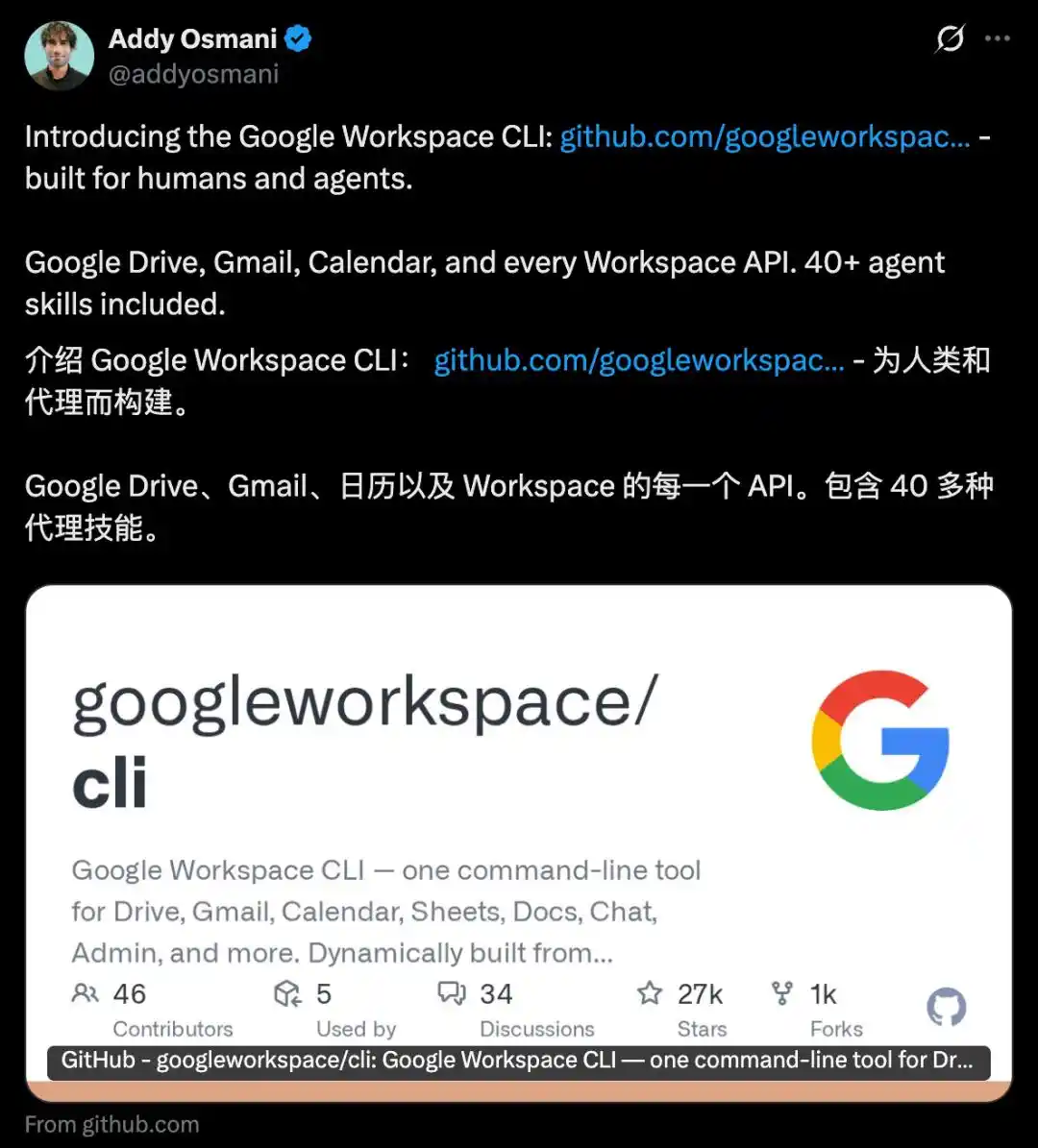
Addy Osmani, Director of Google Cloud AI, gave it a push on X with a concise and powerful caption: "Introducing the Google Workspace CLI—built for humans and agents."
At any normal company, this would be a champagne-popping highlight moment.
But what Google gave him wasn't a reward; it was a termination notice.
The viral hit became a dismissal notice.
A Textbook Case of "Kill the Goose That Lays the Golden Eggs"
What followed was even more absurd.
Just two days before Poehnelt was officially fired, Google publicly announced at the Cloud Next 2026 conference: "We're launching the 'official' Workspace CLI."
The scale of that conference? Over 32,000 attendees, three keynotes, more than 700 breakout sessions.
The same thing, coming from an employee's hands, was called "a violation." Coming from the company's mouth, it's called "innovation."
Just two days ago, Poehnelt disclosed everything on X, and the post's views quickly surged to 4 million.
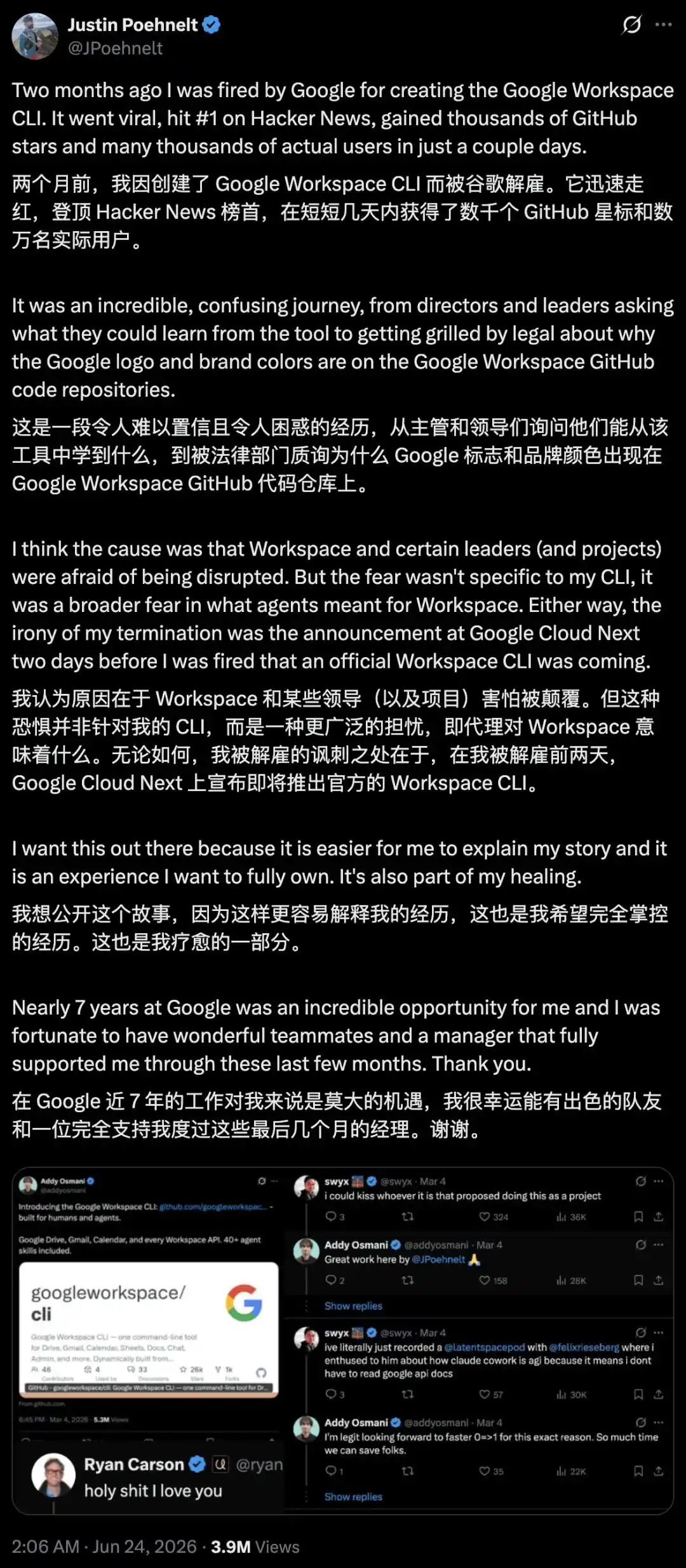
Netizens' comments were direct—isn't this essentially "appropriating the idea for free" and then killing the goose that laid the golden egg?
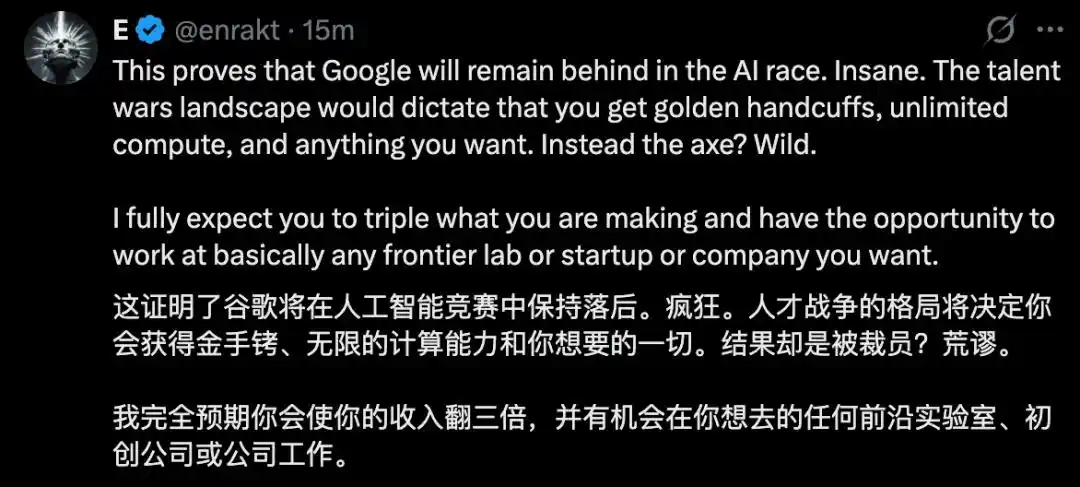
A former Google employee added a sharp comment under the post: "Having spent 7 years at Google, I applaud you. It's all because of the Cloud leadership, a bunch of folks who only know office politics and empire building."
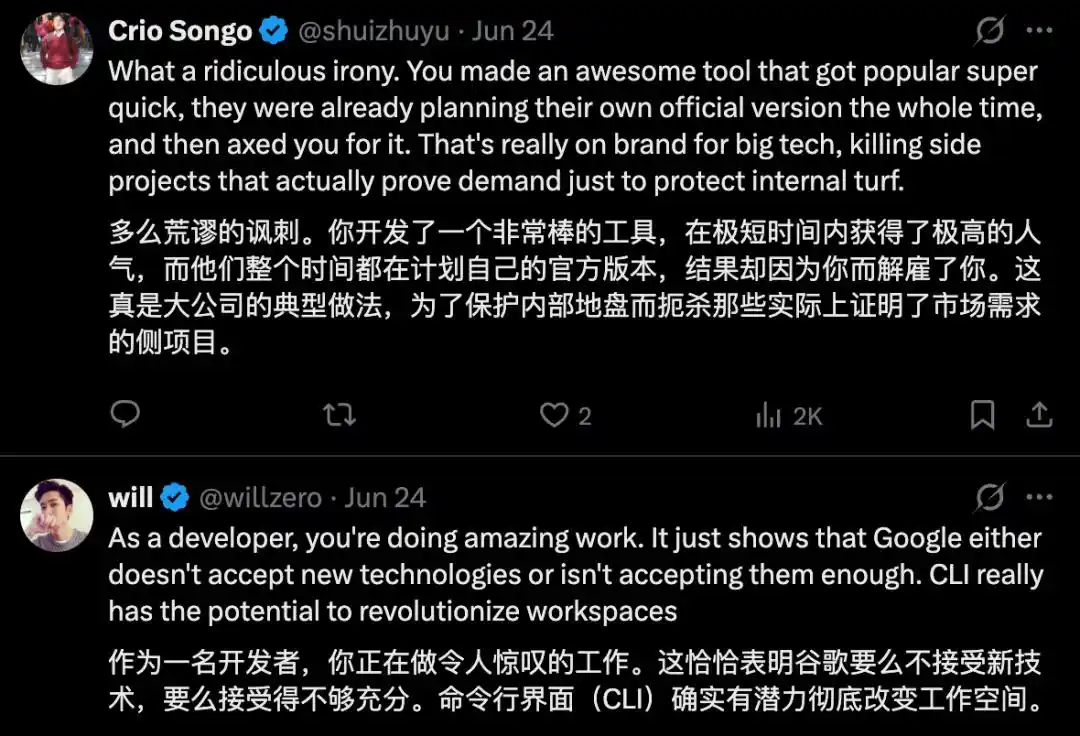
The 'Openclaw' Founder's Direct Jab
The most ironic part is, before leaving, the individual involved left a gracious remark: his nearly 7 years at Google were an incredible experience, he was lucky to have fantastic teammates and a manager who fully supported him in the final months.
Gracious as it was, the slap in the face landed solidly.
This surreal incident within the big tech company soon drew a crowd.
OpenClaw founder Peter Steinberger was the first to step into the fray. He reposted Poehnelt's post, adding a sharp jab:
"Google fired the guy who made the Google Workspace CLI for making the Google Workspace CLI. Lucky for me, Google can't fire me."
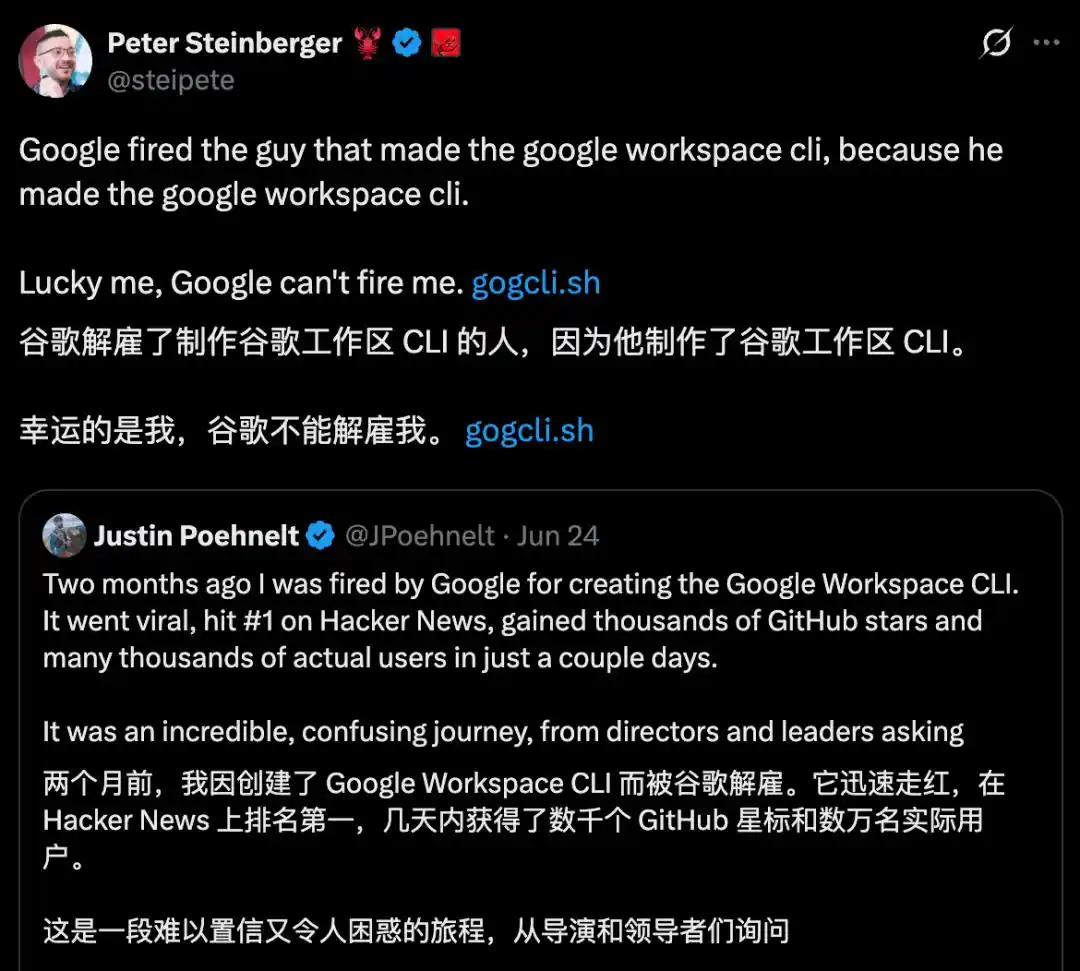
With one sentence, he tore off the fig leaf covering how big company bureaucracy suppresses grassroots tech geeks.
The mockery was complete.
What's even more hilarious is that Peter Steinberger immediately switched to recruitment mode. He publicly invited Justin Poehnelt to join the Codex team online.
This move was truly masterful~
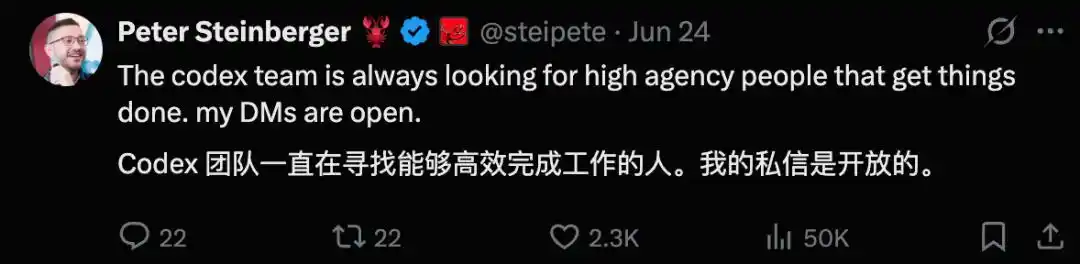
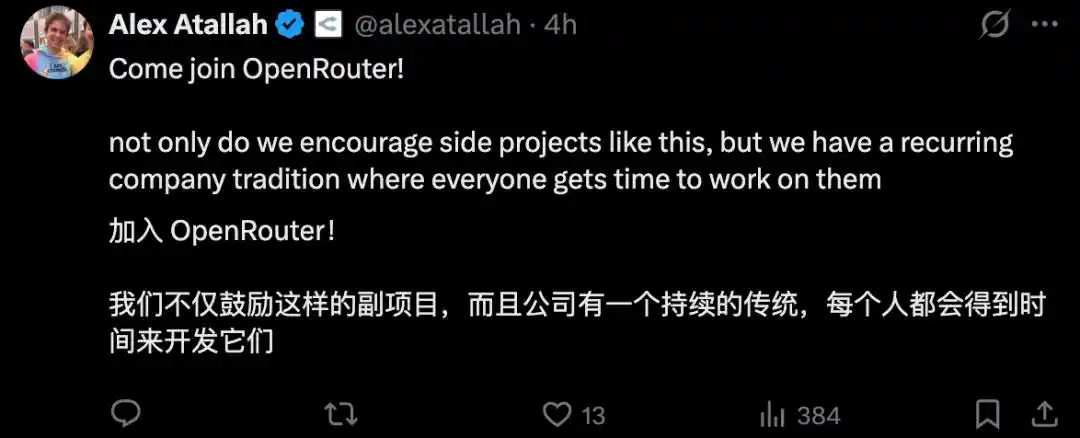
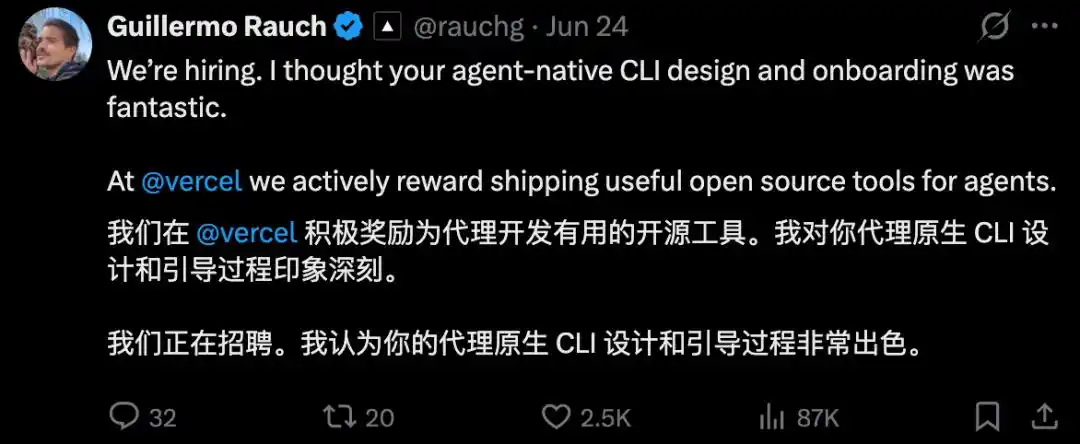
CEOs from OpenRouter, vercel, and other companies also joined the talent battle.
Finding a job is the least of this guy's worries now.
The Real Trigger
So the question arises: why was the creator of a tool that brought the company a massive influx of users, even attracting Directors for insights, fired?
According to Poehnelt's own analysis, the surface trigger was absurd, almost like a joke: the legal department confronted him, seriously questioning—why were Google's logo and brand colors appearing in the GitHub repository for Google Workspace.
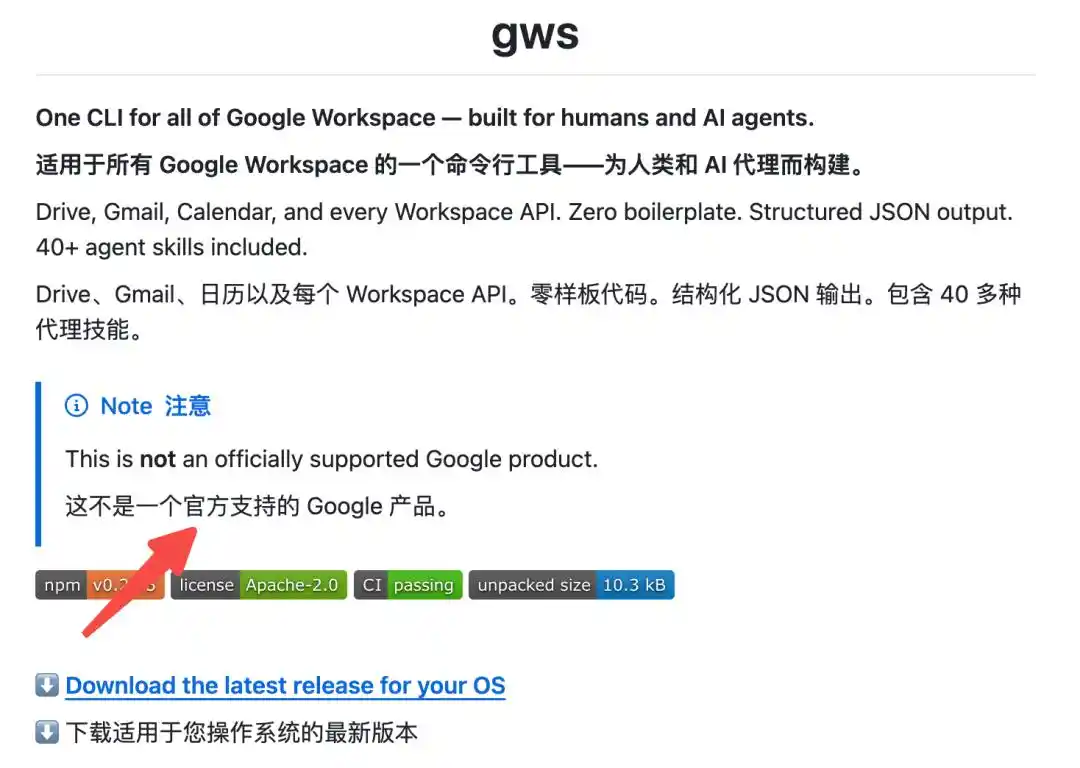
A Google employee, for a Google tool, placed under the official Google GitHub organization googleworkspace, with Google's logo, was chased down by Google's legal team asking, "What gives you the right to use our logo?"
This logic itself is surreal enough.
What's even more ironic is that a core part of the DevRel team's daily work is to release open-source tools with Google branding under Google's GitHub organization—because developers only trust and use them when they see the official logo.
The line between "unofficial open-source project" and "official product" has always been deliberately blurred, because the higher the blur, the higher the user adoption rate.
This is a strategy Google itself has been playing for years.
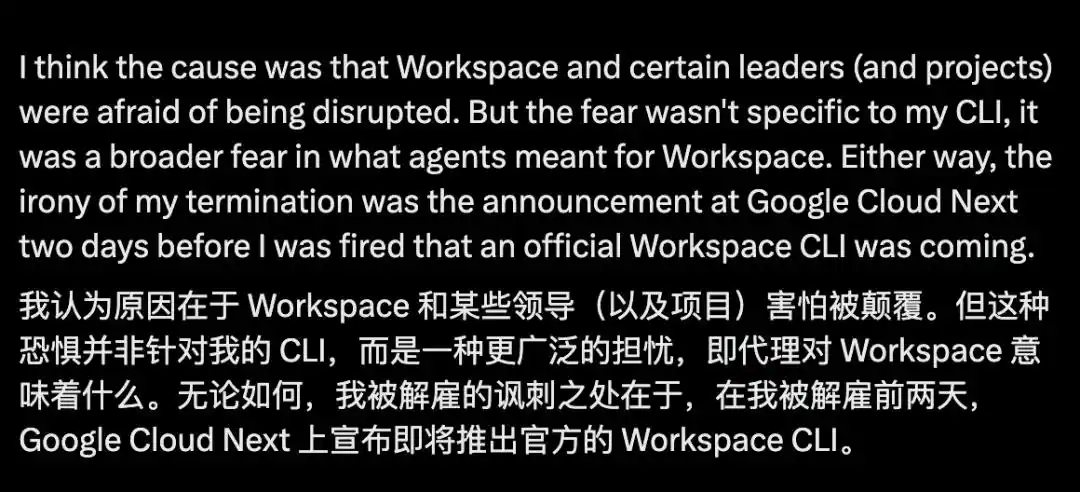
But the person involved saw it clearly. He said the real reason wasn't the logo or brand compliance at all—it was fear.
"I believe Workspace and certain leaders, certain projects, are afraid of being disrupted," Poehnelt wrote. "But this fear isn't specifically about my CLI; it's a broader concern about what AI Agents really mean for Workspace."
This statement is the core of the entire matter.
What gws does essentially transforms Google Workspace from a "you need to log into a webpage, open an interface, and click around yourself" product into a "AI Agent works for you, you just give natural language commands" infrastructure.
And it has already proven this path works.
This precisely touches Google's most sensitive nerve.
Workspace is Google's major cash cow, a productivity suite with over 3 billion users, the lifeline countless businesses pay subscriptions for.
An Agent tool casually made by an internal DevRel employee, which went viral in days, essentially handed evidence of "your moat is being filled in" directly to all executives.
When an Agent can read your emails, schedule meetings, search documents, write reports for you—who needs software that makes you log into a webpage and click around yourself?
gws posed this question for everyone.
The more useful and popular it became, the more it resembled a wake-up call.
Thus, the suppression came from within, not from competitors—the first to want to snuff out this spark was precisely the company that should have been most proud of it.
It's worth noting that Addy Osmani—a 14-year Google veteran who led Chrome and later Cloud AI developer experiences—who helped push that "explosive tweet" for Poehnelt, also left Google around the same time.
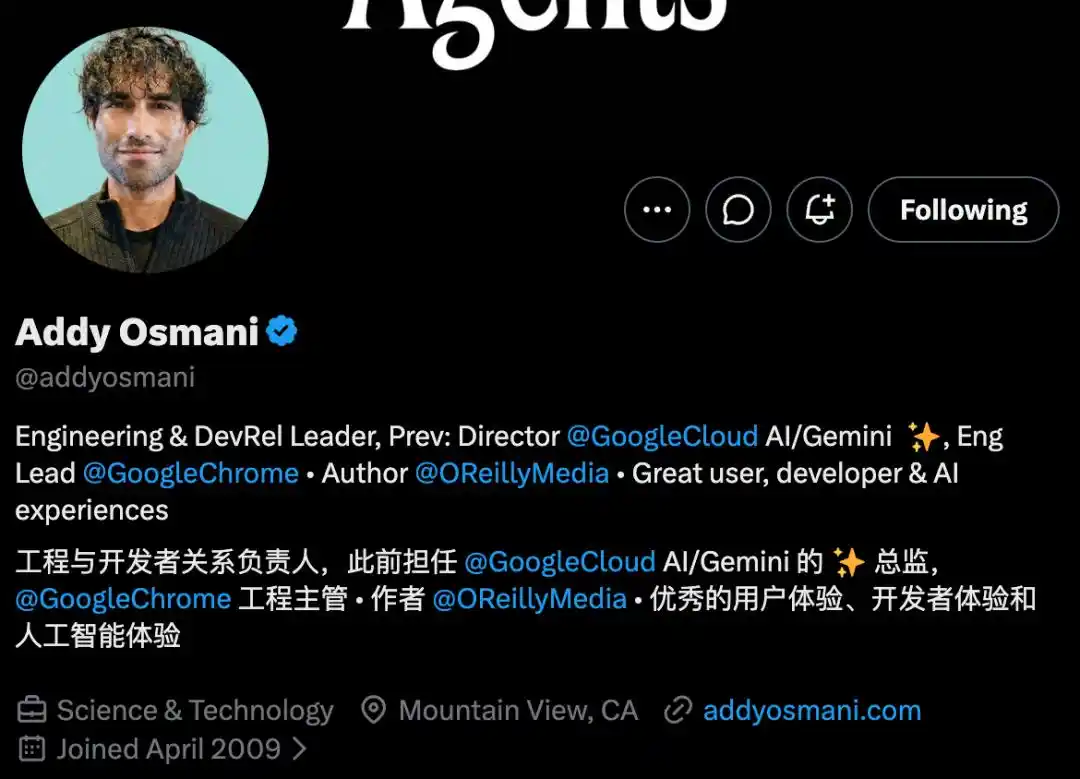
Whether there's a causal link between their departures is unknown, but the coincidence in timelines is already quite telling.
References:
https://x.com/JPoehnelt/status/2069482265953087602
https://x.com/steipete/status/2069594195522941059?s=20
https://github.com/googleworkspace/cli
This article is from WeChat public account "Xinzhiyuan" (New Zhiyuan), author: ASI Revelation, Editor: Solomon