多维度解析稳定币七大关键赛道:谁才是真正的赢家?

marsbitPubblicato 2024-12-09Pubblicato ultima volta 2024-12-10

市场

随着稳定币生态的不断发展,市场对其未来发展方向和价值分布的关注度与日俱增。本文将从多个维度深入剖析稳定币市场的各个赛道及其价值潜力。

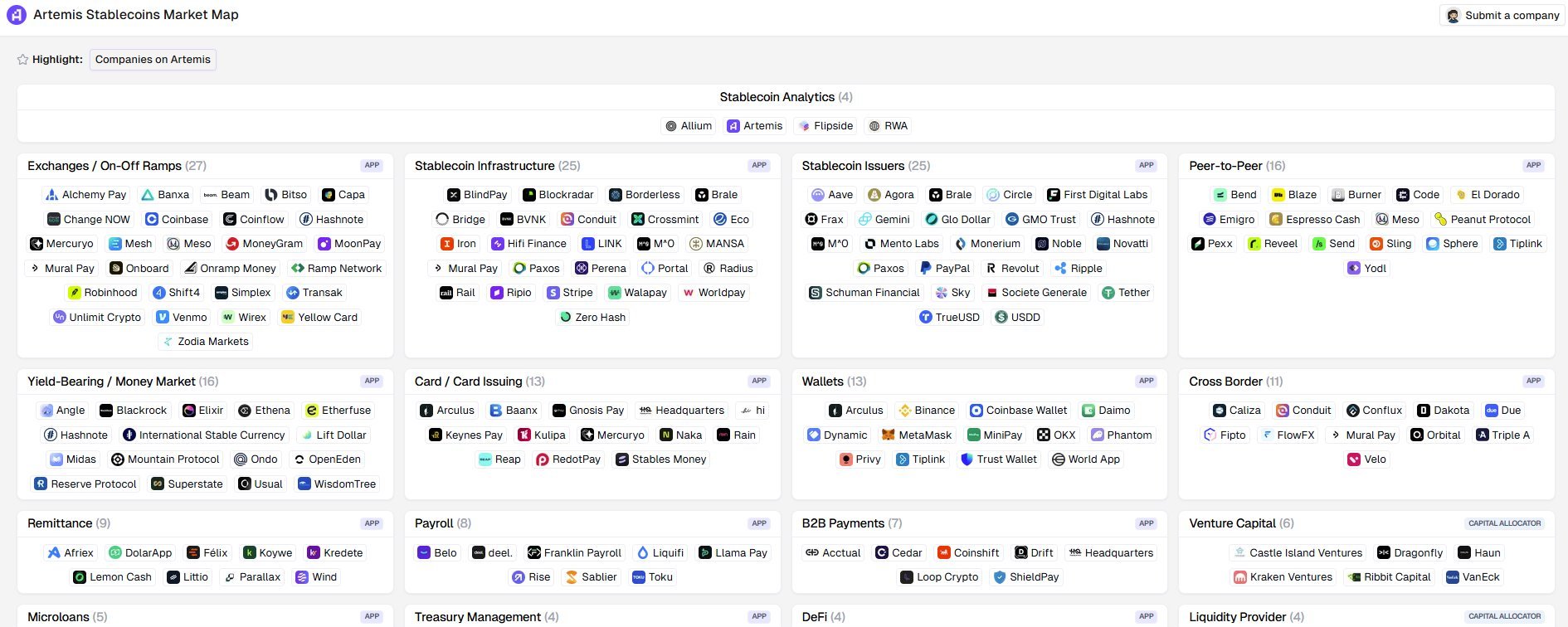
相较于传统框架,本次分析采用更为细致的分类方法,这源于支付领域本身的复杂性和细微差异。对于投资者而言,准确把握各参与方的角色定位和所有权结构尤为重要。主要分类包括:

  1. 结算轨道(Settlement Rails)
  2. 稳定币发行方
  3. 流动性提供商
  4. 价值转移/货币服务
  5. 聚合API/消息传递平台
  6. 商户网关
  7. 稳定币驱动的应用

有人可能会问:为什么需要这么多类别,特别是还没有涵盖钱包或第三方合规等核心基础设施?这是因为每个领域都有其独特的防御"护城河"和不同的价值获取方式。虽然供应商之间存在重叠,但理解每个层面的独特之处至关重要。以下是对各个领域价值分布的分析:


1. 结算轨道

这是一个典型的网络效应主导的领域,核心竞争力体现在:

  • 深度流动性
  • 低费用结构
  • 快速结算
  • 稳定的系统可用性
  • 原生合规与隐私保护

这很可能形成赢家通吃的市场。通用型区块链难以满足主流支付网络的扩展性需求,Layer 2 或专用解决方案可能更具发展潜力。这一领域的赢家将极具价值,并且很可能专注于稳定币/支付领域。


2. 稳定币发行方

目前,Circle 和 Tether 等发行方凭借强大的网络效应和高利率环境取得了显著成功。但未来发展需要:

  • 构建高效可靠的基础设施
  • 提升合规标准
  • 优化铸造/赎回流程
  • 加强与央行和核心银行系统的整合
  • 提升整体流动性(如 Agora)

虽像 Paxos 这样的 SaaS(稳定币即服务)模式可能催生更多竞争者,但中立的非银行机构和金融科技发行的稳定币可能更具优势,因为封闭系统间的交易需要可信的中立第三方。发行人已经拥有大量价值,有些发行人将继续大获全胜,但他们需要发展更全面的业务而不仅仅是发行。


3. 流动性提供者(LPs)

当前主要由 OTC 和交易所主导,呈现高度商品化特征。竞争优势主要依赖:

  • 低成本资金获取
  • 系统稳定性
  • 深度流动性和交易对支持

长期来看,大型机构将主导市场,专注稳定币的 LP 难以建立持久优势。


4. 价值转移/货币服务(稳定币的"PSPs")

这类"稳定币编排"平台(如Bridge和 Conduit)的护城河来自:

  • 专有支付轨道
  • 银行直接合作关系
  • 全球覆盖能力
  • 充足流动性
  • 高水平合规能力

真正拥有专有基础设施的平台较少,但成功者有望在区域市场形成寡头格局,并补充传统的 PSP(支付服务提供商) 成为非常大的企业。


5. 聚合API/消息传递平台

这类市场参与者经常声称他们提供与支付服务提供商(PSPs)相同的服务,但实质上他们只是在进行API的封装和聚合。这些平台既不承担合规风险,也不承担运营风险,更准确地说,它们应该被视为PSPs和流动性提供商(LPs)的市场平台。

虽然目前这些平台能够收取较高的服务费用,但由于它们并未真正处理支付流程中的核心难点或参与基础设施建设,最终将面临利润被压缩,甚至可能被完全淘汰的风险。这些平台往往将自己标榜为"稳定币领域的Plaid",却忽视了一个关键事实:区块链技术本身已经解决了传统银行和支付领域中Plaid所解决的大部分痛点。除非他们能够向终端用户方向扩展并在技术栈中承担更多责任,否则将难以维持其利润率和业务的可持续性。


6. 商户网关/入口

这类平台帮助商户和企业接受稳定币或加密货币支付。虽然有时与PSPs存在业务重叠,但主要专注于提供便捷的开发者工具,同时整合第三方合规和支付基础设施,并将其打包成用户友好的界面。他们希望能够效仿Stripe的发展路径——通过简便的接入方式获取市场,再横向扩展业务。

然而,与Stripe早期的市场环境不同,如今开发者友好的支付方案已经随处可见,渠道分发能力才是制胜关键。现有的支付巨头可以轻松地与支付编排公司合作来添加稳定币支付选项,这使得纯加密货币网关难以找到自己的市场定位。尽管像Moonpay或Transak这样的公司在过去享有较强的定价能力,但这种优势预计难以持续。

在 B2B 领域,特别是大额资金管理和规模化稳定币应用方面仍有机会,但 B2C 领域竞争激烈,面临严峻挑战。


7. 稳定币驱动的金融科技和应用

现在创建一个基于稳定币的"数字银行"或"金融科技"产品比以往任何时候都容易,这使得该领域的竞争异常激烈。成功与否将取决于分发能力、市场推广策略和差异化的产品洞察力——这与传统金融科技没有什么不同。

在发达市场,Nubank、Robinhood和Revolut这样的传统金融科技巨头可轻松整合稳定币功能,而创业公司需要寻找独特价值主张。

在新兴市场,可能还存在一些独特产品的机会(比如Zarpay),但如果仅仅依靠稳定币支持的金融服务作为差异化优势,在发达市场中很难取得成功。

总的来说,这个类别中的纯加密货币/稳定币消费者创业公司可能面临极高的失败率,并将持续面临挑战。不过,面向企业的业务可能还有机会找到自己的细分市场。


结语

虽然本框架未能涵盖所有边缘案例和重叠领域,但为深耕该领域的投资者提供了有益的思考框架。随着市场的持续演进,新的机遇与挑战将不断涌现,理解这些市场动态对于行业参与者至关重要。

Letture associate

WEEX TradFi Trading Competition Kicks Off, 50,000 USDT Prize Pool First-Come, First-Served, Open a Position and Get 5 U

WEEX Exchange Launches "TradFi Trading Competition" with a 50,000 USDT Prize Pool Amidst a crypto market downturn, WEEX Exchange highlights the growth of tokenized traditional finance (TradFi) assets as a key trend, allowing users to trade stocks, ETFs, and commodities using crypto. The platform has launched a "TradFi Trading Competition" from July 9th to 23rd, featuring a 50,000 USDT prize pool. The campaign offers three reward tiers: 1. **New User Bonus (25,000 USDT pool):** New users depositing ≥100 USDT, completing a specified spot trade, and one TradFi contract trade (margin ≥10 USDT) receive 200 USDT. 2. **Volume-Based Rewards (20,000 USDT pool):** All users can earn tiered bonuses for achieving TradFi contract trading volumes of 5,000 USDT (3 USDT), 20,000 USDT (10 USDT), and 100,000 USDT (50 USDT). Rewards are stackable. 3. **Participation Reward:** Any user opening a TradFi contract trade during the event receives 5 USDT instantly. The article promotes WEEX's TradFi features, which include trading tokenized shares of companies like NVIDIA and Tesla using USDT, 24/7 trading, fractional share investing starting from $5, and high leverage up to 100x for hedging. It positions these features as solutions to traditional investing barriers like high fees, strict trading hours, and high share prices. The summary concludes by encouraging users to join the competition and leverage WEEX's platform to access global TradFi markets.

marsbit59 min fa

WEEX TradFi Trading Competition Kicks Off, 50,000 USDT Prize Pool First-Come, First-Served, Open a Position and Get 5 U

marsbit59 min fa

Switching Chains for Another Shot at Success: Can It Really 'Change One's Destiny'?

Recent months have witnessed a wave of established blockchain projects migrating to new public chains, notably Base and Arbitrum, coupled with strategic pivots in their business models—essentially "re-starting" elsewhere. Examples include Sophon (moving from ZKsync to Base to cut $3M+ annual costs and focus on consumer apps), Moonbeam (shifting from Polkadot to Base to pursue decentralized AI), and Secret Network (planning a move from Cosmos to Arbitrum to explore privacy-AI integrations, though its token price plunged 30% post-announcement). A common thread is that these migrating projects are primarily layer-1 or layer-2 chains now seeking relevance in AI and real-world consumer applications. This trend highlights the relative stagnation of ecosystems like Polkadot and Cosmos, which are seeing significant outflows. However, the community remains skeptical about whether such chain-hopping truly enables a turnaround. Historical cases like y00ts NFTs (which moved from Solana to Polygon and back to Ethereum) and Synthetix (which retreated from a multi-chain strategy) show that migration often fails to deliver expected benefits and can add complexity. In today's more rational market, devoid of easy narrative or airdrop红利, simply changing chains is unlikely to be a silver bullet. For both migrating projects and destination chains, the real challenge lies not in attracting projects but in developing actual use cases that retain users.

marsbit1 h fa

Switching Chains for Another Shot at Success: Can It Really 'Change One's Destiny'?

marsbit1 h fa

Trading

Spot
活动图片