7日涨超40%,SUI为何突然强势领跑?

区块律动Pubblicato 2020-09-24Pubblicato ultima volta 2024-09-20

Crypto di tendenza

Letture associate
Three 'Reflexivity' Shadows Hang Over the Market

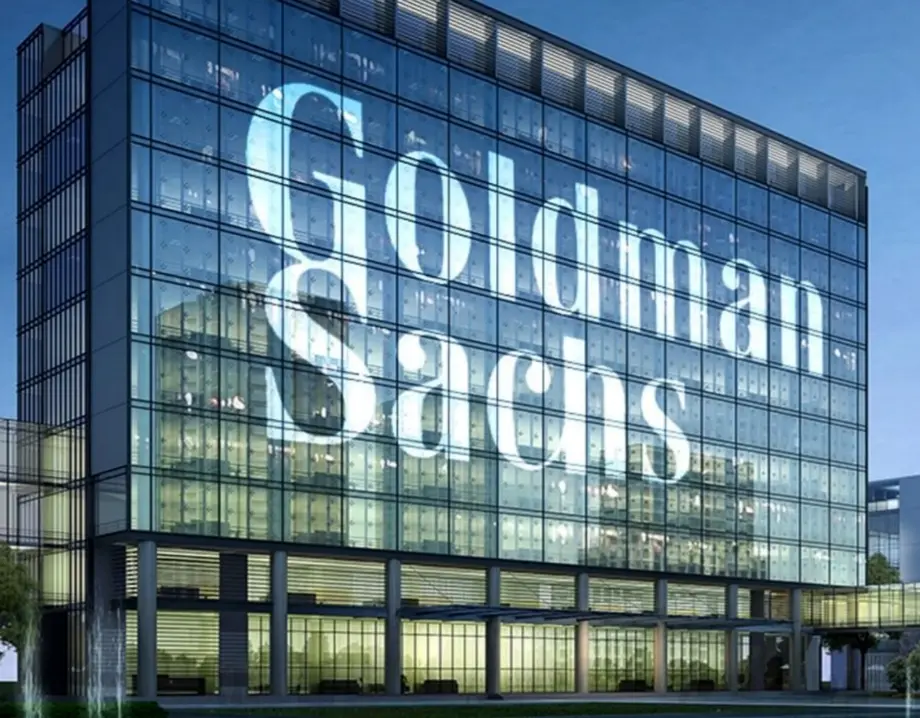
Global markets are currently enveloped by three mutually reinforcing "reflexive" loops: oil price politics, outsized capital expenditure by hyperscale cloud providers, and AI debt risks. According to Goldman Sachs, the combined negative feedback from these factors places the market in a fragile and precarious state. The first loop involves the two-way feedback between surging oil prices and rising interest rates. Brent crude's brief breach of $100 per barrel tests expectations of a U.S. policy response to curb prices and inflation. However, the delay in such intervention forces markets to increasingly price in the risks themselves. Higher energy costs are already impacting corporate earnings, as seen with an airline's profit warning, and threaten to fuel broader inflation. The second loop concerns the massive, escalating capital expenditure (capex) by major tech firms like Google, which recently raised its 2026 capex forecast significantly. The market's tolerance for viewing such spending as a cost-free growth signal is waning, shifting focus to investment returns. This competitive capex spiral pressures the entire cloud and semiconductor sector. Furthermore, the competitive gap in AI between leading closed-source and Chinese open-source models is narrowing rapidly, threatening the economic rationale behind massive investments. The third reflexive danger lies in the financing structures supporting this expansion. Bond prices for entities funding AI infrastructure, such as a Meta financing vehicle, have fallen sharply from issue price. While hyperscale balance sheets remain strong, soaring capex is eroding free cash flow conversion. There is a growing risk that today's capacity build-out leads to future oversupply and significant depreciation charges. Key near-term tests for these dynamics include Microsoft's upcoming earnings, which will scrutinize its balance of growth, spending, and cash flow, and the IPO of Chinese memory chipmaker CXMT, a major new competitor. The current environment is characterized by reflexivity, where each variable is both a cause and an effect, creating a self-reinforcing cycle of uncertainty.

链捕手3 min fa

Three 'Reflexivity' Shadows Hang Over the Market

链捕手3 min fa

Claude Doesn't Submit Code Directly After Writing It: Runs 4 Skills for Self-Check, Fixes Issues, Then Comes Back to You

Claude No Longer Submits Code Directly: 4 Self-Check Skills to Run Before Coming Back to You AI already writes code, but the burden of reviewing it still falls on you. To address this, Anthropic has built a "verification loop" into Claude Code. After writing code, Claude now runs four self-check skills before delivering the work: * `/code-review`: Finds potential bugs and provides review feedback. * `/simplify`: Cleans up the diff, removing redundant or over-complex implementations to reduce future maintenance costs. * `/verify`: Performs end-to-end validation, actually running the application to confirm the feature works, not just appears to. * `/design`: Used only for UI changes; cross-references the implementation against the project's DESIGN.md file. This loop extends the AI agent's workflow from "gather context → execute" to "gather context → execute → auto-verify → fix → re-verify." It tackles the new bottleneck in AI-assisted development: the speed of verifying code now outpaces human review. These skills are built on Claude Code's existing verification foundation (like running apps and using linters). Teams can create their own custom verification skills by documenting their repetitive manual checks in plain language as Markdown files. Verification can be triggered at four levels: manually (Standalone), embedded in a task, chained with other skills, or automatically on every PR (On every PR). The shift signifies that competition in AI programming is moving from code generation to robust verification and self-correction. Well-built verification loops allow AI agents to run longer and more autonomously with less human supervision. Skills, which encapsulate team knowledge and workflows, are becoming a cross-vendor standard, meaning a team's efficiency gap will depend less on the AI model and more on their investment in these automated workflows and verification mechanisms.

marsbit9 min fa

Claude Doesn't Submit Code Directly After Writing It: Runs 4 Skills for Self-Check, Fixes Issues, Then Comes Back to You

marsbit9 min fa

How Has Beijing Become a 'Global High Ground'?

How did Beijing become a "global highland"? In the first half of the year, Beijing's GDP grew by 5.4%, with growth in Q1 reaching 5.9%. Key drivers were not consumption or real estate, but hardcore sectors like chips, robotics, computing power, and large AI models. Investment concentrated sharply in tech, with high-tech manufacturing investment up 36% and technology services investment up 87.2%. Nearly 90% of venture capital flowed into hard tech. Output figures were strong: integrated circuit production rose 17.8%, industrial robots 75.5%, and service robots surged 230%. Companies like Qianxun AI and Galaxy General Robotics are deploying robots in real-world logistics and manufacturing, moving beyond demonstrations. The services sector is also being reshaped by tech, with software, IT, and finance growing faster than the sector average. Beijing leads in AI and embodied intelligence. Galaxy General Robotics secured significant funding, including from state-backed funds. The city released foundational AI models and its independent AI ecosystem, FlagOS, is expanding. Companies like Jiuzhang Yunjie provide neutral computing power and base models, supporting the broader ecosystem. Infrastructure is expanding, with Beijing aiming to add over 70,000 Petaflops of intelligent computing power annually. A "Beijing R&D, surrounding training" model is emerging, with computing resources being allocated to regions like Hebei and Tianjin. Efforts to deepen integration within the Beijing-Tianjin-Hebei region include industrial relocation and improved transport links. To bridge the gap between lab and market, Beijing is establishing pilot-scale production platforms. The underlying trend is the convergence of computing power, capital, talent, and real-world applications. While challenges remain in commercialization and regional integration, Beijing's focus on strengthening these interconnected elements is building the foundation for its claim as a global innovation hub.

marsbit10 min fa

How Has Beijing Become a 'Global High Ground'?

marsbit10 min fa

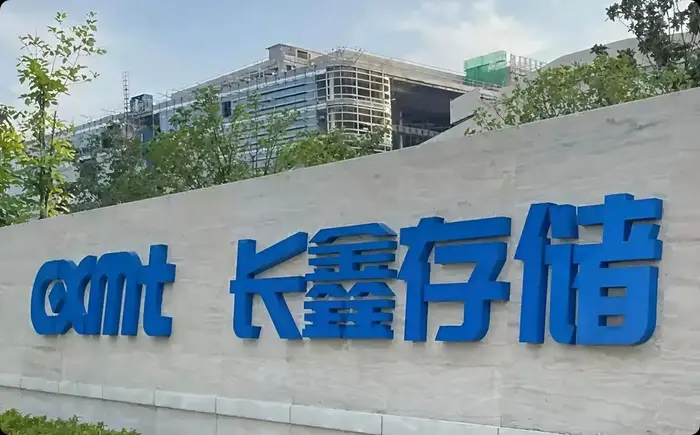
How Did the Target Price of 116 Yuan and a Market Cap of 7.9 Trillion for CXMT Come About?

Nomura's inaugural coverage report on ChangXin Memory Technologies (CXMT) gives a 'Buy' rating with a highly aggressive target price of 116 RMB, implying a 1239.5% upside from the IPO price of 8.66 RMB. The valuation is derived by applying a 20x P/E multiple to projected 2028 EPS of 5.79 RMB. The 20x multiple combines Micron's historical valuation with a premium for Chinese A-shares. The report's financial forecasts are exceptionally bullish. It projects revenue to soar from 62B RMB in 2025 to 773B RMB in 2028, with net profit surging to 393B RMB. A key, and arguably unsustainable, assumption is gross margin expanding to over 90% by 2028, driven almost entirely by price increases with minimal cost growth. This optimism is rooted in a forecast that global DRAM demand will grow over 7x from 2026 to 2030 (CAGR >60%), fueled by agentic AI. Nomura argues that supply growth (30-40% CAGR) will lag far behind demand, creating a persistent shortage. Bottlenecks in cleanroom space, equipment, materials, and skilled engineers will constrain rapid industry expansion. For CXMT, Nomura expects capacity to reach 550k wafers/month by 2028. The company's bit output is forecast to grow 40-45% annually, allowing its global market share to rise from ~10% to ~18%. While CXMT's technology lags leaders by about five years, limiting its wafer ASP, it benefits from supportive domestic procurement policies. Key risks include the cyclicality of memory pricing, with the 90% margin assumption representing a peak-cycle scenario rather than a sustainable norm.

链捕手19 min fa

How Did the Target Price of 116 Yuan and a Market Cap of 7.9 Trillion for CXMT Come About?

链捕手19 min fa

What Will Ethereum Look Like in 2030?

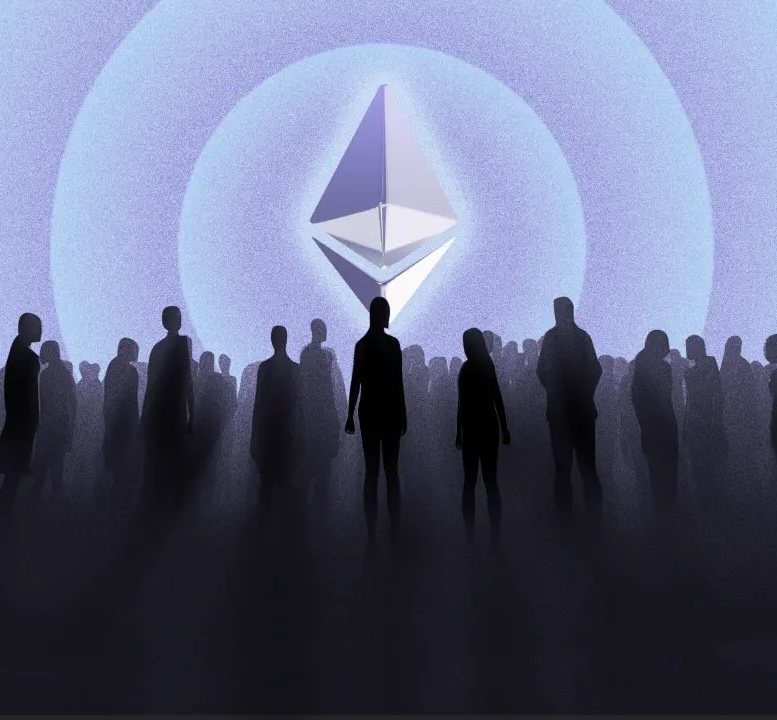
**Title: What Will Ethereum Look Like in 2030?** **Summary:** This article outlines the "Lean Ethereum" vision, a unified roadmap for Ethereum's evolution leading up to 2030, centered around five key "North Star" goals: 1. **Fast L1:** The goal is to reduce transaction finality from ~15 minutes to seconds and block times from 12 seconds to 4 seconds. This will be achieved through a streamlined consensus mechanism using zero-knowledge proofs (ZK proofs) to aggregate validator votes efficiently. The minimum staking requirement will also be lowered to 1 ETH, promoting greater decentralization. 2. **Billion-Gas L1:** Ethereum aims to increase its Layer 1 throughput by ~200x, targeting 1 billion gas per second. The breakthrough relies on implementing an L1 ZK-EVM, where a single cryptographic proof verifies all transactions in a block, eliminating the need for every node to re-execute them. This enables massive scalability while allowing even light clients (like phones) to fully verify the chain. 3. **Trillion-Gas L2:** The focus shifts to scaling Layer 2 networks (Rollups). Enhancements like PeerDAS and planned upgrades will expand data bandwidth (blob capacity) to 1GB per second, supporting a vast ecosystem of high-throughput L2s. Ethereum will solidify its role as a secure settlement layer, with specialized L2s (e.g., for tokenized stocks) handling application-specific logic. 4. **Quantum-Resistant L1:** To counter future quantum computing threats, Ethereum plans to transition its cryptographic signature schemes (ECDSA, BLS) to quantum-safe, hash-based alternatives. A dedicated post-quantum research team is working on this transition, slated for completion around 2029. 5. **Privacy-Native L1:** For the first time, native privacy is an official goal. Using ZK proofs, transactions could hide sender, receiver, and amount details while proving compliance with network rules. This addresses critical privacy concerns for both individuals and enterprises, though regulatory uncertainty remains. The article notes that development is becoming more decentralized, with new institutions like Ethlabs emerging alongside a downsized Ethereum Foundation. While the "Strawmap" document guiding this vision is a living draft subject to change and delays, the core ambition is clear: to make Ethereum faster, more scalable, quantum-secure, and privacy-preserving while retaining its foundational properties of neutrality and trustlessness.

Foresight News21 min fa

What Will Ethereum Look Like in 2030?

Foresight News21 min fa

Trading

Spot

Articoli Popolari

Come comprare SUI

Benvenuto in HTX.com! Abbiamo reso l'acquisto di SUI Network (SUI) semplice e conveniente. Segui la nostra guida passo passo per intraprendere il tuo viaggio nel mondo delle criptovalute.Step 1: Crea il tuo Account HTXUsa la tua email o numero di telefono per registrarti il tuo account gratuito su HTX. Vivi un'esperienza facile e sblocca tutte le funzionalità,Crea il mio accountStep 2: Vai in Acquista crypto e seleziona il tuo metodo di pagamentoCarta di credito/debito: utilizza la tua Visa o Mastercard per acquistare immediatamente SUI NetworkSUI.Bilancio: Usa i fondi dal bilancio del tuo account HTX per fare trading senza problemi.Terze parti: abbiamo aggiunto metodi di pagamento molto utilizzati come Google Pay e Apple Pay per maggiore comodità.P2P: Fai trading direttamente con altri utenti HTX.Over-the-Counter (OTC): Offriamo servizi su misura e tassi di cambio competitivi per i trader.Step 3: Conserva SUI Network (SUI)Dopo aver acquistato SUI Network (SUI), conserva nel tuo account HTX. In alternativa, puoi inviare tramite trasferimento blockchain o scambiare per altre criptovalute.Step 4: Scambia SUI Network (SUI)Scambia facilmente SUI Network (SUI) nel mercato spot di HTX. Accedi al tuo account, seleziona la tua coppia di trading, esegui le tue operazioni e monitora in tempo reale. Offriamo un'esperienza user-friendly sia per chi ha appena iniziato che per i trader più esperti.

575 Totale visualizzazioniPubblicato il 2024.12.12Aggiornato il 2026.06.02

Come comprare SUI

Discussioni

Benvenuto nella Community HTX. Qui puoi rimanere informato sugli ultimi sviluppi della piattaforma e accedere ad approfondimenti esperti sul mercato. Le opinioni degli utenti sul prezzo di SUI SUI sono presentate come di seguito.

活动图片