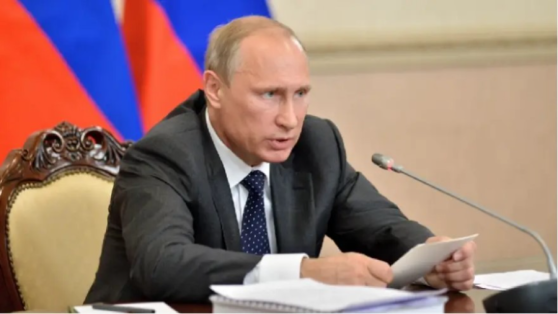
Владимир Путин: Россия занимает лидирующие позиции в мире по майнингу

investing.ruPubblicato 2024-09-05Pubblicato ultima volta 2024-09-05

По словам президента, профицит энергетических ресурсов в Сибири, используемых для добычи криптовалют, не должен быть препятствием для развития других отраслей региона.

«Я думаю, что Россия сегодня уже является одним из мировых лидеров по майнингу. И связано это с профицитом энергетических мощностей в Сибири», — сказал Владимир Путин.

Он отметил, что бизнес хорошо зарабатывает в этой отрасли, но следует уделять внимание и строительству жилья, а также снабжению энергоресурсами производственных комплексов, число которых продолжает расти в регионе.

Ранее Владимир Путин заявлял, что майнинг криптовалюты забирает чрезмерное количество электроэнергии, и, если не наладить контроль, сформируется дефицит ресурсов для предприятий.

В прошлом месяце директор Ассоциации промышленного майнинга в России Сергей Безделов сообщил, что после принятия закона об ограничении обращения криптовалют число желающих майнить стремительно растет.

Читайте оригинальную статью на сайте Bits.media
Letture associate

Is Ethereum Truly a "World Computer"?

Title: Is Ethereum Really a "World Computer"? Ethereum, envisioned as a "world computer" by its founder Vitalik Buterin, aims to be a decentralized platform for global applications. However, a recent analysis by Four Pillars raises questions about whether it is more accurately a "Western computer," based on the geographical distribution of its validators. Currently, the United States dominates with 38.19% of all validators, followed by Germany at 13.04%. Combined, these two countries account for over half of the network. In contrast, Asian representation is minimal, with Singapore holding only 3.15%. The concentration is partly due to affordable cloud hosting services like Hetzner and OVH in Europe and North America, as well as the prevalence of residential validators in the U.S., where individuals run nodes via home internet connections. When examining professionally operated validators, the distribution becomes more balanced. The U.S. share drops to 25.81%, while Asian countries like Singapore (7.28%), Hong Kong (6.44%), Japan (6.38%), and South Korea (4.59%) collectively approach the U.S. level. This shift reflects strategic deployments by institutions to meet regulatory requirements and reduce latency for local users. However, regions like South America, the Middle East, and Africa remain underrepresented. Ethereum's peer-to-peer network mechanisms, such as gossipsub, disadvantage areas with low node density, creating a feedback loop where delayed message propagation reduces validator performance and rewards. This imbalance challenges Ethereum's promises of censorship resistance and global accessibility. Despite these issues, opportunities exist for growth in underrepresented regions. As demand for localized staking infrastructure rises, early entrants in areas like the Middle East could establish dominant positions by offering compliant, low-latency solutions. The evolving validator landscape highlights both the structural challenges and the potential for Ethereum to move closer to its "world computer" ideal.

Foresight News1 h fa

Is Ethereum Truly a "World Computer"?

Foresight News1 h fa

Trading

Spot
活动图片