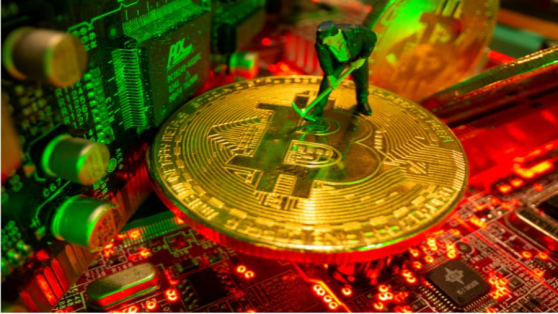
JPMorgan: Доходность майнинга биткоина катастрофически падает

investing.ruPubblicato 2024-09-05Pubblicato ultima volta 2024-09-05

Аналитики отметили, что сложность добычи биткоина возросла на 9%. Три года назад майнинг был более рентабельным и приносил компаниям $342 000 за каждый EH/s. При этом биткоин торговался выше $60 000, а хешрейт составлял 161 EH/s.

«Средний хешрейт сети составил 631 EH/s в августе, что на 16 EH/s больше, чем в прошлом месяце, и примерно на 20 EH/s ниже уровней до халвинга. Доходность майнинга упала до рекордно низкого уровня», — говорится в отчете.

По данным экспертов, общая рыночная капитализация 14 публичных майнинговых компаний, чьи акции торгуются на биржах США, снизилась на 15% за месяц и сейчас составляет $20 млрд.

В прошлом месяце был зафиксирован кратковременный всплеск размера комиссий за транзакции, а годовая волатильность первой криптовалюты увеличилась до 62% в августе по сравнению с 45% в июле, добавили аналитики.

Ранее эксперты JPMorgan заявили, что высокая волатильность рынка цифровых активов не отпугнула институциональных инвесторов.

Читайте оригинальную статью на сайте Bits.media
Letture associate

Is Ethereum Truly a "World Computer"?

Title: Is Ethereum Really a "World Computer"? Ethereum, envisioned as a "world computer" by its founder Vitalik Buterin, aims to be a decentralized platform for global applications. However, a recent analysis by Four Pillars raises questions about whether it is more accurately a "Western computer," based on the geographical distribution of its validators. Currently, the United States dominates with 38.19% of all validators, followed by Germany at 13.04%. Combined, these two countries account for over half of the network. In contrast, Asian representation is minimal, with Singapore holding only 3.15%. The concentration is partly due to affordable cloud hosting services like Hetzner and OVH in Europe and North America, as well as the prevalence of residential validators in the U.S., where individuals run nodes via home internet connections. When examining professionally operated validators, the distribution becomes more balanced. The U.S. share drops to 25.81%, while Asian countries like Singapore (7.28%), Hong Kong (6.44%), Japan (6.38%), and South Korea (4.59%) collectively approach the U.S. level. This shift reflects strategic deployments by institutions to meet regulatory requirements and reduce latency for local users. However, regions like South America, the Middle East, and Africa remain underrepresented. Ethereum's peer-to-peer network mechanisms, such as gossipsub, disadvantage areas with low node density, creating a feedback loop where delayed message propagation reduces validator performance and rewards. This imbalance challenges Ethereum's promises of censorship resistance and global accessibility. Despite these issues, opportunities exist for growth in underrepresented regions. As demand for localized staking infrastructure rises, early entrants in areas like the Middle East could establish dominant positions by offering compliant, low-latency solutions. The evolving validator landscape highlights both the structural challenges and the potential for Ethereum to move closer to its "world computer" ideal.

Foresight News1 h fa

Is Ethereum Truly a "World Computer"?

Foresight News1 h fa

Trading

Spot
活动图片