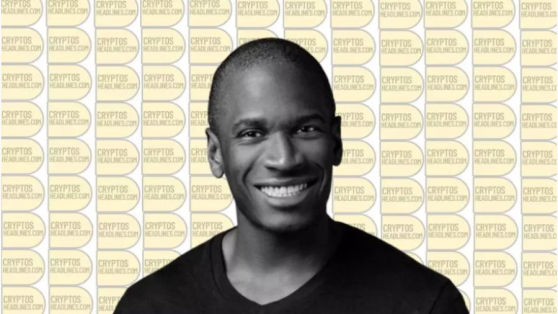
Артур Хейс: Сточная канава для криптовалют может оказаться очень глубокой

investing.ruPubblicato 2024-09-04Pubblicato ultima volta 2024-09-04

Артур Хейс (Arthur Hayes) подчеркнул, что снижение стоимости первой криптовалюты произойдет до заседания Федеральной резервной системы США (ФРС) 18 сентября. По словам криптоэнтузиаста, министр финансов США Джанет Йелен (Janet Yellen) должна действовать быстро, чтобы купировать проблемы в банковском, жилищном секторах экономики, и не спровоцировать ухудшение настроения избирателей.

Величина вливаний денежной массы в американскую экономику должна быть большой, — если Федеральный резерв начнет снижать ставки. Такие монетарные действия окажутся позитивными для криптовалют, особенно для биткоина, отметил предприниматель:

«Интервенции скорее всего начнутся в конце сентября, министерство финансов США пойдет на резкий рост расходов, и даст указание ФРС начать политику количественного смягчения процентной ставки».

По предположению инвестора, биткоин наиболее чувствительно реагирует на изменение долларовой ликвидности, и именно поэтому во время анонса разворота ФРС он подскочил до $64 000, а за следующую неделю просел на 10% на фоне роста баланса казначейских ценных бумаг до $120 млрд.

Ранее Артур Хейс сравнил последствия снижения процентной ставки Федеральной резервной системы для экономики США с эффектом «сахарного кайфа», способного вызвать волновой эффект и краткосрочное восходящее ралли на крипторынке.

Читайте оригинальную статью на сайте Bits.media
Letture associate

Is Ethereum Truly a "World Computer"?

Title: Is Ethereum Really a "World Computer"? Ethereum, envisioned as a "world computer" by its founder Vitalik Buterin, aims to be a decentralized platform for global applications. However, a recent analysis by Four Pillars raises questions about whether it is more accurately a "Western computer," based on the geographical distribution of its validators. Currently, the United States dominates with 38.19% of all validators, followed by Germany at 13.04%. Combined, these two countries account for over half of the network. In contrast, Asian representation is minimal, with Singapore holding only 3.15%. The concentration is partly due to affordable cloud hosting services like Hetzner and OVH in Europe and North America, as well as the prevalence of residential validators in the U.S., where individuals run nodes via home internet connections. When examining professionally operated validators, the distribution becomes more balanced. The U.S. share drops to 25.81%, while Asian countries like Singapore (7.28%), Hong Kong (6.44%), Japan (6.38%), and South Korea (4.59%) collectively approach the U.S. level. This shift reflects strategic deployments by institutions to meet regulatory requirements and reduce latency for local users. However, regions like South America, the Middle East, and Africa remain underrepresented. Ethereum's peer-to-peer network mechanisms, such as gossipsub, disadvantage areas with low node density, creating a feedback loop where delayed message propagation reduces validator performance and rewards. This imbalance challenges Ethereum's promises of censorship resistance and global accessibility. Despite these issues, opportunities exist for growth in underrepresented regions. As demand for localized staking infrastructure rises, early entrants in areas like the Middle East could establish dominant positions by offering compliant, low-latency solutions. The evolving validator landscape highlights both the structural challenges and the potential for Ethereum to move closer to its "world computer" ideal.

Foresight News38 min fa

Is Ethereum Truly a "World Computer"?

Foresight News38 min fa

WEEX TradFi Trading Competition Kicks Off, 50,000 USDT Prize Pool First-Come, First-Served, Open a Position and Get 5 U

WEEX Exchange Launches "TradFi Trading Competition" with a 50,000 USDT Prize Pool Amidst a crypto market downturn, WEEX Exchange highlights the growth of tokenized traditional finance (TradFi) assets as a key trend, allowing users to trade stocks, ETFs, and commodities using crypto. The platform has launched a "TradFi Trading Competition" from July 9th to 23rd, featuring a 50,000 USDT prize pool. The campaign offers three reward tiers: 1. **New User Bonus (25,000 USDT pool):** New users depositing ≥100 USDT, completing a specified spot trade, and one TradFi contract trade (margin ≥10 USDT) receive 200 USDT. 2. **Volume-Based Rewards (20,000 USDT pool):** All users can earn tiered bonuses for achieving TradFi contract trading volumes of 5,000 USDT (3 USDT), 20,000 USDT (10 USDT), and 100,000 USDT (50 USDT). Rewards are stackable. 3. **Participation Reward:** Any user opening a TradFi contract trade during the event receives 5 USDT instantly. The article promotes WEEX's TradFi features, which include trading tokenized shares of companies like NVIDIA and Tesla using USDT, 24/7 trading, fractional share investing starting from $5, and high leverage up to 100x for hedging. It positions these features as solutions to traditional investing barriers like high fees, strict trading hours, and high share prices. The summary concludes by encouraging users to join the competition and leverage WEEX's platform to access global TradFi markets.

marsbit2 h fa

WEEX TradFi Trading Competition Kicks Off, 50,000 USDT Prize Pool First-Come, First-Served, Open a Position and Get 5 U

marsbit2 h fa

Trading

Spot
活动图片