5 криптотрейдеров, за которыми стоит следить в сентябре 2024 года

cryptonews.ruPubblicato 2021-03-31Pubblicato ultima volta 2024-08-31

Волатильный и непредсказуемый рынок цифровых активов — не самое простое пространство для навигации. BeInCrypto составил список криптотрейдеров и экспертов, которые пережили не один цикл и помогут ориентироваться в этом изменчивом поле.

Crypto Tony

Crypto Tony открывает наш список криптотрейдеров, за которыми стоит следить в сентябре 2024 года. За его аналитикой следит более 448 000 подписчиков.

Хотя внимание этого трейдера в основном сосредоточено на биткоине (BTC), иногда он разбирает топовые альткоины и мем-монеты. Недавно Crypto Tony поделился своими мыслями по поводу Polkadot, отметив, что после недавнего падения DOT представляет хорошую возможность для покупки.

Читайте также: Лучшие альткоины для инвестиций: какую криптовалюту купить в 2024
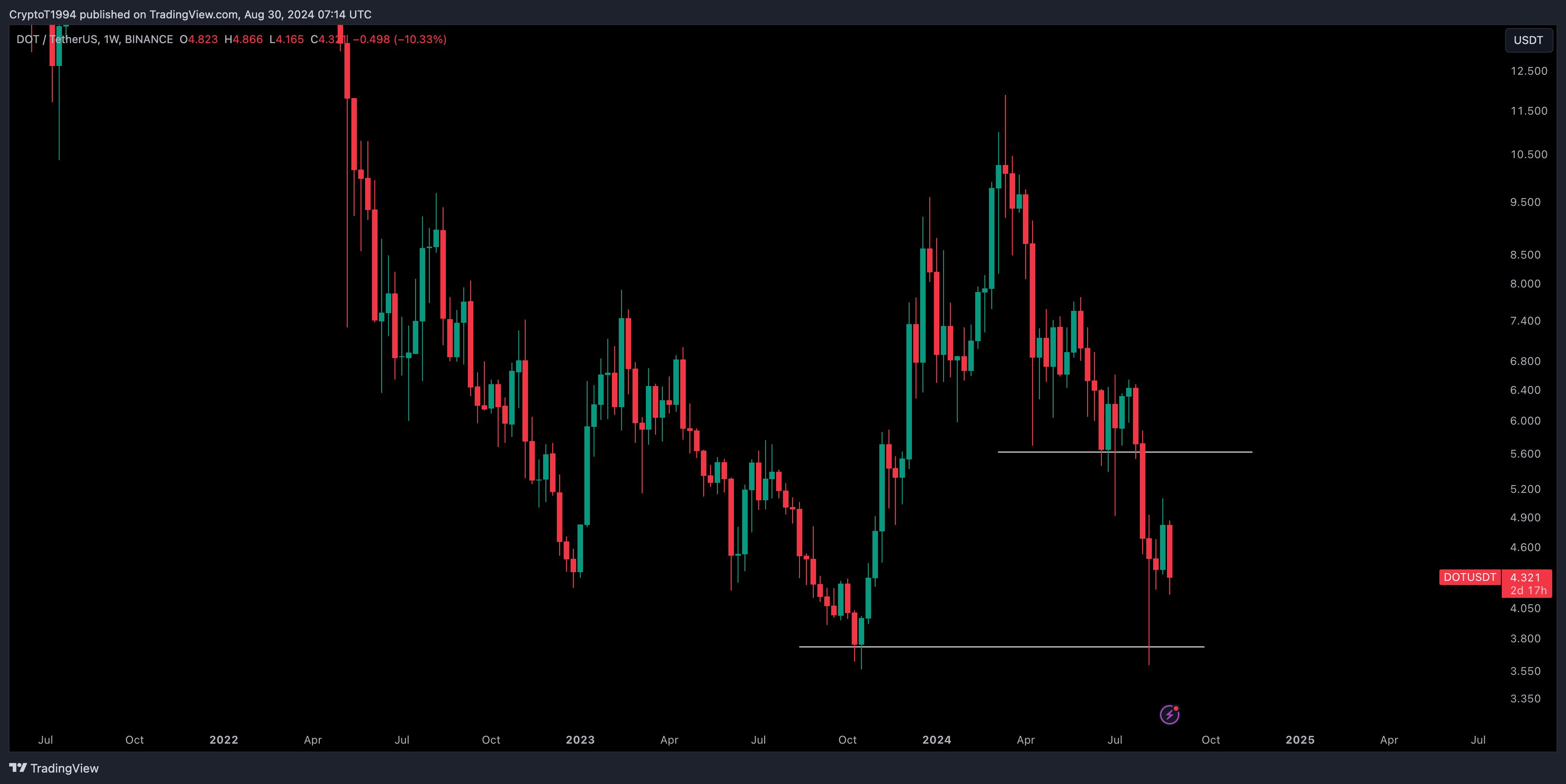
Динамика цены DOT. Источник: X/Twitter

Pentosh1

Pentosh1 известен своим краткосрочным анализом биткоина и альткоинов. В июле он выразил мнение, что альткоины продолжат боковое движение или падение после того, как большинство из них потеряло от 15% до 20% своей стоимости. Что касается BTC, Pentosh1 предполагает, что главная криптовалюта скоро может достичь нового исторического максимума.

«Считаю, что это лишь вопрос времени, когда BTC достигнет нового ATH. Посмотрите только на последние 6 месяцев, одобрение ETF, которые стали самыми успешными ETF в истории, и добавьте то, что биткоин теперь занимает большую часть политической арены с обсуждениями в нескольких государствах», — написал он.

Бенджамин Коуэн

Бенджамин Коуэн уже появлялся в нашем списке лучших криптотрейдеров в июне. В этот раз он снова привлек наше внимание благодаря своему умению проводить детальный анализ с технической и макроэкономической точки зрения.

В отличие от Pentosh1 и Crypto Tony, которые сосредоточены на «Твиттере», Коуэн ведет и канал на YouTube: на момент написания на IntoTheCryptoverse подписаны более 850 тыс. человек.

Пару дней назад назад аналитик поделился своим мнением о Solana (SOL), отметив, что недавнее падение цены альткоина не означает конец коррекции. Однако Коуэн также считает, что восстановление может произойти очень быстро.

Читайте также: Лучшие биржи для альткоинов: где торговать криптовалютой

Bluntz Capital

Bluntz Сapital специализируется на анализе биткоина и Ethereum. Недавно он написал в «Твиттере», что цена BTC может оставаться нестабильной до октября. Трейдер также утверждает, что криптокиты скоро начнут продавать биткоин за ETH, что, возможно, подтолкнет цену альткоина наверх.

«Диапазон скоро восстановится, и на ETHBTC зреет бычья дивергенция, и киты впервые в этом цикле продают BTC в пользу ETH», — написал он.

Помимо двух крупнейших криптовалют, Bluntz анализирует и мемкоины. 25 августа он сообщил, что в ближайшее время на рынке снова начнут доминировать мем-монеты на «кошачью» тематику.

CrediBULL Crypto

CrediBULL Crypto часто делится своими мыслями об альткоинах. На его странице вы найдете аналитику, касающуюся Chainlink (LINK), ETH и некоторых токенов DeFi-платформ — например, Curve (CRV).

Поскольку этот трейдер использует кредитное плечо в своей торговле, его кандидатура может быть не самой подходящей для новичков, которым лучше держать позиции на спотовом рынке.


Letture associate

Analysis of the Latest Portfolio Adjustment by the "Top Player" in the U.S. Stock Market: $9 Billion Short on NVIDIA, Shifting Focus to Power and Memory Sectors

AI investor Leopold Aschenbrenner has made a significant portfolio shift, taking a $9 billion nominal short position against top AI infrastructure stocks like NVIDIA, ASML, and Oracle. Simultaneously, he is redirecting capital towards what he sees as the next critical bottlenecks in the AI boom: power, memory, and data center networking, alongside private investments in AI model companies like Anthropic. This move is interpreted not as a call that the AI bubble has burst, but as a rotation within the infrastructure stack. The analysis highlights NVIDIA's recent $25 billion bond issuance as a potential signal, questioning why a cash-rich company would seek external debt despite high profits and increased dividends/buybacks. The core investment thesis is that the initial, crowded "picks and shovels" trade in semiconductors is maturing. The next wave of capital is expected to flow into the physical and logistical constraints of AI expansion: electricity supply, memory chip capacity, data center construction, and enabling technologies like optical networking (fiber) for high-bandwidth communication, where copper remains crucial for short distances. Aschenbrenner's substantial (approx. 20% of fund) private stake in Anthropic is noted as a key part of his strategy—investing directly in the "mine" (AI models) rather than just the "shovels." The discussion concludes that while certain segments may be overvalued, the overarching AI infrastructure demand driven by real product usage remains robust. The most promising long-term investments are seen in essential, non-sexy infrastructure—particularly energy and power companies—whose demand is viewed as a global constant irrespective of AI's cyclicality.

marsbit1 min fa

Analysis of the Latest Portfolio Adjustment by the "Top Player" in the U.S. Stock Market: $9 Billion Short on NVIDIA, Shifting Focus to Power and Memory Sectors

marsbit1 min fa

BIT Research: Liquidity is Disappearing, Will Bitcoin Replay the Bottoming Pattern of 2022?

The crypto market is currently in an adjustment phase driven by policy expectations and liquidity shifts. Despite a brief rebound fueled by geopolitical easing and SpaceX's strong IPO performance, unexpectedly hawkish signals from new Fed Chair Kevin Warsh have removed anticipated easing support. Concurrently, stablecoin liquidity is shrinking, with insufficient new capital inflows, pushing the market into a typically quiet summer period. Pricing lacks catalysts for a sustained rally. Daily trading volume has significantly contracted, stablecoin growth has slowed markedly, and the supportive effect of Strategy's (formerly MicroStrategy) STRC preferred stock-financed Bitcoin purchases is fading. Amid policy uncertainty, seasonal weakness, and liquidity contraction, Bitcoin faces near-term downward pressure. Warsh's hawkish pivot and refusal to provide a clear policy outlook have increased risk premiums, historically unfavorable for Bitcoin. Technically, the trend remains bearish below $73,700, with $62,446 as critical support. A break below could accelerate declines, though a prolonged consolidation phase, similar to 2022's bottoming process, is possible. Liquidity is a core constraint. Current daily volume is around $500 billion, roughly 25% of the peak during the July-Oct 2025 rally. The 12-month growth rates for USDT and USDC have fallen to ~20%, with 6-month growth near zero, indicating weak new inflows. Bitcoin ETF and Strategy-driven inflows have also weakened, with a 30-day rolling net outflow. With inflation at 4.2% above the Fed's target, combined hawkish policy, seasonal factors, and liquidity shortages challenge Bitcoin's ability to hold above $60,000. However, this adjustment phase may be forming a cyclical low this summer, potentially setting the stage for the next bull cycle.

marsbit30 min fa

BIT Research: Liquidity is Disappearing, Will Bitcoin Replay the Bottoming Pattern of 2022?

marsbit30 min fa

Who Makes the Best Use of Claude Code? The Answer Might Not Be Programmers

Claude Code Usage Report Summary (Based on ~400k sessions) Core Finding: In agentic programming with Claude Code, a clear division of labor has emerged: humans primarily decide *what* to build (planning decisions), while Claude decides *how* to build it (execution decisions). Key Insights: 1. **Effectiveness is not limited to programmers.** In code-generation tasks, success rates for users in non-technical fields (law, finance, management, research) are nearing those of software engineers. What matters most is the user's domain expertise and understanding of the problem to be solved. 2. **Domain expertise drives success and efficiency.** Sessions where users exhibited "expert" proficiency in the task's domain saw verified success rates double compared to "novice" sessions. Experts also delegated more work per instruction, with Claude executing more actions and producing more output. 3. **AI is amplifying, not replacing, domain knowledge.** Claude Code lowers the *implementation* barrier, not the *judgment* barrier. The value of knowing the "what" and "why" is increasing relative to just knowing the "how" to code. 4. **Usage is evolving.** Over a 7-month period (Oct '25 - Apr '26), the share of sessions for debugging halved, while use for software operations, data analysis, and non-code writing roughly doubled. The estimated economic value of typical tasks increased by ~25%. Conclusion: The data suggests coding agents are making programming background less critical for completing technical tasks. However, they reward and amplify deep domain understanding. The ability to successfully direct an AI agent stems more from mastery of a specific field than from coding skill itself. The primary gains come from being competent in a domain; deep specialization adds only marginal additional advantage. This may signal a shift where software creation becomes integrated into various professions.

marsbit1 h fa

Who Makes the Best Use of Claude Code? The Answer Might Not Be Programmers

marsbit1 h fa

Trading

Spot
Futures
活动图片