SignalPlus宏观分析(20240426):美国一季度GDP大幅度低于预期

Odaily星球日报Pubblicato 2024-04-26Pubblicato ultima volta 2024-04-26

Introduzione

美国第一季度GDP增长仅1.6%,远低于第四季度的3.4%,其中个人消费增速从3.3%降至2.5%,商品支出从3.0%降至-0.4%。在加密货币方面,投资者的注意力仍被分散到今年表现强劲的memecoin/BTC符文。

SignalPlus宏观分析(20240426):美国一季度GDP大幅度低于预期

SignalPlus宏观分析(20240426):美国一季度GDP大幅度低于预期

几份不友善的经济数据影响了纽约交易时段的风险情绪。美国第一季度 GDP 增长仅 1.6% ,远低于第四季度的 3.4% ,其中个人消费增速从 3.3% 降至 2.5% ,商品支出从 3.0% 降至 -0.4% ,库存 (-0.3% )、净出口 (-0.86% )、联邦政府支出 (-0.2% ) 均拖累第一季度的增长,同时平减指数不合时宜地跃升至 3.1% (vs 前值 1.6% ),是 2023 年第二季度以来的最高水平,而本地需求是唯一亮点,增长 3.1% 。同时,第一季度核心 PCE 物价指数增长大幅跃升至 3.7% (vs 前值 2.0% ),打击了仅剩的所有乐观情绪,也表示今天公布(且是美联储关注重点)的 3 月核心 PCE 通胀数据有机会比 2.7% 的市场预测来得高。

SignalPlus宏观分析(20240426):美国一季度GDP大幅度低于预期

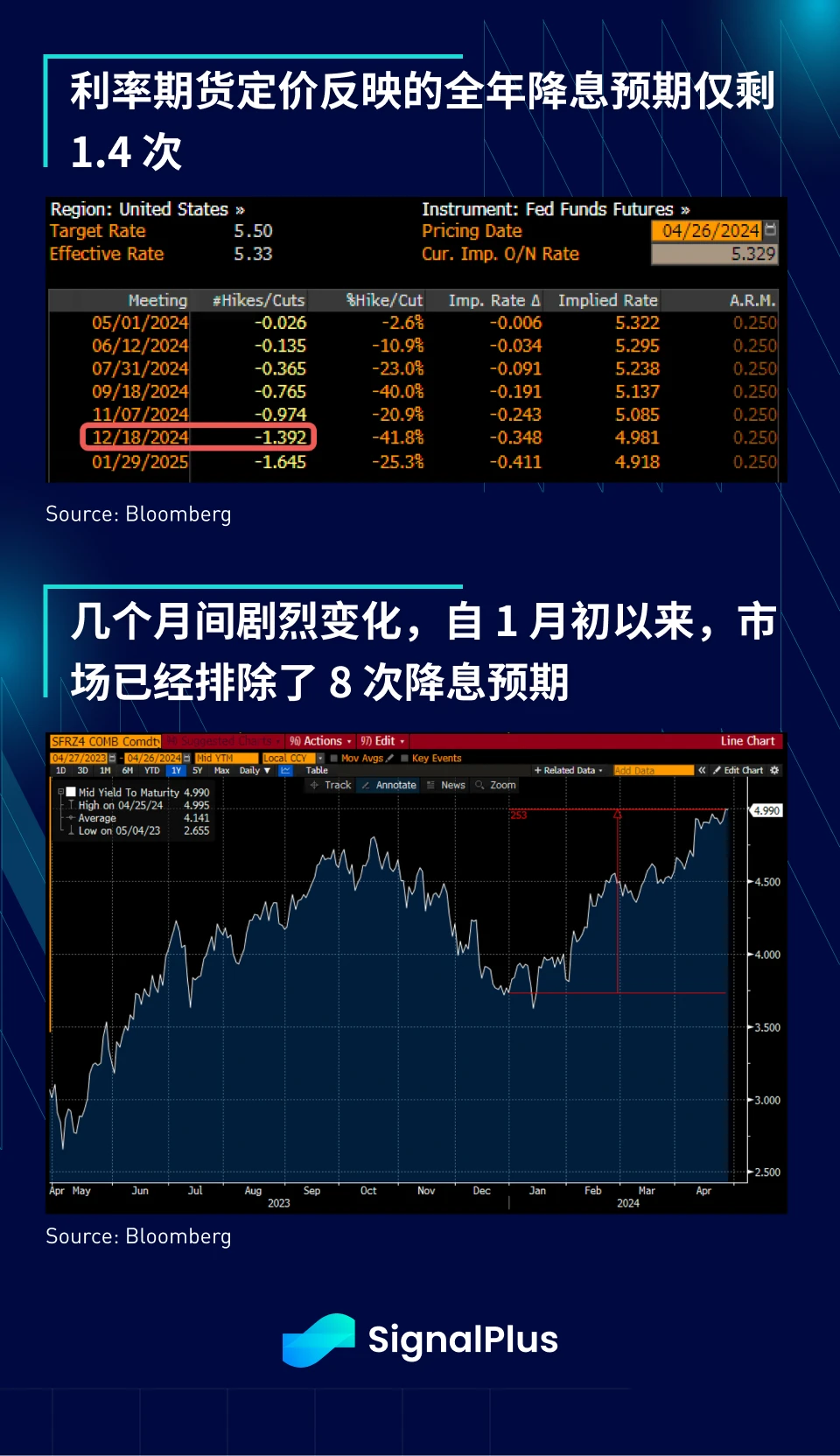
总体而言,经济产出疲软加上价格上涨(可以说是…滞胀吗?),这对资产价格来说相当不利。美债收益率曲线整体跳升 6-8 个基点, 2 年期收益率一度突破 5% ,然后回落至 4.99% 。对于 2024 年的累计降息预期已回落至仅 1.4 次,与 1 月初高达 8 次降息 (!!) 的市场预期相比,这是相当剧烈的变化。

除非 PCE 通胀数据结果大幅低于预期,否则市场预计 Powell 将会在下周的 FOMC 记者会上进行一些“重新校准”。回想一下芝加哥联储行长 Goolsebee 早些时候的采访:

「经过六、七个月的大幅改善和接近 2% 的通胀数据之后,我们现在看到远高于此的水平,我们必须重新调整,必须等待并观察」

——芝加哥联储 Goolsebee

可以合理地预期主席会撤回 3 月份的评论,并被迫接受通胀的发展并未如美联储所愿的事实。另一个变数是“鹰派重新校准”是否会影响到放缓缩表的时间点,目前市场预计最快将于 5 月开始放缓,可以密切关注是否有“少数参与者”表示将在当前情况下继续进行缩表,直到看到准备金水平进一步恶化。
SignalPlus宏观分析(20240426):美国一季度GDP大幅度低于预期

美国股市昨天在大部分时间里呈现 1% 的跌幅,主要受到 Meta 财报结果不佳的拖累,随后在 Microsoft 和 Alphabet 财报公布后出现了+ 2% 的逆势反弹。Microsoft 股价在各板块营收全面增长的带动下上涨超过 5% ,而 Google 的广告和服务收入超出预期,且宣布 700 亿美元的股票回购以及首次派息,股价因此上涨超过 11 %。

SignalPlus宏观分析(20240426):美国一季度GDP大幅度低于预期

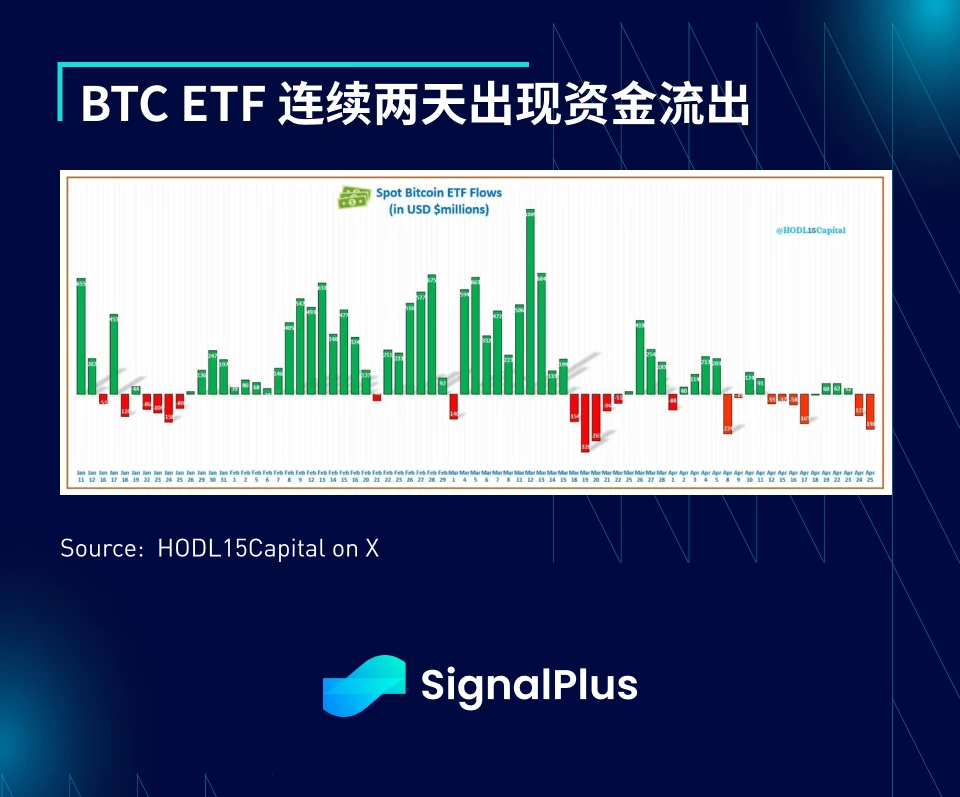
在加密货币方面,投资者的注意力仍被分散到今年表现强劲的 memecoin / BTC 符文,主要币种的价格仍停滞不前。 随著主流投资者的兴趣大幅放缓,BTC ETF 连续两天出现资金流出,延续了过去 4 周较令人失望的趋势。目前我们对价格走势维持中立观点,建议仍要保持谨慎的态度。

SignalPlus宏观分析(20240426):美国一季度GDP大幅度低于预期

SignalPlus宏观分析(20240426):美国一季度GDP大幅度低于预期

最后,继 SEC 可能在 5 月正式拒绝批准 ETH 现货 ETF 后,我们看到 Consensys 向 SEC 发起诉讼,控诉该机构“试图通过针对 Consensys 及其他潜在对象的特定执法行动非法监管 ETH” ,以牙还牙。

过去几年在这个领域学到的最重要的教训?永远看好律师在这个行业的作用。祝福各位周末愉快。

SignalPlus宏观分析(20240426):美国一季度GDP大幅度低于预期

SignalPlus宏观分析(20240426):美国一季度GDP大幅度低于预期

您可在 ChatGPT 4.0 的 Plugin Store 搜索 SignalPlus ,获取实时加密资讯。如果想即时收到我们的更新,欢迎关注我们的推特账号@SignalPlus_Web3 ,或者加入我们的微信群(添加小助手微信:SignalPlus 123)、Telegram 群以及 Discord 社群,和更多朋友一起交流互动。SignalPlus Official Website:https://www.signalplus.com

Letture associate

Giants Wage the Context War, Reconstructing AI Moats

The article "Giants Launch the Context War, Reconstructing AI's Moat" discusses how leading AI companies—OpenAI, Anthropic, and Google—are shifting their competitive focus from model size to acquiring, managing, and utilizing user context (Context). Initially, Context referred to the length of text a model could process, leading to a "arms race" for longer context windows. However, the competition has evolved through three key phases: expanding text capacity (long context windows), enabling memory across sessions, and finally, integrating AI into real user environments like browsers and desktops to capture dynamic task states. Each company is pursuing a distinct strategy. OpenAI is building Context around the ChatGPT account, turning it into a central hub that accumulates user understanding across various integrated applications and tools. Anthropic, lacking a major user base, focuses on high-value verticals like coding, empowering its Claude model to actively gather Context through GUI interaction (Computer Use) and system connections (MCP protocol). Google, with vast existing user data from products like Search and Gmail, faces the challenge of restructuring this data into actionable, AI-understandable Context for its Gemini model within its ecosystem. The core argument is that the nature of competitive advantage in AI is changing. The internet era prized network effects—connecting more users. The AI era values "individual depth": the ability to build deep, task-specific understanding of a user. This creates a new moat through 1) the compounding value of accumulated Context, 2) deep integration with user tools and permissions, and 3) the establishment of trust for complex tasks. Therefore, the battle for Context is fundamentally about capturing "task entry points" and converting existing digital ecosystems into environments where AI can effectively understand and act, rather than merely scaling user numbers.

marsbit13 min fa

Giants Wage the Context War, Reconstructing AI Moats

marsbit13 min fa

Foundation Steps Back, Ethlabs Steps Forward: Ethereum Undergoes Its Largest Restructuring in History

On June 23rd, the Ethereum ecosystem witnessed two major shifts, signaling a significant governance realignment. First, former Ethereum Foundation researchers established Ethlabs, a new independent non-profit. Backed by major ETH holders like Bitmine and SharpLink, Ethlabs aims to address practical needs for institutional adoption, including faster settlement, native asset issuance, cross-chain transactions, and mainnet scaling. Secondly, the Ethereum Foundation announced a major restructuring, laying off 54 employees (20% of its staff) to become a leaner entity focused on protocol governance and maintenance rather than being the primary builder. This move represents a pivotal correction. Criticisms had mounted over the Foundation's perceived slowness, lack of clear strategy, and over-reliance on Vitalik Buterin's influence. Ethlabs emerges as a more execution-oriented, "industrialized" layer focused on market adoption—bridging the gap between research and real-world use. Notably, Vitalik Buterin is absent from its list of supporters, interpreted as an intentional step to avoid excessive personal endorsement and allow the organization to build independent credibility. The Ethereum Foundation's downsizing and redefinition mark a retreat from its former central coordinating role. It now aims to share the "privilege of stewarding Ethereum" with other emerging groups like Ethlabs, the Ethereum Applications Guild, and The Ethereum Economic Zone. Analysts frame this dual shift as the Foundation ensuring Ethereum remains "correct" (credibly neutral), while Ethlabs must prove it remains "effective" (competitive and attractive for capital and adoption). This addresses community "shareholder-like anxiety" about ETH's market performance. While risks exist—such as concerns over shifting from Foundation centrality to large-holder influence—the consensus is that the greater risk for Ethereum was inaction, caught between technical idealism and organizational inertia. These steps aim to create a more multi-stakeholder, execution-driven future for the network.

链捕手7 h fa

Foundation Steps Back, Ethlabs Steps Forward: Ethereum Undergoes Its Largest Restructuring in History

链捕手7 h fa

Second Half of U.S. Crypto Policy: The Clarity Act Aims for 60 Votes, CFTC's "One-Person Commission" Becomes Biggest Variable

In a pivotal year for US crypto policy, the "CLARITY Act" is advancing in the Senate but faces a high hurdle, needing 60 votes to pass. Key challenges include bridging partisan divides on ethics and swaying undecided Republican senators within a tight legislative calendar of only about 40 working days. The policy "second half" involves intense negotiations on a broader framework for Web3 and DeFi, including crypto tax reforms and the Blockchain Regulatory Certainty Act. A significant uncertainty is the understaffed CFTC, operating with four commissioner vacancies, which complicates regulatory clarity. Meanwhile, the departure of key "crypto champions"—SEC Commissioner Hester Peirce and Senator Cynthia Lummis—will impact ongoing policy efforts. Industry experts are cautiously optimistic but realistic. Sara K. Weed notes that while progress is being made, CLARITY is unlikely to pass this Congress, pushing agencies like the SEC and CFTC to provide more guidance. Sulolit Mukherjee suggests meaningful crypto tax legislation is more likely to be attached to larger must-pass bills. Rashan Colbert discusses the jurisdictional debate over prediction markets, emphasizing the need for a regulatory framework that fosters their development as financial tools rather than treating them broadly as gambling. The clock is ticking, but opportunities remain for substantive progress through continued bipartisan dialogue and pragmatic efforts.

marsbit10 h fa

Second Half of U.S. Crypto Policy: The Clarity Act Aims for 60 Votes, CFTC's "One-Person Commission" Becomes Biggest Variable

marsbit10 h fa

Dan Koe's New Essay: Escaping the Fate of the Wage Slave, How to Survive the AI Replacement Wave?

Dan Koe argues that the true threat in the AI era isn't technology itself, but a reliance on others for one's livelihood and happiness. The core problem is "wage slavery"—spending life on unfulfilling work. To survive and thrive, one must escape this by building their own enterprise. The key is developing five elements: Agency (initiative), Taste (discernment), Persuasion, Persistence, and Iteration. These boil down to problem-solving skills and experiential knowledge, which cannot be learned passively but only through doing your own projects. The solution is to become "unemployable" by shifting your identity. This requires: 1) Radically changing your environment to force growth, 2) Choosing a medium (like content creation) that provides real feedback through trial and error, and 3) Mastering either code or, preferably, media (content). Content creation is more valuable because its subjective nature and need for human perspective create a durable advantage over generic AI output. To start, define your life's work by answering foundational questions about your innate knowledge, unique abilities, and contrarian beliefs. Then, immediately act by publishing your first piece of content. The cycle of creating, receiving feedback, and iterating is the essential path to developing the skills needed for an independent, meaningful career and financial resilience.

marsbit11 h fa

Dan Koe's New Essay: Escaping the Fate of the Wage Slave, How to Survive the AI Replacement Wave?

marsbit11 h fa

Trading

Spot
Futures
活动图片