Without Storytelling Power, Web3 Cannot Reach Vast Territories

marsbitDipublikasikan tanggal 2025-12-30Terakhir diperbarui pada 2025-12-30

Abstrak

Web3's failure stems not from a lack of ideas, but from its inability to resonate emotionally. Current Web3 narratives are dominated by abstract concepts—blockchains, infrastructure, protocols—which, while technically sound, lack humanity and fail to connect with ordinary people. Storytelling is crucial in Web3, more than in any other industry. Unlike topics like food or travel that evoke immediate sensory associations, Web3 feels distant and cold without emotional hooks. Projects often lead with technical explanations of how things work, neglecting the feelings they evoke—confusion, joy, relief—which are universal and relatable. Instead of listing features, effective communication starts with relatable user experiences. For example, rather than saying “this improves scalability,” describe the moment a user realizes a transaction completed instantly without waiting. Stories don’t dilute technical value; they prepare the audience to engage with complex ideas. By grounding concepts in human moments—struggles, breakthroughs, small victories—Web3 can become tangible and compelling. Practical experience shows that story-driven content, focusing on authentic user journeys, outperforms technical explanations in engagement and comprehension. The key is making Web3 feel human, not just functional.

Written by: Noir

Compiled by: Chopper, Foresight News

The failure of Web3 has never been due to a lack of creativity. In fact, its problem lies in its inability to resonate with people.

Most of the current Web3 narratives are filled with abstract concepts: public chains, infrastructure, protocols, layers... These terms are not wrong! But they lack any "human touch," making it impossible for ordinary people to feel a connection.

This is precisely where the value of storytelling comes in. In the Web3 field, the importance of storytelling far exceeds that of any other industry.

Web3 Is Built on Logic but Lacks Emotional Resonance

In other fields, people already come with a cognitive context. For example: talking about food can stimulate your appetite; discussing fitness can make you visualize progress; mentioning travel will immediately bring to mind the scenery of the destination.

But Web3 simply cannot do this. Creators and project teams are always painstakingly explaining how amazing those invisible systems and intangible processes are.

Without stories as a foundation, all of this seems distant and cold.

In short: utterly boring. Clearly, no one will pay for something boring.

Stories Are the Gateway for Ordinary People to Enter Web3

Most creators and project teams are eager to explain upfront how something works. But they forget that a good story always begins by describing how it feels.

Confusion, laughter, relief, vulnerability... these emotions are completely absent in Web3 narratives.

Friend, if this trend continues, the outcome is self-evident. Even if people don’t understand the technology, these emotions are universal. The key is that when someone recognizes familiar feelings in a story, they will instinctively follow you to hear your subsequent professional explanations.

Stop Listing Features; Talk More About User Experience Moments

Compare two ways of expression, and the difference is clear.

Feature-first version: This feature improves the system’s scalability by optimizing throughput.

There’s nothing wrong with this statement, but it’s forgettable, and... what does it even mean?😂

Story-first version: I kept refreshing the page, mentally prepared to wait again... only to find that the transaction had already been completed.

The same core information, but the latter has more warmth and is easier to understand.

Storytelling isn’t about downplaying technology; it’s about preparing the listener’s brain to receive complex information.

Got it? I hope you understand. Let’s continue...

Complex Concepts Need Real-Life Scenarios to Land
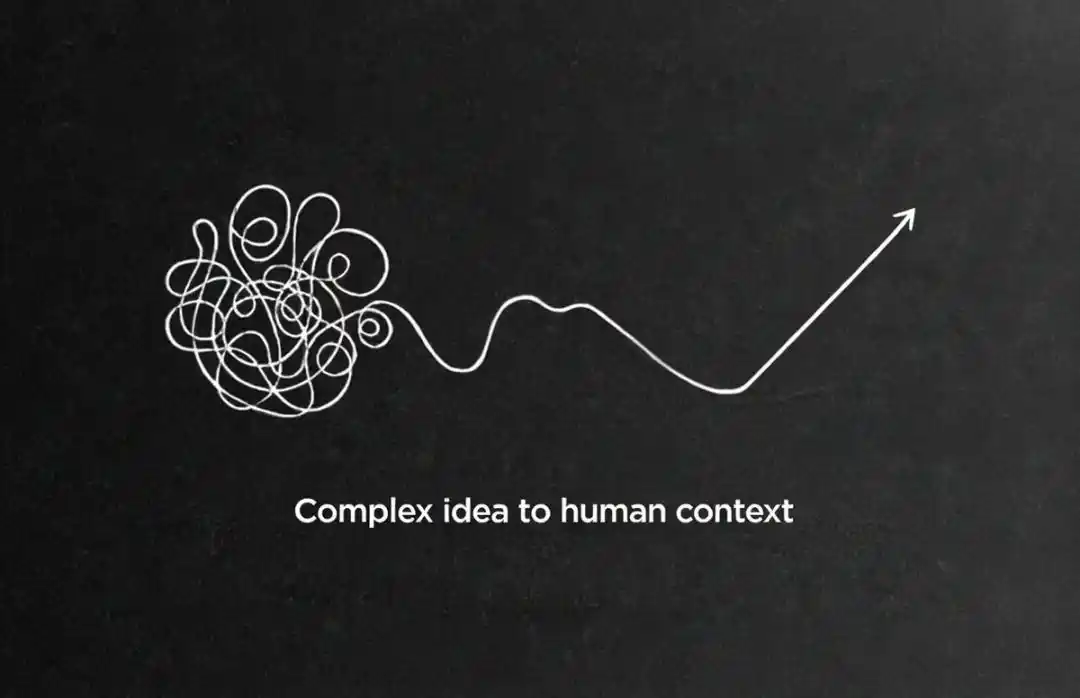
When faced with complex problems, people ask themselves: "What does this have to do with me?"

And stories can subtly provide the answer. All it takes is a simple real-life scenario to make the connection.

You don’t actually need to explain every detail. You just need to showcase a key moment: a frustrating bottleneck, a moment of relief, a small victory.

That’s enough to make a complex concept feel real and tangible.

Practical Validation: This Methodology Really Works

The core of my work is creating story-centric video content for Web3 bounty campaigns and sponsors.

Over time, I’ve noticed a pattern: the videos that win are never the ones with the most hardcore technical explanations, but those that begin with moments full of human touch.

I don’t start by listing features or explaining principles. Instead, I focus on these scenes: the initial awkwardness of using a product for the first time; the stumbling before understanding a function; the sudden clarity when everything finally connects.

This narrative approach always keeps viewers engaged longer and helps them understand faster. This is also why my videos stand out in bounty competitions.

It’s not because I explain more technology, but because I make complex concepts feel human and emotionally warm.


Pertanyaan Terkait

QWhat is the main reason for Web3's failure according to the article?

AWeb3's failure is not due to a lack of creativity, but rather its inability to resonate with people emotionally. Its narratives are filled with abstract concepts that lack a human touch, making it difficult for ordinary people to connect.

QHow does the article suggest making Web3 concepts more relatable?

AThe article suggests using storytelling to make Web3 concepts more relatable. Instead of listing technical features, creators should focus on describing the user's experience and emotional moments, such as confusion, joy, or relief, to create a connection.

QWhat is the difference between 'function-first' and 'story-first' approaches as described in the article?

AThe 'function-first' approach focuses on explaining technical details, like 'optimizing throughput to improve system scalability,' which can be boring and hard to understand. The 'story-first' approach describes a relatable user experience, such as 'I kept refreshing the page, expecting to wait... only to find the transaction was already complete,' making it more engaging and understandable.

QWhy are emotions like confusion or joy important in Web3 storytelling?

AEmotions like confusion or joy are important because they are universal and relatable. When they recognize familiar feelings in a story, people are more likely to engage and be open to understanding the subsequent technical explanations.

QWhat practical evidence does the author provide to support the effectiveness of storytelling in Web3?

AThe author, who creates story-focused video content for Web3 bounty campaigns and sponsors, found that winning videos are not the most technically detailed but those that begin with human, emotional moments. These videos, which focus on user experiences like initial struggles or moments of clarity, keep viewers engaged longer and help them understand complex concepts faster, leading to success in bounty competitions.

Bacaan Terkait

Penarikan Bitcoin Terus Berlanjut: Penyimpanan 8 Tahun di Dompet Dingin Coldcard Berakhir dengan Nol

Dompet keras Coldcard Dihack, Aset Bitcoin Senilai $88,6 Juta Dicuri Dompet keras Coldcard mengalami kerentanan keamanan serius, menyebabkan gelombang penarikan paksa dana pengguna. Menurut Galaxy Research, total 1.367,05 BTC (sekitar $88,6 juta) telah dicuri dari 4.585 alamat yang rentan. Masalahnya bukan pada perangkat lunak (firmware), yang sudah diperbarui oleh pengembang Coinkite. Akar masalahnya ada pada seed phrase (frasa pemulihan) yang dihasilkan oleh perangkat antara Maret 2021 dan versi firmware tertentu. Kesalahan pemrograman menyebabkan generator angka acak perangkat beralih dari komponen keras ke generator perangkat lunak (Yasmarang) yang dapat diprediksi. Seed phrase yang dibuat dalam periode rentan ini dapat ditebak melalui serangan brute-force secara offline. Perangkat yang terdampak mencakup model Mk2/Mk3 (firmware 4.0.1–4.1.9), Mk4/Mk5 (sebelum v5.6.0), dan Q (sebelum v1.5.0Q). Satu-satunya cara untuk mengamankan dana adalah dengan membuat seed phrase BARU pada firmware yang telah diperbaiki dan memindahkan semua aset ke alamat baru tersebut. Memperbarui firmware saja tidak mengubah seed phrase lama yang sudah rentan. Insiden ini menghancurkan bagi investor jangka panjang. Satu korban, seorang pria 39 tahun, kehilangan 2 BTC ($130.000) yang ia kumpulkan selama 8 tahun melalui kerja keras. Ia menggunakan Bitcoin sebagai lindung nilai terhadap hiperinflasi di negaranya dan menyimpannya dengan aman di dompet dingin untuk pensiun dini. Pencurian instan ini menghancurkan rencananya dan mengungkap kerapuhan strategi 'simpan dan lupakan' meski dengan perangkat keras sekalipun. Kasus ini mengingatkan pada insiden serupa di masa lalu di mana kelemahan generator angka acak merusak keamanan kriptografi. Ini mempertanyakan asumsi bahwa penyimpanan offline selalu identik dengan keamanan mutlak.

cryptonews.ru20m yang lalu

Penarikan Bitcoin Terus Berlanjut: Penyimpanan 8 Tahun di Dompet Dingin Coldcard Berakhir dengan Nol

cryptonews.ru20m yang lalu

Mengapa Bitcoin Bertahan di $64.000 Setelah Jeda Ketat dari The Fed

Bitcoin berakhir di bulan Juli mendekati level $64.000, bertahan di tengah volatilitas pasca keputusan Federal Reserve AS untuk mempertahankan suku bunga dalam kisaran 3,50-3,75%. Meskipun tiga anggota komite voting mendukung kenaikan suku bunga, sinyal keseluruhan dari Fed tetap ketat, membatasi minat terhadap aset berisiko. Pasar kripto menunjukkan ketahanan dengan aliran bersih masuk $32,1 juta ke ETF Bitcoin spot, mengakhiri serangkaian arus keluar. Di sisi lain, ETF Ethereum mengalami penarikan dana sekitar $18,65 juta. Kapitalisasi pasar agregat bertahan di sekitar $2,29 triliun. Secara teknis, Bitcoin menemukan dukungan di zona $63.000-63.500 dengan hambatan utama di dekat $66.000. Sementara Ethereum diperdagangkan sekitar $1.900 dengan tekanan harga, metrik jaringan seperti antrian validator yang panjang menunjukkan komitmen jangka panjang. Pergerakan di altcoin beragam: ETF Solana mencatat aliran masuk yang kuat sekitar $19 juta, sementara XRP dan BNB bergerak dalam konsolidasi. Regulasi juga menjadi perhatian setelah penundaan pembahasan CLARITY Act di Senat AS hingga musim gugur, mengurangi harapan disahkannya undang-undang tersebut pada tahun 2026. Hari terakhir bulan Juli akan dipantau untuk data makro AS seperti inflasi dan pengeluaran konsumen, yang dapat memengaruhi pergerakan pasar. Skenario dasar untuk Bitcoin adalah konsolidasi dalam kisaran $63.000-66.000. Kelangsungan aliran masuk institusional dan pertahanan level kunci akan menjadi sinyal penting untuk pemulihan pasar di paruh kedua tahun 2026.

cryptonews.ru3j yang lalu

Mengapa Bitcoin Bertahan di $64.000 Setelah Jeda Ketat dari The Fed

cryptonews.ru3j yang lalu

Trading

Spot
活动图片




