Visa Effect

marsbitDipublikasikan tanggal 2026-01-15Terakhir diperbarui pada 2026-01-15

Abstrak

Visa Effect: A Blueprint for Stablecoin Network Growth The article draws parallels between the fragmented early days of the credit card industry and the current state of stablecoins. In the 1960s, numerous banks operated isolated payment networks, creating settlement chaos. Visa succeeded not just through technology, but by creating a cooperative, independent structure that aligned incentives. It acted as a neutral third party, allowing member banks to share profits proportionally, have governance rights, and initially adhere to exclusivity clauses. This fostered powerful network effects. Today, stablecoins face similar fragmentation, with over 300 stablecoins listed on Defillama. Services that enable protocols to issue their own branded stablecoins (e.g., Ethena, Anchorage Digital) are compared to the failed BankAmericard model, which only fractures liquidity and prevents any single stablecoin from achieving mainstream network effects. The proposed solution is a Visa-like model for stablecoins: an independent, third-party cooperative. Issuers and applications supporting a specific asset class would join, share in reserve yields, and have governance rights over the stablecoin's development. This structure would consolidate liquidity, create internal compounding network effects, and drive widespread adoption.

Author: Nishil Jain

Compiled by: Block unicorn

Preface

In the 1960s, the credit card industry was in chaos. Banks across the United States were trying to establish their own payment networks, but each network operated independently. If you held a Bank of America credit card, you could only use it at merchants that had a cooperation agreement with Bank of America. When banks tried to expand their business to other banks, all credit card payments encountered the problem of interbank settlement.

If a merchant accepted a card issued by another bank, the transaction had to be settled through its original check settlement system. The more banks that joined, the more settlement problems arose.

Then Visa emerged. Although the technology it introduced undoubtedly played a huge role in the credit card payment revolution, the more important success lay in its global universality and its success in getting global banks to join its network. Today, almost every bank in the world has become a member of the Visa network.

While this seems very normal today, imagine trying to convince the first thousand banks, both inside and outside the United States, that joining a cooperation agreement instead of building their own network was a wise move. Then you begin to realize the scale of this endeavor.

By 1980, Visa had become the dominant payment network, processing about 60% of credit card transactions in the United States. Currently, Visa operates in over 200 countries.

The key was not more advanced technology or more funding, but the structure: a model that could coordinate incentives, decentralize ownership, and create compound network effects.

Today, stablecoins face the same fragmentation problem. And the solution may be the same as what Visa did fifty years ago.

Experiments Before Visa

Other companies that appeared before Visa failed to develop.

American Express (AMEX) tried to expand its credit card business as an independent bank, but its scale expansion was limited to continuously adding new merchants to its banking network. On the other hand, BankAmericard was different; Bank of America owned its credit card network, and other banks only utilized its network effects and brand value.

American Express had to approach each merchant and user individually to open their bank accounts, while Visa achieved scale by accepting banks itself. Each bank that joined the Visa cooperative network automatically gained thousands of new customers and hundreds of new merchants.

On the other hand, BankAmericard had infrastructure issues. They did not know how to efficiently settle credit card transactions from one consumer bank account to another merchant bank account. There was no efficient settlement system between them.

The more banks that joined, the worse this problem became. Thus, Visa was born.

The Four Pillars of Visa's Network Effects

From the story of Visa, we learn about 2-3 important factors that led to the accumulation of its network effects:

Visa benefited from its status as an independent third party. To ensure that no bank felt threatened by competition, Visa was designed as a cooperative independent organization. Visa did not participate in competing for the distribution pie; the banks competed for it.

This incentivized participating banks to compete for a larger share of the profits. Each bank was entitled to a portion of the total profits, proportional to the total transaction volume it processed.

Banks had a say in the network's functions. Visa's rules and changes had to be voted on by all relevant banks and required 80% approval to pass.

Visa had exclusivity clauses with each bank (at least initially); anyone joining the cooperative could only use Visa cards and the network and could not join other networks—thus, to interact with Visa banks, you also needed to be part of its network.

When Visa's founder, Dee Hock, traveled across the United States to persuade banks to join the Visa network, he had to explain to each bank that joining the Visa network was more beneficial than building their own credit card network.
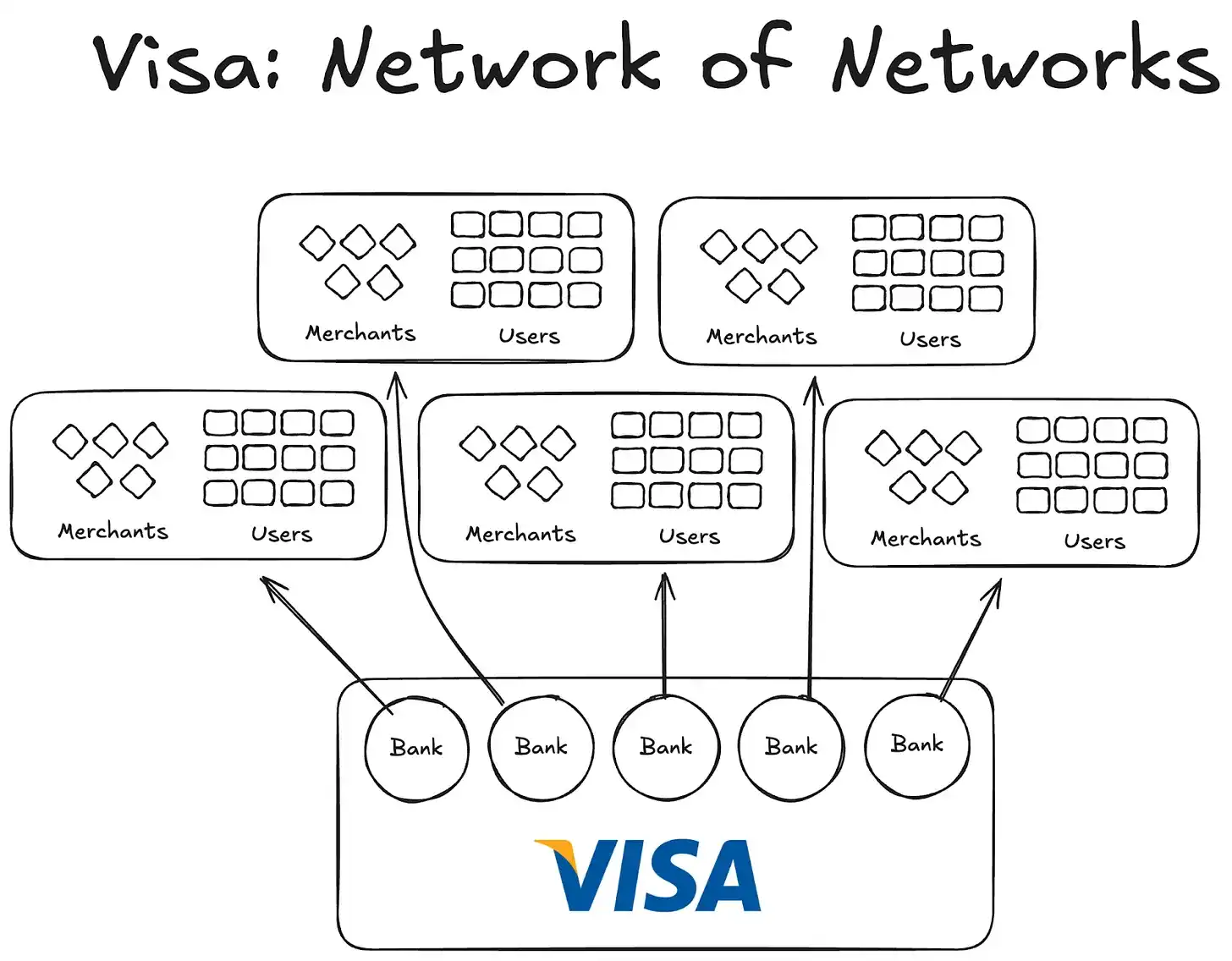
He had to explain that joining Visa meant more users and more merchants would be connected to the same network, which would promote more digital transactions globally and bring more benefits to all participants. He also had to explain that if they built their own credit card network, their user base would be very limited.

Implications for Stablecoins

In a sense, Anchorage Digital and other companies now offering stablecoin-as-a-service are replaying the BankAmericard story in the stablecoin space. They provide the underlying infrastructure for new issuers to build stablecoins, but liquidity continues to fragment into new tokens.

Currently, over 300 stablecoins are listed on Defillama. Moreover, each newly created stablecoin is limited to its own ecosystem. As a result, no single stablecoin can generate the network effects needed to go mainstream.

Since the same underlying assets support these new coins, why do we need more coins with new code?

In our Visa story, these are like BankAmericards. Ethena, Anchorage Digital, M0, or Bridge—each allows a protocol to issue its own stablecoin, but this only exacerbates industry fragmentation.

Ethena is another similar protocol that allows yield transmission and white-label customization of its stablecoin. Just like MegaETH issuing USDm—they issued USDm through tools that support USDtb.

However, this model failed. It only fragments the ecosystem.

In the credit card case, the brand differences between banks did not matter because it did not create any friction in user-to-merchant payments. The underlying issuance and payment layer was always Visa.

However, for stablecoins, this is not the case. Different token codes mean an infinite number of liquidity pools.

Merchants (or in this case, applications or protocols) will not add all stablecoins issued by M0 or Bridge to their list of accepted stablecoins. They will decide based on the liquidity of these stablecoins in the open market; the coins with the most holders and the highest liquidity should be accepted, while the rest will not.

The Way Forward: The Visa Model for Stablecoins
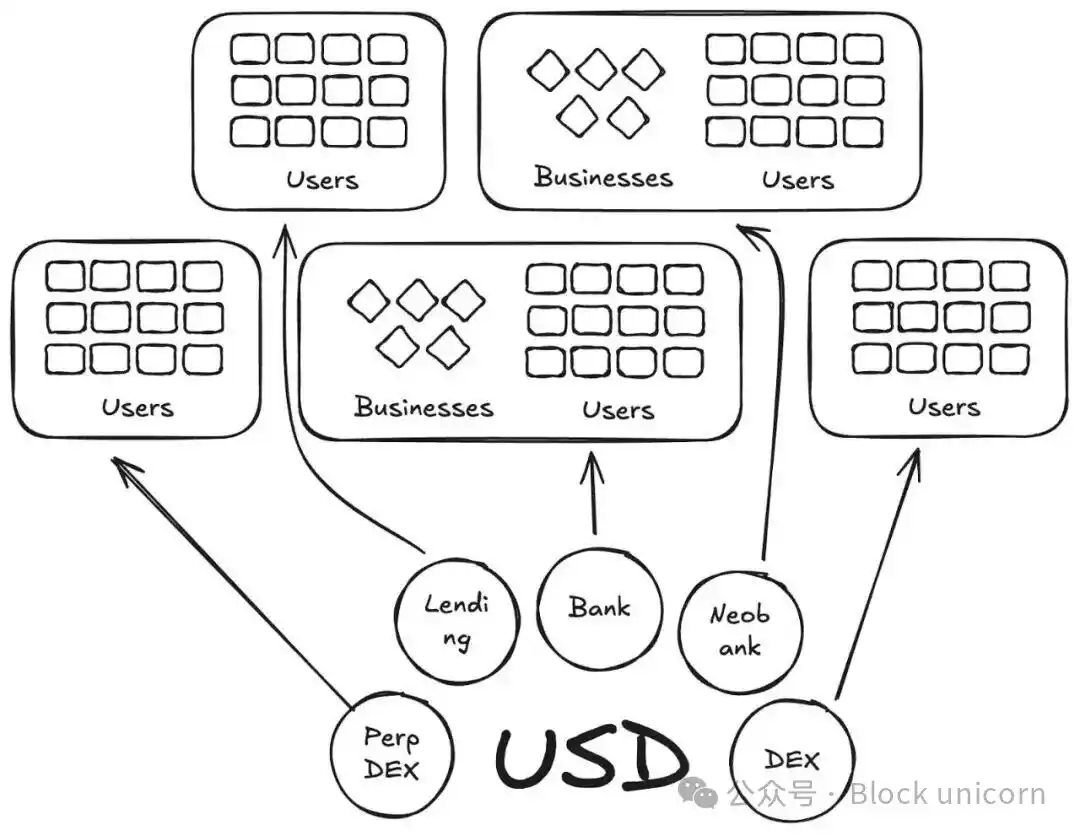
We need independent third-party institutions to manage stablecoins of different asset classes. Issuers and applications supporting these assets should be able to join cooperatives and access reserve earnings. At the same time, they should also have governance rights and be able to vote on the direction of their chosen stablecoin.

From a network effects perspective, this would be a superior model. As more issuers and protocols join the same token, it will facilitate the widespread adoption of a token that retains earnings internally rather than flowing into others' pockets.


Pertanyaan Terkait

QWhat was the main challenge faced by the credit card industry in the 1960s, and how did Visa address it?

AThe main challenge was fragmentation, with each bank operating its own isolated payment network. Visa addressed this by creating a cooperative network that allowed banks to join and share infrastructure, enabling universal acceptance and efficient interbank settlement.

QHow did Visa's structure differ from competitors like American Express and BankAmericard, and why was it more successful?

AVisa operated as an independent, cooperative organization where banks shared ownership and governance, avoiding competition among members. In contrast, American Express acted as a single bank expanding alone, and BankAmericard had infrastructure issues with interbank settlement. Visa's model incentivized participation and scaled network effects more effectively.

QWhat are the key pillars of Visa's network effects as described in the article?

AThe key pillars are: 1) Visa's independent third-party status to avoid competition among banks, 2) Profit sharing proportional to transaction volume, 3) Governance through voting by member banks requiring 80% approval, and 4) Initial exclusivity clauses preventing members from joining other networks.

QHow does the current stablecoin landscape resemble the pre-Visa credit card era, and what problem does this create?

AThe stablecoin landscape is fragmented, with over 300 stablecoins on Defillama, each limited to its own ecosystem. This prevents network effects, causes liquidity fragmentation, and hinders mainstream adoption, similar to how isolated bank networks struggled before Visa.

QWhat solution does the article propose for stablecoins, inspired by Visa's model?

AThe article proposes an independent third-party cooperative for stablecoins, where issuers and applications join to share reserve yields and governance rights. This would unify liquidity, enhance network effects, and keep benefits within the ecosystem rather than fragmenting them.

Bacaan Terkait

Setelah Tiga Kuartal Berturut-Turut Turun, Bisakah Pasar Kripto Menyambut Jendela Stabilitas di Kuartal Ketiga?

Pasar kripto mengalami kuartal terburuk sejak 2022, dengan kapitalisasi pasar turun 12.6% menjadi $2.1 triliun, didorong oleh keluarnya modal dan penurunan volume perdagangan. Bitcoin dan Ethereum masing-masing jatuh 14.2% dan 25.4% di kuartal kedua. Aliran keluar bersih dari ETF Bitcoin AS mencapai $4.67 miliar, menandakan tekanan jual yang berkelanjutan. Faktor utama meliputi terputusnya hubungan dengan saham AS, kebijakan moneter Federal Reserve yang ketat, dan pelepasan aset oleh perusahaan seperti Strategy. Proses legislasi UU CLARITY yang akan memberikan kejelasan regulasi terhambat, meningkatkan premi risiko di sektor ini. Namun, ada tanda-tanda potensi stabilisasi. Aliran keluar ETF yang besar secara historis sering terjadi di akhir fase penurunan, dan para pemegang Bitcoin jangka panjang mulai menambah kepemilikan lagi. Sementara sebagian besar sektor menyusut, pasar prediksi dan aset koleksi yang ditokenisasi mencatat pertumbuhan signifikan. Pandangan untuk kuartal ketiga sangat bergantung pada pertemuan Fed akhir Juli. Sinyal kebijakan yang lunak dapat mendukung pemulihan Bitcoin, sementara sikap yang hawkish dapat memicu konsolidasi lebih lanjut. Meskipun tantangan regulasi tetap ada, indikator teknis seperti harga Bitcoin yang mendekati rata-rata bergerak 200-mingguannya menunjukkan dasar jangka panjang belum rusak. Logika pasar telah bergeser dari mengandalkan narasi ke faktor fundamental seperti kebijakan dan ekspektasi suku bunga.

marsbit16j yang lalu

Setelah Tiga Kuartal Berturut-Turut Turun, Bisakah Pasar Kripto Menyambut Jendela Stabilitas di Kuartal Ketiga?

marsbit16j yang lalu

The SpaceX Trade, Terbuka: SPCXON Mulai Diperdagangkan di WEEX

SpaceX meluncurkan IPO terbesar dalam sejarah pada Juni 2026, namun akses bagi banyak pedagang terhambat oleh batasan regional dan prosedur broker. WEEX kini menghadirkan SPCXON/USDT di pasar spotnya, sebuah instrumen tokenisasi yang memungkinkan paparan terhadap pergerakan harga SpaceX melalui akun kripto yang diselesaikan dengan USDT, tanpa memerlukan broker AS atau pembiayaan bank. SPCXON adalah produk tokenisasi yang mencerminkan ekonomi kepemilikan SpaceX bagi pedagang yang memenuhi syarat di luar AS, dengan dividen diinvestasikan kembali. Aset ini diperdagangkan di WEEX sebagai pasangan spot dengan USDT, tersedia selama jam pasar, memberikan akses mudah bagi trader kripto. Kasus investasi untuk SpaceX didasarkan pada pertumbuhan pendapatan Starlink dan pencapaian Starship, meskipun valuasinya yang tinggi (sekitar 90-110 kali pendapatan) telah memperhitungkan eksekusi sempurna selama bertahun-tahun. Faktor seperti jumlah saham publik yang terbatas dan masa buka kunci (unlock) insider pertama menjadi pertimbangan penting. Penting untuk diingat bahwa SPCXON memberikan paparan, bukan kepemilikan langsung atas saham atau hak suara. Harganya dapat diperdagangkan pada premium atau diskon terhadap nilai aset bersih. WEEX menawarkan akses ke berbagai aset TradFi yang ditokenisasi seperti ini dalam satu akun terpadu, bersama dengan pasar futures dan kampanye perdagangan dengan pool hadiah.

TheNewsCrypto16j yang lalu

The SpaceX Trade, Terbuka: SPCXON Mulai Diperdagangkan di WEEX

TheNewsCrypto16j yang lalu

Momen Perdagangan BIT: BTC Masih Tertekan oleh EMA 200 Mingguan, Setelah Ditolak Mungkin Kembali Turun, Saham Penyimpanan dan Semikonduktor yang Melonjak Malam Kemudian Mulai Anjlok di Pasar Malam

**PASAR KRIPTO & SAHAM: BTC Hadapi Resistensi, Saham Semikonduktor Turun di Perdagangan Malam** Pasar kripto melanjutkan pemulihan, dengan harga Bitcoin bertahan di sekitar $66,000 setelah rebound lebih dari 15% dari titik terendah Juli. Namun, BTC menghadapi **tembok resistensi kuat di dekat $68,000**, yang bertepatan dengan biaya rata-rata investor selama lima bulan terakhir dan titik gagalnya rebound pertengahan Juni. Secara teknis, perhatian tertuju pada **200 EMA mingguan (~$68,328) sebagai level kunci**. Jika BTC ditolak di level ini, potensi penurunan menuju support $63,000 terbuka. Analis menyoroti volume rendah dan penurunan open interest futures di CME, menandakan rebound ini lebih dipicu likuiditas rendah musim panas daripada awal bull run penuh. Di pasar saham AS, **indeks futures utama turang** setelah sesi kemarin yang kuat. Sektor semikonduktor dan penyimpanan (storage), yang melonjak pada hari Selasa (contoh: Micron +12%), **mengalami koreksi di perdagangan malam (night trading)**. ETF semikonduktor turun 2,22% dan saham Micron turun 2,29%. Meski begitu, ada sorotan positif seperti **Super Micro Computer (SMCI)** yang naik lebih dari 15% setelah melaporkan pandangan pendapatan yang kuat dan pesanan baru yang sangat besar, mengonfirmasi permintaan server AI tetap solid. Kekhawatiran makro muncul dari **kenaikan harga minyak mentah (di atas $91)** akibat ketegangan geopolitik dan **lonjakan imbal hasil (yield) obligasi pemerintah AS**, dengan imbal hasil 10-tahun mencapai sekitar 4,64%. Faktor-faktor ini dapat menambah tekanan inflasi dan membatasi ruang gerak pasar saham. Saham terkait kripto seperti Coinbase dan Robinhood naik kuat didorong oleh perkembangan regulasi yang lebih jelas di AS. Di Asia, **Korea Selatan** dan **Jepang** menunjukkan kinerja beragam. Indeks KOSPI Korea naik didukung pemulihan saham semikonduktor, sementara pasar Jepang melemah dengan **Yen terus melemah ke level terendah sejak 1986**, meningkatkan kekhawatiran akan intervensi bank sentral. **Yang Perlu Diperhatikan Selanjutnya:** * **22 Juli:** Acara AI AMD, rilis laporan keuangan dari Google (Alphabet), Tesla, IBM. * **23 Juli:** Keputusan suku bunga Bank Sentral Eropa (ECB), data klaim pengangguran AS, laporan keuangan Intel. * Perkembangan lebih lanjut dari **harga minyak, imbal hasil obligasi, dan dinamika Yen Jepang** akan menjadi penentu sentimen pasar risiko secara keseluruhan.

marsbit16j yang lalu

Momen Perdagangan BIT: BTC Masih Tertekan oleh EMA 200 Mingguan, Setelah Ditolak Mungkin Kembali Turun, Saham Penyimpanan dan Semikonduktor yang Melonjak Malam Kemudian Mulai Anjlok di Pasar Malam

marsbit16j yang lalu

Mantan Ketua CFTC dan Presiden Circle, Tarbert: Satu Pihak Menasihati Anda untuk Berpikir Jangka Panjang, di Sisi Lain Menguangkan $30 Juta Sendiri

Penulis: Zen, PANews Heath Tarbert, mantan Ketua CFTC dan Presiden Circle, baru-baru ini menyerukan kepada investor untuk mengadopsi pandangan jangka panjang terhadap saham Circle, meskipun harganya telah turun 70% dari puncaknya. Namun, ia sendiri secara konsisten menjual saham CRCL sejak perusahaan go public, menguangkan sekitar $30 juta tanpa pernah membeli saham tambahan di pasar terbuka. Tarbert, yang bergabung dengan Circle pada Juli 2023 dan menjadi Presiden pada awal 2025, dikenal sebagai pendukung kuat narasi "jangka panjang" perusahaan. Namun, sehari sebelum IPO Circle, ia menetapkan rencana perdagangan 10b5-1 untuk menjual hingga 353.290 saham dalam setahun. Dalam 13 bulan setelah IPO, ia menjual lebih dari 360.000 saham, termasuk penjualan tunggal senilai $11,5 juta pada Maret 2026. Ia bahkan menetapkan rencana 10b5-1 kedua untuk menjual hingga 160.000 saham lagi pada akhir tahun 2026. Langkah Tarbert ini menuai kecaman karena dianggap tidak konsisten dengan pesan "jangka panjang" yang ia sampaikan kepada publik. Perjalanan kariernya sering dikaitkan dengan "revolving door" antara regulator dan dunia keuangan. Setelah mengundurkan diri sebagai Ketua CFTC pada Maret 2021, ia bergabung dengan Citadel Securities hanya 27 hari kemudian sebagai Kepala Penasihat Hukum, tepat saat perusahaan itu menghadapi pengawasan ketat terkait peristiwa GameStop. Di Citadel, ia juga mendukung undang-undang yang memperluas wewenang CFTC atas pasar crypto, sementara Citadel diketahui berencana berekspansi ke aset kripto. Tarbert kemudian pindah ke Circle pada 2023, membantu perusahaan mengatasi tantangan regulasi dan akhirnya go public melalui IPO langsung. Meskipun sangat berharga bagi perusahaan, tindakannya menjual saham dalam jumlah besar sambil mendorong investor untuk bertahan menimbulkan pertanyaan tentang komitmennya yang sebenarnya terhadap masa depan jangka panjang Circle.

marsbit16j yang lalu

Mantan Ketua CFTC dan Presiden Circle, Tarbert: Satu Pihak Menasihati Anda untuk Berpikir Jangka Panjang, di Sisi Lain Menguangkan $30 Juta Sendiri

marsbit16j yang lalu

Gate Research Institute: Produk Keuangan Kripto Menggulirkan Gelombang "Wall Street-ization", Kompetisi atau Integrasi?

**Ringkasan: Gelombang "Wall Street-ization" Produk Keuangan Kripto: Kompetisi atau Integrasi?** Artikel ini membahas fenomena konvergensi antara keuangan tradisional (TradFi) dan keuangan kripto (Crypto). Meskipun Bitcoin awalnya dirancang sebagai sistem peer-to-peer yang terdesentralisasi dan bebas dari perantara seperti bank, pasar kripto kini semakin diintegrasikan ke dalam infrastruktur keuangan tradisional. **Tren "Wall Street-ization":** Dimulai dengan disetujuinya ETF spot Bitcoin pada 2024, aset kripto kini dikemas menjadi produk seperti ETF (oleh BlackRock, Fidelity, dll.), futures, dan sekuritisasi aset riil (RWA) seperti obligasi pemerintah yang ditokenisasi. Ini memberikan akses yang mudah dan teregulasi bagi investor institusional, tetapi juga berarti kekuasaan atas penerbitan, penentuan harga, kustodian, dan distribusi aset kripto semakin bergeser ke lembaga keuangan besar. **Dua Jalur Konvergensi (1+1>2):** Artikel ini menyoroti dua arah integrasi: 1. **Dari CEX ke TradFi:** Dilambangkan oleh **Gate.io**, yang berkembang dari bursa kripto menjadi platform multi-aset. Gate kini menawarkan perdagangan saham nyata (AS, Hong Kong, Korea) menggunakan USDT, menyediakan akses tanpa batas waktu ke pasar tradisional. 2. **Dari TradFi ke Crypto:** Dilambangkan oleh **Robinhood**, platform broker tradisional yang memperluas layanannya ke aset kripto (termasuk melalui akuisisi Bitstamp) dan mengembangkan produk seperti token saham di blockchain. **Tujuan Bersama: Akun Keuangan "Super" Terpadu:** Kedua jalur ini bertujuan menciptakan **akun keuangan generasi berikutnya yang terpadu**. Pengguna di masa depan mungkin dapat memperdagangkan Bitcoin, saham Apple, ETF, emas, dan obligasi pemerintah yang ditokenisasi dalam satu antarmuka yang sama, menggunakan stablecoin sebagai lapisan dana. **RWA dan Obligasi Pemerintah di On-Chain sebagai Lapisan Tengah:** Tokenisasi aset dunia nyata, terutama obligasi pemerintah AS, menyediakan aset berpenghasilan rendah risiko di ekosistem on-chain. Pasar ini tumbuh pesat (naik 40% pada paruh pertama 2026) meskipun pasar kripto turun, menunjukkan permintaan nyata. **Kesimpulan:** "Wall Street-ization" bukanlah pengambilalihan sepihak, melainkan **transformasi timbal balik**. TradFi dan Crypto saling melengkapi: Crypto mendapatkan akses ke likuiditas, kepatuhan, dan jaringan distribusi yang luas, sementara TradFi mengadopsi efisiensi, kecepatan, dan pasar 24/7 dari Crypto. Hasil akhirnya adalah pembentukan **pasar modal terpadu yang lebih efisien dan global**, di mana batas antara aset tradisional dan kripto semakin kabur.

marsbit16j yang lalu

Gate Research Institute: Produk Keuangan Kripto Menggulirkan Gelombang "Wall Street-ization", Kompetisi atau Integrasi?

marsbit16j yang lalu

Trading

Spot
活动图片




