The winds of the times have shifted, but Samsung is undoubtedly fortunate. This giant, which has deep cultivation for decades in areas like semiconductors, display panels, and memory, holds a sufficiently thick foundation of technology and capital, leaving it with space to pivot and maneuver amidst this great upheaval.
Samsung Electronics' presence in the Chinese market has taken another step back.
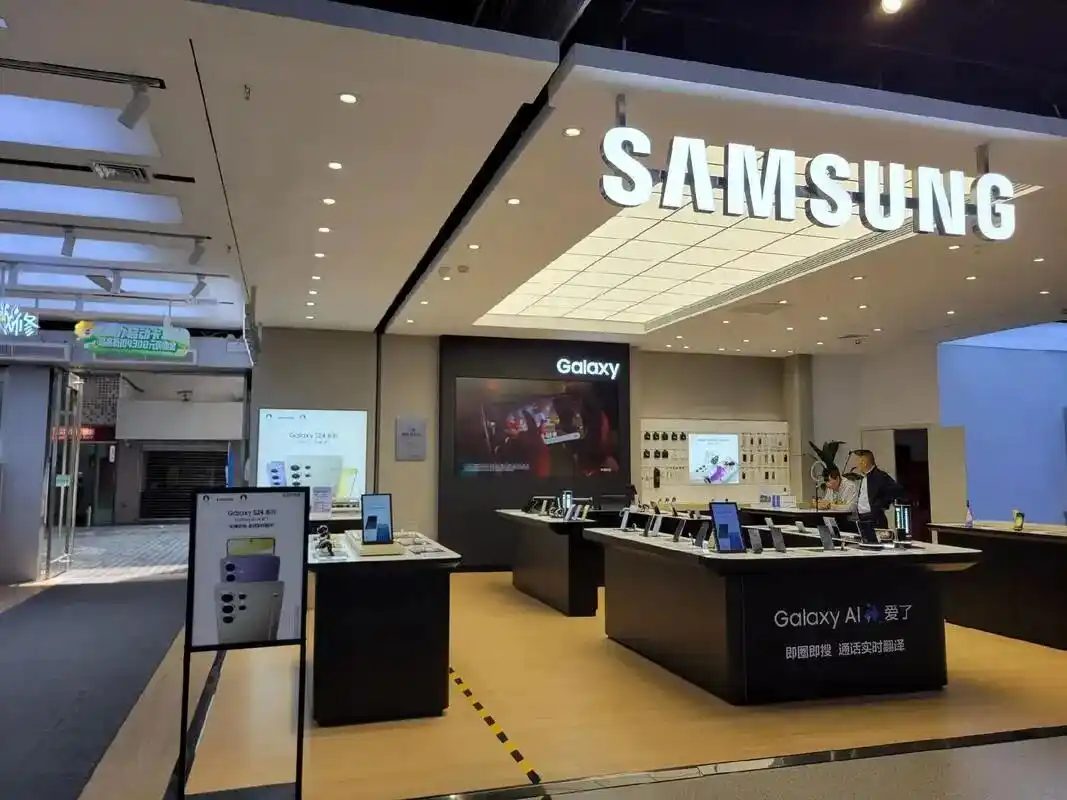
Recently, Sina Tech reported that Samsung Mobile is beginning to scale back its layout in the Chinese market. According to insiders, stores with monthly sales of less than 300,000 yuan will be gradually phased out. Currently, Samsung stores have already closed in cities like Shenzhen, Fuzhou, Zhengzhou, and Xi'an.
However, this comes only three months after Samsung Electronics announced its exit from the Chinese home appliance market. In May this year, Samsung Electronics announced its withdrawal from the Chinese home appliance market, officially stating it was "to cope with the rapidly changing market environment."
But Samsung had clearly stated that its semiconductor business (memory), mobile terminal (smartphone), and medical device businesses in China would continue normal operations. As of now, Samsung has remained silent regarding the adjustments to its smartphone business.
Behind this silence lies perhaps a sense of helplessness. Whether it's home appliances or smartphones, Samsung's former glory in the Chinese market is a thing of the past. Samsung is bidding farewell to an era, but simultaneously, new brands are restarting another era.
For Samsung, the once "peak China" now leaves only a shrinking silhouette.
1. Samsung Mobile Phones Follow in the Footsteps of Home Appliances
Three months ago, when Samsung home appliances announced their exit from the Chinese market, external observers gave a not-so-optimistic prediction: after home appliances, Samsung mobile phones might also find it hard to remain unscathed.
This judgment is not without basis. For a brand to establish itself in a market, brand, product, and channels are all indispensable. However, as Samsung home appliances gradually withdraw from China, their display channels are inevitably shrinking, and Samsung's brand influence is bound to be affected.
Market data also verifies the difficult situation of Samsung's home appliances and phones.
In 2025, Samsung's share of the Chinese home appliance market was only 1.5%. The situation for Samsung smartphones is even more severe. According to IDC data, in Q2 2026, Samsung's share in the Chinese smartphone market had fallen to 0.1%, with shipments plummeting 60.8% year-on-year.
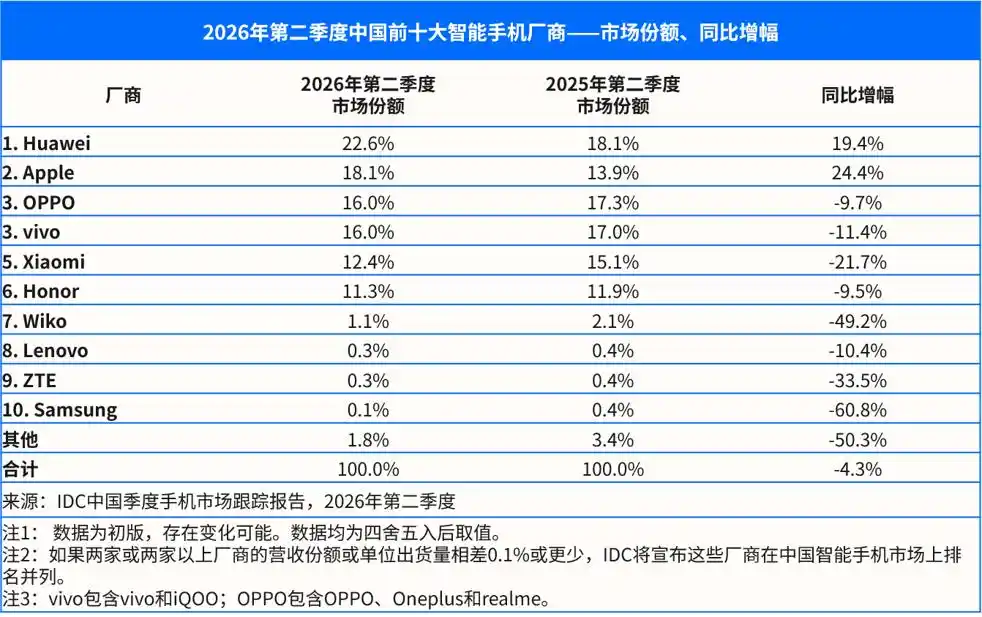
What does 0.1% mean? In the same period, Chinese smartphone market shipments were approximately 66.01 million units. Six manufacturers including Huawei, Apple, OPPO, and vivo collectively occupied about 96% of the domestic market. Samsung has been squeezed into the "Others" category.
But interestingly, while Samsung has lost ground in China, it remains the "king of phones" overseas.
Omdia data shows that in Q2 2026, Samsung's global smartphone shipments reached 60.5 million units, a 5% year-on-year increase, continuing to rank first globally with a 22% market share.
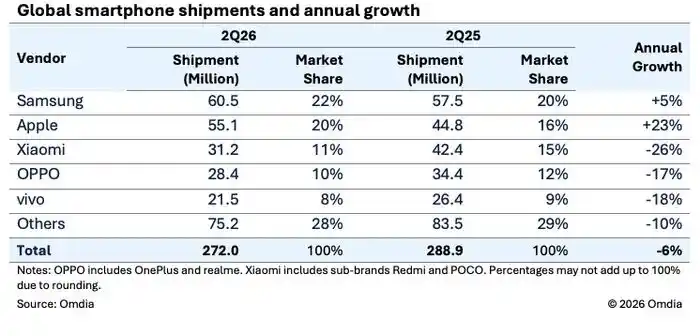
The same brand has a world of difference in the Chinese and overseas markets. This contrast indicates that Samsung's poor sales in China cannot be simply attributed to product issues.
So, how exactly did Samsung lose the Chinese market?
First, pressure from competitors. Over a decade ago, Samsung was the undisputed "king of phones" in the domestic market. Samsung Galaxy flagship models were synonymous with high-end and durability, with its domestic market share nearing 20% at its peak.
But in recent years, consumer demand has gradually returned to rationality. The iteration speed of domestic smartphone brands has visibly accelerated, with various parameters, configurations, and imaging technologies bombarding the market, giving consumers a wider range of choices.
However, Samsung phones have maintained a "proud and aloof" image. Compared to domestic brands, they are more expensive without necessarily offering stronger specifications.
Take the Samsung Galaxy S26 Ultra released in February this year as an example. The 12+256GB configuration is priced at 9,999 yuan on the official website. However, the Honor Magic8 Pro with the same Snapdragon 8 Elite chip (presumably referring to a similar high-end chip) and 12+256GB configuration is priced at only 5,699 yuan.
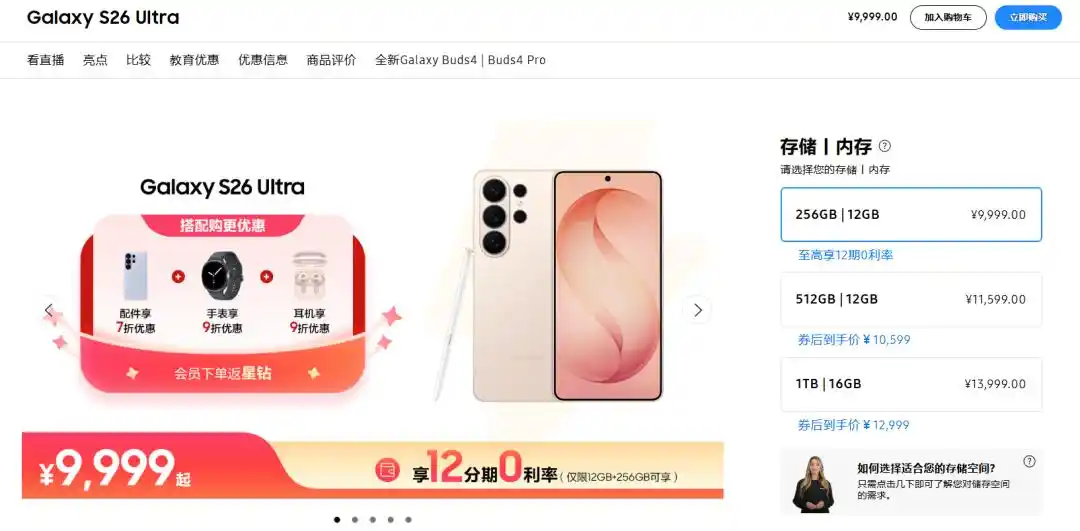
In addition, Samsung phones' core experiences like imaging, AI, and battery life have been comprehensively surpassed by domestic brands. For instance, the Samsung Galaxy S26 Ultra features 80W fast charging, while current domestic flagship models already offer 90W, 100W, or even faster charging.
On social platforms, many users complain that Samsung phone photos look "hazy"; battery life lasts less than 4 hours, requiring a power bank for daily use...
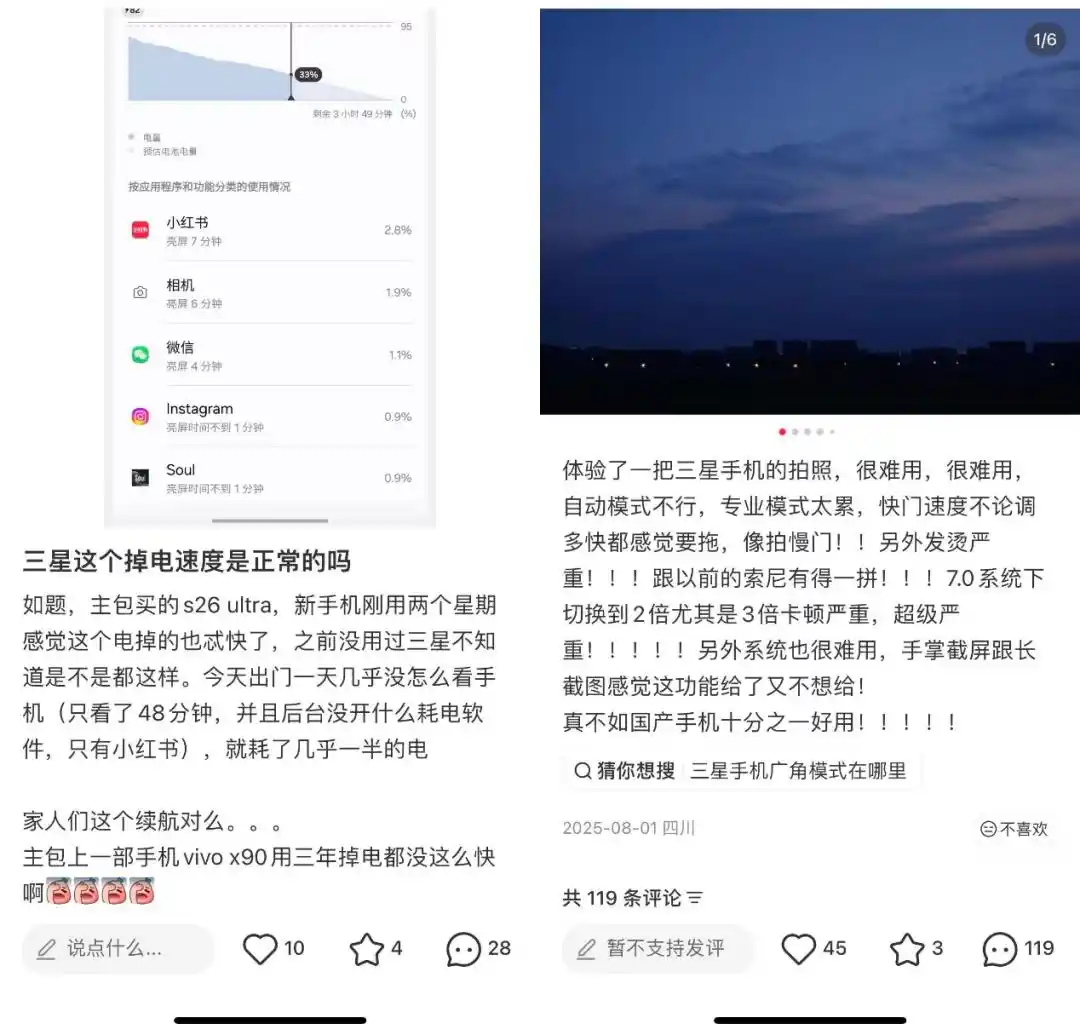
Consumers also do the math. By spending half the money, they can get similar performance, even better cameras, and faster charging. Samsung's brand halo is no longer a justification for premium pricing.
Secondly, a product ecosystem that "doesn't adapt to local conditions."
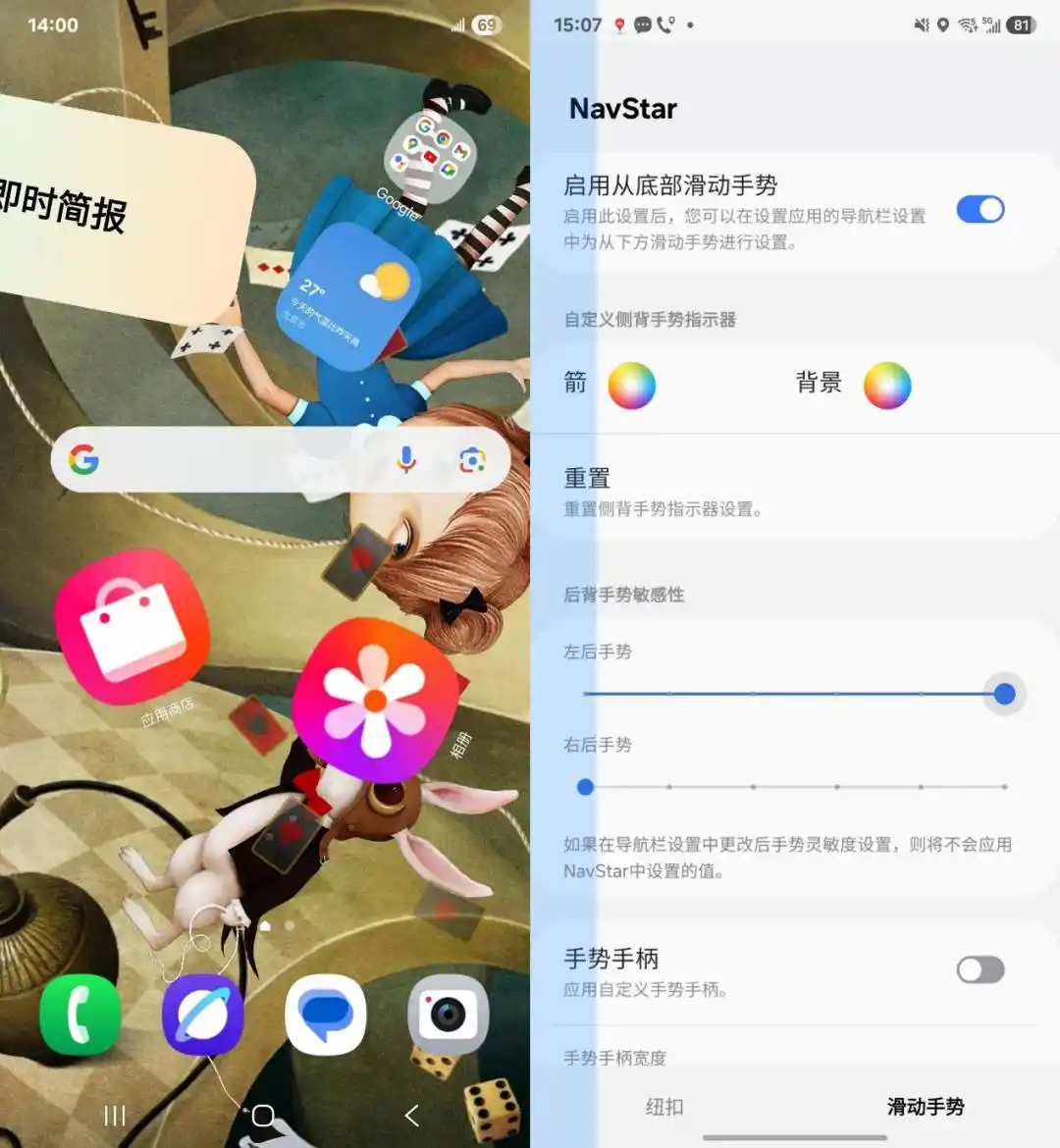
Samsung's ONE UI system resembles more of a "global edition" universal template. Its system functions, ecosystem services, and interaction logic haven't truly integrated into the life scenarios and cultural habits of local users.
For example, its NFC transit card only supports a few cities; Samsung Pay's deep adaptation to WeChat Pay and Alipay lags behind, lacking quick operations like HarmonyOS's "one-touch payment code." Consumers accustomed to domestic phone systems inevitably find it awkward.
Finally, China-South Korea relations are also a subtle factor, directly influencing the popularity of Korean brands in the Chinese market. When Korean celebrities and variety shows are no longer trending in the domestic market, the heat for Korean brands also gradually fades.
Rome wasn't built in a day. Samsung's decline in the Chinese market is a slow deceleration that has lasted over a decade.
2. Stronger Chips, Greater Pressure on Phones
However, what might have made Samsung determined to withdraw from the Chinese market is perhaps another set of accounts.
Recently, Samsung Electronics announced its Q2 2026 financial results. Revenue was 171.5 trillion won (approximately 804.975 billion yuan), a 130% year-on-year increase; operating profit was 89.5 trillion won (approximately 420.1 billion yuan), an increase of over 1800% year-on-year, setting a new single-quarter profit record for the third consecutive quarter.
Supporting this impressive report card is the semiconductor surge driven by the AI boom. The financial report shows that the Device Solutions (DS) division, responsible for semiconductors, contributed 99.7% of the company's operating profit.
How profitable is Samsung Semiconductor? In Q2, the group earned about 89.4 trillion won, roughly double the annual profit of 43.6 trillion won from last year, and even exceeding the total profit sum of the three years from 2023 to 2025.
This financial report allowed the outside world to re-recognize Samsung's "money-making ability," but it also simultaneously revealed an extremely awkward reality in Samsung's business structure—the stronger the memory business, the more pressure on consumer electronics.
In Q2 this year, the Device eXperience (DX) division, which includes Samsung phones and home appliances, achieved revenue of 48 trillion won, a 9% quarter-on-quarter decrease; operating losses reached 0.8 trillion won, marking the first time Samsung's mobile business has fallen into the red since its inception.
However, considering that Samsung's global smartphone sales achieved a 5% year-on-year increase in Q2, the reason for the simultaneous profit decline is not sales, but cost.
Late last year, according to Korean media reports, Samsung's DS division (responsible for semiconductors) refused to sign a DRAM supply agreement with the MX division (responsible for mobile phones and other businesses) for more than 12 months, further driving up costs for smartphones and other smart devices.
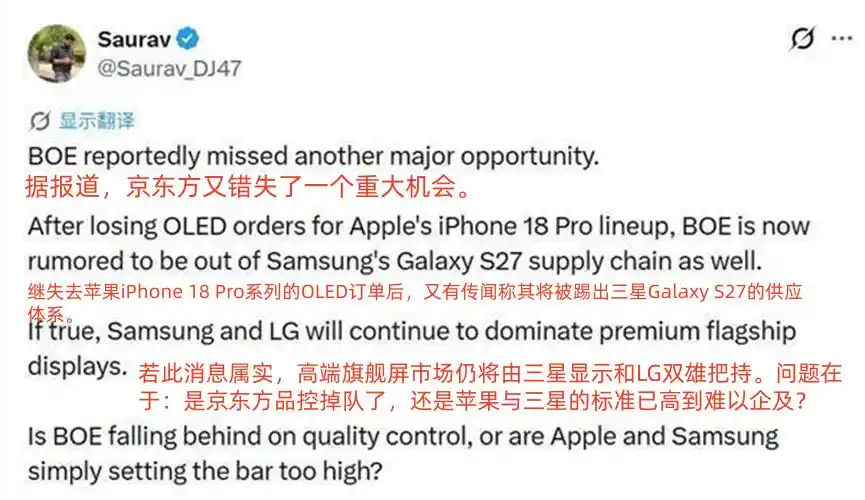
In January this year, media reported that Samsung intended to introduce BOE as a second OLED panel supplier for the Galaxy S27, hoping to reduce screen procurement costs through supplier competition.
But this plan has now fallen through. Foreign media reported that the core resistance came from Samsung Display, as this division was originally the exclusive panel supplier for Samsung phones and finds it difficult to accept its flagship products switching to a competitor's panels.
In Samsung's past history, the prosperity cycles of the memory and mobile phone businesses have often been "one up, the other down": when memory is booming, the phone business faces pressure; when the memory business is in a trough, the phone business becomes the profit core supporting the company through the cycle.
The problem is, this mutually supportive relationship has become "precarious" as the AI boom drives the semiconductor surge.
Looking at current leading smartphone manufacturers, those capable of achieving chip and display autonomy and control are actually few and far between. Huawei and Apple adopt a "self-developed chips, externally sourced screens" strategy; Xiaomi, OPPO, and vivo are also developing their own chips but still fall short.
Samsung is the company holding the most "good cards." But this internally synergistic supply chain ecosystem, in the face of interests, has instead become a drag.
Different divisions within Samsung have their own interest games. Each division wants to maximize its own profits, but when different divisions of a company hinder each other for their respective interests, the ultimate victim is the interests of the entire group.
3. Rooting in the Ultra-High-End Smartphone Market
The cost pressure on the mobile phone business has also become the trigger for Samsung to scale back its business in China.
According to Sina Finance reports, recently, Samsung mobile phone stores in many parts of China have experienced a closure wave. Store staff revealed that the group internally set a rigid assessment target: stores and staff with monthly single-store sales below 300,000 yuan will face gradual phase-out.
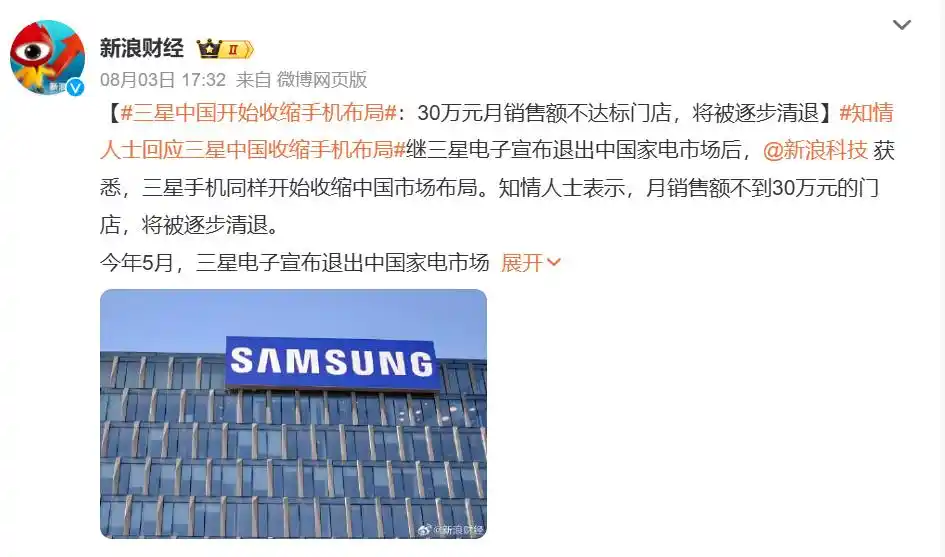
Currently, Samsung has not responded to this. But considering Samsung home appliances' exit from China and the semiconductor division's accounts, the 300,000 yuan sales target as an assessment benchmark is not unfounded.
Samsung's intention is already very clear. It is actively narrowing its product lines, directing group resources toward high-end product lines. For example, exiting the fiercely competitive Chinese home appliance market while outsourcing the production of entry-level home appliances.
For the mobile phone business, Samsung is likely adopting the same strategy. Last month, Samsung released the new Galaxy Z Fold8 series, a book-style foldable phone similar to the Huawei Pura X Max, with a starting price of 12,999 yuan.
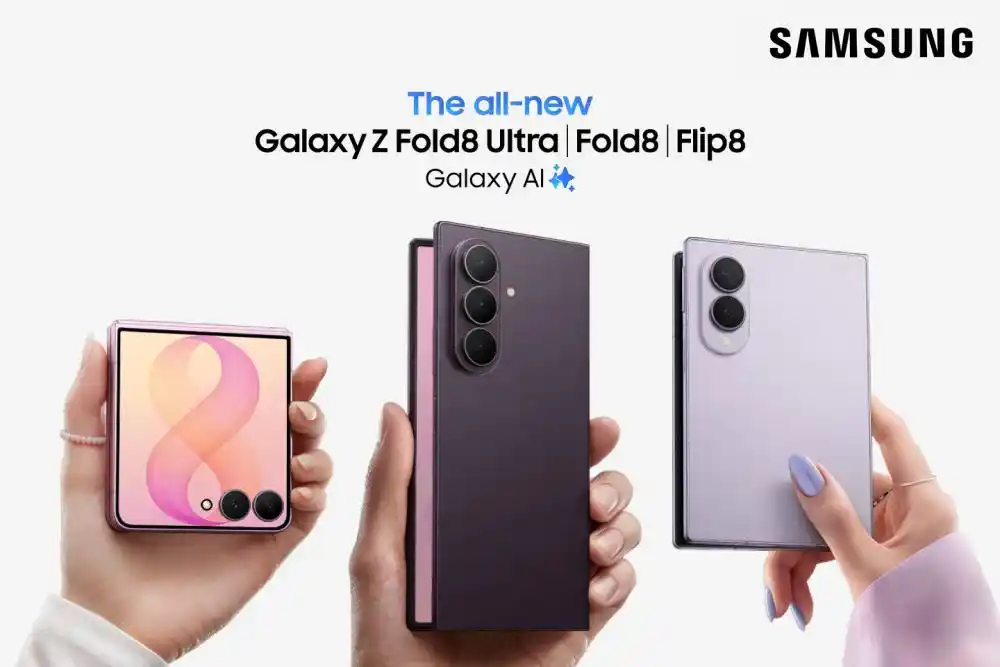
Despite the hefty price tag, media reports indicate that pre-orders for the Galaxy Z Fold8 series in South Korea reached 1.44 million units, breaking the Galaxy series' highest pre-order record; in the Indian market, pre-orders surpassed 271,000 units in 72 hours.
According to the original plan, the initial flexible screen production capacity for the Samsung Z Fold8 was about 2.8 million units. However, Samsung has now placed additional orders with core suppliers for screens, hinges, batteries, etc., adding hundreds of thousands of units of capacity.
Before this, the book-style foldable phone category was pioneered by Huawei, which also holds strong consumer mindshare in the domestic market. But with Samsung and Apple (expected to release its first book-style foldable product in September) entering the fray, this pie will inevitably be shared.
Counterpoint predicts that in the 2026 global book-style foldable phone market, Samsung, Apple, and Huawei will hold market shares of 32%, 25%, and 24% respectively.
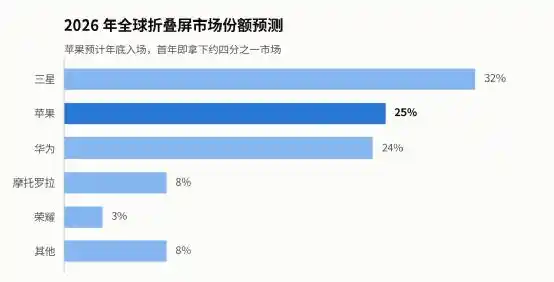
Even though Samsung's smartphone share in China is only 0.1%, it still firmly holds the "number one" position globally. Whether in the domestic or international market, for Samsung, fighting a more focused battle is the one with better odds of success.
Therefore, Samsung's channel contraction in the domestic market may have just begun.
Ultra-high-end smartphone products inevitably target mid-to-high-end consumer groups. Therefore, Samsung only needs to retain a small number of core city stores to sufficiently cover its target customer base—using minimal channel investment to defend its final brand stronghold.
The winds of the times have changed, but Samsung is undoubtedly lucky. This giant, with decades of deep cultivation in semiconductors, display panels, memory, and other fields, holds a sufficiently thick foundation of technology and capital, leaving it with space to pivot and maneuver amidst this great upheaval.
But the other side of the coin is that as Samsung further races towards the semiconductor business, the corporate resilience once supported by businesses like home appliances and phones may be unknowingly and continuously consumed.
Once the memory chip cycle turns downward, Samsung will lack a sufficient buffer. When eggs are increasingly concentrated in one basket, the weight of the basket itself becomes the greatest risk.
Currently, Samsung's focus on high-end business is a more pragmatic and rational choice.
But the business world never offers the luxury of a "complete and smooth retreat." When you actively contract from a market, it means ceding ground to others; when you choose to serve only a small group of high-end users, it means giving up economies of scale and brand influence.
Samsung's high-end story may paint another picture, but Samsung will also no longer be the Samsung of the past.
This article is from the WeChat public account "Spiral Lab," author: Wuqing (Heartless)