Robinhood Founder Vlad Tenev on the Great Wealth Transfer, Tokenization, and Gen Z's Investment Future

marsbitDipublikasikan tanggal 2026-03-18Terakhir diperbarui pada 2026-03-18

Abstrak

In a Bankless interview, Robinhood CEO Vlad Tenev discusses the future of finance, driven by generational wealth transfer, tokenization, and Gen Z's investing behavior. He reveals that Gen Z are serious long-term investors, starting retirement planning as early as age 19 on average. Tenev addresses the $70-90 trillion "Great Wealth Transfer," emphasizing Robinhood's strategy to serve both younger generations and older asset owners through products like banking services and trust accounts. He predicts 24/7 markets and asset tokenization will become standard, with Robinhood already offering tokenized stocks in the EU. Robinhood is building a hybrid CeFi/DeFi infrastructure, including its own Layer 2 chain, to improve accessibility and utility for real-world assets. Tenev dismisses the notion that young investors are solely driven by "financial entertainment," highlighting data showing 40% of platform assets are in passive investments. Other key points include: the social value of prediction markets as "truth machines," plans for a Robinhood Social feature, the potential of AI-powered financial agents, and efforts to democratize access to private equity investments. He also discusses regulatory challenges and the strategic focus on global expansion if U.S. clarity remains limited.

Written by: Bankless

Compiled by: Plain Language Blockchain
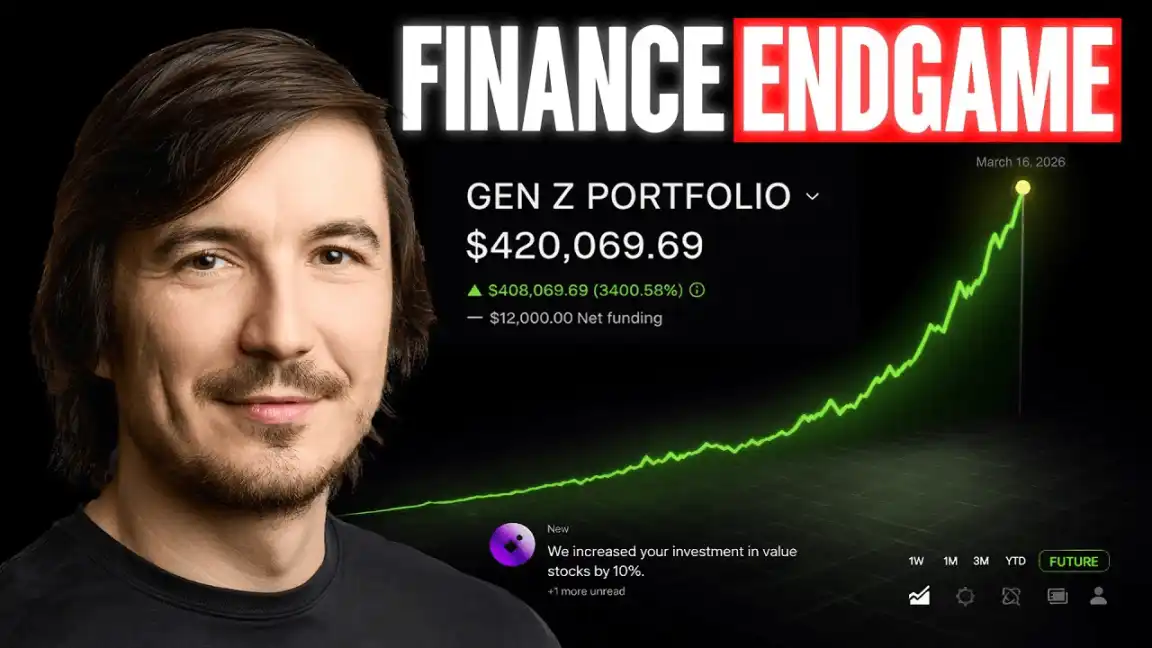
Do you think Generation Z (Gen Z) are just "financial nihilists" squandering their youth on TikTok and blindly speculating in the crypto market? The data from Robinhood founder Vlad Tenev will completely颠覆 your perception. In the latest Bankless interview, Vlad revealed an astonishing fact: Gen Z are the most hardcore long-termists in history, starting to plan for retirement at an average age of 19.

As the序幕拉开 for the $70 trillion "Great Wealth Transfer," this financial giant at the center of the storm is playing a big game: from 24/7 tokenized US stock trading, to plans allowing retail investors to get early access to unicorns like SpaceX and Stripe, to the即将改变游戏规则的 AI financial agents. Vlad not only responded to质疑 about "financial entertainment," but also deeply拆解ed how Robinhood is reshaping traditional banking through a DeFi architecture. This is not just an interview about trading tools, but a roadmap to the future of finance in 2040.

The $70 Trillion "Great Wealth Transfer"

Host: Let's start with the "Great Wealth Transfer." Over the next few decades, as the Baby Boomer and Silent Generations pass their assets down to Gen X, Millennials, and Gen Z, an estimated $70 to $90 trillion in assets are expected to transfer generations in the US. This is the largest wealth transfer in history. To what extent does this massive opportunity guide Robinhood's strategy?

Vlad: We think about it quite a bit. Many companies have started talking about this, but we truly turned it into concrete fintech action, dating back to when we launched Robinhood's banking services at our Gold event last year. Robinhood's core philosophy is: whether individual or institutional, domestic or international, Robinhood should be the place where all your money and assets get the best service. We believe we have a huge opportunity when inheritance events occur for the older generation. We not only serve the younger generation receiving the wealth but also aim to attract the current asset holders—the parents and grandparents—through rich products and features. Through credit and banking services, we can access a large amount of liquid assets held in checking and savings accounts. This year we also launched custodial accounts and trust accounts. We are not just waiting for people to inherit; we are working to make the older generation realize that using other outdated financial platforms today is a disadvantage. This puts us in a favorable position for the peak of the wealth transfer expected in about 8 to 10 years.

Finance in 2040: 24/7 Markets and Asset Tokenization

Host: What will finance look like in 2040? What will remain the same, and what will be彻底改变? Will we have 24/7/365 markets? What role will AI play?

Vlad: I believe 24/7/365 markets are inevitable. We launched 24-hour stock trading in 2022, and now the whole industry is following suit. The technology is ready, and weekend trading will happen sooner than imagined. Tokenization is another core driver. Last year we launched tokenized versions of thousands of US stocks in the EU, even including token giveaways for private companies like OpenAI and SpaceX. It's still early, but I think by the end of this year, tokenized stocks will begin to surpass traditional brokerage accounts in terms of trading advantages. If you can solve the 24/7 liquidity problem for private equity, then basically all assets can achieve全天候 trading.

Tech Stack: The Fusion of CeFi and DeFi

Host: Your Layer 2 chain, Robinhood Chain, just launched on testnet. How do you position this tech stack you are building? Are you challenging the NYSE, or building a new entry point into the crypto world?

Vlad: The tech stack is divided into two parts. One part is the CeFi component, which is the tradability of stock tokens on centralized exchanges like Bitstamp; the other part is the DeFi aspect, where we want users to be able to participate in DeFi protocols on Robinhood Chain or other chains through non-custodial wallets. We don't see ourselves as catching up to traditional providers; this is more like a completely new species. In the crypto ecosystem, many tokens lack underlying utility, but when you bind technological power to real-world assets (RWA) with real fundamental utility, the experience undergoes a qualitative change. As for the US market, although the regulatory environment is changing, the US itself already has a mature structure close to 24/5, so the marginal benefits of tokenization might be less apparent in the short term compared to the EU. But as the technology proves its superiority overseas, it will eventually be移植回 the US.

DeFi Strategy and "Truth Machine" Prediction Markets

Host: Companies like Coinbase and BlackRock are moving towards DeFi. What is Robinhood's decentralized finance strategy? Also, regarding the recently hot "prediction markets," do you think they are good or bad for society?

Vlad: Our strategy is "full-stack." We need to onboard a large number of customers through the Robinhood App and Wallet, while also building infrastructure like Robinhood Chain. The activity on the testnet has exceeded my expectations; developers are very interested. The future core lies in "Curation"—how to help customers filter through thousands of on-chain products to find high-quality choices that match their risk profile. Regarding prediction markets, I believe they are very beneficial to society. They are not just trading venues but "truth machines." The business model of traditional news media sometimes delays the truth in exchange for traffic, while prediction markets fill the primal need people have for "real information."

Host: Will Robinhood strengthen its media and content属性? For example, becoming the homepage for prediction markets, or adding social elements.

Vlad: Absolutely. We are about to launch Robinhood Social. We have a massive amount of assets, and prediction markets will be "first-class citizens" among them. Through user-generated content (UGC), we can capture breaking news faster than manual curation. At the same time, our media division, Sherwood Media, is also outputting high-quality content and integrating prediction market data. In terms of execution, we partner with Kalshi and ForecastX, and in the future, through the acquired Bitstamp, we will also have our own trading venue to provide customers with the optimal experience.

Debunking the Myth of "Financial Entertainment"

Host: Many people believe the younger generation engages in finance for entertainment, even带有 "financial nihilism," thinking they are speculating and gambling. As a platform, how do you view this trend?

Vlad: I have a rather "spicy" take: I don't believe entertainment drives most financial activity. The reality is, no one wants to discuss the boring but important parts on social media. On Twitter, no one posts "my Robinhood retirement account grew again," because it's not sexy and doesn't go viral. But the data tells us that 40% of the assets on the platform are in passive instruments (like ETFs, cash). Even the most active options traders typically have larger passive investment portfolios. People just operate in different accounts for different purposes.

Host: That's a powerful counter-narrative. So Gen Z isn't financially irresponsible, but actually more savvy?

Vlad: Exactly. As I just mentioned, they open accounts very early. Part of the reason is the convenience of access—just a few clicks on Robinhood to open an account. Another part is economic incentives, like our 3% match contribution for Gold members' retirement accounts. Furthermore, young people today are more likely to be independent contractors or gig economy participants, making it harder to rely on traditional employer 401k plans, so they need to actively manage their future more. Currently, our retirement assets have exceeded $25 billion, and the growth is astounding.

Trump Accounts and the Future "Gen Beta"

Host: Let's talk about groups younger than 19. The Trump Accounts mentioned in the recent "Fairness for All Act" have attracted attention; the government would provide a $1000 initial investment fund for newborns. Why do you rate this so highly?

Vlad: This is the first mechanism I can think of that truly "gives money back to the future." Current policies mostly involve debt that mortgages the future. Trump Accounts are automated; they teach children the value of long-term investment. By age 18 or 30, benefiting from compound interest, this money could grow to hundreds of thousands or even millions of dollars. Although newborns won't directly operate phones, these accounts are managed by parents, and we will focus on building a "kids' investment experience" focused on financial education and literacy.

Financial Super App and the Future of Payments

Host: Everyone is running towards a "financial super app." Will Robinhood pack all functions into one app? Also, why haven't you implemented peer-to-peer (P2P) payments between users yet?

Vlad: We will adopt a flexible strategy. The main app will evolve to be more highly personalized, tailored to you like a social media feed. At the same time, we will also retain standalone professional apps, like a dedicated banking app or non-custodial wallet, connected through unified identity verification. Regarding payments, we've experimented. But we found Robinhood users are primarily credit-driven, not the群体 that primarily relies on借记卡 for early paycheck access. Currently, the P2P experience on Venmo and Cash App is already good; we don't want to just pile on mediocre, commoditized features unless we can make significant improvements. Right now, our priority is moving the remaining banking features onto the platform.

Stablecoins and Regulation

Host: What is your view on stablecoins as banking products?

Vlad: Stablecoins face two challenges: First, FDIC insurance. US consumers highly value fund safety, especially after the 2023 banking crisis; the de-pegging risk of stablecoins leaves people wary. Second, competition from cashback on payments. Currently, you can't get 3% cashback like with credit cards when paying with stablecoins. Stablecoins are currently useful for large B2B or cross-border payments, but for consumer scenarios like splitting a bill for pizza, more ecosystem maturity is needed.

Host: Regarding the Clarity Act (crypto regulation bill), how reliant are you on its passage?

Vlad: The Clarity Act can clarify what is a security and what is a commodity, which would save us a lot of legal and compliance costs. More importantly, it can prevent policy flip-flops due to administrative changes. Regardless of whether the bill passes, we will push forward with Robinhood Chain because it is global and permissionless. If clarity is high in the US, we'll push the US market; if clarity is low, we'll prioritize developing international business.

The Next Growth Areas: AI and Private Equity

Host: Looking ahead, what is Robinhood's third big opportunity?

Vlad: There are several directions. First is the launch of Social features; second is the popularization of prediction markets. But the biggest transformation might come from AI. We are thinking: how could an "AI agent," like a family office, run your entire financial life? From automatically managing savings to executing complex trading strategies. Additionally, we are also addressing the issue of retail investors being unable to access growth stocks (like Stripe, SpaceX) through Robinhood Ventures. We allow retail participation in IPOs through IPO Access and use our own capital to invest in late-stage private rounds. In the future, we hope even seed-round financing could include retail investors.

Host: Thank you, Vlad, for sharing. Robinhood has always been a leader in democratizing finance. The above does not constitute financial advice; cryptocurrencies are risky. Thank you for listening to Bankless.


Pertanyaan Terkait

QWhat is the 'Great Wealth Transfer' and how is Robinhood positioning itself for it?

AThe 'Great Wealth Transfer' refers to the projected $70-90 trillion in assets that will be passed down from the Baby Boomer and Silent generations to Gen X, Millennials, and Gen Z in the coming decades. Robinhood is positioning itself by not only serving the younger generations who will inherit the wealth but also by attracting the current asset holders (parents and grandparents) through products like credit and banking services, custodial accounts, and trust accounts. The goal is to become the primary platform for all financial services, making them aware that using outdated platforms is a disadvantage.

QAccording to Vlad Tenev, what are the key drivers for the future of finance by 2040?

AVlad Tenev identifies two key drivers for the future of finance by 2040: 24/7/365 markets and asset tokenization. He believes round-the-clock trading is inevitable and that tokenization is a core driver, noting that tokenized stocks in the EU are on track to surpass traditional brokerage accounts in trading advantages by the end of the year. Solving the 24/7 liquidity problem for private equity would essentially allow all assets to trade continuously.

QHow does Robinhood's strategy for DeFi and its new Robinhood Chain differ from traditional financial infrastructure?

ARobinhood's strategy is 'full-stack,' combining both CeFi and DeFi components. The CeFi component involves making tokenized stocks tradable on centralized exchanges like Bitstamp. The DeFi component aims to let users engage with DeFi protocols through non-custodial wallets on the Robinhood Chain or other chains. Vlad Tenev positions this not as competing with traditional suppliers like the NYSE but as creating a new species of financial infrastructure that combines real-world assets (RWA) with crypto utility, leading to a qualitatively different experience.

QWhat is Vlad Tenev's response to the criticism that Gen Z's engagement in finance is driven by 'entertainment' or 'financial nihilism'?

AVlad Tenev strongly disputes the narrative that Gen Z's finance activity is primarily driven by entertainment. He argues that the 'boring but important' aspects of investing, like passive ETF and cash holdings, don't get discussed on social media because they aren't 'sexy' or viral. Data shows that 40% of assets on the Robinhood platform are in passive instruments. He states that Gen Z is actually more financially responsible, opening investment accounts very early (average age 19) due to ease of access and economic incentives, and are often proactive in managing their future, especially as independent workers.

QWhat are some of the next big growth opportunities for Robinhood, as mentioned by Vlad Tenev?

AThe next big growth opportunities for Robinhood include: 1) The launch of its Social feature and the proliferation of prediction markets. 2) The transformative potential of AI, specifically exploring how an 'AI agent' could autonomously manage a user's entire financial life, from savings to executing complex trading strategies. 3) Democratizing access to private equity for retail investors through initiatives like Robinhood Ventures and IPO Access, aiming to eventually allow散户 investment even in seed-round funding for companies like Stripe and SpaceX.

Bacaan Terkait

Batas 10% Posisi Dialokasikan, Dana Ritel Berizin Inggris Rencanakan Eksposur Tidak Langsung ke Aset Kripto

**FCA Inggris Usulkan Batas 10% untuk Dana Ritel Berinvestasi di Aset Kripto melalui ETN** Otoritas Perilaku Keuangan Inggris (FCA) sedang mengkonsultasikan peraturan baru yang akan mengizinkan dana ritel UCITS dan sebagian besar dana ritel non-UCITS (NURS) untuk memegang Crypto Exchange Traded Notes (ETN), dengan batas maksimal 10% dari aset total dana. Usulan ini, tertuang dalam dokumen konsultasi CP26/17, membuka jalan bagi investor ritel biasa untuk mendapatkan eksposur tidak langsung ke aset kripto melalui dana yang dikelola secara profesional. Namun, dana tetap dilarang untuk memegang langsung aset kripto native seperti Bitcoin atau Ethereum. Batas 10% dirancang agar alokasi kripto tetap menjadi posisi "satelit" minor dalam portofolio yang terdiversifikasi. Peraturan yang berbeda berlaku untuk dana investor profesional (Qualified Investor Schemes), yang tidak dikenakan batas ini, sementara dana aset jangka panjang (LTAF) dilarang berinvestasi di ETN kripto. Kebijakan ini melanjutkan langkah FCA yang sebelumnya telah mengizinkan investor ritel untuk memperdagangkan ETN kripto di bursa Inggris yang diakui mulai Oktober 2025. FCA menekankan bahwa ETN kripto tetap dikategorikan sebagai investasi berisiko tinggi. Meskipun pintu investasi dibuka, tanggung jawab berat ada pada manajer dana. Mereka harus memastikan ETN kripto sesuai dengan tujuan investasi dana, melakukan due diligence ketat, menilai likuiditas, dan memberikan informasi yang jelas kepada investor tentang risikonya. Persyaratan pelaporan dan pengungkapan yang ketat ini bisa menjadi penghalang bagi banyak lembaga pengelola aset. Pada akhirnya, keberhasilan implementasi kebijakan ini bergantung pada kemauan industri manajemen dana. Ada dua kemungkinan: kebijakan ini dapat diadopsi secara moderat, menandai perubahan signifikan dalam memasukkan kripto ke arus utama, atau hanya bersifat simbolis jika biaya kepatuhan dan risiko persepsi dianggap terlalu besar dibandingkan manfaatnya. Konsultasi publik untuk aturan terkait dana ini akan berlangsung hingga 13 Juli 2026.

Foresight News31m yang lalu

Batas 10% Posisi Dialokasikan, Dana Ritel Berizin Inggris Rencanakan Eksposur Tidak Langsung ke Aset Kripto

Foresight News31m yang lalu

Mythos Versi Publik Diluncurkan Secara Resmi: Mengurai Keunggulan dan Keterbatasan Audit Kontrak Cerdas AI

Sumber: Beosin Pada 9 Juni, Anthropic secara resmi meluncurkan versi publik Mythos Claude Fable 5. Fable 5 menunjukkan kemampuan luar biasa dalam menemukan kerentanan keamanan yang tersembunyi, seperti yang terlihat dalam insiden Zcash, di mana model AI berhasil mengungkap bug serius yang lolos dari audit manual selama empat tahun dalam waktu singkat. **Keunggulan Audit AI** terbukti dalam skenario seperti deteksi **tabrakan slot penyimpanan (*storage slot collision*)**. Contohnya, ketika komponen `rewards mapping` bertabrakan dengan slot tetap `ReentrancyGuard` dari pustaka Solady, AI dapat dengan cepat memetakan tata letak penyimpanan dan mengidentifikasi tabrakan yang sangat tersembunyi ini, sesuatu yang mudah terlewatkan dalam audit manual. AI sangat efisien dalam pencocokan pola kode, penyaringan awal massal, dan analisis kerentanan sintaksis dalam kontrak tunggal. Namun, **Kelemahan Audit AI** masih tampak dalam menghadapi **kerentanan semantik kombinasi lintas protokol**. Misalnya, dalam serangan terhadap Curve LlamaLend sDOLA, yang melibatkan beberapa kontrak (crvUSD Controller.vy, sDOLA.sol, dll.), Fable 5 gagal mengidentifikasi vektor serangan inti. Serangan ini memanfaatkan interaksi beberapa protokol DeFi (seperti memanipulasi harga pool melalui *flash loan* untuk memicu likuidasi) dan membutuhkan pemahaman mendalam tentang model ekonomi dan logika bisnis ekosistem yang kompleks—area di mana AI saat ini masih terbatas. Kesimpulannya, **Fable 5 sangat efektif** untuk menemukan bug tersembunyi dalam sintaksis, logika kontrak tunggal, dan tabrakan penyimpanan. Namun, untuk kerentanan kombinasi kompleks, logika bisnis lintas kontrak, dan model ekonomi DeFi, **analisis ahli keamanan manusia** masih sangat penting. Pendekatan terbaik adalah **kombinasi sinergis antara AI dan auditor pakar**, di mana AI menangani penyaringan awal dan analisis mendetail, sementara manusia fokus pada konteks bisnis yang rumit dan potensi serangan kombinasi, sehingga meningkatkan efisiensi dan kedalaman audit secara keseluruhan.

marsbit36m yang lalu

Mythos Versi Publik Diluncurkan Secara Resmi: Mengurai Keunggulan dan Keterbatasan Audit Kontrak Cerdas AI

marsbit36m yang lalu

Kebalikan Ucapan dan Tindakan Trump: 'Perjanjian Akan Segera Tercapai' Hanyalah Tabir Asap Perang

Catatan redaksi: Artikel ini membahas serangan udara AS terhadap target dekat Selat Hormuz pada 10 Juni dan mengkritik keras kebijakan pemerintahan Trump yang berubah-ubah terkait Iran. Setelah helikopter Apache AS jatuh (penyebab masih diselidiki), Trump awalnya menyebut insiden itu "bukan masalah besar", tetapi kemudian di Truth Social mendakwa Iran "menembak jatuh" helikopter tersebut dan melancarkan serangan balasan. Inti kritik penulis bukan hanya pada respons militer ini, tetapi pada pola rutin Trump menciptakan ilusi bahwa "kesepakatan akan segera tercapai". Sementara terus mengklaim negosiasi berada di "tahap akhir" dan kesepakatan akan ditandatangani dalam "dua tiga hari", pemerintah justru meningkatkan aksi militer dan mempermalukan Iran secara publik. Diplomasi terlihat seperti pertunjukan politik untuk siklus berita. Serangan "proporsional" AS malah memicu serangan balasan Iran ke pangkalan AS di kawasan. Selat Hormuz tetap belum normal, tekanan pada harga minyak dan pasar berlanjut. Penulis mengingatkan: ketika "sangat dekat" berulang kali menggantikan kemajuan nyata, respons paling rasional adalah mencatatnya dan berasumsi kenyataan justru sebaliknya. Artikel ini melacak garis waktu dan mengecam inkonsistensi Trump. Dalam kurang dari 24 jam, narasinya berubah dari "bukan masalah besar" menjadi "perlu respons". Janji kesepakatan yang akan datang telah dia keluarkan lebih dari 30 kali sejak konflik dimulai akhir Februari, tanpa hasil nyata. Serangan AS dilaporkan mengganggu pasokan air untuk 20.000 orang, sementara Iran membalas dengan menyerang pangkalan AS. Kesimpulan: Setiap klaim "dua tiga hari" adalah ilusi. Ketika Anda mendengar "kami sangat dekat" dari Trump atau Wakil Presiden JD Vance, catatlah, hitunglah, dan anggaplah fakta sebenarnya justru berlawanan. Janji kosong itu sudah bukan diplomasi, melainkan pertunjukan. Selat Hormuz tetap tertutup setelah lebih dari 100 hari, membuktikan kegagalan pendekatan ini.

marsbit38m yang lalu

Kebalikan Ucapan dan Tindakan Trump: 'Perjanjian Akan Segera Tercapai' Hanyalah Tabir Asap Perang

marsbit38m yang lalu

Trade.xyz Tolak Rebase Picu Kontroversi, Pasar Pre-IPO On-Chain Hadapi Ujian Penetapan Harga

Penulis: Nancy, PANews Ketika para pemain kripto memamerkan pesanan pembelian SpaceX di media sosial, Trade.xyz di Hyperliquid justru menjadi sorotan kontroversi karena aturan penetapan harga kontrak berkelanjutan (perpetual) pra-penawaran umum perdana (Pre-IPO) untuk SPCX (SpaceX). Pada 10 Juni, Trade.xyz merilis pernyataan menanggapi kontroversi tersebut. Platform menjelaskan bahwa kontrak IPOP mereka adalah kontrak perpetual tipe harga yang bertujuan melacak ekspektasi harga per saham, bukan valuasi perusahaan total. Oleh karena itu, informasi seperti total saham atau kapitalisasi pasar bukan bagian dari logika penetapan harga. Contoh edukatif awal yang menunjukkan cara menghitung harga per saham berdasarkan asumsi valuasi telah dihapus karena dianggap menyesatkan. Pemicu masalah adalah pengungkapan dalam prospektus SpaceX bahwa jumlah saham sebenarnya adalah 13,08 miliar, sekitar 10% lebih tinggi dari perkiraan pasar sebelumnya (11,87 miliar). Bursa terpusat (CEX) lain menangguhkan perdagangan dan menyesuaikan harga berdasarkan data baru, sementara Trade.xyz tidak melakukannya karena logika produknya tidak bergantung pada data jumlah saham. Hal ini memicu kesenjangan harga dan peluang arbitrase antar platform. Trade.xyz menyatakan harga SPCX akan konvergen dengan harga pasar saham SpaceX yang sebenarnya setelah IPO selesai dan data perdagangan eksternal tersedia. Namun, respons ini justru memperbesar kritik. Banyak pengguna merasa platform tidak transparan sejak awal tentang aturan kontrak, dan penjelasan serta revisi dokumen dilakukan setelah kontroversi terjadi. Kerugian finansial nyata dialami oleh trader yang memegang posisi long (beli), karena harga turun sekitar 10% tanpa mekanisme penyesuaian (rebase), menyebabkan likuidasi bagi pengguna leverage tinggi. Artikel ini membahas tantangan besar bagi Perp DEX (Decentralized Exchange untuk kontrak berkelanjutan) dalam menangani aset Pre-IPO di rantai blokir (on-chain), khususnya ketiadaan mekanisme rebase. Rebase adalah penyesuaian netral nilai yang menyelaraskan harga kontrak dan jumlah posisi pengguna secara proporsional saat terjadi peristiwa seperti perubahan jumlah saham. CEX dapat melakukannya dengan mudah melalui database terpusat, tetapi implementasinya di DEX jauh lebih kompleks karena semua proses berjalan pada kontrak pintar yang tidak dapat diubah langsung, berpotensi meningkatkan biaya, kompleksitas, dan risiko keamanan. Beberapa menyarankan solusi teknis mungkin, seperti yang diterapkan oleh protokol lain seperti Aster. Trade.xyz, yang berjalan pada arsitektur HIP-3 Hyperliquid yang memungkinkan pasar independen, dikabarkan sedang mempelajari solusi untuk peristiwa seperti pemecahan saham (stock split) di masa depan. Pada intinya, kasus SPCX menguji kemampuan Perp DEX dalam membangun mekanisme penemuan harga yang andal untuk aset RWA (Real World Assets) seperti Pre-IPO, dan apakah mereka dapat bertahan menghadapi ujian informasi serta tindakan korporasi dunia nyata, atau hanya akan menjadi ajang spekulasi.

marsbit43m yang lalu

Trade.xyz Tolak Rebase Picu Kontroversi, Pasar Pre-IPO On-Chain Hadapi Ujian Penetapan Harga

marsbit43m yang lalu

Trading

Spot
Futures
活动图片




