Original: Simon, Delphi Digital
Adaptation: Yuliya, PANews
In Delphi Digital's upcoming "2026 Application Outlook" report, Pump.fun is regarded as one of the most noteworthy consumer applications to watch in the coming year. The report points out that since Delphi Digital first published its analysis before Pump's funding round, although many predictions have come true, the platform's development in some areas has fallen short of expectations, disappointing users and investors, and its core challenges still persist. To achieve a grander vision, the Pump team must find a balance between the inherent short-termism of the crypto world and the platform's long-term ambitions. The report further emphasizes that once a project launches a token, its operating environment changes accordingly, because the token itself becomes a product with intrinsic reflexivity, continuously shaping user expectations—Pump is no exception.
The Dilemma of the Creator Economy and the Fleeting Success of "Bagwork"
Since the funding round, the Pump team has continued to invest in the crypto-native live streaming space, but this has not unfolded as Delphi Digital had expected, at least not yet.
Pump has failed to attract influential creators from outside the crypto ecosystem, and the CCM (Creator Capital Market) model, which briefly flourished on Pump, quickly died out. The most notable moment came from the rise of "Bagwork," which highlighted both the potential of creator-driven tokens and the structural issues that still hinder the development of this model.
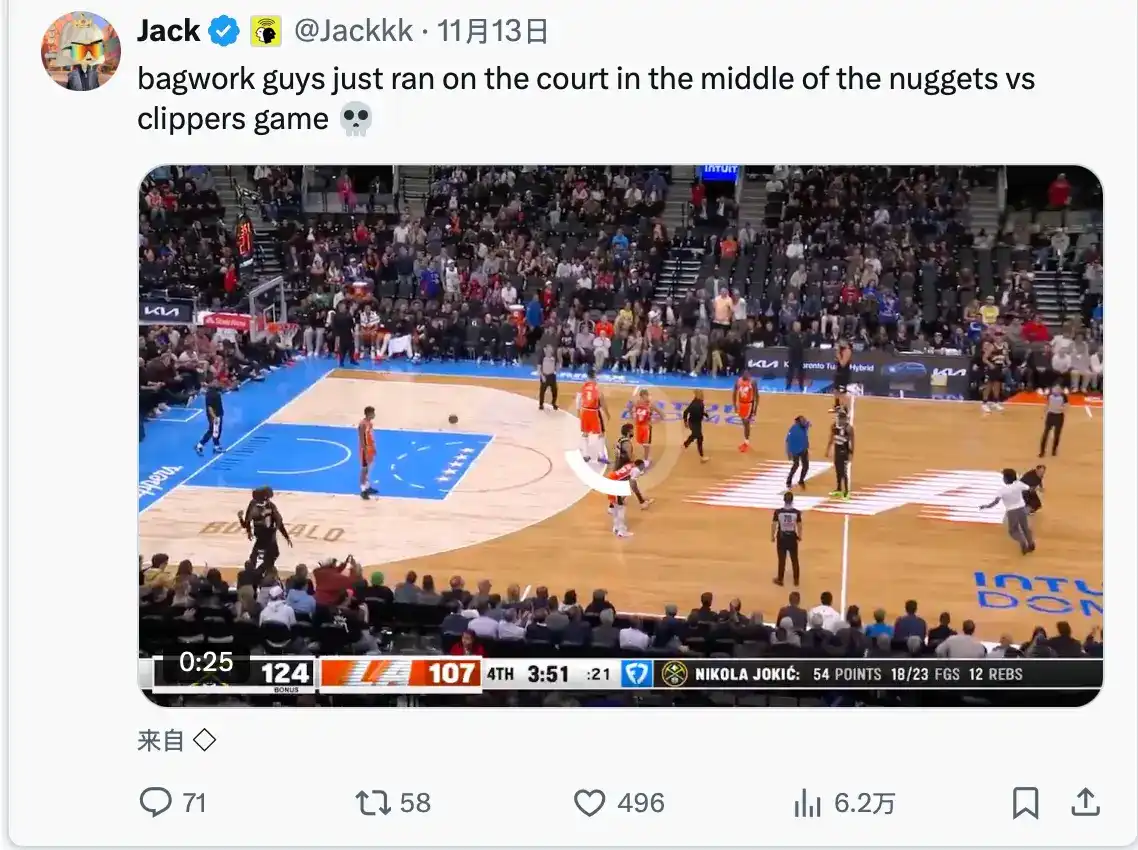
This breakthrough was led by a group of teenagers and partially supported by Pump. They orchestrated a series of viral stunts: stealing fitness influencer Bradley Martyn's hat, rushing onto the field during a Dodgers game, storming the Knicks' court, and even getting tattoos of Pump.fun and Bagwork.
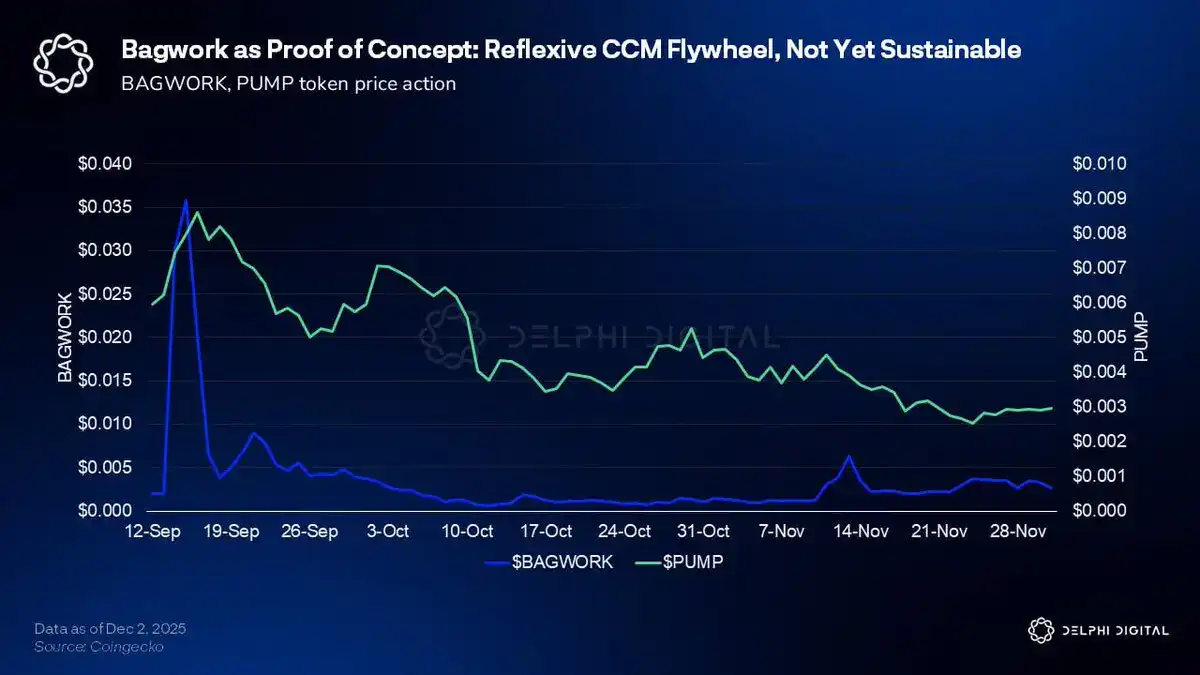
The emergence of "Bagwork" almost perfectly coincided with Pump.fun's peak moment in mid-September, when the fully diluted valuation (FDV) of the $PUMP token reached approximately $8.5 billion, and the market capitalization of the Bagwork token $BAGWORK briefly exceeded $50 million. Since then, no creator token has come close to replicating that level of organic growth momentum or peak valuation. The Knicks court stunt occurred long after the initial hype cycle, and today Bagwork's market capitalization is around $2 million.
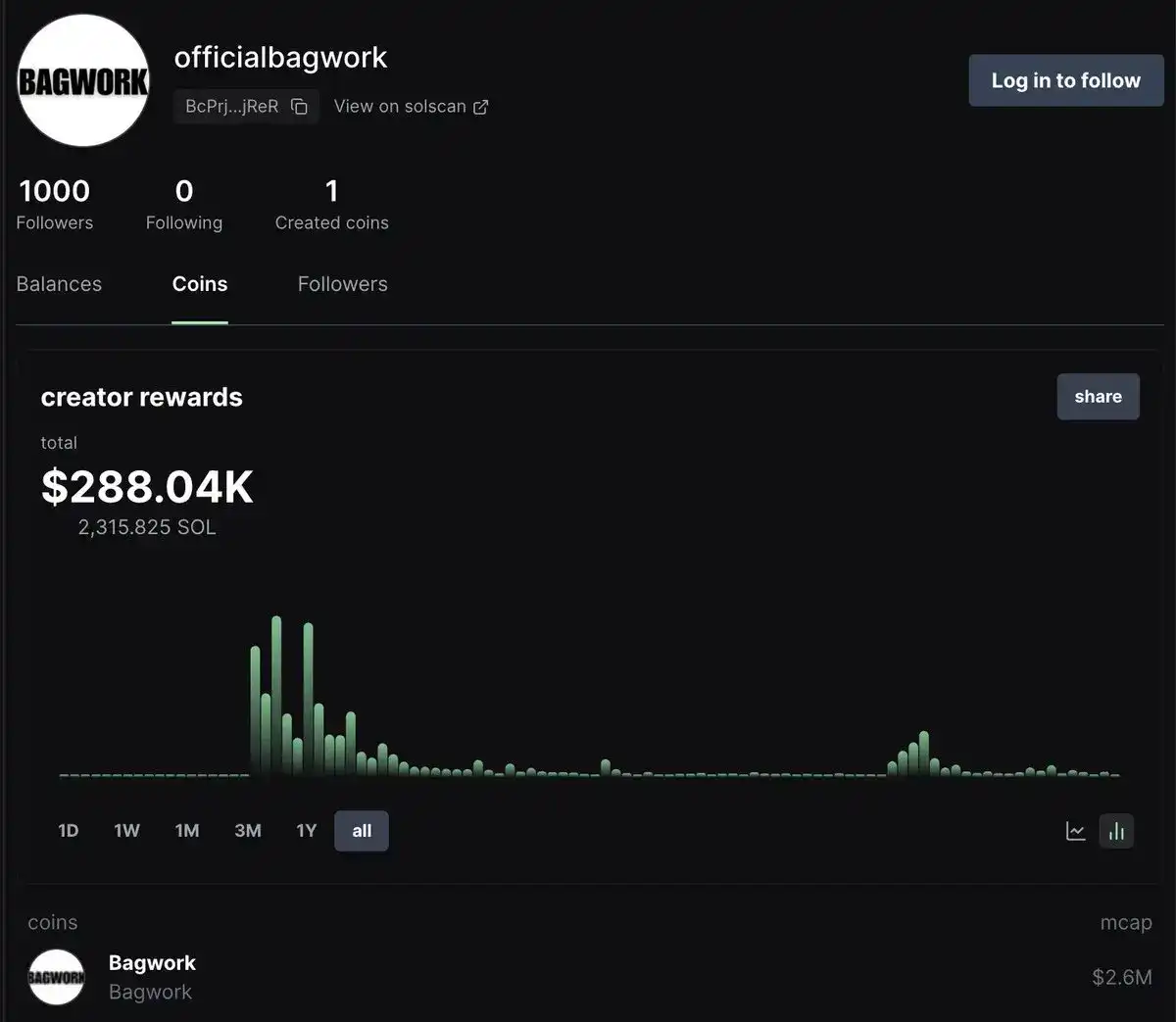
Bagwork was one of the few cases in Pump's live streaming experiment that truly worked as intended. The Bagwork team earned over 2,300 SOL in creator revenue from $BAGWORK trading fees (approximately $300,000 at current prices). Note that all of this was achieved without the team needing to sell any of their holdings. These viral stunts directly translated into attention, trading volume, and fees, creating the closest case to a genuine creator token flywheel effect that Pump has seen so far.
However, apart from Bagwork, Pump has struggled to realize its ambitions in the live streaming space. The value of creator tokens continues to decline, which brings us back to the structural issue of the token itself being part of the product.
Structural Issues and the Path Forward
Currently, the economic incentive to hold or support a creator token remains unclear. Bagwork's early success quickly faded, and every major creator token since has failed to gain similar traction and eventually trended toward zero.
Creators can earn short-term revenue through the CCM fee structure, but the reputational cost associated with a continuously depreciating token makes this model unattractive to more established influencers who could help attract a broader audience. From a trader's perspective, these tokens remain a zero-sum game environment rather than genuine communities.
This is the most critical issue Pump needs to address as it enters 2026.
The team has yet to conduct meaningful experiments in deeper creator incentives, and its airdrop allocation quota remains unused. Apart from the support provided informally during Bagwork's rise, Pump has not made any coordinated attempts, such as targeted airdrops, creator rewards, or other incentive mechanisms. These mechanisms could have been used to bootstrap early activity, create more PvE (Player vs. Environment)-style incentives, and give creators room to experiment without immediately destroying their communities.
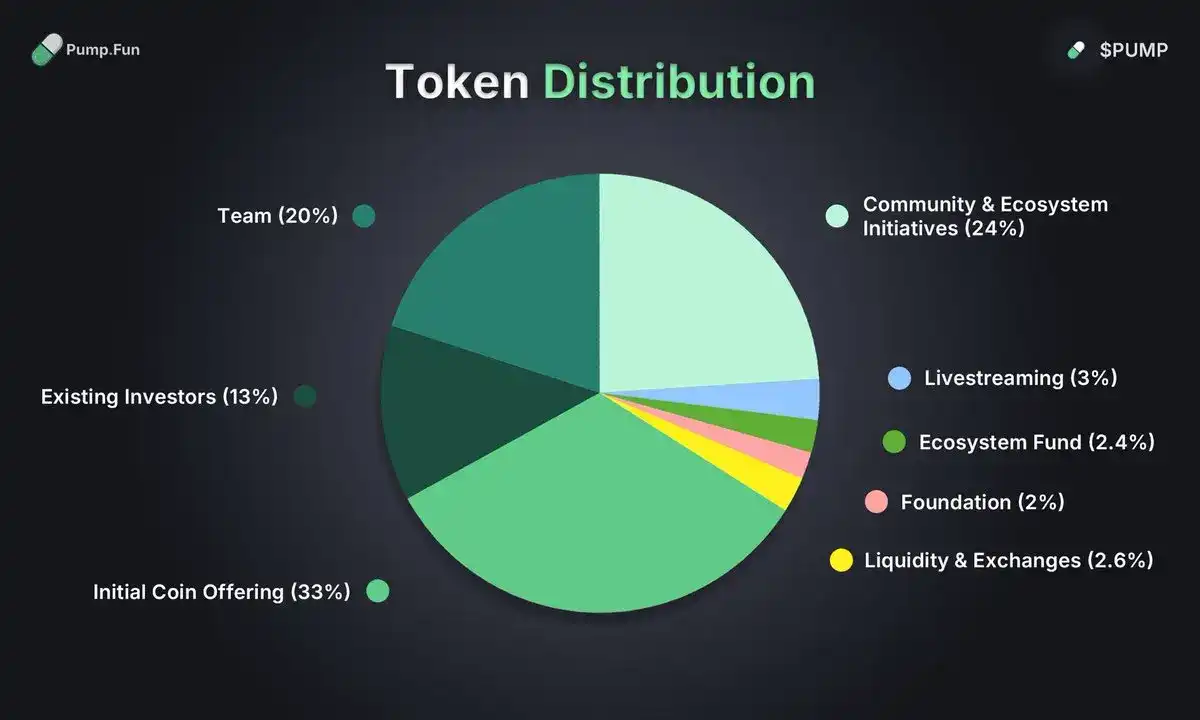
The good news is that this gives Pump significant room for choice. The unused "Community & Ecosystem Initiative" treasury is a major lever the team can pull once the model is ready. If Pump can design a sustainable incentive structure for creator tokens, it will unlock a whole new economic category for creators looking to leverage crypto mechanisms to monetize and grow their audience. The upside potential is real, but until then, the live streaming feature will continue to exist as a series of short-lived hype cycles rather than a lasting, repeatable business vertical.
Tokenomics and Market Performance
On the token side, the primary catalyst for the $PUMP price rebound from around $0.025 to $0.085 was the team's decision to use 100% of net revenue for buybacks.
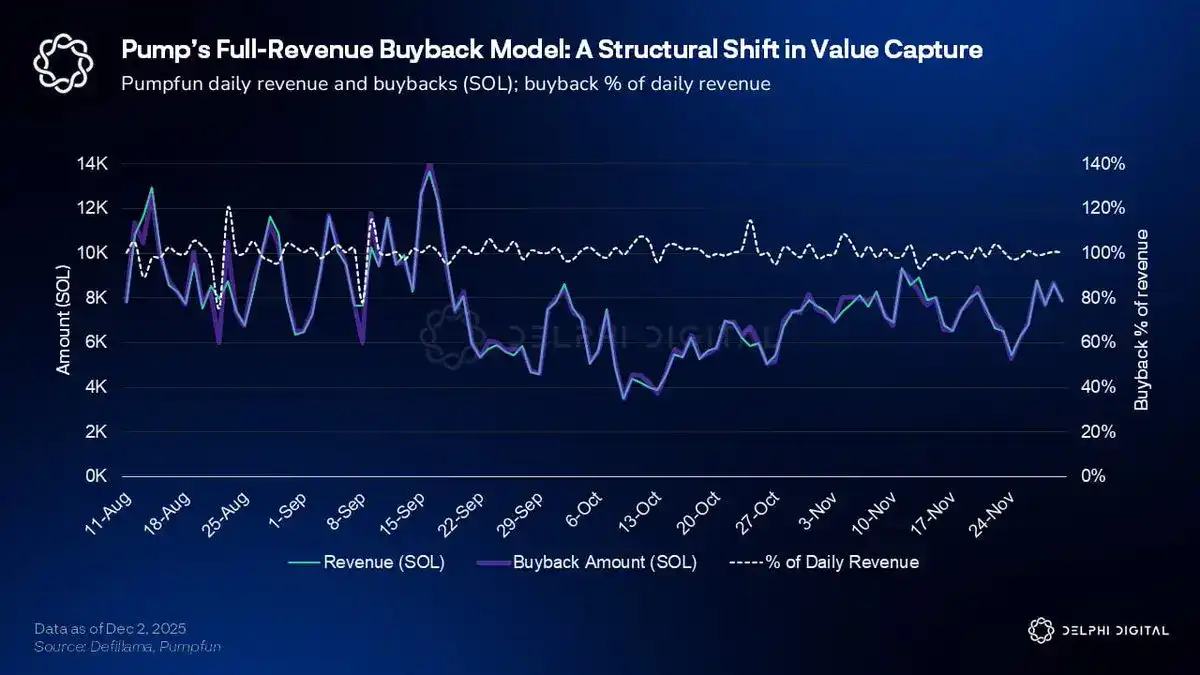
After the market made it clear that a partial buyback strategy would not be rewarded, Pump shifted from initially planning to use about a quarter of its revenue for buybacks to essentially adopting a full Hyperliquid-like model. In an illiquid and harsh altcoin environment, this shift helped ignite one of the strongest large-cap token rallies of the year.
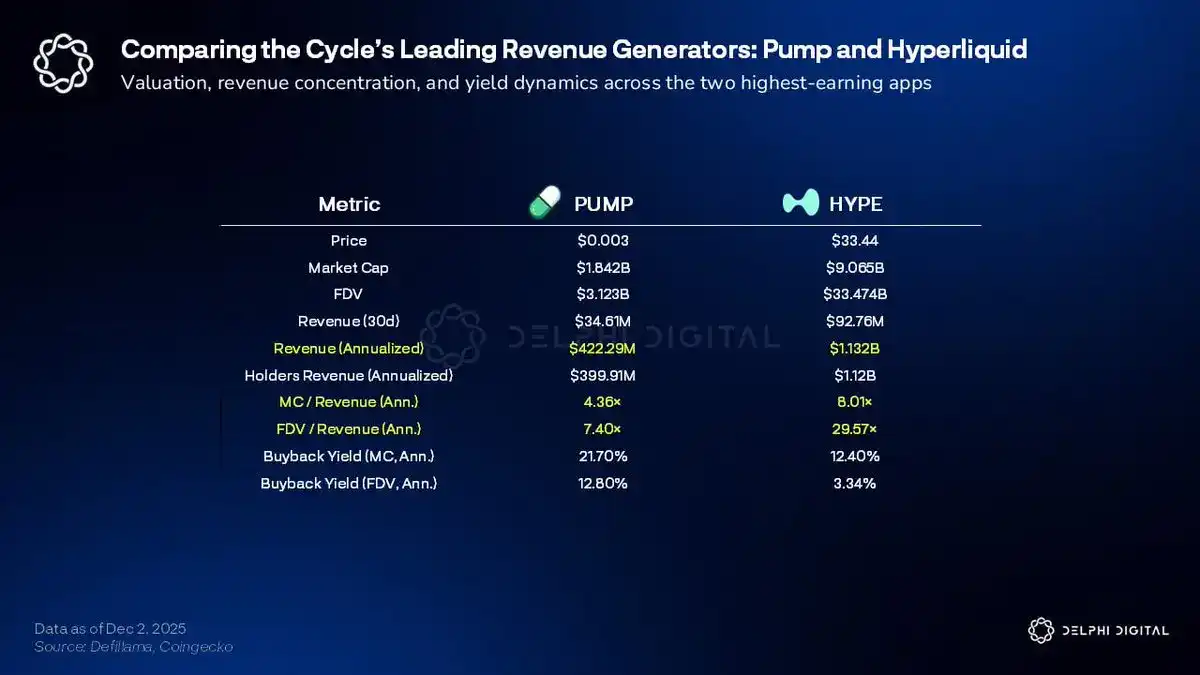
In terms of the buyback-to-market-cap ratio, no other mainstream token trades at a cheaper multiple than $PUMP. Based on current data, Pump's annualized revenue is $422 million, while its market capitalization is $1.84 billion, meaning its market-cap-to-revenue multiple (MC/Rev) is 4.36x, with an annualized buyback yield of about 12.8%. These levels are significantly lower than all other large-cap tokens, including Hyperliquid's approximately 8.01x MC/Rev and about 3.34% yield.
Even so, the market remains skeptical about Pump's long-term business development trajectory. Concerns may include: whether the team can continue to launch meaningful products, the impact of future token unlocks (about 40% of the supply is still locked), and uncertainty about how airdrop and creator incentive distributions will ultimately be implemented. Additionally, the general contraction in Memecoin and end-user activity, as well as ongoing doubts about the durability of Pump's revenue base, exacerbate these concerns.
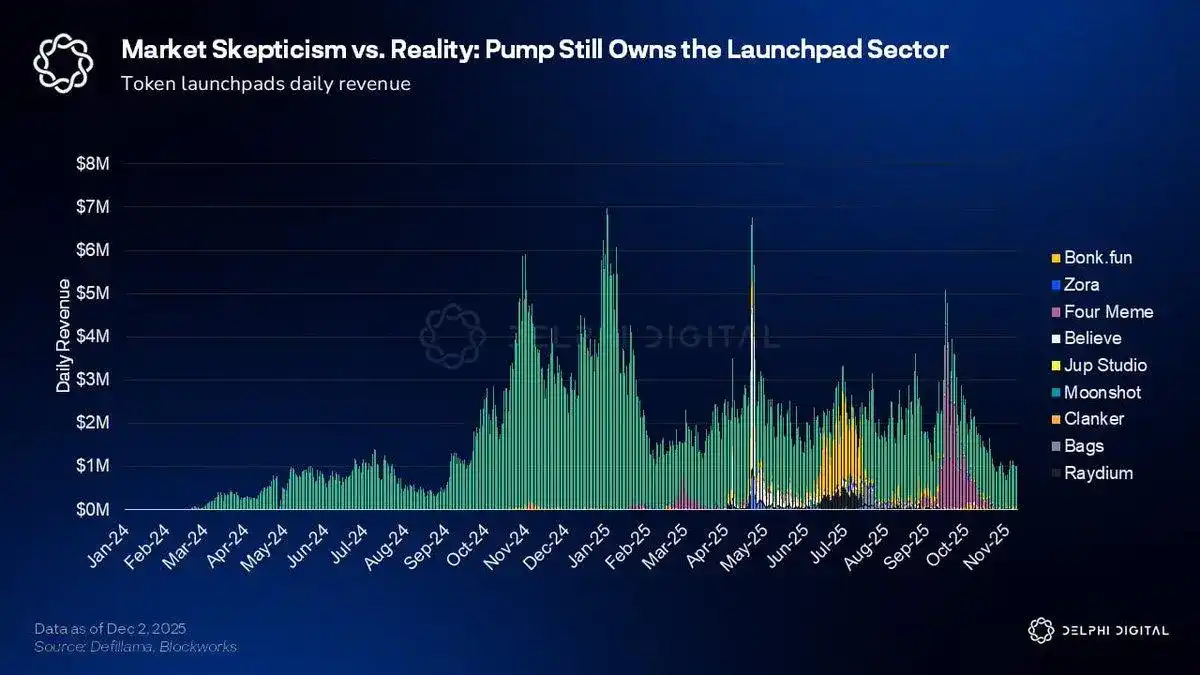
Despite these concerns, Pump continues to dominate the Memecoin launchpad space and still earns (and buys back) approximately $1 million daily, even in an extremely tough market environment. Its daily launchpad revenue has fallen nearly 85% from its peak of nearly $14 million per day earlier this year to around $2 million per day now, but competitors, aside from brief challenges, have not substantially shaken Pump's position. This aligns with the expectations in Delphi Digital's initial report during the Bonk and Raydium challenger phase: even facing periodic trading volume compression, Pump maintains a structurally dominant share of industry activity.
Strategic Moves and Future Direction
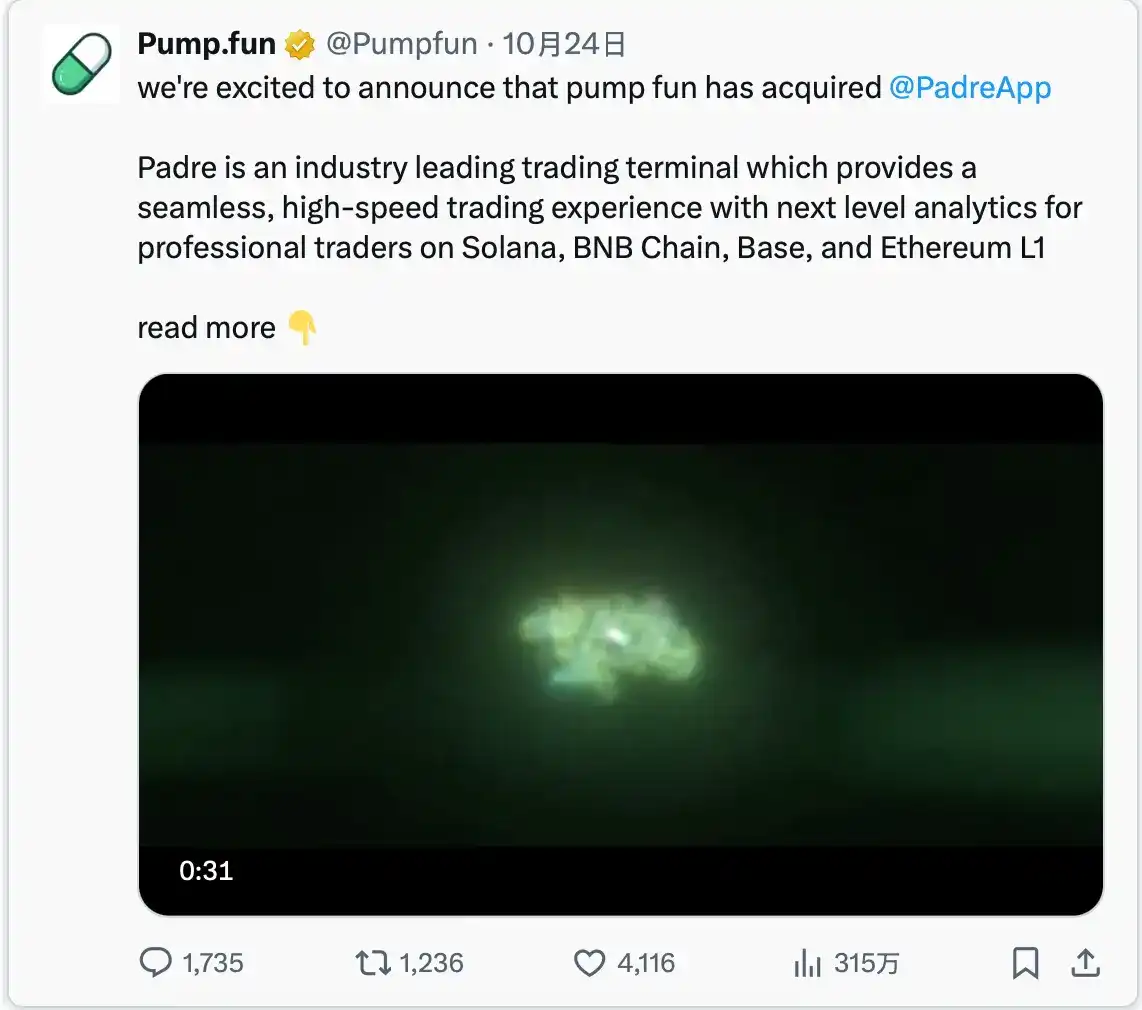
The acquisition of Padre indicates that Pump intends to expand beyond Solana, reach multi-chain users, and has already achieved support for BNB ecosystem assets through Padre's frontend. This also aligns with Delphi Digital's earlier prediction that Pump would eventually acquire a terminal or terminal-related asset to strengthen its traffic entry point and integrate more of the user journey. However, beyond these moves, the team has remained quiet. An investor call has been scheduled but had not taken place at the time of writing, so more clarity may be forthcoming.

Pump's leadership has also expressed interest in the broader ICM (Internet Capital Market) category, but this is not an area Delphi Digital considers core, nor does it align with Pump's current core identity or product strengths. The initial attempt at this model was made by Believe but failed to gain real traction, and MetaDAO has since become the dominant player in the "high-quality founder + community" funding space. ICM is also culturally and structurally misaligned with Pump's brand feel, which is built on speculation, speed, and creator meme culture, rather than long-form governance or prophet governance-style systems.
To succeed in the ICM space, Pump would need to delve deep into heavy governance structures and attract non-crypto teams looking to operate on-chain, which is not where most of Pump's current users or creators are. Although there is theoretical upside if the team commits seriously, I view this as a secondary or optional direction, not a natural extension of Pump's existing flywheel as it enters 2026.
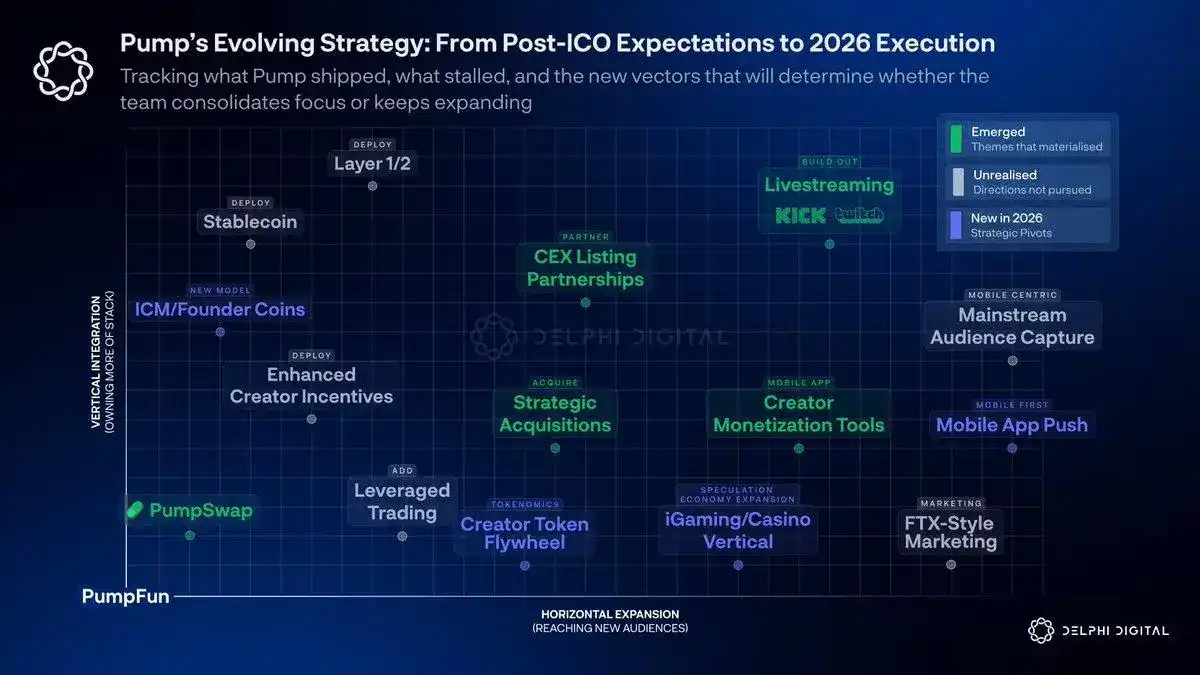
Looking ahead to 2026, the main questions revolve around whether Pump can finally create an incentive-aligned model for creator tokens, whether it can meaningfully expand into multi-chain markets through Padre, how it will manage token unlocks and declining revenue visibility, and which product vertical it will choose as its most aggressive entry point. Currently, its strategy seems scattered across multiple layers, from live streaming to ICM to mobile. At some point, the team may need to identify a primary focus, and for most of 2025, that focus seemed to be live streaming. Now, that is less clear.
Potential Breakthroughs: iGaming and Mobile
The bigger question is whether Pump can still attract larger non-crypto creators. This may require reinventing the creator token flywheel, introducing stronger, longer-term incentives to sustain virality beyond the crypto-native crowd. The raw ingredients exist. In 2025, Bagwork's run gave Delphi Digital a glimpse of what it looks like when this model works, a time when Pump seemed close to crossing the chasm.
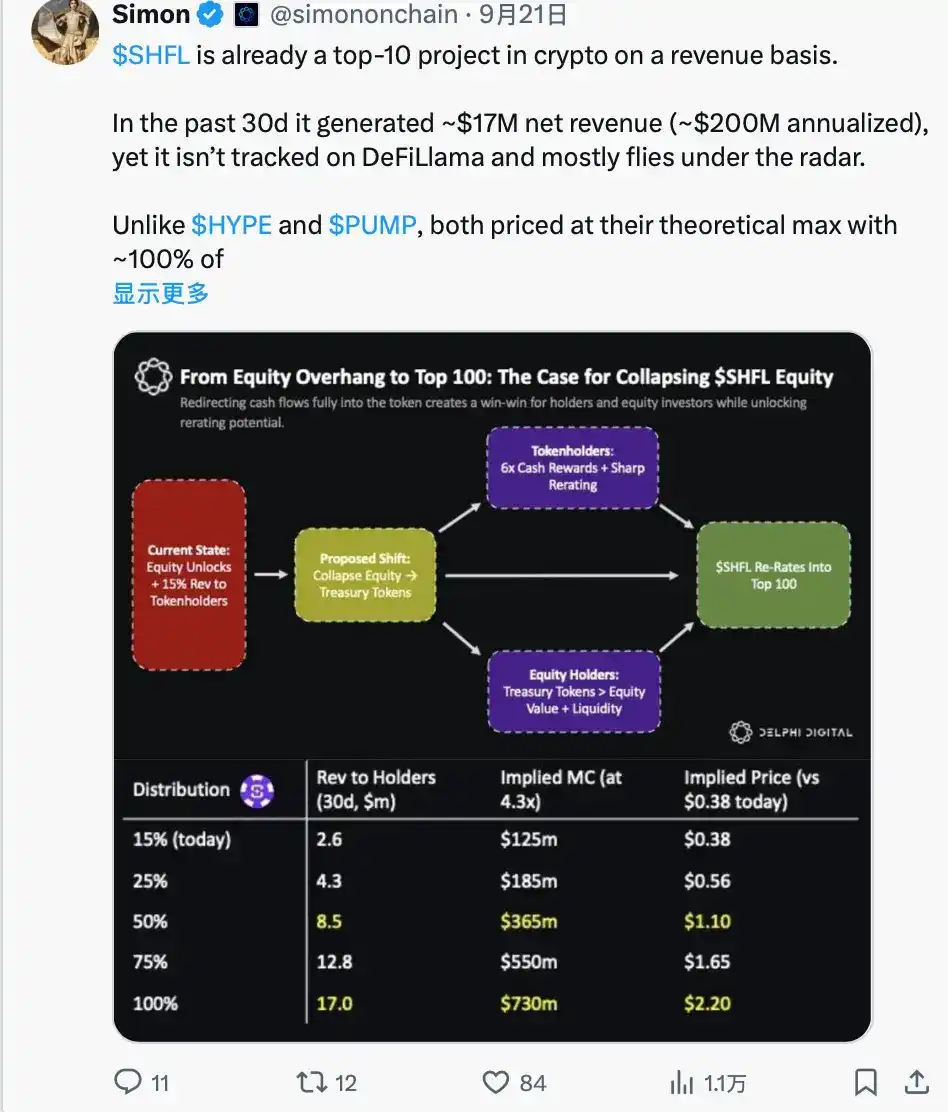
Pump also retains significant room to expand its product suite. One strategic direction the team should seriously evaluate is entering the iGaming or casino-related vertical; a Kick/Stake-like model would naturally fit with Pump's speculation-driven user base. This would create deep synergies with its memecoin and live streaming ambitions, and the profit potential of this category is already proven. Shuffle's net gaming revenue and weekly lottery distributions demonstrate how large this opportunity can be when executed well.
Pump's mobile app is another underutilized advantage. Deeper promotion on mobile could broaden the traffic funnel, make the product more accessible to mainstream users, and provide creators with more monetization space. If combined with iGaming, this would meaningfully expand Pump's potential user base while strengthening parts of the platform that already work.
Despite the uncertainties, Pump remains one of the most resilient consumer applications of this cycle, maintaining dominance even as the broader macro environment shifted. Making substantive progress in any single direction could catalyze a meaningful market sentiment reset and prepare Pump for broader breakthrough beyond the crypto-native crowd.