
Primitive Ventures: Why Are We Bullish On On-Chain Perpetual U.S. Stocks?

marsbitDipublikasikan tanggal 2026-01-30Terakhir diperbarui pada 2026-01-30

Abstrak

Primitive Ventures argues that on-chain perpetual contracts for US equities represent a pivotal convergence point for crypto and traditional finance, poised to absorb global liquidity. The trend is driven by crypto's innate preference for volatility and key infrastructure upgrades: crypto in-kind margin acceptance by CBOE/CME, DTCC's potential on-chain settlement integration, and the emergence of tokenized equities as collateral enabling systematic basis farming. The dynamic involves "onshore issuance, offshore distribution." While entities like Ondo focus on compliant tokenized stock issuance, demand flows to platforms with superior distribution and trading interfaces, predominantly on BNB Chain. On-chain perps attract global professional traders seeking 24/7 access, high leverage, cross-margin efficiency, and DeFi composability, bypassing traditional broker limitations. The stack is maturing with infrastructure (HIP-3/HyperCore, Orderly, Chainlink), trading platforms (Trade.xyz, Ostium), and terminal frontends (Based, Phantom). The future is a unified global "margin network" where diverse assets serve as interoperable collateral. However, the window is narrowing. The primary threat is not demand but regulatory approval of onshore products, which could rapidly shift activity back to established brokers (e.g., Robinhood with 0DTE options). With the SEC/CFTC actively studying perps and compliant entrants like Bitnomial emerging, offshore/on-chain players must quickly captur...

Author: YettaS, Investment Partner at Primitive Ventures

As gold and silver continue to hit new highs, Trade.xyz's daily trading volume approaches $2 billion, and Binance lists TSLA perpetual contracts with little hesitation, the trend is hard to ignore: Traditional financial assets are becoming the new gateway for the crypto market to absorb global liquidity.

Just a year ago, most CEX operators probably couldn't accept this fact: An on-chain trading venue is actually using TradFi assets as a wedge to begin eroding and reshaping the core territory of centralized exchanges.
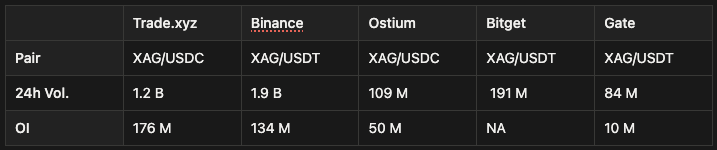
We all know that crypto capital inherently prefers volatility; from a product structure perspective, equity perps are precisely at the convergence point of several key upgrades, which is the fundamental reason they stand out in this cycle:

  • As CBOE / CME gradually accept crypto in-kind margin this year, the liquidity and availability of crypto assets as collateral will significantly improve.

  • Once the DTCC establishes a direct on-chain connection, the settlement layer will begin to permeate on-chain, and stock assets will gain a native on-chain settlement channel from the source.

  • The truly interesting part then emerges: Tokenized stocks as collateral → Perpetual contract exchanges accept them → Institutions begin systematic basis farming.

Onshore Issuance, Offshore Distribution

The U.S. exports finance not by exporting financial institutions themselves, but by exporting "access." The petrodollar system distributed dollars globally, externalizing inflationary pressure; stablecoins replicated this logic by wholesale purchasing of U.S. Treasuries, turning the whole world into new dollar holders without the need for banks or brokers. On-chain stocks are the next step in this logic. From unbanked to unbrokered, dollar assets will once again complete their global倾销 (dumping).
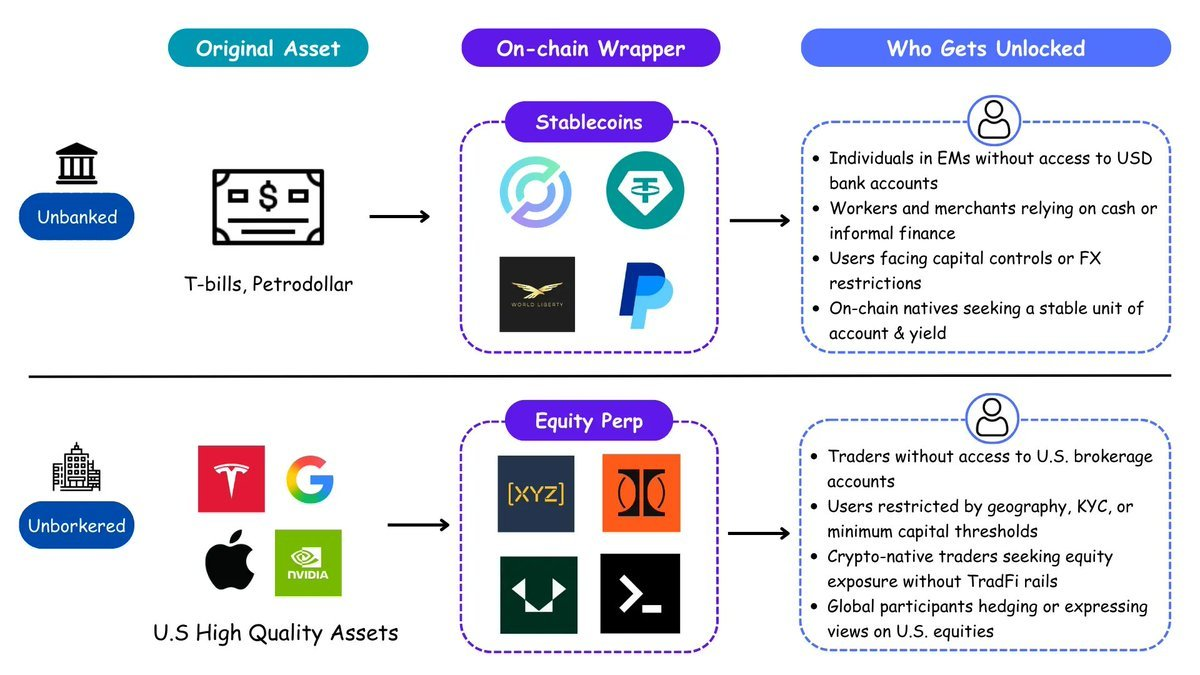
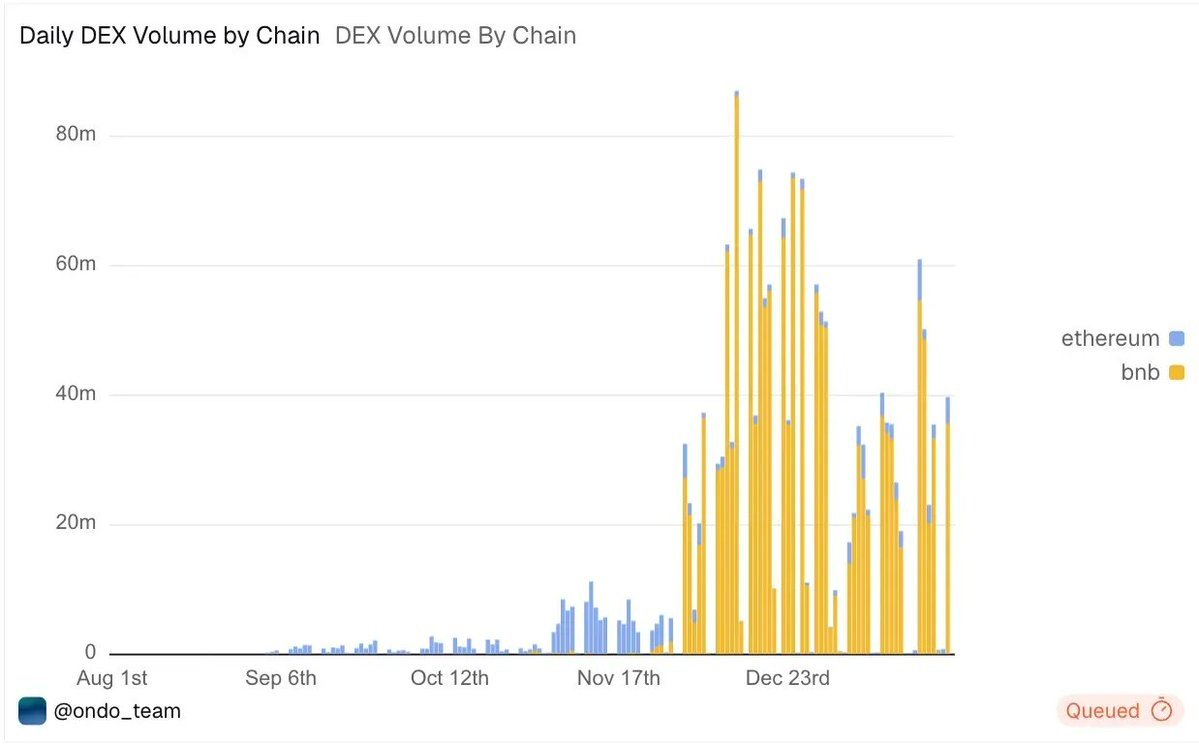
CEXs saw the opportunity and potential threat early on, so they chose to expand first. Ondo and xStocks focused on the issuance side—connecting with brokers, custodying real stocks, minting 1:1 tokenized stocks on multiple chains—but it turned out that issuance itself doesn't automatically create a market.

The first wave of real demand came from traders unable to access the U.S. brokerage system and crypto-native users seeking exposure to U.S. stocks without relying on TradFi infrastructure. The issuers handled the heaviest compliance and custody work, but the flow of funds went to the side that truly controls trading attention and distribution capabilities. Offshore platforms embedded the products directly into their trading interfaces, and trading volume naturally aggregated there. Ultimately, we see the vast majority of tokenized stock trading volume concentrated on BNB Chain, accounting for over 80%.
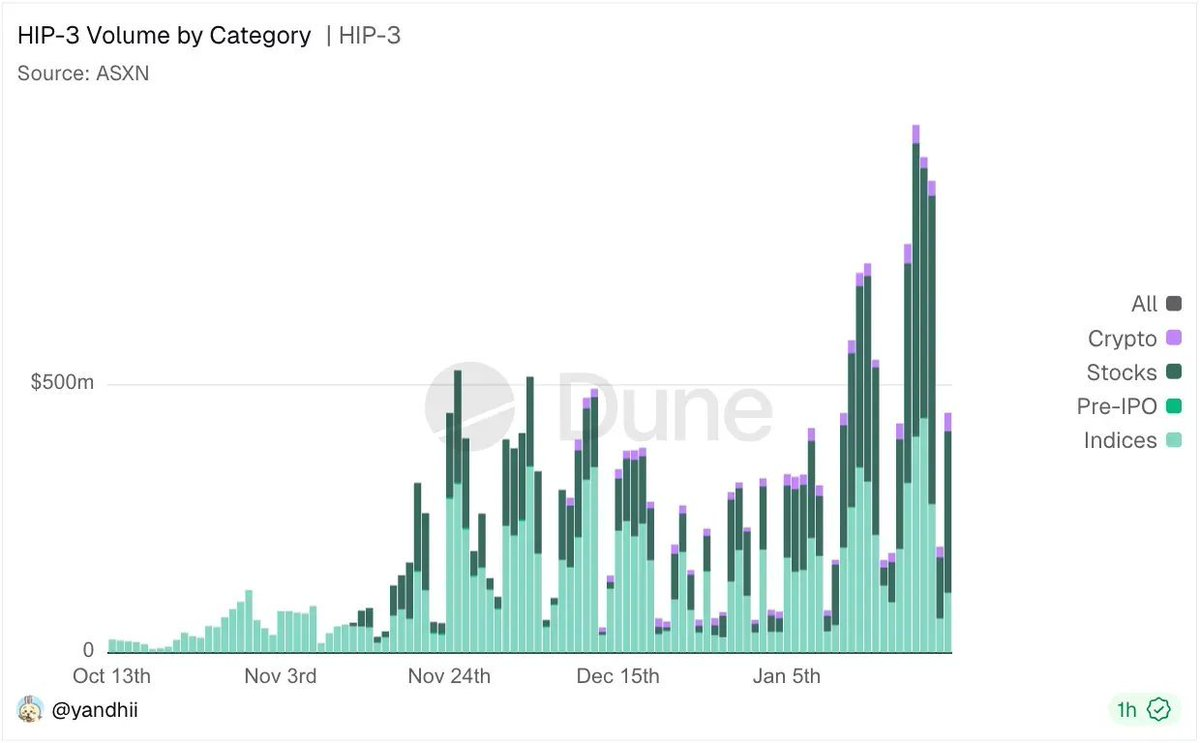
If offshore spot unlocked retail demand, on-chain equity perps further attracted the flow of professional traders. These users are global trading participants who want to trade or hedge U.S. stocks without being constrained by broker access, trading hours, or jurisdictional limits.

Take HIP-3 as an example; it provides professional traders with a trading interface to systematically conduct basis trading, capture cross-market dislocations, and cover stocks, crypto assets, and indices simultaneously. With the叠加 (overlay) of potential airdrop incentives, trading volume continues to刷新 (refresh) new highs.
The Golden Window for On-Chain Stock Perpetuals

Once a现货锚点 (spot anchor) exists, perpetual contracts almost always become the most efficient trading tool, for reasons that are as direct as ever:

  • 7×24 hour trading,不受 (not subject to) market hour restrictions

  • Cross-margin with all assets, extremely capital efficient

  • High leverage allows true risk appetite to be释放 (released)

  • Composable into DeFi strategies

  • Provides a clear collateral path for RWA / tokenized assets

The entire tech stack is rapidly taking shape:
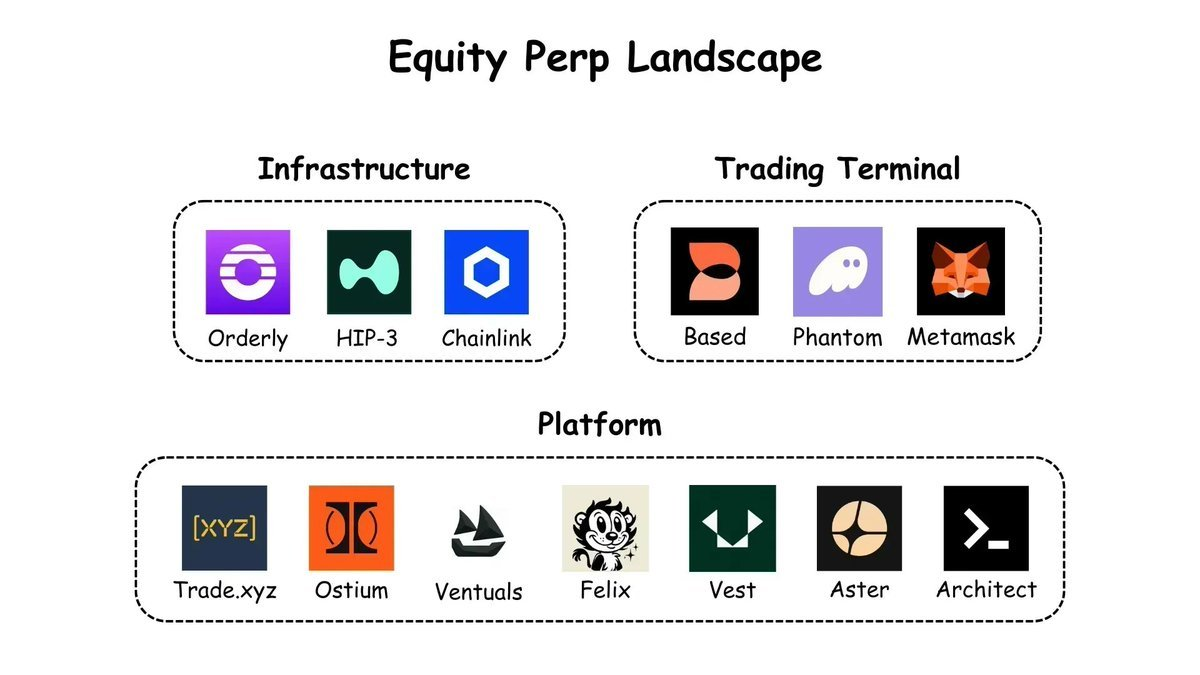
Infrastructure

  • HIP-3 / HyperCore: High-performance orderbook engine, supports any perp market

  • Orderly: Unified omnichain orderbook, anyone can launch a perp with no code

  • Chainlink: Stock price oracle (core data layer)

Platforms (Where trading happens)

  • Trade.xyz: Based on HIP-3, currently the largest equity perp DEX

  • Ostium: FX / Commodities / Stocks,偏向 (leaning towards) CFD structure

  • Ventuals: pre-IPO market (HIP-3)

  • Felix / Vest / Aster / Architect: Each has its focus on settlement, coverage, and distribution

Terminals (Current upstream traffic entry points)

  • Based: Multi-asset interface aggregating Hyperliquid, HIP-3, and prediction markets

  • Phantom / Metamask-like frontends: Convert wallet traffic into trading behavior

Looking forward, the focus is shifting from "tokenization" to "monetary velocity." The real on-chain GDP will be generated here. The ultimate winners won't just be players who can mint on-chain wrapped assets, but those trading venues that, at scale, can convert any asset into usable collateral and provide the deepest liquidity and the cleanest matching / risk engine.

Imagine the future as a globally unified "collateral network": Bitcoin, U.S. stocks, gold, U.S. Treasuries are no longer locked in their respective systems but can be used as collateral like building blocks at any time; perpetual contracts become the most universal risk expression tool; stablecoins play the role of cash; various trading and arbitrage strategies run automatically 7×24 on-chain, constantly combining. Assets are no longer "held" but are continuously called upon.

Racing Against Time

The window is open, but time is not on the side of on-chain equity perps. The biggest threat is not demand, but the formal approval of onshore products. History has repeatedly shown that once regulators nod, distribution回流 (flows back) to the existing brokerage system in an extremely short time. 0DTE options are the most direct example: after approval, they were quickly absorbed and dominated by Robinhood.

More importantly, the countdown has begun. The SEC and CFTC are systematically studying perpetual derivatives and their market structure and risks, which usually means regulatory boundaries are being actively defined. Meanwhile,

  • Bitnomial became the first CFTC-compliant perp

  • Coinbase also launched 5-year futures with a funding mechanism,几乎 (almost) indistinguishable in trading behavior from perps.

The reason offshore and on-chain players can still lead is simply that the products haven't been standardized yet. Once the rules take shape, the advantage will quickly disappear. Those who truly have a chance are not those waiting for certainty, but those who, while the window is still open, quickly lock in users and liquidity, and shape the rules while running and coordinating with regulators. Time is not a background variable but the core constraint determining victory or defeat, and the countdown has already begun.

Just as Tether used crypto's distribution power to quietly push the dollar globally back in the day, today's on-chain economy is essentially doing the same thing—leveraging the liquidity and trading tools of the crypto market to deliver U.S. stocks and American assets in a form with higher frequency, higher leverage, and higher liquidity to a broader set of participants. On-chain is not对抗 (fighting against) off-chain; it is rewriting the operating methods of the existing system with faster speed and stronger capital efficiency. The real watershed lies in whether one can timely capture this mechanism and complete the cognition and layout of the new continent on-chain.


Pertanyaan Terkait

QWhy does Primitive Ventures believe on-chain perpetuals for US stocks are gaining traction in the crypto market?

APrimitive Ventures attributes the rise of on-chain perpetuals for stocks to crypto's inherent preference for volatility, key infrastructure upgrades like CBOE/CME accepting crypto in-kind margin, and the potential for DTCC to establish direct on-chain connections. These factors enable tokenized stocks to be used as collateral, attracting institutional basis farming and global liquidity.

QWhat is the significance of the 'offshore distribution' model for tokenized stocks mentioned in the article?

AThe 'offshore distribution' model refers to platforms outside strict US jurisdiction that focus on distributing and trading tokenized stocks, capturing demand from users unable to access US brokerages or seeking crypto-native exposure. This model has concentrated over 80% of trading volume on BNB Chain, demonstrating that distribution, not just issuance, drives market growth.

QWhat advantages do on-chain equity perpetuals offer over traditional trading methods?

AOn-chain equity perpetuals offer 24/7 trading unrestricted by market hours, high capital efficiency with cross-margin across all assets, high leverage to match risk appetite, composability into DeFi strategies, and a clear path for using RWA/tokenized assets as collateral.

QWhat are the main threats to the growth of on-chain equity perpetuals according to the article?

AThe primary threat is the potential approval and rapid adoption of onshore regulated products by established brokers, as seen with 0DTE options on Robinhood. Regulatory bodies like the SEC and CFTC are already studying perpetual derivatives, and once rules are standardized, the current advantage could quickly diminish.

QHow does the article describe the future vision of a 'global margin network'?

AThe future is envisioned as a globally unified 'margin network' where assets like Bitcoin, US stocks, gold, and US Treasuries are not siloed but can be used interchangeably as collateral. Perpetual contracts serve as the universal tool for risk expression, stablecoins act as cash, and various trading/arbitrage strategies operate 24/7, continuously composing and utilizing assets rather than just holding them.

Bacaan Terkait

Ketika Konsensus Semakin Cepat, Apa yang Ditaruhkan oleh Investor Muda?

Dengan kemajuan teknologi yang semakin cepat, terutama di bidang AI, robotika, dirgantara, dan komputasi kuantum, para investor muda berhadapan dengan perubahan logika investasi. Mereka tidak lagi cukup mengandalkan model keuangan dan pengalaman industri lama, tetapi juga harus memahami bahasa teknologi, menerima rute yang belum konvergen, dan membuat keputusan sebelum konsensus terbentuk. WAIC merilis daftar "Alpha Youth Investment Leaders," yang mencerminkan beberapa tren utama dalam investasi teknologi saat ini. Tren pertama adalah pergeseran AI dari layar ke dunia fisik. Perhatian kini beralih ke perangkat ujung, robot, mobil, sistem industri, dan infrastruktur luar angkasa. Meskipun robot humanoid dan kecerdasan emboddied menarik perhatian, fokus utama adalah kemampuan pengiriman dan ROI yang nyata, bukan hanya demonstrasi yang mengesankan. Kecerdasan ujung menjadi kunci, dengan perangkat keras AI yang membangun hubungan data dan layanan berkelanjutan dengan pengguna. Tren kedua adalah beralihnya fokus kompetisi dari model dasar ke "roda terbang cerdas." Manfaat model besar belum sepenuhnya terealisasi dalam merekonstruksi produktivitas. Nilai jangka panjang terletak pada perusahaan yang dapat mengintegrasikan kemampuan model ke dalam alur kerja nyata, membentuk siklus tertutup data, pelatihan, dan umpan balik pengguna yang saling memperkuat (roda terbang cerdas). Ini menciptakan nilai yang bertahan melampaui sekadar pembaruan model. Tren ketiga adalah munculnya teknologi dasar baru untuk mengatasi hambatan data. Ketika data manusia yang berkualitas tinggi menjadi langka, pembelajaran penguatan, permainan mandiri, dan model dasar ilmiah menjadi arah yang diperhatikan. Model-model ini bertujuan untuk membangun kemampuan yang lebih mendasar dan universal dalam bidang seperti ilmu kehidupan dan material, menggunakan data dan umpan balik eksperimen khusus untuk mendorong pertumbuhan kemampuan AI selanjutnya. Tren keempat adalah perlunya modal yang sabar untuk teknologi keras. Di bidang seperti dirgantara komersial, komputasi kuantum, dan energi canggih, siklus validasi lebih panjang dan penuh ketidakpastian teknis. Investasi di bidang ini memerlukan pemahaman awal tentang kemampuan teknik dan ketahanan tim, dengan harapan pengembalian dalam skala waktu yang lebih panjang, sambil mendorong perkembangan industri dan akumulasi kemampuan dasar. Peran investor muda adalah memahami teknologi lebih awal, masuk lebih dalam ke industri, dan membuat pilihan jangka panjang di tengah ketidakpastian.

marsbit2m yang lalu

Ketika Konsensus Semakin Cepat, Apa yang Ditaruhkan oleh Investor Muda?

marsbit2m yang lalu

SBI, Manajer Investasi Terbesar India Melantai di Bursa, Sinyal Apa yang Bisa Dibaca dari Data Perdagangannya?

SBI Funds Management, manajer investasi terbesar di India, melantai di bursa pada 21 Juli dengan penawaran perdana senilai sekitar US$10 miliar. Permintaan mencapai 42 kali lipat dari saham yang ditawarkan, menunjukkan minat pasar yang kuat terhadap aset inti India. Namun, harga saham hanya naik sekitar 6,3% pada hari pertama, lebih rendah dari ekspektasi premium pasar gelap sebelumnya. Hal ini menandakan likuiditas tersedia, tetapi investor tidak mau membayar terlalu mahal. Keberhasilan SBI membuka peluang bagi IPO besar berikutnya seperti NSE dan Reliance Jio. Namun, sinyal dari SBI kompleks: jendela IPO India terbuka, tetapi terutama untuk perusahaan dengan merek kuat, arus kas sehat, dan narasi pertumbuhan jangka panjang yang jelas. Perbedaan pendapat muncul di kalangan penjamin emisi. Lembaga lokal seperti Equirus dan Kotak tetap aktif dengan menekankan efisiensi biaya, sementara beberapa bank investasi internasional seperti Citigroup dan JPMorgan menarik diri karena fee penjaminan yang sangat rendah (dilaporkan sekitar 0,01%). Ini mencerminkan pergeseran kekuatan tawar-menawar ke tangan emiten kuat seperti SBI, yang mengandalkan jaringan distribusi lokalnya. Pertumbuhan industri manajemen aset India, didorong oleh penetrasi produk bersama yang masih rendah dan tren investasi SIP, mendukung valuasi SBI. Namun, kenaikan harga yang moderat mencerminkan kehati-hatian investor terhadap risiko siklus pasar. Pada akhirnya, SBI berfungsi sebagai penanda harga baru bagi pasar IPO India. Kelanjutannya akan diuji oleh IPO besar berikutnya. Jika proyek seperti Jio dan NSE dapat diluncurkan dengan valuasi wajar, SBI akan dilihat sebagai awal pemulihan. Jika tidak, ini hanya akan menjadi kesuksesan selektif bagi emiten berkualitas terbaik.

marsbit32m yang lalu

SBI, Manajer Investasi Terbesar India Melantai di Bursa, Sinyal Apa yang Bisa Dibaca dari Data Perdagangannya?

marsbit32m yang lalu

Saham A: Ketahanan, Ekspektasi, dan Dasar yang Tertimpa Kerusakan

Artikel ini membahas ketahanan pasar saham A-shares di tengah tekanan eksternal pada Juli 2026. Meskipun saham teknologi global, termasuk Korea, melemah dan berdampak pada sektor teknologi A-shares, pasar domestik menunjukkan dasar yang kuat. Penurunan terutama dipicu oleh kontagion risiko eksternal (seperti deleverage di Korea), bukan keruntuhan fundamental. Industri teknologi China memiliki struktur yang lebih terdiversifikasi—meliputi berbagai sub-sektor dan logika naratif ganda (rantai pasokan global AI dan substitusi impor domestik)—dibandingkan ketergantungan Korea pada siklus super chip memori. Data fundamental, seperti pertumbuhan laba yang kuat di modul optik dan kabel serat optik, belum terbantahkan. Pihak berwenang ("Tim Nasional") secara aktif mendukung pasar dengan pembelian besar-besaran dan kebijakan stabilisasi, mengirimkan sinyal keyakinan. Selain sektor teknologi, tiga pilar lain—konsumsi, siklus, dan keuangan—memiliki momentum pemulihan endogen. Sektor konsumsi menunjukkan perbaikan dengan kenaikan CPI dan normalisasi inventaris, sementara siklus (seperti aluminium) didukung oleh profitabilitas tinggi, ekspektasi kenaikan harga, dan valuasi rendah. Aset keuangan menawarkan stabilitas dan dividen yang menarik. Kesimpulannya, penyesuaian ini lebih merupakan pelepasan risiko eksternal. Dengan intervensi kebijakan yang tegas dan fundamental ekonomi yang beragam serta tangguh, pasar A-shares dipandang memiliki ketahanan untuk kembali stabil.

marsbit1j yang lalu

Saham A: Ketahanan, Ekspektasi, dan Dasar yang Tertimpa Kerusakan

marsbit1j yang lalu

Trading

Spot
活动图片




