Multicoin Co-founder: Is Decentralization Always Slower Than Centralization? PropAMM Is Breaking This Bias

marsbitDipublikasikan tanggal 2026-03-13Terakhir diperbarui pada 2026-03-13

Abstrak

In a recent article, Multicoin Capital co-founder Kyle Samani argues that PropAMM (Proactive Automated Market Maker) on Solana represents one of the most significant innovations in market microstructure in decades. It challenges the long-held belief that decentralized systems are inherently slower than centralized ones due to global node communication. In traditional centralized exchanges (CEXs), market makers co-locate servers and engage in constant bidirectional communication with the exchange to update orders, resulting in latency. In contrast, PropAMM runs market-making algorithms directly on the Solana blockchain, eliminating the need for inter-server messaging. Price updates occur within the same physical silicon, drastically reducing latency. PropAMM already offers narrower spreads for SOL-USDC spot trading than major CEXs. Samani predicts it will dominate on-chain trading across spots, perpetuals, and prediction markets in 2024. Current challenges include non-deterministic routing and lack of guaranteed best execution for takers, but solutions from aggregators like Jupiter and dFlow are expected. Upcoming Solana upgrades—such as higher compute limits, reduced slot times, and lower network latency—will further enhance PropAMM performance, solidifying its advantage over traditional systems.

Author: Kyle Samani, Multicoin Co-founder

Compiled by: Azuma, Odaily Planet Daily

Editor's Note: The man who knows how to hype Solana best, Multicoin Capital's former co-founder Kyle Samani, who recently made a high-profile exit, is back!

Last night, Kyle Samani posted a long Thread on his personal X account. In the post, Samani once again demonstrated his highly persuasive "hype" (not derogatory here) rhetoric, using "efficiency"—a weak point in the decentralization narrative—as a breakthrough. He detailed how Solana's PropAMM will catch up with or even surpass traditional centralized models in efficiency, arguing that PropAMM is one of the most important innovations in market microstructure in recent years, or even decades.

Below is the original content:

PropAMM is one of the most important innovations in market microstructure in recent years, and perhaps even one of the most significant in decades.

To help everyone grasp this conclusion, let's first look at how market makers (MMs) quote prices on traditional centralized exchanges (CEXs).

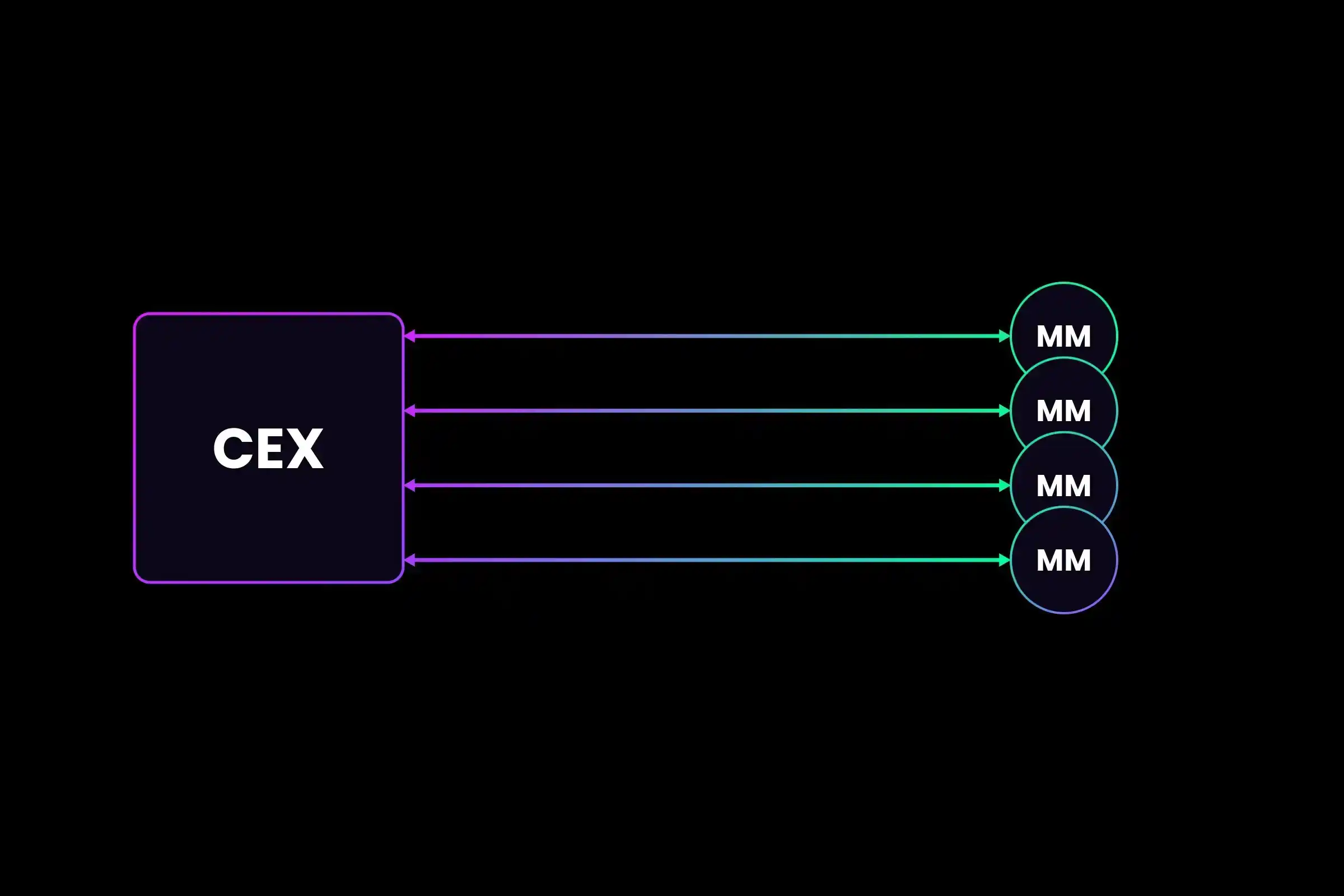
Market makers typically engage in physical co-location with the trading platform. Each market maker runs an algorithm on a server and connects to another server running the exchange's system via a network cable of uniform length (e.g., 50 meters).

A massive stream of data is constantly exchanged between market makers and the trading platform. Whenever a market maker sends an order to the exchange—whether it's a limit order, cancellation, or market order—the exchange must broadcast this information to all other market makers; then, other market makers resend their orders based on the new information; this cycle repeats indefinitely.

Here is a simple diagram.
Now let's look at how PropAMM works on the Solana mainnet.

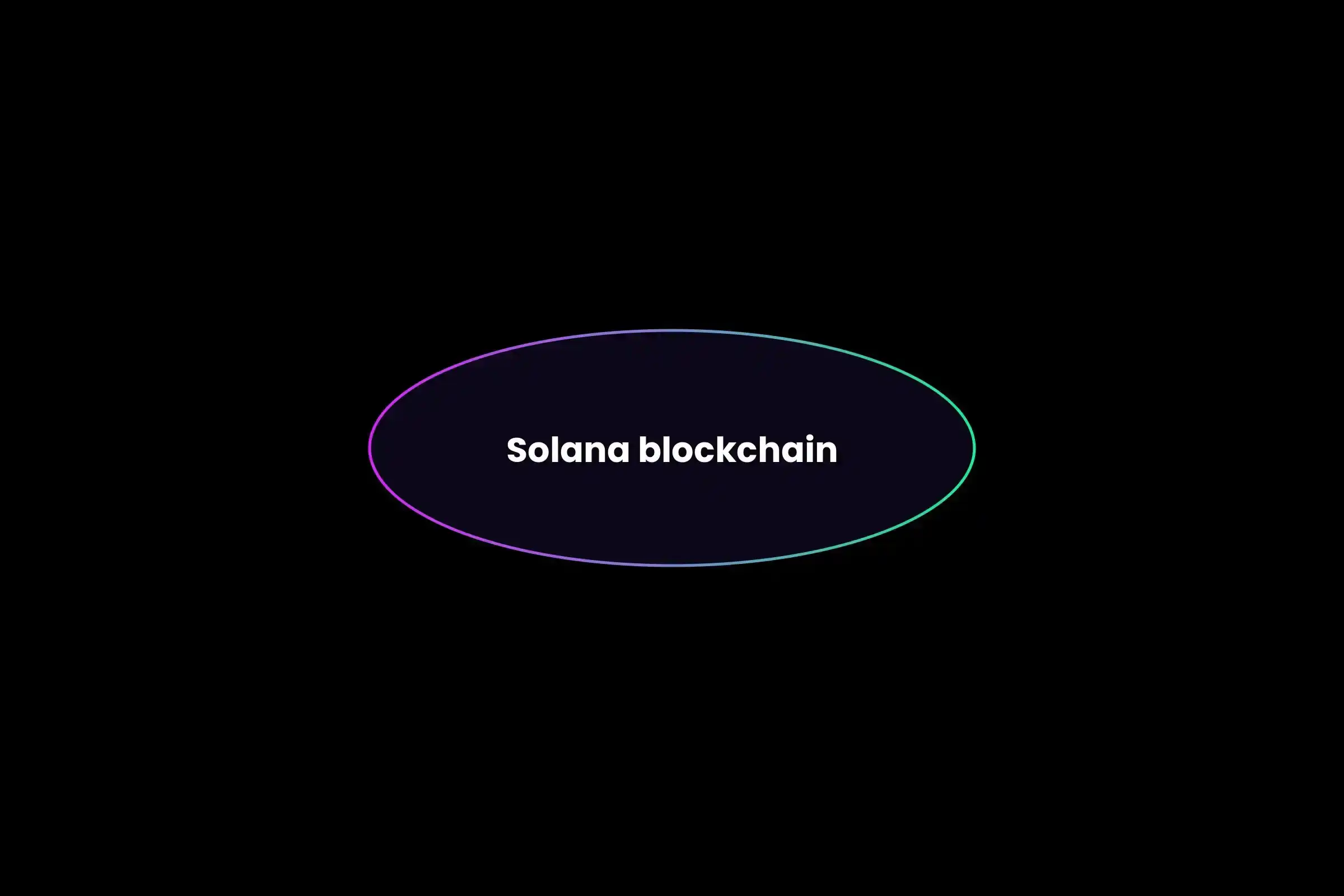
The beauty of PropAMM on Solana is that the blockchain itself directly "hosts" the market maker algorithms. This means the system no longer needs to send billions of messages back and forth between market makers and the exchange; the market-making algorithms will run directly on the same physical machine as the exchange.

Here is the new diagram. (That's right, only the Solana blockchain is needed!)
There has long been a common view in the cryptocurrency industry that decentralized systems must be slower (with higher latency) than centralized systems because they require communication between global nodes.

But if you reframe the issue, on-chain hosted algorithms could actually have lower latency than traditional centralized financial exchanges.

Why is that? The reason is that the latency required for PropAMM to update prices only involves electrons moving within the same physical silicon chip. For example, if the last market order causes a change in the SOL-USD price, this information is immediately visible to all PropAMMs and used to price the next market order. Everything happens within the same silicon chip; there is no longer a need for two-way communication between servers.

It's worth noting that PropAMM does require frequent oracle updates, but this is not a problem and does not change the overall fact described above.

The most critical point remains that when the trading platform—in this case, the Solana blockchain—directly hosts the PropAMM algorithms, the market makers' pricing changes in real-time within the same physical silicon chip.

PropAMM has already become the dominant mechanism for SOL-USDC spot quotes on Solana, with narrower spreads than all major CEXs. I expect this market structure to become the dominant model for on-chain trading this year, including spot, perpetual contracts (perps), and even prediction markets.

The biggest challenge for PropAMM is that there is currently no way to ensure that takers always get the best execution, because:

· The algorithms of all PropAMMs are not public (which is reasonable, as traditional market-making algorithms are also proprietary);

· When routing trades between multiple PropAMMs, the results are non-deterministic.

However, this problem can be solved. I expect all relevant aggregator teams to launch solutions this year, such as Jupiter and dFlow for spot, and Phoenix for contracts.

Current PropAMMs are still under-optimized and constrained by various limitations of the Solana blockchain itself. This year, Solana will roll out a series of major upgrades that will significantly enhance PropAMM performance, including:

1. Higher CU (Compute Unit) limits per transaction and larger transaction sizes;

2. Higher CU limits per block;

3. Alpenglow: Reducing slot time from 400ms to 100–150ms;

4. DoubleZero: Reducing global network latency;

5. Application-controlled execution;

6. Multiple concurrent leaders.

If PropAMMs on the Solana mainnet can already offer narrower quotes than all CEXs without these upgrades, imagine how powerful they will become as these upgrades are gradually implemented.

Related reading: The Turnaround of Kyle Samani, the "Best Crypto Investor in History," and a Mirror of a Decade Ago


Pertanyaan Terkait

QWhat is PropAMM and why is it considered a major innovation in market microstructure?

APropAMM is a mechanism on Solana where market maker algorithms are hosted directly on the blockchain, eliminating the need for constant communication between market makers and exchanges. It is considered a major innovation because it reduces latency by running algorithms on the same physical hardware as the exchange, potentially outperforming traditional centralized systems in efficiency.

QHow does PropAMM achieve lower latency compared to traditional centralized exchanges?

APropAMM achieves lower latency by hosting market maker algorithms directly on the Solana blockchain, allowing price updates to occur within the same physical silicon. This eliminates the bidirectional communication delays between market makers and exchanges in traditional systems, as all operations happen internally on the same hardware.

QWhat are the current challenges faced by PropAMM in ensuring best execution for takers?

AThe main challenges are that PropAMM algorithms are not publicly disclosed (similar to traditional market makers), and trading routing across multiple PropAMMs is non-deterministic, making it difficult to guarantee the best execution for takers automatically.

QWhich Solana upgrades are expected to enhance PropAMM performance in the future?

AKey Solana upgrades include higher CU limits per transaction, larger transaction sizes, increased CU per block, Alpenglow (reducing slot time to 100-150ms), DoubleZero (reducing global network latency), application-controlled execution, and multiple concurrent leaders.

QHow has PropAMM already demonstrated its effectiveness on Solana's mainnet?

APropAMM has become the dominant mechanism for SOL-USDC spot quotes on Solana, offering narrower spreads than all major centralized exchanges (CEXs), showcasing its efficiency and potential to lead on-chain trading in spots, perpetuals, and prediction markets.

Bacaan Terkait

Berita Buruk bagi Mereka yang Mengharapkan Kejatuhan Besar Bitcoin (BTC): Analis Terkenal Memberikan Penjelasan yang Sangat Jelas!

Berita buruk bagi mereka yang mengharapkan penurunan besar Bitcoin (BTC): seorang analis ternyata menyatakan pendapatnya dengan sangat jelas! Analis kripto terkenal yang dikenal dengan nama Killa mengatakan bahwa BTC kemungkinan besar tidak akan mengalami penurunan tajam ke kisaran $36.000–$48.000 seperti yang banyak diperkirakan investor. Ia menjelaskan bahwa dalam siklus bearish sebelumnya, Bitcoin biasanya membentuk tiga titik terendah utama, dengan dua titik terakhir menjadi penentu pasar. Setelah turun ke sekitar $59.000, Bitcoin membentuk divergensi bullish kecil, namun tekanan penjual tidak cukup kuat untuk mendorong harga lebih rendah. Situasi ini menunjukkan pasar semakin menguat, bukan melemah, dan kondisi yang diperlukan untuk skenario crash besar sebagian besar telah hilang. Analis tersebut menyatakan bahwa Bitcoin kini telah memasuki fase akumulasi yang jelas, dengan level sekitar $57.000 sebagai batas bawah penting. Meskipun mungkin terjadi penurunan jangka pendek di bawah level ini sesekali, itu tidak menandai dimulainya pasar bearish baru. Berdasarkan analisis pola siklus pasar sebelumnya, harga cenderung pulih setelah mencapai titik terendah besar. Ia menambahkan, melihat tren historis, penurunan berkepanjangan dan tajam BTC ke kisaran $36.000–$48.000 tidak sesuai dengan struktur pasar saat ini. Jika Bitcoin memang akan memulai gelombang penurunan baru ke sekitar $40.000, hal itu seharusnya sudah terjadi saat ini. *Ini bukan rekomendasi investasi.

cryptonews.ru50m yang lalu

Berita Buruk bagi Mereka yang Mengharapkan Kejatuhan Besar Bitcoin (BTC): Analis Terkenal Memberikan Penjelasan yang Sangat Jelas!

cryptonews.ru50m yang lalu

Saham Jatuh Lebih Parah daripada Cryptocurrency, Kemana Perginya Uang?

Pasar saham global, khususnya Korea Selatan, mengalami penurunan tajam pada akhir Juli, dengan indeks Kospi bahkan memicu circuit breaker. Saham-saham semikonduktor seperti SK Hynix dan produk leveraged ETF terkait ambruk drastis, mencerminkan proses deleveraging paksa global yang menargetkan posisi ramai. Yang menarik, Bitcoin justru relatif stabil, tampak 'lebih tahan' daripada saham teknologi. Penurunan ini dipicu oleh laporan keuangan SK Hynix yang meski bagus tapi di bawah ekspektasi, persaingan dari China, serta tekanan dari proses unwinding carry trade Yen Jepang. Ini bukan keruntuhan logika AI, melainkan lebih karena likuidasi posisi leverage oleh pedagang ritel dan dana lindung nilai. Uang yang keluar dari pasar saham ternyata tidak mengalir ke Bitcoin. Bitcoin hanya tampak stabil karena sudah mengalami koreksi besar lebih dulu (sekitar 21% pada Mei-Juni) melalui arus keluar besar-besaran dari ETF spot AS. Uang mencari aman justru mengalir ke aset seperti emas. Narasi 'emas digital' Bitcoin terpisah: emas untuk perlindungan, Bitcoin untuk potensi pertumbuhan. Agar aliran modal besar masuk ke Bitcoin, dibutuhkan tiga kondisi: tekanan likuidasi global mereda, The Fed menurunkan suku bunga tanpa resesi, dan regulasi crypto (seperti CLARITY Act) yang jelas disahkan. Bitcoin saat ini bukan safe haven, melainkan aset yang sudah mengalami koreksi lebih awal. Namun, korelasi yang rendah dengan Nasdaq pasca tekanan ini justru bisa menarik minat institusi di masa depan sebagai diversifikasi portofolio saat kondisi membaik.

marsbit2j yang lalu

Saham Jatuh Lebih Parah daripada Cryptocurrency, Kemana Perginya Uang?

marsbit2j yang lalu

Trading

Spot
活动图片