Iran Opens Fire on an Oil Tanker That Paid Bitcoin Transit Fees to Scammers

marsbitDipublikasikan tanggal 2026-04-22Terakhir diperbarui pada 2026-04-22

Abstrak

Iran announced plans to charge Bitcoin and USDT transit fees for oil tankers passing through the Strait of Hormuz. Within two weeks, scammers impersonated Iranian officials and sent fraudulent messages to stranded vessels, demanding cryptocurrency payments in exchange for safe passage. At least one tanker that paid the fake fee was fired upon by Iranian Revolutionary Guard boats when attempting to cross. Maritime risk firm MARISKS confirmed the scam exploited shipowners’ anxiety amid heightened regional tensions. Chain analysis firms TRM Labs and Chainalysis found no evidence of large-scale crypto payments actually being made to Iranian entities. Legal experts warned that even payments made to scammers—if intended for Iran—could violate international sanctions. The incident highlights how cryptocurrency’s irreversibility, often touted as a strength, becomes a critical risk in conflict-driven fraud. While Iran’s proposal initially sparked excitement in crypto circles, it ultimately created a new attack vector for deception, leaving ships trapped, fined, or even under fire.

Author: Deep Tide TechFlow

Deep Tide Introduction: Less than two weeks after Iran announced it would collect Bitcoin transit fees in the Strait of Hormuz, scammers impersonated Iranian officials and sent fake messages to stranded oil tankers demanding BTC and USDT.

At least one tanker that paid the fake transit fee was fired upon by the Iranian Revolutionary Guard Corps when attempting to pass. Chain analysis firms TRM Labs and Chainalysis both stated that no large-scale on-chain evidence of cryptocurrency payments has been found so far.
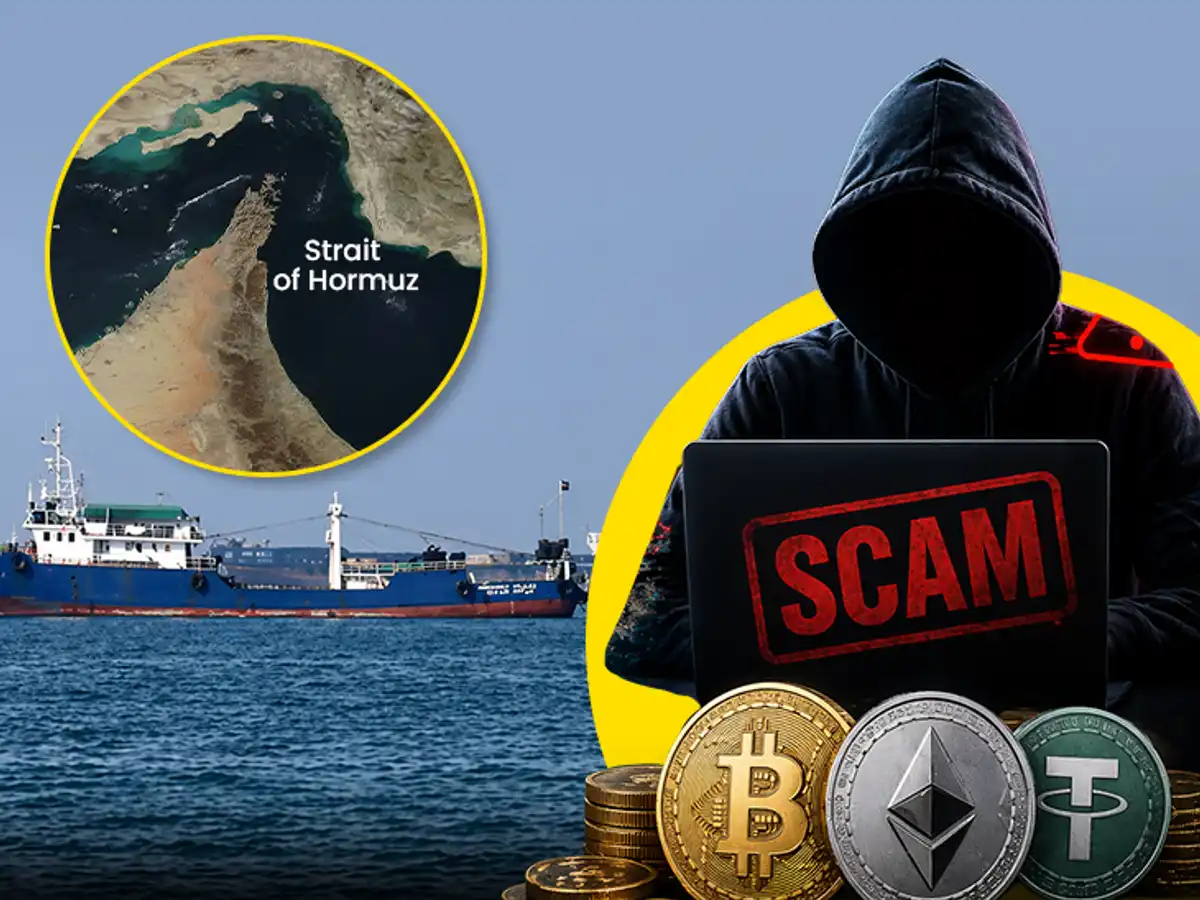
Iran announced it would collect transit fees in Bitcoin, and within two weeks, scammers turned this narrative into a weapon.

According to a Reuters report on April 21, the maritime risk management company MARISKS issued a warning: unidentified individuals are posing as Iranian authorities and sending false messages to ships stranded on the western side of the Strait of Hormuz, demanding payment of "transit fees" in BTC or USDT in exchange for safe passage. MARISKS believes that at least one of the vessels fired upon by Iranian Revolutionary Guard Corps speedboats on April 18, when Iran briefly opened the strait, was a victim of this scam.

The absurdity of the incident lies in the entire chain of causality: a sovereign state announces it will collect Bitcoin transit fees, scammers copy this rhetoric to commit fraud, shipowners believe it and pay, and then get shot at by the real Iranian military.

From "National-Level Settlement Tool" to Attack Surface for Scammers

The story begins in early April.

From March 30 to 31, the Iranian parliament passed the "Hormuz Strait Management Plan," formally writing into law the transit fee system that the Islamic Revolutionary Guard Corps had already been implementing since mid-March. According to the Financial Times, Hamid Hosseini, spokesperson for the Iran Oil, Gas, and Petrochemical Products Exporters Union, confirmed that fully loaded tankers are required to pay a fee of $1 per barrel, with payment methods including Bitcoin, USDT, or Chinese yuan. A supertanker carrying 2 million barrels of crude oil could face a single transit fee of up to $2 million.

Upon the news, Bitcoin's price jumped 5%, briefly breaking through $72,700. The crypto community quickly interpreted this as a milestone validation of Bitcoin as a "neutral settlement layer for international trade." Institutions like Bitwise even linked it to predictions of Bitcoin reaching $1 million.

But there were also many skeptics.

Sam Lyman of the Bitcoin Policy Institute pointed out in a report on April 15 that large-scale collection of Bitcoin transit fees with existing technology is "almost impossible." Ari Redbord, global policy head at TRM Labs, told Fortune magazine that on-chain data does not show transit fee payments occurring on a large scale. Chainalysis, in its analysis report, noted that on-chain activities of entities linked to Iran primarily rely on USDT on the Tron network, not Bitcoin.

Scammers don't care about these technical debates. They only need a credible narrative, and the Iranian government has already written the script for them.

Ships That Paid the Fake Fee Got Shot at for Real

According to Reuters and DL News, the wording of the scam messages highly imitates official language. The scammers required shipowners to submit ship documents, claiming they would be assessed by the "Iranian security department." After passing the assessment, payment in BTC or USDT would be required, after which the ship could "safely pass through the strait at the scheduled time."

Approximately 400 ships and about 20,000 crew members are currently stranded in the Persian Gulf. With the U.S. blockading Iranian ports and Iran repeatedly opening and closing the strait for passage, the anxiety of shipowners is understandable. The scammers precisely exploited this anxiety.

On April 18, Iran briefly opened the strait, and some ships attempted to pass. According to the UK Maritime Trade Operations (UKMTO), two Iranian Revolutionary Guard Corps speedboats opened fire on an oil tanker trying to exit the strait, forcing it to turn back. MARISKS believes this tanker had previously paid the cryptocurrency "transit fee" to scammers, thinking it had obtained passage permission.

They paid, but the money didn't go to Iran. The ship was still shot at.

Paying Scammers Could Also Violate Sanctions Laws

Even more ironically, even if shipowners realize they have been scammed, the legal risks won't disappear.

Xue Yin Peh, investigation strategy head at Chainalysis, told Decrypt that regardless of whether the recipient is actually the Iranian authorities, as long as the payer intended to pay a sanctioned regime, it could constitute a violation of OFAC, EU, and UK sanctions regulations. In other words, even if you thought you were paying Iran and the money ended up in a scammer's pocket, regulators could still pursue your "subjective intent."

Isabella Chase, head of policy for Europe, the Middle East, and Africa at TRM Labs, also warned that any wallet addresses associated with such demands should be considered "high-risk," and cryptocurrency payments do not provide any "safe harbor" in terms of sanctions compliance.

This creates a nearly unsolvable dilemma for shipowners: paying Iran violates sanctions, paying scammers might also violate sanctions, and not paying means continuing to drift in the Persian Gulf.

"Bitcoin's Irreversibility" Turns from Advantage to Flaw

The most noteworthy aspect for the crypto industry to reflect on is how Bitcoin's core characteristics performed in this scenario.

Benzinga's report highlighted the key issue: cryptocurrency payments cannot be reversed once sent. Traditional bank transfers at least offer the possibility of freezing and recovery, but once Bitcoin or USDT is transferred, the funds are lost. This feature is called "trustless settlement" in normal commercial contexts but becomes "irrecoverable loss" in the combined scenario of war and fraud.

This might be the most absurd crypto story of 2026... Iran's plan to collect transit fees in Bitcoin may never have been truly implemented, but scammers have already made money from this story, and an oil tanker got shot because of it.


Kripto yang Sedang Tren

Pertanyaan Terkait

QWhat did Iran announce regarding the Strait of Hormuz in early April, and what was the proposed payment method?

AIran announced a toll system for oil tankers passing through the Strait of Hormuz, requiring a fee of $1 per barrel of oil. The payment methods included Bitcoin, USDT, or Chinese Yuan.

QHow did scammers exploit Iran's announcement about cryptocurrency toll payments?

AScammers impersonated Iranian authorities and sent fake messages to ships stranded in the Strait of Hormuz, demanding payments in BTC or USDT as 'tolls' for safe passage, capitalizing on the anxiety of shipowners.

QWhat happened to at least one ship that paid the fake toll to scammers?

AAt least one ship that paid the fake toll was fired upon by Iranian Revolutionary Guard Corps boats when it attempted to pass through the strait during a brief opening, forcing it to turn back.

QAccording to chain analysis firms TRM Labs and Chainalysis, was there evidence of large-scale cryptocurrency toll payments to Iran?

ANo, both TRM Labs and Chainalysis stated that there was no on-chain evidence of large-scale cryptocurrency toll payments being made to Iran.

QWhat legal risk do shipowners face even if they pay scammers instead of the actual Iranian authorities?

AShipowners could still be deemed in violation of OFAC, EU, and UK sanctions laws because the intent to pay a sanctioned regime (Iran) is what matters, regardless of whether the funds actually reached Iranian authorities or scammers.

Bacaan Terkait

Mengapa Bitcoin Bertahan di $64.000 Setelah Jeda Ketat dari The Fed

Bitcoin berakhir di bulan Juli mendekati level $64.000, bertahan di tengah volatilitas pasca keputusan Federal Reserve AS untuk mempertahankan suku bunga dalam kisaran 3,50-3,75%. Meskipun tiga anggota komite voting mendukung kenaikan suku bunga, sinyal keseluruhan dari Fed tetap ketat, membatasi minat terhadap aset berisiko. Pasar kripto menunjukkan ketahanan dengan aliran bersih masuk $32,1 juta ke ETF Bitcoin spot, mengakhiri serangkaian arus keluar. Di sisi lain, ETF Ethereum mengalami penarikan dana sekitar $18,65 juta. Kapitalisasi pasar agregat bertahan di sekitar $2,29 triliun. Secara teknis, Bitcoin menemukan dukungan di zona $63.000-63.500 dengan hambatan utama di dekat $66.000. Sementara Ethereum diperdagangkan sekitar $1.900 dengan tekanan harga, metrik jaringan seperti antrian validator yang panjang menunjukkan komitmen jangka panjang. Pergerakan di altcoin beragam: ETF Solana mencatat aliran masuk yang kuat sekitar $19 juta, sementara XRP dan BNB bergerak dalam konsolidasi. Regulasi juga menjadi perhatian setelah penundaan pembahasan CLARITY Act di Senat AS hingga musim gugur, mengurangi harapan disahkannya undang-undang tersebut pada tahun 2026. Hari terakhir bulan Juli akan dipantau untuk data makro AS seperti inflasi dan pengeluaran konsumen, yang dapat memengaruhi pergerakan pasar. Skenario dasar untuk Bitcoin adalah konsolidasi dalam kisaran $63.000-66.000. Kelangsungan aliran masuk institusional dan pertahanan level kunci akan menjadi sinyal penting untuk pemulihan pasar di paruh kedua tahun 2026.

cryptonews.ru2j yang lalu

Mengapa Bitcoin Bertahan di $64.000 Setelah Jeda Ketat dari The Fed

cryptonews.ru2j yang lalu

Parker Lewis Menjawab Mengapa Bitcoin Tetap Menjadi Uang Terbaik

Parker Lewis, salah satu analis Bitcoin paling terkemuka, mengkritik keras strategi pemasaran perusahaan publik yang memposisikan diri sebagai perbendaharaan kripto. Menurutnya, upaya mereka mengumpulkan modal melalui penjualan "kredit digital" dalam bentuk saham preferen abadi mendistorsi esensi mata uang kripto pertama. Lewis menekankan bahwa Bitcoin tidak memiliki hasil tetap pada tingkat algoritmanya, dan janji dividen reguler adalah permainan berisiko tinggi yang didanai terutama oleh investor baru di pasar yang naik. Untuk menunjukkan risikonya, ia membandingkan pasar kredit global sebesar $300 triliun dengan pasar saham preferen abadi yang hanya $1 triliun, menunjukkan bahwa lembaga keuangan menghindari risiko abadi ini, mengalihkannya ke investor ritel. Ia juga membantah klaim bahwa Bitcoin "terlalu volatil untuk 99% populasi". Volatilitas, katanya, adalah konsekuensi matematis alami dari adopsi massal aset baru dengan pasokan tetap. Setiap gelombang pengguna baru menyebabkan lonjakan harga karena mereka harus menawar lebih tinggi kepada pemegang awal. Lewis menyarankan untuk membeli Bitcoin langsung daripada saham perusahaan seperti MicroStrategy, karena lebih aman secara matematis daripada mempercayakan dana kepada manajer korporat. Fokus pada derivatif korporat mengalihkan perhatian dari ancaman utama: depresiasi uang fiat yang cepat. Lewis mengilustrasikan inflasi sebenarnya dengan "Indeks Ribeye"-nya, mencatat kenaikan harga steak premium dari $19,99 menjadi $37,99 sejak musim semi 2020, setara dengan inflasi 12-13% per tahun, lebih tinggi dari data resmi. Strategi keuangan yang paling bijaksana dan aman dalam inflasi global adalah kepemilikan langsung atas Bitcoin pertama dan kendali penuh atas kunci pribadi. Mengejar imbal hasil korporat yang meragukan melalui saham perbendaharaan kripto hanya meningkatkan risiko sistemik, sementara pemahaman tentang uang terdesentralisasi yang sejati dapat melindungi tabungan dari gejolak makroekonomi.

cryptonews.ru2j yang lalu

Parker Lewis Menjawab Mengapa Bitcoin Tetap Menjadi Uang Terbaik

cryptonews.ru2j yang lalu

Trading

Spot

Artikel Populer

Cara Membeli IR

Selamat datang di HTX.com! Kami telah membuat pembelian Infrared Finance (IR) menjadi mudah dan nyaman. Ikuti panduan langkah demi langkah kami untuk memulai perjalanan kripto Anda.Langkah 1: Buat Akun HTX AndaGunakan alamat email atau nomor ponsel Anda untuk mendaftar akun gratis di HTX. Rasakan perjalanan pendaftaran yang mudah dan buka semua fitur.Dapatkan Akun SayaLangkah 2: Buka Beli Kripto, lalu Pilih Metode Pembayaran AndaKartu Kredit/Debit: Gunakan Visa atau Mastercard Anda untuk membeli Infrared Finance (IR) secara instan.Saldo: Gunakan dana dari saldo akun HTX Anda untuk melakukan trading dengan lancar.Pihak Ketiga: Kami telah menambahkan metode pembayaran populer seperti Google Pay dan Apple Pay untuk meningkatkan kenyamanan.P2P: Lakukan trading langsung dengan pengguna lain di HTX.Over-the-Counter (OTC): Kami menawarkan layanan yang dibuat khusus dan kurs yang kompetitif bagi para trader.Langkah 3: Simpan Infrared Finance (IR) AndaSetelah melakukan pembelian, simpan Infrared Finance (IR) di akun HTX Anda. Selain itu, Anda dapat mengirimkannya ke tempat lain melalui transfer blockchain atau menggunakannya untuk memperdagangkan mata uang kripto lainnya.Langkah 4: Lakukan trading Infrared Finance (IR)Lakukan trading Infrared Finance (IR) dengan mudah di pasar spot HTX. Cukup akses akun Anda, pilih pasangan perdagangan, jalankan trading, lalu pantau secara real-time. Kami menawarkan pengalaman yang ramah pengguna baik untuk pemula maupun trader berpengalaman.

646 Total TayanganDipublikasikan pada 2025.12.17Diperbarui pada 2026.06.02

Cara Membeli IR

Diskusi

Selamat datang di Komunitas HTX. Di sini, Anda bisa terus mendapatkan informasi terbaru tentang perkembangan platform terkini dan mendapatkan akses ke wawasan pasar profesional. Pendapat pengguna mengenai harga IR (IR) disajikan di bawah ini.

活动图片












