From Shouting 150 Dollars to Liquidating HYPE in Just Three Days, How Much Credibility Does Arthur Hayes Have Left?

marsbitDipublikasikan tanggal 2026-06-09Terakhir diperbarui pada 2026-06-09

Abstrak

How much of Arthur Hayes's market credibility remains? Recently, the "godfather of crypto perpetual swaps" and BitMEX co-founder has faced public criticism, including accusations from on-chain investigator ZachXBT about creating exit liquidity for his followers. Starting last week, Hayes executed multiple sudden sell-offs. He had repeatedly publicly predicted the HYPE token would reach $150. After a $100,000 bet defending Hyperliquid on June 1st, he announced just three days later that he had completely sold his HYPE and NEAR holdings, successfully exiting near the peak. He also sold ZEC and WLD. His sale of WLD appeared to be a classic "pump and dump" maneuver. On June 3rd, he publicly set a $10 target for WLD, causing its price to surge over 35%. By June 6th, he announced he had sold his WLD, citing "anomalous" SpaceX pre-IPO price action, which triggered a sharp price drop. On June 9th, Hayes published a lengthy article explaining his actions, citing factors like rising energy costs and a potential AI bubble burst. Consequently, his family office, Maelstrom, now holds positions in US energy producers and only core crypto assets BTC and ETH, having sold AI-related stocks and non-core cryptocurrencies. This pattern is not new. In 2025, he similarly touted HYPE before selling it at what turned out to be a cycle peak, only to repurchase it at the next cycle's low. Similar scenarios played out with tokens like ETHFI and ENA. Long-term observers have developed a strategy: i...

Original |Odaily Planet Daily(@OdailyChina)

Author |Golem(@web3_golem)
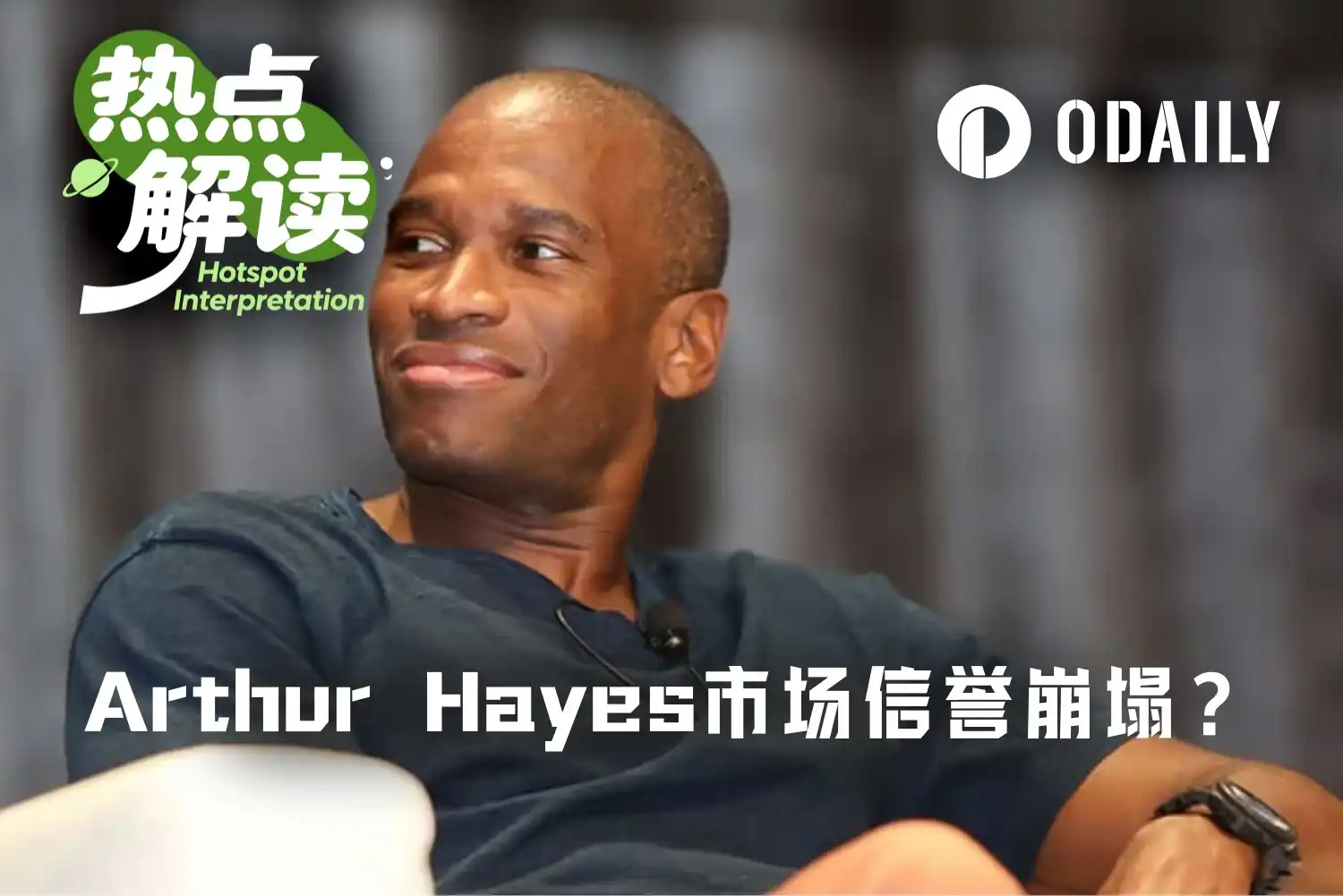
How much market credibility does Arthur Hayes have left? Recently, Arthur Hayes, the "Father of Crypto Perpetual Contracts" and co-founder of BitMEX, has faced public criticism, with on-chain detective ZachXBT also publicly questioning how much exit liquidity he has created using his followers.

Liquidated HYPE, NEAR, WLD

Starting last week, Arthur Hayes performed several unannounced selling operations to exit the top.

Arthur Hayes had repeatedly publicly stated that HYPE would rise to 150 dollars in this cycle. On June 1, Arthur Hayes was passionately criticizing and making a 100, 000 dollars bet with Kyle Samani, former co-founder of Multicoin Capital, for disparaging Hyperliquid. However, just 3 days later, Arthur Hayes announced he had completely liquidated his HYPE and NEAR holdings, with HYPE falling over 13.6% that day. His sell-off successfully exited at the top; HYPE hit a new high of 75.5 dollars on June 4 before falling continuously, currently trading around 62-64 dollars.

In addition to selling HYPE and NEAR, Arthur Hayes also liquidated ZEC and WLD. His liquidation of ZEC might be somewhat justified due to the Orchard Pool attack, but his selling of WLD resembled a classic "KOL cutting retail" operation: secretly accumulating, publicly shilling, and finally selling at a pumped price.

Because from publicly shilling WLD to liquidating WLD, Arthur Hayes only "acted" for 3 days. On June 3, the day before selling HYPE, Arthur Hayes publicly called for WLD to reach 10 dollars, suggesting WLD would become an alternative for investors who find it difficult to directly participate in SpaceX equity trading. After the news spread, WLD rose over 35% that day. But by June 6, Arthur Hayes changed his tune, stating he had sold all his WLD because SpaceX's pre-market price movement was "anomalous." This single, light explanation caused WLD to drop over 20% that day.

The difference between Arthur Hayes and "third-rate KOLs" is that he writes essays, often justifying his actions from the perspectives of macroeconomics and top-level design.

On June 9, Arthur Hayes published a lengthy essay, Reality Test (taking about 20 minutes to read fully), explaining his recent moves. He argued that three factors—rising energy costs due to restricted traffic in the Strait of Hormuz, the IPOs of the three major AI stocks (SpaceX, Anthropic, and OpenAI), and Trump turning against AI for mid-term elections—would burst the AI bubble.

Based on this, his family office Maelstrom holds significant positions in US-listed energy producers and has sold AI-related stocks and non-core crypto assets, holding only BTC and ETH.

Arthur Hayes' Words Shouldn't Be Heeded, But His Actions Must Be Watched

Arthur Hayes' articles are not only adept at using a large amount of economic data and charts to argue points but sometimes also overlay political and historical perspectives, leaving people dazzled. But when you take his words seriously and invest real money following his moves, he might announce the next day that he has liquidated and started talking down, seemingly forgetting what he said the day before, and your portfolio takes a simultaneous hit.

Such operations are common. As early as 2025, Arthur Hayes repeatedly played the "bullish one moment, liquidating the next" script. The most classic example remains HYPE. In August 2025, during a speech at WebX Japan, Arthur Hayes touted HYPE, claiming the token still had up to 126x upside potential (Odaily Note: price was 45.9 dollars that day), but just one month later, he announced he had sold all HYPE for millions in profit, citing the need to avoid token unlock risks.

This sale by Arthur Hayes was precisely at the peak of HYPE's last bull run, after which HYPE fell continuously. It wasn't until mid-January 2026 that Arthur Hayes started buying HYPE again on a large scale. Judging from the price action, his entry point was again the low point of this cycle's rally.

Similar examples include ETHFI and ENA, all involving public bullish statements, followed by unannounced sales, achieving precise exits at the top.(Related reading:You Ran Again First! A Review of Arthur Hayes' Exit Records)

Long-term followers of Arthur Hayes have summarized a methodology: Arthur Hayes' words shouldn't be listened to, but his actions must be closely watched. Follow his accumulation cautiously, but sell decisively when he does.

However, if Arthur Hayes continues such performances, especially cases like this WLD price manipulation, no matter how reasonable the excuses are disguised, his market credibility will be threatened. It's like a crypto version of "The Boy Who Cried Wolf." In the end, Arthur Hayes will inevitably face backlash.

One sentence in his latest published article is correct—"I am still an unabashed gambler," and gamblers generally don't end well.


Kripto yang Sedang Tren

Pertanyaan Terkait

QWhat recent actions have led to Arthur Hayes' market credibility being questioned?

AArthur Hayes has faced criticism for abruptly selling off assets like HYPE, NEAR, and WLD after publicly endorsing them. For example, he sold HYPE days after predicting it would reach $150 and dumped WLD just three days after recommending it, actions that have drawn accusations of creating exit liquidity for his followers.

QHow did Arthur Hayes explain his sudden sale of AI-related crypto assets like WLD?

AIn his article 'Reality Test,' Hayes cited three main reasons: rising energy costs due to restricted traffic in the Strait of Hormuz, the potential IPO of major AI companies (SpaceX, Anthropic, OpenAI), and the possibility of Trump turning against AI for midterm elections. He claimed these factors could burst the AI bubble, prompting his family office to sell non-core crypto assets and hold only BTC and ETH.

QWhat is the 'methodology' some investors have developed regarding Arthur Hayes' market behavior?

ASome investors have concluded that 'Arthur Hayes' words cannot be trusted, but his actions must be closely watched.' They advise being cautious about following his buying moves but promptly selling when he does, as he has a history of publicly advocating for assets and then selling them at what often turns out to be a peak.

QWhat was a previous instance where Arthur Hayes exhibited similar 'pump and dump' behavior?

AA classic example is with HYPE in August 2025. Hayes publicly promoted HYPE at the Japan WebX conference, claiming it had 126x upside potential. Just one month later, he announced he had sold all his HYPE holdings, profiting millions, citing token unlock risks. This sale occurred near the peak of HYPE's price at that time.

QAccording to the article, what does Arthur Hayes call himself, and what warning is implied about such a label?

AIn his latest article, Arthur Hayes states, 'I am still an unapologetic gambler.' The article implies that such behavior is risky and warns that consistently acting like a gambler manipulating the market could lead to a loss of credibility and eventual backlash, similar to the 'boy who cried wolf' fable.

Bacaan Terkait

human.tech Meluncurkan Clean SDK untuk Aplikasi Web3 yang Mengutamakan Privasi

human.tech meluncurkan Clean SDK, toolkit yang memungkinkan pengembang membuat aplikasi Web3 yang mengutamakan privasi dan akuntabilitas transparan. SDK ini menyediakan komponen untuk verifikasi identitas tanpa pengetahuan (zero-knowledge), pemeriksaan sanksi, dan transaksi privat tanpa harus menangani data pengguna sensitif atau membangun infrastruktur kepatuhan dari nol. Clean SDK mengatasi tantangan klasik Web3: memungkinkan privasi tanpa mengorbankan akuntabilitas. Dengan menggabungkan zero-knowledge proof dan verifikasi terprogram, aplikasi dapat membuktikan legitimasi pengguna dan dana telah lolos pemeriksaan sanksi, sambil menjaga kerahasiaan identitas pribadi. Shield, aplikasi pertama yang dibangun di atas Clean SDK, diluncurkan bersamaan. Aplikasi ini berfungsi sebagai jembatan privat ke Aztec, memungkinkan pengguna mentransfer aset sambil membuktikan bahwa transfer dilakukan oleh manusia unik dan dana telah diperiksa terhadap sumber sanksi, tanpa mengungkap identitas. SDK ini menawarkan tiga teknik verifikasi inti: Proof of Innocence (pemeriksaan sanksi), Proof of Personhood (verifikasi manusia), dan Proof of Clean Hands (verifikasi identitas pemerintah zero-knowledge). Fitur-fitur ini memungkinkan autentikasi pengguna dan transaksi tanpa membocorkan informasi pribadi. Didesain untuk pengembang di Aztec, Clean SDK memungkinkan integrasi privasi terprogram langsung ke dalam aplikasi terdesentralisasi. Peluncurannya mencerminkan permintaan yang tumbuh akan infrastruktur yang menyeimbangkan privasi dan akuntabilitas secara transparan, tanpa bergantung pada basis data identitas konvensional.

TheNewsCrypto45m yang lalu

human.tech Meluncurkan Clean SDK untuk Aplikasi Web3 yang Mengutamakan Privasi

TheNewsCrypto45m yang lalu

Melepaskan Likuiditas $100 Juta? Kebijakan Baru Pump.fun Menguji Teknik '5-Menit Pump'

Pump.fun, platform peluncuran token meme di Solana, resmi memperkenalkan mode BOOST pada 21 Juli sebagai mekanisme standar baru. Inti dari mode ini adalah mengubah 20% likuiditas yang sebelumnya terkunci secara permanen di pool likuiditas (LP) setelah migrasi token, menjadi pembeli aktif. Dana yang sebelumnya "terjebak" sebagai "likuiditas mati" itu sekarang akan digunakan untuk membeli token tersebut selama 5 menit pertama setelah migrasi ke PumpSwap, menggunakan metode TWAP (Time-Weighted Average Price). Semua token yang dibeli kemudian akan langsung dimusnahkan (burn). Mekanisme ini bertujuan menciptakan tekanan beli jangka pendek sekaligus mengurangi pasokan token yang beredar secara permanen. Pump.fun memperkirakan, kebijakan lama yang mengunci likuiditas menyebabkan pemborosan lebih dari $100 juta per tahun. BOOST berupaya memanfaatkan dana tersebut untuk meningkatkan momentum perdagangan sesaat setelah peluncuran, dengan harapan meningkatkan retensi trader dan volume perdagangan berkelanjutan bagi token-token yang diluncurkan. Namun, beberapa kekhawatiran muncul. Beberapa pihak menilai hal ini bisa mempermudah token berkualitas rendah terlihat sukses di menit-menit awal, dan justru mendorong perilaku peluncuran yang lebih spekulatif. Kekhawatiran lain adalah risiko kejatuhan harga yang lebih tajam setelah periode 5 menit berakhir, jika diikuti dengan penjualan besar-besaran.

marsbit52m yang lalu

Melepaskan Likuiditas $100 Juta? Kebijakan Baru Pump.fun Menguji Teknik '5-Menit Pump'

marsbit52m yang lalu

Menjual Ruang Blok Sudah Mati: Blockchain Publik Harus Menemukan Cara Hidup Baru

Penulis Castle Labs, dikompilasi oleh TechFlow, membahas perlunya perubahan model bisnis blockchain publik. Dalam dua tahun terakhir, 14 perusahaan crypto menghasilkan pendapatan lebih dari $200 juta, namun hanya satu yang merupakan blockchain publik: Hyperliquid. Sebagai perbandingan, Arbitrum hanya menghasilkan $430.000 dalam 30 hari terakhir, sementara Hyperliquid menghasilkan sekitar $58 juta. Hal ini menunjukkan bahwa model bisnis tradisional menjual ruang blok tidak lagi cukup. Blockchain publik perlu beralih menjadi studio produk, distributor aplikasi, jalur pembayaran, atau tumpukan SaaS vertikal untuk menghasilkan pendapatan berkelanjutan dan menghindari risiko kehabisan dana. Artikel ini juga membahas serangan terhadap Ostium, di mana lebih dari 40% TVL hilang karena input harga palsu, menekankan pentingnya kontrol keamanan yang ketat untuk protokol yang membawa pasar off-chain ke on-chain. Selain itu, diskusi tentang opsi keuangan menyoroti bahwa untuk adopsi yang lebih luas, manfaat opsi harus disajikan dalam produk yang lebih mudah dipahami seperti vault hasil, opsi biner jangka pendek, produk terstruktur, atau pasar prediksi, bukan sebagai instrumen kompleks dengan istilah teknis. Protokol baru yang menarik perhatian termasuk Flex (pasar uang suku bunga tetap dari Yearn), Base App yang kini dikelola oleh Cobie, Plether (DEX kontrak berkelanjutan untuk indeks dolar AS), dan fokus Starknet pada peningkatan privasi dan ketahanan kuantum untuk pertumbuhan kelembagaan di on-chain.

marsbit1j yang lalu

Menjual Ruang Blok Sudah Mati: Blockchain Publik Harus Menemukan Cara Hidup Baru

marsbit1j yang lalu

Trading

Spot

Artikel Populer

Cara Membeli HYPE

Selamat datang di HTX.com! Kami telah membuat pembelian Hyperliquid (HYPE) menjadi mudah dan nyaman. Ikuti panduan langkah demi langkah kami untuk memulai perjalanan kripto Anda.Langkah 1: Buat Akun HTX AndaGunakan alamat email atau nomor ponsel Anda untuk mendaftar akun gratis di HTX. Rasakan perjalanan pendaftaran yang mudah dan buka semua fitur.Dapatkan Akun SayaLangkah 2: Buka Beli Kripto, lalu Pilih Metode Pembayaran AndaKartu Kredit/Debit: Gunakan Visa atau Mastercard Anda untuk membeli Hyperliquid (HYPE) secara instan.Saldo: Gunakan dana dari saldo akun HTX Anda untuk melakukan trading dengan lancar.Pihak Ketiga: Kami telah menambahkan metode pembayaran populer seperti Google Pay dan Apple Pay untuk meningkatkan kenyamanan.P2P: Lakukan trading langsung dengan pengguna lain di HTX.Over-the-Counter (OTC): Kami menawarkan layanan yang dibuat khusus dan kurs yang kompetitif bagi para trader.Langkah 3: Simpan Hyperliquid (HYPE) AndaSetelah melakukan pembelian, simpan Hyperliquid (HYPE) di akun HTX Anda. Selain itu, Anda dapat mengirimkannya ke tempat lain melalui transfer blockchain atau menggunakannya untuk memperdagangkan mata uang kripto lainnya.Langkah 4: Lakukan trading Hyperliquid (HYPE)Lakukan trading Hyperliquid (HYPE) dengan mudah di pasar spot HTX. Cukup akses akun Anda, pilih pasangan perdagangan, jalankan trading, lalu pantau secara real-time. Kami menawarkan pengalaman yang ramah pengguna baik untuk pemula maupun trader berpengalaman.

420 Total TayanganDipublikasikan pada 2024.12.11Diperbarui pada 2026.06.02

Cara Membeli HYPE

Diskusi

Selamat datang di Komunitas HTX. Di sini, Anda bisa terus mendapatkan informasi terbaru tentang perkembangan platform terkini dan mendapatkan akses ke wawasan pasar profesional. Pendapat pengguna mengenai harga HYPE (HYPE) disajikan di bawah ini.

活动图片












