From Aztec to Zcash: Privacy Evolving from 'Gray Industry Tool' to 'Institutional Necessity'

比推Dipublikasikan tanggal 2025-12-26Terakhir diperbarui pada 2025-12-26

Abstrak

From Aztec to Zcash: The Rise of Pragmatic Privacy in Blockchain In 2025, blockchain privacy evolved from a niche concern to a mainstream priority, driven by the concept of "pragmatic privacy" that balances individual anonymity with regulatory compliance. This shift is marked by the strong performance of privacy-focused assets like Zcash and new institutional initiatives. Several new privacy-centric blockchains launched or advanced significantly. Aztec Network's Ignition L2 mainnet went live, raising over 6,100 ETH. Nillion launched its "blind computer" mainnet for encrypted data computation. Cosmos-based Namada introduced a "composable privacy" L1, while Miden spun out from Polygon to build its own privacy chain. Umbra raised $154.9 million in an ICO to build on Solana. Horzen transitioned to a Base L3 privacy solution. Institutions are actively embracing privacy. Coinbase hired a team from Iron Fish to develop privacy primitives for Base. Circle is testing a privacy-preserving wrapped USDC (USDCx) on Aleo. The Canton Network and EY's Nightfall L2 are focusing on confidential enterprise solutions. The Ethereum Foundation formed a dedicated "Privacy Cluster" and an "Institutional Privacy Working Group." Vitalik Buterin also launched Kohaku, an open-source wallet framework for compliant privacy. At the application layer, tools like 0xbow's Privacy Pools (based on Vitalik's research) and Railgun (using "proof of innocence") allow users to anonymize transactions without aidi...

Source: The Block

Original Title: From Aztec to Zcash: The year 'pragmatic privacy' took root

Compiled and Edited by: BitpushNews


Since Satoshi Nakamoto wrote the Bitcoin whitepaper, the privacy limitations of blockchain have been evident. The cryptocurrency pioneer pointed out at the time: despite using anonymous mechanisms, Bitcoin addresses could still be traced back to real-world identities.

For many years since, this "pseudo-anonymous" characteristic has been tacitly accepted as "acceptable enough," causing most blockchain privacy projects to remain on the margins for a long time.

However, this year has seen a renewed interest in blockchain privacy, with Zcash becoming one of the best-performing assets of the year, and the Ethereum Foundation launching multiple end-to-end encryption initiatives. The concept of "Pragmatic Privacy" has also begun to take root, aiming to balance individual privacy with compliance considerations.

Emerging Privacy Chains

2025 has witnessed the launch of several new privacy-focused blockchains at various stages of development.

Perhaps the most notable is the Aztec Network's Ignition chain going live on mainnet in November. This is not only because it is the "first fully decentralized L2 on Ethereum," with multiple innovations in consensus and ZK technology, but also because it has overcome numerous obstacles since the project's inception in 2017.

Earlier this month, Ignition also raised 19,476 ETH (approximately $61 million) from 16,741 participants using a new "Continuous Clearing Auction" mechanism co-developed with Uniswap Labs.

Nillion is another blockchain project that launched its mainnet in 2025. This so-called "blind computer" aims to perform computations on encrypted data and has already integrated with multiple networks, including Layer 1's Near and Layer 2's Arbitrum, to enhance privacy at the application layer.

Namada, built on Cosmos, also launched its Layer 1 mainnet in June, focusing on "composable privacy" and supporting multiple blockchain ecosystems—including Bitcoin L2s (like Lombard and Babylon), Ethereum, and Solana—via cross-chain bridges.

Miden, which has been in development since at least 2022, is preparing to launch its mainnet next year. Even so, the project took a huge step towards independence this year: spinning off from Polygon and raising $25 million to build the privacy-focused blockchain Edge.

Similarly, the privacy protocol Umbra, powered by Arcium, conducted its Initial Coin Offering (ICO) on MetaDAO in October, raising $154.9 million. Umbra plans to launch concurrently with Arcium's mainnet Alpha, becoming one of the first privacy protocols built on Solana utilizing its infrastructure.
Horizen, one of the oldest crypto privacy projects, also underwent a major transformation this year: it shut down its proprietary Layer 1 and L2 incubator and relaunched as a Layer 3 privacy solution on Base, the network incubated by Coinbase.

Grayscale, which manages the ZEN token fund, also filed a registration statement with the U.S. Securities and Exchange Commission (SEC) to convert its Grayscale Zcash Trust into the first ZEC ETF. Zcash, which launched the Zebra 3.1 upgrade, has been one of the best-performing tokens in the second half of the year.

Institutional Privacy Initiatives

Coinbase signaled multiple times this year that privacy is not optional for Base. Earlier this year, the company announced it had hired a development team from Iron Fish (a long-standing PoW privacy project) to provide "privacy-preserving primitives" for Base.

Circle, the largest U.S. stablecoin issuer, also made waves by announcing it was testing a privacy-preserving wrapped USDC called USDCx on the Aleo testnet.

USDCx appears to focus on "configurable compliance," aiming to support enterprise-level use cases such as payroll management and e-commerce.

Meanwhile, the Canton Network, backed by Goldman Sachs and BNY Mellon, and Nightfall, an Ethereum L2 incubated by EY, focus on enterprise blockchain solutions that require extreme confidentiality. Nightfall has already announced support for two blockchains: the real-world asset (RWA) network Plume and CELO.

The Ethereum Foundation initiated multiple privacy programs this year, signaling that the topic has moved from a niche research area to a core concern for Ethereum developers. In October, the Foundation formed the so-called "Privacy Cluster," a dedicated team of dozens of engineers aimed at consolidating its privacy efforts, including a roadmap for achieving native end-to-end encryption. The Foundation also launched the "Institutional Privacy Working Group" to guide institutions and enterprises into Ethereum.
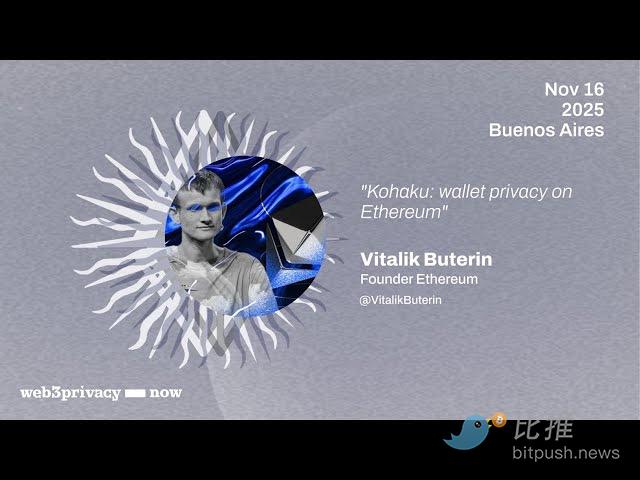
Ethereum's Vitalik Buterin also introduced Kohaku, an open-source centralized wallet framework for privacy, aimed at fostering "default and compliant" privacy features.

Pragmatic Privacy

The concept of "pragmatic privacy" is perhaps most fully realized at the application layer. This year, 0xbow launched Privacy Pools, a tool for ordinary blockchain users to erase transaction records without running into legal trouble.

Privacy Pools are based on research published by Buterin and several other senior cryptographers on "association lists," designed to prevent bad actors from profiting from crypto mixers. The 0xbow team recently raised a $3.5 million seed round, expanded support for Sky's USDS stablecoin, and provided a method for Tornado Cash users to remain anonymous "without helping hackers." It is also part of the Ethereum Foundation's Kahaku software framework.

Similarly, Railgun is listed in Kahaku's GitHub repository as a means of shielding funds. Railgun achieves blockchain privacy through a "proof of innocence" system, where users generate ZK proofs showing their funds/transactions do not belong to a preset list of flagged/malicious addresses.
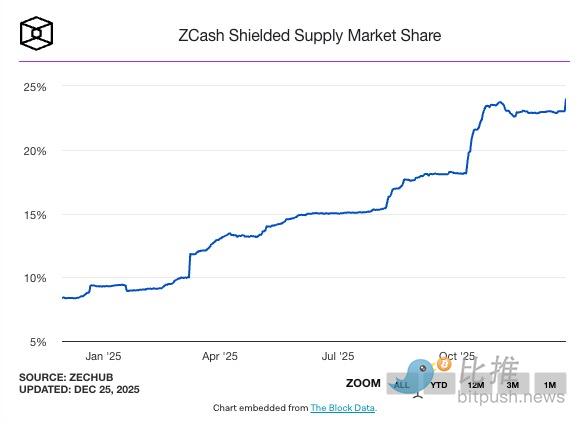
Finally, it's worth noting that as a standard-bearer for crypto privacy, Zcash's anonymous pool supply has grown to nearly 25%, marking a steady increase in network privacy adoption. Zcash provides users with functional privacy and the ability to achieve compliance through selective disclosure of information.


Twitter:https://twitter.com/BitpushNewsCN

Bitpush TG Discussion Group:https://t.me/BitPushCommunity

Bitpush TG Subscription: https://t.me/bitpush

Original link:https://www.bitpush.news/articles/7598558

Pertanyaan Terkait

QWhat is the main concept that has gained traction in blockchain privacy in 2025, as discussed in the article?

AThe main concept is 'Pragmatic Privacy', which aims to balance individual privacy with compliance considerations.

QWhich privacy-focused blockchain launched its mainnet in November 2025 and is noted as 'Ethereum's first fully decentralized L2'?

AAztec Network's Ignition chain launched its mainnet in November 2025 and is described as Ethereum's first fully decentralized L2.

QWhat significant step did the Ethereum Foundation take in October 2025 regarding privacy?

AIn October 2025, the Ethereum Foundation formed a 'Privacy Cluster', a dedicated team of dozens of engineers to consolidate its privacy efforts, including a roadmap for native end-to-end encryption.

QWhat is the purpose of Privacy Pools, as mentioned in the article?

APrivacy Pools is a tool for ordinary blockchain users to erase transaction records without getting into legal trouble, based on research about 'association lists' to prevent bad actors from benefiting from crypto mixers.

QWhich stablecoin issuer is testing a privacy-preserving wrapped version of USDC called USDCx on the Aleo testnet?

ACircle, the largest U.S. stablecoin issuer, is testing a privacy-preserving wrapped version of USDC called USDCx on the Aleo testnet.

Bacaan Terkait

9,42 Juta Investor Ritel Berebut Saham Changxin Tech, Siapa yang Beruntung?

**Hasil Undian IPO Changxin Tech: 942 Juta Investor Ritel Berebut, Siapa yang Beruntung?** Hasil penawaran umum perdana (IPO) Changxin Technology resmi diumumkan. Sebanyak 942,88 juta investor ritel berpartisipasi dalam penawaran online, dengan jumlah saham yang efektif diajukan mencapai 816,9 miliar saham. Sebanyak 770 ribu nomor undian berhasil dialokasikan, menghasilkan tingkat keberhasilan undian sekitar 0,4714% — tertinggi dalam sejarah saham baru STAR Market. Mekanisme dialihkan (rebalancing) dari penempatan institusional ke penawaran online juga diterapkan, meningkatkan alokasi untuk investor ritel menjadi 3,85 miliar saham. Ini menjadikannya saham dengan penawaran online terbesar dalam sejarah STAR Market. Di sisi penempatan institusional, 285 lembaga mengelola 10.907 akun dan akhirnya dialokasikan 2,173 miliar saham, dengan tingkat alokasi sekitar 0,1756%. Asuransi Taikang Asset Management menjadi institusi dengan alokasi terbanyak. Di antara perusahaan publik, E Fund, Southern Fund, dan ICBC Credit Suisse memimpin. Pendiri perusahaan AI quant terkemuka, DeepSeek, Liang Wenfeng, melalui dua entitasnya (Ningbo Huanfang dan Zhejiang Jiuzhang), memperoleh alokasi terbesar di antara reksa dana privat, dengan total sekitar 20,25 juta saham senilai 1,75 miliar RMB. Jika kapitalisasi pasar Changxin Tech mencapai 3 triliun RMB setelah listing, diperkirakan akan menghasilkan keuntungan sekitar 730 juta RMB bagi portofolionya. Perkiraan valuasi pasar untuk Changxin Tech berkisar antara 1 triliun hingga lebih dari 4 triliun RMB. Saham ini dijadwalkan akan resmi tercatat pada 27 Juli, dan diprediksi akan menjadi saham teknologi dengan kapitalisasi pasar tertinggi di A-Shares. Namun, koreksi baru-baru ini di pasar saham teknologi global berpotensi memengaruhi kinerja harganya setelah listing.

marsbit43m yang lalu

9,42 Juta Investor Ritel Berebut Saham Changxin Tech, Siapa yang Beruntung?

marsbit43m yang lalu

Goddess dengan 3 Juta Pengikut Ternyata Rekayasa AI, Panti Asuhan Palsu, Amal Palsu Lintas Negara Runtuh dalam Semalam

[Artikel intisari] Terungkapnya Skandal Amal Palsu dengan AI: Influencer Australia dengan 3 Juta Pengikut Diduga Gunakan AI Buat Panti Asuhan Fiktif. Investigasi oleh ABC NEWS Verify membongkar kecurangan yang diduga dilakukan oleh influencer Australia Lily Jay (nama asli Lily Jay Hinson) dan yayasannya, Lily Jay Foundation. Yayasan ini, yang mengklaim melakukan pekerjaan amal di Nepal, Gaza, Uganda, dan Sudan, dituduh menggunakan gambar dan video yang dihasilkan AI untuk menipu pengikutnya yang hampir 3 juta. Bukti pemalsuan meliputi: - Video pembukaan panti asuhan di Uganda dengan anak-anak memegang permen lolipop. Analisis menunjukkan seluruh adegan, termasuk wanita yang bersorak, anak-anak, dan spanduk di belakang, adalah buatan AI. Terdapat juga kesalahan karakter huruf pada kaos yang khas pada gambar AI. - Panti asuhan "Ada Nur" tersebut tidak terdaftar secara sah di Uganda. - Foto-foto yang mengklaim Lily Jay memenangkan "Austral-Global Humanitarian Excellence Award 2026" mengandung tanda air digital SynthID dari ChatGPT, menandainya sebagai gambar AI. - Klaim tentang "toko roti" yang mengirim bantuan kemanusiaan di Gaza tidak dapat diverifikasi oleh organisasi lokal. Yayasan ini secara halus mengakui di situs webnya bahwa ia bukan organisasi amal terdaftar, yang berarti tidak tunduk pada audit keuangan yang ketat. Setelah investigasi ABC, halaman web menghapus tombol donasi dan video untuk pengunjung dari Australia, tetapi tetap terbuka bagi pengunjung internasional. Pakar seperti mantan CEO World Vision Australia Tim Costello memperingatkan bahwa gambar anak-anak rentan memicu emosi dan donasi. Kasus ini menunjukkan bagaimana AI dapat mengeksploitasi kepercayaan dan kebaikan publik dengan menciptakan narasi yang sangat meyakinkan dan sesuai harapan. Ini adalah peringatan tentang pentingnya skeptisisme dan verifikasi dalam era di mana konten palsu semakin mudah dibuat.

marsbit1j yang lalu

Goddess dengan 3 Juta Pengikut Ternyata Rekayasa AI, Panti Asuhan Palsu, Amal Palsu Lintas Negara Runtuh dalam Semalam

marsbit1j yang lalu

L2 'Recalibration': Ketika L1 Menjadi Rollup Miliknya Sendiri, Apa Akhir dari Ethereum?

"L2 'Rekalibrasi': Ketika L1 Menjadi Rollup-nya Sendiri, Apa Masa Depan Ethereum?" Artikel ini membahas evolusi hubungan antara Ethereum L1 dan L2 (Layer 2). Awalnya, L2 seperti Rollup bertugas utama memperluas kapasitas transaksi dengan biaya rendah, sementara L1 fokus pada keamanan dan desentralisasi. Namun, dengan peningkatan skalabilitas L1 sendiri melalui peningkatan Gas Limit, zkEVM, dan teknologi lainnya, peran L2 perlu dikaji ulang. Kedepannya, nilai L2 tidak lagi hanya pada transaksi murah dan cepat, tetapi lebih pada menyediakan fungsi yang terdiferensiasi seperti optimasi aplikasi spesifik, privasi, dan model tata kelola yang fleksibel. L1 akan menjadi pusat global yang tangguh untuk penyelesaian, status bersama, dan likuiditas. Artikel ini juga membahas tantangan interoperabilitas akibat fragmentasi di banyak L2. Solusi seperti kerangka Open Intents dan Ethereum Interoperability Layer (EIL) bertujuan membuat pengalaman pengguna terasa seperti menggunakan satu rantai tunggal. Selain itu, memperpendek waktu finalitas L1 menjadi hitungan detik sangat penting untuk aplikasi lintas rantai. Yang lebih menarik, dengan masuknya sistem bukti seperti zkEVM ke dalam protokol utama, suatu hari nanti L1 Ethereum mungkin beroperasi mirip dengan "Rollup untuk dirinya sendiri", di mana eksekusi dan verifikasi dapat dipisahkan. Ini mengaburkan batas tradisional antara L1 dan L2. Kesimpulannya, masa depan Ethereum bukanlah tentang L1 menggantikan L2 atau sebaliknya. Alih-alih, ini tentang menciptakan ekosistem di mana berbagai lingkungan eksekusi (L2) dengan fungsi berbeda dapat beroperasi bersama, dengan berbagi keamanan, likuiditas, dan hubungan status di bawah hub L1 yang kuat, memberikan pengalaman yang lebih mulus dan terpadu bagi pengguna.

marsbit1j yang lalu

L2 'Recalibration': Ketika L1 Menjadi Rollup Miliknya Sendiri, Apa Akhir dari Ethereum?

marsbit1j yang lalu

Trading

Spot
活动图片