Author: Haotian
Just because of Cathie Wood's one remark, Binance's old issues have been dug up again, with Western KOLs almost forcing criticism down everyone's throats. But looking at the sentiment in the Chinese-speaking community, you might be surprised—why does Binance always portray itself as the "scapegoat," yet is widely seen as a "cancer to the industry"?
The logic lies in three words: "discourse power," "internalization," and "positive externalities."
Absolute Monopoly of "Discourse Power" and "Blind Spots"
No single company in the previous Crypto space has ever wielded such immense "discourse power."
The 2017 ICO boom was led by various "big players" issuing tokens, but the market was still small back then, with high tolerance for error—it was the红利 of a wild era.
The 2021 wave was driven by internal innovation in DeFi and external growth brought by NFTs, leading to a Cambrian explosion of technological narratives.
By 2024, the industry is burdened with technical debt. The market lacks native technological narrative capabilities, with many institutions waiting to exit and numerous development projects without product-market fit waiting to cash out. As the CEX with the richest liquidity and largest user base, Binance suddenly realized it had become the last resort for liquidity harvesting. Many on-chain projects eventually fizzle out after moving from third-tier and second-tier exchanges to Binance.
Thus, Binance made a decision that seemed defensive but was actually monopolistic: tightening the gates and redefining listing logic.
This was meant to protect liquidity from being drained by junk projects, but it resulted in a terrifying "discourse power bullying." When an exchange can define what constitutes a valuable project through launchpad, or even easily determine the fate of an entire sector, the industry inevitably falls into a "blind spot."
Builders no longer think about how to serve users well but instead focus on pleasing Binance's listing team. VCs no longer cultivate value alpha from a technical perspective but instead gather resources to secure that "listing ticket." Over time, this monopolistic discourse power has filtered out a bunch of meticulously self-serving "customized" projects.
So, in a bear market where innovation is weak and sentiment is low, users aren't just blaming project teams but also the entity with the final say—Binance. Binance needn't play the victim; this is the inevitable cost of discourse power monopoly.
Extreme "Internalization": From Casino to Slaughterhouse
Everyone knows the future of the industry lies in Mass Adoption, but looking back, this cycle led by Binance has fallen into an unprecedented "internalization" dilemma.
Look at the projects launched on Binance's launchpad: high FDV, low circulating supply, and the unavoidable reliance on BNB Holder support have become the standard. This is essentially a meticulously designed "internal liquidity pump." Think about it: in this model, project teams and market makers hold extremely low-cost tokens, leveraging Binance's liquidity premium to distribute at high prices, while retail investors are forced to buy these inflated bubbles on the secondary market.
Later, Binance Alpha, Meme Rush, BNB Chain ecosystem support, MEME tracking and hype, and a series of other attention-grabbing tactics have made the internalization model even more extreme.
Then there's BNB Chain. As its own ecosystem chain, it's natural for Binance to provide significant resources for support. But with better exit channels available, BNB Chain should have become a model for application development and innovation on other chains. Unfortunately, BNB Chain hasn't been able to leverage this inherent advantage and has gradually become a breeding ground for "shitcoin schemes," pyramid projects, and hacker cash-outs.
The consequence of such practices is that, perhaps due to bias or inability to play the game, external incremental capital simply isn't willing to enter, while internal存量 funds are repeatedly washed out. The market has transformed from a "casino" with winners and losers into a "slaughterhouse" where almost no one survives except the house.
Binance's internalization strategy seems to have built a massive ecological island, but it has无形中 siphoned off most of the industry's liquidity. Crucially, it hasn't converted this流量 into driving force beneficial to the industry. Instead, through constant PVP battles and Meme狂欢, it has consumed user trust and capital.
So, from Binance's perspective as a commercial entity,这一切 seems like market behavior, and there's no reason to blame it entirely for the industry's lack of development. But as the largest liquidity pool in the Crypto industry, failing to grow the pie through fund or application innovation is itself an original sin.
Lack of "Positive Externalities": Why the Old Issues Keep Resurfacing?
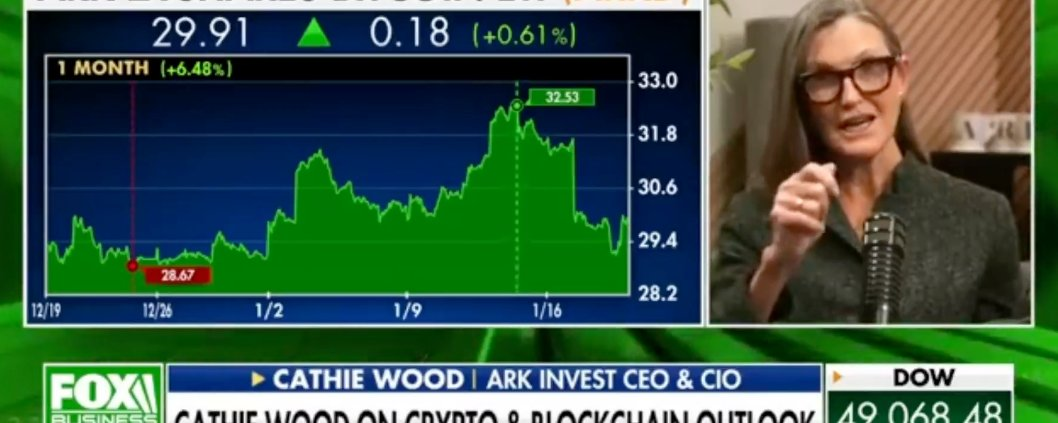
Why did Cathie Wood's seemingly casual criticism resonate so deeply, even trigger a collective attack from Western KOLs? Besides the truth about the 1011 incident never being fully revealed, the main reason lies in "positive externalities."
A true industry leader must possess the ability to continuously output positive externalities while growing itself.
Let's make a comparison:
- Coinbase, though criticized for its trading experience and slow listings, has built a compliance bridge connecting traditional finance, contributing significantly to ETF approvals. This is the positive externality of compliance.
- The Ethereum Foundation, though inefficient,始终 pushes the boundaries of technology, from smart contracts to Layer2. This is the positive externality of technology.
- Even the now-defunct FTX provided a reason for Wall Street funds and VCs to flock by sponsoring teams and making political contributions, which can也算是一种 "positive externality."
- OKX @star_okx has earned its reputation over years of operating Wallet and Dex Infra, essentially bringing a positive externality of mature industry infrastructure through "product power."
- In contrast, Binance, during its疯狂扩张 in recent years, has created the industry's largest user pool and普及了 Crypto trading concepts, which is indeed remarkable progress. But when a platform grows large enough to "represent" the industry, its positive externalities begin to be diluted by the "burden" its scale brings. What burden? It's the方方面面 where the market expected it to act differently but it did the opposite.
For example, the market expected Binance, during a time of weak technological narrative innovation, to tighten its selection process and use its listing effect to lead value technological innovation. Instead, it chose the MEME sector, exacerbating the long-term幻灭感 of technological uselessness at the cost of short-term hype.
Another example: the market expected Binance to leverage its APP and super-entry status, through standardized protocol openness, to become a truly comprehensive cross-chain trading infrastructure connecting other fragmented application layers. Instead, it built a closed-loop, all-in-one ecosystem, seemingly维护了 its commercial empire's moat but also became a pump hindering the overflow of liquidity into the real on-chain ecosystem.
Binance can, of course, deny all this. But "heavy is the head that wears the crown." As the super giant of this industry, its every move is deeply tied to the fate of Crypto.
The giant that rose as a "草莽英雄" and still holds dominance will naturally become the biggest obstacle to establishing a new industry order if it fails to cut ties with its "past."
Even if it weren't Binance, any company holding top resources without担当 for the industry would face prolonged criticism and FUD.
以上。
Ultimately, the舆论困局 Binance faces is not simply FUD. It's the industry's清算 of a giant that has eaten its fill of industry红利 but behaves like a merchant只想守住家产 in the face of responsibility and担当—a mismatch of virtue and position!
When "liquidity" becomes a tool for discourse power monopoly, leading to innovation窒息 and "blind spots";
When "ecological expansion" falls into extreme internalization harvesting, leading to liquidity枯竭 and存量互杀;
When "industry growth" loses positive externalities, leading to compliance obstacles and mainstream偏见;
The dragon-slaying youth of yesterday ultimately faces the ultimate难题 of how to avoid becoming the dragon.
The solution doesn't lie in PR counterattacks or launching more Meme coins to divert attention. It lies in whether Binance can跳出 the "唯我独尊"流量思维, truly return discourse power to the vast Crypto community, return liquidity to genuine on-chain technological innovation, and create large-scale positive externalities to repay the industry.