Borrowing Money from a Hundred Years Later, Building Incomprehensible AI

marsbitDipublikasikan tanggal 2026-05-12Terakhir diperbarui pada 2026-05-12

Abstrak

Tech giants like Alphabet, Amazon, Meta, and Microsoft are undergoing a radical financial transformation due to AI. Their traditional "light-asset, high-free-cash-flow" model is being dismantled by staggering capital expenditures on AI infrastructure—data centers, GPUs, and power. Combined 2026 guidance exceeds $700 billion, a 4.5x increase from 2022, causing free cash flow to plummet (e.g., Amazon's fell 95%). To fund this, they are borrowing unprecedented sums through long-dated, multi-currency bonds (e.g., Alphabet's 100-year bond). The world's most conservative capital—pensions, insurers—is now funding Silicon Valley's most speculative bet. This shift makes these companies resemble heavy-asset industrials (railroads, utilities) rather than software firms, threatening their premium valuations. Historically, such infrastructure booms (railroads, fiber optics) followed a pattern: genuine technology, overbuilding fueled by competitive frenzy, aggressive debt financing, and a crash triggered by financial conditions—not technology failure. The infrastructure remained, but many original builders and financiers did not survive. The core gamble is a "time arbitrage": using cheap debt today to build scale and lock in customers before AI capabilities commoditize. They are betting that AI revenue will materialize before debt comes due. Their positions vary: Amazon is under immediate cash pressure; Meta's path to monetization is unclear; Alphabet has a robust core business buffer; ...

On February 10, 2026, Alphabet, Google's parent company, issued a bond in London with a maturity date a hundred years in the future.

A hundred years.

Anyone buying this bond is betting that by the time their grandchildren retire, this company will still be alive and have the money to pay it back.

Historically, century bonds are extremely rare. Disney issued one in 1993, Coca-Cola did, and further back, Norfolk Southern Railway did. In fact, this term length was standard for 19th-century railroad companies because laying tracks, digging tunnels, and building bridges had investment payback periods so long they had to be calculated in 'centuries'.

But now, an internet company is borrowing money like a railroad company. Why?

Over the past eighteen months, the answer has gradually emerged. It's not in the PPT of any AI launch event, not on the benchmark leaderboards, and not in the debates about 'when AGI will arrive'. It's hidden in the capital expenditure line of financial reports, in the spread changes of bond issuances, in the cliff-like plunge of free cash flow.

To understand this answer, you first need to see what has disappeared.

The Money-Printing Machine Smashed by Its Own Hand

First, we need to understand that over the past two decades, what Wall Street believed in most was not a particular tech company itself, but a financial structure adopted by this cohort of companies.

These tech companies' revenue came from advertising, cloud services, platform commissions—all delivered digitally, with marginal costs approaching zero. No factories needed, no inventory, no mines or oil wells. The more users, the thinner the cost spread, the higher the profit margin.

The direct product of this structure is free cash flow. Unlike net profit, which on the income statement can be polished by accounting rules, free cash flow is the real money flowing into bank accounts, money that can be used for stock buybacks, dividends, and investing in the future. This is why US tech stocks get premium valuations.

There was an old joke about Apple sitting on over $200 billion in cash not knowing how to spend it; Google generating tens of billions in free cash flow year after year, as if the search box was directly connected to a gold mine; Amazon, under the guise of a low-margin e-commerce business, having a cloud computing money printer underneath; Meta making heaps of money from over two billion people seeing ads every day.

Investors weren't just buying growth; they were buying the 'light-asset, high-cash-flow' narrative because it promised these companies would never be dragged down by factories like General Motors, crushed by infrastructure debt like AT&T, or tortured by the capital expenditure cycles of oil companies. They could directly ignore the gravity of industrial capitalism.

Then AI arrived. And AI brought a surprisingly counterintuitive result.

At the end of April this year, Amazon released its Q1 earnings. Revenue, profit, AWS growth were all decent. Over the past twelve months, Amazon's operating cash flow was $148.5 billion, up 30% year-over-year, looking good. But during the same period, free cash flow dropped from $25.9 billion to $1.2 billion, evaporating by 95%.
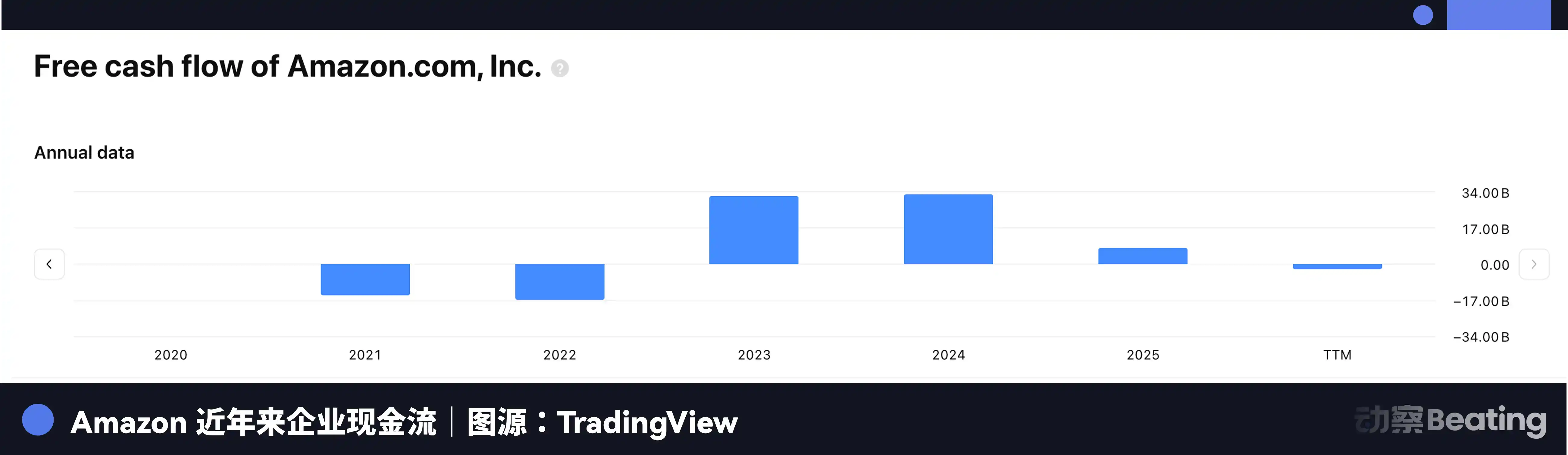
Where did the money go? Amazon's Q1 capital expenditure alone was $44.2 billion, up 76.7% year-over-year, with full-year guidance around $200 billion. Almost all of this money is being thrown into AI infrastructure—data centers, GPUs, networking equipment, power contracts.

Amazon isn't making less money; on the contrary, they're making more than before. It's just that they're throwing almost every penny of it into the bottomless pit of AI. Operating cash flow is the Yangtze River, capital expenditure is the Three Gorges Dam, and free cash flow has become a trickle downstream.

The others aren't much better.

In 2026, the combined capital expenditure guidance for the four giants is $700 to $725 billion: Amazon ~$200B, Microsoft ~$190B, Alphabet ~$185B, Meta $125-145B. In 2022, the four combined spent $162 billion, a 4.5x increase in four years. Just in Q1 2026 alone, the four spent over $130 billion combined, more than the annual GDP of many countries.
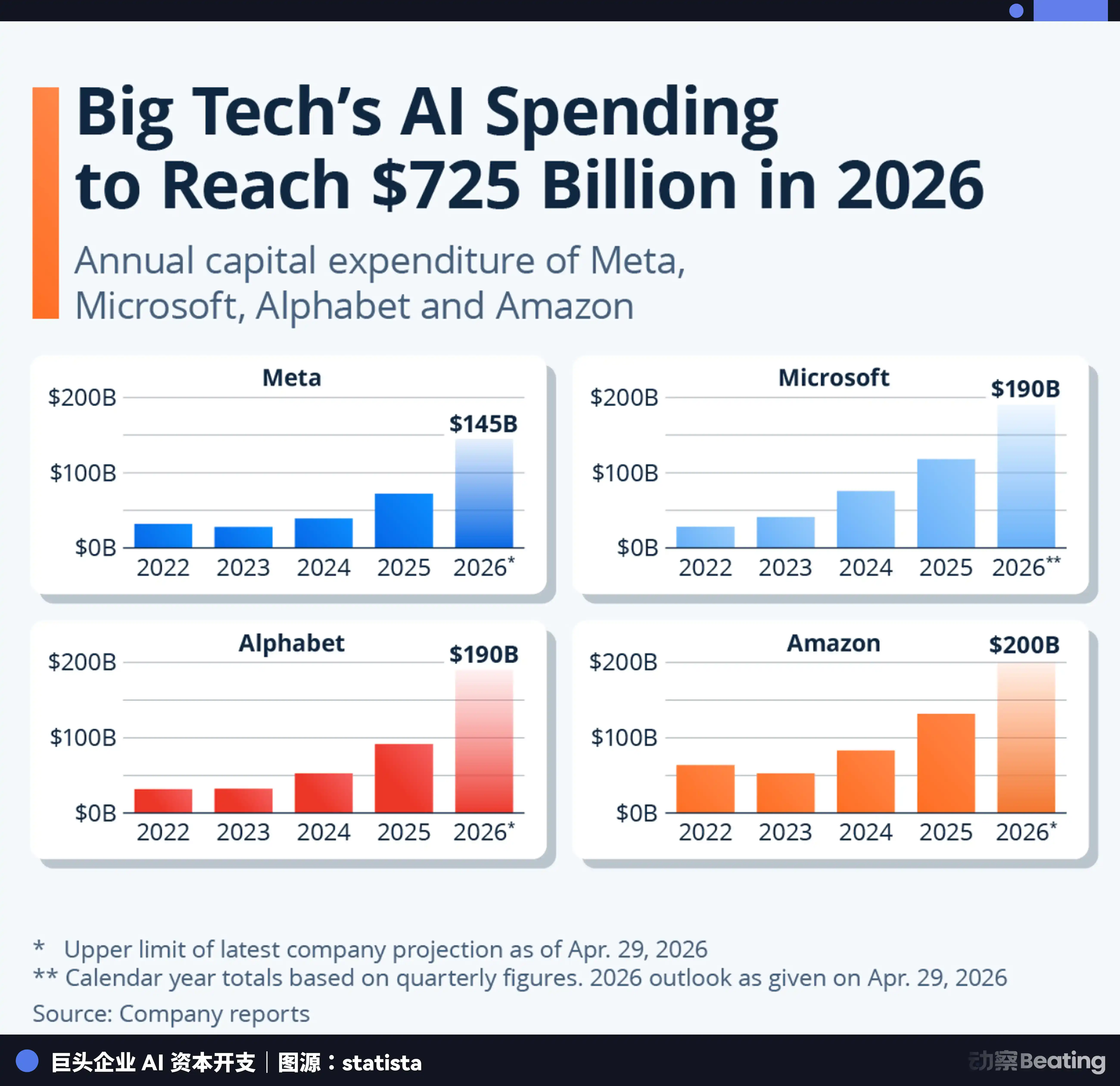
On the surface, these companies still look shiny. Revenue is growing, profit margins are holding up well, and the AI launch events are still lively. But 'Free Cash Flow' doesn't agree.

'Profit' is, ultimately, an opinion. How depreciation periods are set, how R&D is capitalized, how revenue is recognized—all have room for creative accounting. But 'Cash Flow' is a fact. Money in, money out, clear as day. Profit tells a story; cash flow tells the truth.

So the truth is that the core financial advantage of being 'light-asset, high-cash-return' that these companies built over two decades is being eaten away, bite by bite, by AI capital expenditures.

The immediate question follows: Free cash flow is at rock bottom, yet their investments are ramping up. So where is this money coming from?

Borrowing. And the way they're borrowing now is unprecedented.

In Three Months, Borrowing Half the World's Money

Alphabet borrowed $32 billion in February.

One month later, in March, Amazon completed a $36.9 billion bond issuance, with 11 tranches ranging from two-year to fifty-year maturities. Investor orders totaled $126 billion, 3.4 times oversubscribed. After this bond, Amazon's total debt nearly doubled in a year. Another month later. On April 30, Meta issued $25 billion in bonds.

Another month later, on May 11, Alphabet announced it was preparing its first yen-denominated bond. This is interesting; Alphabet's February bond issuance wasn't just in dollars, it also included 3.1 billion Swiss francs.

This is a company based in California, USA, with revenue almost entirely in US dollars, yet it went to Switzerland to borrow money. And in May, it set its sights on the yen. Amazon's March deal also included euro tranches.

This isn't currency diversification by the giants' finance departments for appearances; this is forced.

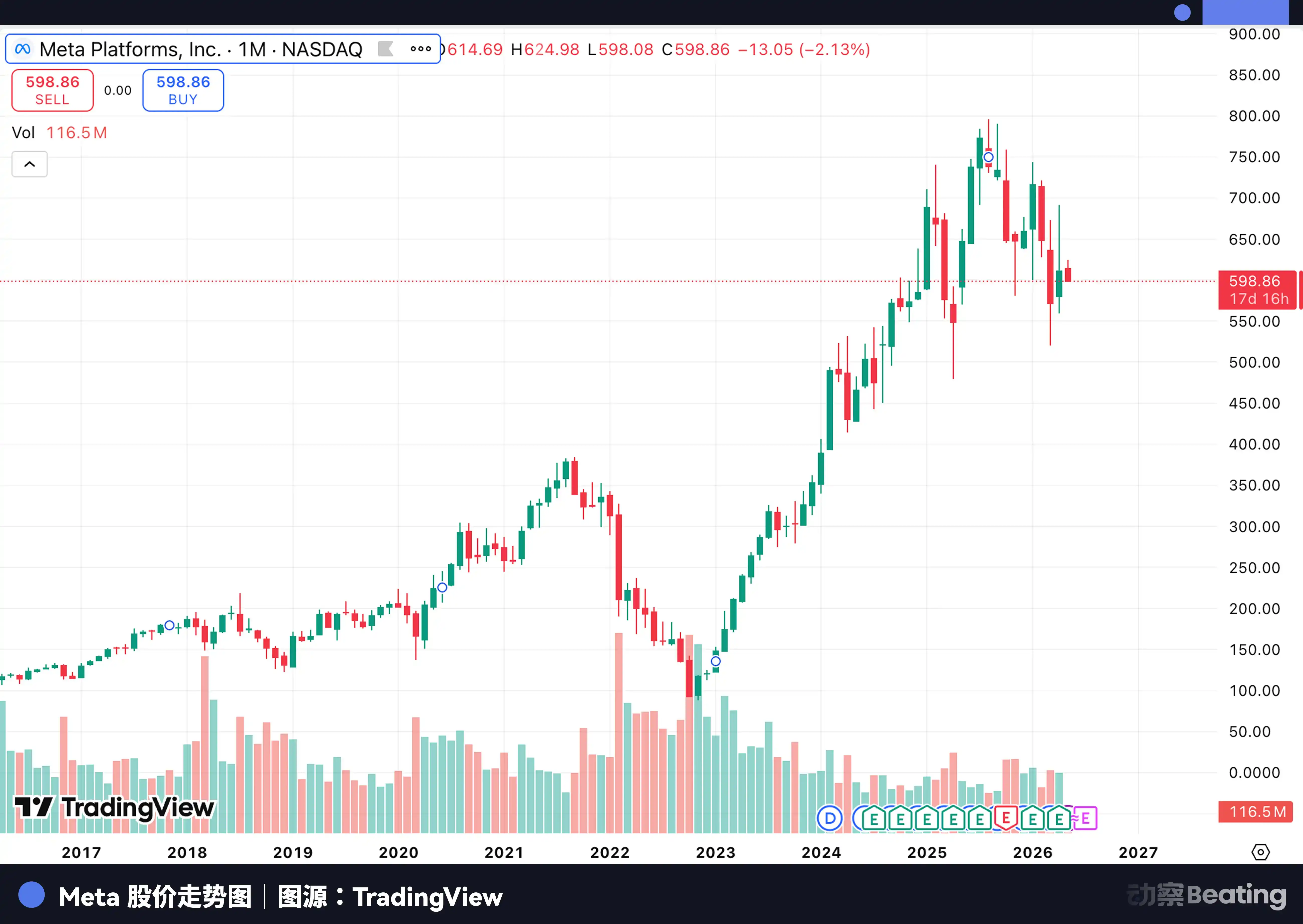
Look at Meta. Its April $25 billion bond, the longest 2066 maturity tranche was priced at a spread of 1.47 percentage points—the risk premium investors demanded over US Treasuries. Six months earlier, in October 2025, when Meta issued a similar forty-year tranche, the spread was only 1.10. It widened by 37 basis points in six months, and not just for the longest tranche; the premium for almost all six tranches it issued was higher than the last round.
So, these giants need to find places with lower interest rates. The Swiss National Bank's policy rate is the lowest among major economies, and Swiss franc bond yields are far lower than dollar ones. Japan, while having ended the negative interest rate era, still offers a huge advantage in yen financing costs. More critically, investors in Zurich and Tokyo aren't yet flooded with Silicon Valley tech debt; their appetite is fresh, not as picky as New York's. For a top-tier borrower like Alphabet, borrowing elsewhere is both cheaper and avoids the queue.

AI's capital expenditures land in the US (data centers) and Taiwan, China (chips), but the money to pay for it is pulled from Switzerland, from Japan, from Europe. Silicon Valley globalized technologically for two decades; now it's globalizing in debt.

And the buyers of these bonds aren't hedge funds or venture capital. Those who can digest century, fifty-year bonds are pension funds, insurance companies, sovereign wealth funds—the most risk-averse money in the global financial system. Their mission is capital preservation, stability, beating inflation, not taking risks.

But now, the pension fund of a retired teacher in Zurich, the reserves a Tokyo insurance company sets aside for life insurance policies, are flowing through the transmission chain of the bond market into a data center in Oregon or Virginia, turning into GPUs on racks and cooling towers on roofs. Most of these holders don't know the underlying assets of their bonds. Their fund managers buy 'Alphabet Aa2 credit', 'Amazon A1 credit'; the rating agencies' letters give a sense of security. As for what buildings this money ultimately builds, what equipment it installs, what models it runs, whether those models can earn enough to repay the debt—there are too many intermediate layers; it's impossible to see clearly from Zurich and Tokyo.

The world's most conservative money is now funding the world's most radical technology bet.

When Internet Companies Grow Smokestacks

But this money hasn't become ad spending, user subsidies, or stock buybacks. None of the usual ways tech companies spent money over the past two decades have been followed this time.

This money has turned into concrete, steel, copper wire, transformers, and cooling pipes.

Amazon's $200 billion 2026 capital expenditure guidance means it spends $550 million per day, $23 million per hour, $380,000 per minute. Microsoft announced plans to invest $10 billion in AI infrastructure in Japan alone from 2026 to 2029.

This isn't a software company's expansion pace; this is infrastructure.

And the essence of infrastructure is making a company heavy.

The construction cycle, investment scale, and operational complexity of a large data center are on the same order of magnitude as an auto assembly plant or a semiconductor fab. Site selection, environmental impact assessment, power connection agreements, water source guarantees, physical security—the whole process has to be run through.

GPUs in AI play a role similar to high-end machine tools in manufacturing: expensive, capacity-constrained, rapidly depreciating. The chips bought with heavy money today may be obsolete in two or three years, but you can't wait, because your competitors won't.

Electricity has become a strategic resource. A large AI data center's power consumption is equivalent to a mid-sized city. Giants are signing long-term power purchase agreements, investing in nuclear power, negotiating dedicated power lines with utility companies.

Cooling water is starting to compete with residents for water rights; many communities in arid regions find an unwelcome guest on their water usage rankings.

These scenes were impossible for tech companies twenty years ago. Site negotiations, grid access, water rights disputes, local tax incentives—these are things railroad companies, power companies, and refineries do. And century bonds, fifty-year bonds, cross-currency issuances—the last time these financial instruments were used intensively was also during the great era of railroad and telecom construction.

Opening the 2026 balance sheets and cash flow statements, these companies' numbers now look closer to TSMC, Duke Energy, or Union Pacific Railroad than they do to their own ten years ago.

This touches on valuation. The core assumption of the past investor pricing logic for tech giants was marginal cost decrease—one more user, one more ad, incremental cost near zero, so profit margins would keep expanding. But the AI infrastructure layer isn't like that. Every additional model trained, every inference cluster deployed, every data center built requires real money invested. Whether the investment pays off depends on whether customers will pay, how model efficiency evolves, and how the competitive landscape changes.

And all of this is uncertain.

This is more like semiconductors: each new process node requires a bigger fab, and returns depend on yield and the market. It's also like power: generation capacity is built first, and returns depend on electricity prices and demand. And it's like railroads: tracks are laid first, and returns depend on whether the economy along the line develops.

So, since tech giants' financial structures are becoming more like heavy-asset companies, the valuation multiples the market gives them will eventually converge toward those of heavy-asset companies.

Some might say once the infrastructure is built, they'll return to a light-asset model. Too naive. Railroads have been built for over a hundred years and are still being built; power grids have been built for a century without stopping; semiconductor fabs need upgrades every few years. The infrastructure of a general-purpose technology has never been 'finished.'

AI may not be a continuation of the internet; it might be a resurgence of industrial capitalism, wearing a cloak of code and standing on a concrete foundation. The internet spent twenty years letting tech companies escape gravity; AI is pulling them back in two years.

Every General-Purpose Technology Revolution

In 1840s Britain, railroads were the AI of that era. Freight speed jumped from a few miles per hour with horse-drawn carriages to tens of miles per hour with trains—an order-of-magnitude efficiency leap, also quite exaggerated.

Capital flooded in. In 1846, the total railway investment authorized by the British Parliament was about £600 million, while Britain's annual GDP was only around £500 million. A nation bet more than a full year's national income on a new technology. Today, that's like the US throwing over $25 trillion into AI.

Early railroads mainly relied on selling stock for financing. Buyers were filled with imagination about the future. Later, as construction scale snowballed and returns were delayed, with later projects deteriorating in quality, equity financing wasn't enough; debt financing stepped into the spotlight. Railway companies began issuing bonds, mortgaging future revenues from uncompleted lines. Financing became increasingly aggressive, from domestic to international borrowing.

What killed the boom wasn't a problem with railway technology; it was interest rates. In 1846, the Bank of England tightened monetary policy, triggered by grain imports and gold outflows due to the Irish famine, which had nothing to do with railways. But interest rates don't care about the reason; they just kill the borrowers with the weakest cash flow. Railway stocks crashed, and many railway companies went bankrupt.

But fortunately, the railways themselves remained. Tracks, stations, tunnels, bridges didn't disappear because investors lost money. They were taken over at a discount by later players, integrated, and operated, eventually becoming the arteries of the British Industrial Revolution. The rise and fall of cities, industrial layouts, and population flows were rearranged along the tracks.

Twenty years later, the same play repeated across the Atlantic. After the US Civil War, the federal government encouraged western railroad construction with land grants and loan guarantees. Over 35,000 miles of new track were laid during the boom. Railway bond yields of 6.4% to 6.7% were the most attractive fixed-income product at the time. Money poured in from the East Coast, from Europe, into the wilderness of the American West.

In 1873, Jay Cooke & Company, the main financier of the Northern Pacific Railway and one of the largest investment banks in the US at the time, declared bankruptcy. The chain reaction ultimately led to 18,000 businesses failing within two years, with 89 railroads going bankrupt over six years.

But America's railway network was ultimately built. It became the physical foundation for the US becoming a 20th-century super industrial power. However, the people who built the railroads and the people who ultimately made money from them were not the same people.

Fiber optics were similar.

In the late 1990s, the rise of the internet fueled huge imaginations about bandwidth. Telecom companies began laying fiber optics frantically, not just connecting cities but also linking continents and crossing oceans. Between 1996 and 2001, US telecom companies issued over $500 billion in new bonds to finance this construction, burying tens of millions of miles of fiber optic cable underground and on seabeds.

But the laying speed far outpaced demand. When the bubble burst, only about 5% of the fiber laid across the US was connected to equipment and carrying data. The remaining 95% was 'dark fiber,' lying underground, waiting for an unknown future.

WorldCom, the second-largest US long-distance operator, with $107 billion in assets, filed for bankruptcy in 2002—the largest bankruptcy in US history at the time. Global Crossing, which built one of the world's largest fiber networks, also fell that year. Winstar, 360networks, McLeodUSA—a string of names fell on the excess of dark fiber.

But fiber optics also ultimately remained. Those undersea cables and metropolitan networks ridiculed as overbuilt in the 1990s became the backbone of the entire internet economy over the next two decades. Netflix streaming, Google search, Amazon's cloud all ran on that fiber, or on its upgraded versions.

The same logical chain appears repeatedly in these three historical episodes.

First, the technology itself is real. Railroads were indeed faster than carriages, fiber optics were indeed faster than copper wires, and AI indeed can do things previously impossible. No one denies the value of the technology itself in hindsight.

But the construction speed far exceeded short-term demand because competition among peers didn't allow anyone to stop and wait for demand to catch up. You believed it was a winner-take-all game where the first to build locked in customers and ecosystems, so you had to keep running.

Everyone was running, leading to collective overbuilding. To sustain the overbuilding speed, financing became increasingly aggressive: equity wasn't enough, so debt was used; short-term wasn't enough, so long-term was used; domestic currency wasn't enough, so foreign currency was used. Railroads were like this, fiber optics were like this, and Swiss franc bonds, yen bonds, century bonds are also like this.

What ultimately triggered the correction was often not a problem with the technology, but a change in financial conditions. In 1846, it was rising interest rates; in 1873, it was an investment bank's bankruptcy triggering a credit chain break; in 2001, it was the dot-com bubble combined with recession. The technology kept advancing, but companies couldn't hold on.

In the end, the infrastructure remained, but a significant portion of the builders did not. The beneficiaries of the railroads were the cities and factories along the lines, not necessarily the original shareholders of the railroad companies. The beneficiaries of the fiber optics were Google, Netflix, Amazon, not WorldCom's bondholders.

Of course, we can't directly equate today's tech giants with 19th-century railroad tycoons or 1990s telecom adventurers. The difference is that today's companies have massive, still-growing core business cash flows. Amazon has AWS and e-commerce; Alphabet has Search and YouTube; Meta has the world's largest social advertising network; Microsoft has Office and Azure.

They aren't startups building data centers by burning investor money; they are giants with real profits mortgaging their own futures.

So the question is whether the payback period for capital expenditure can outrun the repayment period of the debt. Railroads were good, but borrowing money for six years to build lines that take twenty years to pay back can kill you just the same. Fiber optics were good, but borrowing for five years to lay cables only 5% of which are used can't save a balance sheet either.

AI data centers are certainly good. But what scale of AI revenue is needed to break even on $200 billion in annual capital expenditure? How many years are needed to recoup $700 billion in combined investment? If model efficiency advances faster than expected—say, a new architecture makes the same task require one-tenth the computing power—could the computing power built at great cost today become the new generation of dark fiber?

All Bonds Issued Are Buying the Same Thing

Back to that century bond at the beginning.

The institutional investor who bought it—maybe a Swiss pension fund, maybe a British insurance company—made a decision that day: lend money to Alphabet, to be repaid in a hundred years.

Behind this decision is a chain of beliefs: believing AI will be widely adopted, Alphabet will survive this race, its Search and advertising businesses will continue to generate cash, the data centers it builds will be fully utilized, and no disaster will destroy this company over the next century in the global economy.

The holders of Amazon's fifty-year bonds have a similar, though perhaps slightly shorter, chain of beliefs in their minds. Meta's bondholders accepted record-high CDS premiums, but the chain is shorter because the market is clearly giving Meta a narrower credit window than the others.

The chains vary in length, but they are buying the same thing. Not GPUs, not data centers, not fiber optics and transformers—those are intermediates. What they are truly buying is time.

AI models are trending towards homogenization. Open source is catching up with closed source; small models are approaching large models; the capability gap is narrowing. Before this window closes, before everyone can run similar models, whoever can first scale up computing power and lock enterprise customers onto their cloud can turn temporary technological leadership into a lasting commercial moat.

So the giants aren't betting on 'whose model is smartest,' but on a more fundamental proposition: before AI capabilities fully diffuse, can I build infrastructure and customer relationships to a scale others can't catch up with?

This is time arbitrage—using today's low-cost money to buy tomorrow's market position.

Time arbitrage has a cruel prerequisite: the future must arrive on time.

The four companies face different time pressures.

Amazon is the most urgent. Free cash flow has been swallowed by capital expenditure to a mere $1.2 billion. AWS's AI service revenue must reach scale within two or three years; otherwise, debt pressure will seep from the balance sheet into the income statement.

Meta is the most fragile. Social advertising profits are rich, but there's a missing bridge between them and the commercialization of AI infrastructure. Azure and AWS can directly sell computing power to enterprise clients. After Meta spends over a hundred billion building infrastructure, what it turns into, who it sells to, and how it charges—the story isn't fully fleshed out yet. The market's impatience is already written in its stock price and CDS.

Alphabet is the most composed. Search and YouTube require little maintenance to keep generating cash. Even if AI yields no short-term returns, the core business can provide a safety net. The market gave it century-long credit—the longest time window among the four. But $185 billion in capital expenditure is 2.5 times last year's; the acceleration itself consumes patience. Composure doesn't equal safety.

Microsoft is the clearest. Its deep tie-up with OpenAI has made Azure a direct beneficiary of AI commercialization. Copilot is already charging; GitHub Copilot is one of the highest-paid-for AI products among programmers. The path from infrastructure to revenue is the shortest. But $190 billion in capital expenditure means that even with a clear path, the bet's size is so large that everything must go according to script to break even.

All four are betting on the same thing, which in a nutshell is: borrowing money from the future to build something not fully understood today, betting that use cases explode before the debt comes due.

This road has been traveled by railroads, by fiber optics. Each time, the technology ultimately proved its worth, and the infrastructure remained. But each time, there were also a group—sometimes a large group—of people who paid for the construction and didn't live to see it pay off. The technology was right, the timing was wrong, and financial markets don't give wrong timing a second chance.

No one knows if AI's 'future' will arrive on time. The only certainty is this: the world's most conservative pool of money has already, by buying these century, fifty-year, forty-year bonds, signed a contract with Silicon Valley.

The contract's terms are simple: We lend you time, you give us the future.

As for whether the future will keep its promise, no one can say for sure now.

Pertanyaan Terkait

QAccording to the article, what fundamental financial transformation has the rise of AI caused for major tech companies?

AThe rise of AI has forced major tech companies (Amazon, Microsoft, Alphabet, Meta) to fundamentally transform from a 'light-asset, high-cash-flow' model to a 'heavy-asset' model, reminiscent of traditional infrastructure or industrial companies. Their massive, skyrocketing capital expenditures on AI infrastructure (data centers, GPUs) are consuming their once-plentiful free cash flow, leading them to finance this buildout through unprecedented debt issuance.

QWhy are these tech giants issuing long-term bonds in foreign currencies like Swiss Francs and Yen?

AThey are issuing bonds in foreign currencies like Swiss Francs and Yen because investors in major US debt markets (like New York) are becoming more demanding, requiring higher risk premiums (spreads) for their bonds. Markets like Switzerland and Japan currently offer lower interest rates and have investors who are less saturated with tech debt, providing a cheaper and more accessible source of capital to fund their massive AI investments.

QWhat historical parallels does the article draw between the current AI infrastructure build-out and past technological revolutions?

AThe article draws parallels to the 19th-century British and American railway booms and the late-1990s fiber-optic network build-out. All three episodes involved: 1) A transformative, real technology. 2) Frenzied, competitive overbuilding that far outpaced immediate demand. 3) Increasingly aggressive financing (shifting from equity to long-term, often international debt). 4) A collapse or crisis often triggered by external financial conditions (rising interest rates, banking failures) rather than the technology itself. 5) The infrastructure ultimately remaining and becoming foundational, but many of the original builders/financiers not surviving to reap the rewards.

QWhat is the 'time arbitrage' that the article describes these companies are attempting?

AThe 'time arbitrage' is using today's relatively low-cost capital (from bond sales) to build AI infrastructure at a massive scale *now*, in order to lock in customers and establish market dominance *before* AI capabilities become commoditized and widely diffused. They are betting that securing this time advantage will create a durable commercial moat that justifies the huge upfront debt.

QHow does the article differentiate the financial pressures and timelines facing the four major tech companies (Amazon, Meta, Alphabet, Microsoft)?

AAmazon faces the most urgent pressure as its free cash flow has nearly vanished; its AWS AI services need to generate significant revenue quickly to manage its growing debt. Meta is seen as the most vulnerable because it lacks a direct, clear path from its massive infrastructure spend to a monetizable AI product for enterprise customers, worrying investors. Alphabet is the most从容 (composed/stable) due to its robust core search and YouTube businesses providing a cash cushion, giving it the longest perceived time horizon (evidenced by its century bond). Microsoft has the clearest path, with its close OpenAI partnership and existing products like Copilot already generating AI revenue, but its enormous capital expenditure still represents a massive bet that requires everything to go according to plan.

Bacaan Terkait

Dialog dengan Vitalik, Xiao Feng, Aya Miyaguchi, dan Joseph Chalom: Dari 'Prinsip Pengurangan' ke Ekonomi Agen Cerdas

Dialog Vitalik Buterin, Xiao Feng, Aya Miyaguchi, dan Joseph Chalom: Dari "Prinsip Pengurangan" ke Ekonomi Agen Cerdas Pada 22 April, "Ethereum Application Summit" yang diadakan oleh Ethereum Applications Guild (EAG) berlangsung di Hong Kong Web3 Festival. Para pembangun, peneliti, dan penggerak aplikasi dari berbagai lapisan ekosistem Ethereum berkumpul untuk mendiskusikan "apa yang harus dibangun pada tahap berikutnya Ethereum", mengeksplorasi arah nyata dan peluang jangka panjang di lapisan aplikasi. Vitalik Buterin dalam dialognya dengan Dr. Xiao Feng menyoroti arah pengembangan Ethereum di masa depan, serta pentingnya AI, perangkat keras, keamanan, dan komputasi privasi bagi ekosistem blockchain. Ia menekankan perlunya "Keamanan Sumber Terbuka *Full Stack*", yang mencakup tidak hanya protokol blockchain tetapi juga browser, sistem operasi, dompet perangkat keras, hingga lapisan chip. Ia juga percaya bahwa AI akan membawa antarmuka pengguna baru, di mana interaksi berbasis bahasa alamiah dengan blockchain akan menjadi tren. Vitalik mengusulkan konsep "Kedaulatan Lunak" (*Soft Sovereignty*), di mana teknologi harus memungkinkan pengguna untuk benar-benar memiliki dan mengontrol aset, data, serta kehidupan digital mereka. Dr. Xiao Feng berpendapat bahwa Ethereum memasuki tahap baru dari "pembangunan infrastruktur" menuju "penerapan aplikasi nyata". Kunci proses ini adalah terus menurunkan hambatan teknis dan meningkatkan pengalaman pengguna. Integrasi AI, komputasi privasi, dan blockchain akan membawa kemungkinan baru untuk skenario dunia nyata seperti perawatan kesehatan dan kolaborasi data. Aya Miyaguchi, Ketua Ethereum Foundation, menjelaskan "Prinsip Pengurangan" (*Principle of Subtraction*) dalam mandat yayasan. Ini berarti EF akan lebih banyak berperan sebagai pendukung di area yang sudah matang, sambil mempertahankan nilai inti seperti anti-sensor, sumber terbuka, keamanan, dan perlindungan privasi. Ia menekankan bahwa "ketahanan jangka panjang" lebih penting daripada "insentif jangka pendek". Joseph Chalom, CEO SharpLink, meyakini Ethereum mewakili arsitektur dasar pasar modal global di masa depan. Ia menggambarkan era "Ekonomi Agen Cerdas" yang akan datang, di mana pada 2027, orang akan menggunakan akun bank dan Agen AI yang didukung dompet Web3 untuk mengeksekusi instruksi investasi secara otomatis. Ia mendorong untuk membangun masa depan keuangan dengan berani, sambil tetap menghormati prinsip keamanan dan desentralisasi. KTT Aplikasi Ethereum ini menandai bahwa lapisan aplikasi menjadi kekuatan pendorong inti untuk perkembangan ekosistem selanjutnya. Peluncuran resmi Ethereum Applications Guild (EAG) menandai terbentuknya jaringan kolaborasi terbuka bagi pembangun global.

marsbit2m yang lalu

Dialog dengan Vitalik, Xiao Feng, Aya Miyaguchi, dan Joseph Chalom: Dari 'Prinsip Pengurangan' ke Ekonomi Agen Cerdas

marsbit2m yang lalu

Cerebras IPO: Valuasi US$48,8 Miliar, 'Penantang Nvidia' Ini Gelembung atau Raja Baru?

Cerebras, yang dianggap sebagai "penantang Nvidia", akan IPO di Nasdaq dengan kode CBRS pada 14 Mei dengan valuasi sekitar $48,8 miliar. Ini menjadikannya IPO terbesar global sepanjang 2026 hingga saat ini. Analisis mendalam terhadap dokumen S-1 mengungkap tiga paradoks utama. Pertama, secara teknis kuat dengan chip skala wafer (WSE-3) yang unggul dalam inferensi, tetapi secara finansial, laba GAAP tahun 2025 sebesar $237,8 juta didorong oleh keuntungan akuntansi non-tunai. Tanpa penyesuaian ini, perusahaan justru mencatat kerugian. Kedua, meski terlihat telah mendiversifikasi dari ketergantungan pada klien Timur Tengah (G42), 86% pendapatan 2025 tetap berasal dari dua entitas terkait di Uni Emirat Arab (MBZUAI 62% dan G42 24%). Kontrak besar dengan OpenAI bernilai lebih dari $200 miliar juga kompleks, melibatkan pinjaman, waran saham, dan klausa eksklusivitas. Ketiga, Cerebras adalah pemain khusus di ceruk inferensi AI yang sensitif terhadap latensi, bukan pengganti umum Nvidia di pelatihan model atau ekosistem CUDA yang mapan. Dengan price-to-sales ratio sekitar 95x, valuasi sangat tinggi dan bergantung pada eksekusi sempurna kontrak OpenAI serta adopsi pasar yang lebih luas. Perusahaan juga memiliki struktur kepemilikan saham ganda yang memberi kendali penuh pada pendiri serta risiko geopolitik terkait ekspor chip. Kesimpulannya, IPO Cerebras adalah peristiwa penting yang menguji apresiasi pasar untuk infrastruktur AI. Sebagai investasi, ini adalah taruhan berisiko tinggi dengan potensi imbal hasil tinggi, cocok sebagai bagian kecil dari portofolio, tetapi membutuhkan kehati-hatian karena ketergantungan klien, valuasi agresif, dan persaingan teknologi yang ketat.

marsbit30m yang lalu

Cerebras IPO: Valuasi US$48,8 Miliar, 'Penantang Nvidia' Ini Gelembung atau Raja Baru?

marsbit30m yang lalu

Apa yang Terjadi Setelah Grant Habis? Nasib Alat Pengembang Ethereum

Pada 27 Februari, Ethereum Foundation (EF) mengumumkan Project Odin, sebuah program pendampingan terstruktur untuk tim infrastruktur pengembang kunci yang telah menerima hibah besar sebelumnya. Berbeda dengan pemberi dana hibah biasa, Odin berfokus pada keberlanjutan jangka panjang setelah dana hibah habis. Tujuan Odin adalah membantu tim-tim yang sangat penting bagi ekosistem Ethereum—seperti bahasa pemrograman, compiler, atau alat infrastruktur lainnya—untuk membangun jalur pendanaan yang berkelanjutan dan mengurangi ketergantungan pada satu sumber dana. Program ini menyediakan penasihat strategis yang akan mendampingi tim selama sekitar 12 bulan untuk mengidentifikasi sumber pendapatan potensial, membangun kemitraan, dan merancang model keuangan yang tidak mengorbankan netralitas proyek sebagai barang publik. Artikel ini menjelaskan mengapa alat-alat pengembang sering kali sulit mencari pendanaan berkelanjutan, mencontohkan kasus Vyper (bahasa kontrak pintar) dan libp2p (stack jaringan P2P). Project Odin tidak menggantikan mekanisme pendanaan publik seperti Gitcoin Grants atau RetroPGF, tetapi melengkapinya dengan membantu tim menggabungkan berbagai sumber dana—hibah, dana retroaktif, kontrak dukungan perusahaan, dan lainnya—menjadi strategi keuangan yang kokoh. Bagi komunitas, ini adalah pergeseran perspektif: mendukung barang publik bukan hanya tindakan amal, tetapi manajemen risiko ekosistem. Protokol dan proyek yang bergantung pada alat-alat ini perlu mempertimbangkan untuk memasukkan dukungan jangka panjang ke dalam anggaran mereka sendiri.

marsbit1j yang lalu

Apa yang Terjadi Setelah Grant Habis? Nasib Alat Pengembang Ethereum

marsbit1j yang lalu

Trading

Spot
Futures

Artikel Populer

Apa Itu GROK AI

Grok AI: Merevolusi Teknologi Percakapan di Era Web3 Pendahuluan Dalam lanskap kecerdasan buatan yang terus berkembang dengan cepat, Grok AI menonjol sebagai proyek yang patut diperhatikan yang menjembatani domain teknologi canggih dan interaksi pengguna. Dikembangkan oleh xAI, sebuah perusahaan yang dipimpin oleh pengusaha terkenal Elon Musk, Grok AI berupaya untuk mendefinisikan ulang cara kita berinteraksi dengan kecerdasan buatan. Seiring dengan berkembangnya gerakan Web3, Grok AI bertujuan untuk memanfaatkan kekuatan AI percakapan untuk menjawab pertanyaan kompleks, memberikan pengguna pengalaman yang tidak hanya informatif tetapi juga menghibur. Apa itu Grok AI? Grok AI adalah chatbot AI percakapan yang canggih yang dirancang untuk berinteraksi dengan pengguna secara dinamis. Berbeda dengan banyak sistem AI tradisional, Grok AI menerima berbagai pertanyaan yang lebih luas, termasuk yang biasanya dianggap tidak pantas atau di luar respons standar. Tujuan inti proyek ini meliputi: Penalaran yang Andal: Grok AI menekankan penalaran akal sehat untuk memberikan jawaban logis berdasarkan pemahaman kontekstual. Pengawasan yang Dapat Diskalakan: Integrasi bantuan alat memastikan bahwa interaksi pengguna dipantau dan dioptimalkan untuk kualitas. Verifikasi Formal: Keamanan adalah hal yang utama; Grok AI menggabungkan metode verifikasi formal untuk meningkatkan keandalan output-nya. Pemahaman Konteks Panjang: Model AI unggul dalam mempertahankan dan mengingat riwayat percakapan yang luas, memfasilitasi diskusi yang bermakna dan sadar konteks. Ketahanan Adversarial: Dengan fokus pada peningkatan pertahanannya terhadap input yang dimanipulasi atau berbahaya, Grok AI bertujuan untuk mempertahankan integritas interaksi pengguna. Intinya, Grok AI bukan hanya perangkat pengambilan informasi; ini adalah mitra percakapan yang imersif yang mendorong dialog yang dinamis. Pencipta Grok AI Otak di balik Grok AI tidak lain adalah Elon Musk, seorang individu yang identik dengan inovasi di berbagai bidang, termasuk otomotif, perjalanan luar angkasa, dan teknologi. Di bawah naungan xAI, sebuah perusahaan yang fokus pada kemajuan teknologi AI dengan cara yang bermanfaat, visi Musk bertujuan untuk membentuk kembali pemahaman tentang interaksi AI. Kepemimpinan dan etos dasar sangat dipengaruhi oleh komitmen Musk untuk mendorong batasan teknologi. Investor Grok AI Meskipun rincian spesifik mengenai investor yang mendukung Grok AI masih terbatas, secara publik diakui bahwa xAI, inkubator proyek ini, didirikan dan didukung terutama oleh Elon Musk sendiri. Usaha dan kepemilikan Musk sebelumnya memberikan dukungan yang kuat, lebih lanjut memperkuat kredibilitas dan potensi pertumbuhan Grok AI. Namun, hingga saat ini, informasi mengenai yayasan investasi tambahan atau organisasi yang mendukung Grok AI tidak tersedia secara mudah, menandai area untuk eksplorasi potensial di masa depan. Bagaimana Grok AI Bekerja? Mekanisme operasional Grok AI sama inovatifnya dengan kerangka konseptualnya. Proyek ini mengintegrasikan beberapa teknologi mutakhir yang memfasilitasi fungsionalitas uniknya: Infrastruktur yang Kuat: Grok AI dibangun menggunakan Kubernetes untuk orkestrasi kontainer, Rust untuk kinerja dan keamanan, dan JAX untuk komputasi numerik berkinerja tinggi. Ketiga elemen ini memastikan bahwa chatbot beroperasi secara efisien, dapat diskalakan dengan efektif, dan melayani pengguna dengan cepat. Akses Pengetahuan Real-Time: Salah satu fitur pembeda Grok AI adalah kemampuannya untuk mengakses data real-time melalui platform X—sebelumnya dikenal sebagai Twitter. Kemampuan ini memberikan AI akses ke informasi terbaru, memungkinkannya untuk memberikan jawaban dan rekomendasi yang tepat waktu yang mungkin terlewat oleh model AI lainnya. Dua Mode Interaksi: Grok AI menawarkan pengguna pilihan antara “Mode Menyenangkan” dan “Mode Reguler.” Mode Menyenangkan memungkinkan gaya interaksi yang lebih bermain dan humoris, sementara Mode Reguler fokus pada memberikan respons yang tepat dan akurat. Fleksibilitas ini memastikan pengalaman yang disesuaikan yang memenuhi berbagai preferensi pengguna. Intinya, Grok AI menggabungkan kinerja dengan keterlibatan, menciptakan pengalaman yang kaya dan menghibur. Garis Waktu Grok AI Perjalanan Grok AI ditandai oleh tonggak penting yang mencerminkan tahap pengembangan dan penerapannya: Pengembangan Awal: Fase dasar Grok AI berlangsung selama sekitar dua bulan, di mana pelatihan awal dan penyempurnaan model dilakukan. Rilis Beta Grok-2: Dalam kemajuan signifikan, beta Grok-2 diumumkan. Rilis ini memperkenalkan dua versi chatbot—Grok-2 dan Grok-2 mini—masing-masing dilengkapi dengan kemampuan untuk chatting, coding, dan penalaran. Akses Publik: Setelah pengembangan beta, Grok AI menjadi tersedia untuk pengguna platform X. Mereka yang memiliki akun yang diverifikasi dengan nomor telepon dan aktif selama setidaknya tujuh hari dapat mengakses versi terbatas, membuat teknologi ini tersedia untuk audiens yang lebih luas. Garis waktu ini mencakup pertumbuhan sistematis Grok AI dari awal hingga keterlibatan publik, menekankan komitmennya untuk perbaikan berkelanjutan dan interaksi pengguna. Fitur Utama Grok AI Grok AI mencakup beberapa fitur kunci yang berkontribusi pada identitas inovatifnya: Integrasi Pengetahuan Real-Time: Akses ke informasi terkini dan relevan membedakan Grok AI dari banyak model statis, memungkinkan pengalaman pengguna yang menarik dan akurat. Gaya Interaksi yang Beragam: Dengan menawarkan mode interaksi yang berbeda, Grok AI memenuhi berbagai preferensi pengguna, mengundang kreativitas dan personalisasi dalam berkomunikasi dengan AI. Dasar Teknologi yang Canggih: Pemanfaatan Kubernetes, Rust, dan JAX memberikan proyek ini kerangka kerja yang solid untuk memastikan keandalan dan kinerja optimal. Pertimbangan Diskursus Etis: Penyertaan fungsi penghasil gambar menunjukkan semangat inovatif proyek ini. Namun, hal ini juga menimbulkan pertimbangan etis seputar hak cipta dan penggambaran yang menghormati tokoh-tokoh yang dikenali—diskusi yang sedang berlangsung dalam komunitas AI. Kesimpulan Sebagai entitas perintis di bidang AI percakapan, Grok AI mencakup potensi untuk pengalaman pengguna yang transformatif di era digital. Dikembangkan oleh xAI dan didorong oleh pendekatan visioner Elon Musk, Grok AI mengintegrasikan pengetahuan real-time dengan kemampuan interaksi yang canggih. Ini berupaya untuk mendorong batasan apa yang dapat dicapai oleh kecerdasan buatan sambil tetap fokus pada pertimbangan etis dan keselamatan pengguna. Grok AI tidak hanya mewujudkan kemajuan teknologi tetapi juga mewakili paradigma percakapan baru di lanskap Web3, menjanjikan untuk melibatkan pengguna dengan pengetahuan yang mahir dan interaksi yang menyenangkan. Seiring proyek ini terus berkembang, ia berdiri sebagai bukti apa yang dapat dicapai di persimpangan teknologi, kreativitas, dan interaksi yang mirip manusia.

515 Total TayanganDipublikasikan pada 2024.12.26Diperbarui pada 2024.12.26

Apa Itu GROK AI

Apa Itu ERC AI

Euruka Tech: Gambaran Umum tentang $erc ai dan Ambisinya di Web3 Pendahuluan Dalam lanskap teknologi blockchain dan aplikasi terdesentralisasi yang berkembang pesat, proyek-proyek baru muncul dengan frekuensi tinggi, masing-masing dengan tujuan dan metodologi yang unik. Salah satu proyek tersebut adalah Euruka Tech, yang beroperasi di domain cryptocurrency dan Web3 yang luas. Fokus utama Euruka Tech, khususnya tokennya $erc ai, adalah untuk menghadirkan solusi inovatif yang dirancang untuk memanfaatkan kemampuan teknologi terdesentralisasi yang terus berkembang. Artikel ini bertujuan untuk memberikan gambaran komprehensif tentang Euruka Tech, eksplorasi tujuannya, fungsionalitas, identitas penciptanya, calon investor, dan signifikansinya dalam konteks yang lebih luas dari Web3. Apa itu Euruka Tech, $erc ai? Euruka Tech dicirikan sebagai proyek yang memanfaatkan alat dan fungsionalitas yang ditawarkan oleh lingkungan Web3, dengan fokus pada integrasi kecerdasan buatan dalam operasinya. Meskipun rincian spesifik tentang kerangka proyek ini agak samar, proyek ini dirancang untuk meningkatkan keterlibatan pengguna dan mengotomatiskan proses di ruang crypto. Proyek ini bertujuan untuk menciptakan ekosistem terdesentralisasi yang tidak hanya memfasilitasi transaksi tetapi juga menggabungkan fungsionalitas prediktif melalui kecerdasan buatan, sehingga penamaan tokennya, $erc ai. Tujuannya adalah untuk menyediakan platform intuitif yang memfasilitasi interaksi yang lebih cerdas dan pemrosesan transaksi yang efisien dalam lingkup Web3 yang terus berkembang. Siapa Pencipta Euruka Tech, $erc ai? Saat ini, informasi mengenai pencipta atau tim pendiri di balik Euruka Tech masih tidak ditentukan dan agak tidak jelas. Ketidakhadiran data ini menimbulkan kekhawatiran, karena pengetahuan tentang latar belakang tim sering kali penting untuk membangun kredibilitas dalam sektor blockchain. Oleh karena itu, kami telah mengkategorikan informasi ini sebagai tidak diketahui sampai rincian konkret tersedia di domain publik. Siapa Investor Euruka Tech, $erc ai? Demikian pula, identifikasi investor atau organisasi pendukung untuk proyek Euruka Tech tidak disediakan dengan mudah melalui penelitian yang tersedia. Aspek yang sangat penting bagi pemangku kepentingan atau pengguna potensial yang mempertimbangkan keterlibatan dengan Euruka Tech adalah jaminan yang datang dari kemitraan keuangan yang mapan atau dukungan dari perusahaan investasi yang terkemuka. Tanpa pengungkapan tentang afiliasi investasi, sulit untuk menarik kesimpulan komprehensif tentang keamanan finansial atau keberlangsungan proyek. Sesuai dengan informasi yang ditemukan, bagian ini juga berada pada status tidak diketahui. Bagaimana Euruka Tech, $erc ai Bekerja? Meskipun kurangnya spesifikasi teknis yang mendetail untuk Euruka Tech, penting untuk mempertimbangkan ambisi inovatifnya. Proyek ini berusaha memanfaatkan kemampuan komputasi kecerdasan buatan untuk mengotomatiskan dan meningkatkan pengalaman pengguna dalam lingkungan cryptocurrency. Dengan mengintegrasikan AI dengan teknologi blockchain, Euruka Tech bertujuan untuk menyediakan fitur seperti perdagangan otomatis, penilaian risiko, dan antarmuka pengguna yang dipersonalisasi. Esensi inovatif dari Euruka Tech terletak pada tujuannya untuk menciptakan koneksi yang mulus antara pengguna dan kemungkinan luas yang ditawarkan oleh jaringan terdesentralisasi. Melalui pemanfaatan algoritma pembelajaran mesin dan AI, proyek ini bertujuan untuk meminimalkan tantangan bagi pengguna baru dan menyederhanakan pengalaman transaksional dalam kerangka Web3. Simbiosis antara AI dan blockchain ini menggarisbawahi signifikansi token $erc ai, yang berdiri sebagai jembatan antara antarmuka pengguna tradisional dan kemampuan canggih dari teknologi terdesentralisasi. Garis Waktu Euruka Tech, $erc ai Sayangnya, sebagai akibat dari informasi yang terbatas mengenai Euruka Tech, kami tidak dapat menyajikan garis waktu yang mendetail tentang perkembangan utama atau tonggak dalam perjalanan proyek ini. Garis waktu ini, yang biasanya sangat berharga dalam memetakan evolusi suatu proyek dan memahami trajektori pertumbuhannya, saat ini tidak tersedia. Ketika informasi tentang peristiwa penting, kemitraan, atau penambahan fungsional menjadi jelas, pembaruan pasti akan meningkatkan visibilitas Euruka Tech di dunia crypto. Klarifikasi tentang Proyek “Eureka” Lainnya Penting untuk dicatat bahwa banyak proyek dan perusahaan berbagi nomenklatur serupa dengan “Eureka.” Penelitian telah mengidentifikasi inisiatif seperti agen AI dari NVIDIA Research, yang fokus pada pengajaran robot tugas kompleks menggunakan metode generatif, serta Eureka Labs dan Eureka AI, yang meningkatkan pengalaman pengguna dalam analitik pendidikan dan layanan pelanggan, masing-masing. Namun, proyek-proyek ini berbeda dari Euruka Tech dan tidak boleh disamakan dengan tujuan atau fungsionalitasnya. Kesimpulan Euruka Tech, bersama dengan token $erc ai-nya, mewakili pemain yang menjanjikan namun saat ini masih samar dalam lanskap Web3. Meskipun rincian tentang pencipta dan investor masih belum diungkapkan, ambisi inti untuk menggabungkan kecerdasan buatan dengan teknologi blockchain tetap menjadi titik fokus yang menarik. Pendekatan unik proyek ini dalam mendorong keterlibatan pengguna melalui otomatisasi canggih dapat membedakannya seiring dengan kemajuan ekosistem Web3. Seiring dengan terus berkembangnya pasar crypto, pemangku kepentingan harus memperhatikan kemajuan seputar Euruka Tech, karena pengembangan inovasi yang terdokumentasi, kemitraan, atau peta jalan yang terdefinisi dapat menghadirkan peluang signifikan di masa depan. Saat ini, kami menunggu wawasan yang lebih substansial yang dapat mengungkap potensi Euruka Tech dan posisinya dalam lanskap crypto yang kompetitif.

469 Total TayanganDipublikasikan pada 2025.01.02Diperbarui pada 2025.01.02

Apa Itu ERC AI

Apa Itu DUOLINGO AI

DUOLINGO AI: Mengintegrasikan Pembelajaran Bahasa dengan Inovasi Web3 dan AI Dalam era di mana teknologi membentuk kembali pendidikan, integrasi kecerdasan buatan (AI) dan jaringan blockchain menandai batasan baru untuk pembelajaran bahasa. Masuklah DUOLINGO AI dan cryptocurrency terkaitnya, $DUOLINGO AI. Proyek ini bercita-cita untuk menggabungkan kekuatan pendidikan dari platform pembelajaran bahasa terkemuka dengan manfaat teknologi Web3 yang terdesentralisasi. Artikel ini menggali aspek-aspek kunci dari DUOLINGO AI, menjelajahi tujuannya, kerangka teknologi, perkembangan sejarah, dan potensi masa depan sambil mempertahankan kejelasan antara sumber daya pendidikan asli dan inisiatif cryptocurrency independen ini. Gambaran Umum DUOLINGO AI Pada intinya, DUOLINGO AI berusaha untuk membangun lingkungan terdesentralisasi di mana pelajar dapat memperoleh imbalan kriptografi untuk mencapai tonggak pendidikan dalam kemahiran bahasa. Dengan menerapkan kontrak pintar, proyek ini bertujuan untuk mengotomatiskan proses verifikasi keterampilan dan alokasi token, sesuai dengan prinsip Web3 yang menekankan transparansi dan kepemilikan pengguna. Model ini menyimpang dari pendekatan tradisional dalam akuisisi bahasa dengan sangat bergantung pada struktur tata kelola yang dipimpin oleh komunitas, memungkinkan pemegang token untuk menyarankan perbaikan pada konten kursus dan distribusi imbalan. Beberapa tujuan notable dari DUOLINGO AI meliputi: Pembelajaran Gamified: Proyek ini mengintegrasikan pencapaian blockchain dan token non-fungible (NFT) untuk mewakili tingkat kemahiran bahasa, mendorong motivasi melalui imbalan digital yang menarik. Penciptaan Konten Terdesentralisasi: Ini membuka jalan bagi pendidik dan penggemar bahasa untuk berkontribusi pada kursus mereka, memfasilitasi model pembagian pendapatan yang menguntungkan semua kontributor. Personalisasi Berbasis AI: Dengan menggunakan model pembelajaran mesin yang canggih, DUOLINGO AI mempersonalisasi pelajaran untuk beradaptasi dengan kemajuan belajar individu, mirip dengan fitur adaptif yang ditemukan di platform yang sudah mapan. Pencipta Proyek dan Tata Kelola Hingga April 2025, tim di balik $DUOLINGO AI tetap anonim, praktik yang umum dalam lanskap cryptocurrency terdesentralisasi. Anonimitas ini dimaksudkan untuk mempromosikan pertumbuhan kolektif dan keterlibatan pemangku kepentingan daripada fokus pada pengembang individu. Kontrak pintar yang diterapkan di blockchain Solana mencatat alamat dompet pengembang, yang menandakan komitmen terhadap transparansi terkait transaksi meskipun identitas penciptanya tidak diketahui. Menurut peta jalannya, DUOLINGO AI bertujuan untuk berkembang menjadi Organisasi Otonom Terdesentralisasi (DAO). Struktur tata kelola ini memungkinkan pemegang token untuk memberikan suara pada isu-isu penting seperti implementasi fitur dan alokasi kas. Model ini sejalan dengan etos pemberdayaan komunitas yang ditemukan dalam berbagai aplikasi terdesentralisasi, menekankan pentingnya pengambilan keputusan kolektif. Investor dan Kemitraan Strategis Saat ini, tidak ada investor institusi atau modal ventura yang dapat diidentifikasi secara publik yang terkait dengan $DUOLINGO AI. Sebaliknya, likuiditas proyek ini terutama berasal dari bursa terdesentralisasi (DEX), menandai kontras yang tajam dengan strategi pendanaan perusahaan teknologi pendidikan tradisional. Model akar rumput ini menunjukkan pendekatan yang dipimpin oleh komunitas, mencerminkan komitmen proyek terhadap desentralisasi. Dalam whitepapernya, DUOLINGO AI menyebutkan pembentukan kolaborasi dengan “platform pendidikan blockchain” yang tidak ditentukan yang bertujuan untuk memperkaya penawaran kursusnya. Meskipun kemitraan spesifik belum diungkapkan, upaya kolaboratif ini menunjukkan strategi untuk menggabungkan inovasi blockchain dengan inisiatif pendidikan, memperluas akses dan keterlibatan pengguna di berbagai jalur pembelajaran. Arsitektur Teknologi Integrasi AI DUOLINGO AI menggabungkan dua komponen utama yang didorong oleh AI untuk meningkatkan penawaran pendidikannya: Mesin Pembelajaran Adaptif: Mesin canggih ini belajar dari interaksi pengguna, mirip dengan model kepemilikan dari platform pendidikan besar. Ia secara dinamis menyesuaikan kesulitan pelajaran untuk mengatasi tantangan spesifik pelajar, memperkuat area yang lemah melalui latihan yang ditargetkan. Agen Percakapan: Dengan menggunakan chatbot bertenaga GPT-4, DUOLINGO AI menyediakan platform bagi pengguna untuk terlibat dalam percakapan yang disimulasikan, mendorong pengalaman pembelajaran bahasa yang lebih interaktif dan praktis. Infrastruktur Blockchain Dibangun di atas blockchain Solana, $DUOLINGO AI memanfaatkan kerangka teknologi yang komprehensif yang mencakup: Kontrak Pintar Verifikasi Keterampilan: Fitur ini secara otomatis memberikan token kepada pengguna yang berhasil melewati tes kemahiran, memperkuat struktur insentif untuk hasil pembelajaran yang nyata. Lencana NFT: Token digital ini menandakan berbagai tonggak yang dicapai pelajar, seperti menyelesaikan bagian dari kursus mereka atau menguasai keterampilan tertentu, memungkinkan mereka untuk memperdagangkan atau memamerkan pencapaian mereka secara digital. Tata Kelola DAO: Anggota komunitas yang memiliki token dapat terlibat dalam tata kelola dengan memberikan suara pada proposal kunci, memfasilitasi budaya partisipatif yang mendorong inovasi dalam penawaran kursus dan fitur platform. Garis Waktu Sejarah 2022–2023: Konseptualisasi Landasan untuk DUOLINGO AI dimulai dengan pembuatan whitepaper, menyoroti sinergi antara kemajuan AI dalam pembelajaran bahasa dan potensi terdesentralisasi dari teknologi blockchain. 2024: Peluncuran Beta Peluncuran beta terbatas memperkenalkan penawaran dalam bahasa-bahasa populer, memberikan imbalan kepada pengguna awal dengan insentif token sebagai bagian dari strategi keterlibatan komunitas proyek. 2025: Transisi DAO Pada bulan April, peluncuran mainnet penuh terjadi dengan peredaran token, mendorong diskusi komunitas mengenai kemungkinan ekspansi ke bahasa Asia dan pengembangan kursus lainnya. Tantangan dan Arah Masa Depan Hambatan Teknis Meskipun memiliki tujuan ambisius, DUOLINGO AI menghadapi tantangan signifikan. Skalabilitas tetap menjadi perhatian yang berkelanjutan, terutama dalam menyeimbangkan biaya yang terkait dengan pemrosesan AI dan mempertahankan jaringan terdesentralisasi yang responsif. Selain itu, memastikan penciptaan konten berkualitas dan moderasi di tengah penawaran terdesentralisasi menimbulkan kompleksitas dalam mempertahankan standar pendidikan. Peluang Strategis Melihat ke depan, DUOLINGO AI memiliki potensi untuk memanfaatkan kemitraan mikro-credentialing dengan institusi akademis, menyediakan validasi keterampilan bahasa yang diverifikasi oleh blockchain. Selain itu, ekspansi lintas rantai dapat memungkinkan proyek ini untuk menjangkau basis pengguna yang lebih luas dan ekosistem blockchain tambahan, meningkatkan interoperabilitas dan jangkauannya. Kesimpulan DUOLINGO AI mewakili perpaduan inovatif antara kecerdasan buatan dan teknologi blockchain, menghadirkan alternatif yang berfokus pada komunitas untuk sistem pembelajaran bahasa tradisional. Meskipun pengembangannya yang anonim dan model ekonomi yang muncul membawa risiko tertentu, komitmen proyek terhadap pembelajaran gamified, pendidikan yang dipersonalisasi, dan tata kelola terdesentralisasi menerangi jalan ke depan untuk teknologi pendidikan di ranah Web3. Seiring kemajuan AI dan evolusi ekosistem blockchain, inisiatif seperti DUOLINGO AI dapat mendefinisikan ulang bagaimana pengguna terlibat dengan pendidikan bahasa, memberdayakan komunitas dan memberikan imbalan atas keterlibatan melalui mekanisme pembelajaran yang inovatif.

535 Total TayanganDipublikasikan pada 2025.04.11Diperbarui pada 2025.04.11

Apa Itu DUOLINGO AI

Diskusi

Selamat datang di Komunitas HTX. Di sini, Anda bisa terus mendapatkan informasi terbaru tentang perkembangan platform terkini dan mendapatkan akses ke wawasan pasar profesional. Pendapat pengguna mengenai harga AI (AI) disajikan di bawah ini.

活动图片