As the Yuan Breaks 7, Why Is the Dollar Stablecoin USDT Trading at a Deep Discount?

比推Dipublikasikan tanggal 2025-12-30Terakhir diperbarui pada 2025-12-30

Abstrak

The Chinese yuan (CNH) broke through the key 7.0 per dollar level in late December 2025, reaching its strongest point since Q3 2024. Concurrently, the USDT stablecoin experienced a rare and significant discount in its over-the-counter (OTC) price in China, falling to around 6.83 yuan—a negative premium of approximately 2.48% against the official exchange rate. This divergence is attributed to two main factors. First, a major external driver is the weakening US dollar. The dollar index fell 9% in 2025, its worst performance in eight years, driven by expectations of a more dovish Federal Reserve under new leadership and a reassessment of the "US exceptionalism" trade. This provided room for non-US currencies like the yuan to appreciate. Second, and more critically for USDT, was a significant regulatory crackdown in China. In early December 2025, Chinese regulators explicitly brought stablecoins like USDT under supervision to combat illegal cross-border capital flows and money laundering. This caused OTC traders to pause operations and many holders to panic-sell their USDT for yuan, creating a surge in supply and a collapse in demand that severely depressed its local price. Analysts conclude that the era of a perpetually strong dollar providing one-way gains is over. Market participants are now advised to move away from betting on unilateral currency moves and instead adopt a risk-neutral stance in a new environment of heightened volatility.

Author: ChandlerZ, Foresight News

Original Title: What Does the Simultaneous Occurrence of the Yuan Breaking 7 and the Discount on the Dollar Stablecoin Mean?


At the end of 2025, the foreign exchange market is undergoing a quiet but intense asset repricing.

In late December, the offshore yuan (CNH) exchange rate against the US dollar broke through the 7.0 mark during intraday trading, reaching as high as the 6.99 range, hitting a new high since the third quarter of 2024. The onshore yuan against the US dollar also touched 7.0133.

While the official exchange rate was still fluctuating around the 7.0 mark, the OTC price of USDT had already fallen below 6.90 much earlier. As of the time of writing, data from multiple exchanges show that the USDT OTC price (Buy 1) is approximately 6.83 yuan, representing a negative premium rate of 2.48% relative to the current exchange rate of 7.0040.

This inversion was almost unimaginable during the strong dollar cycle of the past three years.

The Collapse of the Dollar 'High Ground'

The decline of the US dollar in 2025 is the most important external backdrop for the yuan's strength.

In 2025, the US dollar index plummeted by 9% for the year, marking its worst performance in eight years, reflecting, to some extent, a global reassessment of "US Exceptionalism".
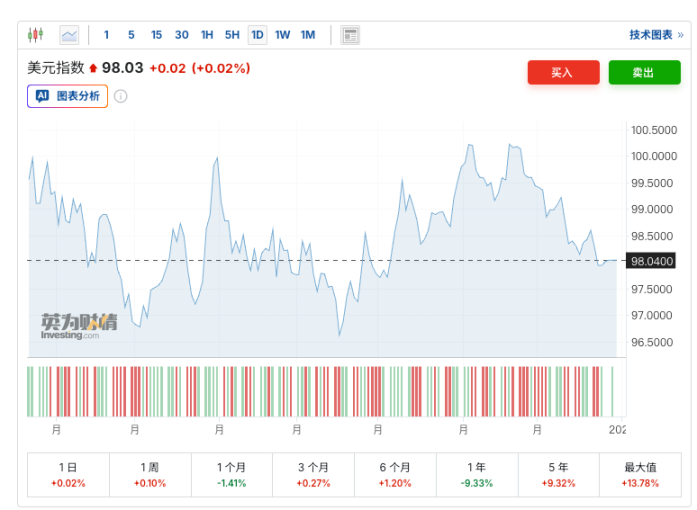
First is the gravitational pull of valuation regression. Although the dollar index has rebounded nearly 2% from its September low, from a fundamental perspective, the dollar is still outrageously "expensive." Data from the Bank for International Settlements (BIS) shows that as of October, the dollar's real broad effective exchange rate (REER), although down from its historical high of 115.1 in January to 108.7, remains at an absolute high. Karl Schamotta, Chief Market Strategist at global corporate payments company Corpay, stated bluntly: "From a fundamental perspective, the dollar is still overvalued."
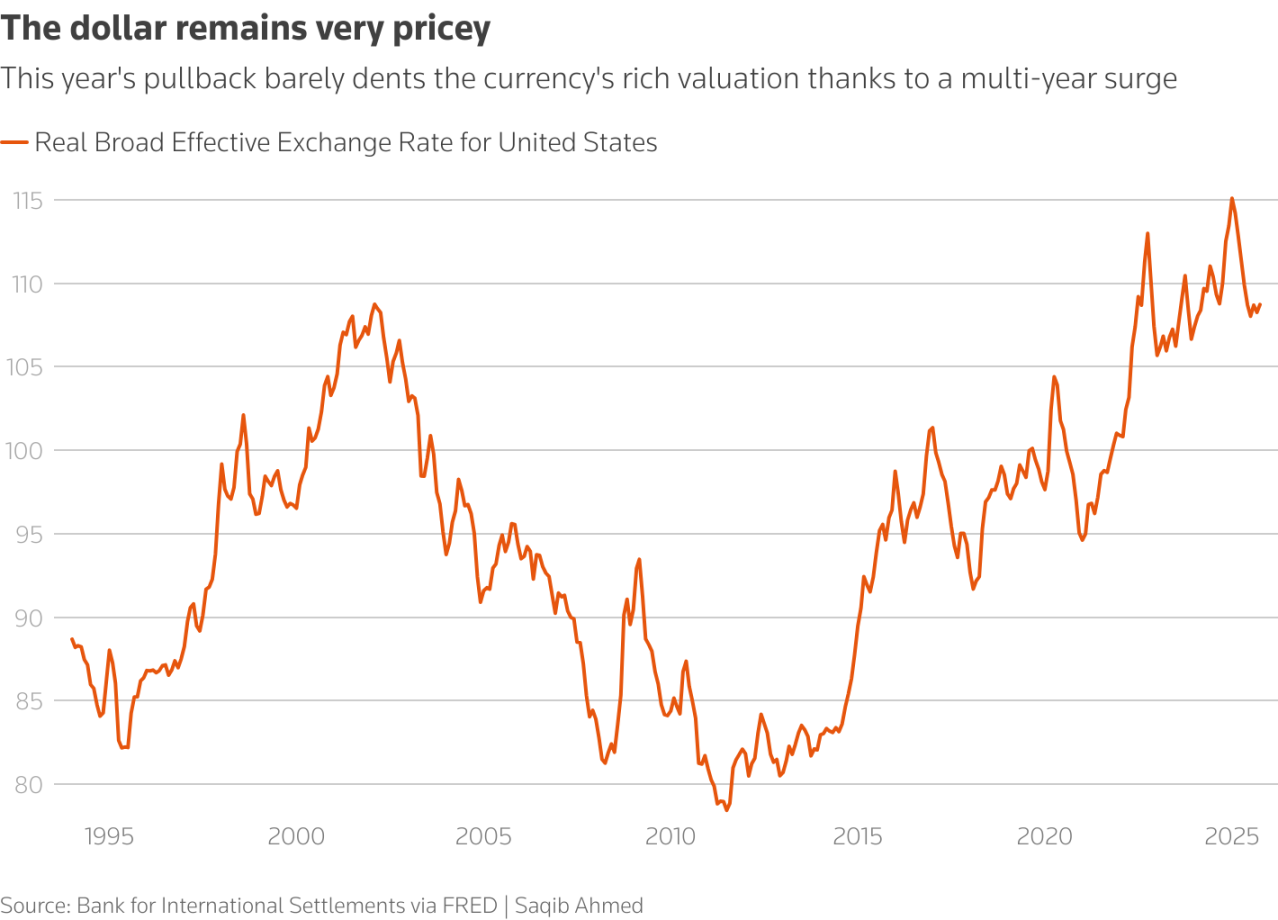
The line chart shows that due to years of sustained gains, this year's correction has barely impacted the dollar's high valuation.

Second is the dovish expectations for the new Fed. The market is pricing in a more accommodative 2025. With Powell set to step down and the Trump administration favoring low-interest-rate policies, leading candidates for his successor, including White House economic adviser Kevin Hassett and former Fed Governor Kevin Warsh, have all shown clear dovish tendencies.

Reuters noted in its year-end market report that the drop in the dollar index is driven more by expectations of Fed rate cuts, narrowing interest rate differentials with other economies, and changes in risk premiums due to the US fiscal deficit and political uncertainty.

And as the relative returns and safety premium of dollar assets are repriced, non-US currencies gain some upward room.

Institutional Consensus: Short-term Upward Momentum, Long-term Intensified Game

With the psychological barrier of 7.0 broken, the biggest question in the current market is whether this marks the start of a new long-term yuan appreciation cycle or is merely a short-term rebound driven by sentiment.

Standing on the threshold of 2026, the consensus among institutions is trending towards冷静 (calmness): short-term惯性向上 (inertia upward), long-term博弈加剧 (game intensifies).

Huachuang Securities believes that in terms of domestic supply and demand, the core factor behind it is foreign exchange settlement and sales. Although December's FX settlement and sales data have not yet been released, logical deduction suggests that the yuan's appreciation itself affects corporate expectations and behavior regarding FX settlement. Coupled with the typically strong seasonal characteristic of higher FX settlement at year-end, these two factors may have jointly driven the stronger performance of domestic supply and demand factors in the second phase of appreciation. On one hand, the continuous appreciation of the yuan exchange rate affects corporate expectations regarding FX settlement decisions; on the other hand, net FX settlement is usually strong at year-end.

However, the macro research team at Guotai Junan Securities also pointed out that the formation of yuan appreciation expectations is not without obstacles. Measuring domestic capital expectations using gold purchasing power parity, the volatility in 2025 was actually not low. Trade frictions in April once pushed domestic capital's depreciation expectations above 7.5, while the start of the Fed's rate cut cycle in September brought domestic capital's appreciation expectations to around 7.0. The reason is essentially that, in an environment where the internal economy has not yet shown significant elasticity, most investors remain somewhat hesitant about trend appreciation.

What Are the Reasons for USDT's Deep Discount?

Crypto market data analyst @Phyrex_Ni analyzed that the deep discount on USDT is mainly due to three reasons:

First: On a macro level, the Chinese yuan is currently strengthening significantly against the US dollar. Since the second half of 2025, the yuan has continued to strengthen. Reasons include the continuation of the Fed's rate-cutting cycle, the weakening US dollar index, and improved Chinese economic data. Holding USDT is equivalent to indirectly holding US dollar assets, which will incur exchange rate losses in the context of yuan appreciation. That is to say, the market itself, anticipating further yuan strength, has already priced in some exchange rate deviation, but this is not the main reason, only a very minor secondary factor.

Second: Chinese regulatory policies have tightened significantly. In early December 2025, the PBOC and twelve other departments jointly issued a document strengthening the crackdown on virtual currency trading speculation, explicitly bringing stablecoins (like USDT) into the regulatory scope, focusing on illegal cross-border capital flows, money laundering, and underground banks using USDT. This has led many OTC merchants and traders to suspend or reduce operations, causing market liquidity to tighten. Some holders, fearing account freezes or regulatory risks, are eager to sell USDT for yuan, increasing supply while demand plummets, directly depressing P2P prices. Historically, every regulatory upgrade in China (e.g., the 2021 ban) has led to negative OTC premiums for USDT. This time the力度 (force) is greater, so the deviation in USDT's exchange rate against the yuan is larger.

Third: The overall crypto market is volatile, and coupled with regulatory negative news, retail and institutional demand for USDT has decreased. Some investors based in mainland China, seeking to avoid risks, hope to offload their USDT as soon as possible, similar to the current negative premium cycle in China's real estate market.

Under the dual pressures of a turning macro cycle and tightening regulatory boundaries, the one-sided safe-haven logic of "holding US dollars means guaranteed gains" that prevailed over the past three years has completely失效 (failed).

For all market participants, the core task now is no longer to bet on whether the next point will be 6.8 or 7.0, but to告别 (bid farewell to) the path dependency on unilateral dollar appreciation. In a future where volatility is significantly elevated, the focus must回归风险中性 (return to risk neutrality).


Twitter:https://twitter.com/BitpushNewsCN

BitPush TG Discussion Group:https://t.me/BitPushCommunity

BitPush TG Subscription: https://t.me/bitpush

Original link:https://www.bitpush.news/articles/7599178

Pertanyaan Terkait

QWhy did the offshore Chinese yuan (CNH) break through the 7.0 mark against the US dollar in December 2025?

AThe offshore Chinese yuan broke through the 7.0 mark due to a significant decline in the US dollar, which fell 9% throughout 2025, marking its worst performance in eight years. This reflected a global reassessment of 'US Exceptionalism,' alongside expectations of a more dovish Federal Reserve under potential new leadership and narrowing interest rate differentials with other economies.

QWhat were the main reasons for the deep discount in USDT's over-the-counter price relative to the official USD/CNY exchange rate?

AThe deep discount in USDT's price was primarily caused by China's stringent regulatory crackdown on cryptocurrency transactions, including stablecoins like USDT, which reduced market liquidity and increased selling pressure. Additionally, the appreciation of the yuan against the dollar made holding USDT less attractive, and overall crypto market volatility further dampened demand.

QHow did market expectations for the Federal Reserve's policy in 2025 influence the US dollar's performance?

AMarket expectations for a more dovish Federal Reserve in 2025, driven by potential new leadership favoring low-interest policies under the Trump administration, contributed to the US dollar's decline. This led to reduced relative yields and safety premiums for dollar assets, encouraging capital flow into non-US currencies like the yuan.

QWhat role did China's regulatory policies play in affecting USDT's market dynamics?

AChina's regulatory policies, specifically a joint announcement by 13 departments in December 2025 targeting virtual currency transactions and stablecoins like USDT, significantly reduced market liquidity. This caused many traders to pause operations and led to increased selling of USDT as users sought to avoid regulatory risks, resulting in a supply-demand imbalance and deep discount.

QWhat is the consensus among major financial institutions regarding the future trend of the yuan's exchange rate?

AMajor financial institutions consensus is that the yuan may experience short-term upward momentum due to factors like seasonal year-end forex settlements and changing corporate expectations, but long-term trends will involve increased volatility and uncertainty, especially given internal economic challenges and fluctuating investor sentiment towards sustained appreciation.

Bacaan Terkait

SEC AS Ingin Hapus Aturan Lama Tahun 2005, Apa yang Dilihat oleh Tokenisasi Saham

**Ringkasan:** Pada 11 Juni, Komisi Sekuritas dan Bursa AS (SEC) mengusulkan penghapusan dua aturan inti dalam Peraturan Sistem Pasar Nasional (Regulation NMS): Aturan 611 dan Aturan 610(e). Aturan ini, yang dibuat pada 2005, dirancang untuk melindungi harga terbaik di pasar saham AS. Aturan 611 mencegah pesanan "dilaksanakan melalui" harga yang lebih baik di tempat lain (trade-through rule), sedangkan Aturan 610(e) membatasi kutipan terkunci dan silang. SEC berargumen bahwa pasar saat ini jauh lebih otomatis, terhubung, dan kompetitif dibandingkan 2005. Aturan-aturan ini dianggap telah meningkatkan kompleksitas, biaya kepatuhan, dan fragmentasi perdagangan, sementara mungkin tidak lagi diperlukan karena kewajiban pelaksanaan terbaik yang sudah dimiliki pialang. Proposal ini menarik perhatian komunitas Web3 dan aset tokenisasi karena dalam latar belakangnya, SEC secara eksplisit menyebutkan teknologi buku besar terdistribusi (DLT), aset kripto, kontrak pintar, dan Automated Market Makers (AMM) sebagai pendorong bentuk dan metode perdagangan sekuritas baru. Dengan menghapus aturan yang sangat terpusat dan kaku ini, SEC membuka pintu bagi lebih banyak eksperimen dalam mekanisme perdagangan, keselarasan yang lebih baik dengan perdagangan 24/7, dan potensi integrasi yang lebih mulus untuk model seperti saham ter-tokenisasi. Namun, ini baru tahap usulan dengan periode masukan publik 60 hari. Perubahan ini tidak mengatasi tantangan mendasar tokenisasi saham seperti penjagaan aset, penyelesaian, hak pemegang saham, atau persyaratan KYC/AML. Bahkan jika aturan federal ini dicabut, aturan terkait dari bursa dan FINRA mungkin masih berlaku. Intinya, ini adalah langkah awal potensial untuk mengurangi kompleksitas yang digerakkan oleh aturan dan memungkinkan inovasi dalam struktur pasar ekuitas AS.

Foresight News3j yang lalu

SEC AS Ingin Hapus Aturan Lama Tahun 2005, Apa yang Dilihat oleh Tokenisasi Saham

Foresight News3j yang lalu

Transformasi Ethena dan Kecemasan Wall Street

**Ringkasan:** Pada Juni 2026, protokol stablecoin Ethena mengumumkan kemitraan strategis dengan raksasa manajer aset tradisional, Janus Henderson. Kolaborasi ini menandai transformasi Ethena dari protokol DeFi asli menjadi entitas yang tertanam di dalam inti keuangan tradisional, sekaligus mencerminkan kecemasan institusi Wall Street terhadap masa depan. Awalnya, stablecoin USDe Ethena dikenal dengan strategi delta-netral yang bergantung pada pendanaan *perpetual futures*. Namun, kelemahan model ini terbukti saat pasar berubah, memaksa Ethena melakukan transformasi. USDe berevolusi dari produk sintetis kripto murni menjadi stablecoin dengan cadangan hybrid yang mencakup aset keuangan dunia nyata (RWA) seperti surat utang negara, obligasi korporasi, dan instrumen kredit. Kemitraan dengan Janus Henderson memiliki empat lapisan: (1) diversifikasi cadangan USDe dengan aset kredit korporasi (CLO) terealisasi token Janus Henderson, (2) investasi strategis Janus Henderson dalam token ENA, (3) penggunaan sUSDe sebagai alat manajemen kas treasury Janus Henderson, dan (4) rencana pengembangan produk ETF untuk mendistribusikan USDe dan ENA kepada klien institusional. Kecemasan Wall Street yang mendorong langkah seperti ini berasal dari tekanan struktural yang lebih besar. Setelah pengesahan undang-undang stablecoin AS yang jelas (GENIUS Act), persaingan beralih ke pembangunan jaringan distribusi. Institusi tradisional seperti Janus Henderson khawatir akan kehilangan kendali atas saluran distribusi aset di era tokenisasi, tekanan terhadap hasil (*yield*) yang lebih menarik dari produk seperti sUSDe, dan yang terpenting, kehilangan akses ke lapisan penyelesaian ekonomi digital baru yang didominasi stablecoin. Kemitraan ini adalah strategi "mundur untuk maju" – menerima kekurangan dalam inovasi protokol tetapi memanfaatkan lisensi, jaringan klien, dan reputasi untuk mengamankan posisi dalam infrastruktur keuangan masa depan. Kolaborasi ini mengilustrasikan peleburan batas antara keuangan tradisional dan DeFi, dengan stablecoin sebagai medan pertempuran utamanya.

Foresight News4j yang lalu

Transformasi Ethena dan Kecemasan Wall Street

Foresight News4j yang lalu

Trading

Spot
Futures

Artikel Populer

Cara Membeli BILL

Selamat datang di HTX.com! Kami telah membuat pembelian Billions Network (BILL) menjadi mudah dan nyaman. Ikuti panduan langkah demi langkah kami untuk memulai perjalanan kripto Anda.Langkah 1: Buat Akun HTX AndaGunakan alamat email atau nomor ponsel Anda untuk mendaftar akun gratis di HTX. Rasakan perjalanan pendaftaran yang mudah dan buka semua fitur.Dapatkan Akun SayaLangkah 2: Buka Beli Kripto, lalu Pilih Metode Pembayaran AndaKartu Kredit/Debit: Gunakan Visa atau Mastercard Anda untuk membeli Billions Network (BILL) secara instan.Saldo: Gunakan dana dari saldo akun HTX Anda untuk melakukan trading dengan lancar.Pihak Ketiga: Kami telah menambahkan metode pembayaran populer seperti Google Pay dan Apple Pay untuk meningkatkan kenyamanan.P2P: Lakukan trading langsung dengan pengguna lain di HTX.Over-the-Counter (OTC): Kami menawarkan layanan yang dibuat khusus dan kurs yang kompetitif bagi para trader.Langkah 3: Simpan Billions Network (BILL) AndaSetelah melakukan pembelian, simpan Billions Network (BILL) di akun HTX Anda. Selain itu, Anda dapat mengirimkannya ke tempat lain melalui transfer blockchain atau menggunakannya untuk memperdagangkan mata uang kripto lainnya.Langkah 4: Lakukan trading Billions Network (BILL)Lakukan trading Billions Network (BILL) dengan mudah di pasar spot HTX. Cukup akses akun Anda, pilih pasangan perdagangan, jalankan trading, lalu pantau secara real-time. Kami menawarkan pengalaman yang ramah pengguna baik untuk pemula maupun trader berpengalaman.

210 Total TayanganDipublikasikan pada 2026.05.07Diperbarui pada 2026.06.02

Cara Membeli BILL

Apa Itu ATWO

I. Pengenalan ProyekArena Two adalah platform interaktif terdesentralisasi yang memungkinkan penggemar memainkan peran aktif yang ter-tokenisasi dalam hasil acara waktu nyata. Berbeda dengan model penyiaran tradisional yang mengurangi penggemar menjadi penonton pasif, Arena Two memanfaatkan teknologi blockchain untuk memungkinkan penggemar memberikan suara secara langsung dan mempengaruhi hasil di lapangan.II. Informasi TokenNama token: ATWO(Arena Two)III. Tautan TerkaitSitus web:https://arenatwo.com/Penjelajah:https://basescan.org/token/0x499D35eBE6cEe9B2Ac35Fd003fcBbeeB9CFc7B32Twitter:https://x.com/arenatwoXCatatan: Pengenalan proyek berasal dari materi yang diterbitkan atau disediakan oleh tim proyek resmi, yang hanya untuk referensi dan tidak merupakan saran investasi. HTX tidak bertanggung jawab atas kerugian langsung atau tidak langsung yang diakibatkan.

212 Total TayanganDipublikasikan pada 2026.05.18Diperbarui pada 2026.06.02

Apa Itu ATWO

Cara Membeli ATWO

Selamat datang di HTX.com! Kami telah membuat pembelian Arena Two (ATWO) menjadi mudah dan nyaman. Ikuti panduan langkah demi langkah kami untuk memulai perjalanan kripto Anda.Langkah 1: Buat Akun HTX AndaGunakan alamat email atau nomor ponsel Anda untuk mendaftar akun gratis di HTX. Rasakan perjalanan pendaftaran yang mudah dan buka semua fitur.Dapatkan Akun SayaLangkah 2: Buka Beli Kripto, lalu Pilih Metode Pembayaran AndaKartu Kredit/Debit: Gunakan Visa atau Mastercard Anda untuk membeli Arena Two (ATWO) secara instan.Saldo: Gunakan dana dari saldo akun HTX Anda untuk melakukan trading dengan lancar.Pihak Ketiga: Kami telah menambahkan metode pembayaran populer seperti Google Pay dan Apple Pay untuk meningkatkan kenyamanan.P2P: Lakukan trading langsung dengan pengguna lain di HTX.Over-the-Counter (OTC): Kami menawarkan layanan yang dibuat khusus dan kurs yang kompetitif bagi para trader.Langkah 3: Simpan Arena Two (ATWO) AndaSetelah melakukan pembelian, simpan Arena Two (ATWO) di akun HTX Anda. Selain itu, Anda dapat mengirimkannya ke tempat lain melalui transfer blockchain atau menggunakannya untuk memperdagangkan mata uang kripto lainnya.Langkah 4: Lakukan trading Arena Two (ATWO)Lakukan trading Arena Two (ATWO) dengan mudah di pasar spot HTX. Cukup akses akun Anda, pilih pasangan perdagangan, jalankan trading, lalu pantau secara real-time. Kami menawarkan pengalaman yang ramah pengguna baik untuk pemula maupun trader berpengalaman.

151 Total TayanganDipublikasikan pada 2026.05.18Diperbarui pada 2026.06.02

Cara Membeli ATWO

Diskusi

Selamat datang di Komunitas HTX. Di sini, Anda bisa terus mendapatkan informasi terbaru tentang perkembangan platform terkini dan mendapatkan akses ke wawasan pasar profesional. Pendapat pengguna mengenai harga A (A) disajikan di bawah ini.

活动图片














