Altcoin market falls from $100B to $26.5B in volume – Can demand recover?

ambcryptoDipublikasikan tanggal 2026-03-21Terakhir diperbarui pada 2026-03-21

Abstrak

Altcoin trading volume has sharply declined from peaks above $100 billion to approximately $26.5 billion, indicating a significant contraction in market activity and reduced risk appetite. Binance currently processes nearly 40% of this volume, with other exchanges handling the remainder. The market has entered a capitulation phase, with nearly 40% of altcoins trading near all-time lows, reflecting broad-based deterioration rather than isolated declines. Capital is rotating towards Bitcoin as a safer asset, leading to thinner liquidity and accelerated price declines in altcoins. However, such extreme conditions suggest selling pressure may be nearing exhaustion. Market structure shows stress without full capitulation, with limited liquidations and controlled selling pressure. The Futures-to-Spot ratio on Binance has reached a 1.5-year high, indicating derivatives activity is outpacing spot demand—a sign of fragile market balance. If spot demand fails to recover, the market could face renewed volatility, though current conditions may eventually favor accumulation if liquidity returns to undervalued altcoins.

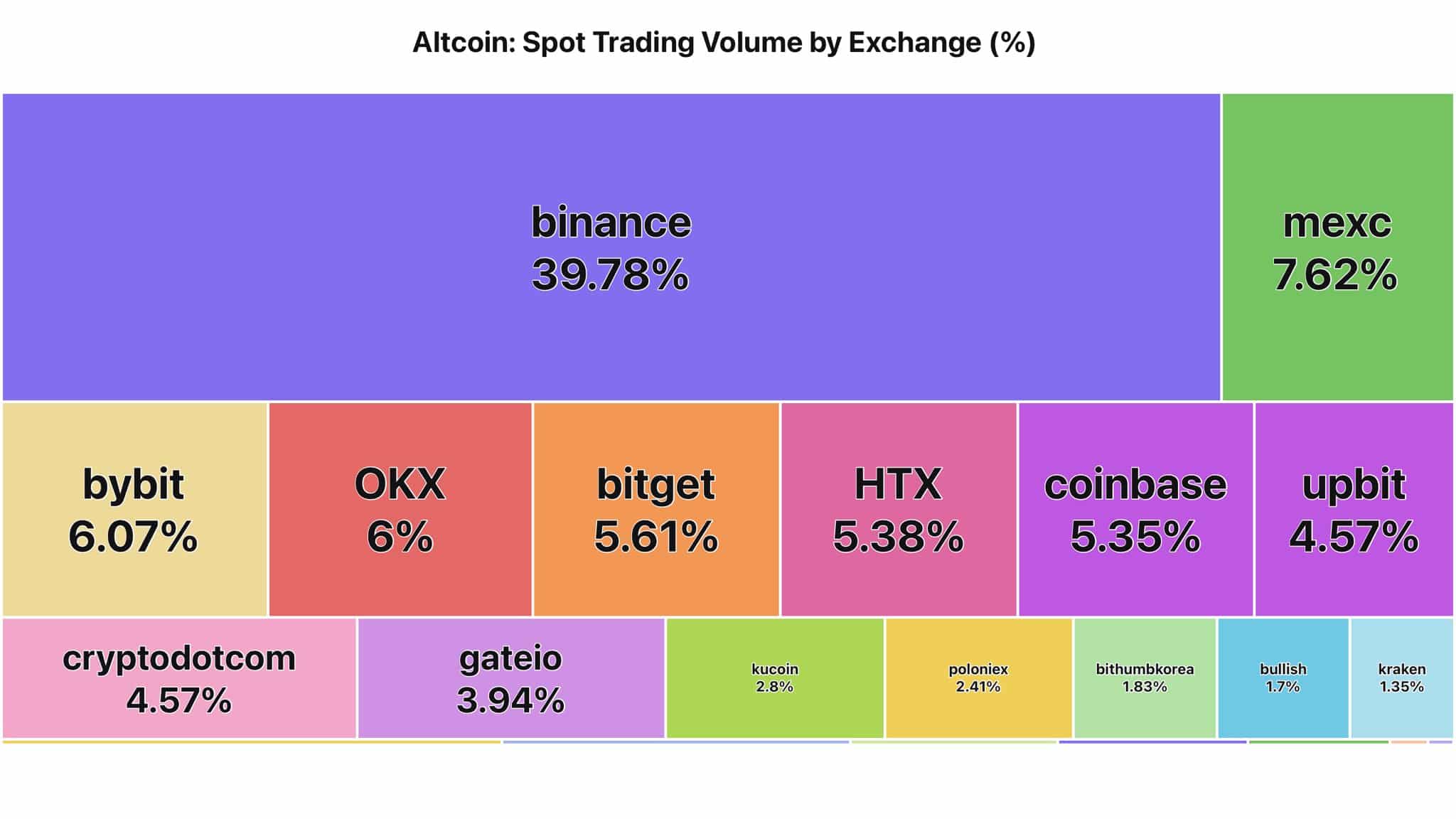
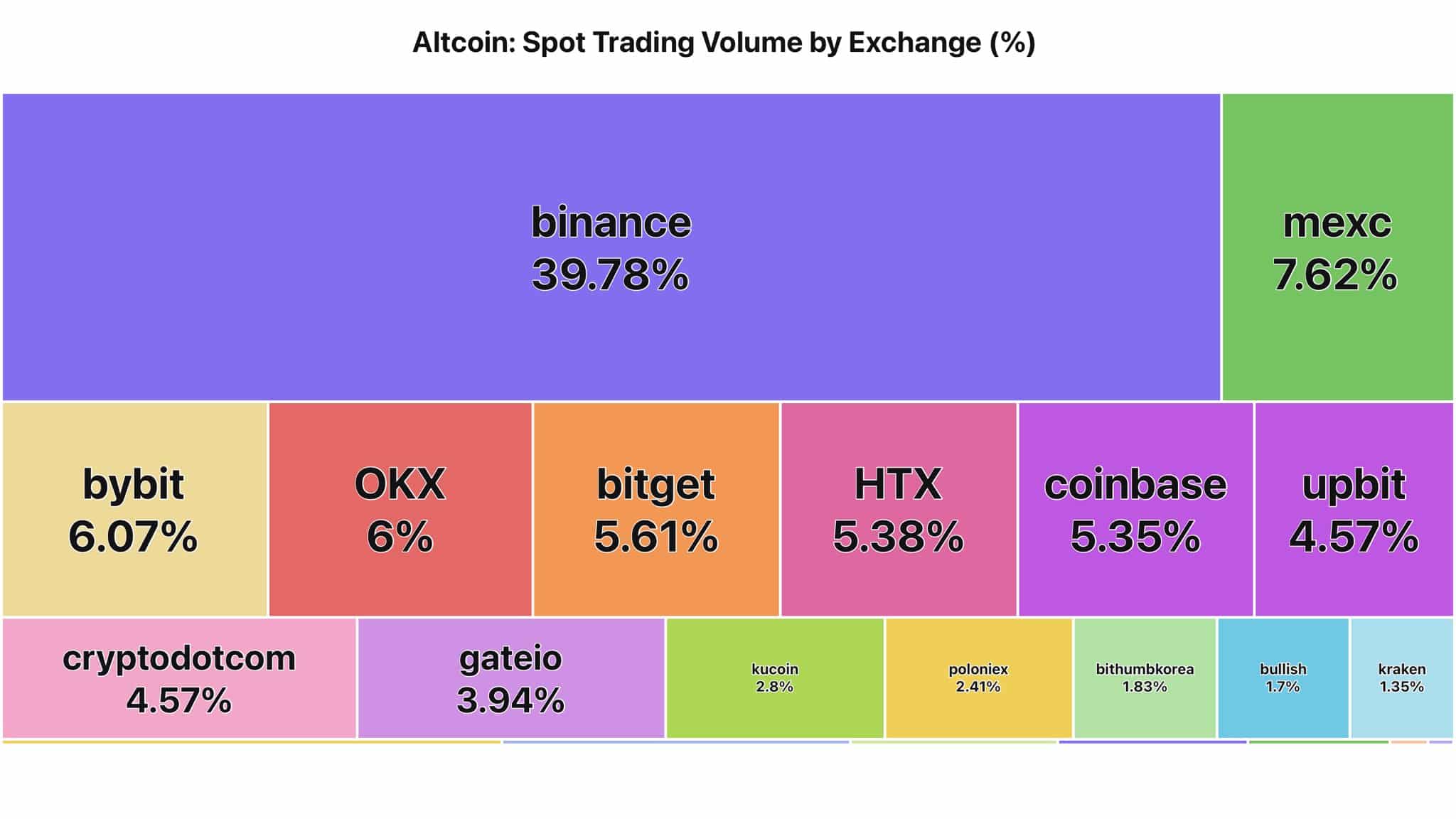
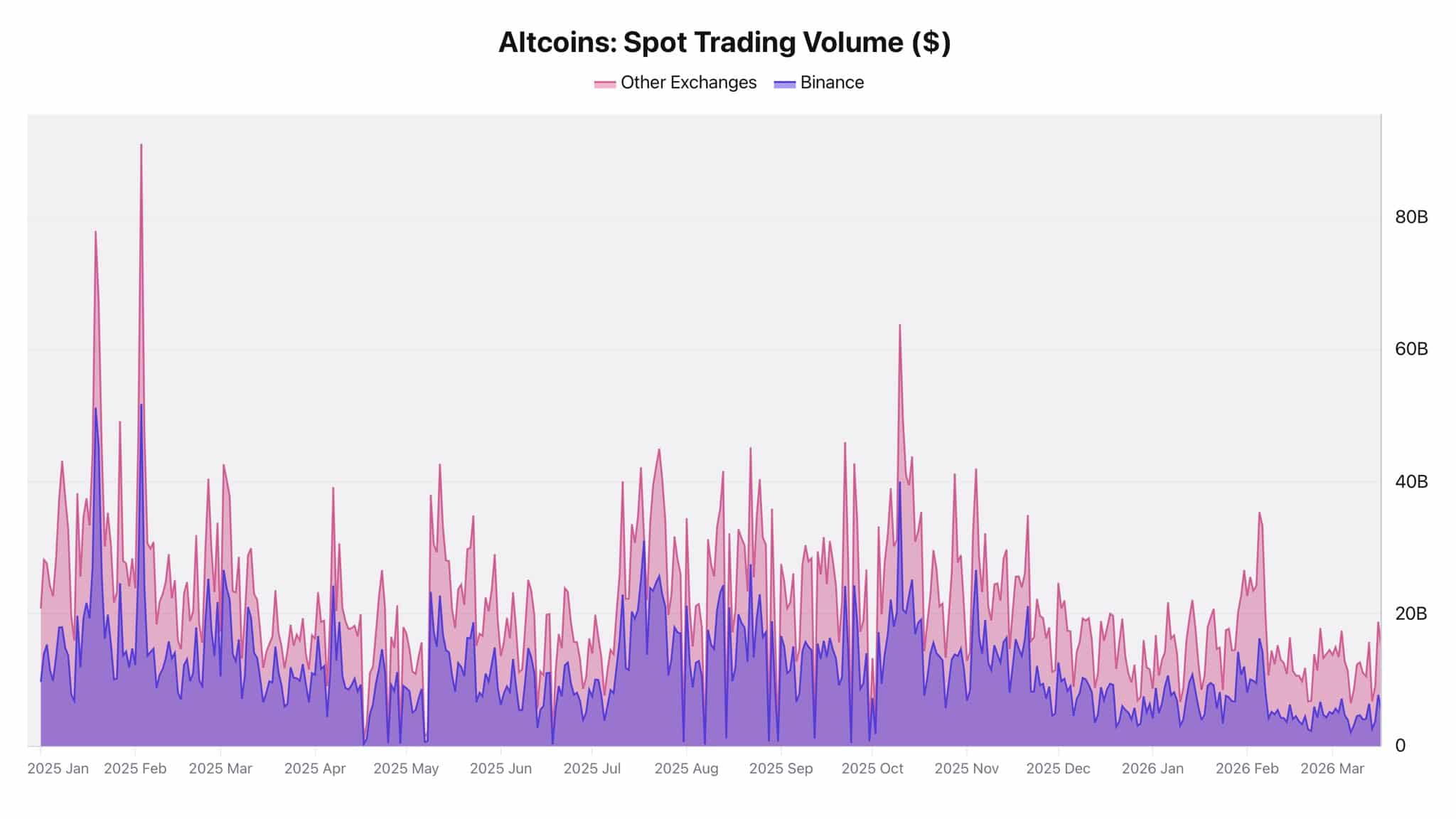
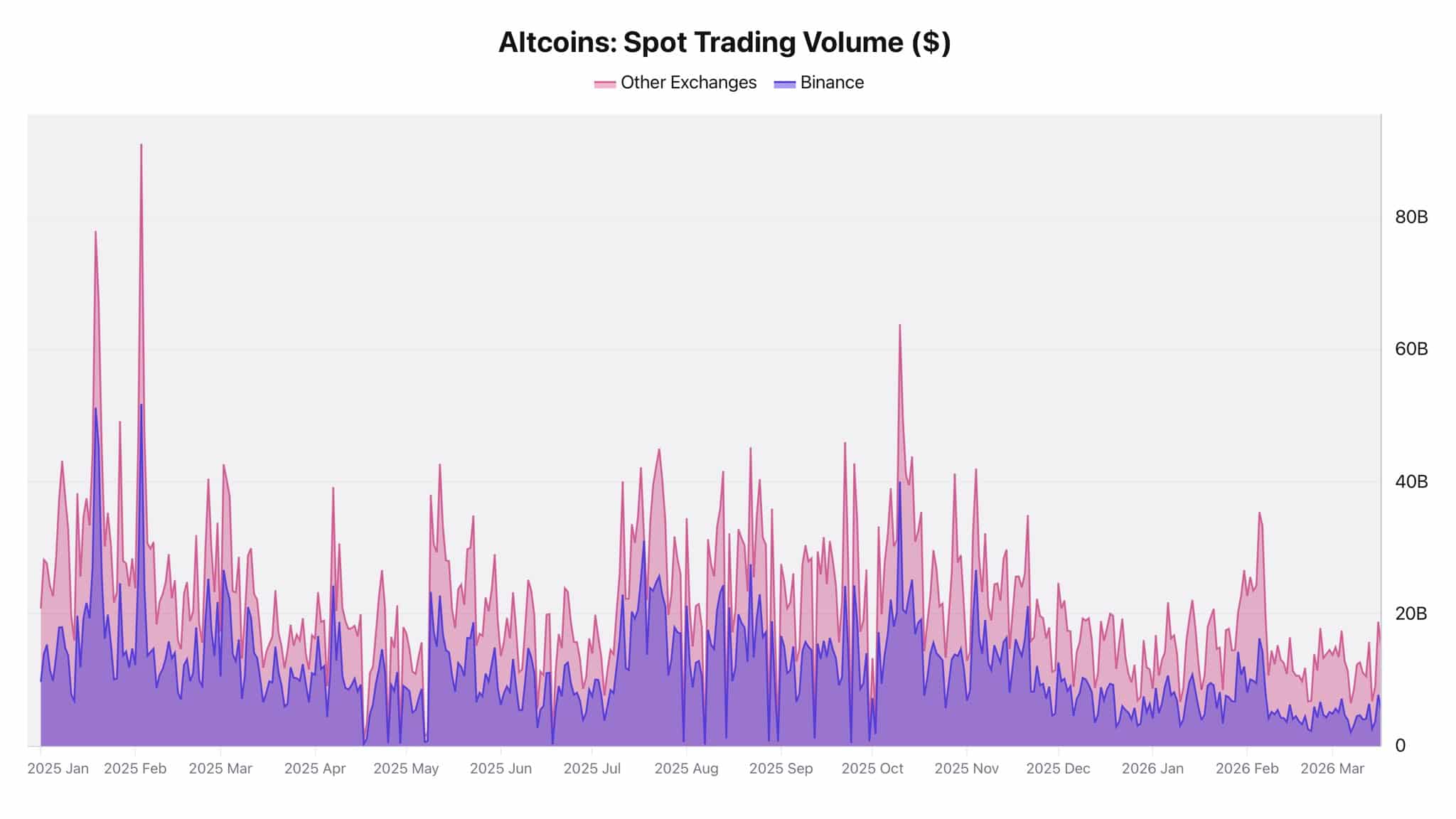
Altcoin trading volume has dropped towards $26.5 billion from peaks above $100 billion, showing a sharp contraction in activity. As this decline unfolded, Binance processed about $7.7 billion. All while other exchanges handled roughly $18.8 billion – Confirming broad-based weakness.
Source: CryptoQuant

In relative terms, Binance holds nearly a 40% share right now, with the same rising as overall participation shrinks. Earlier peaks in February and October 2025 saw volumes surge to $40–50 billion on Binance and up to $91 billion elsewhere, marking periods of strong demand.

As volumes fall across all venues, participation weakens across pairs and trade sizes, pointing to reduced risk appetite.
Source: CryptoQuant

However, this also means capital is stepping back rather than exiting entirely. As engagement compresses, volatility often declines, although such phases can precede renewed positioning once sentiment stabilizes and liquidity begins returning.
Altcoins enter capitulation zone as liquidity rotates to Bitcoin

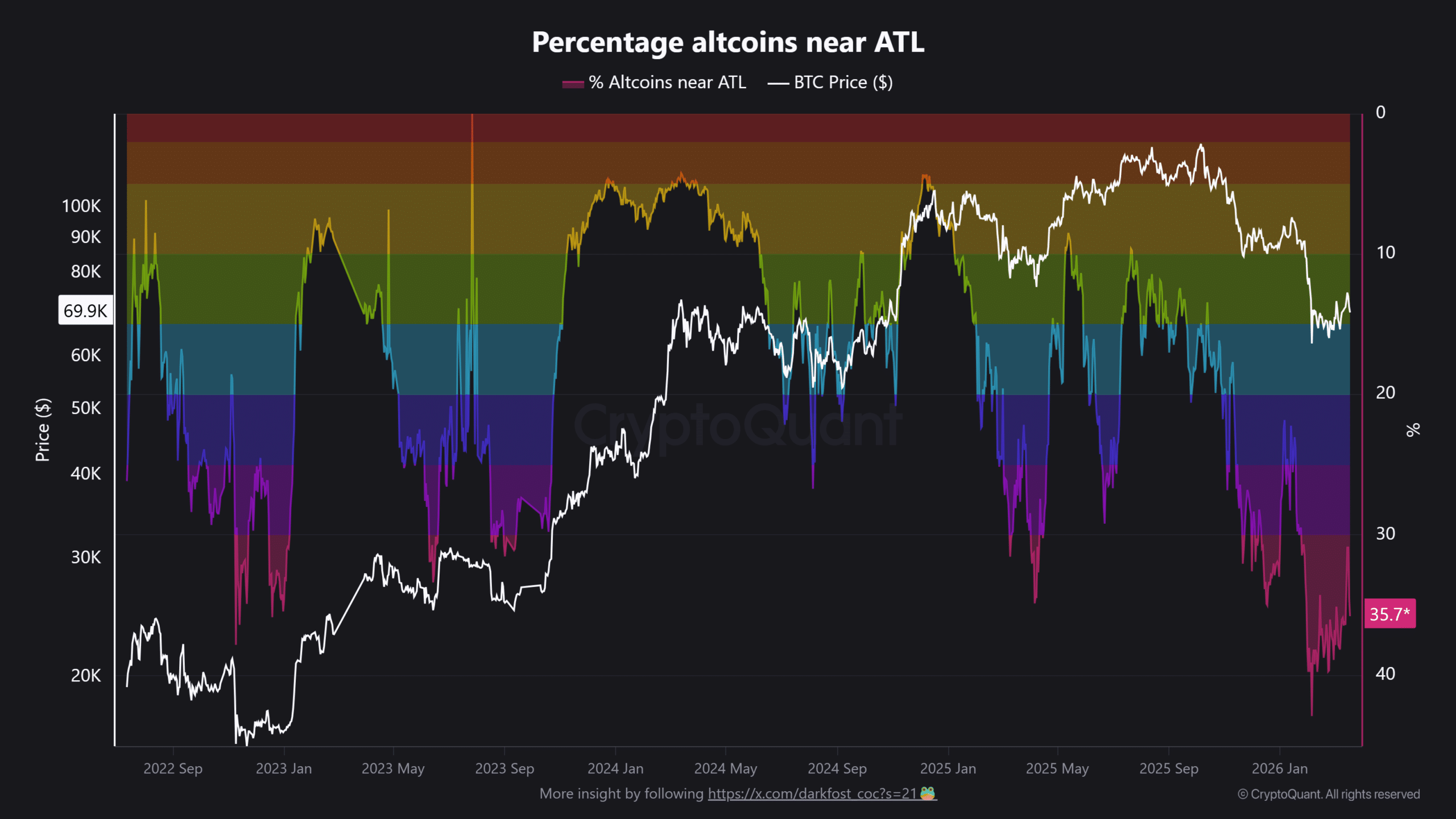
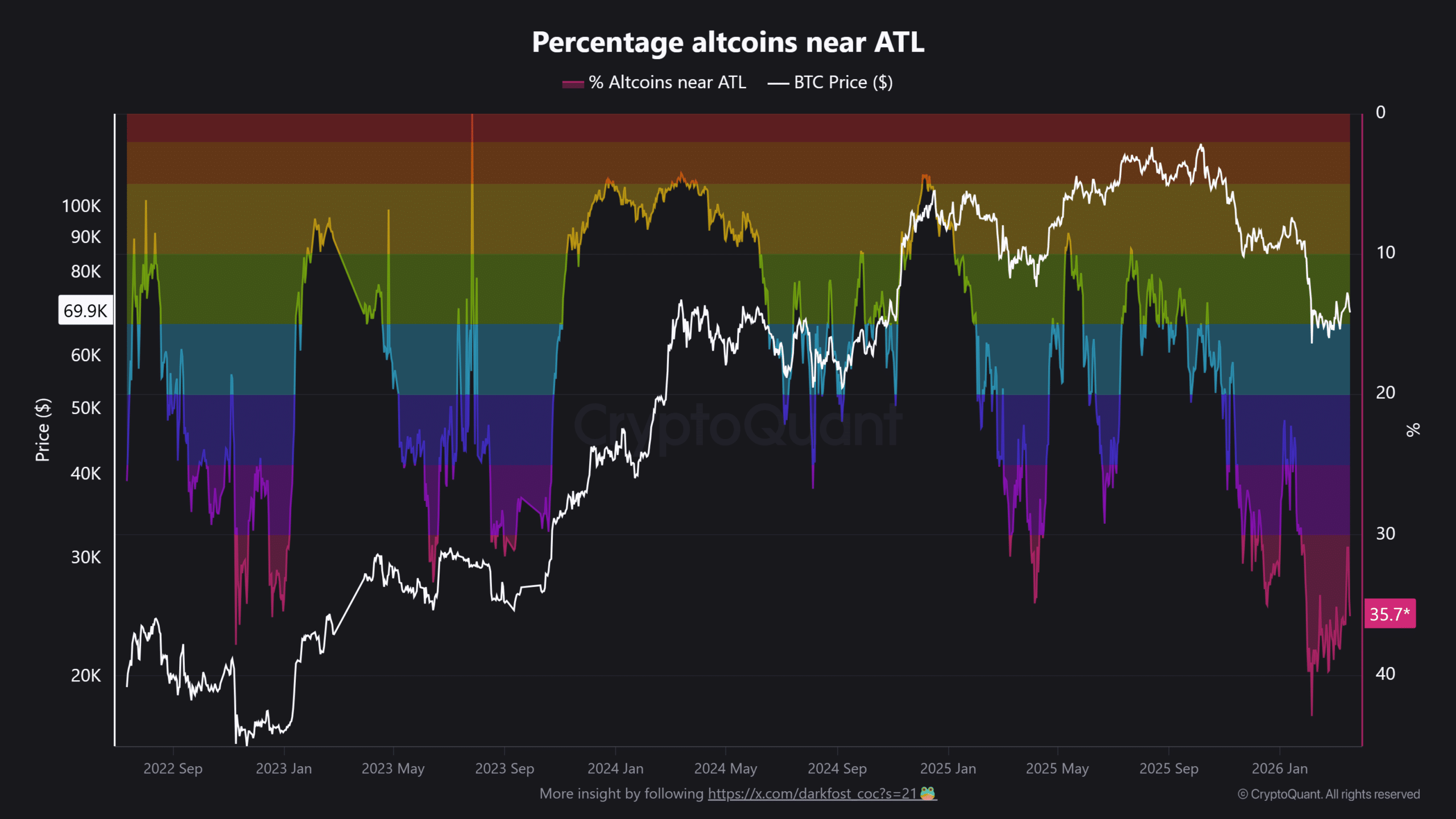
Altcoin weakness deepened as nearly 38–40% of assets traded near all-time lows, pushing the market into clear capitulation territory. As this level rises, it would reflect broad deterioration rather than isolated declines.

Source: CryptoQuant

At the same time, Bitcoin has held on relatively stronger, highlighting a widening divergence between major and risk assets. This shift signals liquidity rotation, where capital moves into Bitcoin for safety while exiting altcoins. As funds leave, altcoins face thinner liquidity and reduced demand, which accelerates price declines.

However, such extreme readings also mean that selling pressure may be nearing exhaustion. Meanwhile, participants reduce risk exposure, favoring preservation over speculation.

Such a structure implies a fragile market, one where downside risks remain. However, conditions may begin to favor accumulation if liquidity gradually returns to undervalued altcoins.

Market holds near capitulation as derivatives outpace spot demand

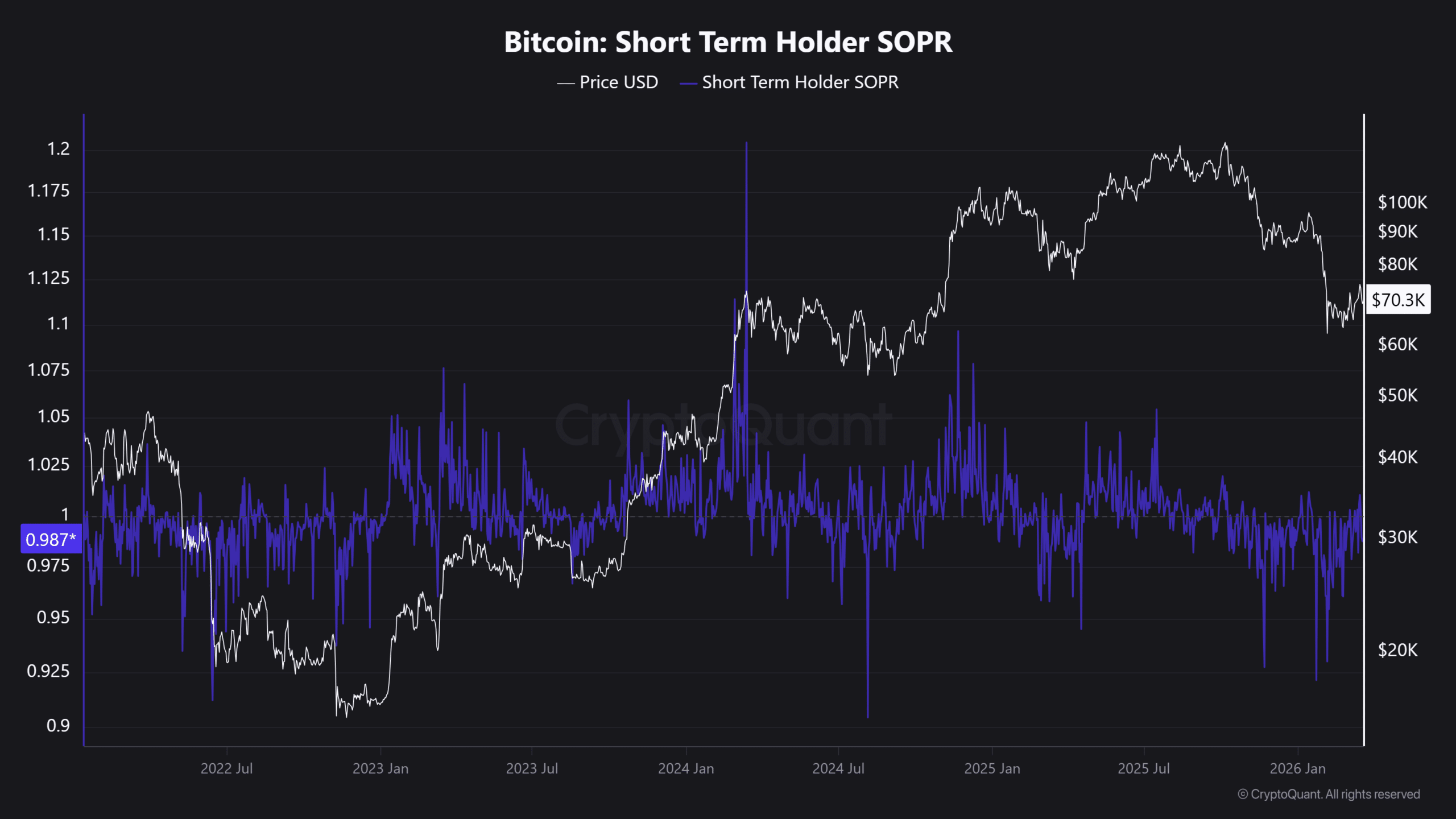
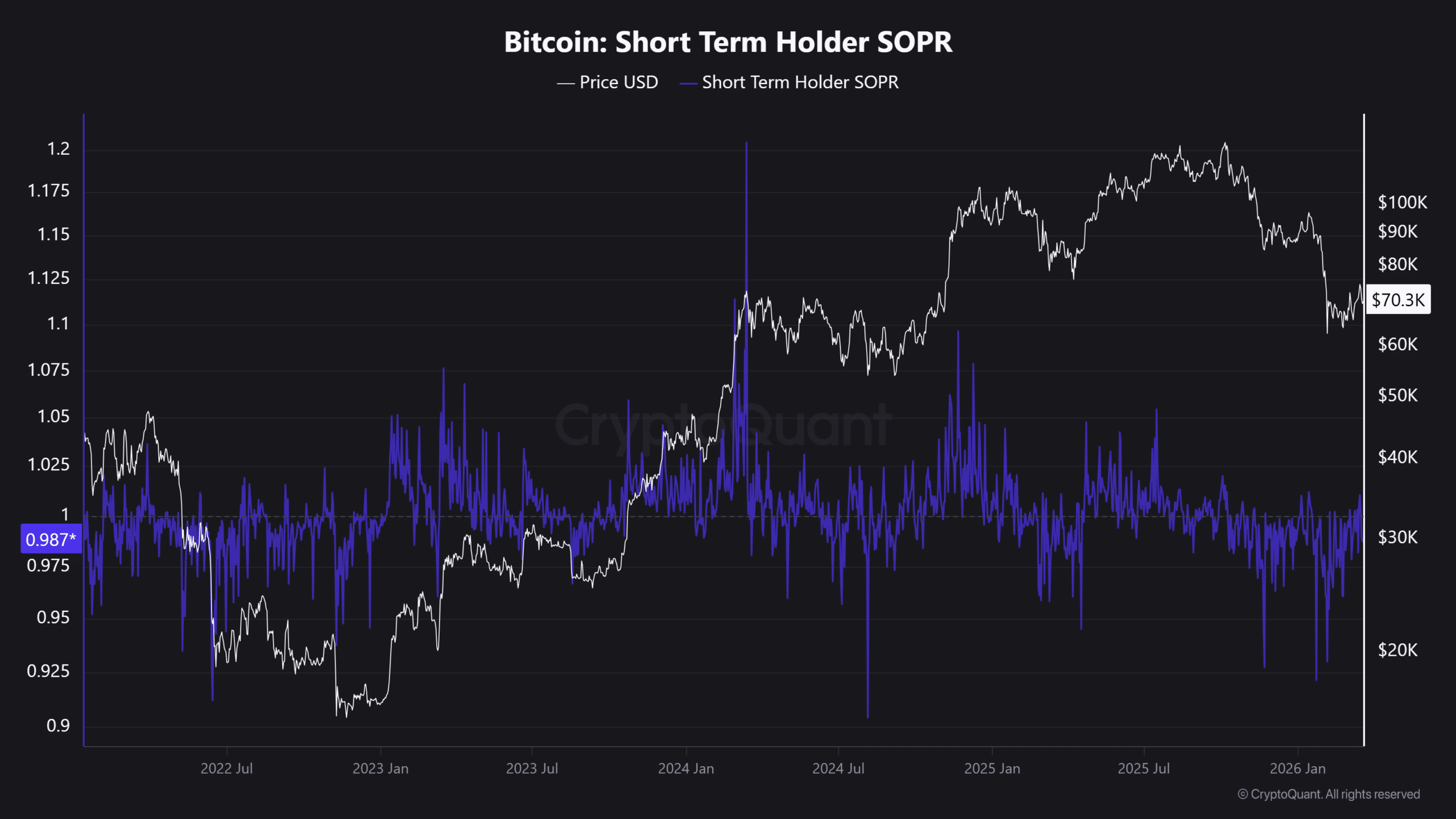
Finally, market structure revealed stress building without full capitulation, as Bitcoin [BTC] Short-Term Holder SOPR held near 0.98, reflecting realized losses around -12%. Since 2023, similar levels have often preceded deeper resets. And yet, press time selling appeared to be more controlled rather than aggressive.

Source: CryptoQuant

Consequently, liquidations have stayed subdued at $234 million, with $127 million in longs – Indicative of limited forced exits.

However, liquidity quality weakened as Binance’s Futures-to-Spot ratio climbed to a 1.5-year high. Such a shift showed derivatives activity expanding faster than spot demand.This divergence also hinted at a fragile balance, one where markets may either stabilize or face renewed volatility if spot demand fails to strengthen.


Final Summary

  • Altcoin market showed weakening demand as volumes fell to $26.5 billion and nearly 40% traded near lows, reflecting reduced risk appetite.
  • Altcoins now face thinning liquidity and sell-side pressure as capital rotates to Bitcoin [BTC], although conditions may begin favoring accumulation if demand returns.

Pertanyaan Terkait

QWhat has happened to the altcoin trading volume according to the article?

AAltcoin trading volume has sharply contracted, dropping to $26.5 billion from peaks above $100 billion.

QWhich exchange processed the largest share of altcoin trades during this decline?

ABinance processed the largest share, handling about $7.7 billion, which represents nearly 40% of the market.

QWhat does the decline in altcoin volume and the performance of Bitcoin indicate about market behavior?

AIt indicates a liquidity rotation where capital is moving into Bitcoin for safety while exiting altcoins, reflecting reduced risk appetite and a preference for preservation over speculation.

QWhat does the high Futures-to-Spot ratio on Binance suggest about the current market dynamics?

AThe high ratio, which reached a 1.5-year high, suggests that derivatives activity is expanding faster than spot demand, indicating a fragile balance that could lead to renewed volatility if spot demand doesn't strengthen.

QAccording to the article, what might the current market conditions potentially favor in the future?

AThe current conditions may begin to favor accumulation if liquidity gradually returns to undervalued altcoins, as extreme selling pressure could be nearing exhaustion.

Bacaan Terkait

Mengapa Bitcoin Bertahan di $64.000 Setelah Jeda Ketat dari The Fed

Bitcoin berakhir di bulan Juli mendekati level $64.000, bertahan di tengah volatilitas pasca keputusan Federal Reserve AS untuk mempertahankan suku bunga dalam kisaran 3,50-3,75%. Meskipun tiga anggota komite voting mendukung kenaikan suku bunga, sinyal keseluruhan dari Fed tetap ketat, membatasi minat terhadap aset berisiko. Pasar kripto menunjukkan ketahanan dengan aliran bersih masuk $32,1 juta ke ETF Bitcoin spot, mengakhiri serangkaian arus keluar. Di sisi lain, ETF Ethereum mengalami penarikan dana sekitar $18,65 juta. Kapitalisasi pasar agregat bertahan di sekitar $2,29 triliun. Secara teknis, Bitcoin menemukan dukungan di zona $63.000-63.500 dengan hambatan utama di dekat $66.000. Sementara Ethereum diperdagangkan sekitar $1.900 dengan tekanan harga, metrik jaringan seperti antrian validator yang panjang menunjukkan komitmen jangka panjang. Pergerakan di altcoin beragam: ETF Solana mencatat aliran masuk yang kuat sekitar $19 juta, sementara XRP dan BNB bergerak dalam konsolidasi. Regulasi juga menjadi perhatian setelah penundaan pembahasan CLARITY Act di Senat AS hingga musim gugur, mengurangi harapan disahkannya undang-undang tersebut pada tahun 2026. Hari terakhir bulan Juli akan dipantau untuk data makro AS seperti inflasi dan pengeluaran konsumen, yang dapat memengaruhi pergerakan pasar. Skenario dasar untuk Bitcoin adalah konsolidasi dalam kisaran $63.000-66.000. Kelangsungan aliran masuk institusional dan pertahanan level kunci akan menjadi sinyal penting untuk pemulihan pasar di paruh kedua tahun 2026.

cryptonews.ru1j yang lalu

Mengapa Bitcoin Bertahan di $64.000 Setelah Jeda Ketat dari The Fed

cryptonews.ru1j yang lalu

Parker Lewis Menjawab Mengapa Bitcoin Tetap Menjadi Uang Terbaik

Parker Lewis, salah satu analis Bitcoin paling terkemuka, mengkritik keras strategi pemasaran perusahaan publik yang memposisikan diri sebagai perbendaharaan kripto. Menurutnya, upaya mereka mengumpulkan modal melalui penjualan "kredit digital" dalam bentuk saham preferen abadi mendistorsi esensi mata uang kripto pertama. Lewis menekankan bahwa Bitcoin tidak memiliki hasil tetap pada tingkat algoritmanya, dan janji dividen reguler adalah permainan berisiko tinggi yang didanai terutama oleh investor baru di pasar yang naik. Untuk menunjukkan risikonya, ia membandingkan pasar kredit global sebesar $300 triliun dengan pasar saham preferen abadi yang hanya $1 triliun, menunjukkan bahwa lembaga keuangan menghindari risiko abadi ini, mengalihkannya ke investor ritel. Ia juga membantah klaim bahwa Bitcoin "terlalu volatil untuk 99% populasi". Volatilitas, katanya, adalah konsekuensi matematis alami dari adopsi massal aset baru dengan pasokan tetap. Setiap gelombang pengguna baru menyebabkan lonjakan harga karena mereka harus menawar lebih tinggi kepada pemegang awal. Lewis menyarankan untuk membeli Bitcoin langsung daripada saham perusahaan seperti MicroStrategy, karena lebih aman secara matematis daripada mempercayakan dana kepada manajer korporat. Fokus pada derivatif korporat mengalihkan perhatian dari ancaman utama: depresiasi uang fiat yang cepat. Lewis mengilustrasikan inflasi sebenarnya dengan "Indeks Ribeye"-nya, mencatat kenaikan harga steak premium dari $19,99 menjadi $37,99 sejak musim semi 2020, setara dengan inflasi 12-13% per tahun, lebih tinggi dari data resmi. Strategi keuangan yang paling bijaksana dan aman dalam inflasi global adalah kepemilikan langsung atas Bitcoin pertama dan kendali penuh atas kunci pribadi. Mengejar imbal hasil korporat yang meragukan melalui saham perbendaharaan kripto hanya meningkatkan risiko sistemik, sementara pemahaman tentang uang terdesentralisasi yang sejati dapat melindungi tabungan dari gejolak makroekonomi.

cryptonews.ru1j yang lalu

Parker Lewis Menjawab Mengapa Bitcoin Tetap Menjadi Uang Terbaik

cryptonews.ru1j yang lalu

Trading

Spot
活动图片