After the Tide Recedes, How Many Truly Resilient Crypto Projects Remain?

比推Dipublikasikan tanggal 2026-02-05Terakhir diperbarui pada 2026-02-05

Abstrak

Title: After the Tide Recedes: How Many Truly Resilient Crypto Projects Remain? In a prolonged crypto market downturn, projects demonstrating pragmatic and realistic visions are proving most resilient. This analysis highlights three key examples: 1. **Hyperliquid** addresses immediate trading friction by offering a decentralized exchange (DEX) for perpetual contracts, combining CEX-like features (high leverage, fast execution) with on-chain transparency. Its sustained activity post-airdrop reflects genuine user adoption. 2. **Canton Network** targets institutional finance needs by providing a blockchain infrastructure with "selective privacy" for regulatory compliance and business confidentiality. Backed by partnerships like DTCC (handling ~$3.7 quadrillion annually), it enables seamless integration with traditional finance. 3. **Kite AI** builds infrastructure for a future AI-driven economy, developing tools like "Agent Passport" for identity verification and the x402 protocol for autonomous payments. While not yet widely deployed, its vision aligns with the anticipated rise of AI agents as economic entities. Key evaluation criteria for project viability include: - Solving a real, existing problem (not manufactured demand); - Structurally sound solutions (technically, legally, economically); - Team execution capability (resources, expertise, track record). Projects failing these tests may see short-term gains but likely collapse in downturns. The current market stress...

Source: Tiger Research

Author: Ekko & Ryan Yoon

Original Title: Realism Is the Only Answer in a Crypto Downturn

Compiled and Edited: BitpushNews


The cryptocurrency market continues to be in a prolonged downtrend. In such an environment, the projects that can survive are those that present pragmatic and realistic visions.

Core Points

<ul class="list-paddingleft-2" style="animation: 0s ease 0s 1 normal none running none; appearance: none; background-image: none; background-position: 0% 0%; background-size: auto; background-repeat: repeat; background-attachment: scroll; background-origin: padding-box; background-clip: border-box; border: 0px none rgb(31, 31, 31); inset: auto; clear: none; clip: auto; columns: auto; contain: none; container: none; content: normal; cursor: auto; cx: 0px; cy: 0px; d: none; direction: ltr; fill: rgb(0, 0, 0); filter: none; flex: 0 1 auto; float: none; gap: normal; hyphens: manual; interactivity: auto; isolation: auto; margin-bottom: 16px; marker: none; mask: none; offset: normal; opacity: 1; order: 极速执行以及通过 HLP 机制提供的稳定流动性——带入了链上环境。</p> <p>Early usage was partly driven by the demand for the $HYPE token airdrop. However, users remained highly active even after the airdrop ended, reflecting genuine recognition of the platform's performance. Ultimately, Hyperliquid's resilience stems from solving a persistent and real problem: user dissatisfaction with centralized exchanges.</p> <h3>Canton Network: Positioning for the Institutional Finance Era</h3> <p>Canton provides a solution targeting the near future. As interest in real-world assets (RWA) continues to grow, financial institutions have begun to view blockchain as a financial infrastructure, not just a public network. In this context, institutions need not complete data transparency, but a "selective privacy model" that supports regulatory compliance while protecting business confidentiality.
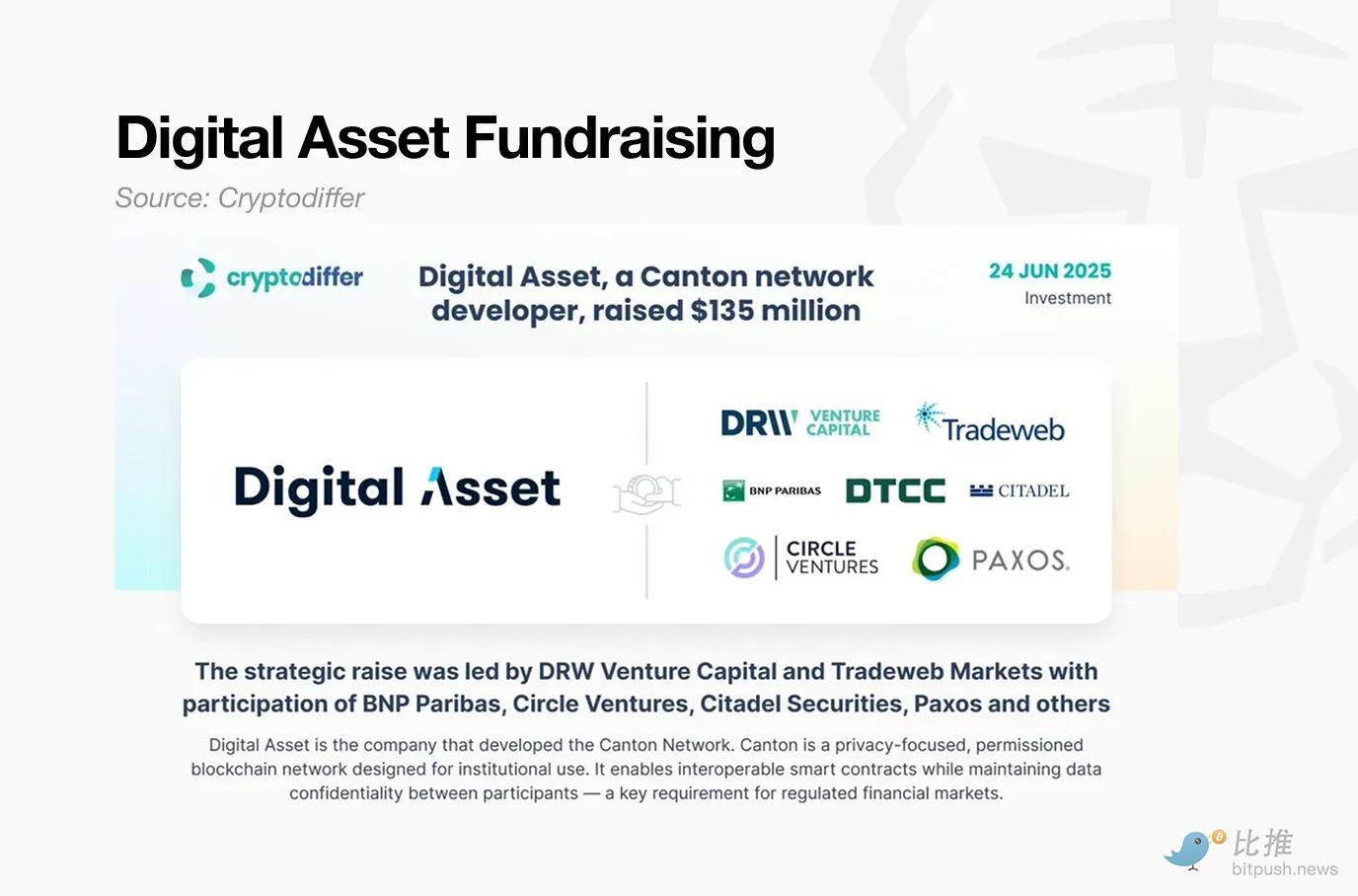
The Canton Network was born in response to these needs. Using the smart contract language DAML, Canton can provide customizable data disclosure schemes based on the needs of the participating parties.

This allows financial institutions to maintain transaction confidentiality while sharing information only to the necessary extent. Instead of强行推行 a technology-provider-led design, Canton has built infrastructure that highly aligns with institutional needs.

Another key factor is that Canton has aimed for "real-world deployment" from the start to expand its ecosystem, receiving early collaborative support from financial institutions. Most notably, its partnership with DTCC (The Depository Trust & Clearing Corporation) has established a channel for assets managed in the traditional financial system to enter the Canton environment. DTCC handles approximately $3.7 quadrillion in transactions annually, further validating the practical feasibility of the Canton Network's solution.

In the end, Canton provides a structured solution that simultaneously meets three major institutional requirements: privacy protection, regulatory compliance, and integration with the existing financial system.

Kite AI: Building the AI Economy That Has Yet to Arrive

Unlike the previous two examples, Kite AI currently has relatively limited application in the real world. However, viewed from the future perspective of "AI Agents operating as economic entities," its structural logic remains highly compelling.
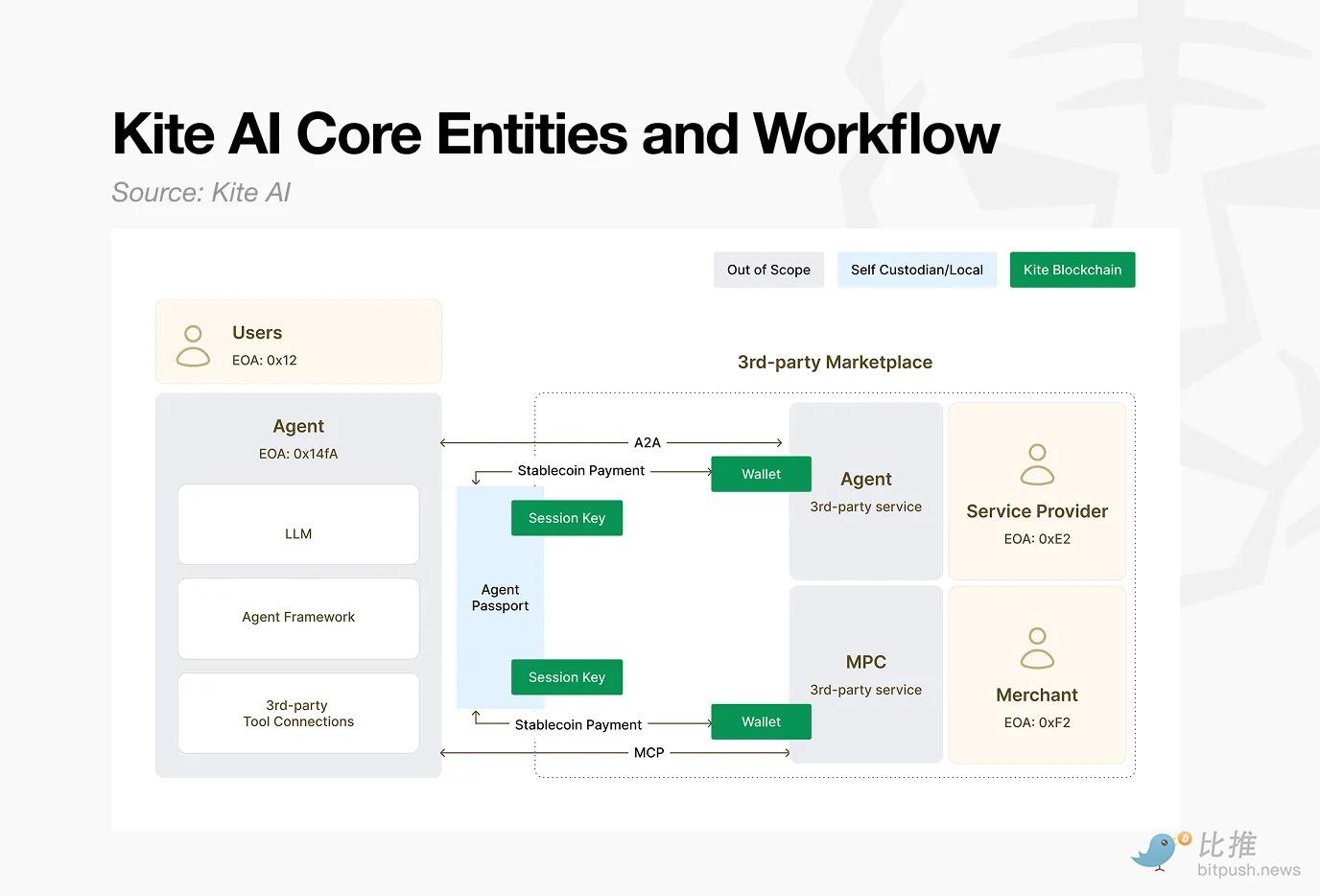
There is broad consensus, both in Web2 and Web3, on an "agent-driven future." Few would dispute that future AI Agents will handle tasks like booking hotels or ordering groceries on behalf of users.

However, realizing this future requires an infrastructure that allows AI Agents to independently initiate and execute payments. Existing transaction systems are designed around transfers between people and efficiency for human participants.

Therefore, for AI Agents to become autonomous economic entities, new mechanisms are needed, including identity verification and automated payment frameworks. Kite AI is building payment infrastructure specifically designed for this environment, with core components including the "Agent Passport" for identity verification and the x402 protocol for automated payments.

The vision presented by Kite AI is not yet ready for large-scale deployment, simply because the future it targets has not fully arrived. Nonetheless, the project's practical significance stems from a broader assumption: when this widely anticipated future arrives, the foundational technology it is developing will become a necessity. This alignment with macro trends gives the project structural credibility even with its current limited usage.

Three Key Questions for Assessing Practical Feasibility

Although these three projects operate on different timeframes, they share a common characteristic: real-world feasibility.

Evaluations of the same project often diverge: some believe it solves real problems, while others dismiss it as hype. To bridge this interpretative gap, we must ask at least three core questions:

  1. What specific problem is the project aiming to solve? (Is it a genuine pain point for users, or a need fabricated just to use the technology?)

  2. Is the proposed solution structurally feasible? (Does it hold up technically, in terms of compliance, and in its economic model?)

  3. Does the team have the capability to execute in reality? (Do they have relevant industry resources, technical expertise, and implementation experience?)

Since most projects promote optimistic future narratives, answering these questions correctly requires time and effort; filtering out misleading or incomplete information is not easy. Projects that cannot confidently answer these three questions might experience short-term price increases, but when the next downturn comes, they will likely perish with it.

The current state of the crypto market is clearly not optimistic. But this does not mean the industry is over. New experiments will continue, and our task is to assess what these efforts truly represent. Right now, keeping our feet on the ground is the only choice.


Twitter:https://twitter.com/BitpushNewsCN

Bitpush TG Discussion Group:https://t.me/BitPushCommunity

Bitpush TG Subscription: https://t.me/bitpush

Original link:https://www.bitpush.news/articles/7609260

Pertanyaan Terkait

QWhat is the core argument of the article regarding which crypto projects survive a market downturn?

AThe article argues that crypto projects which survive a downturn are those with a pragmatic and realistic vision, focusing on solving concrete, real-world problems rather than relying on abstract narratives or hype.

QAccording to the article, what are the three key questions to evaluate a project's practical viability?

AThe three key questions are: 1. What specific problem is the project trying to solve? (Is it a genuine user pain point or a manufactured need?) 2. Is the proposed solution structurally sound? (Is it technically, regulatorily, and economically viable?) 3. Does the team have the capability to execute in reality? (Do they have relevant industry resources, technical expertise, and implementation experience?)

QHow does Hyperliquid demonstrate resilience in the current market according to the analysis?

AHyperliquid demonstrates resilience by solving a persistent, real-world problem: user dissatisfaction with centralized exchanges. It brought key CEX features like high leverage, fast execution, and stable liquidity (via its HLP mechanism) on-chain with its perp DEX, and maintained high activity even after its token airdrop ended, showing genuine user认可 (recognition).

QWhat specific need of financial institutions does the Canton Network address?

ACanton Network addresses the institutional need for a 'selective privacy model' that supports regulatory compliance while protecting business confidentiality. It provides customizable data disclosure through its DAML smart contract language, allowing institutions to share information only as necessary, and is built with real-world deployment in mind, evidenced by its collaboration with major entities like the DTCC.

QWhat future scenario is Kite AI's infrastructure designed for, and why is it considered pragmatically credible despite limited current use?

AKite AI is designed for a future where AI Agents act as autonomous economic entities, requiring new infrastructure for identity verification (Agent Passport) and automated payments (x402 protocol). It is considered pragmatically credible because its vision aligns with the widely anticipated macro-trend of AI-driven economies, making its underlying technology a potential necessity when that future arrives.

Bacaan Terkait

Mengapa Bitcoin Bertahan di $64.000 Setelah Jeda Ketat dari The Fed

Bitcoin berakhir di bulan Juli mendekati level $64.000, bertahan di tengah volatilitas pasca keputusan Federal Reserve AS untuk mempertahankan suku bunga dalam kisaran 3,50-3,75%. Meskipun tiga anggota komite voting mendukung kenaikan suku bunga, sinyal keseluruhan dari Fed tetap ketat, membatasi minat terhadap aset berisiko. Pasar kripto menunjukkan ketahanan dengan aliran bersih masuk $32,1 juta ke ETF Bitcoin spot, mengakhiri serangkaian arus keluar. Di sisi lain, ETF Ethereum mengalami penarikan dana sekitar $18,65 juta. Kapitalisasi pasar agregat bertahan di sekitar $2,29 triliun. Secara teknis, Bitcoin menemukan dukungan di zona $63.000-63.500 dengan hambatan utama di dekat $66.000. Sementara Ethereum diperdagangkan sekitar $1.900 dengan tekanan harga, metrik jaringan seperti antrian validator yang panjang menunjukkan komitmen jangka panjang. Pergerakan di altcoin beragam: ETF Solana mencatat aliran masuk yang kuat sekitar $19 juta, sementara XRP dan BNB bergerak dalam konsolidasi. Regulasi juga menjadi perhatian setelah penundaan pembahasan CLARITY Act di Senat AS hingga musim gugur, mengurangi harapan disahkannya undang-undang tersebut pada tahun 2026. Hari terakhir bulan Juli akan dipantau untuk data makro AS seperti inflasi dan pengeluaran konsumen, yang dapat memengaruhi pergerakan pasar. Skenario dasar untuk Bitcoin adalah konsolidasi dalam kisaran $63.000-66.000. Kelangsungan aliran masuk institusional dan pertahanan level kunci akan menjadi sinyal penting untuk pemulihan pasar di paruh kedua tahun 2026.

cryptonews.ru2j yang lalu

Mengapa Bitcoin Bertahan di $64.000 Setelah Jeda Ketat dari The Fed

cryptonews.ru2j yang lalu

Parker Lewis Menjawab Mengapa Bitcoin Tetap Menjadi Uang Terbaik

Parker Lewis, salah satu analis Bitcoin paling terkemuka, mengkritik keras strategi pemasaran perusahaan publik yang memposisikan diri sebagai perbendaharaan kripto. Menurutnya, upaya mereka mengumpulkan modal melalui penjualan "kredit digital" dalam bentuk saham preferen abadi mendistorsi esensi mata uang kripto pertama. Lewis menekankan bahwa Bitcoin tidak memiliki hasil tetap pada tingkat algoritmanya, dan janji dividen reguler adalah permainan berisiko tinggi yang didanai terutama oleh investor baru di pasar yang naik. Untuk menunjukkan risikonya, ia membandingkan pasar kredit global sebesar $300 triliun dengan pasar saham preferen abadi yang hanya $1 triliun, menunjukkan bahwa lembaga keuangan menghindari risiko abadi ini, mengalihkannya ke investor ritel. Ia juga membantah klaim bahwa Bitcoin "terlalu volatil untuk 99% populasi". Volatilitas, katanya, adalah konsekuensi matematis alami dari adopsi massal aset baru dengan pasokan tetap. Setiap gelombang pengguna baru menyebabkan lonjakan harga karena mereka harus menawar lebih tinggi kepada pemegang awal. Lewis menyarankan untuk membeli Bitcoin langsung daripada saham perusahaan seperti MicroStrategy, karena lebih aman secara matematis daripada mempercayakan dana kepada manajer korporat. Fokus pada derivatif korporat mengalihkan perhatian dari ancaman utama: depresiasi uang fiat yang cepat. Lewis mengilustrasikan inflasi sebenarnya dengan "Indeks Ribeye"-nya, mencatat kenaikan harga steak premium dari $19,99 menjadi $37,99 sejak musim semi 2020, setara dengan inflasi 12-13% per tahun, lebih tinggi dari data resmi. Strategi keuangan yang paling bijaksana dan aman dalam inflasi global adalah kepemilikan langsung atas Bitcoin pertama dan kendali penuh atas kunci pribadi. Mengejar imbal hasil korporat yang meragukan melalui saham perbendaharaan kripto hanya meningkatkan risiko sistemik, sementara pemahaman tentang uang terdesentralisasi yang sejati dapat melindungi tabungan dari gejolak makroekonomi.

cryptonews.ru3j yang lalu

Parker Lewis Menjawab Mengapa Bitcoin Tetap Menjadi Uang Terbaik

cryptonews.ru3j yang lalu

Trading

Spot
活动图片





