After the Tide Recedes, How Many Truly Resilient Crypto Projects Remain?

比推Dipublikasikan tanggal 2026-02-05Terakhir diperbarui pada 2026-02-05

Abstrak

Title: After the Tide Recedes: How Many Truly Resilient Crypto Projects Remain? In a prolonged crypto market downturn, projects demonstrating pragmatic and realistic visions are proving most resilient. This analysis highlights three key examples: 1. **Hyperliquid** addresses immediate trading friction by offering a decentralized exchange (DEX) for perpetual contracts, combining CEX-like features (high leverage, fast execution) with on-chain transparency. Its sustained activity post-airdrop reflects genuine user adoption. 2. **Canton Network** targets institutional finance needs by providing a blockchain infrastructure with "selective privacy" for regulatory compliance and business confidentiality. Backed by partnerships like DTCC (handling ~$3.7 quadrillion annually), it enables seamless integration with traditional finance. 3. **Kite AI** builds infrastructure for a future AI-driven economy, developing tools like "Agent Passport" for identity verification and the x402 protocol for autonomous payments. While not yet widely deployed, its vision aligns with the anticipated rise of AI agents as economic entities. Key evaluation criteria for project viability include: - Solving a real, existing problem (not manufactured demand); - Structurally sound solutions (technically, legally, economically); - Team execution capability (resources, expertise, track record). Projects failing these tests may see short-term gains but likely collapse in downturns. The current market stress...

Source: Tiger Research

Author: Ekko & Ryan Yoon

Original Title: Realism Is the Only Answer in a Crypto Downturn

Compiled and Edited: BitpushNews


The cryptocurrency market continues to be in a prolonged downtrend. In such an environment, the projects that can survive are those that present pragmatic and realistic visions.

Core Points

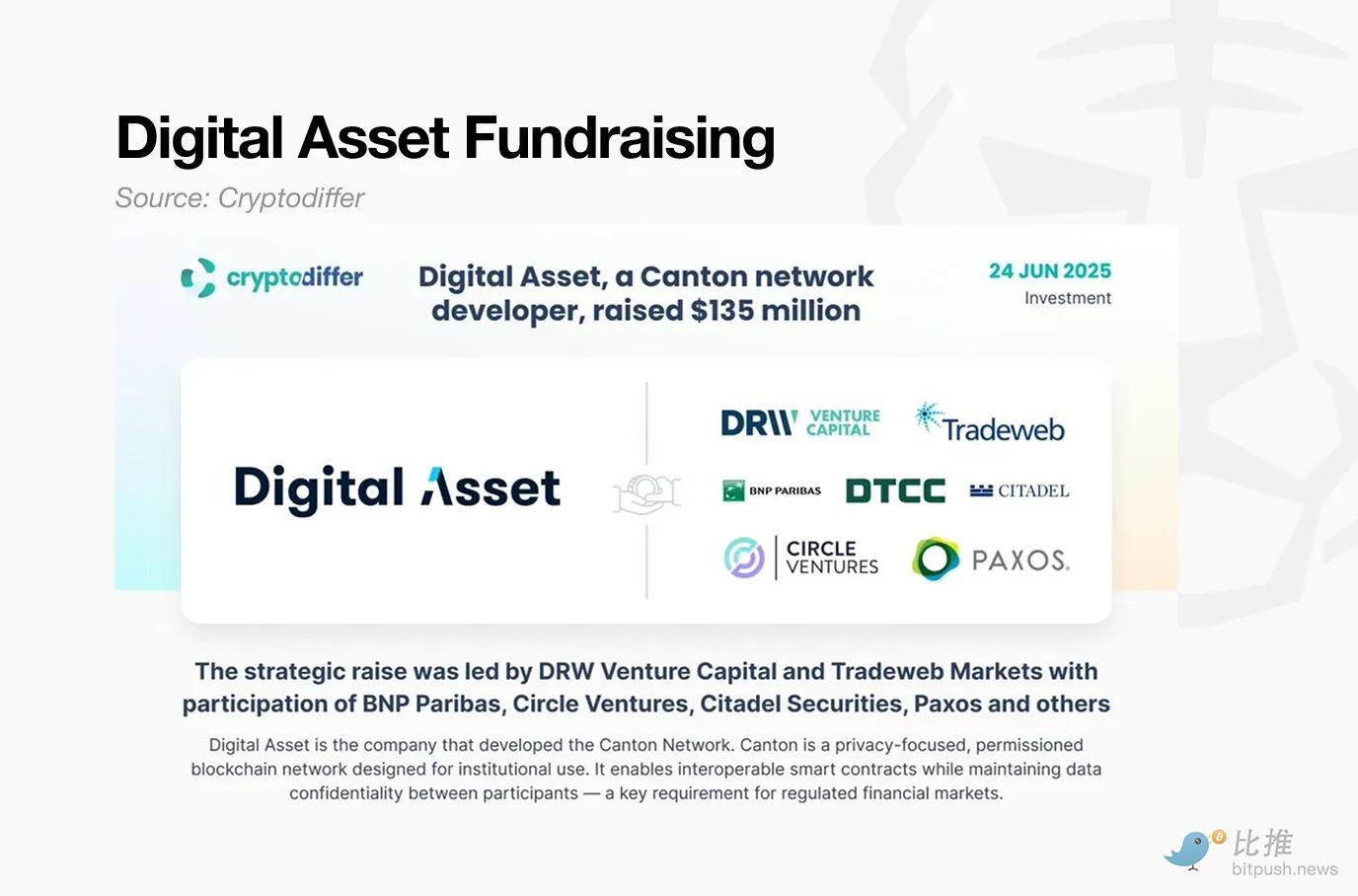
    The Canton Network was born in response to these needs. Using the smart contract language DAML, Canton can provide customizable data disclosure schemes based on the needs of the participating parties.

    This allows financial institutions to maintain transaction confidentiality while sharing information only to the necessary extent. Instead of强行推行 a technology-provider-led design, Canton has built infrastructure that highly aligns with institutional needs.

    Another key factor is that Canton has aimed for "real-world deployment" from the start to expand its ecosystem, receiving early collaborative support from financial institutions. Most notably, its partnership with DTCC (The Depository Trust & Clearing Corporation) has established a channel for assets managed in the traditional financial system to enter the Canton environment. DTCC handles approximately $3.7 quadrillion in transactions annually, further validating the practical feasibility of the Canton Network's solution.

    In the end, Canton provides a structured solution that simultaneously meets three major institutional requirements: privacy protection, regulatory compliance, and integration with the existing financial system.

    Kite AI: Building the AI Economy That Has Yet to Arrive

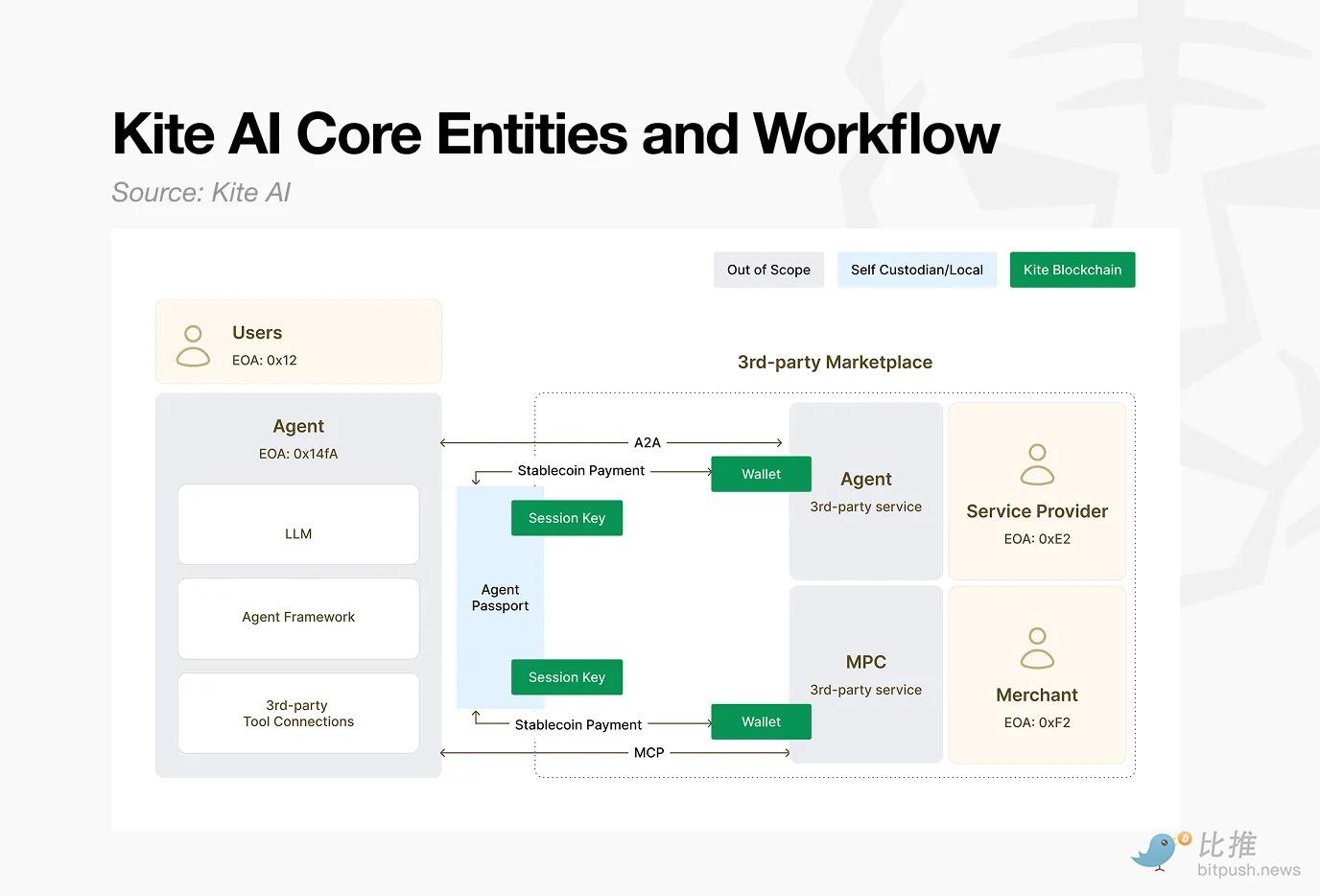
    Unlike the previous two examples, Kite AI currently has relatively limited application in the real world. However, viewed from the future perspective of "AI Agents operating as economic entities," its structural logic remains highly compelling.

    There is broad consensus, both in Web2 and Web3, on an "agent-driven future." Few would dispute that future AI Agents will handle tasks like booking hotels or ordering groceries on behalf of users.

    However, realizing this future requires an infrastructure that allows AI Agents to independently initiate and execute payments. Existing transaction systems are designed around transfers between people and efficiency for human participants.

    Therefore, for AI Agents to become autonomous economic entities, new mechanisms are needed, including identity verification and automated payment frameworks. Kite AI is building payment infrastructure specifically designed for this environment, with core components including the "Agent Passport" for identity verification and the x402 protocol for automated payments.

    The vision presented by Kite AI is not yet ready for large-scale deployment, simply because the future it targets has not fully arrived. Nonetheless, the project's practical significance stems from a broader assumption: when this widely anticipated future arrives, the foundational technology it is developing will become a necessity. This alignment with macro trends gives the project structural credibility even with its current limited usage.

    Three Key Questions for Assessing Practical Feasibility

    Although these three projects operate on different timeframes, they share a common characteristic: real-world feasibility.

    Evaluations of the same project often diverge: some believe it solves real problems, while others dismiss it as hype. To bridge this interpretative gap, we must ask at least three core questions:

    1. What specific problem is the project aiming to solve? (Is it a genuine pain point for users, or a need fabricated just to use the technology?)

    2. Is the proposed solution structurally feasible? (Does it hold up technically, in terms of compliance, and in its economic model?)

    3. Does the team have the capability to execute in reality? (Do they have relevant industry resources, technical expertise, and implementation experience?)

    Since most projects promote optimistic future narratives, answering these questions correctly requires time and effort; filtering out misleading or incomplete information is not easy. Projects that cannot confidently answer these three questions might experience short-term price increases, but when the next downturn comes, they will likely perish with it.

    The current state of the crypto market is clearly not optimistic. But this does not mean the industry is over. New experiments will continue, and our task is to assess what these efforts truly represent. Right now, keeping our feet on the ground is the only choice.


    Twitter:https://twitter.com/BitpushNewsCN

    Bitpush TG Discussion Group:https://t.me/BitPushCommunity

    Bitpush TG Subscription: https://t.me/bitpush

    Original link:https://www.bitpush.news/articles/7609260

Pertanyaan Terkait

QWhat is the core argument of the article regarding which crypto projects survive a market downturn?

AThe article argues that crypto projects which survive a downturn are those with a pragmatic and realistic vision, focusing on solving concrete, real-world problems rather than relying on abstract narratives or hype.

QAccording to the article, what are the three key questions to evaluate a project's practical viability?

AThe three key questions are: 1. What specific problem is the project trying to solve? (Is it a genuine user pain point or a manufactured need?) 2. Is the proposed solution structurally sound? (Is it technically, regulatorily, and economically viable?) 3. Does the team have the capability to execute in reality? (Do they have relevant industry resources, technical expertise, and implementation experience?)

QHow does Hyperliquid demonstrate resilience in the current market according to the analysis?

AHyperliquid demonstrates resilience by solving a persistent, real-world problem: user dissatisfaction with centralized exchanges. It brought key CEX features like high leverage, fast execution, and stable liquidity (via its HLP mechanism) on-chain with its perp DEX, and maintained high activity even after its token airdrop ended, showing genuine user认可 (recognition).

QWhat specific need of financial institutions does the Canton Network address?

ACanton Network addresses the institutional need for a 'selective privacy model' that supports regulatory compliance while protecting business confidentiality. It provides customizable data disclosure through its DAML smart contract language, allowing institutions to share information only as necessary, and is built with real-world deployment in mind, evidenced by its collaboration with major entities like the DTCC.
QWhat future scenario is Kite AI's infrastructure designed for, and why is it considered pragmatically credible despite limited current use?

AKite AI is designed for a future where AI Agents act as autonomous economic entities, requiring new infrastructure for identity verification (Agent Passport) and automated payments (x402 protocol). It is considered pragmatically credible because its vision aligns with the widely anticipated macro-trend of AI-driven economies, making its underlying technology a potential necessity when that future arrives.

Bacaan Terkait

Pendiri Zcash Mengatakan Audit AI Anthropic Tidak Menemukan Bug Serius dalam Protokol

Pendiri Zcash Zooko Wilcox mengumumkan bahwa audit keamanan pada protokol Zcash, yang dilakukan oleh model AI Mythos dari Anthropic atas permintaan Shielded Labs, tidak menemukan bug serius baru. Hasil audit ini memberikan gambaran positif mengenai ketahanan keamanan Zcash, yang merupakan aset kripto berfokus privasi yang menghadapi tekanan regulasi dan pengawasan teknis berkelanjutan. Wilcox menekankan bahwa audit ini adalah bagian dari upaya melindungi pengguna Zcash. Meskipun ulasan berbantuan AI bukan pengganti pekerjaan keamanan manusia, alat semacam itu semakin penting untuk memindai basis kode yang kompleks dan mengidentifikasi potensi kelemahan. Bagi protokol privasi seperti Zcash, standar keamanan harus sangat tinggi karena pengguna mengandalkan kekuatan kriptografi dan kualitas implementasi. Tidak ditemukannya bug serius baru tidak berarti Zcash bebas risiko, tetapi hasil ini dapat mendukung kepercayaan pengguna dan pengembang. Cerita ini juga menggambarkan tren berkembang di ekosistem kripto, di mana model AI mulai diintegrasikan ke dalam pekerjaan audit keamanan infrastruktur, menambah kecepatan dan cakupan analisis, meskipun temuan AI tetap memerlukan interpretasi yang hati-hati oleh pakar manusia. Perkembangan ini mencerminkan pergeseran lebih luas dalam industri kripto, di mana pembaruan infrastruktur, laporan keamanan, dan kualitas protokol menjadi semakin penting dalam percakapan pasar, seiring dengan pergerakan harga jangka pendek.

bitcoinist1j yang lalu

Pendiri Zcash Mengatakan Audit AI Anthropic Tidak Menemukan Bug Serius dalam Protokol

bitcoinist1j yang lalu

Bitcoin Ke $400.000? Analis Gunakan Overlay Emas untuk Menyampaikan Kasus Berani untuk Tahun 2026

Analis Vivek Sen menyatakan bahwa Bitcoin (BTC) berpotensi mencapai $400.000 pada tahun 2026. Klaim ini didasarkan pada analisis overlay grafik, di mana pola pergerakan harga Bitcoin saat ini dibandingkan dengan pola breakout historis emas. Sen berpendapat bahwa jika Bitcoin terus mengikuti struktur serupa dengan emas, target harga tersebut mungkin tercapai. Namun, artikel menekankan bahwa perbandingan visual semata bukanlah model perkiraan yang pasti. Bitcoin dan emas memiliki perbedaan mendasar dalam hal ukuran pasar, likuiditas, volatilitas, dan basis investor. Pasar Bitcoin juga lebih refleksif, dipengaruhi oleh posisi derivatif, aliran dana ETF, dan leverage di ekosistem kripto. Untuk mendukung skenario kenaikan ekstrem tersebut, diperlukan beberapa faktor pendorong utama, seperti: aliran masuk institusional yang berkelanjutan melalui ETF Bitcoin, kondisi makroekonomi yang mendukung aset penyimpan nilai, likuiditas yang membaik, dan lingkungan pasar kripto yang optimis secara keseluruhan. Pada intinya, target $400.000 merupakan skenario optimis yang bersifat spekulatif dan lebih merupakan komentar pasar daripada prediksi harga yang terkonfirmasi. Keberhasilannya sangat bergantung pada apakah tren bullish Bitcoin saat ini dapat dipertahankan dan didukung oleh faktor fundamental dan aliran dana yang nyata. Tanpa konfirmasi tersebut, overlay grafik dengan emas dianggap hanya sebagai analogi yang menarik namun berisiko tinggi.

bitcoinist3j yang lalu

Bitcoin Ke $400.000? Analis Gunakan Overlay Emas untuk Menyampaikan Kasus Berani untuk Tahun 2026

bitcoinist3j yang lalu

Jam Pemotongan Hadiah Bitcoin Menunjukkan Fase Dasar, Tetapi Sinyal Siklus Perlu Kehati-hatian

**Ringkasan Artikel:** Analis Crypto Rover berpendapat bahwa Bitcoin (BTC) sedang berada dalam fase "pembentukan dasar" (*bottoming phase*) berdasarkan siklus *halving*-nya. Ia membagikan bagan yang menunjukkan pola berulang pasca-*halving*, mengklaim bahwa ritme dan struktur pasar saat ini mirip dengan siklus-siklus sebelumnya. Ini mendukung narasi populer di kalangan trader bahwa fase konsolidasi saat ini mungkin akan diikuti oleh fase bullish yang lebih kuat. **Namun, klaim ini perlu disikapi dengan hati-hati.** 1. Sumber (Crypto Rover) dikategorikan sebagai influencer berisiko tinggi yang sering kali terlalu bullish dan promosional. 2. Analisis siklus *halving* menjadi kurang andal seiring matangnya pasar Bitcoin. Pasar kini melibatkan ETF spot, arus derivatif yang lebih besar, dan pengaruh makroekonomi, yang tidak ada di siklus awal. 3. Bagan yang ditampilkan tidak dilengkapi model statistik, konfirmasi *on-chain*, atau level invalidas yang jelas. **Kesimpulan untuk Trader:** Pandangan siklus ini memberikan kerangka waktu naratif bagi para *bull* (pihak yang optimis). Namun, Bitcoin masih perlu membuktikan bahwa pembeli mampu mempertahankan level support kunci dan membentuk *higher low*. Sinyal nyata harus datang dari struktur harga, likuiditas, dan perilaku *on-chain*. Saat ini, argumen "jam *halving*" lebih tepat dianggap sebagai komentar pasar yang menarik, bukan sinyal trading yang terkonfirmasi.

bitcoinist5j yang lalu

Jam Pemotongan Hadiah Bitcoin Menunjukkan Fase Dasar, Tetapi Sinyal Siklus Perlu Kehati-hatian

bitcoinist5j yang lalu

9,4 Miliar, Ini Investasi Terbesar Robot Tahun Ini

**Neura, Perusahaan Robot Humanoid Jerman, Raup Rp94,9 Triliun dalam Pendanaan Seri C** Neura, perusahaan robot humanoid asal Munich, Jerman, berhasil mengumpulkan pendanaan seri C sebesar $14 miliar atau sekitar Rp94,9 triliun. Pendanaan ini menempatkan valuasi perusahaan sekitar $7 miliar, membawanya ke jajaran teratas perusahaan robot humanoid global. Yang menarik dari pendanaan ini adalah profil investor. Selain raksasa teknologi seperti NVIDIA, Amazon, dan Qualcomm, dua nama besar industri Jerman, **Schaeffler** (pembuat bantalan dan sistem transmisi) dan **Bosch** (komponen otomotif & peralatan industri), turut serta. Keikutsertaan mereka menandakan pergeseran logika dalam industri: robot humanoid tidak lagi sekadar demonstrasi teknologi, tetapi mulai dilihat sebagai solusi yang siap diimplementasikan di lantai pabrik. Neura sendiri sudah memiliki klien nyata seperti BMW. Pendanaan besar-besaran ke sektor ini didorong oleh dua hal utama: **titik kritis kemampuan AI** (terutama model besar yang meningkatkan persepsi dan pengambilan keputusan robot) dan **tekanan kebutuhan industri** (kekurangan tenaga kerja terampil dan biaya tenaga kerja yang terus naik secara global). Saat ini, ada dua jalur berbeda yang ditempuh perusahaan robot: 1. **Robot Humanoid Umum**: Bertujuan membuat robot serbaguna seperti Figure AI. Jalur ini menjanjikan namun penuh tantangan teknis dan siklus komersialisasi panjang. 2. **Fokus pada Skenario Industri Spesifik**: Seperti Neura, yang memprioritaskan tugas-tugas industri berulang dan terdefinisi dengan baik (misalnya, di pabrik mobil). Jalur ini memiliki jalur komersialisasi yang lebih jelas. Tantangan utama ke depan bukan lagi pada kemampuan teknis dasar (bergerak, memahami perintah), tetapi pada **stabilitas, keandalan, dan pembentukan ekosistem komersial** di dunia nyata. Ini termasuk biaya adaptasi yang tinggi untuk setiap pabrik dan pembangunan sistem pemeliharaan yang tangguh. Namun, masuknya modal industri dari perusahaan seperti Schaeffler dan Bosch menunjukkan keyakinan bahwa tantangan-tantangan ini dapat diatasi. Pertempuran sesungguhnya untuk robot humanoid kini telah berpindah dari laboratorium ke lantai pabrik.

marsbit13j yang lalu

9,4 Miliar, Ini Investasi Terbesar Robot Tahun Ini

marsbit13j yang lalu

Trading

Spot
Futures
活动图片