After the Collapse of the Believe Flywheel Myth, the 26-Year-Old Prodigy Founder Stands as Defendant in Federal Court

marsbitDipublikasikan tanggal 2026-04-16Terakhir diperbarui pada 2026-04-16

Abstrak

In March 2026, 26-year-old Australian entrepreneur Ben Pasternak and his entities B24, Inc. and Believe Foundation were sued in a New York federal court. Investors accused Pasternak of deceptive practices and false advertising through three consecutive token offerings and a forced token migration, causing hundreds of millions in losses. The case centers on Believe (formerly Clout.me), a Solana-based social token launch platform Pasternak founded. Users could create tokens via tweets, with the platform token LAUNCHCOIN reaching a peak market cap of $370 million in May 2025. Pasternak initially claimed he had "zero ownership" of his self-named token, PASTERNAK, which crashed over 95% within a week. In October 2025, Believe forced a migration from LAUNCHCOIN to a new token, BELIEVE, increasing total supply by 33.3%. New tokens were allocated to team members, investors, and the foundation, diluting existing holders. Pasternak falsely claimed no tokens were allocated to insiders for a year, while the foundation received 40 million tokens with no lock-up. The platform generated an estimated $54 million in fees from $6 billion in trading volume. Pasternak earned creator fees throughout. After the migration, significant selling occurred from top wallets. BELIEVE’s value plummeted from its peak to around $1.2 million. Pasternak, a former teen prodigy who dropped out of school at 15, had previously founded apps like Monkey and the food-tech startup NUGGS. His personal life also dre...

On March 23, 2026, a lawsuit was filed in the Southern District of New York Federal Court, officially naming 26-year-old Australian entrepreneur Ben Pasternak and his entities B24, Inc. and Believe Foundation as defendants.

This class action lawsuit, initiated by investors Joshua Lee and Pierre Montmeas, accuses Pasternak of engaging in deceptive business practices and false advertising through three consecutive token offerings and one forced migration, resulting in hundreds of millions of dollars in losses for consumers. By this time, nearly half a year had passed since his last original social media post.

The core of this lawsuit points to a Solana ecosystem application named Believe. Believe (formerly Clout.me) was a Solana social token launch platform launched in 2025, founded by Pasternak. Users could create tokens without code simply by posting a tweet on platform X with "@launchcoin + token name". It utilized a bonding curve mechanism, automatically upgrading to a Meteora liquidity pool once the market cap reached $100,000. The platform was positioned as an "idea crowdfunding platform," and its platform token LAUNCHCOIN reached a peak market cap of $370 million in May 2025.

According to the complaint, Pasternak launched a token named after himself, PASTERNAK, in January 2025, publicly stating on the same day that he had "zero ownership" of the token. This statement successfully built a trust narrative of "no insider allocation," and the token's market cap briefly touched $80 million on its first day. However, within a week, the price plummeted over 95%, and by March 2025, its market cap was only about $190,000.

On April 28, 2025, the platform was renamed from Clout to Believe; on May 2, the on-chain metadata for PASTERNAK was changed to LAUNCHCOIN, though the token contract itself was not redeployed. The complaint points out that in mid-May, the LAUNCHCOIN market cap once exceeded $240 million, reaching an all-time high of $0.3647. The price continued to decline afterwards, while Pasternak and the official Believe account publicly promised at least twelve times during this period to initiate a "flywheel" buyback mechanism, using platform fee revenue to purchase tokens on the open market to support the price.

On October 15, 2025, the Believe team announced the forced migration of LAUNCHCOIN to a new token, BELIEVE. Holders had to complete a 1:1 exchange by October 29; tokens not migrated by the deadline would be permanently destroyed.

Simultaneously, the total supply of the new token inflated from 1 billion to approximately 1.333 billion, an increase of 33.3%. The complaint details the allocation of the new tokens: about 17% allocated to current and future contributors, subject to a four-year vesting period and a one-year lockup; about 5% allocated to early investors, locked for one year; and about 3% allocated to the foundation, with no lockup restrictions, immediately available.

Original LAUNCHCOIN holders received no additional compensation and saw their ownership directly diluted.

The complaint further states that Pasternak publicly stated on the day of the migration announcement that "no individual or entity will get tokens for at least a year," a statement clearly contradicted by the fact that the foundation's approximately 40 million tokens were immediately unlocked. Additionally, the Believe team described the supply increase as "25%," while the actual mathematical calculation was approximately 33%, a discrepancy that sparked widespread skepticism and ridicule within the crypto community.

Regarding the platform's economic model, Believe charged approximately a 2% fee on each transaction, initially split equally between the token creator and the platform, but adjusted in June 2025 to 70% for the creator and 30% for the platform. The platform also designed a "scout" mechanism, where the first user to trigger a token launch would receive 0.1% of subsequent transaction fees. The complaint estimates that Believe processed approximately $6 billion in trading volume, with total platform fee revenue around $54 million.

As the creator of PASTERNAK, LAUNCHCOIN, and BELIEVE, Pasternak himself continuously received a share of the creator fees. The complaint also notes that in the week the migration was announced, on-chain data showed significant selling activity from top wallet addresses.

Pasternak's last original tweet was posted on October 16, 2025. In this lengthy post, he admitted for the first time that he had never purchased any Solana token before launching his first one, reiterated that the team received no token allocation in the initial offering, clarified the misstatement regarding the supply increase, promised that the foundation's holdings would not be sold, and committed to initiating the buyback flywheel after the migration was complete.
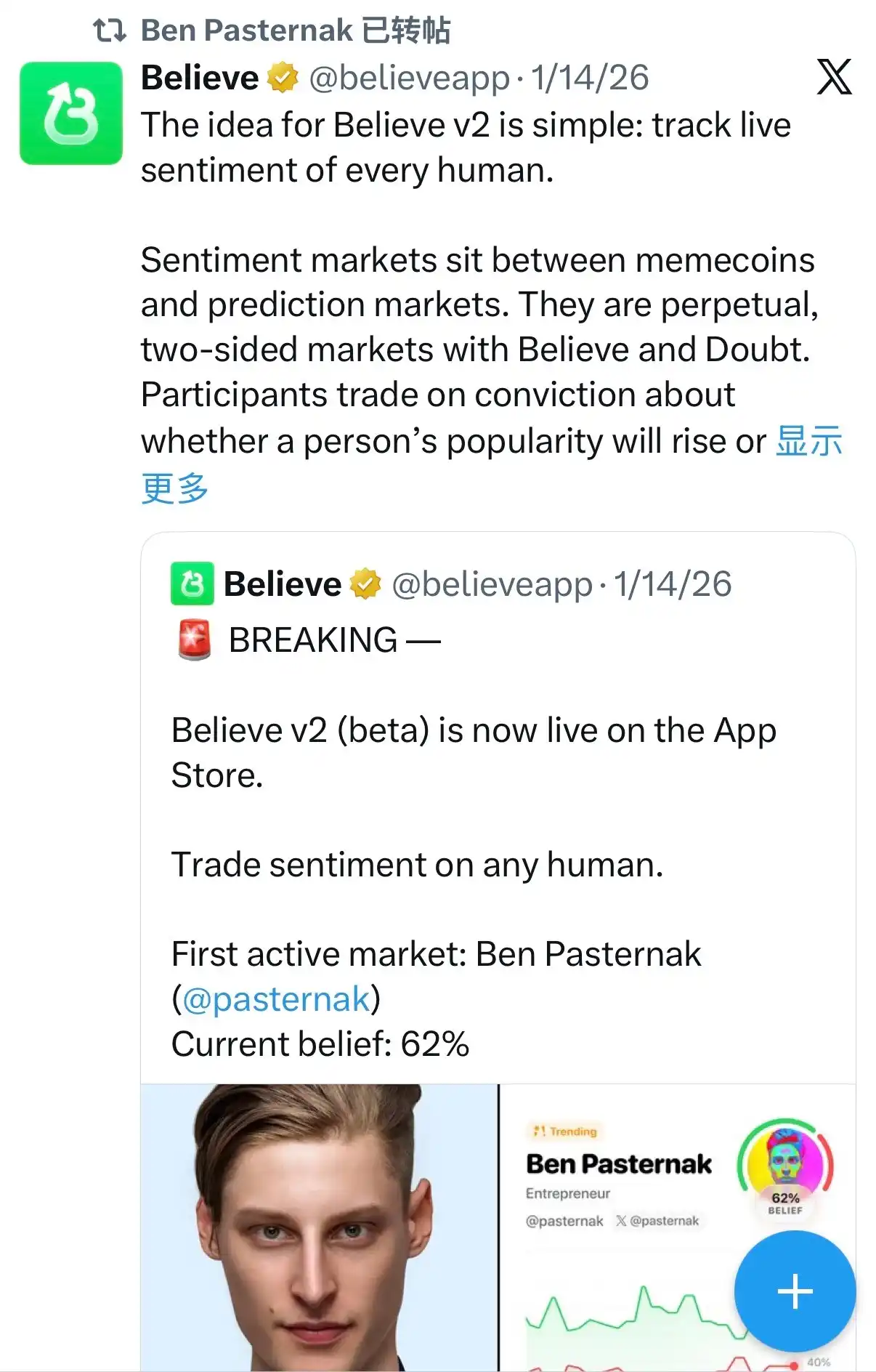
On January 14, 2026, he retweeted a post from the official Believe account, which read: "The idea behind Believe v2 is simple: track everyone's real-time sentiment."
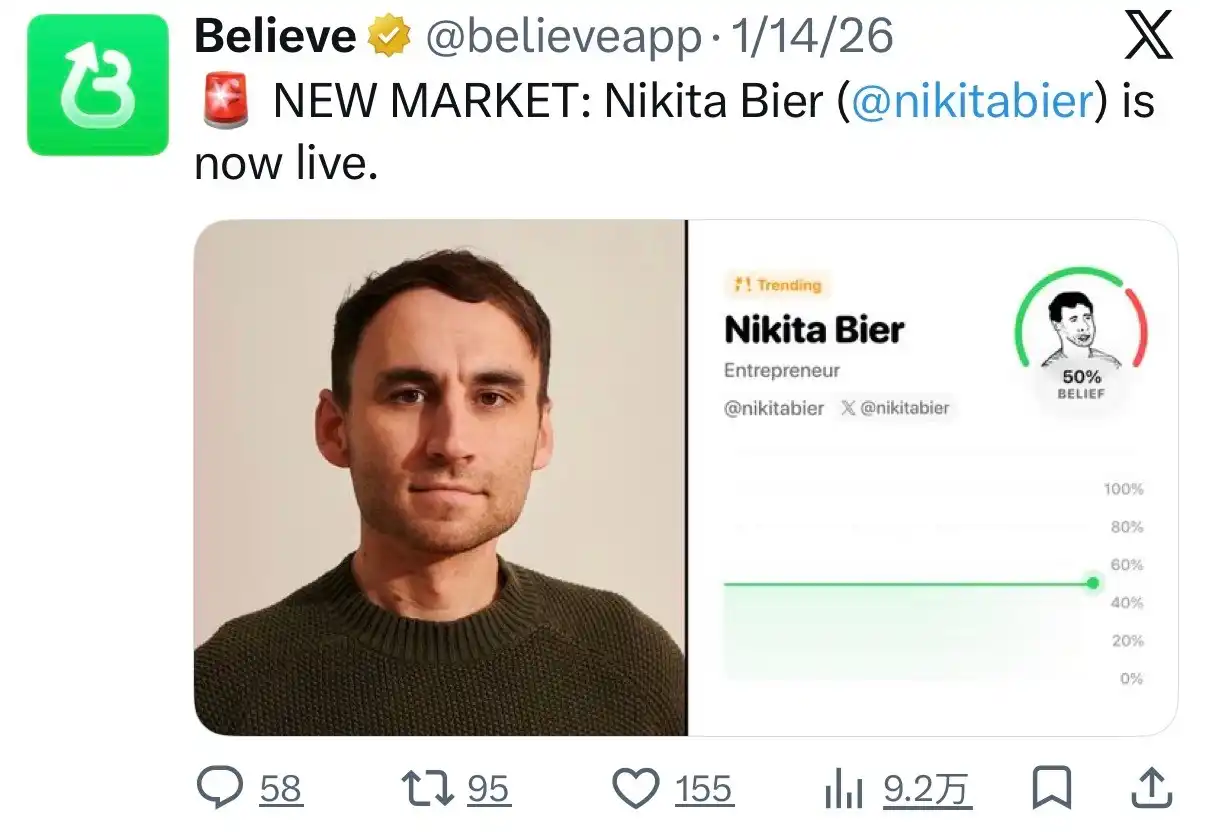
Updates from the official Believe account also stopped on that day, with its last tweet announcing: "New market listing: Nikita Bier (@nikitabier) is now open for trading." Thereafter, both Pasternak's personal and the project's official social media fell completely silent.

Believe v2, launched in January 2026, attempted to pivot to a "sentiment market," allowing users to bet on the real-time popularity of public figures through a perpetual bilateral market, but failed to regain market attention. As of the filing date, the BELIEVE token's market cap was approximately $1.2 million, having evaporated from its historical high.

This lawsuit invokes New York General Business Law Sections 349 and 350, California's Unfair Competition Law and False Advertising Law, alongside common law claims such as negligent misrepresentation and unjust enrichment. The plaintiffs request the court to order the defendants to compensate for actual losses, return platform and creator fees, and, where necessary, impose constructive trusts and injunctive relief on traceable digital assets.

Documents show Pasternak resides in Manhattan, New York, and his controlled entity B24, Inc. is also registered in New York, with platform operations and development pointing to this jurisdiction. As of the time of writing, he has not publicly responded to the lawsuit nor disclosed the specific amount of profit he gained from the Believe project.

A Legendary Teenage Era

Prior to this legal storm, Pasternak's life resume was legendary. Born on September 6, 1999, in Sydney, Australia, into a Jewish family, he grew up in the Vaucluse suburb. He taught himself programming at age 13. In 2014, at 14 years old, he collaborated with an engineer from Chicago during a school science class and completed the iOS game "Impossible Rush" in a few hours, which garnered millions of downloads and briefly reached No. 16 on the US App Store overall chart. Media quickly picked up the story, dubbing him "the next Zuckerberg."

In January 2015, the 15-year-old Pasternak rejected internship offers from Facebook and Google, dropped out of high school, and flew alone to New York to seek venture capital. In April of the same year, he founded Flogg, a social shopping app for teenagers, raising about $2 million from firms like Binary Capital and Greylock Partners.

Flogg's performance fell short of expectations and it shut down by the end of 2016. He promptly redirected resources to a new project, Monkey, a video chat app for teenagers.

Monkey accumulated over 20 million users and was acquired by the Chinese company Holla in 2018, becoming his first successfully sold startup from his teenage years.

Starting in 2018, Pasternak shifted to the food tech sector, co-founding Simulate and launching the plant-based chicken nugget NUGGS. The project attracted support from notable investors like Alexis Ohanian, Jay-Z, and McCain Foods, raising over $50 million in 2021, with the company's valuation once exceeding $250 million. That same year, he was named to the Forbes "30 Under 30" list.

From mobile apps to food tech, and then to Web3, Pasternak's every pivot landed on trending sectors, accompanied by significant controversy and risk. And as he finds himself deep in legal troubles, his personal life has also taken a dramatic turn.

Since the second half of 2024, Pasternak was publicly dating TikTok influencer Evelyn Ha. Evelyn is from the influential Korean-American Ha family of three sisters, and Pasternak frequently shared their luxurious interactions on social platforms.

However, in early April 2026, netizens noticed that the Ha sisters had simultaneously unfollowed him on Instagram, and Evelyn was later revealed to be in a close relationship with a Twitch streamer. The outside world widely interpreted this series of actions as signals of the relationship's end, with some in the crypto community joking that "the Hermès budget can finally be reinvested into the flywheel."

From the teenager writing apps in a Sydney high school classroom to the entrepreneur standing as a defendant in a New York federal court, Ben Pasternak's 26th year has brought both legal and emotional storms. He was once the media's "next Zuckerberg," but now his name is more often associated with "fraud," "collapse," and "unfollow."

Pertanyaan Terkait

QWhat are the main allegations against Ben Pasternak and his entities in the federal lawsuit?

AThe lawsuit alleges that Ben Pasternak, B24, Inc., and Believe Foundation engaged in deceptive business practices and false advertising through three consecutive token offerings and a forced migration, causing consumers to suffer hundreds of millions of dollars in losses.

QWhat was the core mechanism and initial promise of the Believe (formerly Clout.me) platform?

ABelieve was a Solana-based social token launch platform where users could create tokens by posting a specific tweet. It used a bonding curve mechanism and promised an automatic 'flywheel' buyback mechanism, using platform fee revenue to purchase tokens on the open market to support their price.

QWhat controversial action did the Believe team take with the LAUNCHCOIN token in October 2025?

AThe Believe team announced a forced migration from the LAUNCHCOIN token to a new token called BELIEVE. The total supply was inflated by approximately 33.3%, diluting original holders, and the new tokens were allocated to team members, investors, and a foundation, contrary to Pasternak's earlier public statements.

QWhat was the significant contradiction between Pasternak's public statements and the token migration plan?

APasternak publicly stated that 'no individual or entity would receive tokens for at least a year' on the day the migration was announced. However, the foundation's allocation of approximately 40 million BELIEVE tokens was immediately unlocked and usable, directly contradicting his claim.

QWhat was Ben Pasternak's background and public persona before the Believe controversy?

ABefore the Believe controversy, Ben Pasternak was celebrated as a teenage prodigy who created popular apps, sold a company, and founded a successful food-tech startup, NUGGS. He was featured on the Forbes '30 Under 30' list and was often referred to as 'the next Zuckerberg' by the media.

Bacaan Terkait

Banking Africa: Cantor8 Bergerak Lebih Dalam ke Sektor Uang Seluler Afrika melalui Yiksi Limited

**Cantor8 Perluas Kehadiran di Sektor Uang Seluler Afrika melalui Yiksi Limited** Cantor8, penyedia infrastruktur terkemuka untuk Jaringan Canton, telah mengumumkan kemitraan eksklusif dengan Yiksi Limited untuk membawa sistem uang seluler utama Afrika seperti M-PESA (Kenya) dan EVC Plus (Somalia) ke dalam blockchain. Ini merupakan bagian dari inisiatif yang lebih luas untuk memperluas akses infrastruktur perbankan penting di seluruh Afrika. Kemitraan ini akan memanfaatkan infrastruktur Taran App, platform fintech Afrika, untuk mengintegrasikan kedua sistem pembayaran seluler yang sangat populer tersebut ke Jaringan Canton. Langkah ini berfungsi sebagai pilot penting untuk peluncuran yang lebih luas di berbagai negara dan ekosistem uang seluler Afrika lainnya. Latar belakang inisiatif ini adalah terbatasnya infrastruktur perbankan tradisional di wilayah seperti Kenya dan Somalia, di mana penetrasi perbankan formal rendah (misalnya 15% di Somalia). Sebaliknya, adopsi uang seluler sangat tinggi (lebih dari 85% orang dewasa di Kenya, 87% populasi di Somalia). Faktor pendorongnya termasuk akses terbatas ke bank, mata uang lokal yang tidak stabil, dan populasi yang sangat mahir dengan ponsel. Dengan bermigrasi ke blockchain Jaringan Canton, sistem uang seluler ini bertujuan mendapatkan manfaat seperti penyelesaian instan (settlement), privasi yang mematuhi regulasi, dan interoperabilitas yang lebih baik antar jaringan dan perbatasan. Tujuan akhir Cantor8 adalah menciptakan sistem pembayaran pan-Afrika yang mulus, menghubungkan ekonomi, dan meningkatkan efisiensi dengan memanfaatkan stabilitas Dolar AS dalam sistem digital.

TheNewsCrypto18m yang lalu

Banking Africa: Cantor8 Bergerak Lebih Dalam ke Sektor Uang Seluler Afrika melalui Yiksi Limited

TheNewsCrypto18m yang lalu

Larangan Hasil Stablecoin Muncul sebagai Titik Puncak dalam RUU Kripto Baru AS

Rancangan undang-undang struktur pasar crypto AS yang baru mengusulkan pelarangan pembayaran yield atau bunga pada stablecoin pembayaran, yang dengan cepat menjadi titik perdebatan utama antara bank dan industri aset digital. Asosiasi perbankan mendukung pembatasan ini, mengkhawatirkan stablecoin yang menghasilkan yield dapat menarik simpanan dari bank tradisional dan berfungsi seperti rekening tabungan berbasis blockchain. Di sisi lain, eksekutif crypto berargumen bahwa industri telah banyak berkompromi dan larangan ini menghilangkan salah satu keunggulan utama stablecoin bagi pengguna ritel. Meski membatasi yield pasif, rancangan undang-undang ini juga mencakup ketentuan yang dianggap menguntungkan bagi industri crypto, seperti membuat kategori hukum untuk token jaringan dan komoditas digital, menyediakan jalur pendaftaran yang lebih jelas untuk perusahaan crypto, serta melindungi penyimpanan mandiri melalui dompet yang di-host sendiri. Bagi pengguna ritel, hasilnya beragam. Mereka mungkin mendapatkan kejelasan status hukum, persyaratan cadangan dan pengungkapan yang lebih kuat, serta akses yang lebih luas ke layanan crypto yang diatur. Namun, mereka mungkin kehilangan peluang yield pasif sederhana yang sebelumnya ditawarkan stablecoin di luar sistem perbankan. Perdebatan intinya adalah apakah stablecoin harus menjadi produk keuangan terbuka berbasis blockchain atau tetap menjadi alat pembayaran digital yang dibatasi ketat.

ambcrypto1j yang lalu

Larangan Hasil Stablecoin Muncul sebagai Titik Puncak dalam RUU Kripto Baru AS

ambcrypto1j yang lalu

Top 3 Koin Meme yang Perlu Diperhatikan Sekarang, Dengan Satu Token Baru Memimpin Narasi Pertumbuhan 15.000%

Popularitas meme coin perlahan kembali karena peningkatan likuiditas dan investasi dari trader ritel. Dalam siklus pasar bull, koin ini sering unggul berkat komunitas, meme, dan momentum. Berikut tiga meme coin yang patut diperhatikan: **Pepe ($PEPE):** Memanfaatkan meme internet populer, Pepe tetap relevan melalui aktivitas media sosial dan keterlibatan komunitasnya. Meski periode pertumbuhan cepatnya mungkin telah lewat, aset ini masih dianggap sebagai pilihan yang layak. **Bonk ($BONK):** Berkembang dalam ekosistem Solana, Bonk mendapat manfaat dari jaringan yang cepat berkembang. Integrasi dan distribusi berbasis komunitas membuatnya relevan selama reli yang digerakkan oleh meme. **Little Pepe ($LILPEPE):** Token baru ini menawarkan potensi upside signifikan, dengan target pertumbuhan 15.000% karena masih dalam tahap awal. Berhasil mengumpulkan lebih dari $28 juta dalam presale. Dilengkapi blockchain Layer 2 sendiri yang mendukung Ethereum, menawarkan transaksi cepat, bebas pajak, perlindungan bot, staking, meme launchpad, dan tata kelola DAO. Proyek ini juga memberikan hadiah token senilai $777.000 kepada para pemenang selama presale. Minat investor kini bergeser ke token dengan momentum dan utility tinggi. Pepe dan Bonk tetap solid, tetapi Little Pepe dipandang lebih siap untuk pertumbuhan berkat permintaan dan fitur yang meningkat. Token baru dengan daya tarik kuat semakin sulit diabaikan oleh investor yang ingin mengejar peluang besar.

TheNewsCrypto3j yang lalu

Top 3 Koin Meme yang Perlu Diperhatikan Sekarang, Dengan Satu Token Baru Memimpin Narasi Pertumbuhan 15.000%

TheNewsCrypto3j yang lalu

Casper Network Menerbitkan Casper Manifest, Peta Jalan Multi-Tahun untuk Memberdayakan Aset Ril Beraturan dan Ekonomi Mesin

**Jaringan Casper Menerbitkan "Casper Manifest", Peta Jalan Multitahun untuk Mendukung Aset Riil Teregulasi dan Ekonomi Mesin** Asosiasi Casper meluncurkan Casper Manifest, sebuah peta jalan teknis multitahun yang dirancang untuk menjadikan Casper Network sebagai lapisan infrastruktur bagi tokenisasi aset dunia nyata teregulasi dan ekonomi mesin-ke-mesin yang berkembang. Manifesto ini memperkenalkan sembilan inisiatif protokol inti yang berfokus pada: 1. **Akses untuk Semua Pengembang:** Menambahkan kompatibilitas penuh Ethereum Virtual Machine (EVM) di samping mesin WebAssembly yang ada, memungkinkan pengembang membawa kontrak, alat, dan dompet mereka ke Casper tanpa modifikasi. 2. **Pengalaman Pengguna Tanpa Gesekan:** Mengimplementasikan transaksi tanpa biaya gas (gasless), operasi batch, dan akun pintar yang memungkinkan autentikasi biometrik, membuat penggunaan aplikasi blockchain terasa seperti aplikasi biasa. 3. **Kepatuhan dan Privasi Terpadu:** Menjadi Layer 1 pertama di mana kepatuhan regulasi dan privasi transaksi dirancang bekerja bersama. Mendukung token keamanan yang mematuhi standar ERC-3643 dan roadmap privasi bertahap untuk transaksi rahasia dengan biaya tetap. 4. **Infrastruktur Asli untuk Ekonomi Mesin:** Menerapkan standar pembayaran terbuka X402 untuk memungkinkan agen AI dan mesin membayar satu sama lain secara otomatis dalam stablecoin, didukung oleh akun pintar dan infrastruktur tanpa biaya gas. 5. **Token sebagai Entitas Utama:** Registry Token Asli Casper memberikan status level protokol untuk semua token dengan biaya operasi tetap dan dapat diprediksi, sama seperti transfer asli. 6. **Keamanan Kuantum:** Memperkenalkan akun hibrida dengan kunci tahan kuantum, menjadikan Casper platform kontrak pintar utama pertama yang mengirimkan tanda tangan transaksi pasca-kuantum. Peta jalan ini akan dijalankan secara bertahap hingga 2027, dimulai dengan dukungan pembayaran mikro X402 dalam beberapa minggu ke depan, diikuti oleh kompatibilitas EVM, token keamanan patuh, dan fitur-fitur lainnya di sepanjang tahun 2026. Tujuannya adalah membangun infrastruktur yang dapat diandalkan untuk menghadirkan miliar pengguna berikutnya, triliunan dolar aset tertokenisasi, dan miliaran mesin otonom ke dalam blockchain.

TheNewsCrypto4j yang lalu

Casper Network Menerbitkan Casper Manifest, Peta Jalan Multi-Tahun untuk Memberdayakan Aset Ril Beraturan dan Ekonomi Mesin

TheNewsCrypto4j yang lalu

Trading

Spot
Futures
活动图片




