Original | Odaily Planet Daily(@OdailyChina)
Author | Wenser(@wenser 2010 )
Recently, a scam involving tens of millions of RMB has exploded within the cryptocurrency industry.
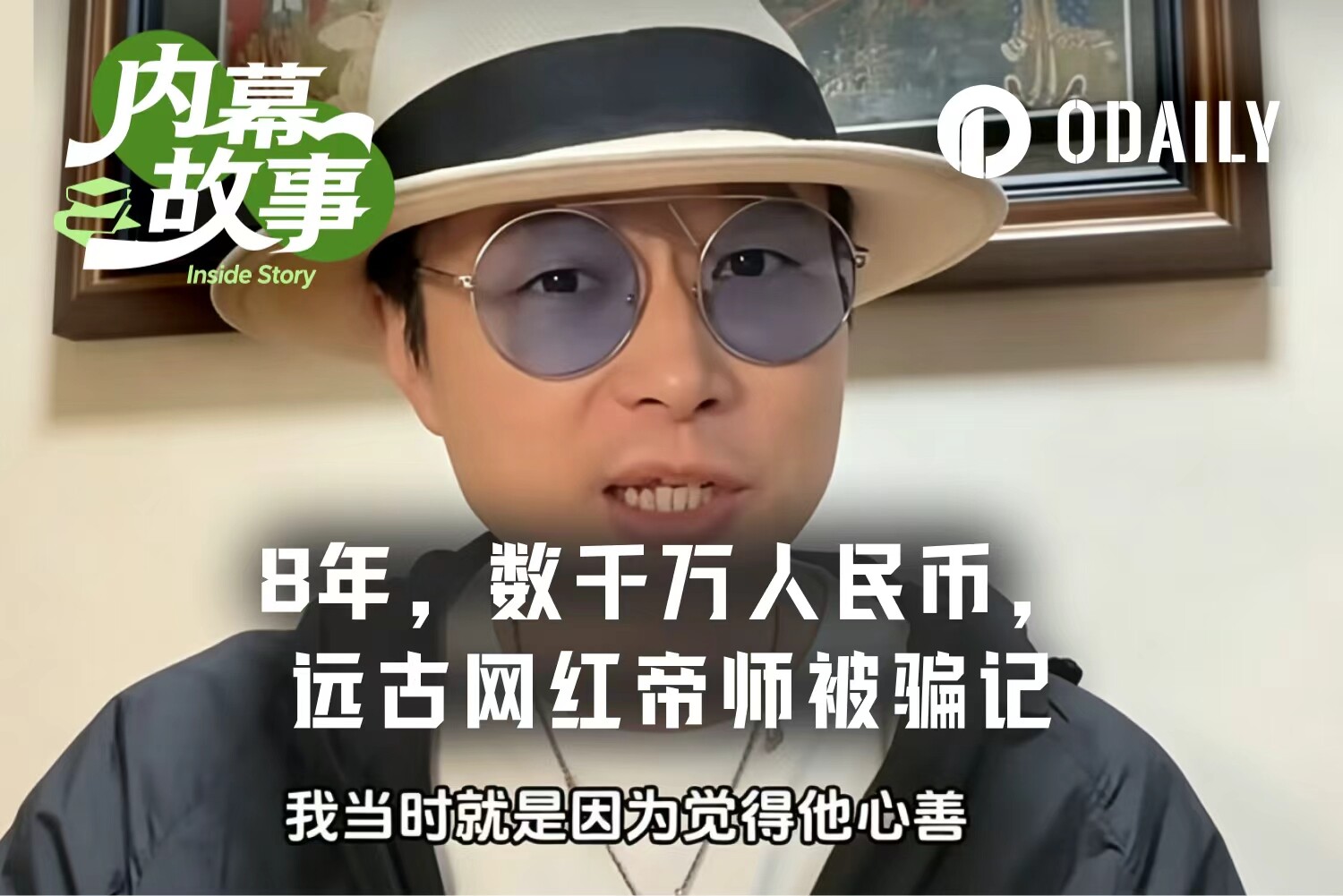
The once top-earning outdoor live-streaming "king" — Di Shi — revealed during a live stream that he had been set up by a crypto "bro" he had known for eight years, cumulatively defrauded of tens of millions of yuan (Odaily Planet Daily Note: one source claims 30 million yuan).
This "crypto good brother" is none other than Sun Zeyu, the founder of Genesis Capital, who entered the crypto industry as early as 2013 and is regarded as a "big shot" by many.
Beyond the identities of both parties and the amount involved, what is even more shocking is the method of the scam. Di Shi personally disclosed that, upon investigation by national-level white hat personnel, it was discovered that some of the "Ethereum" he had entrusted Sun Zeyu to purchase was not real ETH at all. Instead, it was token assets on a forked chain specifically built by Sun Zeyu for him.
On this fake chain, there were only 7 addresses in total, 6 of which were addresses arranged by Sun Zeyu; the remaining 1 belonged to Di Shi's wallet address. Sound familiar? It's like "only one person in the WeChat group is being scammed, the rest are all actors," but in a crypto version.
Throughout this long friendship, Sun Zeyu had helped Di Shi "withdraw" several million yuan to verify the authenticity of the assets. It was these few successful withdrawals that made Di Shi trust all of Sun Zeyu's arrangements implicitly. Later, Di Shi even introduced friends to purchase cryptocurrency from Sun Zeyu, acting as a guarantor himself. This deal ultimately fell through for other reasons, otherwise, his friend's money of at least 10 million yuan would also have been counted as lost on his head had it been stolen.
Di Shi admitted in his online live stream that if he hadn't discovered it in time, as cryptocurrency prices continued to rise, the final loss could have reached hundreds of millions of yuan.
The Revolving Door of Fame and Fortune in the Attention Economy
Looking back at this "crypto scam" that lasted 8 years and involved tens of millions of RMB, one side is a former early-fame "outdoor live-streaming king," deeply versed in the playbook of the attention economy and having leveraged it early to gain substantial wealth. The other side is a former "crypto big shot" frequently seen in media reports, who entered the cryptocurrency industry in 2013, establishing brands like CoolBitX wallet and Genesis Capital, and could be considered quite successful in his time.
On the stage of fame and fortune in the attention world, both were undoubtedly successful individuals, but were also backlashed by their success: the former saw his career suffer a major blow due to tax evasion, disappearing from public view for a time; the latter ultimately fled abroad due to "token sale scandals," fraud, and liquidation events.
Ancient Internet Celebrity Di Shi: From "Outdoor Live-Streaming King" to Fined Over 10 Million RMB for Tax Evasion
Di Shi, real name Sun Zihuan, was born in Beijing in 1984. During the golden age of the live-streaming industry's wild early days, he was an undisputed top streamer. According to his own accounts, he has even seen a dragon, earning him the nickname "the man who has seen a dragon" among netizens.
In 2016, Di Shi began his live-streaming career on Quanmin TV; in 2018, at the peak of the live-streaming boom, he switched to Penguin Esports, quickly becoming the platform's "No. 1 outdoor streamer." His streaming style was flamboyant and bold, covering outdoor adventures, food reviews, celebrity interviews, mixed with insider revelations, gossip, and historical knowledge. He once live-streamed having dinner with Song Dandan and her son, attended the Huayi Night celebrity dinner, and visited esports team bases. At his peak, his account had millions of followers.
This prosperity lasted three or four years until 2022, when Di Shi faced a major turning point in his life:
On June 9 that year, the Second Inspection Bureau of the Beijing Municipal Tax Service, State Taxation Administration, announced: Online streamer Sun Zihuan (screen name Di Shi) was suspected of tax evasion. Upon investigation, during the period from 2019 to 2020, he failed to legally declare and pay 1.9786 million RMB in individual income tax, evaded 2.2012 million RMB in individual income tax by using intermediary companies to conceal live-streaming tip income, and underpaid 347,600 RMB in other taxes and fees. Ultimately, taxes were recovered, late fees and penalties were imposed, totaling 11.7145 million RMB.
This "tax evasion scandal" severely damaged his live-streaming career, and he vanished from public view for a time.
"Crypto Big Shot" Sun Zeyu: The Double Life from "Honest Post-90s" to Serial Crypto Fraudster
As a post-90s individual like Sun Yuchen, Sun Zeyu ventured into the blockchain industry as early as 2013, among the earliest batch of cryptocurrency practitioners in China. In 2016, he participated as a co-founder in establishing CoolBitX wallet — a hardware wallet product focusing on secure storage of crypto assets. In December 2017, he co-founded Genesis Capital with Zhu Huaiyang, focusing on venture capital and investment banking services in the blockchain industry.
In public information, Sun Zeyu could be considered a young, accomplished "crypto elite" or "crypto big shot," active in media reports with a series of glamorous titles like "CCTV特邀评论员" (CCTV Special Commentator), "北京大学金融科技创新实验室区块链顾问委员" (Blockchain Advisory Committee Member, Peking University Financial Technology Innovation Laboratory), and "创世资本创始合伙人" (Founding Partner, Genesis Capital). In an interview with The Guardian, he boldly predicted that "within ten years, Bitcoin will reach the price of one coin, one villa." In 2018, Jiemian News referred to him as "the most honest post-90s in the crypto circle" in a report, revealing he had accumulated "nine-figure assets" within 6 years. After founding Genesis Capital, Sun Zeyu also invested in multiple projects like DeepBrain Chain (DBC), IOS, AELF, JEX, and Game.com, gaining considerable prestige within the circle.
In 2018, when the two met, it was a period of shared "upward trajectory" in their lives — Di Shi was at the peak of the live-streaming industry, with substantial income and remarkable influence; Sun Zeyu was a sought-after investor in the crypto world, well-versed in crypto investments. One had money and wanted to invest, the other was willing to provide professional investment advice and management — a seemingly perfect cross-border investment collaboration began.
Deconstructing the Eight-Year Scam: How a Fake Chain Swallowed Tens of Millions
According to Di Shi's own revelation, the opportunity for him to meet Sun Zeyu arose after he was cheated out of nearly 10 million RMB by another friend of Sun Zeyu's. Sun Zeyu then proactively offered to help him "recoup the losses" through quantitative trading, ultimately gaining trust with a 4x return. Subsequently, Di Shi purchased Bitcoin multiple times through Sun Zeyu without incident. However, considering security issues with exchange storage, he eventually followed Sun's advice and transferred the corresponding assets into a CoolBitX wallet, which ironically gave Sun Zeyu the opportunity to swap the assets.

The scam details revealed by Di Shi in his live stream are a textbook case of a "token sale scam" in the crypto industry. The operational logic of the entire scam can be broken down into the following steps:
Step One: Build Trust, Test the Waters with Small Amounts
Sun Zeyu leveraged his public identity as founder of Genesis Capital and co-founder of CoolBitX wallet, along with titles like CCTV commentator and Peking University advisor, to quickly establish a "professional and credible" investor image. For an outsider like Di Shi, these accolades were the best credit endorsements.
Initially, Sun Zeyu helped Di Shi purchase mainstream cryptocurrencies like Bitcoin and Ethereum on his behalf, and everything seemed normal. When Di Shi needed money, Sun Zeyu could even help him "withdraw several million yuan" — these successful transaction records further solidified Di Shi's trust.
Step Two: Introduce the Fake Chain, Swap the Real for the Fake
This is the most core and egregious step of the entire scam.
Sun Zeyu did not actually use Di Shi's funds to purchase real Ethereum. Instead, he built a private forked chain, issued tokens on this chain that looked identical to Ethereum, but were actually "counterfeit assets with parentheses," and then gave them to Di Shi.
As Di Shi was not from a technical background and had limited understanding of cryptocurrency, he couldn't distinguish whether the "Ethereum" tokens in his wallet were genuine Ethereum mainnet assets or just digital symbols on a private chain. For him, being able to see the balance, receive "tokens," and even make large withdrawals — that was enough.
The truth about this fake chain was: the entire chain had only 7 addresses, 6 belonging to parties associated with Sun Zeyu, and 1 belonging to Di Shi. This means Di Shi's "real money" never existed in the real market from the start; it was just a virtual number on a carefully orchestrated blockchain ledger by Sun Zeyu.

Step Three: Expand Investments, Increase Capital Inflow
Beyond purchasing cryptocurrencies on his behalf, Sun Zeyu also recommended more investment opportunities to Di Shi, including a cryptocurrency exchange he operated in South Korea. Deeply trusting this "good brother," Di Shi continued to add investments.
Step Four: Maintain the Illusion, Delay Exposure
Sun Zeyu knew well that to sustain the scam, he had to continually give the victim "positive feedback." Fund withdrawals, occasional "profits," market updates, and even daily greetings and care during holidays — all these made Di Shi feel his crypto investments were steadily growing, with asset value even rising.
Eight years, tens of millions in funds, flowed into this carefully designed black hole. It wasn't until 2026 that Di Shi, after hearing about a series of fraud incidents involving Sun Zeyu, discovered the truth of the "fake chain, fake Ethereum, fake coins" through professional investigation.
Di Shi Isn't the Only Victim: Sun Zeyu's Token Sale Scams Keep Happening, Trapping Prey One After Another
Di Shi is not the only one harmed by Sun Zeyu's "token sales."
In February 2026, Wu Blockchain recorded a podcast (released in April) titled "Victim of Sun Zeyu's Token Sale: How Did a Crypto Big Shot Become a Scammer?". In the program, two interviewees recounted their financial disputes with Sun Zeyu.
The first victim is an early crypto industry practitioner named Qingtian (William Lu). In 2022, through an intermediary, he participated in a primary token sale for the TIA (Celestia) project, paying Sun Zeyu approximately $300,000. They had a written contract explicitly stating Sun Zeyu's name, ID number, payment address, and bearing his signature. However, after TIA officially launched, Qingtian did not receive the corresponding tokens, and Sun Zeyu completely disappeared.
The second victim is Lù Zǐ, founder of BitRing and a Web3 entrepreneur. In early 2021, his team transferred approximately $1.5 million to Sun Zeyu under the guise of "wealth management investment" (of which a partner had already invested $500,000, later adding another $1 million). Sun Zeyu promised an annualized return of over ten percent and verbally guaranteed the principal. Soon after, Sun Zeyu informed them the funds had been "completely lost due to liquidation," but never provided any trading records or liquidation evidence, nor returned any funds, subsequently disappearing.
According to the two victims' estimates, there are currently about 3 to 4 identifiable victims on social media, with single amounts ranging from hundreds of thousands to over a million dollars. Another crypto industry figure, codenamed "94," lost about $1 million, and there may be more victims who haven't come forward.
More alarmingly, victims revealed Sun Zeyu is no longer in China. Rumors suggest he is currently in Cambodia, controlled by some local园区势力 (park/compound forces). Regardless of the rumor's veracity, an indisputable fact is: cross-border pursuit and recovery in the cryptocurrency field is extremely difficult. The victims' path to justice is fraught with obstacles, and the real money invested is likely gone for good.
A Panorama of Crypto Industry Scams: Token Sales Are Just the Tip of the Iceberg, Fraud Methods Are Varied
The Di Shi incident is not an isolated case. In fact, "token sale scams" are just one of many risks in the crypto industry. Typical cases and methods include, but are not limited to:
- PlusToken Ponzi Scheme: In 2020, the Yancheng police in Jiangsu province cracked the massive PlusToken online pyramid scheme, involving 310,000 Bitcoins and 9.17 million Ethereum, with total asset value exceeding 40 billion RMB at the time.
- Token Sale Runners: From the 2017 ICO frenzy to the present, token sale runners disappearing with funds occur frequently. Various tactics include intermediaries pooling funds and vanishing, project parties colluding with intermediaries to rug pull, and using fake tokens to impersonate real ones — all kinds of methods are hard to guard against.
- Fake Wallets/Fake Exchanges: Phishing websites, malicious wallet apps, fake exchanges — every year, a large number of users lose huge assets due to these traps.
The common characteristic of these incidents/types is: Scammers exploit information asymmetry and trust relationships to transfer funds from outsiders and insiders, as well as mainstream coins, into their own pockets, exchanging their worthless air assets for others' real money.
The peculiarity of Di Shi's case lies in pushing the "trusted acquaintance scam" to its extreme. Simultaneously, a scam that boils the frog slowly is more隐蔽 (concealed) and harder to guard against than a one-time fund grab and run.
Four Pieces of Advice for Crypto Investment by Outsiders: Reject Custody, Learn to Verify, Understand Basics, Beware of High Returns
1. Never Let Others Custody Your Assets
"Not Your Keys, Not Your Coins." This is the most fundamental iron rule in the crypto industry. No matter how prestigious the other party's identity or how close the relationship, once you hand over your funds for someone else to purchase, invest, or hold on your behalf, you lose control over the assets. Di Shi's lesson is that he didn't even know if he held real coins — because the private keys weren't in his hands, and the chain wasn't within his认知范围 (scope of understanding).
2. Learn to Verify the Authenticity of Assets
If you hold cryptocurrency, you must learn to verify whether the assets are on a real public chain yourself. Ethereum has the Etherscan explorer, Bitcoin has the Blockchain.com explorer — enter your address to check all transaction records and asset balances. A "chain" with only 7 addresses simply wouldn't show up on a real public chain explorer.
3. Self-Study Before Investing
Cryptocurrency investment is a field with an extremely high technical barrier. Public chain principles, wallet security, smart contract risks, on-chain analysis — this knowledge isn't something you can master by reading a few blog posts. If you are an internet celebrity or an outsider looking to allocate crypto assets, you have two options: either hire a truly professional, qualified team with compliant custodial solutions to operate; or spend enough time self-studying, from basic principles to practical verification, thoroughly understanding every step. The most dangerous state is "knowing a little but not enough" — thinking you understand, but actually unable to distinguish between a fake chain and a real one, clicking on a phishing site from a search result and getting cleaned out.
4. Beware of "Friend Recommendations" and High-Return Promises
The entry point for almost all investment scams is a "friend's recommendation." A friend says there's an internal quota, a brother says there's principal-guaranteed wealth management, a fellow villager says there's a hundred-fold coin — the essence of these lines is to利用 (leverage) trust relationships to lower your guard. Additionally, any crypto investment promising principal protection, "fixed returns," or "guaranteed profits" deserves high suspicion. The crypto market itself is highly volatile; there is no such thing as risk-free high returns, including those seemingly tempting DeFi arbitrage opportunities.
In summary, whether you're an internet celebrity or an ordinary person, the only moat for survival in this high-risk field is professional knowledge and sufficient vigilance.
As of the time of writing, there has been no police case filing announcement or judicial ruling regarding the Di Shi爆料 (revelation) incident. The final定性 (determination) of "fraud" still needs to be based on judicial authorities. But regardless of the legal outcome, the lesson Di Shi paid for with tens of millions of RMB in real money is already enough to sound a warning bell for all who come after.