After Losing 97% of Its Market Value, iQiyi Attempts to Use AI to Forcefully Extend Its Lifespan

marsbitDipublikasikan tanggal 2026-04-23Terakhir diperbarui pada 2026-04-23

Abstrak

After losing 97% of its market value since its 2018 peak, iQiyi is aggressively pivoting to AI in a desperate attempt to survive. At its 2026 World Conference, CEO Gong Yu announced an "AI Artist Library" with over 100 virtual performers and a new AIGC platform, "NaDou Pro," promising faster production and lower costs. This shift comes as the company faces severe financial distress: its market cap sits near delisting thresholds at $1.36 billion, with significant losses, declining membership revenue, and depleted cash flow. The AI strategy has sparked controversy. Top actors have issued legal threats against unauthorized digital replicas, while in Hengdian, over 134,000 background actors are seeing their already scarce job opportunities vanish as AI replaces them for background roles. iQiyi's move represents a fundamental shift from being a high-cost content buyer to a landlord" to becoming a "platform capitalist" that transfers production risk to creators. This contrasts with competitors like Douyin (TikTok's Chinese counterpart), which is investing heavily in *real* actor-led short dramas, betting that authentic human connection retains users better than AI-generated content. The article draws a parallel to the 1920s transition to "talkies," which made cinema musicians obsolete but ultimately enriched the art form. In contrast, iQiyi's AI drive is framed not as an artistic evolution but as a cost-cutting measure that could degrade storytelling, replacing genuine human emo...

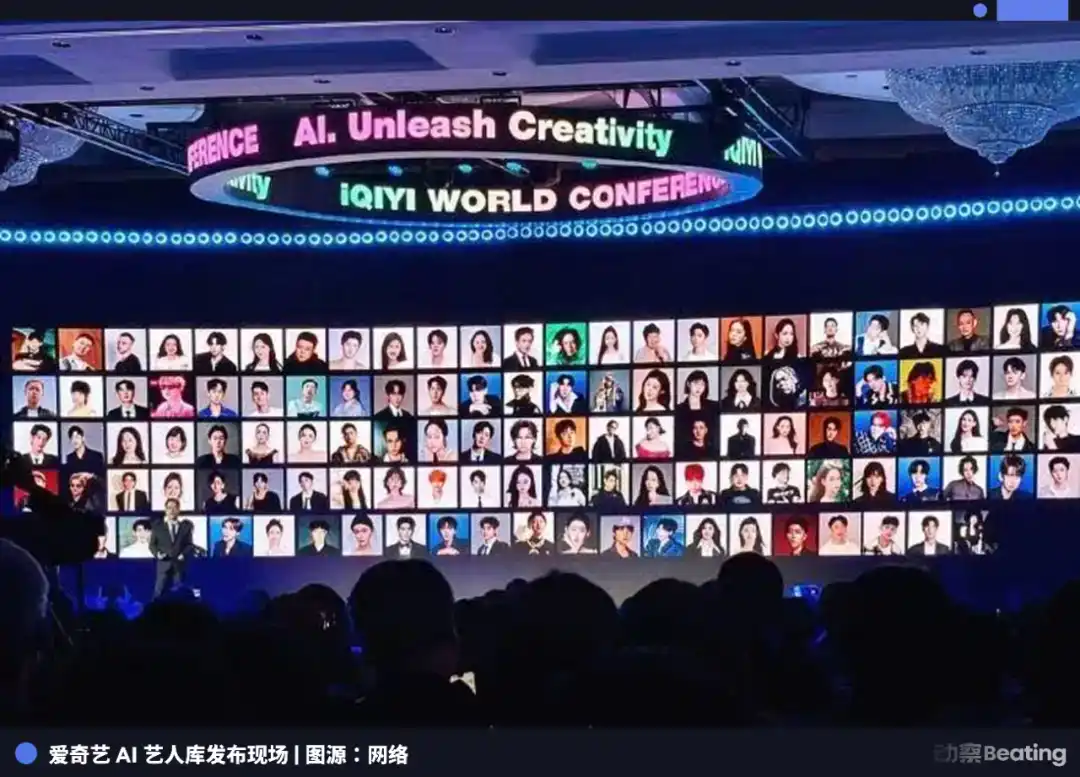
At the iQiyi World Conference in April 2026, Gong Yu stood on stage and said: "Live-action filming may become intangible cultural heritage."

The large screen on stage displayed the "AI Actor Library," with virtual humans inside tirelessly changing expressions and costumes. Gong Yu stated that iQiyi had signed over 100 AI actors, and that using AI would significantly shorten filming time, with post-production completing a large amount of work using digital doubles. He also announced the official commercial launch of "Nadou Pro," an AIGC film and television production platform for small and medium-sized creators, providing AI tools, new revenue-sharing rules, and "uncapped" profit promises.

The press conference was packaged as a technological狂欢, with music, lighting, and PPTs all配合 this narrative: the future has arrived, embrace it.

But outside this grand event, on another large screen, there was a number: $1.41.

This was iQiyi's closing price on the Nasdaq screen, with a market capitalization of only $1.361 billion, just one step away from the delisting threshold. At its IPO in 2018, iQiyi's stock price had once reached a high of $46, with a peak market cap exceeding $31.2 billion. From $31.2 billion to $1.361 billion, a drop of 97%, it took less than eight years.
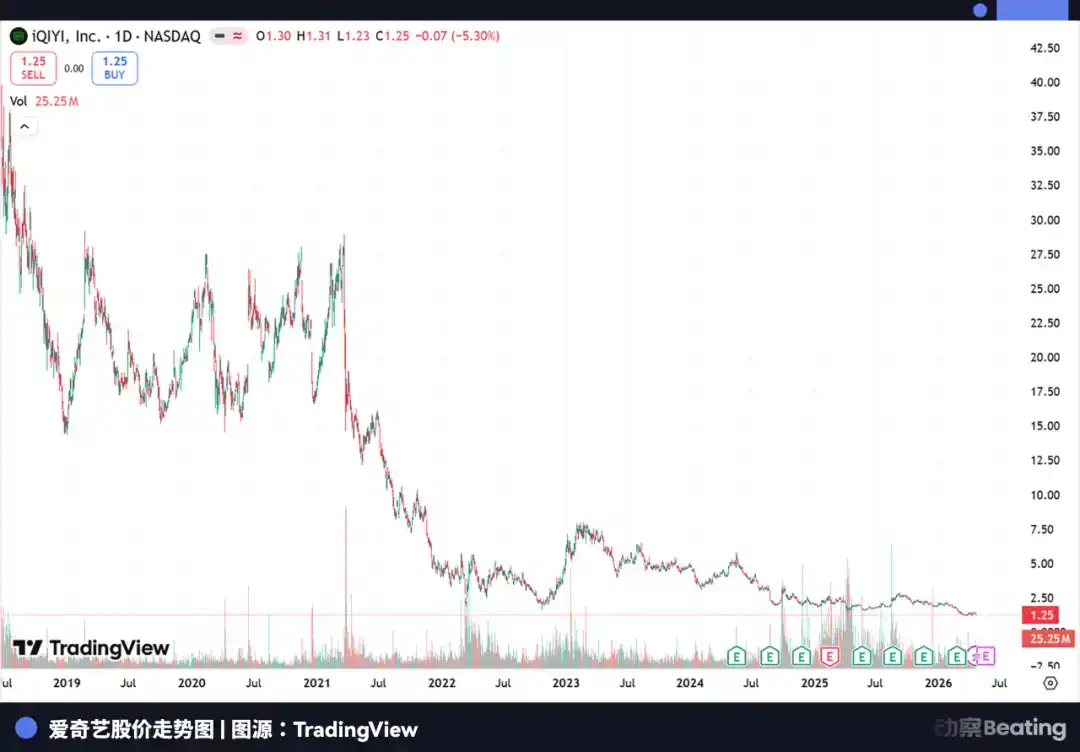
The outside world debates whether AI can act well, but the capital market only cares whether AI can tell a good story. Over the past decade, iQiyi has burned through hundreds of billions in funds but has never found a path to sustainable profitability.

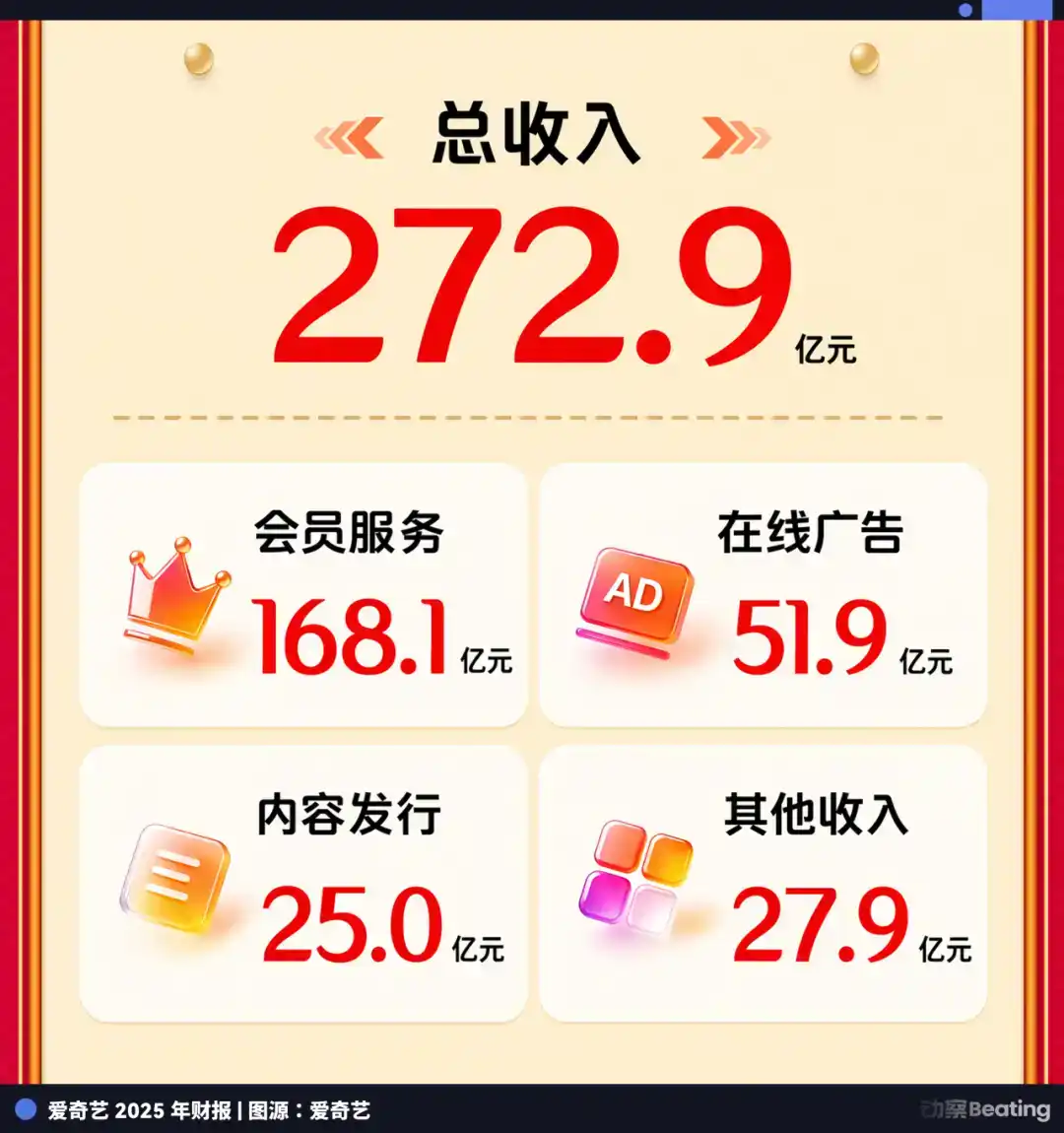
In 2025, this streaming giant's content costs still reached 15.45 billion yuan, accounting for 56% of its total annual revenue; the annual net loss was 206.3 million yuan, turning from profit to loss; operating profit was only 640 million yuan, a plunge of 73% compared to 2024's 2.36 billion yuan. And just two years earlier, in 2023, iQiyi's net profit was as high as 1.93 billion yuan, the peak of profitability since the company's founding.

From peak to loss, it took only two years.

More棘手的是, iQiyi's free cash flow had plummeted from over 3.3 billion yuan in 2023 to less than 10 million yuan, its self-造血 ability rapidly deteriorating.

The company issued convertible bonds twice in 2023 and 2025, totaling nearly $1 billion, with interest burdens持续加重. After its U.S. stock financing function basically failed, iQiyi secretly submitted a listing application to the Hong Kong Stock Exchange at the end of March 2026, and in April, it rolled out the big饼 of the AI Actor Library and "Nadou Pro."

A company seeking to "replenish blood" in Hong Kong needs a new narrative that can make investors' eyes light up. "Marginal cost趋零," "AI cost reduction and efficiency increase"—these词汇 in today's capital market context are more valuable than any hit drama.

This has nothing to do with art; it's only about preserving the shell.

But when a company no longer pleases capital with content quality but with "cost reduction," who will become the first batch of fuel under this cost-cutting machine?

Hengdian

The focus of public opinion on this AI storm was soon occupied by several lawyer's letters.

Zhang Ruoyun was the first to speak out, stating that he had never authorized any platform to generate an AI double and reserved the right to pursue legal action. Yu Hewei, Chen Xiao, Wang Churan, and others followed suit,纷纷辟谣. Yi Yangqianxi's studio issued a statement pointing out that several AI short dramas had unauthorized use of his likeness and voice, with the involved short dramas reaching nearly 75 million in热度. Tan Jianci, Gong Jun, Yang Zi, and other actors also接连发声维权.

For a time, the "AI Actor Library" became a hot potato, forcing iQiyi to explain that the AI actors in the library were "authorized AI actors," not digital copies of real stars, and that "actors joining the Nadou Pro Actor Library only represents their intention to engage with AI film and television projects." Gong Yu also responded publicly multiple times, emphasizing that the platform respects actors' rights and that AI is a tool, not a replacement.
Big stars' statements can make it to热搜, but in places the camera doesn't see, there are also the 134,000 background actors in Hengdian.

In recent years, with the explosion of the short drama market, the demand for background actors in Hengdian had once rebounded. Short drama crews are numerous, cycles are short, and the pace is fast, requiring a large number of background actors. In long dramas, background actors are just set pieces, without lines or names; in short dramas, they have the opportunity to show their faces, say a few lines, even play major roles. A regular background actor's daily salary is between 150 and 300 yuan; if they work hard, they can earn four or five thousand a month. Not much, but enough to live on.

After AI arrived, this "enough to live on" began to动摇.

In the first quarter of 2026, over 85% of short drama crews in Hengdian had fully switched to using AI actors for supporting roles and background actors. The employment rate for专职 actors in live-action short dramas plummeted from 82% in 2025 to 29%. Some crews no longer recruit background actors, only needing to film the leads in front of a green screen, leaving the rest of the background crowd to be generated by algorithms with one click. AI-generated background actors don't need to eat, don't need rest, are never late, never ask for raises, and never complain.

There are about 134,000 registered background actors in Hengdian, with only about 800 effective positions available daily, making the competition more fierce than the civil service exam. Some actors used to maintain a pace of filming over 20 days a month, shooting上百部 short dramas, but for over a month after the Spring Festival, they didn't get a single day of work. After this year's Spring Festival, the production volume of live-action short dramas was directly halved by 50%.

Big stars defend their肖像权 on热搜, while small background actors disappear under the wash of AI. Top stars have agencies, lawyers, and Weibo热搜; their维权 can become news, can create舆论 pressure, can force platforms to让步. But background actors have nothing. Their disappearance won't make news; it will only become the increasingly short waiting lines outside some Hengdian crew gates.

The paeans of technological revolution are always composed with the sighs of底层劳动者. But in this cost-cutting game, what role does the platform itself play? Is it truly promoting a technological revolution, or is it using a pretty name to甩出去 its heaviest包袱?

From "Landlord" to "Pump"

At the conference, iQiyi announced its transformation into a "decentralized social media" platform, launching "Nadou Pro" and modifying its revenue-sharing rules.

"Nadou Pro" is positioned as a content platform for small and medium-sized creators, providing AI creation tools, supporting user-made short dramas, and allowing them to earn revenue through sharing. Gong Yu said this is "returning the power of content creation to the masses," a "decentralized" content revolution. The new revenue-sharing rules promise creators "uncapped" shared revenue, with additional subsidy incentives for AIGC content and medium-length drama content.

It sounds like empowering creators, handing the stage to the masses. But it's only "sounds like."

Long-form video platforms used to be "landlords" who spent money buying shows. At its peak, iQiyi spent over 20 billion yuan a year on content procurement and production, with a single S-level drama often costing hundreds of millions in investment, and the平台自负盈亏. The logic of this model was: I spend money, I buy content, I attract user subscriptions, I earn membership fees. In 2023, iQiyi's membership service revenue reached 20.3 billion yuan, with membership numbers突破 120 million, its peak moment.

But this logic has a fatal flaw: it assumes the platform can持续判断 what good content is, and that good content can持续 bring enough subscribing users.

iQiyi spent money for ten years, lost money for ten years. Membership numbers fell all the way from the peak of 120 million; in 2025, membership service revenue dropped to 16.81 billion yuan, a year-on-year decrease of about 5%. More troublesome was that one of iQiyi's cost-cutting methods was vigorously promoting a movie revenue-sharing model, where the platform no longer prepays licensing fees but shares revenue with partners based on actual播放量. This确实 reduced upfront cash支出, but the side effect was that the studios willing to accept revenue sharing were mostly mid-to-low-tier content. Truly popular IPs that could drive membership payments, copyright holders still preferred high-price buyouts. The result was that iQiyi's content library became filled with mid-to-low-tier works that "prioritized quantity over quality." Hit titles were missing, users noticed, and the platform's stickiness and willingness to pay也随之下降.
This model has reached its end.

Now, iQiyi doesn't want to lose money anymore; it wants to make稳赚不赔. The platform hands AI tools to countless retail creators, letting them卷、试错. Whoever becomes popular, the platform takes the lion's share; whoever flops, the platform remains unaffected. Just like Uber doesn't employ drivers and Airbnb doesn't buy properties, iQiyi no longer wants to buy shows.

This logic has a more academic name in the internet industry: "platform capitalism." The platform provides infrastructure, attracts a large number of suppliers to join, then through algorithm distribution and抽成 mechanisms, transfers risk to the suppliers and keeps the profits for itself. YouTube and TikTok are both successful cases of this logic. But the success of these two platforms is based on the premise that they are themselves traffic entrances and have huge user bases.

Can iQiyi replicate this logic? This is a questionable issue. iQiyi's monthly active user scale is not on the same level as TikTok's; its content consumption scenario is "sitting down to watch a show," not "scrolling." Transforming a paid subscription platform into a UGC content platform—why would users stay?

But what's more worth questioning is, when a long-form video platform starts lowering itself to become a "pump," transferring all the risks of content production to retail creators, what does this mean for the entire content industry? And what are those short-form video platforms that originally rose依靠短平快 doing?

Two Routes

Just as iQiyi bet on AI, Douyin invested 500 million yuan to support "live-action short dramas."

On April 15, 2026, at the 13th China Network Audiovisual Conference, Douyin Group released its latest live-action short drama support plan. The platform will invest 500 million yuan in special funds to持续扶持 live-action short drama content innovation and现实题材深耕. Hongguo Short Drama's总编辑乐力 clearly stated at the press conference that live-action short dramas have obvious advantages in user retention, completion rate, and long-term payment willingness.

Douyin's 500 million yuan support plan specifically targets "short dramas performed by real people," explicitly excluding AI-generated content. Douyin's logic is that AI-generated content on the platform has already泛滥, users are beginning to experience aesthetic fatigue, and real faces, real emotional expressions, and real body language have instead become scarce commodities. Live-action short dramas contribute the vast majority of the platform's播放量,收藏量, interaction volume, and payment conversion. AI anime dramas significantly lag behind live-action content in user retention and completion rates.

After short-form video platforms reached traffic peaks, the core problem they faced was user retention and payment conversion. Low-quality AI content can fill timelines but cannot build user stickiness, let alone drive payments. Real emotional resonance can achieve this. Thus, Douyin began spending big money to buy "human touch."

Meanwhile, the platform that should have represented high-quality, in-depth content—the long-form video platform—jumped into the cheapest industrial assembly line due to financial despair.

This dislocation is a rational choice under two different financial conditions. Douyin, backed by ByteDance, has sufficient cash flow and can make long-term investments in content quality; iQiyi's on-hand cash is no longer enough to support the long-term gambling of high-cost content—it must find a path of "low cost, high output."

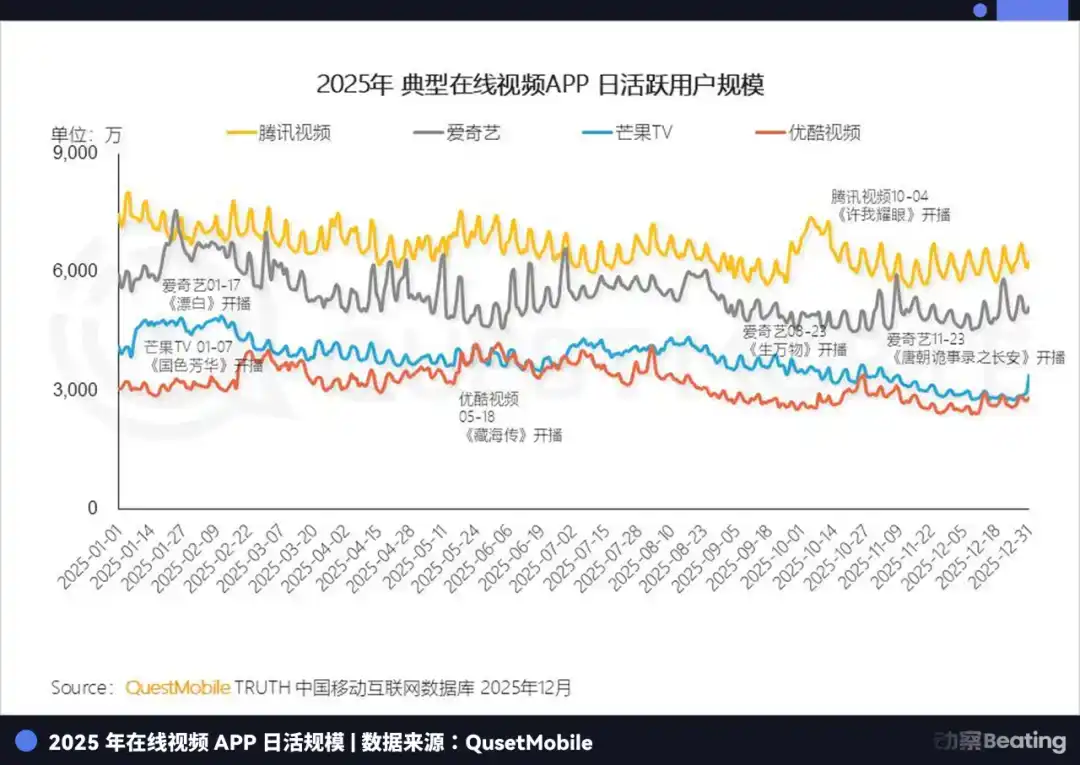
In comparison, Tencent Video is backed by Tencent Holdings. In the first three quarters of 2025, the parent company's revenue was 557.3 billion yuan, a year-on-year increase of 14%. Tencent Video maintains its lead in the long-form video market with over 340 million月活 and 114 million members. Mango TV, relying on Hunan Broadcasting System's content supply chain and low-cost self-production capability, remains stably profitable. iQiyi has neither Tencent's social ecosystem for blood transfusion nor Mango's cost advantage; its situation is the most difficult among the three major long-form video platforms.
But the path of "low cost, high output" has never been a good path in the content industry.

Data shows that the proportion of AI仿真人 short dramas in the Top 100 Anime Drama chart has surged from 7% in 2025 to 38%. The daily新增量级 of authorized AI short dramas might be in the thousands. A three-person team, a few thousand yuan in computing costs, 48 hours to produce a drama—this is the production efficiency of AI short dramas. But in this track, 90% of companies are in a loss-making state, over 60% of works have惨淡播放量, and profitability is difficult. Among tens of thousands of released works, hit titles with播放量破亿 are few and far between.

Low barriers to entry are never a competitive advantage; they only make the track excessively crowded.

The Jazz Singer

On October 6, 1927, the first talking picture, "The Jazz Singer," premiered in New York.

Before this, every movie theater had a band专门为 silent films伴奏. Large-scale theaters had bands of twenty or thirty people; small theaters had at least one pianist. They improvised演奏 based on the情节 on the silver screen—low strings for tragedies, light piano for comedies. It was a craft and a stable livelihood. There were about 22,000 theater musicians in the United States; they had their own union, their own industry standards, their own professional dignity.
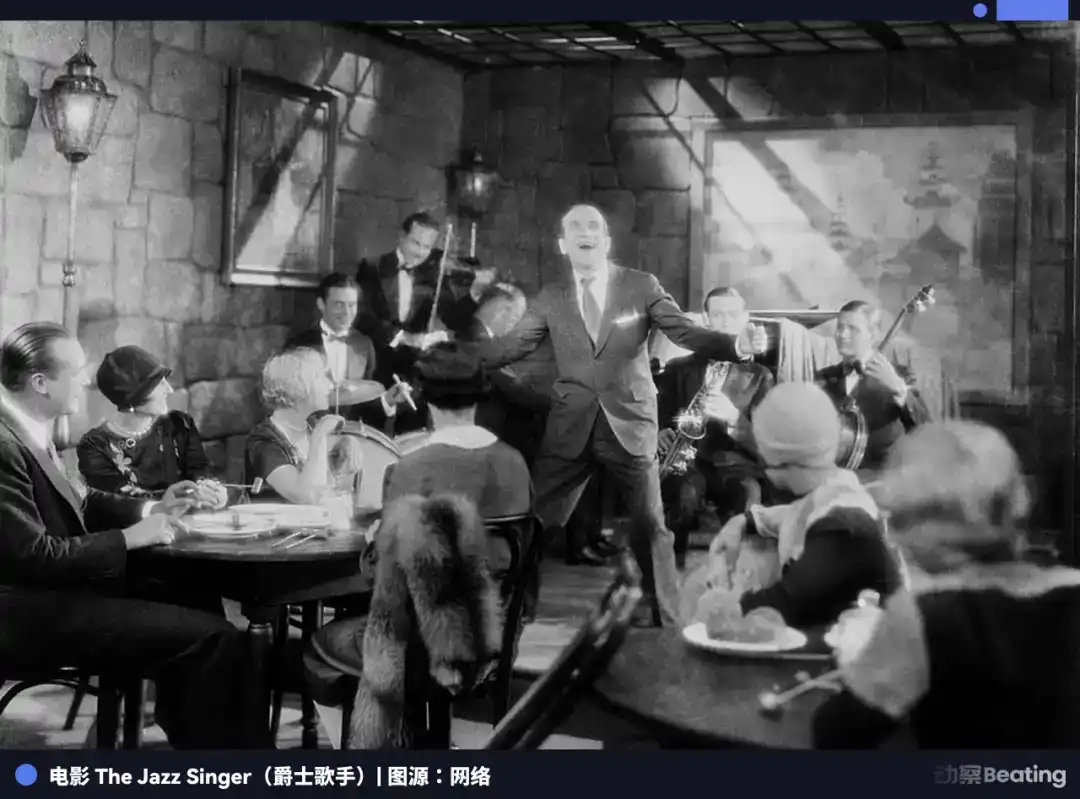
After the advent of talking pictures, these musicians were almost all unemployed within a few years. From 1927 to 1930, the number of U.S. theater musicians plummeted from about 22,000 to less than 5,000. Their union once launched boycotts, organizing musicians to refuse to play in theaters equipped with sound devices, but it was to no avail. The tide of technology does not stop because有人反对.

John Philip Sousa早在 1906 wrote "The Menace of Mechanical Music," predicting that phonographs and mechanical instruments would replace live演奏, turn music into an industrial product, and deprive musicians of their livelihoods.

Today, Gong Yu saying "live-action filming becomes intangible cultural heritage" seems, at first glance, to be the same statement that movie companies made to theater musicians back then.

Every technological revolution needs a "intangible cultural heritage" narrative to complete the handover, beautifying the淘汰的东西 as "precious tradition," then smoothly sweeping it into the museum. The term "intangible cultural heritage" itself is a form of安抚; it acknowledges that you once were, acknowledges that you once had value, but simultaneously宣告 your era is over.

Talkies and the AI Actor Library are superficially similar, but there is an essential difference.

Talkies were a new mode of expression. They allowed films to tell more complex stories, express richer emotions, and ultimately gave audiences more.

Theater musicians lost their jobs, but the art form of film itself became more complete and more powerful.

What is the AI Actor Library? It is not a new mode of expression; it is a cheaper mode of replication. It does not make film and television more complete; it only makes it cheaper. The logic of talkies was to use better technology to tell better stories, attracting more people into theaters. The logic of the AI Actor Library is to use cheaper costs to produce more content, to spend less money.

These are not the same thing.

If iQiyi's AI gamble succeeds, if it wins, then what about the audience?

Stimulation Replaces Empathy, The Folded Reality

The final outcome of the泛滥 of AI film and television is not about replacing anyone, but about quietly changing the mechanism by which humans receive stories and perceive real emotions.

Neuroscience research indicates that when humans watch live performances, mirror neurons in the brain are activated, generating emotional empathy; we feel, to some extent, the emotions the actor is experiencing. This is an ability evolved over tens of thousands of years, the foundation of our understanding of others and building social connections. This is also why a good movie or series can leave people回味 long after it ends, even changing a person's views on certain things.

AI-generated performances can be highly realistic on a technical level, but they lack real experience. An AI-generated character cries because the algorithm calculated that this scene requires crying, not because the character truly experienced something. The human brain can perceive this difference to some extent, which is why the completion rate and payment conversion rate of AI-generated content are far lower than those of live-action content, even if its visuals might be more refined and the plot more "thrilling."

But this perceptual ability is use-it-or-lose-it.

When a generation grows up accustomed to the absolute smoothness and high-frequency stimulation fed by AI, their brains will gradually adapt to this stimulation mode, and their perception threshold for complex, subtle, wrinkled real emotions will become higher and higher. Just like people who长期 eat heavily seasoned food gradually lose the ability to taste bland food.

Marshall McLuhan said "the medium is the massage," meaning that the medium is not just a pipeline for transmitting content; it itself shapes the way we perceive the world. When the logic of content production shifts from "telling a real story" to "using algorithms to calculate the stimulation the audience wants," the medium is no longer a massage but an anesthetic.

This is not singing a挽歌 for "live-action filming," nor is it saying that AI is necessarily bad. Technology itself has no good or evil; the problem lies in what it is used for and under what commercial logic it is大规模推广. A company betting on AI out of financial despair and a creator who truly believes AI can make art better use the same technology, but their motivations are completely different, and the results will be completely different.

Gong Yu said AI could allow actors to take on 4 projects a year instead of 2. The subtext of this statement is that the value of actors lies not in what they experience on set but in how many times their faces are rendered.

But real performance was never about the face. It's about a person, at a specific moment, because of some real experience, making a choice that cannot be predicted. This is something AI cannot calculate.

Only, when audiences are already accustomed to algorithm feeding, will they still need that which cannot be calculated?

Pertanyaan Terkait

QWhat is the main reason iQiyi is aggressively adopting AI technology according to the article?

AThe main reason is iQiyi's severe financial situation, with its market value dropping 97% from its peak and facing delisting risks. It is using AI as a new narrative to attract investment, particularly for its upcoming HK listing, by promising lower production costs and higher efficiency.

QHow has the rise of AI-generated actors impacted real actors, particularly extras in Hengdian?

AAI-generated actors have severely impacted extras in Hengdian. Over 85% of short drama crews have switched to using AI for supporting and background roles by Q1 2026, causing the employment rate for real actors in short dramas to plummet from 82% to 29%. This has left approximately 134,000 registered extras competing for only about 800 available positions daily.

QWhat contrasting approach is TikTok's parent company taking compared to iQiyi regarding content creation?

AWhile iQiyi is pushing for AI-generated content to reduce costs, TikTok's parent company, ByteDance, is investing 500 million yuan to specifically fund and support 'real-person short dramas'. They believe content featuring real actors leads to better user retention, completion rates, and long-term payment willingness compared to AI content.

QWhat key financial metrics highlight iQiyi's struggle as mentioned in the article?

AKey financial metrics include a market cap drop from over $31.2 billion at its peak to just $1.36 billion (a 97% decrease), a net loss of 206.3 million yuan in 2025 after previously turning a profit, a 73% plunge in operating profit, and a drastic reduction in free cash flow from over 3.3 billion yuan to under 10 million yuan.

QAccording to the article, what is a fundamental difference between the introduction of sound in film and iQiyi's push for AI actors?

AThe introduction of sound in film was a new form of expression that enhanced storytelling and made the art form more complete and powerful, even though it made some professions obsolete. In contrast, iQiyi's push for AI actors is primarily about creating a cheaper way to replicate content, not about artistic enhancement. It focuses on cost reduction rather than improving the narrative quality or emotional depth of the content.

Bacaan Terkait

Trading

Spot
Futures

Artikel Populer

Apa Itu GROK AI

Grok AI: Merevolusi Teknologi Percakapan di Era Web3 Pendahuluan Dalam lanskap kecerdasan buatan yang terus berkembang dengan cepat, Grok AI menonjol sebagai proyek yang patut diperhatikan yang menjembatani domain teknologi canggih dan interaksi pengguna. Dikembangkan oleh xAI, sebuah perusahaan yang dipimpin oleh pengusaha terkenal Elon Musk, Grok AI berupaya untuk mendefinisikan ulang cara kita berinteraksi dengan kecerdasan buatan. Seiring dengan berkembangnya gerakan Web3, Grok AI bertujuan untuk memanfaatkan kekuatan AI percakapan untuk menjawab pertanyaan kompleks, memberikan pengguna pengalaman yang tidak hanya informatif tetapi juga menghibur. Apa itu Grok AI? Grok AI adalah chatbot AI percakapan yang canggih yang dirancang untuk berinteraksi dengan pengguna secara dinamis. Berbeda dengan banyak sistem AI tradisional, Grok AI menerima berbagai pertanyaan yang lebih luas, termasuk yang biasanya dianggap tidak pantas atau di luar respons standar. Tujuan inti proyek ini meliputi: Penalaran yang Andal: Grok AI menekankan penalaran akal sehat untuk memberikan jawaban logis berdasarkan pemahaman kontekstual. Pengawasan yang Dapat Diskalakan: Integrasi bantuan alat memastikan bahwa interaksi pengguna dipantau dan dioptimalkan untuk kualitas. Verifikasi Formal: Keamanan adalah hal yang utama; Grok AI menggabungkan metode verifikasi formal untuk meningkatkan keandalan output-nya. Pemahaman Konteks Panjang: Model AI unggul dalam mempertahankan dan mengingat riwayat percakapan yang luas, memfasilitasi diskusi yang bermakna dan sadar konteks. Ketahanan Adversarial: Dengan fokus pada peningkatan pertahanannya terhadap input yang dimanipulasi atau berbahaya, Grok AI bertujuan untuk mempertahankan integritas interaksi pengguna. Intinya, Grok AI bukan hanya perangkat pengambilan informasi; ini adalah mitra percakapan yang imersif yang mendorong dialog yang dinamis. Pencipta Grok AI Otak di balik Grok AI tidak lain adalah Elon Musk, seorang individu yang identik dengan inovasi di berbagai bidang, termasuk otomotif, perjalanan luar angkasa, dan teknologi. Di bawah naungan xAI, sebuah perusahaan yang fokus pada kemajuan teknologi AI dengan cara yang bermanfaat, visi Musk bertujuan untuk membentuk kembali pemahaman tentang interaksi AI. Kepemimpinan dan etos dasar sangat dipengaruhi oleh komitmen Musk untuk mendorong batasan teknologi. Investor Grok AI Meskipun rincian spesifik mengenai investor yang mendukung Grok AI masih terbatas, secara publik diakui bahwa xAI, inkubator proyek ini, didirikan dan didukung terutama oleh Elon Musk sendiri. Usaha dan kepemilikan Musk sebelumnya memberikan dukungan yang kuat, lebih lanjut memperkuat kredibilitas dan potensi pertumbuhan Grok AI. Namun, hingga saat ini, informasi mengenai yayasan investasi tambahan atau organisasi yang mendukung Grok AI tidak tersedia secara mudah, menandai area untuk eksplorasi potensial di masa depan. Bagaimana Grok AI Bekerja? Mekanisme operasional Grok AI sama inovatifnya dengan kerangka konseptualnya. Proyek ini mengintegrasikan beberapa teknologi mutakhir yang memfasilitasi fungsionalitas uniknya: Infrastruktur yang Kuat: Grok AI dibangun menggunakan Kubernetes untuk orkestrasi kontainer, Rust untuk kinerja dan keamanan, dan JAX untuk komputasi numerik berkinerja tinggi. Ketiga elemen ini memastikan bahwa chatbot beroperasi secara efisien, dapat diskalakan dengan efektif, dan melayani pengguna dengan cepat. Akses Pengetahuan Real-Time: Salah satu fitur pembeda Grok AI adalah kemampuannya untuk mengakses data real-time melalui platform X—sebelumnya dikenal sebagai Twitter. Kemampuan ini memberikan AI akses ke informasi terbaru, memungkinkannya untuk memberikan jawaban dan rekomendasi yang tepat waktu yang mungkin terlewat oleh model AI lainnya. Dua Mode Interaksi: Grok AI menawarkan pengguna pilihan antara “Mode Menyenangkan” dan “Mode Reguler.” Mode Menyenangkan memungkinkan gaya interaksi yang lebih bermain dan humoris, sementara Mode Reguler fokus pada memberikan respons yang tepat dan akurat. Fleksibilitas ini memastikan pengalaman yang disesuaikan yang memenuhi berbagai preferensi pengguna. Intinya, Grok AI menggabungkan kinerja dengan keterlibatan, menciptakan pengalaman yang kaya dan menghibur. Garis Waktu Grok AI Perjalanan Grok AI ditandai oleh tonggak penting yang mencerminkan tahap pengembangan dan penerapannya: Pengembangan Awal: Fase dasar Grok AI berlangsung selama sekitar dua bulan, di mana pelatihan awal dan penyempurnaan model dilakukan. Rilis Beta Grok-2: Dalam kemajuan signifikan, beta Grok-2 diumumkan. Rilis ini memperkenalkan dua versi chatbot—Grok-2 dan Grok-2 mini—masing-masing dilengkapi dengan kemampuan untuk chatting, coding, dan penalaran. Akses Publik: Setelah pengembangan beta, Grok AI menjadi tersedia untuk pengguna platform X. Mereka yang memiliki akun yang diverifikasi dengan nomor telepon dan aktif selama setidaknya tujuh hari dapat mengakses versi terbatas, membuat teknologi ini tersedia untuk audiens yang lebih luas. Garis waktu ini mencakup pertumbuhan sistematis Grok AI dari awal hingga keterlibatan publik, menekankan komitmennya untuk perbaikan berkelanjutan dan interaksi pengguna. Fitur Utama Grok AI Grok AI mencakup beberapa fitur kunci yang berkontribusi pada identitas inovatifnya: Integrasi Pengetahuan Real-Time: Akses ke informasi terkini dan relevan membedakan Grok AI dari banyak model statis, memungkinkan pengalaman pengguna yang menarik dan akurat. Gaya Interaksi yang Beragam: Dengan menawarkan mode interaksi yang berbeda, Grok AI memenuhi berbagai preferensi pengguna, mengundang kreativitas dan personalisasi dalam berkomunikasi dengan AI. Dasar Teknologi yang Canggih: Pemanfaatan Kubernetes, Rust, dan JAX memberikan proyek ini kerangka kerja yang solid untuk memastikan keandalan dan kinerja optimal. Pertimbangan Diskursus Etis: Penyertaan fungsi penghasil gambar menunjukkan semangat inovatif proyek ini. Namun, hal ini juga menimbulkan pertimbangan etis seputar hak cipta dan penggambaran yang menghormati tokoh-tokoh yang dikenali—diskusi yang sedang berlangsung dalam komunitas AI. Kesimpulan Sebagai entitas perintis di bidang AI percakapan, Grok AI mencakup potensi untuk pengalaman pengguna yang transformatif di era digital. Dikembangkan oleh xAI dan didorong oleh pendekatan visioner Elon Musk, Grok AI mengintegrasikan pengetahuan real-time dengan kemampuan interaksi yang canggih. Ini berupaya untuk mendorong batasan apa yang dapat dicapai oleh kecerdasan buatan sambil tetap fokus pada pertimbangan etis dan keselamatan pengguna. Grok AI tidak hanya mewujudkan kemajuan teknologi tetapi juga mewakili paradigma percakapan baru di lanskap Web3, menjanjikan untuk melibatkan pengguna dengan pengetahuan yang mahir dan interaksi yang menyenangkan. Seiring proyek ini terus berkembang, ia berdiri sebagai bukti apa yang dapat dicapai di persimpangan teknologi, kreativitas, dan interaksi yang mirip manusia.

437 Total TayanganDipublikasikan pada 2024.12.26Diperbarui pada 2024.12.26

Apa Itu GROK AI

Apa Itu ERC AI

Euruka Tech: Gambaran Umum tentang $erc ai dan Ambisinya di Web3 Pendahuluan Dalam lanskap teknologi blockchain dan aplikasi terdesentralisasi yang berkembang pesat, proyek-proyek baru muncul dengan frekuensi tinggi, masing-masing dengan tujuan dan metodologi yang unik. Salah satu proyek tersebut adalah Euruka Tech, yang beroperasi di domain cryptocurrency dan Web3 yang luas. Fokus utama Euruka Tech, khususnya tokennya $erc ai, adalah untuk menghadirkan solusi inovatif yang dirancang untuk memanfaatkan kemampuan teknologi terdesentralisasi yang terus berkembang. Artikel ini bertujuan untuk memberikan gambaran komprehensif tentang Euruka Tech, eksplorasi tujuannya, fungsionalitas, identitas penciptanya, calon investor, dan signifikansinya dalam konteks yang lebih luas dari Web3. Apa itu Euruka Tech, $erc ai? Euruka Tech dicirikan sebagai proyek yang memanfaatkan alat dan fungsionalitas yang ditawarkan oleh lingkungan Web3, dengan fokus pada integrasi kecerdasan buatan dalam operasinya. Meskipun rincian spesifik tentang kerangka proyek ini agak samar, proyek ini dirancang untuk meningkatkan keterlibatan pengguna dan mengotomatiskan proses di ruang crypto. Proyek ini bertujuan untuk menciptakan ekosistem terdesentralisasi yang tidak hanya memfasilitasi transaksi tetapi juga menggabungkan fungsionalitas prediktif melalui kecerdasan buatan, sehingga penamaan tokennya, $erc ai. Tujuannya adalah untuk menyediakan platform intuitif yang memfasilitasi interaksi yang lebih cerdas dan pemrosesan transaksi yang efisien dalam lingkup Web3 yang terus berkembang. Siapa Pencipta Euruka Tech, $erc ai? Saat ini, informasi mengenai pencipta atau tim pendiri di balik Euruka Tech masih tidak ditentukan dan agak tidak jelas. Ketidakhadiran data ini menimbulkan kekhawatiran, karena pengetahuan tentang latar belakang tim sering kali penting untuk membangun kredibilitas dalam sektor blockchain. Oleh karena itu, kami telah mengkategorikan informasi ini sebagai tidak diketahui sampai rincian konkret tersedia di domain publik. Siapa Investor Euruka Tech, $erc ai? Demikian pula, identifikasi investor atau organisasi pendukung untuk proyek Euruka Tech tidak disediakan dengan mudah melalui penelitian yang tersedia. Aspek yang sangat penting bagi pemangku kepentingan atau pengguna potensial yang mempertimbangkan keterlibatan dengan Euruka Tech adalah jaminan yang datang dari kemitraan keuangan yang mapan atau dukungan dari perusahaan investasi yang terkemuka. Tanpa pengungkapan tentang afiliasi investasi, sulit untuk menarik kesimpulan komprehensif tentang keamanan finansial atau keberlangsungan proyek. Sesuai dengan informasi yang ditemukan, bagian ini juga berada pada status tidak diketahui. Bagaimana Euruka Tech, $erc ai Bekerja? Meskipun kurangnya spesifikasi teknis yang mendetail untuk Euruka Tech, penting untuk mempertimbangkan ambisi inovatifnya. Proyek ini berusaha memanfaatkan kemampuan komputasi kecerdasan buatan untuk mengotomatiskan dan meningkatkan pengalaman pengguna dalam lingkungan cryptocurrency. Dengan mengintegrasikan AI dengan teknologi blockchain, Euruka Tech bertujuan untuk menyediakan fitur seperti perdagangan otomatis, penilaian risiko, dan antarmuka pengguna yang dipersonalisasi. Esensi inovatif dari Euruka Tech terletak pada tujuannya untuk menciptakan koneksi yang mulus antara pengguna dan kemungkinan luas yang ditawarkan oleh jaringan terdesentralisasi. Melalui pemanfaatan algoritma pembelajaran mesin dan AI, proyek ini bertujuan untuk meminimalkan tantangan bagi pengguna baru dan menyederhanakan pengalaman transaksional dalam kerangka Web3. Simbiosis antara AI dan blockchain ini menggarisbawahi signifikansi token $erc ai, yang berdiri sebagai jembatan antara antarmuka pengguna tradisional dan kemampuan canggih dari teknologi terdesentralisasi. Garis Waktu Euruka Tech, $erc ai Sayangnya, sebagai akibat dari informasi yang terbatas mengenai Euruka Tech, kami tidak dapat menyajikan garis waktu yang mendetail tentang perkembangan utama atau tonggak dalam perjalanan proyek ini. Garis waktu ini, yang biasanya sangat berharga dalam memetakan evolusi suatu proyek dan memahami trajektori pertumbuhannya, saat ini tidak tersedia. Ketika informasi tentang peristiwa penting, kemitraan, atau penambahan fungsional menjadi jelas, pembaruan pasti akan meningkatkan visibilitas Euruka Tech di dunia crypto. Klarifikasi tentang Proyek “Eureka” Lainnya Penting untuk dicatat bahwa banyak proyek dan perusahaan berbagi nomenklatur serupa dengan “Eureka.” Penelitian telah mengidentifikasi inisiatif seperti agen AI dari NVIDIA Research, yang fokus pada pengajaran robot tugas kompleks menggunakan metode generatif, serta Eureka Labs dan Eureka AI, yang meningkatkan pengalaman pengguna dalam analitik pendidikan dan layanan pelanggan, masing-masing. Namun, proyek-proyek ini berbeda dari Euruka Tech dan tidak boleh disamakan dengan tujuan atau fungsionalitasnya. Kesimpulan Euruka Tech, bersama dengan token $erc ai-nya, mewakili pemain yang menjanjikan namun saat ini masih samar dalam lanskap Web3. Meskipun rincian tentang pencipta dan investor masih belum diungkapkan, ambisi inti untuk menggabungkan kecerdasan buatan dengan teknologi blockchain tetap menjadi titik fokus yang menarik. Pendekatan unik proyek ini dalam mendorong keterlibatan pengguna melalui otomatisasi canggih dapat membedakannya seiring dengan kemajuan ekosistem Web3. Seiring dengan terus berkembangnya pasar crypto, pemangku kepentingan harus memperhatikan kemajuan seputar Euruka Tech, karena pengembangan inovasi yang terdokumentasi, kemitraan, atau peta jalan yang terdefinisi dapat menghadirkan peluang signifikan di masa depan. Saat ini, kami menunggu wawasan yang lebih substansial yang dapat mengungkap potensi Euruka Tech dan posisinya dalam lanskap crypto yang kompetitif.

395 Total TayanganDipublikasikan pada 2025.01.02Diperbarui pada 2025.01.02

Apa Itu ERC AI

Apa Itu DUOLINGO AI

DUOLINGO AI: Mengintegrasikan Pembelajaran Bahasa dengan Inovasi Web3 dan AI Dalam era di mana teknologi membentuk kembali pendidikan, integrasi kecerdasan buatan (AI) dan jaringan blockchain menandai batasan baru untuk pembelajaran bahasa. Masuklah DUOLINGO AI dan cryptocurrency terkaitnya, $DUOLINGO AI. Proyek ini bercita-cita untuk menggabungkan kekuatan pendidikan dari platform pembelajaran bahasa terkemuka dengan manfaat teknologi Web3 yang terdesentralisasi. Artikel ini menggali aspek-aspek kunci dari DUOLINGO AI, menjelajahi tujuannya, kerangka teknologi, perkembangan sejarah, dan potensi masa depan sambil mempertahankan kejelasan antara sumber daya pendidikan asli dan inisiatif cryptocurrency independen ini. Gambaran Umum DUOLINGO AI Pada intinya, DUOLINGO AI berusaha untuk membangun lingkungan terdesentralisasi di mana pelajar dapat memperoleh imbalan kriptografi untuk mencapai tonggak pendidikan dalam kemahiran bahasa. Dengan menerapkan kontrak pintar, proyek ini bertujuan untuk mengotomatiskan proses verifikasi keterampilan dan alokasi token, sesuai dengan prinsip Web3 yang menekankan transparansi dan kepemilikan pengguna. Model ini menyimpang dari pendekatan tradisional dalam akuisisi bahasa dengan sangat bergantung pada struktur tata kelola yang dipimpin oleh komunitas, memungkinkan pemegang token untuk menyarankan perbaikan pada konten kursus dan distribusi imbalan. Beberapa tujuan notable dari DUOLINGO AI meliputi: Pembelajaran Gamified: Proyek ini mengintegrasikan pencapaian blockchain dan token non-fungible (NFT) untuk mewakili tingkat kemahiran bahasa, mendorong motivasi melalui imbalan digital yang menarik. Penciptaan Konten Terdesentralisasi: Ini membuka jalan bagi pendidik dan penggemar bahasa untuk berkontribusi pada kursus mereka, memfasilitasi model pembagian pendapatan yang menguntungkan semua kontributor. Personalisasi Berbasis AI: Dengan menggunakan model pembelajaran mesin yang canggih, DUOLINGO AI mempersonalisasi pelajaran untuk beradaptasi dengan kemajuan belajar individu, mirip dengan fitur adaptif yang ditemukan di platform yang sudah mapan. Pencipta Proyek dan Tata Kelola Hingga April 2025, tim di balik $DUOLINGO AI tetap anonim, praktik yang umum dalam lanskap cryptocurrency terdesentralisasi. Anonimitas ini dimaksudkan untuk mempromosikan pertumbuhan kolektif dan keterlibatan pemangku kepentingan daripada fokus pada pengembang individu. Kontrak pintar yang diterapkan di blockchain Solana mencatat alamat dompet pengembang, yang menandakan komitmen terhadap transparansi terkait transaksi meskipun identitas penciptanya tidak diketahui. Menurut peta jalannya, DUOLINGO AI bertujuan untuk berkembang menjadi Organisasi Otonom Terdesentralisasi (DAO). Struktur tata kelola ini memungkinkan pemegang token untuk memberikan suara pada isu-isu penting seperti implementasi fitur dan alokasi kas. Model ini sejalan dengan etos pemberdayaan komunitas yang ditemukan dalam berbagai aplikasi terdesentralisasi, menekankan pentingnya pengambilan keputusan kolektif. Investor dan Kemitraan Strategis Saat ini, tidak ada investor institusi atau modal ventura yang dapat diidentifikasi secara publik yang terkait dengan $DUOLINGO AI. Sebaliknya, likuiditas proyek ini terutama berasal dari bursa terdesentralisasi (DEX), menandai kontras yang tajam dengan strategi pendanaan perusahaan teknologi pendidikan tradisional. Model akar rumput ini menunjukkan pendekatan yang dipimpin oleh komunitas, mencerminkan komitmen proyek terhadap desentralisasi. Dalam whitepapernya, DUOLINGO AI menyebutkan pembentukan kolaborasi dengan “platform pendidikan blockchain” yang tidak ditentukan yang bertujuan untuk memperkaya penawaran kursusnya. Meskipun kemitraan spesifik belum diungkapkan, upaya kolaboratif ini menunjukkan strategi untuk menggabungkan inovasi blockchain dengan inisiatif pendidikan, memperluas akses dan keterlibatan pengguna di berbagai jalur pembelajaran. Arsitektur Teknologi Integrasi AI DUOLINGO AI menggabungkan dua komponen utama yang didorong oleh AI untuk meningkatkan penawaran pendidikannya: Mesin Pembelajaran Adaptif: Mesin canggih ini belajar dari interaksi pengguna, mirip dengan model kepemilikan dari platform pendidikan besar. Ia secara dinamis menyesuaikan kesulitan pelajaran untuk mengatasi tantangan spesifik pelajar, memperkuat area yang lemah melalui latihan yang ditargetkan. Agen Percakapan: Dengan menggunakan chatbot bertenaga GPT-4, DUOLINGO AI menyediakan platform bagi pengguna untuk terlibat dalam percakapan yang disimulasikan, mendorong pengalaman pembelajaran bahasa yang lebih interaktif dan praktis. Infrastruktur Blockchain Dibangun di atas blockchain Solana, $DUOLINGO AI memanfaatkan kerangka teknologi yang komprehensif yang mencakup: Kontrak Pintar Verifikasi Keterampilan: Fitur ini secara otomatis memberikan token kepada pengguna yang berhasil melewati tes kemahiran, memperkuat struktur insentif untuk hasil pembelajaran yang nyata. Lencana NFT: Token digital ini menandakan berbagai tonggak yang dicapai pelajar, seperti menyelesaikan bagian dari kursus mereka atau menguasai keterampilan tertentu, memungkinkan mereka untuk memperdagangkan atau memamerkan pencapaian mereka secara digital. Tata Kelola DAO: Anggota komunitas yang memiliki token dapat terlibat dalam tata kelola dengan memberikan suara pada proposal kunci, memfasilitasi budaya partisipatif yang mendorong inovasi dalam penawaran kursus dan fitur platform. Garis Waktu Sejarah 2022–2023: Konseptualisasi Landasan untuk DUOLINGO AI dimulai dengan pembuatan whitepaper, menyoroti sinergi antara kemajuan AI dalam pembelajaran bahasa dan potensi terdesentralisasi dari teknologi blockchain. 2024: Peluncuran Beta Peluncuran beta terbatas memperkenalkan penawaran dalam bahasa-bahasa populer, memberikan imbalan kepada pengguna awal dengan insentif token sebagai bagian dari strategi keterlibatan komunitas proyek. 2025: Transisi DAO Pada bulan April, peluncuran mainnet penuh terjadi dengan peredaran token, mendorong diskusi komunitas mengenai kemungkinan ekspansi ke bahasa Asia dan pengembangan kursus lainnya. Tantangan dan Arah Masa Depan Hambatan Teknis Meskipun memiliki tujuan ambisius, DUOLINGO AI menghadapi tantangan signifikan. Skalabilitas tetap menjadi perhatian yang berkelanjutan, terutama dalam menyeimbangkan biaya yang terkait dengan pemrosesan AI dan mempertahankan jaringan terdesentralisasi yang responsif. Selain itu, memastikan penciptaan konten berkualitas dan moderasi di tengah penawaran terdesentralisasi menimbulkan kompleksitas dalam mempertahankan standar pendidikan. Peluang Strategis Melihat ke depan, DUOLINGO AI memiliki potensi untuk memanfaatkan kemitraan mikro-credentialing dengan institusi akademis, menyediakan validasi keterampilan bahasa yang diverifikasi oleh blockchain. Selain itu, ekspansi lintas rantai dapat memungkinkan proyek ini untuk menjangkau basis pengguna yang lebih luas dan ekosistem blockchain tambahan, meningkatkan interoperabilitas dan jangkauannya. Kesimpulan DUOLINGO AI mewakili perpaduan inovatif antara kecerdasan buatan dan teknologi blockchain, menghadirkan alternatif yang berfokus pada komunitas untuk sistem pembelajaran bahasa tradisional. Meskipun pengembangannya yang anonim dan model ekonomi yang muncul membawa risiko tertentu, komitmen proyek terhadap pembelajaran gamified, pendidikan yang dipersonalisasi, dan tata kelola terdesentralisasi menerangi jalan ke depan untuk teknologi pendidikan di ranah Web3. Seiring kemajuan AI dan evolusi ekosistem blockchain, inisiatif seperti DUOLINGO AI dapat mendefinisikan ulang bagaimana pengguna terlibat dengan pendidikan bahasa, memberdayakan komunitas dan memberikan imbalan atas keterlibatan melalui mekanisme pembelajaran yang inovatif.

442 Total TayanganDipublikasikan pada 2025.04.11Diperbarui pada 2025.04.11

Apa Itu DUOLINGO AI

Diskusi

Selamat datang di Komunitas HTX. Di sini, Anda bisa terus mendapatkan informasi terbaru tentang perkembangan platform terkini dan mendapatkan akses ke wawasan pasar profesional. Pendapat pengguna mengenai harga AI (AI) disajikan di bawah ini.

活动图片