A Hair Dryer Blows Open the World's Largest Nvidia Chip Smuggling Case

比推Dipublikasikan tanggal 2026-03-20Terakhir diperbarui pada 2026-03-20

Abstrak

A co-founder and senior executive of Supermicro, Wally Liaw, has been arrested in California for orchestrating the largest AI chip smuggling case in history, involving $2.5 billion worth of Nvidia GPUs destined for China. The scheme involved using a Southeast Asian shell company to purchase servers under the guise of legitimate use, then repackaging them for illegal shipment to China. To deceive auditors, the group created counterfeit servers with real serial numbers transferred using a hairdryer. Liaw, who faces up to 20 years in prison, accelerated operations ahead of new U.S. export restrictions in May 2025. The case highlights the persistent demand for Nvidia chips in China, where black market prices are 50% higher, and the evolving sophistication of smuggling networks, from individual couriers to corporate insiders.

Author: David, Shenchao TechFlow

Original Title: A Hair Dryer Blows Open the World's Largest Nvidia Chip Smuggling Case


Early this morning, Wally Liaw, co-founder of Supermicro, was arrested in California.

Supermicro is one of the world's largest AI server manufacturers and a core supply chain partner of Nvidia, having received $13 billion in orders for Nvidia Blackwell chips in just one quarter last year.

Liaw has been with the company since its founding in 1993 and currently serves as senior vice president and board member.

The charges against him are:

Smuggling $2.5 billion worth of Nvidia AI chip servers to China through shell companies in Southeast Asia. The maximum sentence is 20 years.

The U.S. Department of Justice has characterized this case as the largest AI chip smuggling case in history.

However, the details of this case are very much like a movie plot.

According to the indictment, Liaw and his accomplices arranged for a Southeast Asian company to act as a "white glove," purchasing large quantities of servers equipped with Nvidia GPUs from Supermicro under the guise of "self-use." Once the servers arrived in Southeast Asia, workers tore off the original packaging, placed them into unmarked boxes, and shipped them to China.

The real goods were shipped away, but Supermicro's compliance team and the U.S. Department of Commerce would regularly inspect the inventory and scan serial numbers at the warehouse. The warehouse couldn't be empty, could it?

So they built tens of thousands of fake servers.

The shells looked identical to the real ones, but they contained no chips and could not be powered on. They were specifically placed in the warehouse for auditors to see.

Having fake servers wasn't enough; the serial numbers on the packaging also had to match. Workers used a hair dryer to heat the serial number stickers on the real packaging, peeled them off completely, and then stuck them onto the boxes of the fake servers...
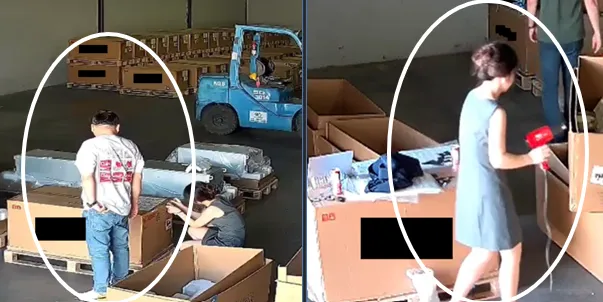
The auditors scanned the codes, and the system showed everything was normal.

Surveillance footage in the factory captured the hair dryer moment. But the real goods were already on their way to China.

Even more outrageous, on one occasion when Supermicro's own compliance team sent someone to inspect, accomplice Sun took photos and videos of the fake servers and sent them to the auditor as "proof" that the "goods were all there."

Another time, U.S. Department of Commerce export control officials came for an inspection. Someone on site directly impersonated a lawyer to receive them...

The main culprit, Liaw, is 71 years old and holds Supermicro stock worth $430 million. In theory, he doesn't need the money.

There's another detail in the indictment. A broker once forwarded a news link to Liaw about several Chinese nationals being arrested in the U.S. for smuggling AI chips.

Liaw's reply was a string of crying face emojis, and then he continued with the operation.

After the news was announced, Supermicro's stock fell 13% in after-hours trading. The company stated that Liaw has been suspended, the involved party Sun has been terminated, and sales manager Steven Chang from the Taiwan office is currently at large.

Supermicro was not named as a defendant. The company stated it has a "robust compliance system."

But this isn't the first time this company's compliance system has had problems.

$2.5 Billion Chip Smuggling Pipeline

This smuggling chain wasn't built overnight.

The indictment shows that Liaw was very proactive in managing the operation. He directly asked the person in charge of the Southeast Asian company via encrypted communication: How many can you take in January? February? March? April? Just give a rough estimate, and then we'll use this number to apply for a chip quota from Nvidia.

So the process was:

First, confirm the demand from Chinese buyers, then use that volume to negotiate a quota from Nvidia, citing "self-use" by the Southeast Asian company. Once Nvidia approved the quota, the servers were assembled in the U.S., shipped to Taiwan, then transferred to the Southeast Asian company, which removed the packaging and shipped them to China.
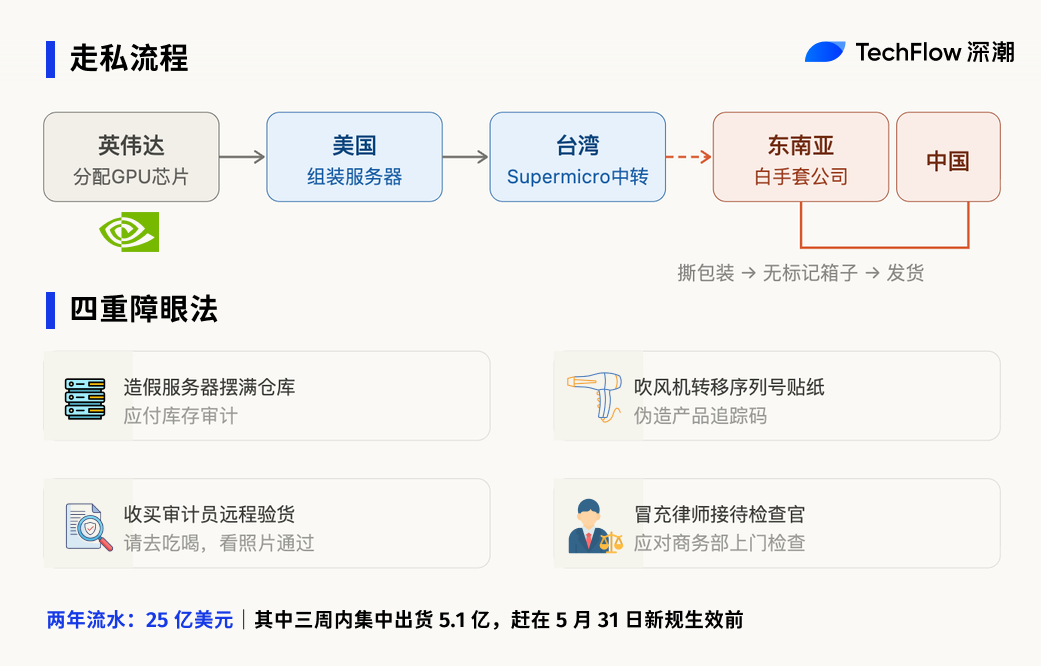
From clients to supply sources to logistics, Liaw single-handedly managed the entire chain. He wasn't a middleman; he was the co-founder and head of business development at Supermicro.

Using his own company's supply chain to smuggle his own company's products.

Between 2024 and 2025, servers worth $2.5 billion flowed out through this pipeline. The indictment says this scale gradually expanded, using the phrase:

Growing increasingly bold.

The boldest single transaction occurred from late April to mid-May 2025. In three weeks, $510 million worth of servers were transferred from the U.S. to China via Southeast Asia.

Why the sudden acceleration? Possibly because Liaw saw a White House statement.

In early 2025, the U.S. government announced a new set of export control rules for AI products, scheduled to take effect in mid-May, further tightening chip export reviews to regions like Southeast Asia. Liaw forwarded this news to the head of the Southeast Asian company, adding a note:

"We need to speed these up before May 13!"

May 13th was the effective date of the new rules. Before that, the existing loopholes could still be used. So the final three weeks became a race against time. The volume that usually took months to move was compressed into twenty days.

Meanwhile, Steven Chang from the Taiwan office was responsible for another task: ensuring no one conducted a real inspection.

The indictment says he prevented auditors from checking the actual areas where servers were stored in the Southeast Asian data center and specifically arranged for an auditor he called "friendly" to conduct this review.

All the forged documents, fake servers, and hair dryer label switching were meant to keep this pipeline running uninterrupted. And the speed of the pipeline peaked in the final three weeks.

But Supermicro isn't the only one in the chip smuggling business.

Over the past two years, the U.S. Department of Justice has dismantled several chip smuggling networks. The scale ranged from tens of millions to hundreds of millions of dollars, with methods becoming increasingly outrageous. And the profiles of the participants have also been escalating.

Stricter the Chip Ban, More Respectable the Smugglers

Supermicro isn't the first to be caught.

Looking back two years, the chip smuggling business has evolved through three generations. The identities of the participants have escalated, their methods have become more like legitimate business, and the scale has grown larger.

The first generation was "ant moving."

When the chip ban first came out in 2022, smuggling was still manual labor. International students, tourists, personal shoppers would carry one or two Nvidia GPUs at a time, hiding them in personal luggage to get through customs. If stopped, they would claim it was for personal use.

Some hid chips in boxes of live lobsters, some strapped them to their bodies and covered them with fake pregnant bellies.

In Shenzhen's Huaqiangbei, these chips had a complete after-sales industry chain. Specialized shops repaired broken cards and disassembled chips, handling over 500 per month, charging $1,400 to $2,800 per chip. After repair, they were sold to data centers and AI startups.

Smugglers at this stage had no companies, no documents; they relied on human effort and courage. The amount per transaction was small, but every little helps.
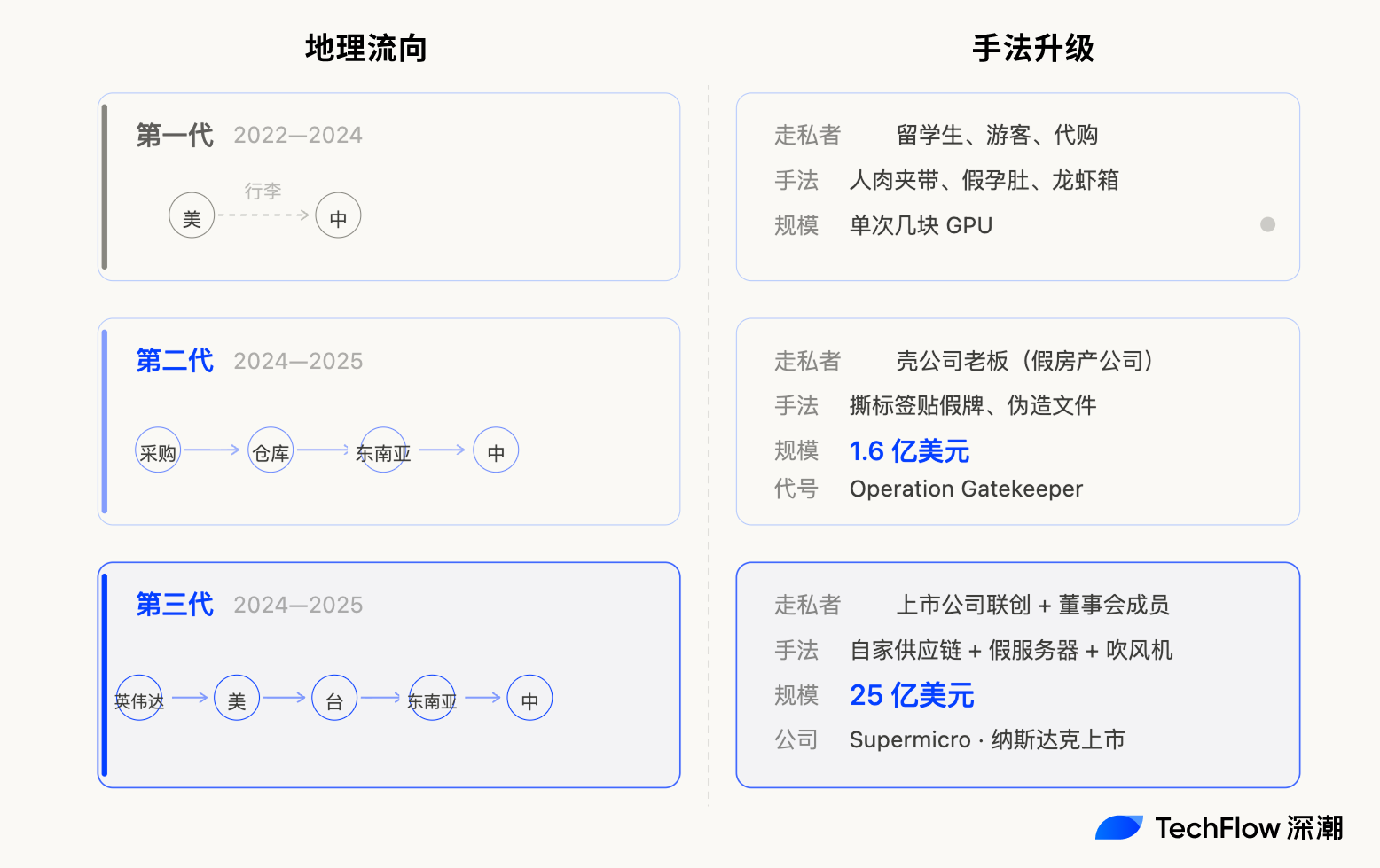
The second generation began using companies, "hanging sheep's head but selling dog meat."

In late 2025, the U.S. Department of Justice dismantled a smuggling network codenamed "Operation Gatekeeper." The main culprit was a man living in Houston named Alan Hsu, 43 years old. He used a company to purchase Nvidia chips in bulk from Lenovo and ship them to a warehouse in New Jersey.

This company was called Janford Realtor, registered as a real estate company.

It never conducted a single real estate transaction.

After the chips arrived at the warehouse, workers tore off Nvidia's original labels and stuck on the name of a fictional company—"SANDKYAN." They were then transshipped via Malaysia and Thailand, eventually entering China. The entire network moved over $160 million in goods in eight months.

The most dramatic moment in this case occurred during the takedown. FBI agents secretly infiltrated the New Jersey warehouse beforehand and quietly removed all the GPUs inside. The smugglers discovered the goods were missing, thought they had been stolen, and sent people to the warehouse to "redeem" them.

The ransom was negotiated to $1 million, and the person who came to make the exchange was caught red-handed by the FBI.

The third generation is the professionally involved, like Supermicro.

No longer fake companies, no longer middlemen, but the co-founder of a listed company personally managing the operation.

No need to buy chips from others; their own company is a core supplier to Nvidia. No need to forge buyer identities; using the company's own supply chain, its own customer relationships, its own quotas to apply for chips, and then internally bypassing its own company's compliance team.

From ant moving to fake real estate companies, to Silicon Valley listed company executives. The three generations of smugglers have only one thing in common:

The end buyers are all in China, and the chips are all Nvidia's.

The difference is, the person carrying a backpack through customs in 2022 was gambling with their freedom. The person sitting in a Silicon Valley office managing the operation in 2026 is gambling with a company worth tens of billions of dollars.

Every time the ban is upgraded, the profit from smuggling jumps a step, and the status of those willing to enter the game also jumps a step.

So how profitable is this business really?

The Black Market Price of a Chip

Why can't chip smuggling be stopped? The answer lies in the price.

According to multiple overseas media reports, the price of Nvidia's high-end GPUs on the Chinese black market is generally about 50% higher than the official channels in the U.S. The ban created a price difference, the price difference created profit, and the profit created smugglers.

Demand is rigid. Ray Wang, an analyst at semiconductor analysis firm SemiAnalysis, said in an interview with CNBC:

Over 60% of China's leading AI models currently still run on Nvidia hardware. Training a large model requires thousands of high-end GPUs; you can't start work even one short.

This means Chinese AI companies don't "want to buy" Nvidia chips; they "must buy" them.
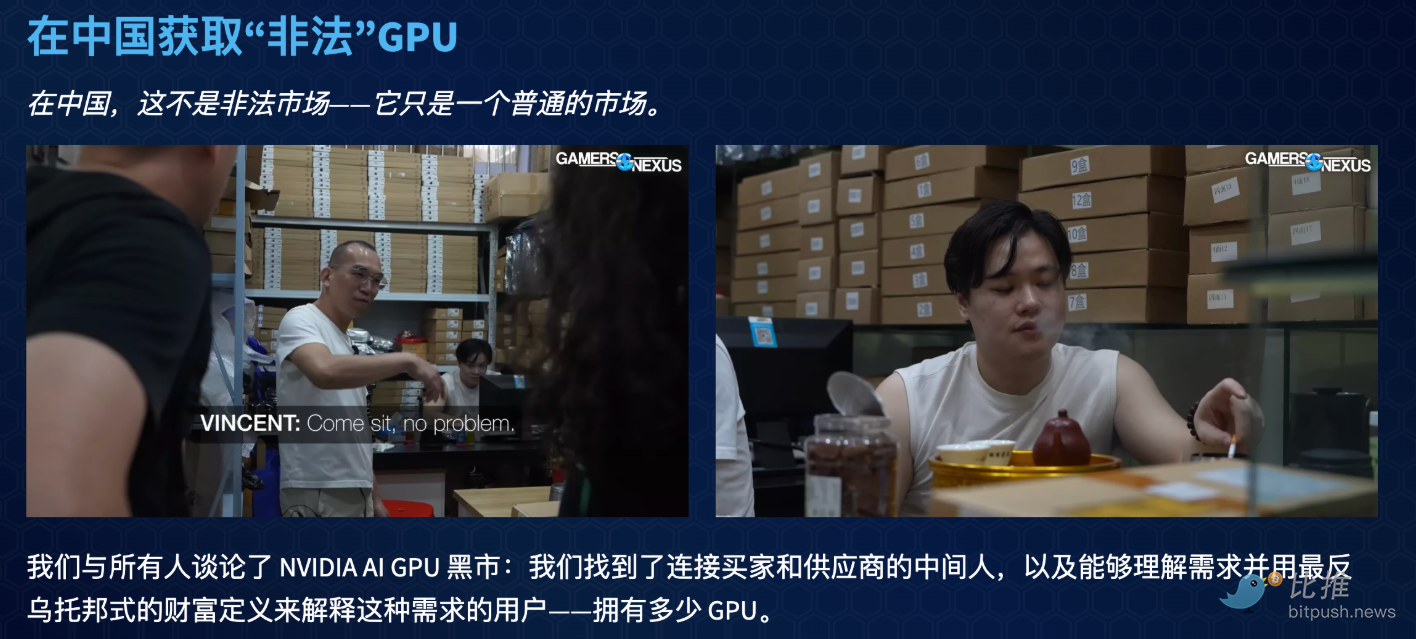
Image source: GamersNexus in-depth investigation of the Huaqiangbei chip market

What about the supply side?

After chips leave Nvidia's factory, they pass through distributors, system integrators, server manufacturers—every link is a potential entry point for smuggling. U.S. export controls mainly focus on the sales and shipping step, relying on buyers to self-declare the end user.

Once the chips leave the U.S., the subsequent steps basically rely on honesty.

A Financial Times report last year estimated that in just the three months after April 2025, over $1 billion worth of embargoed chips flowed into China through various channels. Industry insiders estimate the entire black market's monthly turnover could be on the order of $1 billion...

And ironically, the U.S. government's own policies have been wavering.

Last December, the Department of Justice high-profile announced the dismantling of the Operation Gatekeeper smuggling network, arresting several suspects. But on the same day, Trump announced on Truth Social: Allowing Nvidia to sell H200 chips to China.

Later, the U.S. government opened another loophole, allowing Nvidia to sell the less powerful H20 chips to China, on the condition that Nvidia pay 15% of the sales revenue to the U.S. government.

Cracking down on smuggling on one hand, selling themselves on the other, and even taking a cut. This makes the entire ban system very difficult to explain.

If you tell a chip broker that smuggling is illegal, he might reply: The government is selling them too, they just call it "conditional export."

The deeper paradox is that Nvidia is now the world's highest-valued company, with a market cap of $4.3 trillion. The more advanced its chips, the greater the demand, the higher the black market premium, and the more lucrative the smuggling.

A Hair Dryer Can't Blow Away Demand

What signal do people inside chip companies see when the government itself is both cracking down on smuggling and approving exports?

The protagonist of this article, Supermicro, also helped Musk build the Colossus AI computing cluster in 122 days and received $13 billion in Nvidia Blackwell orders last quarter.

The people who build the servers and the people who smuggle the servers are the same group.

A $2.5 billion smuggling case was finally brought down by a hair dryer. Surveillance footage captured workers using a hair dryer to peel off labels; it's now posted on the U.S. Department of Justice website for anyone to see.

The same week Liaw was arrested, Nvidia CEO Jensen Huang publicly stated that the company is facing a backlog of $1 trillion in chip orders.

A trillion dollars in demand is sitting there, and the black market premium is sitting there.

Perhaps the next person willing to pick up a hair dryer won't have to wait long.


Twitter:https://twitter.com/BitpushNewsCN

Bitpush TG Discussion Group:https://t.me/BitPushCommunity

Bitpush TG Subscription: https://t.me/bitpush

Original link:https://www.bitpush.news/articles/7621608

Pertanyaan Terkait

QWhat was the role of Wally Liaw at Supermicro and what crime was he charged with?

AWally Liaw was a co-founder and senior vice president of Supermicro. He was charged with smuggling $2.5 billion worth of Nvidia AI chip servers to China through shell companies in Southeast Asia.

QWhat was the method used to deceive auditors and export control officials in the smuggling operation?

AThey created thousands of fake servers with identical exteriors but no chips inside. They used a hairdryer to heat and remove the serial number stickers from the real packaging and then applied them to the boxes of the fake servers to pass audits.

QWhy did the smuggling operation accelerate significantly in April and May 2025?

AThe operation accelerated because the U.S. government announced new AI product export control rules set to take effect in mid-May 2025. Liaw wanted to move as much inventory as possible before the stricter rules closed the existing loopholes.

QWhat is the estimated price premium for Nvidia's high-end GPUs on the Chinese black market according to the article?

ANvidia's high-end GPUs sell for approximately a 50% premium on the Chinese black market compared to official U.S. channels.

QWhat paradox does the article highlight regarding the U.S. government's policy on chip exports to China?

AThe article points out the paradox of the U.S. government cracking down on chip smuggling while simultaneously allowing Nvidia to sell certain chips to China under specific conditions, such as taking a 15% cut of the sales, which complicates the enforcement of the ban.

Bacaan Terkait

Trading

Spot
Futures

Artikel Populer

Apa Itu $S$

Memahami SPERO: Tinjauan Komprehensif Pengenalan SPERO Seiring dengan perkembangan lanskap inovasi, munculnya teknologi web3 dan proyek cryptocurrency memainkan peran penting dalam membentuk masa depan digital. Salah satu proyek yang telah menarik perhatian di bidang dinamis ini adalah SPERO, yang dilambangkan sebagai SPERO,$$s$. Artikel ini bertujuan untuk mengumpulkan dan menyajikan informasi terperinci tentang SPERO, untuk membantu para penggemar dan investor memahami dasar-dasar, tujuan, dan inovasi dalam domain web3 dan crypto. Apa itu SPERO,$$s$? SPERO,$$s$ adalah proyek unik dalam ruang crypto yang berusaha memanfaatkan prinsip desentralisasi dan teknologi blockchain untuk menciptakan ekosistem yang mendorong keterlibatan, utilitas, dan inklusi finansial. Proyek ini dirancang untuk memfasilitasi interaksi peer-to-peer dengan cara baru, memberikan pengguna solusi dan layanan keuangan yang inovatif. Pada intinya, SPERO,$$s$ bertujuan untuk memberdayakan individu dengan menyediakan alat dan platform yang meningkatkan pengalaman pengguna dalam ruang cryptocurrency. Ini termasuk memungkinkan metode transaksi yang lebih fleksibel, mendorong inisiatif yang dipimpin komunitas, dan menciptakan jalur untuk peluang finansial melalui aplikasi terdesentralisasi (dApps). Visi mendasar dari SPERO,$$s$ berputar di sekitar inklusivitas, bertujuan untuk menjembatani kesenjangan dalam keuangan tradisional sambil memanfaatkan manfaat teknologi blockchain. Siapa Pencipta SPERO,$$s$? Identitas pencipta SPERO,$$s$ tetap agak samar, karena ada sumber daya publik yang terbatas yang memberikan informasi latar belakang terperinci tentang pendiriannya. Kurangnya transparansi ini dapat berasal dari komitmen proyek terhadap desentralisasi—sebuah etos yang banyak proyek web3 bagi, memprioritaskan kontribusi kolektif di atas pengakuan individu. Dengan memusatkan diskusi di sekitar komunitas dan tujuan kolektifnya, SPERO,$$s$ mewujudkan esensi pemberdayaan tanpa menonjolkan individu tertentu. Dengan demikian, memahami etos dan misi SPERO tetap lebih penting daripada mengidentifikasi pencipta tunggal. Siapa Investor SPERO,$$s$? SPERO,$$s$ didukung oleh beragam investor mulai dari modal ventura hingga investor malaikat yang berdedikasi untuk mendorong inovasi di sektor crypto. Fokus investor ini umumnya sejalan dengan misi SPERO—memprioritaskan proyek yang menjanjikan kemajuan teknologi sosial, inklusivitas finansial, dan tata kelola terdesentralisasi. Fondasi investor ini biasanya tertarik pada proyek yang tidak hanya menawarkan produk inovatif tetapi juga memberikan kontribusi positif kepada komunitas blockchain dan ekosistemnya. Dukungan dari investor ini memperkuat SPERO,$$s$ sebagai pesaing yang patut diperhitungkan di domain proyek crypto yang berkembang pesat. Bagaimana SPERO,$$s$ Bekerja? SPERO,$$s$ menerapkan kerangka kerja multi-faceted yang membedakannya dari proyek cryptocurrency konvensional. Berikut adalah beberapa fitur kunci yang menekankan keunikan dan inovasinya: Tata Kelola Terdesentralisasi: SPERO,$$s$ mengintegrasikan model tata kelola terdesentralisasi, memberdayakan pengguna untuk berpartisipasi aktif dalam proses pengambilan keputusan mengenai masa depan proyek. Pendekatan ini mendorong rasa kepemilikan dan akuntabilitas di antara anggota komunitas. Utilitas Token: SPERO,$$s$ memanfaatkan token cryptocurrency-nya sendiri, yang dirancang untuk melayani berbagai fungsi dalam ekosistem. Token ini memungkinkan transaksi, hadiah, dan fasilitasi layanan yang ditawarkan di platform, meningkatkan keterlibatan dan utilitas secara keseluruhan. Arsitektur Berlapis: Arsitektur teknis SPERO,$$s$ mendukung modularitas dan skalabilitas, memungkinkan integrasi fitur dan aplikasi tambahan secara mulus seiring dengan perkembangan proyek. Kemampuan beradaptasi ini sangat penting untuk mempertahankan relevansi di lanskap crypto yang selalu berubah. Keterlibatan Komunitas: Proyek ini menekankan inisiatif yang dipimpin komunitas, menggunakan mekanisme yang memberikan insentif untuk kolaborasi dan umpan balik. Dengan memelihara komunitas yang kuat, SPERO,$$s$ dapat lebih baik memenuhi kebutuhan pengguna dan beradaptasi dengan tren pasar. Fokus pada Inklusi: Dengan menawarkan biaya transaksi yang rendah dan antarmuka yang ramah pengguna, SPERO,$$s$ bertujuan untuk menarik basis pengguna yang beragam, termasuk individu yang mungkin sebelumnya tidak terlibat dalam ruang crypto. Komitmen ini terhadap inklusi sejalan dengan misi utamanya untuk memberdayakan melalui aksesibilitas. Garis Waktu SPERO,$$s$ Memahami sejarah proyek memberikan wawasan penting tentang trajektori dan tonggak perkembangannya. Berikut adalah garis waktu yang disarankan yang memetakan peristiwa signifikan dalam evolusi SPERO,$$s$: Fase Konseptualisasi dan Ideasi: Ide awal yang membentuk dasar SPERO,$$s$ dikembangkan, sangat selaras dengan prinsip desentralisasi dan fokus komunitas dalam industri blockchain. Peluncuran Whitepaper Proyek: Setelah fase konseptual, whitepaper komprehensif yang merinci visi, tujuan, dan infrastruktur teknologi SPERO,$$s$ dirilis untuk menarik minat dan umpan balik komunitas. Pembangunan Komunitas dan Keterlibatan Awal: Upaya jangkauan aktif dilakukan untuk membangun komunitas pengguna awal dan investor potensial, memfasilitasi diskusi seputar tujuan proyek dan mendapatkan dukungan. Acara Generasi Token: SPERO,$$s$ melakukan acara generasi token (TGE) untuk mendistribusikan token asli kepada pendukung awal dan membangun likuiditas awal dalam ekosistem. Peluncuran dApp Awal: Aplikasi terdesentralisasi (dApp) pertama yang terkait dengan SPERO,$$s$ diluncurkan, memungkinkan pengguna untuk terlibat dengan fungsionalitas inti platform. Pengembangan Berkelanjutan dan Kemitraan: Pembaruan dan peningkatan berkelanjutan terhadap penawaran proyek, termasuk kemitraan strategis dengan pemain lain di ruang blockchain, telah membentuk SPERO,$$s$ menjadi pemain yang kompetitif dan berkembang di pasar crypto. Kesimpulan SPERO,$$s$ berdiri sebagai bukti potensi web3 dan cryptocurrency untuk merevolusi sistem keuangan dan memberdayakan individu. Dengan komitmen terhadap tata kelola terdesentralisasi, keterlibatan komunitas, dan fungsionalitas yang dirancang secara inovatif, ia membuka jalan menuju lanskap keuangan yang lebih inklusif. Seperti halnya investasi di ruang crypto yang berkembang pesat, calon investor dan pengguna dianjurkan untuk melakukan riset secara menyeluruh dan terlibat dengan perkembangan yang sedang berlangsung dalam SPERO,$$s$. Proyek ini menunjukkan semangat inovatif industri crypto, mengundang eksplorasi lebih lanjut ke dalam berbagai kemungkinan yang ada. Meskipun perjalanan SPERO,$$s$ masih berlangsung, prinsip-prinsip dasarnya mungkin benar-benar mempengaruhi masa depan cara kita berinteraksi dengan teknologi, keuangan, dan satu sama lain dalam ekosistem digital yang saling terhubung.

75 Total TayanganDipublikasikan pada 2024.12.17Diperbarui pada 2024.12.17

Apa Itu $S$

Apa Itu AGENT S

Agent S: Masa Depan Interaksi Otonom di Web3 Pendahuluan Dalam lanskap Web3 dan cryptocurrency yang terus berkembang, inovasi secara konstan mendefinisikan ulang cara individu berinteraksi dengan platform digital. Salah satu proyek perintis, Agent S, menjanjikan untuk merevolusi interaksi manusia-komputer melalui kerangka agen terbuka. Dengan membuka jalan untuk interaksi otonom, Agent S bertujuan untuk menyederhanakan tugas-tugas kompleks, menawarkan aplikasi transformasional dalam kecerdasan buatan (AI). Eksplorasi mendetail ini akan menyelami seluk-beluk proyek, fitur uniknya, dan implikasinya untuk domain cryptocurrency. Apa itu Agent S? Agent S berdiri sebagai kerangka agen terbuka yang inovatif, dirancang khusus untuk mengatasi tiga tantangan mendasar dalam otomatisasi tugas komputer: Memperoleh Pengetahuan Spesifik Domain: Kerangka ini secara cerdas belajar dari berbagai sumber pengetahuan eksternal dan pengalaman internal. Pendekatan ganda ini memberdayakannya untuk membangun repositori pengetahuan spesifik domain yang kaya, meningkatkan kinerjanya dalam pelaksanaan tugas. Perencanaan Selama Rentang Tugas yang Panjang: Agent S menggunakan perencanaan hierarkis yang ditingkatkan pengalaman, pendekatan strategis yang memfasilitasi pemecahan dan pelaksanaan tugas-tugas rumit dengan efisien. Fitur ini secara signifikan meningkatkan kemampuannya untuk mengelola beberapa subtugas dengan efisien dan efektif. Menangani Antarmuka Dinamis dan Tidak Seragam: Proyek ini memperkenalkan Antarmuka Agen-Komputer (ACI), solusi inovatif yang meningkatkan interaksi antara agen dan pengguna. Dengan memanfaatkan Model Bahasa Besar Multimodal (MLLM), Agent S dapat menavigasi dan memanipulasi berbagai antarmuka pengguna grafis dengan mulus. Melalui fitur-fitur perintis ini, Agent S menyediakan kerangka kerja yang kuat yang mengatasi kompleksitas yang terlibat dalam mengotomatisasi interaksi manusia dengan mesin, membuka jalan untuk berbagai aplikasi dalam AI dan seterusnya. Siapa Pencipta Agent S? Meskipun konsep Agent S secara fundamental inovatif, informasi spesifik tentang penciptanya tetap samar. Pencipta saat ini tidak diketahui, yang menyoroti baik tahap awal proyek atau pilihan strategis untuk menjaga anggota pendiri tetap tersembunyi. Terlepas dari anonimitas, fokus tetap pada kemampuan dan potensi kerangka kerja. Siapa Investor Agent S? Karena Agent S relatif baru dalam ekosistem kriptografi, informasi terperinci mengenai investor dan pendukung keuangannya tidak secara eksplisit didokumentasikan. Kurangnya wawasan yang tersedia untuk umum mengenai fondasi investasi atau organisasi yang mendukung proyek ini menimbulkan pertanyaan tentang struktur pendanaannya dan peta jalan pengembangannya. Memahami dukungan sangat penting untuk mengukur keberlanjutan proyek dan potensi dampak pasar. Bagaimana Cara Kerja Agent S? Di inti Agent S terletak teknologi mutakhir yang memungkinkannya berfungsi secara efektif dalam berbagai pengaturan. Model operasionalnya dibangun di sekitar beberapa fitur kunci: Interaksi Komputer yang Mirip Manusia: Kerangka ini menawarkan perencanaan AI yang canggih, berusaha untuk membuat interaksi dengan komputer lebih intuitif. Dengan meniru perilaku manusia dalam pelaksanaan tugas, ia menjanjikan untuk meningkatkan pengalaman pengguna. Memori Naratif: Digunakan untuk memanfaatkan pengalaman tingkat tinggi, Agent S memanfaatkan memori naratif untuk melacak sejarah tugas, sehingga meningkatkan proses pengambilan keputusannya. Memori Episodik: Fitur ini memberikan panduan langkah demi langkah kepada pengguna, memungkinkan kerangka untuk menawarkan dukungan kontekstual saat tugas berlangsung. Dukungan untuk OpenACI: Dengan kemampuan untuk berjalan secara lokal, Agent S memungkinkan pengguna untuk mempertahankan kontrol atas interaksi dan alur kerja mereka, sejalan dengan etos terdesentralisasi Web3. Integrasi Mudah dengan API Eksternal: Versatilitas dan kompatibilitasnya dengan berbagai platform AI memastikan bahwa Agent S dapat dengan mulus masuk ke dalam ekosistem teknologi yang ada, menjadikannya pilihan menarik bagi pengembang dan organisasi. Fungsionalitas ini secara kolektif berkontribusi pada posisi unik Agent S dalam ruang kripto, saat ia mengotomatisasi tugas-tugas kompleks yang melibatkan banyak langkah dengan intervensi manusia yang minimal. Seiring proyek ini berkembang, aplikasi potensialnya di Web3 dapat mendefinisikan ulang bagaimana interaksi digital berlangsung. Garis Waktu Agent S Pengembangan dan tonggak Agent S dapat dirangkum dalam garis waktu yang menyoroti peristiwa pentingnya: 27 September 2024: Konsep Agent S diluncurkan dalam sebuah makalah penelitian komprehensif berjudul “Sebuah Kerangka Agen Terbuka yang Menggunakan Komputer Seperti Manusia,” yang menunjukkan dasar untuk proyek ini. 10 Oktober 2024: Makalah penelitian tersebut dipublikasikan secara terbuka di arXiv, menawarkan eksplorasi mendalam tentang kerangka kerja dan evaluasi kinerjanya berdasarkan tolok ukur OSWorld. 12 Oktober 2024: Sebuah presentasi video dirilis, memberikan wawasan visual tentang kemampuan dan fitur Agent S, lebih lanjut melibatkan pengguna dan investor potensial. Tanda-tanda dalam garis waktu ini tidak hanya menggambarkan kemajuan Agent S tetapi juga menunjukkan komitmennya terhadap transparansi dan keterlibatan komunitas. Poin Kunci Tentang Agent S Seiring kerangka Agent S terus berkembang, beberapa atribut kunci menonjol, menekankan sifat inovatif dan potensinya: Kerangka Inovatif: Dirancang untuk memberikan penggunaan komputer yang intuitif seperti interaksi manusia, Agent S membawa pendekatan baru untuk otomatisasi tugas. Interaksi Otonom: Kemampuan untuk berinteraksi secara otonom dengan komputer melalui GUI menandakan lompatan menuju solusi komputasi yang lebih cerdas dan efisien. Otomatisasi Tugas Kompleks: Dengan metodologinya yang kuat, ia dapat mengotomatisasi tugas-tugas kompleks yang melibatkan banyak langkah, membuat proses lebih cepat dan kurang rentan terhadap kesalahan. Perbaikan Berkelanjutan: Mekanisme pembelajaran memungkinkan Agent S untuk belajar dari pengalaman masa lalu, terus meningkatkan kinerja dan efektivitasnya. Versatilitas: Adaptabilitasnya di berbagai lingkungan operasi seperti OSWorld dan WindowsAgentArena memastikan bahwa ia dapat melayani berbagai aplikasi. Saat Agent S memposisikan dirinya di lanskap Web3 dan kripto, potensinya untuk meningkatkan kemampuan interaksi dan mengotomatisasi proses menandakan kemajuan signifikan dalam teknologi AI. Melalui kerangka inovatifnya, Agent S mencerminkan masa depan interaksi digital, menjanjikan pengalaman yang lebih mulus dan efisien bagi pengguna di berbagai industri. Kesimpulan Agent S mewakili lompatan berani ke depan dalam pernikahan AI dan Web3, dengan kapasitas untuk mendefinisikan ulang cara kita berinteraksi dengan teknologi. Meskipun masih dalam tahap awal, kemungkinan aplikasinya sangat luas dan menarik. Melalui kerangka komprehensifnya yang mengatasi tantangan kritis, Agent S bertujuan untuk membawa interaksi otonom ke garis depan pengalaman digital. Saat kita melangkah lebih dalam ke dalam ranah cryptocurrency dan desentralisasi, proyek-proyek seperti Agent S pasti akan memainkan peran penting dalam membentuk masa depan teknologi dan kolaborasi manusia-komputer.

587 Total TayanganDipublikasikan pada 2025.01.14Diperbarui pada 2025.01.14

Apa Itu AGENT S

Cara Membeli S

Selamat datang di HTX.com! Kami telah membuat pembelian Sonic (S) menjadi mudah dan nyaman. Ikuti panduan langkah demi langkah kami untuk memulai perjalanan kripto Anda.Langkah 1: Buat Akun HTX AndaGunakan alamat email atau nomor ponsel Anda untuk mendaftar akun gratis di HTX. Rasakan perjalanan pendaftaran yang mudah dan buka semua fitur.Dapatkan Akun SayaLangkah 2: Buka Beli Kripto, lalu Pilih Metode Pembayaran AndaKartu Kredit/Debit: Gunakan Visa atau Mastercard Anda untuk membeli Sonic (S) secara instan.Saldo: Gunakan dana dari saldo akun HTX Anda untuk melakukan trading dengan lancar.Pihak Ketiga: Kami telah menambahkan metode pembayaran populer seperti Google Pay dan Apple Pay untuk meningkatkan kenyamanan.P2P: Lakukan trading langsung dengan pengguna lain di HTX.Over-the-Counter (OTC): Kami menawarkan layanan yang dibuat khusus dan kurs yang kompetitif bagi para trader.Langkah 3: Simpan Sonic (S) AndaSetelah melakukan pembelian, simpan Sonic (S) di akun HTX Anda. Selain itu, Anda dapat mengirimkannya ke tempat lain melalui transfer blockchain atau menggunakannya untuk memperdagangkan mata uang kripto lainnya.Langkah 4: Lakukan trading Sonic (S)Lakukan trading Sonic (S) dengan mudah di pasar spot HTX. Cukup akses akun Anda, pilih pasangan perdagangan, jalankan trading, lalu pantau secara real-time. Kami menawarkan pengalaman yang ramah pengguna baik untuk pemula maupun trader berpengalaman.

796 Total TayanganDipublikasikan pada 2025.01.15Diperbarui pada 2025.03.21

Cara Membeli S

Diskusi

Selamat datang di Komunitas HTX. Di sini, Anda bisa terus mendapatkan informasi terbaru tentang perkembangan platform terkini dan mendapatkan akses ke wawasan pasar profesional. Pendapat pengguna mengenai harga S (S) disajikan di bawah ini.

活动图片