White House 'Exclusive' Teleprompter Operator Cashes in Over $100,000 Using Insider Information for Predictions

Odaily星球日报Dipublikasikan tanggal 2026-07-22Terakhir diperbarui pada 2026-07-22

Abstrak

The White House is embroiled in another insider trading scandal, this time involving a teleprompter operator for former President Trump. Gabriel Perez, a longtime aide who controlled Trump's speech teleprompters, used his advance knowledge of speech content to profit over $100,000 on prediction markets like Kalshi by betting on which specific words Trump would mention. After Kalshi's monitoring systems flagged suspicious trading activity and froze his funds, the case was referred to the CFTC. Perez was suspended without pay by Trump, who called his actions "disgusting." Unlike previous insiders prosecuted in similar cases, Perez faced no criminal charges, only a CFTC settlement requiring him to return profits and cease such trading. The article highlights how "mention" markets are uniquely vulnerable to manipulation by insiders or even the speakers themselves, citing examples like a Grammy host jokingly saying a random word and a Coinbase CEO reading all prediction market options aloud. As prediction markets like Kalshi tighten compliance—such as requiring users to disclose employers—the piece argues this crackdown on insider trading, while promoting regulatory compliance, may move these markets further from "collective wisdom" and closer to being pure gambling venues.

Original | Odaily Planet Daily (@OdailyChina)

Author | Golem (@web3_golem)
Recently, the White House was embroiled in yet another insider trading scandal.

A White House staff member traded using insider information to profit tens of thousands of dollars in prediction markets. The insider's identity turned out to be a long-term operator responsible for Trump's teleprompter during speeches. This employee has now been suspended and had his salary stopped.

This teleprompter operator has become the third insider disclosed by U.S. judicial authorities, following a special forces soldier involved in the Maduro capture operation and a Google security engineer, to have profited substantially in prediction markets using insider information. (Related Reading: After 4 Months, Polymarket Helped Trump Catch the Leaker of a Military Operation, but the Cost Was...; Checking the Answers Before Handing in the Test? Google Engineer Entangled in Polymarket Insider Trading Case)

Reported by Kalshi, Funds Frozen, But Ultimately Avoids Criminal Liability

The protagonist is named Gabriel Perez, who has been operating the teleprompter for Trump's speeches since 2016. Perez's journey to this job is rather dramatic. In 2016, Trump's campaign team urgently needed a teleprompter operator, so they searched for "teleprompter" on Google and found Perez's company. Perez was thus hired by Trump's team.
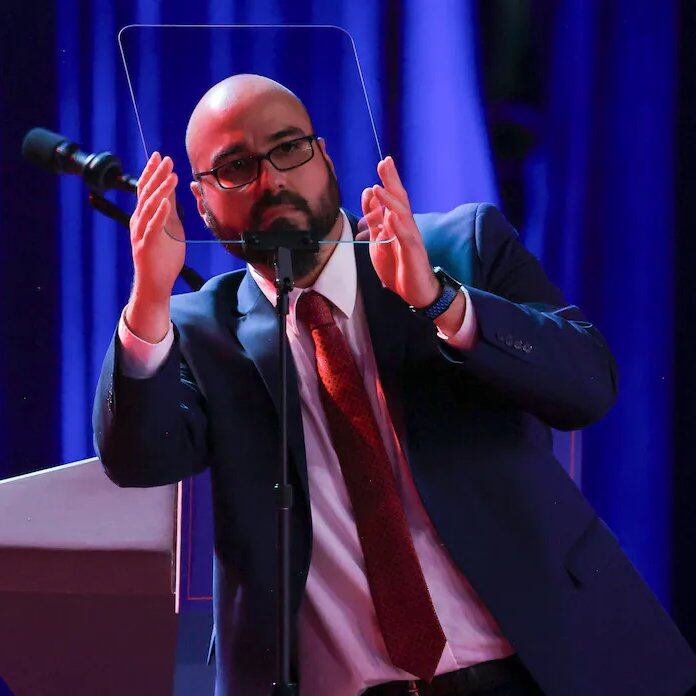
Gabriel Perez

Although Perez was hired by chance, over these 10 years, he gradually became one of Trump's closest aides. American Politico even stated that "Perez has become the only person Trump trusts," as he often receives Trump's personal last-minute modifications to public speeches.

Therefore, Perez became one of the few people with access to Trump's complete speech drafts in advance and held near-final approval authority over almost all of Trump's prepared remarks. This power is not insignificant. Perez's official title at the White House is Deputy Assistant to the President and Technical Advisor, with an annual salary of $175,000, only $20,000 less than senior staff like Chief of Staff Susie Wiles and Press Secretary Karoline Leavitt.

Such compensation already places him in the high-income bracket in the U.S., but the greedy Perez was not satisfied.

When prediction markets became popular, with countless players betting on which specific words Trump would "mention" in certain speeches, Perez discovered that his "privilege" could bring him even more wealth.

CFTC investigators found that Perez placed bets on over a dozen of Trump's speeches within about three months, with total profits exceeding $100,000. This included Trump's prime-time speech in December of last year, his speech at the World Economic Forum in Davos, Switzerland, in January of this year, the State of the Union address in February, and Trump's remarks at the Medal of Honor ceremony in March.

The U.S. President's statutory annual salary is $400,000, and with various allowances, the President receives approximately $569,000 per year. If Perez hadn't been caught, at his rate of earning over $100,000 in three months, his annual income, though his power is less than the President's, would have exceeded the President's salary.

However, even knowing the speech content in advance, Perez could not always successfully predict which words Trump would mention in his speeches because Trump often goes off-script "impromptu." When Trump skipped a word Perez had bet on during a speech, Perez would immediately sell to cut his losses. Trump himself admitted during a speech at the Detroit Economic Club in January that he doesn't look at the teleprompter 80% of the time.

Similar to the fates of the special forces soldier and the Google security engineer, Perez's exposure also originated from the prediction market platform's proactive reporting. Perez frequently used Kalshi for insider trading. Starting in March of this year, Kalshi's monitoring system detected some abnormal trades related to specific words mentioned in Trump's speeches, thus drawing attention to Perez.

After concluding its internal investigation, Kalshi quickly froze over $90,000 in Perez's account and handed the case over to the U.S. Commodity Futures Trading Commission (CFTC). Upon learning of this, Trump commented that it was "disgraceful" and personally decided to suspend Perez without pay during the suspension.

Ultimately, Perez's greed led him to lose both his profits and his original job. However, compared to the special forces soldier and the Google security engineer, Perez was fortunate because U.S. judicial authorities did not file criminal charges against him; Perez won't face jail time.

During the investigation, the CFTC had notified federal prosecutors in Manhattan, but the prosecutors declined to open a criminal investigation. According to informed sources, CFTC regulators have expressed willingness to reach a settlement with Perez and have discussed terms with him. The result requires Perez to return his profits and cease similar trades thereafter.

Perez is Just the Beginning of Purging Insiders from "Mention" Markets

The reason Perez avoided jail is that prosecutors believe his actions do not constitute a criminal offense; he neither leaked important government information in advance nor caused harm to national security. As Trump said, "it's just disgraceful," damaging the clean image of government officials.

In March of this year, the White House warned staff not to use non-public information to place bets in prediction markets. White House spokesperson Davis Ingles stated: "The White House has strict ethics guidelines, and we expect all staff and officials to adhere to them."

But Perez is definitely not the only White House staff member profiting from insider information, and Trump, who openly runs a paid subscription group, is even less qualified to comment on this teleprompter operator (Related Reading: $100,000 a Month, Trump Starts Selling 'Alpha' ).

It's no wonder Perez couldn't resist the temptation; the "mention" markets in prediction platforms are indeed the category most susceptible to manipulation. When the cost for insiders to participate is pushed extremely low, while the potential returns are extremely high, it ceases to be merely a moral issue and becomes a mechanism design problem. In the face of profit, even outwardly respectable and ostensibly righteous politicians cannot guarantee they will never cross that line.

The gameplay of "mention" markets involves users betting on specific words, phrases, or topics that will be mentioned in public speeches. Compared to other events (such as political elections, sports events, etc.), the cost of cheating in "mention" markets is extremely low. It's not limited to people like Perez who know the speech content in advance; for the speaker themselves, cheating is as simple as uttering a word, literalizing "a word is worth a thousand pieces of gold."

At the Grammy Awards ceremony in February this year, host Trevor Noah, after saying "welcome back to the Grammys," suddenly shouted the word "Potato." As everyone was confused, Trevor Noah continued, "if you bet on Polymarket that I was going to say this word, you just made a killing," and congratulated user "Noah 22." However, in reality, the "What will be mentioned at the Grammy Awards" prediction on Polymarket didn't even have "potato" as an option, and the user "noah-22" was purely fictional.

Grammy host shouting potato at the awards ceremony

Some analyses later suggested this was a marketing activity by Polymarket, but it already demonstrated the speaker's ability to manipulate the "mention" market.

There's an even more direct example. In October 2025, during Coinbase's Q3 earnings call, just as the meeting was about to end, CEO Brian Armstrong said he noticed many people were betting in prediction markets on what he would mention during this call. He then opened Polymarket and read aloud all the words listed in the options, ultimately causing all outcomes in that market to reach 100% probability, ending in a draw.

The above are just two examples showcasing speakers' control over "mention" markets; there are certainly many more individuals truly profiting from this lurking beneath the surface. However, as regulation of prediction markets gradually intensifies, perhaps all insiders in "mention" markets will eventually be purged. Perez is just the beginning.

Last month, Kalshi updated its policy, requiring users to disclose their employers. Kalshi's head of enforcement, Bobby DeNault, explained the rationale: "If you have access to information because of your job or employment, and you have a legal duty related to that information, you have an obligation not to take that information for your own use and not to convert it for personal use." Polymarket has not yet imposed such strict disclosure requirements on users, but in the increasingly competitive and compliant prediction market landscape, it is believed that stricter compliance requirements from Polymarket are also on the horizon.

From the special forces soldier and Google engineer to the White House teleprompter operator, prediction markets are step by step purging insider trading. Simultaneously, the market is undergoing a demystification of prediction markets. What was once thought to reflect the wisdom of the crowd is, in reality, just a cash machine for a few insiders.

Although purging insider trading makes prediction markets more compliant, it also moves them further away from truth and closer to being pure casinos.


Kripto yang Sedang Tren

Pertanyaan Terkait

QWho is Gabriel Perez and what was his role in the White House?

AGabriel Perez was a White House staffer, officially titled Deputy Assistant to the President and Technical Advisor. His primary role was operating the teleprompter for former President Donald Trump's speeches, a position he held since 2016.

QHow did Gabriel Perez allegedly profit over $100,000 using inside information?

AGabriel Perez allegedly used his advance knowledge of the prepared text of Trump's speeches to place bets on prediction markets, specifically Kalshi, on whether Trump would mention specific words or phrases during those speeches. Over approximately three months, he profited over $100,000 from these bets.

QWhy was Perez not criminally prosecuted for his actions, according to the article?

AFederal prosecutors reportedly declined to bring criminal charges. They determined Perez's actions did not constitute a criminal offense, as he did not leak significant government information or pose a threat to national security. The CFTC pursued a civil settlement instead.

QWhat action did prediction market platform Kalshi take after discovering Perez's suspicious activity?

AKalshi's monitoring system flagged abnormal trading activity related to Trump's speech keywords. After an internal investigation, Kalshi froze over $90,000 in Perez's account and reported the case to the U.S. Commodity Futures Trading Commission (CFTC).

QAccording to the article, what is a major flaw with 'mention' markets on prediction platforms?

AA major flaw is their vulnerability to manipulation and insider trading. The cost for insiders (like speechwriters, teleprompter operators, or the speakers themselves) to influence the outcome is extremely low, as they can simply include or exclude specific words, making these markets easy targets for exploitation rather than reflecting true crowd wisdom.

Bacaan Terkait

Setelah Tiga Kuartal Berturut-Turut Turun, Bisakah Pasar Kripto Menyambut Jendela Stabilitas di Kuartal Ketiga?

Pasar kripto mengalami kuartal terburuk sejak 2022, dengan kapitalisasi pasar turun 12.6% menjadi $2.1 triliun, didorong oleh keluarnya modal dan penurunan volume perdagangan. Bitcoin dan Ethereum masing-masing jatuh 14.2% dan 25.4% di kuartal kedua. Aliran keluar bersih dari ETF Bitcoin AS mencapai $4.67 miliar, menandakan tekanan jual yang berkelanjutan. Faktor utama meliputi terputusnya hubungan dengan saham AS, kebijakan moneter Federal Reserve yang ketat, dan pelepasan aset oleh perusahaan seperti Strategy. Proses legislasi UU CLARITY yang akan memberikan kejelasan regulasi terhambat, meningkatkan premi risiko di sektor ini. Namun, ada tanda-tanda potensi stabilisasi. Aliran keluar ETF yang besar secara historis sering terjadi di akhir fase penurunan, dan para pemegang Bitcoin jangka panjang mulai menambah kepemilikan lagi. Sementara sebagian besar sektor menyusut, pasar prediksi dan aset koleksi yang ditokenisasi mencatat pertumbuhan signifikan. Pandangan untuk kuartal ketiga sangat bergantung pada pertemuan Fed akhir Juli. Sinyal kebijakan yang lunak dapat mendukung pemulihan Bitcoin, sementara sikap yang hawkish dapat memicu konsolidasi lebih lanjut. Meskipun tantangan regulasi tetap ada, indikator teknis seperti harga Bitcoin yang mendekati rata-rata bergerak 200-mingguannya menunjukkan dasar jangka panjang belum rusak. Logika pasar telah bergeser dari mengandalkan narasi ke faktor fundamental seperti kebijakan dan ekspektasi suku bunga.

marsbitKemarin 08:40

Setelah Tiga Kuartal Berturut-Turut Turun, Bisakah Pasar Kripto Menyambut Jendela Stabilitas di Kuartal Ketiga?

marsbitKemarin 08:40

The SpaceX Trade, Terbuka: SPCXON Mulai Diperdagangkan di WEEX

SpaceX meluncurkan IPO terbesar dalam sejarah pada Juni 2026, namun akses bagi banyak pedagang terhambat oleh batasan regional dan prosedur broker. WEEX kini menghadirkan SPCXON/USDT di pasar spotnya, sebuah instrumen tokenisasi yang memungkinkan paparan terhadap pergerakan harga SpaceX melalui akun kripto yang diselesaikan dengan USDT, tanpa memerlukan broker AS atau pembiayaan bank. SPCXON adalah produk tokenisasi yang mencerminkan ekonomi kepemilikan SpaceX bagi pedagang yang memenuhi syarat di luar AS, dengan dividen diinvestasikan kembali. Aset ini diperdagangkan di WEEX sebagai pasangan spot dengan USDT, tersedia selama jam pasar, memberikan akses mudah bagi trader kripto. Kasus investasi untuk SpaceX didasarkan pada pertumbuhan pendapatan Starlink dan pencapaian Starship, meskipun valuasinya yang tinggi (sekitar 90-110 kali pendapatan) telah memperhitungkan eksekusi sempurna selama bertahun-tahun. Faktor seperti jumlah saham publik yang terbatas dan masa buka kunci (unlock) insider pertama menjadi pertimbangan penting. Penting untuk diingat bahwa SPCXON memberikan paparan, bukan kepemilikan langsung atas saham atau hak suara. Harganya dapat diperdagangkan pada premium atau diskon terhadap nilai aset bersih. WEEX menawarkan akses ke berbagai aset TradFi yang ditokenisasi seperti ini dalam satu akun terpadu, bersama dengan pasar futures dan kampanye perdagangan dengan pool hadiah.

TheNewsCryptoKemarin 08:33

The SpaceX Trade, Terbuka: SPCXON Mulai Diperdagangkan di WEEX

TheNewsCryptoKemarin 08:33

Momen Perdagangan BIT: BTC Masih Tertekan oleh EMA 200 Mingguan, Setelah Ditolak Mungkin Kembali Turun, Saham Penyimpanan dan Semikonduktor yang Melonjak Malam Kemudian Mulai Anjlok di Pasar Malam

**PASAR KRIPTO & SAHAM: BTC Hadapi Resistensi, Saham Semikonduktor Turun di Perdagangan Malam** Pasar kripto melanjutkan pemulihan, dengan harga Bitcoin bertahan di sekitar $66,000 setelah rebound lebih dari 15% dari titik terendah Juli. Namun, BTC menghadapi **tembok resistensi kuat di dekat $68,000**, yang bertepatan dengan biaya rata-rata investor selama lima bulan terakhir dan titik gagalnya rebound pertengahan Juni. Secara teknis, perhatian tertuju pada **200 EMA mingguan (~$68,328) sebagai level kunci**. Jika BTC ditolak di level ini, potensi penurunan menuju support $63,000 terbuka. Analis menyoroti volume rendah dan penurunan open interest futures di CME, menandakan rebound ini lebih dipicu likuiditas rendah musim panas daripada awal bull run penuh. Di pasar saham AS, **indeks futures utama turang** setelah sesi kemarin yang kuat. Sektor semikonduktor dan penyimpanan (storage), yang melonjak pada hari Selasa (contoh: Micron +12%), **mengalami koreksi di perdagangan malam (night trading)**. ETF semikonduktor turun 2,22% dan saham Micron turun 2,29%. Meski begitu, ada sorotan positif seperti **Super Micro Computer (SMCI)** yang naik lebih dari 15% setelah melaporkan pandangan pendapatan yang kuat dan pesanan baru yang sangat besar, mengonfirmasi permintaan server AI tetap solid. Kekhawatiran makro muncul dari **kenaikan harga minyak mentah (di atas $91)** akibat ketegangan geopolitik dan **lonjakan imbal hasil (yield) obligasi pemerintah AS**, dengan imbal hasil 10-tahun mencapai sekitar 4,64%. Faktor-faktor ini dapat menambah tekanan inflasi dan membatasi ruang gerak pasar saham. Saham terkait kripto seperti Coinbase dan Robinhood naik kuat didorong oleh perkembangan regulasi yang lebih jelas di AS. Di Asia, **Korea Selatan** dan **Jepang** menunjukkan kinerja beragam. Indeks KOSPI Korea naik didukung pemulihan saham semikonduktor, sementara pasar Jepang melemah dengan **Yen terus melemah ke level terendah sejak 1986**, meningkatkan kekhawatiran akan intervensi bank sentral. **Yang Perlu Diperhatikan Selanjutnya:** * **22 Juli:** Acara AI AMD, rilis laporan keuangan dari Google (Alphabet), Tesla, IBM. * **23 Juli:** Keputusan suku bunga Bank Sentral Eropa (ECB), data klaim pengangguran AS, laporan keuangan Intel. * Perkembangan lebih lanjut dari **harga minyak, imbal hasil obligasi, dan dinamika Yen Jepang** akan menjadi penentu sentimen pasar risiko secara keseluruhan.

marsbitKemarin 08:32

Momen Perdagangan BIT: BTC Masih Tertekan oleh EMA 200 Mingguan, Setelah Ditolak Mungkin Kembali Turun, Saham Penyimpanan dan Semikonduktor yang Melonjak Malam Kemudian Mulai Anjlok di Pasar Malam

marsbitKemarin 08:32

Mantan Ketua CFTC dan Presiden Circle, Tarbert: Satu Pihak Menasihati Anda untuk Berpikir Jangka Panjang, di Sisi Lain Menguangkan $30 Juta Sendiri

Penulis: Zen, PANews Heath Tarbert, mantan Ketua CFTC dan Presiden Circle, baru-baru ini menyerukan kepada investor untuk mengadopsi pandangan jangka panjang terhadap saham Circle, meskipun harganya telah turun 70% dari puncaknya. Namun, ia sendiri secara konsisten menjual saham CRCL sejak perusahaan go public, menguangkan sekitar $30 juta tanpa pernah membeli saham tambahan di pasar terbuka. Tarbert, yang bergabung dengan Circle pada Juli 2023 dan menjadi Presiden pada awal 2025, dikenal sebagai pendukung kuat narasi "jangka panjang" perusahaan. Namun, sehari sebelum IPO Circle, ia menetapkan rencana perdagangan 10b5-1 untuk menjual hingga 353.290 saham dalam setahun. Dalam 13 bulan setelah IPO, ia menjual lebih dari 360.000 saham, termasuk penjualan tunggal senilai $11,5 juta pada Maret 2026. Ia bahkan menetapkan rencana 10b5-1 kedua untuk menjual hingga 160.000 saham lagi pada akhir tahun 2026. Langkah Tarbert ini menuai kecaman karena dianggap tidak konsisten dengan pesan "jangka panjang" yang ia sampaikan kepada publik. Perjalanan kariernya sering dikaitkan dengan "revolving door" antara regulator dan dunia keuangan. Setelah mengundurkan diri sebagai Ketua CFTC pada Maret 2021, ia bergabung dengan Citadel Securities hanya 27 hari kemudian sebagai Kepala Penasihat Hukum, tepat saat perusahaan itu menghadapi pengawasan ketat terkait peristiwa GameStop. Di Citadel, ia juga mendukung undang-undang yang memperluas wewenang CFTC atas pasar crypto, sementara Citadel diketahui berencana berekspansi ke aset kripto. Tarbert kemudian pindah ke Circle pada 2023, membantu perusahaan mengatasi tantangan regulasi dan akhirnya go public melalui IPO langsung. Meskipun sangat berharga bagi perusahaan, tindakannya menjual saham dalam jumlah besar sambil mendorong investor untuk bertahan menimbulkan pertanyaan tentang komitmennya yang sebenarnya terhadap masa depan jangka panjang Circle.

marsbitKemarin 08:09

Mantan Ketua CFTC dan Presiden Circle, Tarbert: Satu Pihak Menasihati Anda untuk Berpikir Jangka Panjang, di Sisi Lain Menguangkan $30 Juta Sendiri

marsbitKemarin 08:09

Gate Research Institute: Produk Keuangan Kripto Menggulirkan Gelombang "Wall Street-ization", Kompetisi atau Integrasi?

**Ringkasan: Gelombang "Wall Street-ization" Produk Keuangan Kripto: Kompetisi atau Integrasi?** Artikel ini membahas fenomena konvergensi antara keuangan tradisional (TradFi) dan keuangan kripto (Crypto). Meskipun Bitcoin awalnya dirancang sebagai sistem peer-to-peer yang terdesentralisasi dan bebas dari perantara seperti bank, pasar kripto kini semakin diintegrasikan ke dalam infrastruktur keuangan tradisional. **Tren "Wall Street-ization":** Dimulai dengan disetujuinya ETF spot Bitcoin pada 2024, aset kripto kini dikemas menjadi produk seperti ETF (oleh BlackRock, Fidelity, dll.), futures, dan sekuritisasi aset riil (RWA) seperti obligasi pemerintah yang ditokenisasi. Ini memberikan akses yang mudah dan teregulasi bagi investor institusional, tetapi juga berarti kekuasaan atas penerbitan, penentuan harga, kustodian, dan distribusi aset kripto semakin bergeser ke lembaga keuangan besar. **Dua Jalur Konvergensi (1+1>2):** Artikel ini menyoroti dua arah integrasi: 1. **Dari CEX ke TradFi:** Dilambangkan oleh **Gate.io**, yang berkembang dari bursa kripto menjadi platform multi-aset. Gate kini menawarkan perdagangan saham nyata (AS, Hong Kong, Korea) menggunakan USDT, menyediakan akses tanpa batas waktu ke pasar tradisional. 2. **Dari TradFi ke Crypto:** Dilambangkan oleh **Robinhood**, platform broker tradisional yang memperluas layanannya ke aset kripto (termasuk melalui akuisisi Bitstamp) dan mengembangkan produk seperti token saham di blockchain. **Tujuan Bersama: Akun Keuangan "Super" Terpadu:** Kedua jalur ini bertujuan menciptakan **akun keuangan generasi berikutnya yang terpadu**. Pengguna di masa depan mungkin dapat memperdagangkan Bitcoin, saham Apple, ETF, emas, dan obligasi pemerintah yang ditokenisasi dalam satu antarmuka yang sama, menggunakan stablecoin sebagai lapisan dana. **RWA dan Obligasi Pemerintah di On-Chain sebagai Lapisan Tengah:** Tokenisasi aset dunia nyata, terutama obligasi pemerintah AS, menyediakan aset berpenghasilan rendah risiko di ekosistem on-chain. Pasar ini tumbuh pesat (naik 40% pada paruh pertama 2026) meskipun pasar kripto turun, menunjukkan permintaan nyata. **Kesimpulan:** "Wall Street-ization" bukanlah pengambilalihan sepihak, melainkan **transformasi timbal balik**. TradFi dan Crypto saling melengkapi: Crypto mendapatkan akses ke likuiditas, kepatuhan, dan jaringan distribusi yang luas, sementara TradFi mengadopsi efisiensi, kecepatan, dan pasar 24/7 dari Crypto. Hasil akhirnya adalah pembentukan **pasar modal terpadu yang lebih efisien dan global**, di mana batas antara aset tradisional dan kripto semakin kabur.

marsbitKemarin 08:07

Gate Research Institute: Produk Keuangan Kripto Menggulirkan Gelombang "Wall Street-ization", Kompetisi atau Integrasi?

marsbitKemarin 08:07

Trading

Spot

Artikel Populer

Cara Membeli HOUSE

Selamat datang di HTX.com! Kami telah membuat pembelian Housecoin (HOUSE) menjadi mudah dan nyaman. Ikuti panduan langkah demi langkah kami untuk memulai perjalanan kripto Anda.Langkah 1: Buat Akun HTX AndaGunakan alamat email atau nomor ponsel Anda untuk mendaftar akun gratis di HTX. Rasakan perjalanan pendaftaran yang mudah dan buka semua fitur.Dapatkan Akun SayaLangkah 2: Buka Beli Kripto, lalu Pilih Metode Pembayaran AndaKartu Kredit/Debit: Gunakan Visa atau Mastercard Anda untuk membeli Housecoin (HOUSE) secara instan.Saldo: Gunakan dana dari saldo akun HTX Anda untuk melakukan trading dengan lancar.Pihak Ketiga: Kami telah menambahkan metode pembayaran populer seperti Google Pay dan Apple Pay untuk meningkatkan kenyamanan.P2P: Lakukan trading langsung dengan pengguna lain di HTX.Over-the-Counter (OTC): Kami menawarkan layanan yang dibuat khusus dan kurs yang kompetitif bagi para trader.Langkah 3: Simpan Housecoin (HOUSE) AndaSetelah melakukan pembelian, simpan Housecoin (HOUSE) di akun HTX Anda. Selain itu, Anda dapat mengirimkannya ke tempat lain melalui transfer blockchain atau menggunakannya untuk memperdagangkan mata uang kripto lainnya.Langkah 4: Lakukan trading Housecoin (HOUSE)Lakukan trading Housecoin (HOUSE) dengan mudah di pasar spot HTX. Cukup akses akun Anda, pilih pasangan perdagangan, jalankan trading, lalu pantau secara real-time. Kami menawarkan pengalaman yang ramah pengguna baik untuk pemula maupun trader berpengalaman.

492 Total TayanganDipublikasikan pada 2025.04.27Diperbarui pada 2026.06.02

Cara Membeli HOUSE

Diskusi

Selamat datang di Komunitas HTX. Di sini, Anda bisa terus mendapatkan informasi terbaru tentang perkembangan platform terkini dan mendapatkan akses ke wawasan pasar profesional. Pendapat pengguna mengenai harga HOUSE (HOUSE) disajikan di bawah ini.

活动图片