Won't US Stocks Ever Fall Again? The 'Great Melt-up' Trap in the Era of High Debt

marsbitDipublikasikan tanggal 2026-06-17Terakhir diperbarui pada 2026-06-17

Abstrak

The article analyzes a popular theory circulating online that the U.S. stock market may be mathematically incapable of a true, sustained decline due to the country's massive and growing national debt. The argument suggests that the government's only path to managing this debt is through inflation and money printing, which would nominally lift asset prices like stocks, creating a perpetual "melt-up." The author places this idea within the historical context of market melt-ups, such as the dot-com bubble and Japan's asset bubble, where prices detach from fundamentals driven by momentum and FOMO. While acknowledging that a high-debt environment creates incentives for inflation, which is generally favorable for assets over cash, the article refutes key claims of the online theory. It clarifies that interest payments are not about to exceed GDP, that printing money is not the only option for the government, and that stocks do not reliably rise in lockstep with hyperinflation, citing historical examples from Germany, Zimbabwe, and Venezuela. The more probable outcome, according to the author, is a prolonged period of financial repression—moderate inflation above interest rates that slowly erodes debt and cash purchasing power, leading to nominally higher asset prices but potentially lower real returns. The core warning is that while long-term market trends may be upward, this does not eliminate the risk of significant interim crashes (30%, 40%, or more) or guarantee real wealth c...

Original Title: Hitting escape velocity in the Great Melt-up

Original Author: GRAHAM STEPHAN

Original Translator: Peggy

Editor's Note: This article, starting from a viral and subsequently deleted Reddit post, discusses an increasingly tempting judgment in the current US stock market: In the context of high US debt, continuously expanding fiscal deficits, and the ongoing dilution of monetary purchasing power, has the stock market entered a new state where it "cannot truly fall"?

The logic of the Reddit post is simple: The US debt scale has become too large, and the government can ultimately only dilute the debt by printing money and inflation; when the currency depreciates, stocks and hard assets priced in US dollars will also rise accordingly. Therefore, stocks are no longer just risky assets but resemble shelters against currency depreciation.

The author analyzes this claim within the framework of the "Melt-up" (referring to the final-stage accelerated rise in asset prices detached from fundamentals, driven by liquidity, momentum, and FOMO). Similar moments have occurred in history, such as during the Internet bubble and the Japanese asset bubble: new technologies or real growth initially provide a narrative foundation, then leverage and sentiment take over the market, leading investors to believe that old valuation rules have become obsolete.

The key reminder of the article is that a high-debt world does indeed favor assets over cash, but this does not mean stocks are "mathematically impossible to fall." Inflation can push up the nominal prices of assets but does not necessarily bring real wealth growth; the stock market's long-term new highs do not prevent interim drawdowns of 30%, 40%, or even deeper. Historically, in extreme inflation cases like Germany, Zimbabwe, and Venezuela, stock market increases did not equate to investors actually getting richer. Many were forced to sell to cover living costs before asset prices recovered.

The judgment the author ultimately offers is not extreme: The US is more likely to experience not debt default or hyperinflation but a prolonged period of financial repression—inflation slightly higher than interest rates, debt gradually diluted, cash purchasing power continuously eroded, asset prices nominally continuing to rise, but real returns potentially lower than the levels investors have become accustomed to over the past decade.

For investors currently attracted by the narratives of AI, US tech stocks, and "every dip gets bought," what this article truly aims to discuss is not whether to be bullish on US stocks, but how to avoid staking one's entire financial future on an overly smooth upward story. Assets may rise, but that doesn't mean risk disappears; the market may be rescued, but that doesn't mean everyone can hold on until the next new high.

Below is the original text:

This might sound crazy, but what if I told you that, mathematically speaking, the stock market might genuinely never fall again?

Last week, a post on Reddit suddenly went viral, presenting a rather compelling argument. Although the post was deleted after gaining popularity, its gist was this: "Stocks only go up" is no longer just a meme; it's a law. Like gravity, but in the opposite direction, and it acts on money.

The US now owes $40 trillion in debt. Our interest payments will soon exceed GDP. This means the only way for the government to merely pay the interest is to print enough money.

This will lead to hyperinflation. But what does it matter if you hold Palantir or Tesla stock? Those stocks will inflate proportionally. In other words, starting now, it's mathematically impossible for stocks to fall. If they did, the entire world economy would collapse.

That's why you see any "crash" get repaired within half a trading day. Literally, the stock market cannot fall anymore. This isn't last-gasp bravado; it's the new market law.

This isn't the first time such a viewpoint has appeared, but this time, the economic environment warrants serious consideration. So, we need to clarify: What's really happening now? Why is the government forced to continue printing money at an unimaginable scale? And what are the consequences if this theory holds true?

Because if this theory is correct, we might witness the largest wealth transfer in history. If it's wrong, it's a harvest.

Before we begin, if this is your first time reading my article, welcome to join over 40,000 subscribers in understanding the market ahead of time. You'll receive one email per week, completely free.

The Great Melt-up

The "stocks only go up" argument is built on a theory economists call "The Great Melt-up."

The logic of this theory is: Every bull market keeps rising until it enters a mania phase. Prices are no longer driven by fundamentals like earnings or cash flow but almost entirely by momentum. At this stage, you feel like everyone around you is getting rich, and you're the only one left behind.

The belief is simple: Prices will continue to rise because they have been rising so far.

This phenomenon isn't as rare as you might think. In the "melt-up" phase, returns can be staggering until they suddenly stop.

Take the late-1990s Internet bubble. From 1995 to March 2000, the Nasdaq rose 400%, with nearly 90% of that gain in the final year alone. Back then, many companies with no revenue, no profits, or even no real products could command valuations of hundreds of millions of dollars.

In December 1999, the CAPE ratio reached 44, the highest level in 140 years. Investors believed the internet had changed how markets worked. "AI will change everything." Sound familiar?

Then, the Nasdaq plunged 78% over the next two and a half years and took over a decade to return to its previous highs.

Look at Japan. Between 1975 and 1989, Japanese stocks rose 900%. At the peak, Japanese stocks had a P/E ratio as high as 60x. Land prices in Tokyo became absurdly expensive: The land value of the Imperial Palace grounds was even thought to exceed that of the entire state of California.

This was clearly ridiculous, but no one wanted to be the first to exit and miss the subsequent rise. When Japan started raising interest rates, the entire economic system collapsed, and the stock market fell 60% in less than two years. It took the Japanese economy 34 years to finally return to its previous peak.

However, this doesn't mean every rally is a melt-up.

The early stages of every melt-up are usually driven by some real factor: new technology, real economic growth, or a different policy environment. But when FOMO and leverage enter the market, valuations get stretched higher, and everyone starts believing the good times won't end.

So, are we in a melt-up today? We need to look at the stock market of 2026 first.

The Melt-up Theory on Reddit

The core of this Reddit theory is debt.

If the US government owes $40 trillion in debt while still running a $2 trillion annual deficit, how exactly does America get out of this debt without destroying the economy?

The simplest path is to dilute the debt through inflation. The purchasing power of the dollar falls until that $39 trillion debt becomes less burdensome in real terms. This tactic is called "financial repression" because it erodes the wealth created by ordinary people. The US government used a similar approach after World War II.

But when a government devalues its currency, everything priced in that currency rises accordingly: stocks, hard assets, all become nominally more valuable on paper. The problem is, this paper appreciation of assets doesn't equal an increase in real wealth because the dollar itself has become less valuable.

So, when Goldman Sachs recently raised its year-end target for the S&P 500 to 8000 points, even if this prediction comes true, it might not be a simple positive.

The alternative to infinite rising is a genuine stock market crash. But no one would be insane enough to actively choose that path.

However, what's truly unsettling are these numbers: By almost every major valuation metric, US stocks are not cheap. In fact, what investors are paying for every dollar of earnings is near historical highs, roughly double the long-term historical average.

The CAPE ratio has only broken above 40 twice in history. Once during the 1999 Internet bubble, and now.

This means the current market isn't just pricing in a debt-driven melt-up; it's exhibiting a state seen only once in 140 years of market history.

So, how do we judge whether the "Great Melt-up theory" will hold or collapse?

The Crash Test

Some statements in that Reddit post require closer examination.

First, that interest payments will soon exceed GDP—this is wrong.

What exceeds 100% is the debt-to-GDP ratio, not the interest-payments-to-GDP ratio. These are two different things. Historically, the US has been in similar situations and gotten out by "printing money," driving market recovery and further gains.

Second, that the only way to pay interest is to keep printing money—this is also wrong.

The government can also borrow money by selling Treasury bonds to investors, pension funds, other governments, and institutions. Of course, this model can't go on forever.

Third, that stocks will rise proportionally with hyperinflation—this, too, is wrong.

Historical experience doesn't support this. Between 1918 and 1922, the German stock market lost 97% of its value before hyperinflation peaked. Many were forced to sell stocks at the bottom just to pay for rent and food.

In Zimbabwe, the stock market did rise 500-fold, but the local currency depreciated by 99.8% against the US dollar. Similar situations occurred in Venezuela in 2018.

So, what's crucial to understand is: A great melt-up isn't necessarily a boon for stock holders.

Stocks can rise during inflation, but this doesn't automatically mean you get richer. If your portfolio is up 10%, but everything you buy costs 10% more, you haven't actually gained.

So, with this information, what should we really do?

The Exit Plan

History suggests the most likely outcome is: The US will not default on its debt, nor experience unprecedented hyperinflation, nor enter an infinite melt-up fueled by endless money printing due to treasury problems.

A more realistic result is a long, slow period of financial repression: inflation slightly above interest rates, debt becoming more manageable, and the purchasing power of the dollar gradually being lower than in the past.

The cost is that savers are quietly squeezed. Cash loses value, prices keep rising, asset prices in dollar terms continue to climb, but real returns after inflation may be far lower than what investors grew accustomed to over the past decade.

For the stock market, prices are likely to continue rising in the long term because when the dollar's purchasing power declines, asset nominal prices typically rise.

But the stock market's long-term upward trend doesn't mean it can't crash along the way. The market could still fall 30%, 40%, or even 60% from current levels. But it could also set new highs afterward.

These two seemingly contradictory facts can coexist at different times: The market is expensive, and a single event could trigger a 20% sell-off. Nothing is zero-risk. On the other hand, high debt doesn't necessarily mean high inflation, nor does it necessarily mean the stock market will be continuously bid up. Most importantly, you shouldn't base your entire financial future on the hope that "the next bailout will definitely happen."

In my view, that Reddit post is directionally correct, but it misunderstands the path to the outcome.

In a high-debt world, governments do have a strong incentive to let inflation bear the main burden. Over a sufficiently long time horizon, this generally favors assets over cash. But this absolutely does not mean "stocks are mathematically impossible to fall." That's a dangerous assumption.

This assumption makes people rush into every market frenzy, thinking it's their last chance to get rich. They buy at extreme valuations, with no margin of safety, no diversification, and no plan for what the market has done repeatedly—fall.

I'm not here predicting a crash. Many very smart people believe the market can keep rising.

But historically, those who ultimately win during inflationary periods are usually not those who bet their entire portfolio on the most expensive, highest-multiple stocks. The winners are often those with a collection of productive assets: stocks, real estate, some cash, maybe some gold and short-term bonds, and who aren't forced to sell when markets get rough.

In a high-debt world, over the long term, stocks might outperform cash. But this could also mean your portfolio sees almost no real growth for 10, 15, or even 20 years after inflation.

So, rather than relying on your willpower to endure decades of stagnation, build a system that doesn't require you to treat "hope" as an investment strategy.

To summarize, the answer is not panic, nor is it selling everything. But the answer is also not going all-in, using leverage, and assuming every dip will be bought.

This is a very emotional period. You might be tempted to bet everything on a so-called "once-in-a-lifetime opportunity." But risk is always two-sided.

I believe, for most people, the better choice is to stay diversified, not overly concentrated in the most expensive companies. Hold enough cash so you're never forced to sell at the worst possible time.

Most importantly, please don't base your entire financial future on a viral Reddit post.

Stick to your regular investment plan, stay diversified. If you found this article helpful, feel free to like it, share it, or send it to someone you don't want to be left behind by the market.

Original link

Kripto yang Sedang Tren

Pertanyaan Terkait

QWhat is the core argument of the Reddit post discussed in the article, and why does the author believe it is a dangerous assumption?

AThe core argument of the Reddit post is that, due to the massive U.S. national debt, the government has no choice but to inflate the currency to dilute it. In this scenario, assets priced in dollars (like stocks) would rise proportionally with inflation, making them mathematically incapable of falling without causing a total economic collapse. The author believes this is a dangerous assumption because it leads investors to buy at extreme valuations without a safety margin, a diversified portfolio, or a plan for market downturns, which history shows can and do occur even during inflationary periods.

QWhat does the term 'Great Melt-up' (Melt-up) refer to, and what are the historical examples provided in the article?

AThe term 'Great Melt-up' refers to a phase in a bull market where prices are driven almost entirely by momentum, FOMO (fear of missing out), and leverage, rather than fundamentals like earnings or cash flow. It's characterized by a belief that prices will keep rising simply because they have been rising. Historical examples provided include the Dot-com bubble of the late 1990s, where the Nasdaq rose 400% before crashing 78%, and the Japanese asset price bubble from 1975 to 1989, where the stock market rose 900% before collapsing by 60%.

QAccording to the author, what is the most likely economic outcome for the U.S. given its high debt, and what would be its main consequences for savers and investors?

AThe author argues the most likely outcome is a prolonged period of 'financial repression.' This involves inflation running moderately higher than interest rates, which gradually erodes the real value of the debt and makes it more manageable. The main consequence for savers and investors is that the purchasing power of cash is steadily eroded. While asset prices (like stocks) may continue to rise in nominal dollar terms, the real, inflation-adjusted returns are likely to be significantly lower than what investors have been accustomed to over the past decade.

QWhy does the author say that stock prices rising during high inflation does not automatically mean investors become wealthier?

AThe author explains that if an investment portfolio increases by 10% in nominal terms, but the cost of everything the investor needs to buy (goods and services) also increases by 10%, the investor's real purchasing power remains unchanged. They are not actually wealthier. Historical examples like Germany (1918-1922), Zimbabwe, and Venezuela show that even if stock indices rise dramatically in local currency terms, the currency's value can collapse faster, and many people are forced to sell assets at depressed prices just to cover basic living costs.

QWhat practical investment advice does the author give to navigate the current high-debt, potentially inflationary environment?

AThe author advises against panic selling or going all-in on expensive, high-momentum stocks. Instead, the recommended strategy is to maintain a diversified portfolio of productive assets (such as stocks, real estate, some cash, and possibly gold or short-term bonds). This ensures one is not overly concentrated in the most expensive parts of the market. Crucially, one should hold enough cash reserves to avoid being forced to sell assets at the worst possible time during a market downturn. The key is to have a systematic plan and not rely on hope or the assumption that every dip will be rescued by the government.

Bacaan Terkait

Pemburu Jadi Mangsa, MEV Bot yang Paling Cuan Diretas

Penyerang MEV Bot yang Terkenal, Jaredfromsubway.eth, Kehilangan Lebih dari $7,5 Juta dalam Serangan 'Perangkap Madu'. Alamat MEV Bot Ethereum yang terkenal dan sangat aktif, Jaredfromsubway.eth, mengalami serangan rantai yang sangat bertarget pada hari Sabtu, yang mengakibatkan kerugian lebih dari $7,5 juta. Menurut investigasi Blockaid, serangan ini bukanlah serangan phishing tradisional atau eksploitasi kerentanan kontrak pintar, melainkan serangan 'perangkap madu MEV balik' (counter-MEV honeypot attack) yang dirancang khusus untuk mengeksploitasi logika perilaku MEV Bot. Penyerang telah menyebarkan 66 kontrak token palsu dan kumpulan likuiditas palsu selama beberapa minggu sebelumnya. Aset-aset ini disamarkan sebagai aset stabil utama seperti WETH, USDC, dan USDT, dan membangun jalur perdagangan arbitrase yang tampak nyata. Rantai serangan berkembang: kumpulan likuiditas palsu menciptakan sinyal 'kesenjangan harga yang dapat diarbitrase'; bot MEV secara otomatis mengidentifikasi peluang dan mengeksekusi perdagangan; bot memberikan otorisasi ke kontrak bantu yang dikendalikan penyerang selama proses perdagangan; otorisasi ini tidak dicabut tepat waktu, menciptakan paparan izin yang terus-menerus; akhirnya, penyerang memanggil logika 'pintu belakang' yang telah dipasang sebelumnya dalam satu transaksi, secara langsung mentransfer aset ETH, USDC, dan USDT yang dipegang oleh alamat MEV bot tersebut. Jaredfromsubway.eth adalah salah satu bot MEV paling aktif dan menguntungkan di jaringan Ethereum, yang terkenal karena menjalankan serangan 'sandwich' secara sistematis untuk menangkap keuntungan dari pergerakan harga. Cointelegraph Research menunjukkan bahwa sekitar 70% dari sekitar 60.000 hingga 90.000 serangan sandwich bulanan di Ethereum antara November 2024 dan Oktober 2025 terkait dengan strateginya. Diperkirakan bot ini telah menghasilkan puluhan juta dolar AS. Peristiwa ini menjadi peringatan keras tentang meningkatnya ancaman keamanan di ekosistem crypto. Bahkan pemain tingkat atas seperti Jaredfromsubway.eth, yang biasanya berada di sisi 'predator', kini menjadi target dari serangan canggih yang mengeksploitasi logika operasional otomatis mereka sendiri. Selain itu, setelah peretasan, sebuah akun X tidak dikenal dengan 94.000 pengikut mengubah namanya menjadi Jaredfromsubway.eth dan secara palsu mengklaim akan menawarkan hadiah $1 juta untuk pengembalian dana, memicu peringatan dari pengembang agar pengguna tetap waspada terhadap kemungkinan penipuan.

marsbit28m yang lalu

Pemburu Jadi Mangsa, MEV Bot yang Paling Cuan Diretas

marsbit28m yang lalu

Pemburu Dikepung, MEV Bot yang Paling Bisa Hasilkan Uang Diretas

Alamat bot MEV terkenal di Ethereum, Jaredfromsubway.eth, baru-baru ini menjadi korban serangan yang sangat tersasar dan kehilangan lebih dari $7.5 juta. Serangan ini bukanlah phising atau eksploitasi kerentanan kontrak pintar biasa, melainkan serangan "counter-MEV honeypot" yang dirancang khusus untuk mengeksploitasi logika operasional bot MEV. Penyerang dengan sabar menyiapkan puluhan kontrak token dan pool likuiditas palsu selama beberapa minggu, yang menyamar sebagai aset seperti WETH, USDC, dan USDT. Mereka membuat sinyal arbitrase yang tampak menguntungkan. Saat bot Jaredfromsubway.eth mendeteksi dan mencoba mengeksekusi peluang arbitrase ini, bot tersebut secara tidak sengaja memberikan izin (approval) ke kontrak bantu milik penyerang. Izin ini kemudian dieksploitasi dalam satu transaksi untuk menguras aset ETH, USDC, dan USDT dari dompet bot. Jaredfromsubway.eth sendiri adalah salah satu bot MEV paling aktif dan menguntungkan di Ethereum, yang terkenal terutama karena sering melakukan "serangan sandwich" untuk mengambil keuntungan dari selisih harga. Peristiwa ini menunjukkan bahwa bahkan pemain yang biasanya berperan sebagai "predator" di ekosistem crypto pun rentan terhadap ancaman keamanan yang semakin canggih. Setelah serangan, muncul akun palsu di X yang mengaku sebagai Jaredfromsubway.eth dan menawarkan pengembalian dana, yang telah diperingatkan oleh pengembang sebagai potensi penipuan.

Odaily星球日报35m yang lalu

Pemburu Dikepung, MEV Bot yang Paling Bisa Hasilkan Uang Diretas

Odaily星球日报35m yang lalu

Kondisi Pembayaran di Amerika Latin Tak Sesuai dengan yang Anda Bayangkan

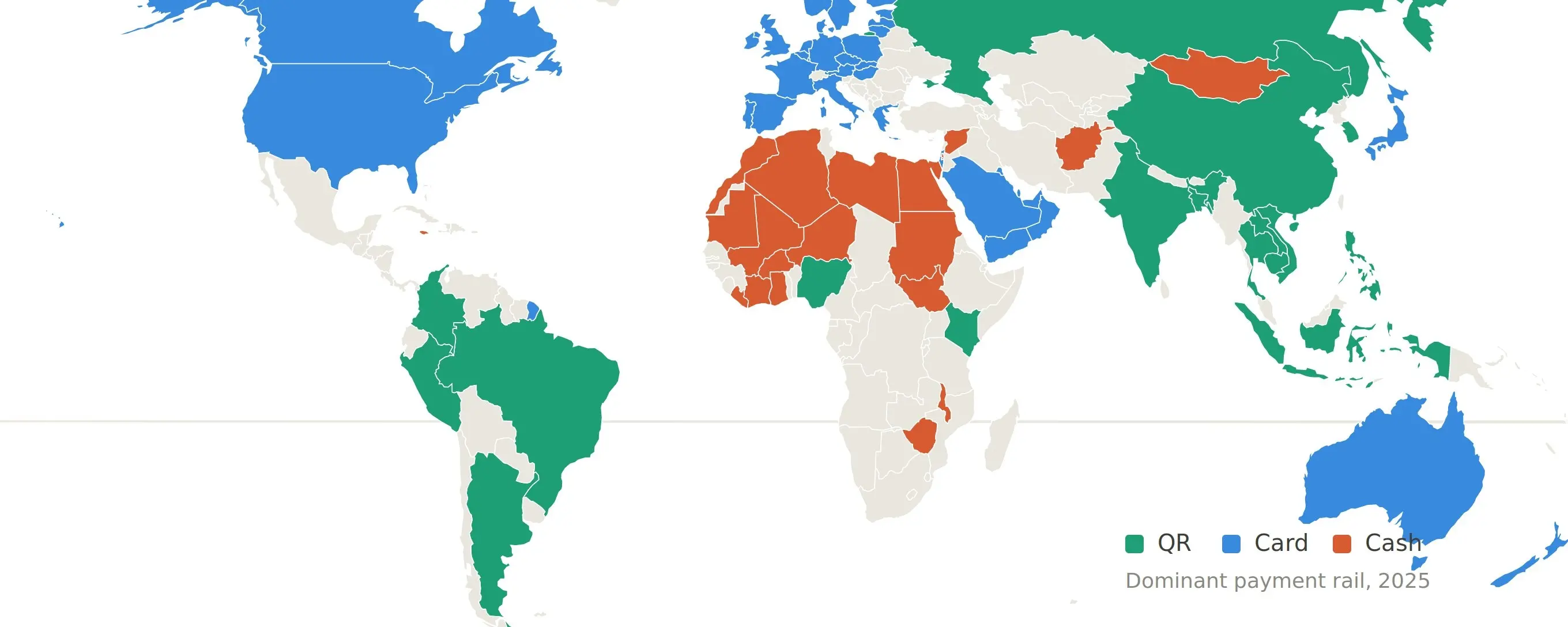
**Ringkasan: Kondisi Pembayaran di Amerika Latin Berbeda dari Bayangan Anda** Penulis menghabiskan hampir sebulan di Amerika Latin, melakukan riset lapangan selama 500 jam dan berbicara dengan lebih dari 100 pengguna lokal serta regulator. Temuannya mengejutkan dan berbeda dari narasi umum. 1. **Kartu Kripto**: Volume transaksi sebenarnya berasal dari profesional bergaji tinggi yang menerima gaji dalam dolar AS atau stablecoin (seperti USDT), lalu mengonversinya ke mata uang lokal via Pix (Brazil), bukan dari transaksi ritel kecil seperti membeli kopi. 2. **Dominasi QR Code**: Pembayaran QR sedang menguasai pasar pembayaran negara berkembang. Di Brasil, Pix memproses >60 miliar transaksi/bulan. Peta global menunjukkan negara berpenduduk padat (China, India, Brasil, dll) didominasi QR, sementara negara kaya (AS, Eropa Barat) masih bertahan dengan kartu. 3. **Peluang Besar**: Interoperabilitas internasional antar sistem pembayaran instan lokal (seperti Pix, UPI, CoDi) masih terpecah-pecah. Ini adalah peluang besar yang belum terbangun. 4. **Persaingan Bergeser**: Persaingan bukan lagi sekadar akuisisi pengguna, tetapi memperebutkan infrastruktur penyelesaian (settlement). Perusahaan pembayaran terkemuka mulai mengakuisisi bank untuk efisiensi biaya dan kepatuhan. 5. **Amerika Latin Bukan Satu Pasar**: Setiap negara (Brasil, Argentina, Meksiko, dll) memiliki dinamika mata uang, regulasi, dan pola ekonomi informal yang sangat berbeda. Memperlakukan mereka sebagai satu kesatuan adalah kesalahan. 6. **Neobank Beralih ke Valas**: Bisnis stablecoin untuk transfer lintas batas semakin kompetitif dengan margin yang menyusut cepat, mendorong perusahaan untuk menjadikannya produk pintu masuk ke layanan lain. 7. **Ekspansi Lintas Batas adalah Kunci**: Startup pembayaran generasi berikutnya perlu memiliki identitas merek dan teknologi yang dapat diskalakan secara internasional sejak hari pertama, bukan hanya fokus mendalam di satu koridor. 8. **Brasil & Meksiko Sudah Jenuh**: Koridor yang kurang diperhatikan seperti "Lima Negara yang Terlupakan" (Republik Dominika, Guatemala, Honduras, Nikaragua, El Salvador) justru menerima arus remitansi besar dengan kompetisi yang jauh lebih rendah. 9. **Segmentasi Pasar yang Tepat**: Misalnya di Brasil, setidaknya ada 5 segmen pengguna dengan aliran dana dan kebutuhan berbeda (turis, ekspatriat, digital nomad, pengguna dompet digital muda, pengguna kripto asli). Strategi pemasaran harus disesuaikan. 10. **Regulasi Lebih Maju**: Bertentangan dengan persepsi, regulator Amerika Latin (Brasil, Meksiko, Kolombia, dll) seringkali lebih progresif dan jelas dalam mengatur aset kripto dan pembayaran digital dibandingkan AS. Kerangka regulasi seringkali sudah ada. Penutup: Peluang sebenarnya bukan hanya pada saluran konversi mata uang/stablecoin, tetapi pada layanan nilai tambah yang dibangun di atasnya.

链捕手47m yang lalu

Kondisi Pembayaran di Amerika Latin Tak Sesuai dengan yang Anda Bayangkan

链捕手47m yang lalu

Trading

Spot
Futures

Artikel Populer

Cara Membeli ERA

Selamat datang di HTX.com! Kami telah membuat pembelian Caldera (ERA) menjadi mudah dan nyaman. Ikuti panduan langkah demi langkah kami untuk memulai perjalanan kripto Anda.Langkah 1: Buat Akun HTX AndaGunakan alamat email atau nomor ponsel Anda untuk mendaftar akun gratis di HTX. Rasakan perjalanan pendaftaran yang mudah dan buka semua fitur.Dapatkan Akun SayaLangkah 2: Buka Beli Kripto, lalu Pilih Metode Pembayaran AndaKartu Kredit/Debit: Gunakan Visa atau Mastercard Anda untuk membeli Caldera (ERA) secara instan.Saldo: Gunakan dana dari saldo akun HTX Anda untuk melakukan trading dengan lancar.Pihak Ketiga: Kami telah menambahkan metode pembayaran populer seperti Google Pay dan Apple Pay untuk meningkatkan kenyamanan.P2P: Lakukan trading langsung dengan pengguna lain di HTX.Over-the-Counter (OTC): Kami menawarkan layanan yang dibuat khusus dan kurs yang kompetitif bagi para trader.Langkah 3: Simpan Caldera (ERA) AndaSetelah melakukan pembelian, simpan Caldera (ERA) di akun HTX Anda. Selain itu, Anda dapat mengirimkannya ke tempat lain melalui transfer blockchain atau menggunakannya untuk memperdagangkan mata uang kripto lainnya.Langkah 4: Lakukan trading Caldera (ERA)Lakukan trading Caldera (ERA) dengan mudah di pasar spot HTX. Cukup akses akun Anda, pilih pasangan perdagangan, jalankan trading, lalu pantau secara real-time. Kami menawarkan pengalaman yang ramah pengguna baik untuk pemula maupun trader berpengalaman.

800 Total TayanganDipublikasikan pada 2025.07.17Diperbarui pada 2026.06.02

Cara Membeli ERA

Diskusi

Selamat datang di Komunitas HTX. Di sini, Anda bisa terus mendapatkan informasi terbaru tentang perkembangan platform terkini dan mendapatkan akses ke wawasan pasar profesional. Pendapat pengguna mengenai harga ERA (ERA) disajikan di bawah ini.

活动图片