pump.fun's New Feature Brings 'Black Mirror' Into Reality

marsbitDipublikasikan tanggal 2026-06-16Terakhir diperbarui pada 2026-06-16

Abstrak

The article begins by recounting a dark fictional story from *Black Mirror* (Season 7, Episode 1 "Common People"), where a man is forced to perform humiliating tasks online to pay for his wife's life-sustaining medical subscription. It then draws a parallel to a new real-world feature on the crypto platform pump.fun called "Pump.fun Go," which allows users to post and complete paid bounty tasks. This feature gained mainstream attention, often negatively, through extreme examples. A prominent case involved a bounty of 40 SOL (~$2,600) offered to permanently tattoo "$bountywork" on one's forehead. An Indian man completed the task, stating the money "changed his life," and later earned significantly more from a related meme coin. Another bounty paid 200 SOL (~$14,000) for a "bounty.fun" forehead tattoo, with the participant simply stating, "We need the money." The article highlights how this system can amplify darkness, citing the dev behind $Bountywork who spent thousands on bounties for attention-grabbing stunts like eating bugs or drinking hot sauce for small sums. It compares this to past tragic live-streaming incidents where people harmed themselves for money, noting regulation cannot stop those in desperate need. However, it also points to positive, altruistic bounties that have emerged, such as organizing anti-work rallies in New York, performing random acts of kindness for strangers, organizing community food drives, or even helping an elderly person cross the street....

Black Mirror Season 7, Episode 1, "Common People," tells this story:

Mike, a welder, and Amanda, a teacher, are a loving couple trying to conceive. Unfortunately, Amanda is diagnosed with an inoperable brain tumor.
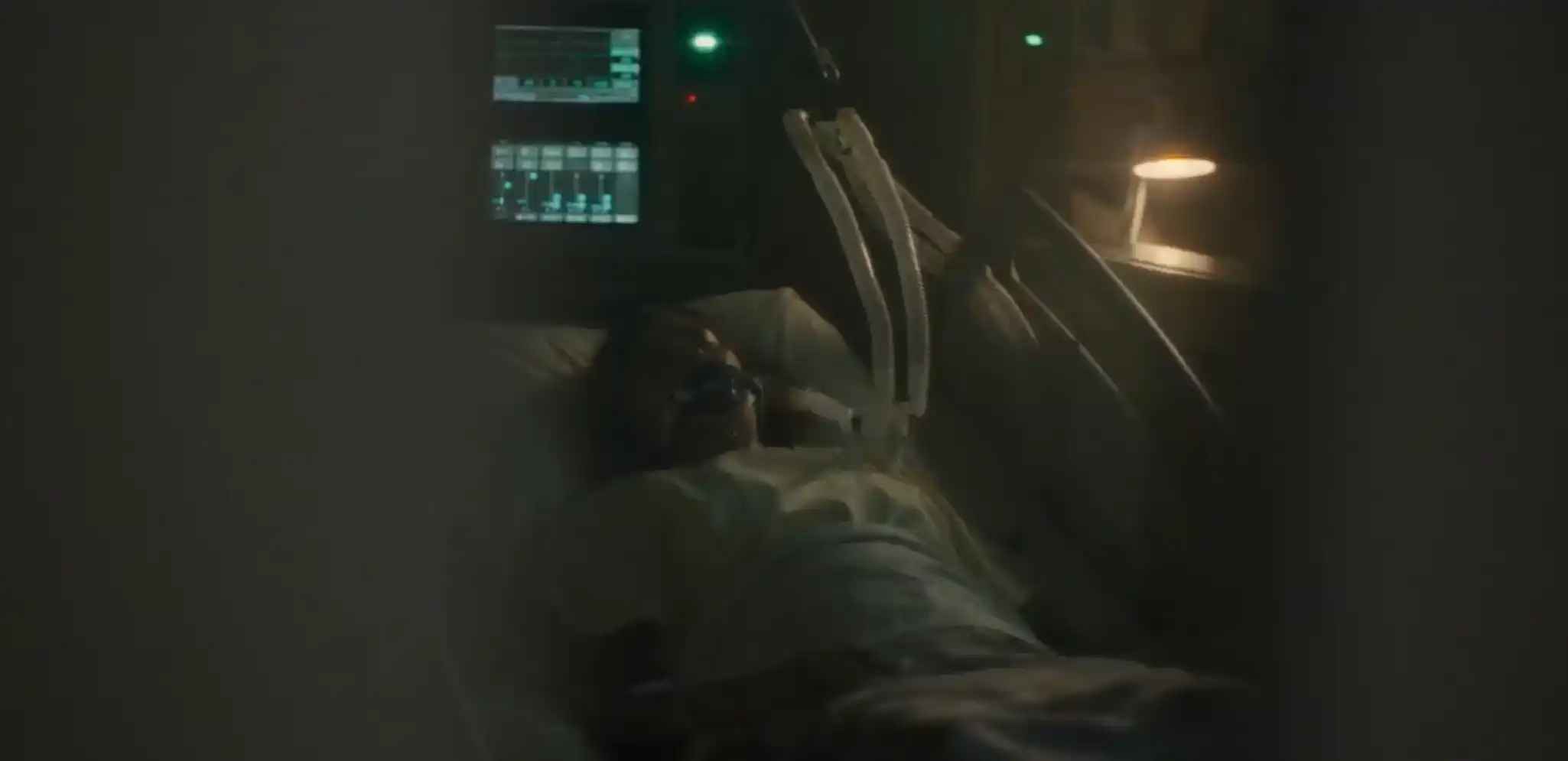
Tech company Rivermind offers a solution: replace the damaged parts with synthetic brain tissue. The surgery is free, but Amanda's life thereafter will depend on the company's servers, with a monthly subscription fee of $300. With no other choice, Mike signs the agreement.
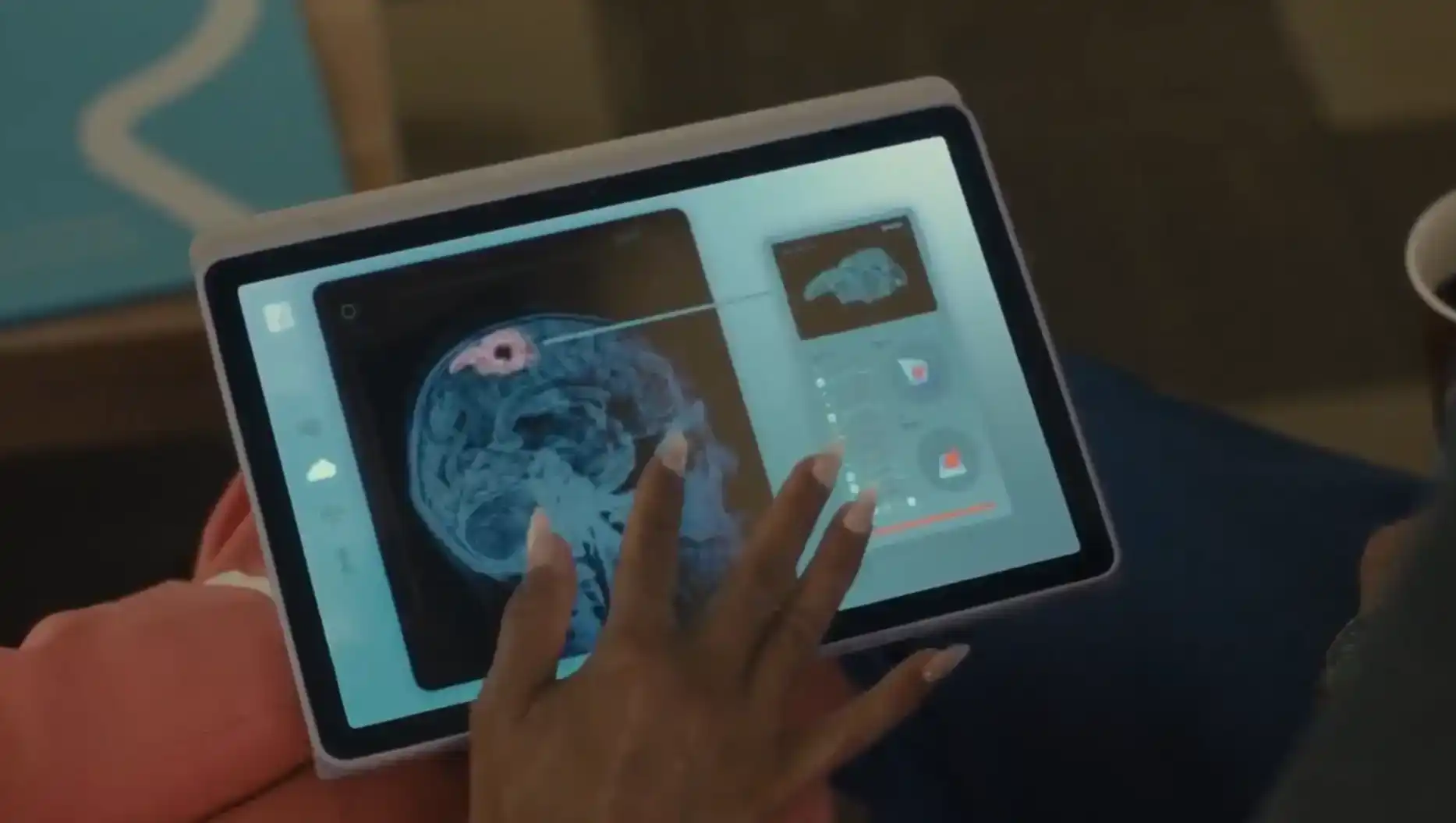
However, the subscription fees keep rising, and when Amanda is conscious, advertisements are involuntarily inserted. To secretly raise money, Mike starts live-streaming on the "Dum Dummies" platform—a website where viewers pay to instruct streamers to perform various humiliating tasks.
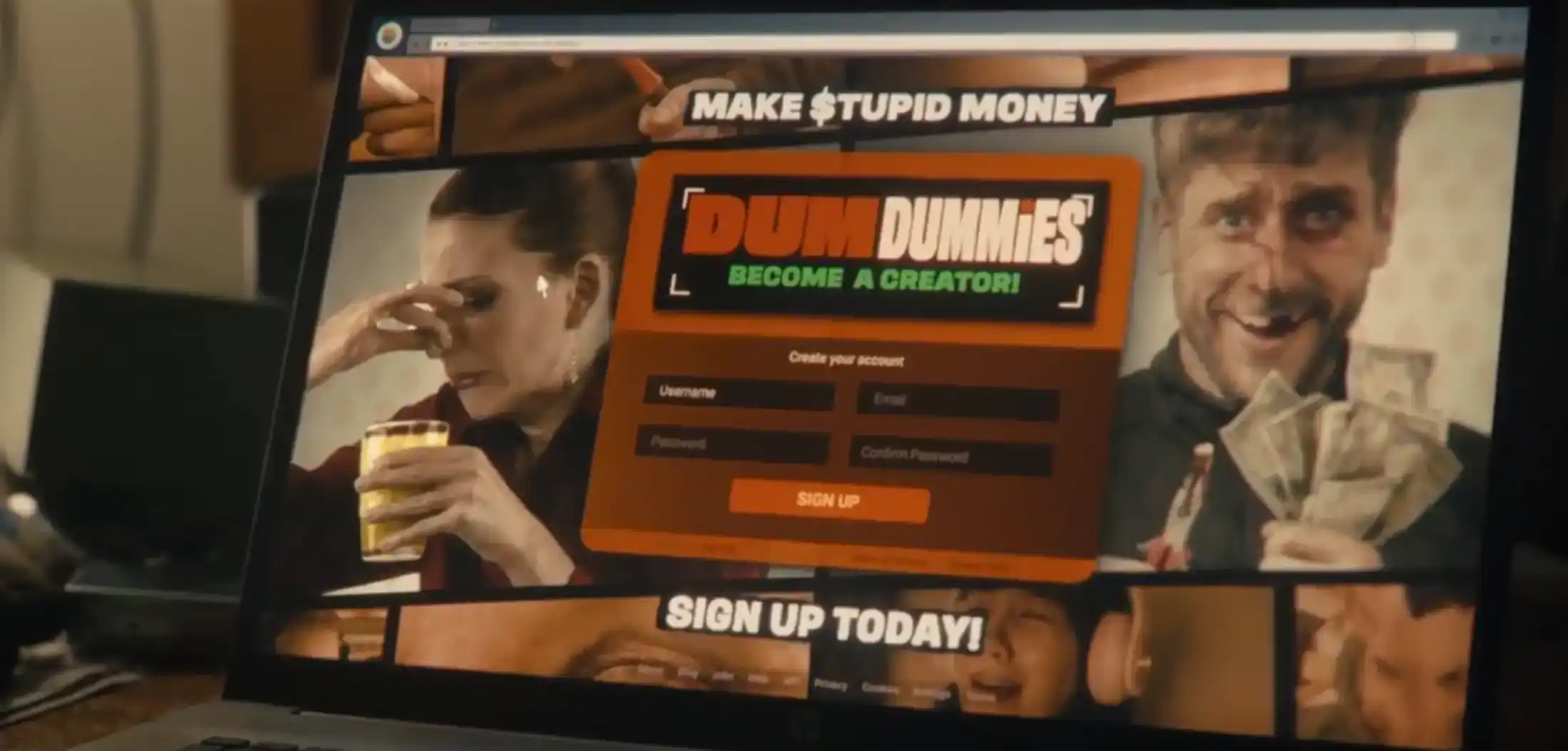
When exposed by a colleague, Mike loses his job, and the couple is plunged into despair.

A year later, Mike can no longer afford the premium service that maintains his wife's life. Amanda sleeps 16 hours a day, and her occasional awakenings are only to broadcast ads. Mike uses his last savings to buy 30 minutes of the premium package, allowing Amanda to leave her final words in brief peace.

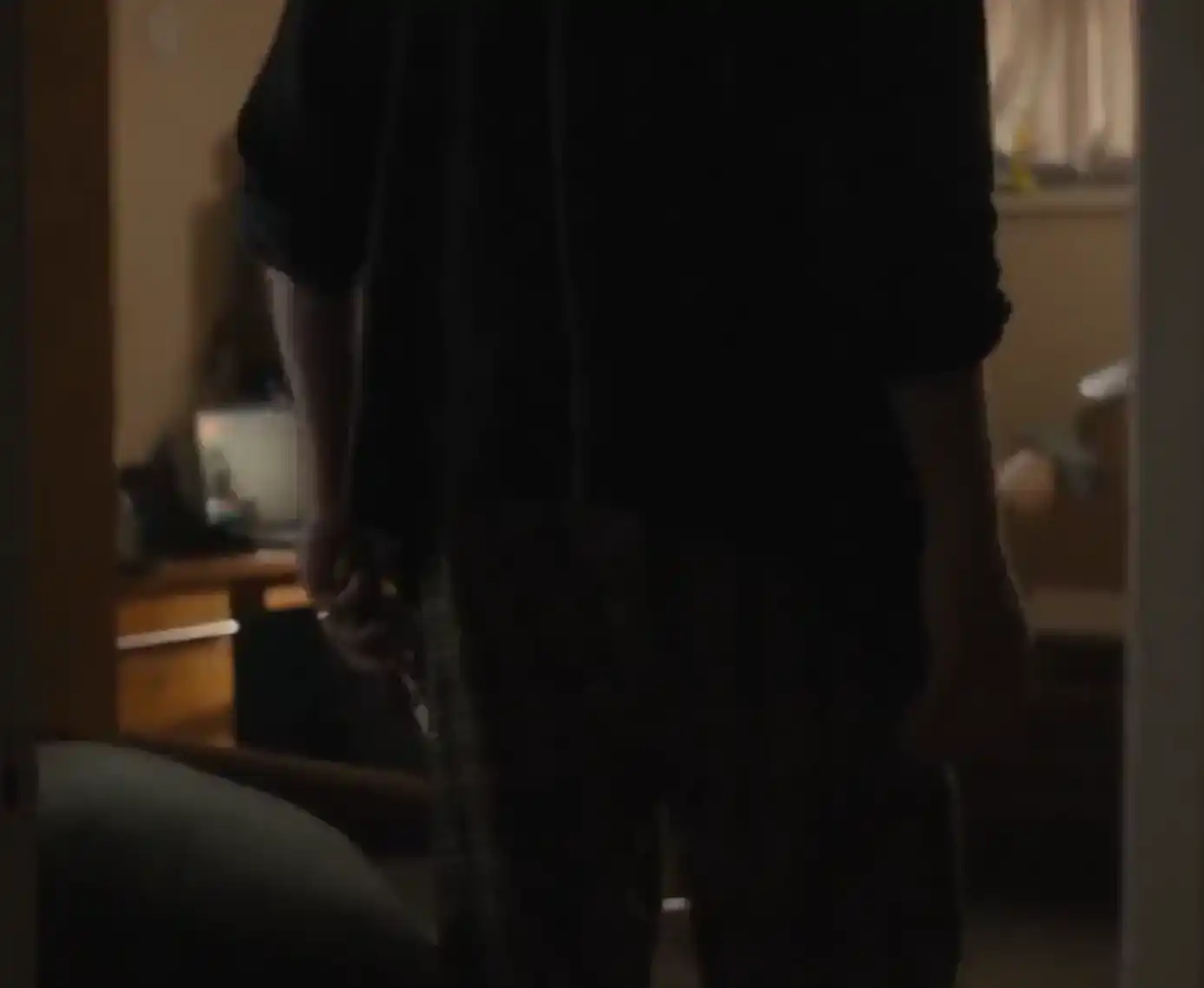
When the time expires, Mike personally ends Amanda's life. The final shot freezes on the still-live laptop screen, with Mike holding a box cutter, walking into the darkness.
Being forced to sell one's dignity for the right to survive is the aspect that feels most chilling and oppressive in this episode. Therefore, when pump.fun launched a new feature called "Pump.fun Go" earlier this month, many couldn't help but think of this episode.

The story of Black Mirror is not far from our lives; it has even entered them.

$2,600 Is the Price of a Forehead Tattoo

The new pump.fun GO feature allows anyone to post paid bounty tasks on pump.fun.

This did attract the attention of mainstream media, but unfortunately, it touched the public in a negative light yet again.

$Bountywork, a token whose market cap once approached $2.5 million at its peak. Its developer, @ayushquantt, focused on continuously posting new tasks on pump.fun to generate hype for this token.

He succeeded—by offering a bounty of 40 SOL (approximately $2,600) for someone to tattoo $bountywork on their forehead.

An Indian man actually got the tattoo:
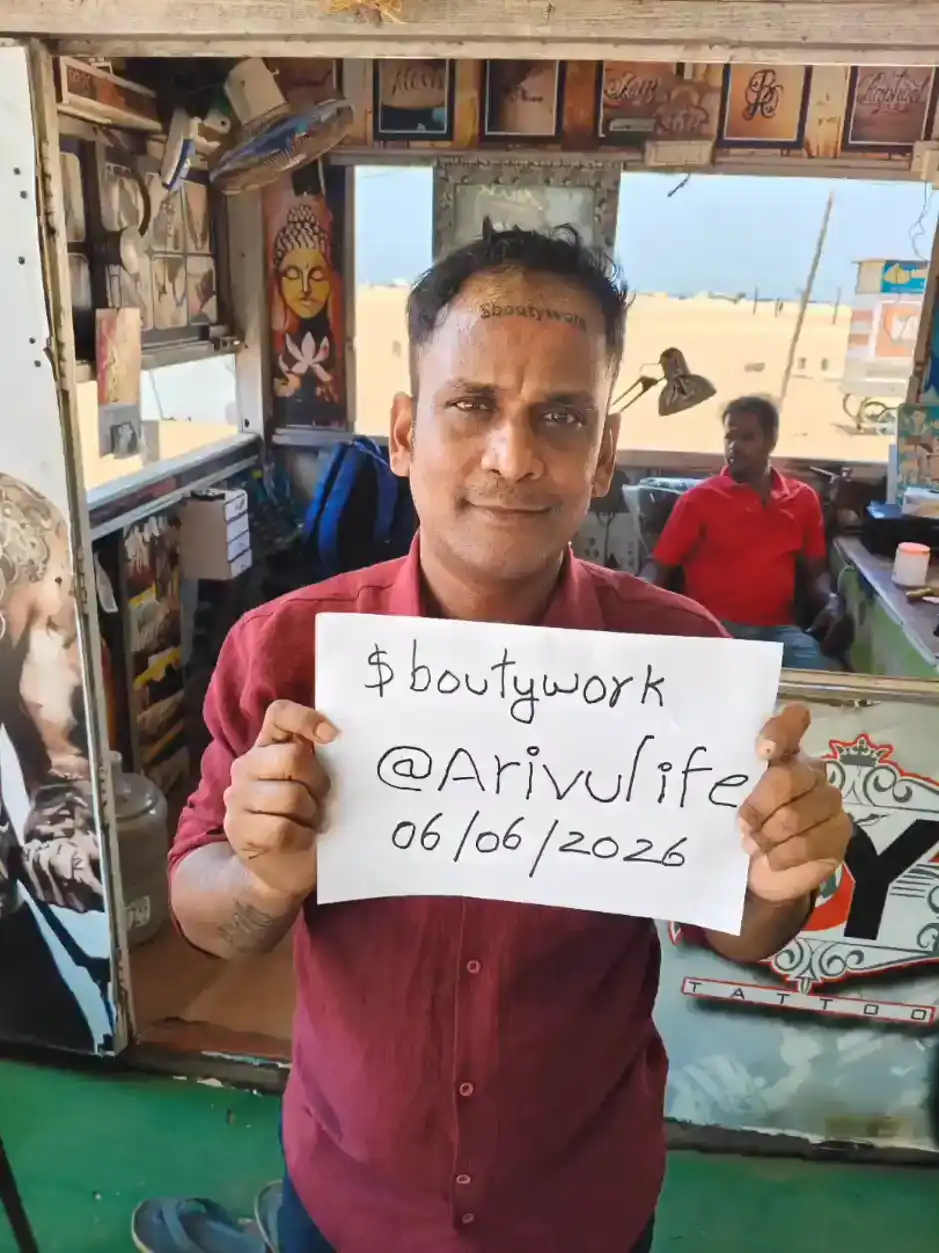
When submitting the full video of his tattooing process for bounty approval, he wrote in his remarks:

"Getting a permanent tattoo on the forehead, which will last a lifetime, is not an easy decision. The process itself was painful. It bled, and I had to endure the discomfort to complete it."

But his submission was rejected by the bounty poster due to a typo in the description—missing an 'n', writing the ticker as $boutywork. And this Indian man had precisely followed the requirements as described.

So, the next day, he went back to add a tattoo of the letter 'n':
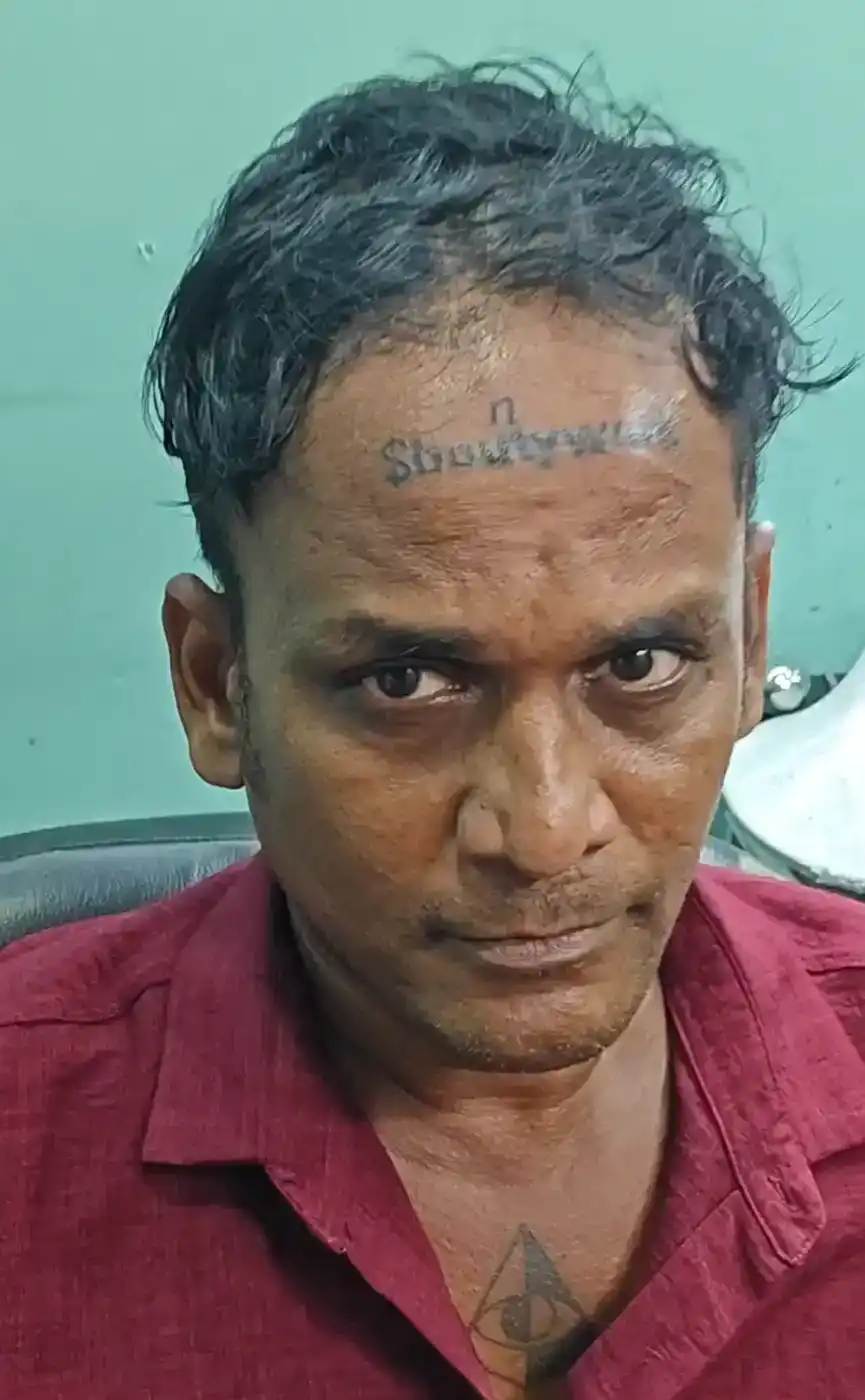
This time, he successfully received the bounty. $2,600 is the price of a forehead tattoo. He said this money changed his life.

But he earned far more than just that $2,600. After his initial bounty approval request was rejected, someone sent him a token called $boutywork, using the incorrect tattoo as the new token's name.

Because the incident had enough traction, this token accumulated over $5 million in trading volume. The creator's revenue from transaction fees was given to him, so he ended up earning about $48,000 in total.

And this wasn't even the highest single bounty earned for completing a tattoo task on pump.fun. Another bounty task posted by @Perporseful, also requiring a forehead tattoo with "bounty.fun," was completed on the same day it was posted. The person eventually received a bounty of 200 SOL (approximately $14,000).
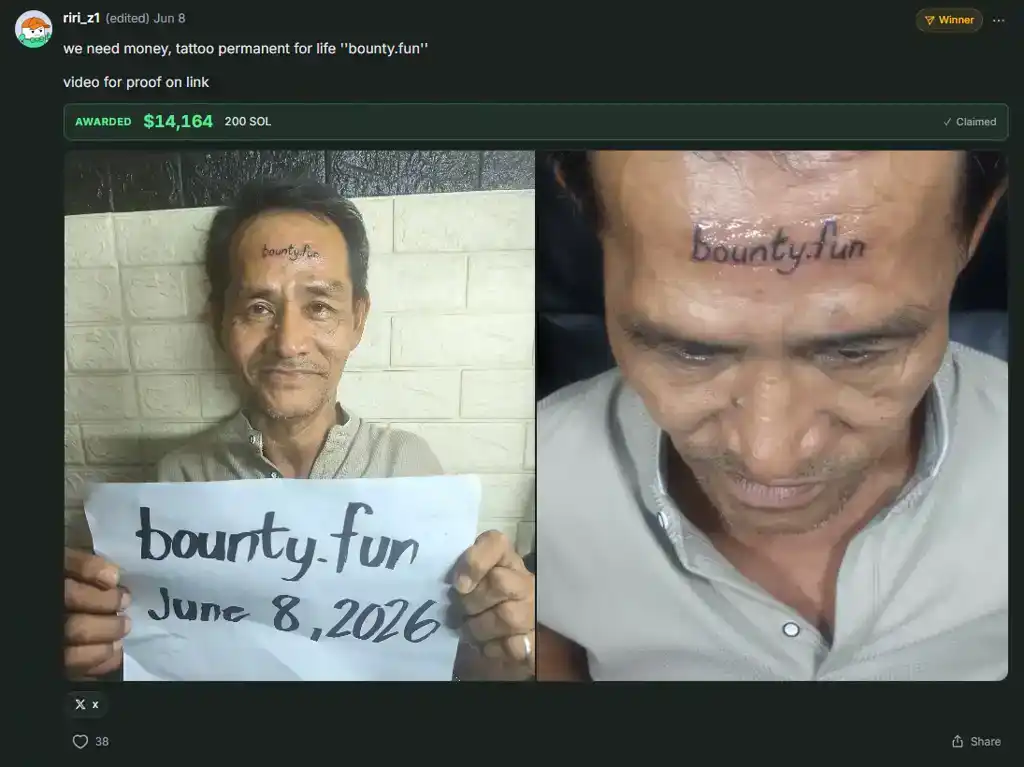
When submitting his tattoo proof for bounty approval, his remark was simple:

"We need money."

Priced Freedom Easily Amplifies Darkness

The hype around the Indian man's forehead tattoo has faded, and $boutywork has basically gone to zero. But the $Bountywork developer is still posting new bounties, trying to replicate this "success." For example, making someone wear a $Bountywork shirt and eat 3 bugs on camera.

Even though the bounty is only 2.5 SOL (about $178), not particularly generous, in the face of "We need money," this is hardly a challenge:

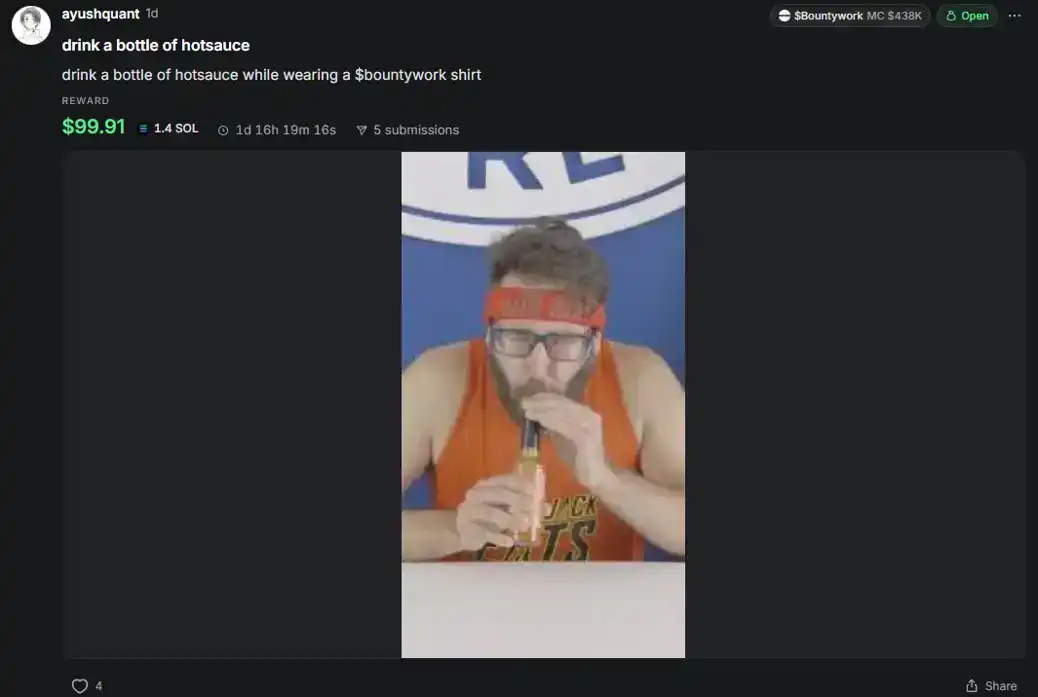
To continuously generate traffic for the $Bountywork token, @ayushquantt has spent $4,500 on various bounties. Besides the bug-eating challenge, there's also one like wearing a $Bountywork shirt and drinking a bottle of hot sauce for a bounty of 1.4 SOL (about $100):
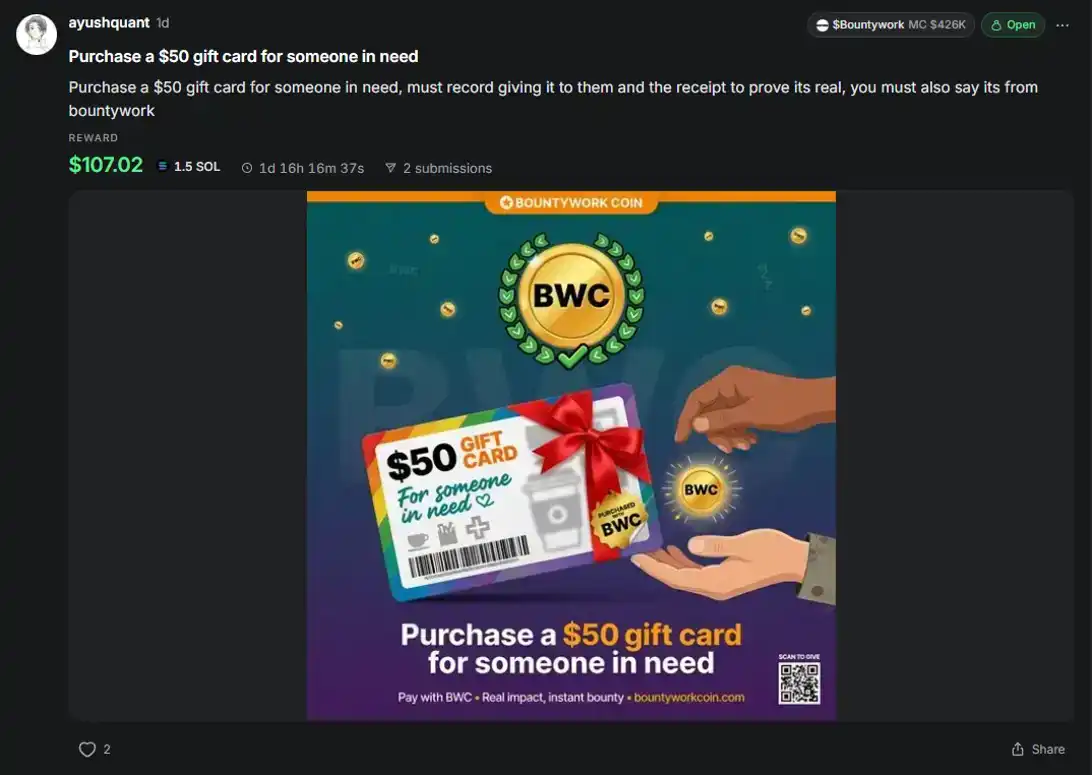
But he has also posted some relatively normal or even heartwarming bounty tasks. For example, gifting a $50 gift card in the name of $Bountywork to someone in need, with a bounty of 1.5 SOL (about $107):
It's difficult to judge the morality of such actions or even the new pump.fun feature. What's very obvious is that gifting a $50 gift card to someone in need barely creates a ripple in terms of traffic, but eating bugs or drinking hot sauce on camera is much more likely to gain attention.

I don't think this means "in an era where traffic equals money, we have all become slaves to traffic." Freedom often reveals itself in a raw, naked form; it's just that you and I have been 'protected' too well. We wouldn't get a forehead tattoo for $2,600 simply because we can still endure monthly salaries of a few thousand, venting our dissatisfaction with work and overtime in group chats and short video apps.

The Black Mirror episode mentioned at the beginning has long entered real life. During the 'wild west' era of live streaming, LiaoLiao Voice was once a popular platform. On December 31, 2018, a streamer with the online name "Da Fei," persuaded by the chat room host Wang and egged on by viewers, consumed a large amount of alcohol again and died of sudden cardiac arrest while out after drinking. In the three months before the incident, "Da Fei" had been live-streaming drinking every day, often drinking alcohol or soybean oil to earn tips.

In one of "Da Fei's" past live streams, he once said after drinking that he couldn't take it anymore and started convulsing. At that time, viewers in the chat room were still egging him on, "Pour what you vomited on your head, add another $300."

Others shouted, "LiaoLiao is finally going to have a death." Unexpectedly, it eventually came true.

Even in 2023-2024, with live streaming regulations becoming more mature, we can still find many cases of deaths due to excessive drinking during PK battles or binge-eating in mukbang streams.

"Desperate for fame," "Why go to such lengths for money?"—these are the final legacies these streamers leave for the internet, topics for after-dinner chatter, gradually disappearing into the massive daily data updates of the internet. Regulatory norms can indeed curb the excessive commodification of people by money, but ultimately cannot stop those on pump.fun who are willing to tattoo their faces for a few thousand dollars.

Because they really need the money.

Light in the Darkness

Although many bounties on pump.fun resemble Black Mirror or the dark web, you can also find some interesting and heartwarming things.

Organize a gathering in New York for people resisting work, promoting "Work is a scam," bounty $15,865. This is the kind of event that energizes a wage slave like me:
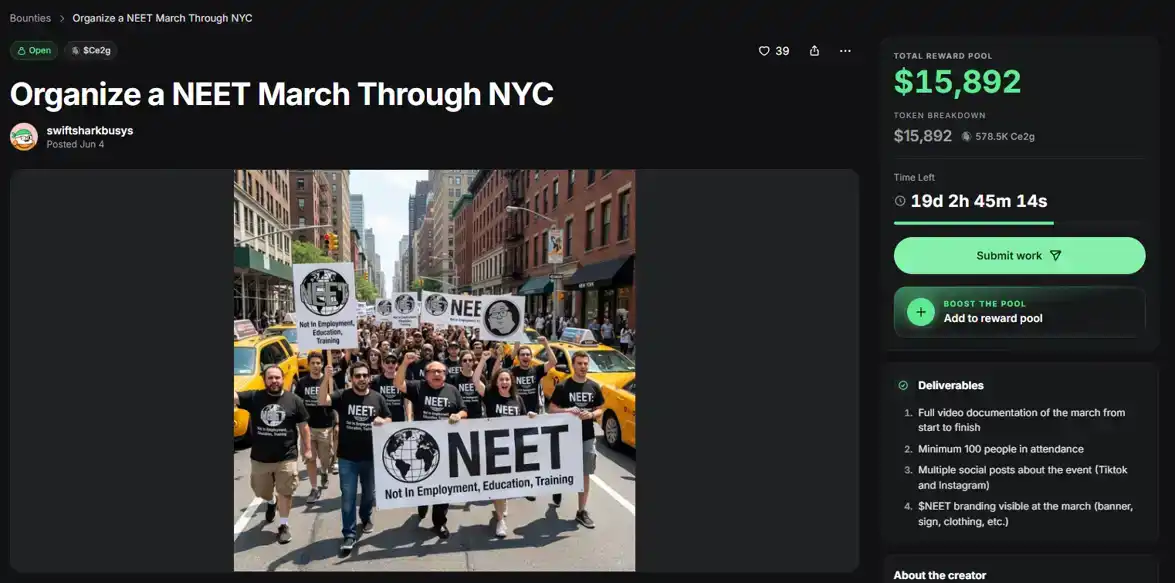
The $neet community has previously self-organized two offline "No Work Gatherings" in the US. If this bounty is completed, it will be the third.

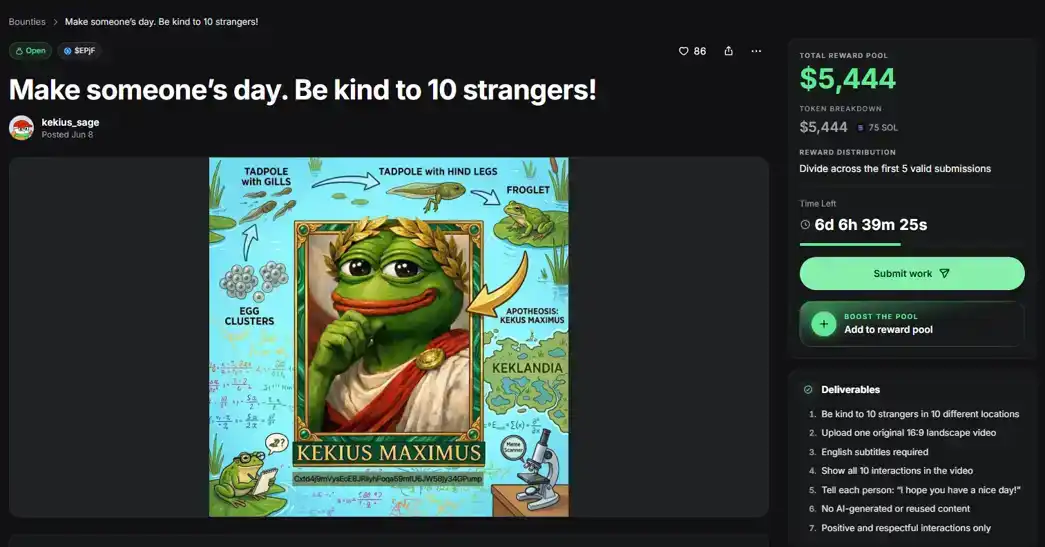
Show kindness to 10 strangers to make their day better. The bounty poster did not specify the method—treat them to a meal, give them flowers, books, buy them coffee, tell them to have a good day. The five best videos each receive a $1,000 bounty:
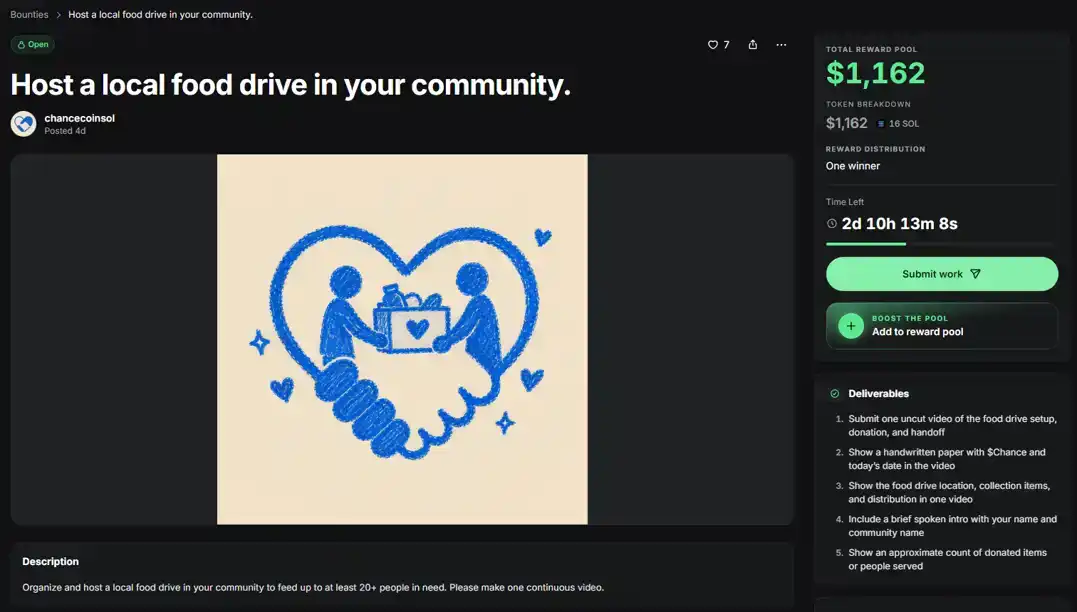
Organize a charity food donation in your local community, providing food to at least 20 people in need, bounty $1,161:
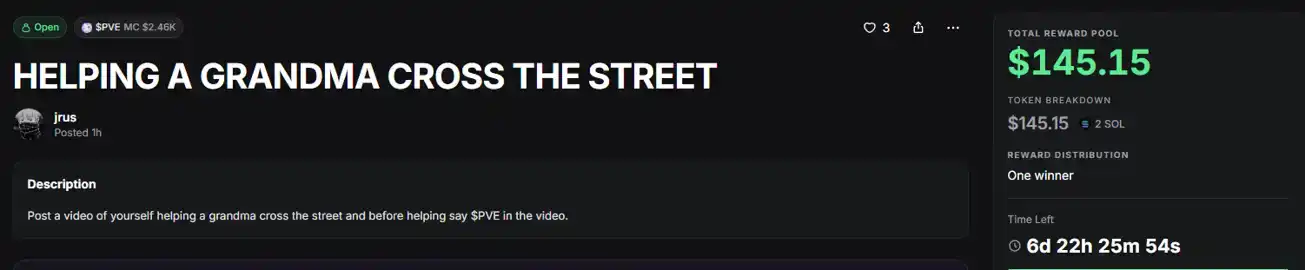
There's even one for helping an old lady cross the street, bounty $145:
The world is vast and full of wonders. We cannot escape the darkness; we can only hope for more light.

Pertanyaan Terkait

QWhat is the core function of the new 'Pump.fun Go' feature mentioned in the article, and what real-world phenomenon does it draw a parallel to?

AThe 'Pump.fun Go' feature allows anyone to post and complete paid bounty tasks on the pump.fun platform. The article draws a parallel to the fictional dystopian reality presented in the Black Mirror episode 'Common People', where people are forced to trade their dignity for survival, as well as to real-world extreme live-streaming phenomena where individuals perform degrading or dangerous acts for money.

QAccording to the article, how much money did the Indian man earn in total from the '$bountywork' tattoo incident, and what were the sources?

AThe Indian man earned a total of approximately $48,000. This came from two sources: the initial 40 SOL (around $2,600) bounty for tattooing the correct '$Bountywork' on his forehead, and the creator fees from trading a separate meme coin named '$boutywork' (the incorrect spelling) that was launched based on the incident's viral attention.

QBeyond shock-value stunts like tattooing and eating insects, what are some examples of positive or socially beneficial bounty tasks found on pump.fun mentioned in the article?

AExamples of positive bounty tasks mentioned include: organizing a rally in New York for people rejecting work; performing acts of kindness for 10 strangers; organizing a community food donation for at least 20 people in need; and helping an elderly person cross the street.

QWhat real-life tragedy from the early days of live streaming does the article reference to illustrate that the 'Black Mirror' scenario is not just fiction?

AThe article references the 2018 case of a streamer nicknamed 'Da Fei' on the 'Liaoliao' platform. He frequently livestreamed heavy drinking to earn tips and eventually died of alcohol poisoning after being egged on by his audience and the chat room host.

QWhat is the article's implied critique regarding why some people are willing to perform extreme acts for relatively small bounties on platforms like pump.fun?

AThe article implies that the primary driver is genuine financial desperation, encapsulated in the simple submission note 'We need the money.' It suggests that societal judgment often overlooks this underlying economic necessity, framing such acts merely as a quest for fame or a sign of being 'crazy for attention,' when for some, it's a matter of survival.

Bacaan Terkait

Debut Wash: Ketua FED yang Paling Paham Crypto Sepanjang Sejarah Akan Datangkan Kejutan atau Teror Bagi Pasar?

**Penampilan Perdana Kevin Warsh: Ketua Fed Paling Paham Crypto, Akan Bawa Kejutan atau Kekhawatiran?** Ketua Federal Reserve yang baru, Kevin Warsh, bersiap untuk konferensi pers kebijakan moneter pertamanya di tengah situasi sulit: inflasi yang bangkit kembali, tekanan pasar untuk menaikkan suku bunga, dan desakan Presiden Trump untuk menurunkan suku bunga. Yang unik, Warsh adalah ketua Fed pertama yang secara terbuka memiliki portofolio investasi tidak langsung yang signifikan di aset kripto dan perusahaan Web3, mencakup berbagai sektor seperti blockchain, DeFi, dan infrastruktur pembayaran. Pemahaman pribadinya tentang teknologi ini berbeda dengan pendahulunya. Analisis kebijakannya berfokus pada dua hal: **sikap hawkish melawan inflasi** yang mungkin berarti lingkungan suku bunga ketat, dan **sikap ramah terhadap aset digital** yang bisa membawa perubahan regulasi dari "pencegahan" menjadi "integrasi dan inovasi". Dampak pada pasar kripto dapat dilihat dari: **pergeseran ekspektasi regulasi** yang lebih mendukung, **penetapan ulang premi risiko** bergantung pada komunikasi kebijakan yang jelas dari Warsh, serta **aliran modal global** yang mungkin mengalir lebih deras ke aset kripto karena legitimasi yang meningkat. Dua skenario utama untuk penampilan perdananya: 1. **Kejutan:** Gabungan sikap kebijakan moneter yang relatif lunak (dovish) dan sinyal ramah kripto dapat memulihkan sentimen pasar. 2. **Kekhawatiran:** Sinyal hawkish yang lebih keras dari perkiraan, seperti isyarat kenaikan suku bunga, dapat memicu tekanan jual di aset berisiko, termasuk kripto. Meski secara etika Warsh telah menjual semua kepemilikannya terkait kripto, pemahaman mendalamnya tentang blockchain diharapkan dapat membentuk kerangka regulasi yang lebih koheren dan mendukung, menjadi infrastruktur penting bagi arus utama aset kripto dalam jangka panjang.

marsbit9j yang lalu

Debut Wash: Ketua FED yang Paling Paham Crypto Sepanjang Sejarah Akan Datangkan Kejutan atau Teror Bagi Pasar?

marsbit9j yang lalu

AGI Bukan Akhir, Makalah Baru DeepMind: Menuju ASI, Kemajuan AI yang Sesungguhnya Baru Dimulai

Jika Kecerdasan Buatan Umum (AGI) tercapai, apakah itu titik akhir? Tim Google DeepMind dalam laporan terbarunya berpendapat bahwa AGI **bukanlah akhir perjalanan**. AI diprediksi akan terus berkembang melampaui kemampuan tim ahli manusia terbaik, menuju Superintelligence (ASI). Laporan ini membedakan tiga konsep: AGI (kecerdasan setara manusia rata-rata), ASI (melampaui manusia di hampir semua bidang), dan UAI (batas teoretis maksimal). Transisi dari AGI ke ASI dapat melalui empat jalur potensial: 1. **Ekspansi Lanjutan**: Meningkatkan skala komputasi, model, dan data. 2. **Inovasi Algoritma**: Penyempurnaan paradigma yang ada atau pergeseran paradigma baru. 3. **Peningkatan Diri Secara Rekursif**: AI yang lebih kuat membantu mengembangkan generasi AI berikutnya yang lebih kuat. 4. **Koordinasi Multi-Agen**: Kecerdasan kolektif dari banyak sistem AGI yang berkolaborasi. Namun, terdapat enam kemacetan potensial: dinding data, tekanan sumber daya ekonomi & alam, batasan paradigma jaringan saraf saat ini, meningkatnya kesulitan penelitian, hambatan abstraksi, serta tantangan regulasi dan penerimaan sosial. Laporan ini juga menyoroti bahwa jika AI melampaui manusia, sistem evaluasi (benchmark) yang ada menjadi tidak relevan. Diperlukan kerangka pengukuran baru, seperti tugas kolaborasi/kompetisi multi-agen, pengujian yang dihasilkan otomatis, atau indikator tidak langsung seperti produktivitas ekonomi. ASI bukanlah sistem ajaib yang mahatahu; perkembangannya tetap dibatasi oleh hukum fisika, kompleksitas komputasi, data, sumber daya, dan umpan balik dunia nyata. Arah dan kecepatan kemajuan AI masih penuh ketidakpastian, sehingga memerlukan penelitian, prediksi, dan mekanisme evaluasi yang terus diperbarui.

marsbit10j yang lalu

AGI Bukan Akhir, Makalah Baru DeepMind: Menuju ASI, Kemajuan AI yang Sesungguhnya Baru Dimulai

marsbit10j yang lalu

Trading

Spot
Futures

Artikel Populer

Cara Membeli PEOPLE

Selamat datang di HTX.com! Kami telah membuat pembelian ConstitutionDAO (PEOPLE) menjadi mudah dan nyaman. Ikuti panduan langkah demi langkah kami untuk memulai perjalanan kripto Anda.Langkah 1: Buat Akun HTX AndaGunakan alamat email atau nomor ponsel Anda untuk mendaftar akun gratis di HTX. Rasakan perjalanan pendaftaran yang mudah dan buka semua fitur.Dapatkan Akun SayaLangkah 2: Buka Beli Kripto, lalu Pilih Metode Pembayaran AndaKartu Kredit/Debit: Gunakan Visa atau Mastercard Anda untuk membeli ConstitutionDAO (PEOPLE) secara instan.Saldo: Gunakan dana dari saldo akun HTX Anda untuk melakukan trading dengan lancar.Pihak Ketiga: Kami telah menambahkan metode pembayaran populer seperti Google Pay dan Apple Pay untuk meningkatkan kenyamanan.P2P: Lakukan trading langsung dengan pengguna lain di HTX.Over-the-Counter (OTC): Kami menawarkan layanan yang dibuat khusus dan kurs yang kompetitif bagi para trader.Langkah 3: Simpan ConstitutionDAO (PEOPLE) AndaSetelah melakukan pembelian, simpan ConstitutionDAO (PEOPLE) di akun HTX Anda. Selain itu, Anda dapat mengirimkannya ke tempat lain melalui transfer blockchain atau menggunakannya untuk memperdagangkan mata uang kripto lainnya.Langkah 4: Lakukan trading ConstitutionDAO (PEOPLE)Lakukan trading ConstitutionDAO (PEOPLE) dengan mudah di pasar spot HTX. Cukup akses akun Anda, pilih pasangan perdagangan, jalankan trading, lalu pantau secara real-time. Kami menawarkan pengalaman yang ramah pengguna baik untuk pemula maupun trader berpengalaman.

649 Total TayanganDipublikasikan pada 2024.12.12Diperbarui pada 2026.06.02

Cara Membeli PEOPLE

Diskusi

Selamat datang di Komunitas HTX. Di sini, Anda bisa terus mendapatkan informasi terbaru tentang perkembangan platform terkini dan mendapatkan akses ke wawasan pasar profesional. Pendapat pengguna mengenai harga PEOPLE (PEOPLE) disajikan di bawah ini.

活动图片