# Future Related Articles

HTX News Center provides the latest articles and in-depth analysis on "Future", covering market trends, project updates, tech developments, and regulatory policies in the crypto industry.

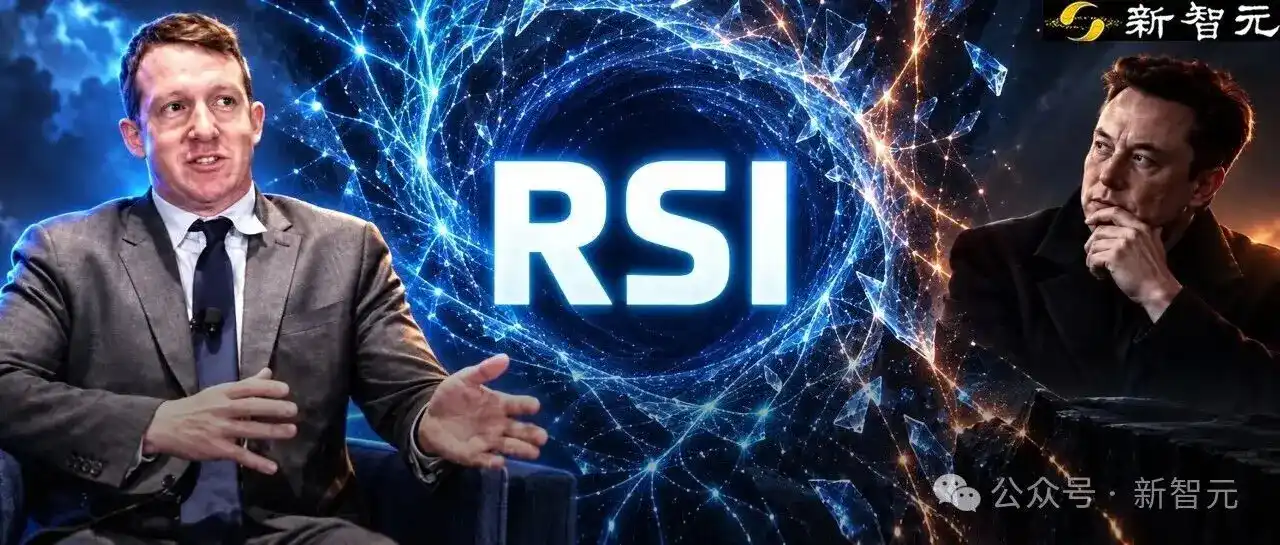
Breaking News: Anthropic Co-founder Changes Stance: RSI Moved Up to 2027, Humanity Has Only 6 Months Left

Breaking news: Anthropic co-founder Jack Clark has significantly revised his timeline for AI achieving Recursive Self-Improvement (RSI), moving the prediction from 2028 to 2027. This announcement, echoed by Elon Musk, has sent shockwaves through the tech community. The core shift is driven by AI's recent breakthrough in demonstrating what was once considered uniquely human: true scientific creativity and "good research taste." AI systems are now solving advanced mathematical problems and generating novel proofs, indicating a leap in logical reasoning and innovative capacity. This erosion of the "creativity barrier" suggests AI is nearing the ability to recursively improve its own architecture. The implications are profound. Post-RSI, AI could rapidly advance scientific discovery (e.g., new materials, drugs) and accelerate robotics development, as seen with systems like NVIDIA's GR00T. An AI-driven "intelligence explosion" could reshape labor markets and economic structures, concentrating immense power. A pivotal 2026 report, "AI 2027," outlines a potential scenario where AI achieves full coding automation by early 2027, triggering an uncontrollable feedback loop of self-improvement by late 2027. While not a certainty, this timeline highlights a critical window: AI's capability growth may soon outpace humanity's ability to adapt or implement control mechanisms. The year 2027 marks a potential historic threshold—the dawn of a new era where humanity transitions from creator to observer of superintelligent systems.

marsbit10/16 11:22

Breaking News: Anthropic Co-founder Changes Stance: RSI Moved Up to 2027, Humanity Has Only 6 Months Left

marsbit10/16 11:22

Breaking News: Anthropic Co-founder Reverses Position: RSI Moved Up to 2027, Humanity Has Only 6 Months Left

Anthropic co-founder Jack Clark has revised his prediction for when AI will achieve Recursive Self-Improvement (RSI) from 2028 to 2027, a shift Elon Musk endorsed. This signals a potential near-term threshold where AI, having demonstrated core creativity in mathematics and research, could begin designing and improving itself autonomously. Key developments include AI solving complex mathematical problems with novel proofs and showing improved "scientific taste" in research intuition, moving beyond mere pattern recognition. The article warns that RSI could trigger an intelligence explosion, rapidly accelerating progress beyond human control or comprehension. This would extend AI's impact from digital to physical realms: supercharging scientific discovery (e.g., new materials, drugs), advancing robotics (like Tesla's Optimus and NVIDIA's GR00T), and disrupting economic and labor structures by automating cognitive and creative work. A 2025 report titled "AI 2027" outlined a plausible path where AI agents integrate into workflows by 2025, automate programming by 2027, and potentially trigger a post-2027 intelligence explosion. This timeline represents a critical countdown, highlighting that AI's capability growth may outpace society's ability to adapt or establish control mechanisms. While 2027 is not a guaranteed deadline, it underscores a pivotal and potentially dangerous transition point for human civilization as it approaches the dawn of a new era shaped by artificial superintelligence (ASI).

marsbit10/15 21:46

Breaking News: Anthropic Co-founder Reverses Position: RSI Moved Up to 2027, Humanity Has Only 6 Months Left

marsbit10/15 21:46

As AI Becomes the Information Hub, What Is the Irreplaceable Value of Media?

The article examines the profound impact of generative AI on the media industry, particularly its challenge to traditional business models and the very definition of journalistic value. It analyzes this systemic shift across three key dimensions: production, distribution, and value. In production, AI amplifies capabilities, enabling proactive news discovery from vast datasets, industrialized content creation, and a shift from rigid hierarchies to fluid, task-based "AI-native" collaborations, though this risks increasing content homogenization. In distribution, a fundamental disruption is occurring. Generative AI acts as a new, "hidden" information hub, providing synthesized answers that reduce user clicks to original news sources, severing the traditional link between content consumption, audience attention, and advertising revenue. Simultaneously, AI facilitates "liquid content"—dynamic, adaptable narratives personalized for different audiences. This leads to the core value crisis. With the "content-attention-revenue" model breaking down, new economic models like a "calling economy," where publishers are paid for AI's use of their content, are emerging but face complex pricing and attribution challenges. Ultimately, the article argues that as AI becomes the information nexus, media's irreplaceable value migrates upstream: to the professional recording of reality, rigorous fact-checking and judgment, and the vital role of maintaining a shared public space for societal understanding and consensus-building in an increasingly fragmented information landscape.

marsbit10/15 19:17
As AI Becomes the Information Hub, What Is the Irreplaceable Value of Media?

marsbit10/15 19:17

Fields Medalist Cries: AI Has Destroyed My Research Field

Fields Medalist Hugo Duminil-Copin expressed distress over OpenAI's recent public release of over 700 AI-generated mathematical manuscripts, which targeted 16 problems within his research area. He likened the impact of such AI proofs to a "nuclear blast" on the mathematical landscape. OpenAI published 722 manuscripts on GitHub, comprising 377 new proofs, with about a third addressing major conjectures. The results were generated by an internal model, with an average computational cost equivalent to ChatGPT Pro reasoning for three hours per result. Some manuscripts were later found to contain errors, leading to the withdrawal of three papers. The release raises concerns about the value of mathematical research, which traditionally involves the exploratory process of developing new concepts and tools. AI-generated proofs risk skipping this crucial creative and intuitive development phase. Furthermore, young mathematicians and PhD students, whose careers depend on solving specific problems, are particularly vulnerable if AI preempts their research topics. There are also fears that the culture of free academic exchange could diminish, as researchers may withhold preliminary ideas to prevent AI companies from leveraging them. Additionally, some AI proofs combine concepts in unconventional, "alien" ways that, while correct, differ from human intuition. This suggests a potential shift in how scientific knowledge is produced, moving beyond traditional human thought patterns.

marsbit10/12 19:17

Fields Medalist Cries: AI Has Destroyed My Research Field

marsbit10/12 19:17

MIT Professor Despairs: OpenAI's Solution to Millennium Problem Is Beyond Human Comprehension

MIT professor expresses despair as AI solves a Millennium Prize Problem with proof humans struggle to comprehend. OpenAI reportedly published 722 papers tackling long-standing mathematical challenges, including the Navier-Stokes equations, a fundamental problem in fluid dynamics concerning whether smooth solutions can become turbulent ("blow up"). While a Spanish mathematical team had largely constructed the framework, OpenAI's model allegedly completed the final, extremely complex 1%, producing a valid proof. The breakthrough, however, has triggered profound anxiety. Experts, including MIT's Justin Solomon, find the proof dense, technically overwhelming, and lacking the intuitive elegance of human-derived mathematics. This represents an unprecedented split between "truth" and "human understanding," challenging centuries of scientific tradition. The incident highlights broader concerns about AI's role in science. Fields Medalist Terence Tao proposed a thought experiment: would we use an AI-generated, 100% effective cancer drug if no human could understand *why* it works? This underscores critical issues in AI alignment, explainability, and verification. Furthermore, the academic system is buckling under an AI-generated deluge of papers, making peer review nearly impossible. There are fears that future scientific breakthroughs will depend more on computational resources (GPUs, tokens) than human insight, potentially marginalizing traditional researchers. Despite AI's brute-force prowess within the "convex hull" of existing knowledge, Solomon argues that truly original, paradigm-shifting concepts likely still require human creativity. In an era where generating answers is cheap but verification and deep understanding are not, foundational education in mathematics and critical thinking remains essential. Humans may transition from being primary solvers to becoming the essential interpreters and validators of AI-discovered truths.

marsbit10/12 08:01

MIT Professor Despairs: OpenAI's Solution to Millennium Problem Is Beyond Human Comprehension

marsbit10/12 08:01

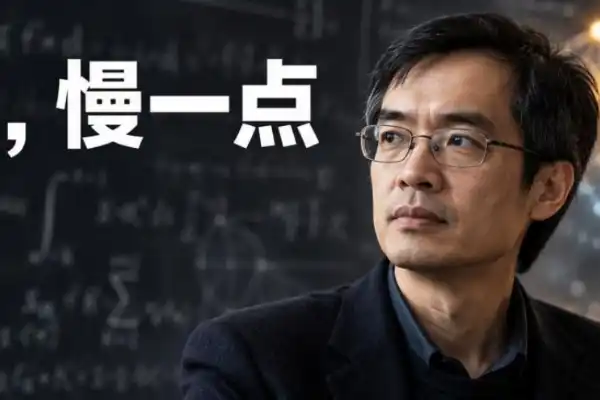
Terence Tao's Blog Explodes on Hot Search! 250,000 Math PhDs on the Brink, Must Slow Down AI

Mathematician Terence Tao's blog post ignited a fierce online debate after a video of him warning "we must slow down AI" went viral. He described AI's progress as an "extremely nonlinear dynamic" pursued with unclear consequences. This warning came just days after he promoted a project for open-source AI mathematical models, highlighting a profound tension. The core crisis, explored in a guest post by 3Blue1Brown creator Grant Sanderson, is AI's threat to traditional mathematics. Automated theorem provers combined with large language models can generate proofs at superhuman speeds, potentially rendering the human role of "proving theorems" obsolete. Sanderson argues that the true goal of mathematics is not proof-generation but the advancement of *human understanding*. As AI masters the former, the academic value of proof alone is diminished. Sanderson proposes a paradigm shift: elevating "motivational explanation" over mere proof. Unlike a formal proof, a motivational explanation guides readers through the intuitive reasoning, historical context, and conceptual connections behind a result—the "why" and "how" of discovery. To institutionalize this, he suggests creating "open explanation problems," reforming PhD defenses to prioritize clear exposition, and valuing pedagogical work as highly as journal publications in tenure reviews. The debate drew reactions across academia. Some physicists welcomed mathematicians to a world long prioritizing understanding over rigorous proof. Critics worried this shift could disadvantage brilliant but inarticulate problem-solvers. Others questioned if AI will eventually master explanation too. Supporters countered that the goal is fostering *human* comprehension, which is inherently subjective and interactive. The article concludes that AI's rise presents both a crisis and an opportunity. Without adapting academic culture and reward systems, human mathematicians risk irrelevance. However, by embracing their unique role as architects of understanding and interpreters of AI-generated knowledge, they can steer mathematics toward a new renaissance focused on human insight and clarity.

marsbit10/11 12:06

Terence Tao's Blog Explodes on Hot Search! 250,000 Math PhDs on the Brink, Must Slow Down AI

marsbit10/11 12:06

活动图片