From Farm to Entrepreneur: After Building Flying Cars, He Bet on the Robot Sector and Created a $39 Billion Giant

marsbitDipublikasikan tanggal 2026-05-20Terakhir diperbarui pada 2026-05-20

Abstrak

From Farm to Tech Tycoon: Brett Adcock's Journey to a $39B Robot Giant Brett Adcock, a serial entrepreneur from an Illinois farm, has built his third major venture, humanoid robotics company Figure AI, into a $39 billion behemoth backed by NVIDIA, Intel, and others. His path began with the sale of his recruiting platform Vettery for $110 million in 2018. He then co-founded and took electric air taxi company Archer Aviation public in 2021 before departing over strategic differences. Adcock founded Figure AI in 2022 with a 30-year vision to create general-purpose humanoid robots that can work in human-designed environments, aiming to address labor shortages in manufacturing, logistics, and retail. The company gained attention through live-streamed robot sorting challenges and a viral demo, though it faces skepticism over its high valuation versus early commercial progress. A key moment was Figure's split from OpenAI in 2024 after a brief collaboration, with Adcock claiming OpenAI provided limited value and deciding to develop AI models internally—a move OpenAI contested. Adcock's pattern is tackling capital-intensive, long-term tech frontiers, moving from software to aviation to robotics, betting on AI and automation as the future of labor.

Author: Zen, PANews

Humanoid robotics company Figure AI recently initiated a "Human vs. Robot" parcel sorting challenge, attracting global attention. This competition, narrowly won by humans, led many to conclude that "humans won the present but lost the future." This statement is not baseless. Before the competition began, Figure had already started a live stream of robot sorting, which has now been broadcasting continuously for seven days. In terms of tireless endurance and continuous work capability, robots far surpass humans.

This sorting challenge live stream, along with the earlier heavyweight promotional video for a home robot, has also earned Figure the label of being a showman. However, there is no doubt that Figure AI is becoming one of Silicon Valley's most-watched humanoid robotics companies. This company, founded just three years ago, saw its valuation soar to $39 billion after a new round of financing, with investors including top-tier corporations and capital such as NVIDIA, Intel Capital, Salesforce, LG, and Qualcomm.

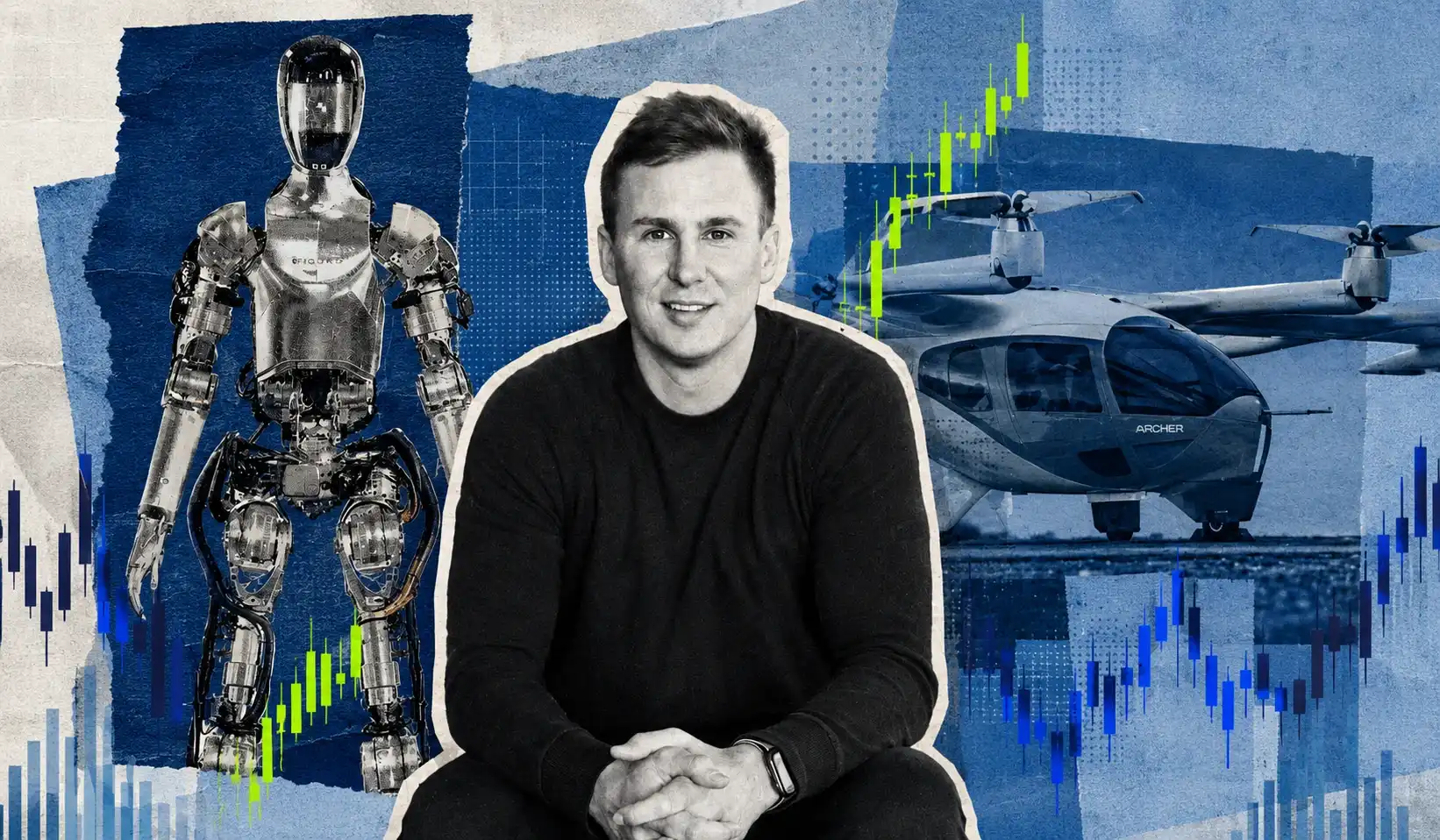
Standing behind this company is serial entrepreneur Brett Adcock, who hails from a farm. Before founding Figure, he had already had two distinct entrepreneurial experiences. First, he built the recruitment platform Vettery, selling it to the Adecco Group for $110 million in 2018. Subsequently, he co-founded electric vertical takeoff and landing (eVTOL) aircraft company Archer Aviation, driving its listing on the New York Stock Exchange in 2021.

Brett Adcock is not a founder who has dug deep in one industry over a long period. Instead, he continuously ventures into more complex, capital-intensive, and harder-to-validate fields. Figure is his most high-profile bet to date, placing him at the center of the AI robotics boom.

Surrounding this company, there are grand visions about a general-purpose robotic workforce, as well as skepticism regarding overvaluation, premature commercialization, safety risks, and technological approaches. To understand Figure, one must first understand how its founder has progressed step by step to reach this point.

Serial Entrepreneur from a Corn and Soybean Farm

Brett Adcock was born in 1986 on a corn and soybean farm in central Illinois. Growing up in this multi-generational farming family environment instilled in Adcock a strong emphasis on "how to create value for the world from scratch." He began starting internet companies at the age of 16. By the time he graduated as valedictorian of his high school class, his family clearly understood that he should perhaps leave the farm and venture into the world of entrepreneurship and business.
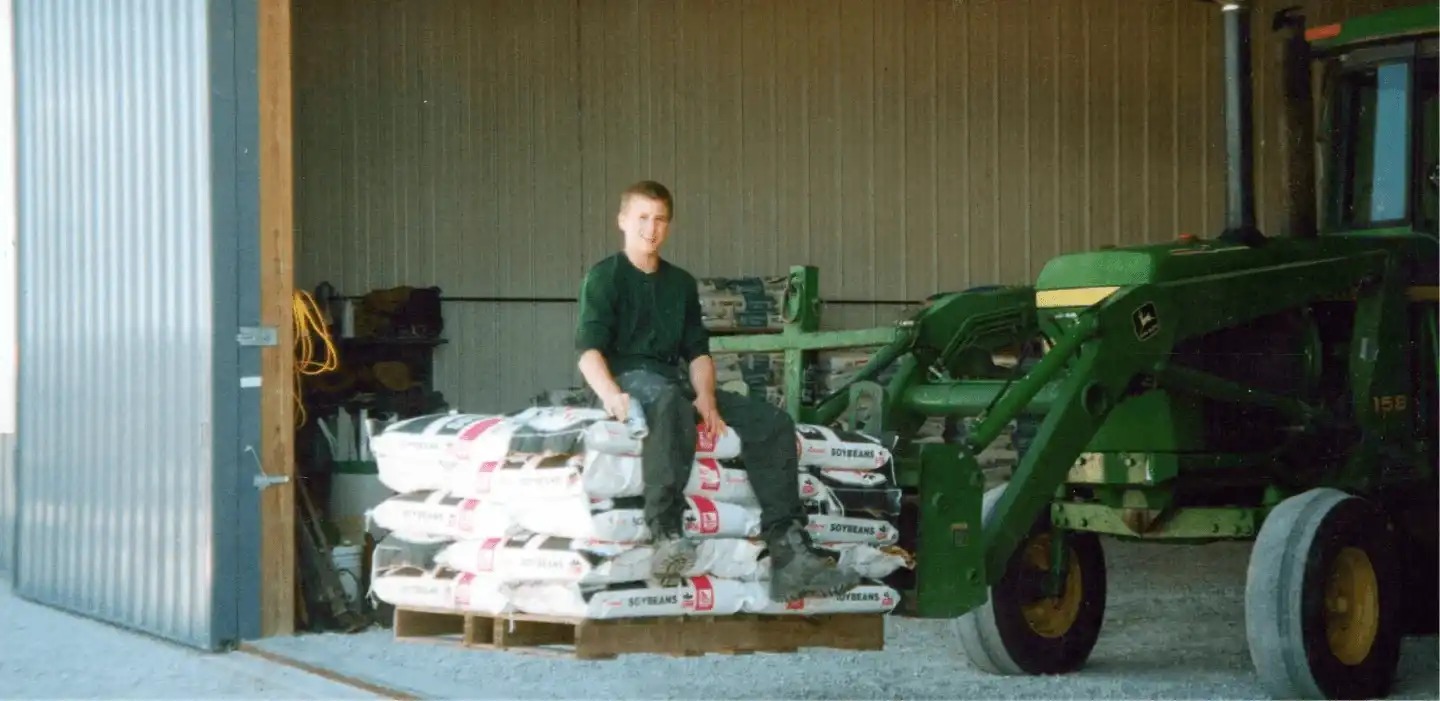
Brett Adcock during childhood

During university, Adcock continued to independently develop various software, initially creating a website selling outdoor electronics. Later, he focused his efforts on the job recruitment sector, developing content websites to help job seekers prepare for interviews in fields like finance ("Street of Walls"), a mobile job search app ("Working App"), and a video interview website. These projects were not successful and resembled early, immature entrepreneurial experiments.

In 2012, while striving in New York, Adcock turned his attention back to the recruitment market. He co-founded Vettery with Adam Goldstein. Initially, Vettery was a platform targeting third-party recruitment agencies, but this model was quickly proven uncompetitive. After several adjustments, Adcock and the team decided to pivot, placing job seekers and companies directly on the same platform and improving matching efficiency through software and machine learning.
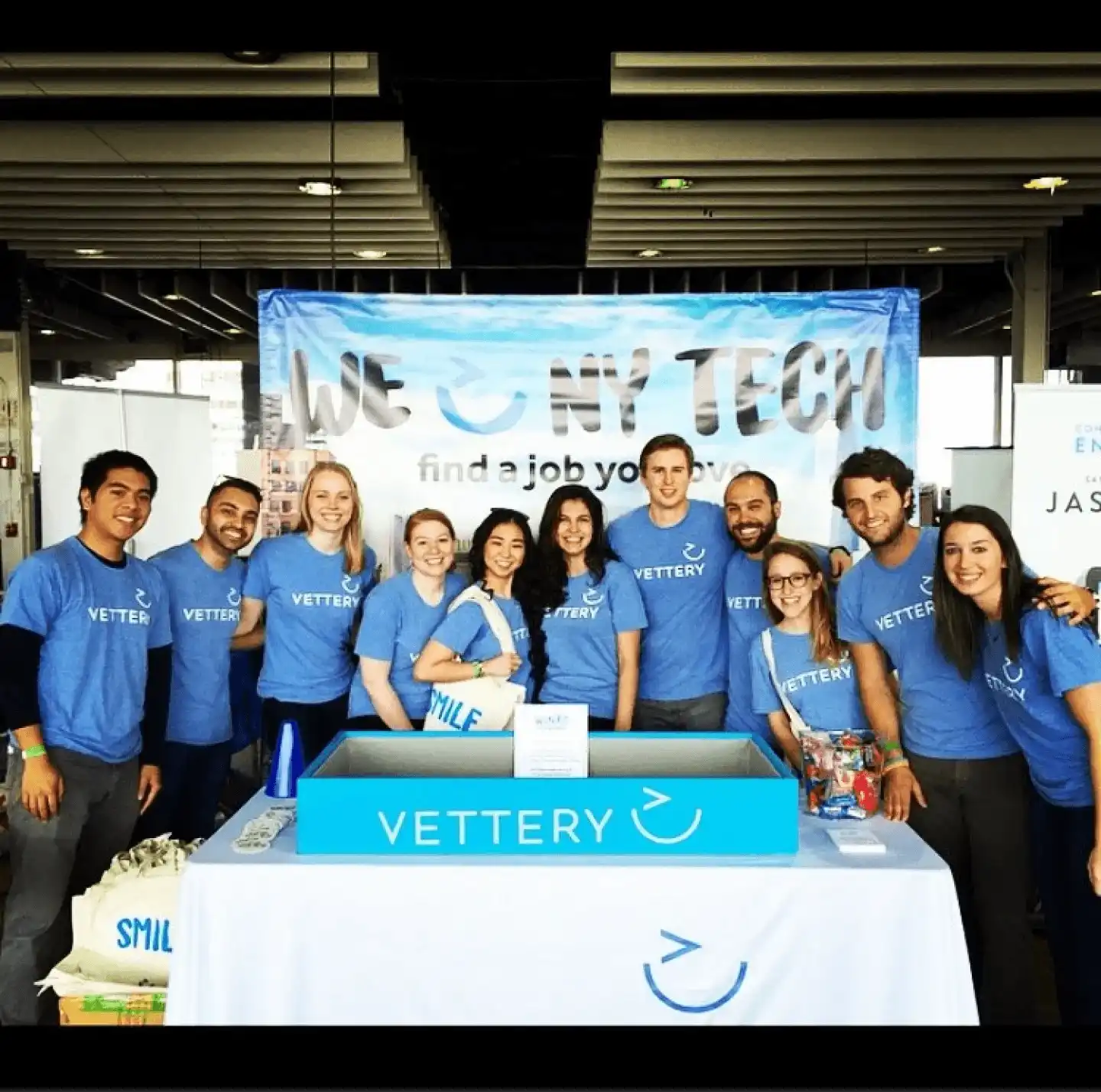
Brett Adcock (5th from right) with his team

After the Vettery platform launched, growth accelerated. Adcock later recalled that platform users experienced consecutive weeks of doubling growth. By 2017, Vettery's employee count had grown to 300, with about 20,000 clients and approximately 30,000 interviews conducted monthly through the system. The company also caught the attention of the world's largest recruitment company, the Adecco Group, and was acquired by the latter for $110 million in 2018.

This transaction provided Adcock, just past his thirties, with a substantial personal fortune. He began looking for more complex, longer-cycle problems that also required capital and engineering prowess, specifically in hardware and sustainable development. Thus, he moved west to California, heading to Silicon Valley to seek the next opportunity.

In Three Years, Building a Flying Car Startup into a Public Company

Aiming to tackle more challenging problems, Adcock could no longer randomly throw out ideas and conduct low-cost experiments like he did in university. After careful consideration, he chose to focus on solving transportation problems by entering the three-dimensional airspace. Adcock wanted to try creating the flying cars seen in sci-fi movies, making electric vertical takeoff and landing (eVTOL) aircraft the most suitable choice.

In 2018, Adcock teamed up with Adam Goldstein again to co-found Archer Aviation. Compared to Vettery, Archer was an entirely different world. It required a top-tier engineering team, hardware R&D, supply chain management, engineering manufacturing, aviation certification, public safety, and long-term patience from capital markets.

The founding of Archer Aviation also involved a fortuitous opportunity. At the time, French aviation giant Airbus was relocating all its flying car "Vahana" business to France, and flight car company Kitty Hawk's cost-cutting measures due to its partnership with Boeing caused dissatisfaction among some engineering team members (Kitty Hawk later dissolved in 2022). Seizing the opportunity, Adcock absorbed a large number of personnel from these two projects, rapidly assembling a seasoned team.

In 2021, Adcock and his team successfully conducted the maiden flight of the full-scale, two-seat, autonomous prototype aircraft "Maker." They also partnered with automotive giant Fiat Chrysler on supply chain, advanced composite materials, and engineering, design, and production aspects, and secured a $1 billion order from United Airlines. That same year, Archer Aviation went public on the New York Stock Exchange via a SPAC merger, valued at approximately $2.7 billion. Today, the company's market capitalization stands at $4.5 billion and it is part of Cathie Wood's Ark Invest portfolio.
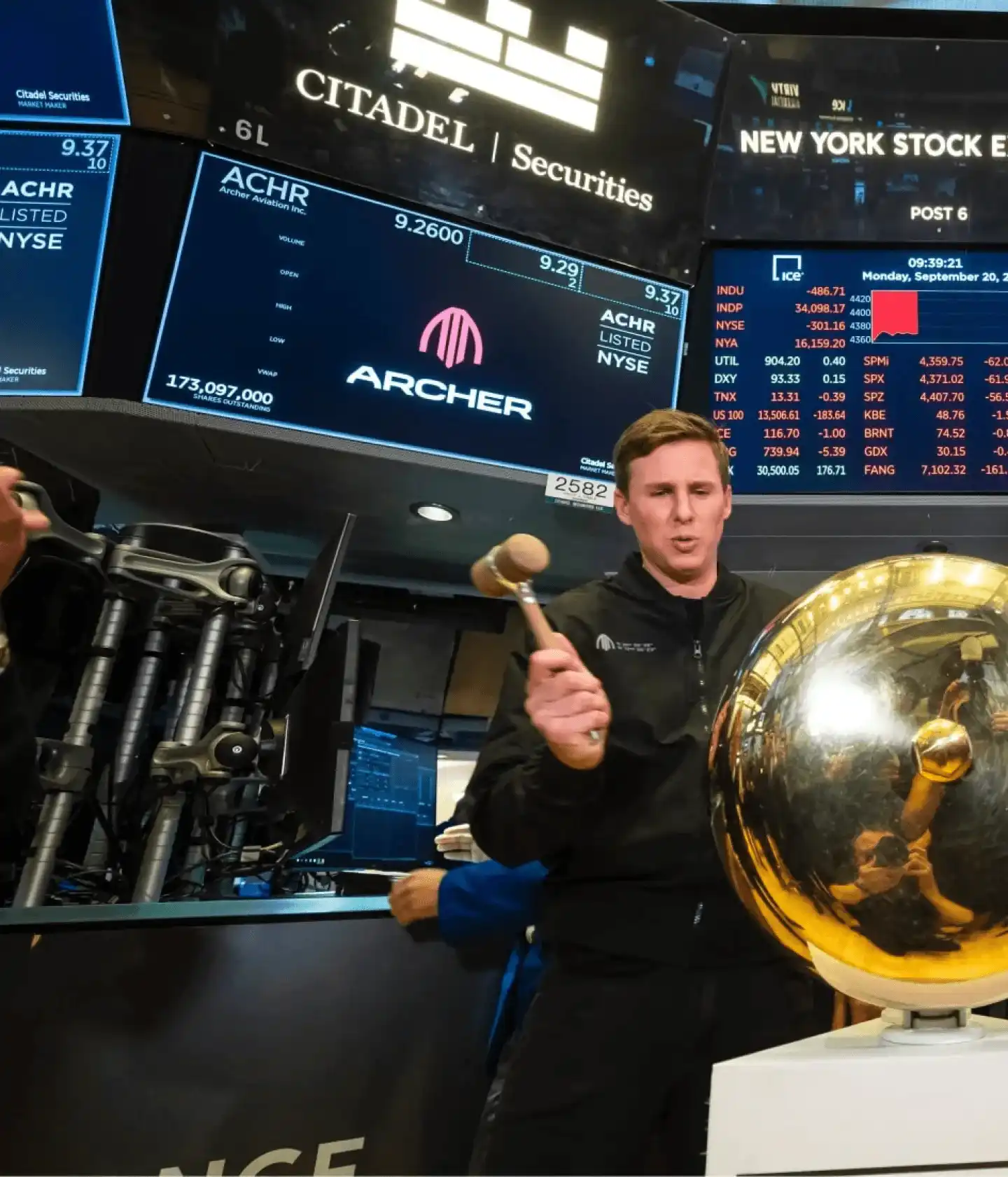
Brett Adcock rings the opening bell at the NYSE

Despite entering the market relatively late, Archer Aviation's rapid rise has made it a major contender in the emerging eVTOL industry. In November 2022, Archer's five-seater "Midnight" aircraft made a stunning debut. Once it receives type certification from the Federal Aviation Administration (FAA), it will become the company's first air taxi product.

However, Adcock quietly left the company shortly after its IPO. In April 2022, Archer announced that Adam Goldstein would serve as the sole CEO, with Adcock stepping down as co-CEO but remaining on the board. The company explained at the time that the move was to simplify the operating structure and advance flight testing, certification, and commercialization.

The real reason for his departure may be more complex and is unknown to the public. Judging by the company's stock performance, it was indeed in a post-IPO slump. Adcock later stated that he left Archer due to "differences" with the board, especially after the company went public, regarding what he wanted to do versus what the team wanted to do.

Perhaps for him, the governance of a public company, the regulatory path, and the pace of commercialization no longer suited a founder who always wanted to leap into the next technological revolution.

Final Venture? Adcock Plans to Build Figure with a 30-Year Vision

After leaving Archer, Adcock quickly entered the next equally sci-fi and currently even larger bet. In 2022, he founded Figure AI, entering the field of general-purpose humanoid robotics. In Figure's Master Plan, he wrote that his goal is to build the company with a 30-year vision, investing time and resources into "maximizing utility impact on humanity."

Regarding team composition, Adcock adopted a strategy similar to when he founded Archer. He rapidly assembled a team of 60 people, with members primarily hailing from renowned companies and projects such as Boston Dynamics, Tesla, Apple's autonomous vehicle project, and Google DeepMind.
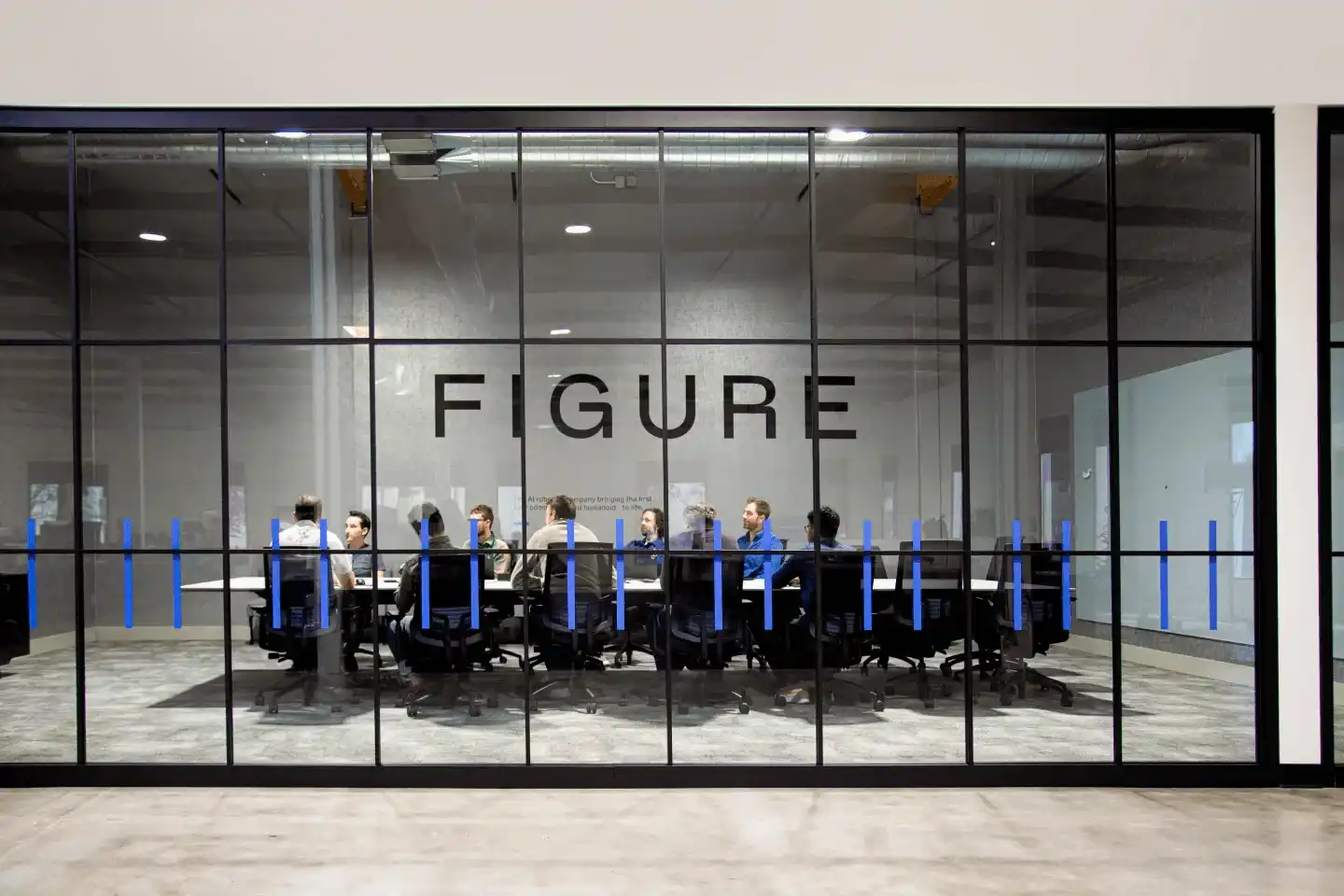
Giving AI a physical body is the proposition Adcock set for Figure. Figure aims not to create industrial robotic arms or service robots, but rather general-purpose humanoid robots capable of entering human environments, using human tools, and performing a variety of tasks. Adcock believes that the world is inherently designed for the human body; therefore, creating robots that interact with the world in a similar way can automate a vast amount of work.

The underlying rationale for this vision is Adcock's assessment of the labor market. In Figure's Master Plan, he writes that the United States has over 10 million "unsafe or undesirable" jobs, and an aging population will further exacerbate the difficulty for businesses to expand their workforce. If the economy is to continue growing, it requires more productivity, which in turn demands more automation. Consequently, Figure has identified manufacturing, logistics, warehousing, retail, and home scenarios as its long-term directions.

As Figure's valuation rises, the skepticism directed at Adcock intensifies. The first category of doubt centers on the vast gap between commercialization and valuation. Essentially, the market is buying a distant future expectation. While Figure has attracted market enthusiasm with a valuation nearing $40 billion, its revenue scale and mass production capabilities remain limited. Its future revenue projections heavily rely on the ability to deploy a large number of robots before 2029.

Furthermore, Figure's split with OpenAI has attracted significant attention and controversy. In 2024, Figure partnered with OpenAI to develop next-generation robot AI models and received investment support from OpenAI, Microsoft, NVIDIA, Jeff Bezos, and others. However, less than a year later, Adcock decided to terminate the partnership and instead develop the models internally.

According to Business Insider, Adcock later stated that OpenAI brought little value to Figure beyond its brand, and that robot AI requires a different technical approach than chatbots. He also mentioned that when OpenAI indicated it wanted to build its own humanoid robots, he considered the partnership over. The report also noted that a technical employee from OpenAI shared a related clip, calling Adcock's claims "untrue."

"Preference" for More Difficult Problems and Larger Narratives

Looking back at Adcock's three main entrepreneurial ventures, Vettery, Archer, and Figure appear unrelated on the surface—one is a recruitment platform, one is a flying car company, and one is a humanoid robot company. However, they share the same entrepreneurial philosophy: targeting a massive, inefficient market where a technological inflection point is emerging, and advancing simultaneously with capital, engineering teams, and bold narratives.

With Vettery, he bet that machine learning could improve recruitment matching efficiency. With Archer, he bet that batteries, motors, and aerospace engineering could unlock urban air mobility. With Figure, he is betting that AI models, robotic hardware, and manufacturing capabilities can fuse into a new type of labor force. Adcock's thinking does not start from a single-point product but works backward from "how the future world should operate" to determine what kind of company to build today.

Brett Adcock's career resembles a curve of increasing asset intensity: from software platforms to aircraft, and then to humanoid robots. He is not a technical expert who has dug deep in a single field for decades. He is more like an "entrepreneurial hunter," sensing opportunities, organizing resources, recruiting teams, amplifying the narrative, and then moving on.

Now, standing under the spotlight of Figure AI, he faces skepticism as loud as the applause. But regardless of the outcome, he has already etched his name into the first chapter of AI robotics business history.

Pertanyaan Terkait

QWhat is Figure AI and why has it attracted significant attention recently?

AFigure AI is a humanoid robotics company. It recently gained global attention by hosting a 'Human vs. Robot' parcel sorting challenge and conducting a 7-day live stream of its robots performing sorting tasks. The company, founded just three years ago, reached a valuation of $390 billion after a new funding round, attracting investments from top-tier firms like NVIDIA, Intel Capital, Salesforce, LG, and Qualcomm.

QWho is Brett Adcock and what are his previous entrepreneurial ventures?

ABrett Adcock is a serial entrepreneur and the founder of Figure AI. His previous ventures include co-founding Vettery, a recruitment platform sold to the Adecco Group for $110 million in 2018, and co-founding Archer Aviation, an electric vertical takeoff and landing (eVTOL) aircraft company that went public on the NYSE in 2021.

QWhat is the core mission and long-term vision Brett Adcock has for Figure AI?

ABrett Adcock's mission for Figure AI is to build general-purpose humanoid robots that can operate in human environments, use human tools, and perform a variety of tasks. He views this as a 30-year project aimed at maximizing utility for humanity by automating labor in sectors like manufacturing, logistics, warehousing, retail, and eventually homes, to address workforce shortages and boost productivity.

QWhy did Brett Adcock leave Archer Aviation shortly after it went public?

AAdcock left his co-CEO role at Archer Aviation due to what he later described as a 'misalignment' with the board. After the company went public, he felt that what he wanted to do differed from what the team wanted to do. This suggests disagreements over the company's direction, governance, and commercialization pace post-IPO.

QWhat are some of the major challenges and criticisms facing Figure AI?

AFigure AI faces several criticisms: 1) Its $390 billion valuation is seen as extremely high compared to its current commercial scale and production capabilities. 2) Its revenue projections depend heavily on deploying large numbers of robots by 2029, which is uncertain. 3) It ended a high-profile partnership with OpenAI on robot AI models, citing a divergence in technical needs and OpenAI's own robotics ambitions, a move that was publicly disputed.

Bacaan Terkait

Xpeng dan Nio Gencar di Komputasi, Ideal Ganti Arsitektur

Pada 15 Juni, Li Auto memperkenalkan chip self-driving buatan sendiri, Ma He M100, yang dikembangkan khusus untuk L9 Livis generasi baru. CTO Li Auto, Xie Yan, menekankan bahwa fokusnya bukan hanya meningkatkan kecepatan, tetapi mengubah arsitektur chip secara fundamental. Di tengah tren produsen mobil yang berlomba-lomba mengembangkan chip sendiri pada tahun 2026, pesaing seperti Nio (chip Shenji NX9031), Xpeng (chip Turing), dan Huawei (MDC 810 Pro) umumnya mengandalkan angka TOPS (komputasi) sebagai senjata pemasaran utama. Namun, Li Auto memilih jalur berbeda dengan mengubah logika arsitektur dasar dari chip tersebut. Ma He M100 mengadopsi arsitektur Dynamic Data Flow, bukan arsitektur von Neumann tradisional. Pendekatan ini dirancang untuk komputasi paralel matriks berskala besar yang diperlukan untuk inferensi model AI (seperti VLA), dengan mengurangi bolak-balik data antara memori dan unit pemrosesan. Hasil klaim Li Auto adalah efisiensi komputasi efektif 3 kali lipat dibandingkan Nvidia Thor U dan penurunan latency 40%. Keberhasilan arsitektur ini mendapat pengakuan eksternal melalui penerimaan makalahnya di konferensi akademis bergengsi ISCA 2026. Namun, keunggulan 3x ini sangat tergantung pada algoritma Li Auto (VLA2.1) dan mungkin tidak berlaku untuk tugas komputasi umum. Dengan chip ini, Li Auto menyelesaikan rantai teknologi "full-stack" yang meliputi chip, compiler, sistem operasi (Star Ring OS), model AI, dan pengontrol domain, menciptakan ekosistem tertutup yang independen dari pemasok seperti Nvidia. Dalam peluncuran ini, CEO Li Xiang juga memperkenalkan visi "Mobil Cerdas Embadied" ("Four-in-One Embodied AI Car"), yang mendefinisikan mobil listrik sebagai asisten hidup yang dapat merasakan, berpikir, dan berkembang, menggeser persaingan dari sekadar fitur konfigurasi (seperti kulkas atau layar) ke kemampuan sistem. Li Auto menetapkan target ambisius untuk model self-driving Ma He VLA agar menyamai performa Tesla FSD V14 pada kuartal keempat tahun ini, dengan rincian peningkatan OTA bertahap mulai Juli hingga Desember. Di balik inovasi teknologi, tantangan finansial tetap ada. Pendapatan Li Auto turun pada Q4 2025, dengan margin yang menyempit. Namun, anggaran R&D tetap tinggi (sekitar 12 miliar yuan, 50% untuk AI). Target penjualan 2026 adalah 550.000 unit, sementara realisasi 2025 adalah 406.000 unit. Pengujian nyata akan dimulai pada kuartal ketiga dengan OTA pertama pada Juli dan peluncuran model baru. Sertifikasi akademis untuk arsitektur chip adalah langkah awal, tetapi penerimaan pasar dan kinerja dalam kondisi mengemudi sehari-hari akan menjadi penentu kesuksesan akhir.

marsbit24m yang lalu

Xpeng dan Nio Gencar di Komputasi, Ideal Ganti Arsitektur

marsbit24m yang lalu

Tahun Pertama Penerapan AI, Hanya Bilang Iya, Abai Risiko? Log Pelayaran Pengembangan Perangkat Lunak Sepenuhnya Sumber Terbuka

Tahun 2026 disebut sebagai era aplikasi AI. Kode dibuat semakin cepat, namun dengan pengawasan yang semakin sedikit saat diterapkan. Risiko dari kode yang ditulis AI sering kali tersembunyi dalam kode yang tampak benar secara sintaksis dan melewati semua pemeriksaan, tetapi dapat menyebabkan kebocoran data atau kerugian aset. Contoh nyata adalah insiden konfigurasi oracle cbETH Moonwell, di mana kesalahan semantik dalam harga melewati proses pengembangan dan pemeriksaan, mengakibatkan kerugian finansial yang signifikan. Risiko pengkodean AI telah berevolusi dari pelengkap lokal ke agen yang dapat membaca file, mengubah konfigurasi, menginstal dependensi, dan menghasilkan skrip infrastruktur, sehingga menciptakan jalur risiko yang lebih panjang dan sulit dilacak dalam rekayasa perangkat lunak. Untuk mengatasi masalah ini, Narwhal-Lab Universitas Peking meluncurkan proyek sumber terbuka **Narwhal AI Code Risks**. Proyek ini mengumpulkan dan mengkategorikan fragmen informasi risiko yang tersebar ke dalam tiga lapisan: `cases/` (peristiwa nyata), `inferred/` (sinyal awal), dan `scenarios/` (skenario risiko tipikal). Risiko diklasifikasikan menjadi 7 kategori: Rantai Pasok, Kerentanan Tingkat Kode, Konfigurasi Cloud & Infrastruktur, Risiko Agen, Risiko Domain Vertikal, Risiko Kekayaan Intelektual & Kepatuhan, serta Faktor Manusia. Tujuan proyek ini adalah untuk mengubah kasus risiko menjadi pengetahuan yang dapat digunakan kembali, membantu pengembang mengidentifikasi masalah serupa, menjadi basis sampel bagi peneliti keamanan, serta menyediakan aturan deteksi dan tolok ukur bagi vendor alat. Dengan menyediakan "log pelayaran" sumber terbuka untuk dunia perangkat lunak, proyek ini bertujuan untuk mencatat dan meneruskan pengalaman, sehingga pihak lain tidak perlu terjebak dalam perangkap yang sama.

marsbit24m yang lalu

Tahun Pertama Penerapan AI, Hanya Bilang Iya, Abai Risiko? Log Pelayaran Pengembangan Perangkat Lunak Sepenuhnya Sumber Terbuka

marsbit24m yang lalu

Landasan Valuasi Triliunan Dollar SpaceX: Siapa yang Mengambil Alih Pengeluaran Modal Tahunan Ratusan Miliar Milik Musk?

Penulis berpendapat bahwa peluang investasi terbesar dalam eksplosifnya SpaceX saat ini bukan pada saham SpaceX itu sendiri (yang mahal dan masih rugi), melainkan pada para pemasoknya. Ini mengikuti pola sejarah seperti rantai pasokan Apple, Tesla, dan NVIDIA, di mana perusahaan "super terminal" mendorong pertumbuhan luar biasa bagi pemasoknya. SpaceX mengalokasikan ratusan miliar dolar untuk pengeluaran modal tahunan, didanai terutama oleh bisnis Starlink yang menguntungkan. Uang ini dialirkan ke pengembangan roket (untuk menurunkan biaya peluncuran) dan AI/pusat data orbital. Pesanan pembelian besar-besaran ini mengalir ke tiga jenis pemasok: 1. **Pengganti yang Sulit:** NVIDIA (GPU & CUDA), Eutelsat (spektrum satelit), Filtronic (penguat sinyal), Materion (berilium), STMicroelectronics (chip antena). 2. **Pengganti yang Mahal:** Honeywell (kontrol penerbangan), Carpenter Technology (baja khusus), Hexcel (serat karbon), Broadcom (pertukaran data). 3. **Pemasok Produksi Massal:** Wistron NeWeb (perakitan terminal Starlink), dan beberapa perusahaan Tiongkok seperti Shenzhen Sunway (konektor), Paixin New Materials (tempaan), Western Superconductor (paduan niobium), Yingliu Co. (cetakan), serta perusahaan seperti Trimble (sinkronisasi waktu) dan Astronics (distribusi daya). Mengapa sekarang adalah saat yang tepat? (1) Volume pembelian SpaceX baru akan meningkat pesat (target 100 peluncuran/tahun, 3000 juta terminal Starlink). (2) Transparansi data melalui IPO memungkinkan pelacakan pesanan. (3) Siklus rantai pasokan mirip dengan tahap awal Tesla (sekitar 2018), menawarkan peluang pertumbuhan jangka panjang. Kesimpulannya, alih-alih membeli saham SpaceX yang fantastis, investor dapat mempertimbangkan perusahaan-perusahaan di balik layar yang menerima pesanan besar dan stabil, terlepas dari volatilitas harga saham SpaceX. Namun, setiap perusahaan perlu dianalisis secara individual dengan mempertimbangkan risiko seperti siklus komoditas, geopolitik, dan perubahan teknologi.

marsbit1j yang lalu

Landasan Valuasi Triliunan Dollar SpaceX: Siapa yang Mengambil Alih Pengeluaran Modal Tahunan Ratusan Miliar Milik Musk?

marsbit1j yang lalu

Landasan Valuasi Triliunan Dolar SpaceX: Siapa yang Mengambil Porsi Belanja Modal Ratusan Miliar Elon Musk Tiap Tahun?

Pondasi valuasi triliunan dolar SpaceX: Siapa yang membagi ratusan miliar belanja modal tahunan Elon Musk? Alih-alih berinvestasi langsung di SpaceX yang IPO dengan valuasi tinggi dan masih rugi, peluang mungkin lebih baik pada rantai pasokannya. Sejarah menunjukkan bahwa raksasa teknologi seperti Apple, Tesla, dan Nvidia telah menciptakan kekayaan besar bagi pemasok mereka. SpaceX beroperasi dengan model: Layanan internet satelit Starlink menghasilkan uang → mendanai pengembangan roket untuk menekan biaya peluncuran → meluncurkan perangkat keras AI ke luar angkasa dengan biaya rendah → menyewakan daya komputasi AI untuk pendapatan baru. Siklus ini menghasilkan pesanan pembelian ratusan miliar dolar AS setiap tahun. Pemasok dapat dikategorikan dalam tiga kelompok: 1. **Pengganti sulit atau tidak mungkin**: NVIDIA (GPU untuk superkomputer), Eutelsat (spektrum radio satelit), Filtronic (amplifier sinyal satelit), Materion (logam berilium), STMicroelectronics (chip antena). 2. **Secara teknis dapat diganti, tetapi biaya peralihannya tinggi**: Honeywell (sistem kendali penerbangan), Carpenter Technology (baja paduan khusus), Hexcel (serat karbon), Broadcom (pertukaran data), Linde (gas industri). 3. **Memerlukan produksi massal yang stabil dengan biaya rendah**: Perusahaan-perusahaan ini memasok komponen untuk perangkat terminal Starlink dan roket. Contohnya termasuk Wistron NeWeb (kontrak perakitan), serta beberapa perusahaan China seperti Sunway Communication (konektor), Paike New Materials (komponen tempa), Western Superconducting (paduan niobium), Yingliu Co (komponen cor). Perusahaan seperti Trimble, Astronics, dan CTS juga menyediakan komponen penting. Mengapa sekarang adalah saat yang tepat? Karena volume pembelian SpaceX baru akan meningkat (target 100 peluncuran/tahun, 30 juta terminal Starlink), transparansi melalui IPO memungkinkan pelacakan pesanan, dan siklus rantai pasokan serupa dengan Tesla pada 2018 - masih di tahap awal pertumbuhan yang curam. Intinya: Pesanan pembelian tahunan SpaceX yang besar, terlepas dari harga sahamnya, akan mengalir ke pemasoknya dan menjadi pendapatan tetap mereka. Inilah peluang yang mungkin lebih dapat diakses daripada berinvestasi langsung di saham SpaceX.

链捕手1j yang lalu

Landasan Valuasi Triliunan Dolar SpaceX: Siapa yang Mengambil Porsi Belanja Modal Ratusan Miliar Elon Musk Tiap Tahun?

链捕手1j yang lalu

Trading

Spot
Futures

Artikel Populer

Cara Membeli ZEN

Selamat datang di HTX.com! Kami telah membuat pembelian Horizen (ZEN) menjadi mudah dan nyaman. Ikuti panduan langkah demi langkah kami untuk memulai perjalanan kripto Anda.Langkah 1: Buat Akun HTX AndaGunakan alamat email atau nomor ponsel Anda untuk mendaftar akun gratis di HTX. Rasakan perjalanan pendaftaran yang mudah dan buka semua fitur.Dapatkan Akun SayaLangkah 2: Buka Beli Kripto, lalu Pilih Metode Pembayaran AndaKartu Kredit/Debit: Gunakan Visa atau Mastercard Anda untuk membeli Horizen (ZEN) secara instan.Saldo: Gunakan dana dari saldo akun HTX Anda untuk melakukan trading dengan lancar.Pihak Ketiga: Kami telah menambahkan metode pembayaran populer seperti Google Pay dan Apple Pay untuk meningkatkan kenyamanan.P2P: Lakukan trading langsung dengan pengguna lain di HTX.Over-the-Counter (OTC): Kami menawarkan layanan yang dibuat khusus dan kurs yang kompetitif bagi para trader.Langkah 3: Simpan Horizen (ZEN) AndaSetelah melakukan pembelian, simpan Horizen (ZEN) di akun HTX Anda. Selain itu, Anda dapat mengirimkannya ke tempat lain melalui transfer blockchain atau menggunakannya untuk memperdagangkan mata uang kripto lainnya.Langkah 4: Lakukan trading Horizen (ZEN)Lakukan trading Horizen (ZEN) dengan mudah di pasar spot HTX. Cukup akses akun Anda, pilih pasangan perdagangan, jalankan trading, lalu pantau secara real-time. Kami menawarkan pengalaman yang ramah pengguna baik untuk pemula maupun trader berpengalaman.

206 Total TayanganDipublikasikan pada 2024.12.12Diperbarui pada 2026.06.02

Cara Membeli ZEN

Diskusi

Selamat datang di Komunitas HTX. Di sini, Anda bisa terus mendapatkan informasi terbaru tentang perkembangan platform terkini dan mendapatkan akses ke wawasan pasar profesional. Pendapat pengguna mengenai harga ZEN (ZEN) disajikan di bawah ini.

活动图片