Telegram Takes Direct Control of TON, Social Traffic Rewrites the Public Chain Narrative

marsbitDipublikasikan tanggal 2026-05-11Terakhir diperbarui pada 2026-05-11

Abstrak

Telegram founder Pavel Durov announced that Telegram will replace the TON Foundation as the core driver and largest validator of The Open Network (TON). Key initiatives include a sixfold reduction in transaction fees, performance upgrades, and improved developer tools within the next few weeks. This marks a strategic shift from Telegram merely providing user access to deeply integrating TON into its platform's core infrastructure. The goal is to transform Telegram's massive social traffic into sustainable on-chain activity. While viral mini-apps like Notcoin have demonstrated Telegram's ability to drive user adoption, TON aims to support frequent, low-value transactions inherent to social platforms—such as tipping, in-app payments, and game rewards. Ultra-low fees and sub-second finality (0.6 seconds) are crucial to making blockchain interactions seamless and nearly invisible within the Telegram user experience. However, Telegram's increased central role raises questions about network decentralization. Durov argues that Telegram's participation will attract more large validators, thereby enhancing decentralization. TON also offers high annual staking rewards (18.8%), aiming to retain capital within its ecosystem. The fundamental challenge for TON is no longer leveraging Telegram's user base, but becoming an indispensable, seamless infrastructure layer for Telegram's everyday applications—moving from an adjacent chain to an embedded utility.

Author | Asher(@Asher_ 0210)
On May 4th, Telegram founder Pavel Durov announced on platform X that TON network transaction fees have been reduced by 6 times, nearing zero. More crucially, he stated that Telegram will replace the TON Foundation, becoming the new core driving force of the TON network and its largest validator. TON's focus will now shift to technological advantages, including a new ton.org, new developer tools, and performance upgrades, with a timeframe of the next 2 to 3 weeks.
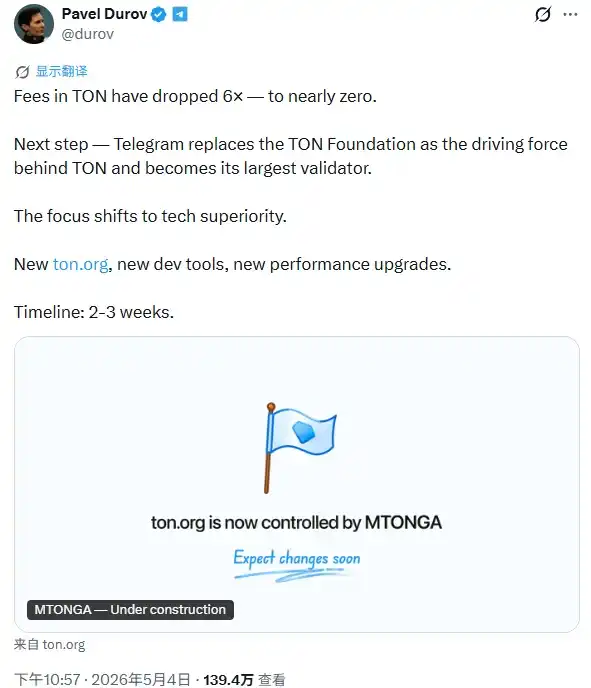
Telegram Founder: TON Fees Reduced by 6x, Telegram to Become Largest Validator

In the past, the relationship between TON and Telegram was more like a strong binding with weak leadership. Telegram provided the gateway, while the Foundation and community were responsible for advancement, with a layer of distance always between them. But this time, Telegram isn't just continuing to bring users to TON; it's beginning to enter more foundational positions such as validator, technical roadmap, and development tools. TON is no longer just a chain adjacent to the Telegram ecosystem but is being reintegrated into Telegram's product system.

TON Doesn't Lack a Gateway; It Lacks Turning the Gateway into Use Cases

Past market discussions about TON often revolved around Telegram's user scale. But for a public chain, having a gateway doesn't equal having an ecosystem, and having user reach doesn't equal having long-term usage. TON's unique aspect is its inherent attachment to a high-frequency social platform, where Mini Apps, wallets, channels, bots, games, and payments already exist within Telegram. This allows TON to avoid having to find users from scratch like most Layer1s. However, if these scenarios cannot solidify into sustained on-chain interactions, Telegram's traffic can only bring waves of short-term hype.

Projects like Notcoin and Dogs have proven that Telegram can quickly generate viral spreads. Simple gameplay combined with social relationship chains can indeed attract a large number of users into crypto applications in a short time. But such explosions come and go quickly. TG mini-games and airdrops can bring attention but can hardly alone sustain a long-term ecosystem.

Therefore, the fee reduction, speed increase, developer tools, and validator role emphasized by Pavel Durov this time point not to a single technological upgrade, but to TON addressing its most critical missing link—transforming Telegram's gateway into sustainable use cases. Only when fees are low enough, confirmation speeds are fast enough, and developer integration is simple enough can scenarios like channel tipping, Mini Apps tasks, game rewards, creator revenue, ad revenue sharing, bot calls, and group micropayments potentially evolve from product features into on-chain activities.

TON no longer needs to repeat the story of "backed by Telegram." What it truly needs to prove is whether the high-frequency behaviors within Telegram can be effectively borne by TON.

Fee Reduction and Speed Increase Aim to Enable Smaller, Higher-Frequency Transactions

The fee reduction by TON this time shouldn't be understood merely as cost optimization typical of public chains. Viewed within the context of Telegram, it actually solves the problem of whether small-amount, high-frequency interactions can become viable.

Most potential on-chain behaviors within Telegram are not large transfers but more fragmented daily operations. Individual transaction amounts are low, but occurrence frequency is high. If users have to perceive fees, wait for confirmations, and repeatedly handle wallet interactions with every button click, these scenarios can hardly truly take off.

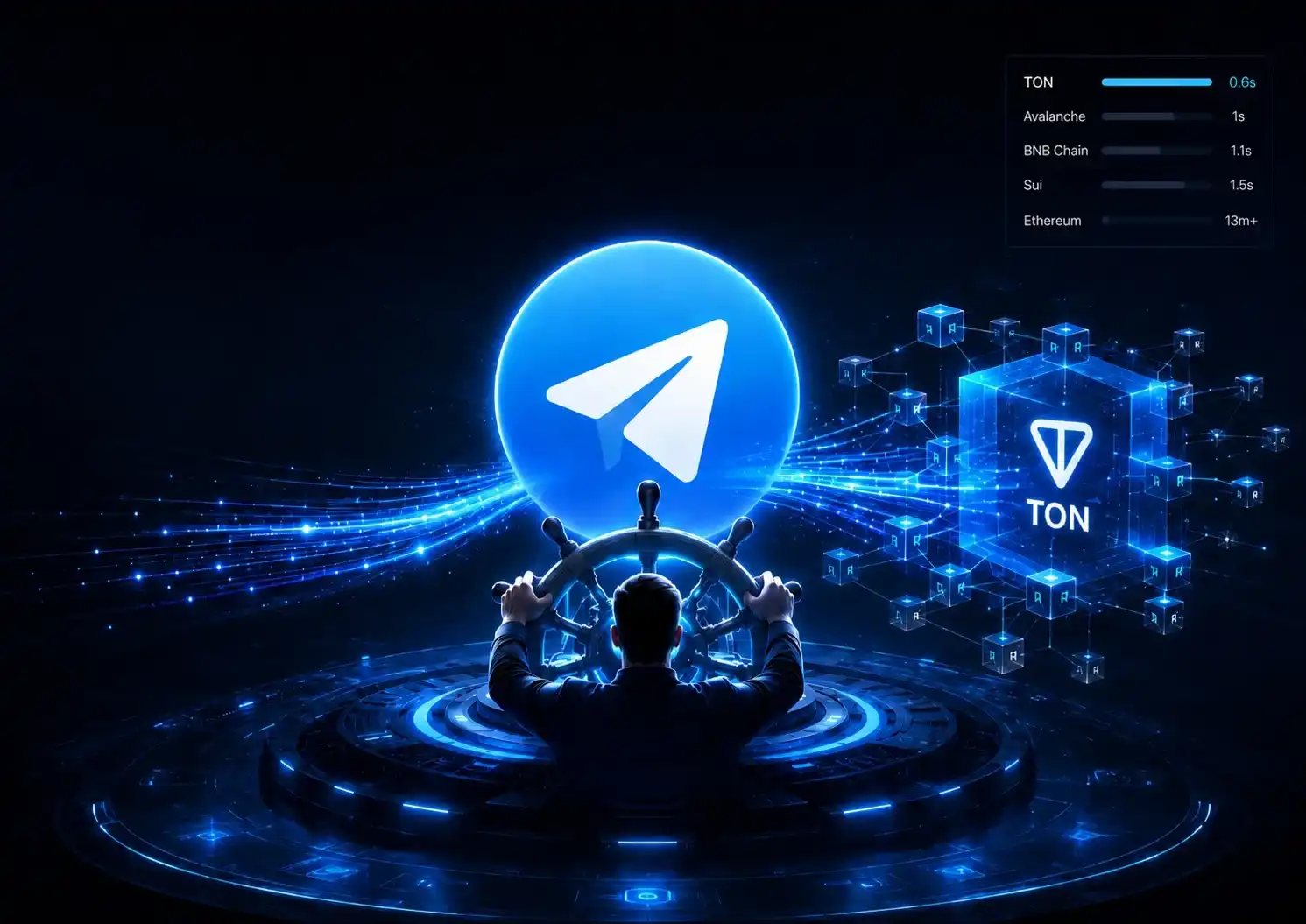
Therefore, fee reduction and speed increase must be considered together. Fees approaching zero lower the usage barrier; reducing finality time to 0.6 seconds lowers the perception of waiting. For Telegram, the chain shouldn't become an extra layer perceived by users but should be hidden as much as possible behind product actions like sending messages, clicking buttons, and viewing balance changes.
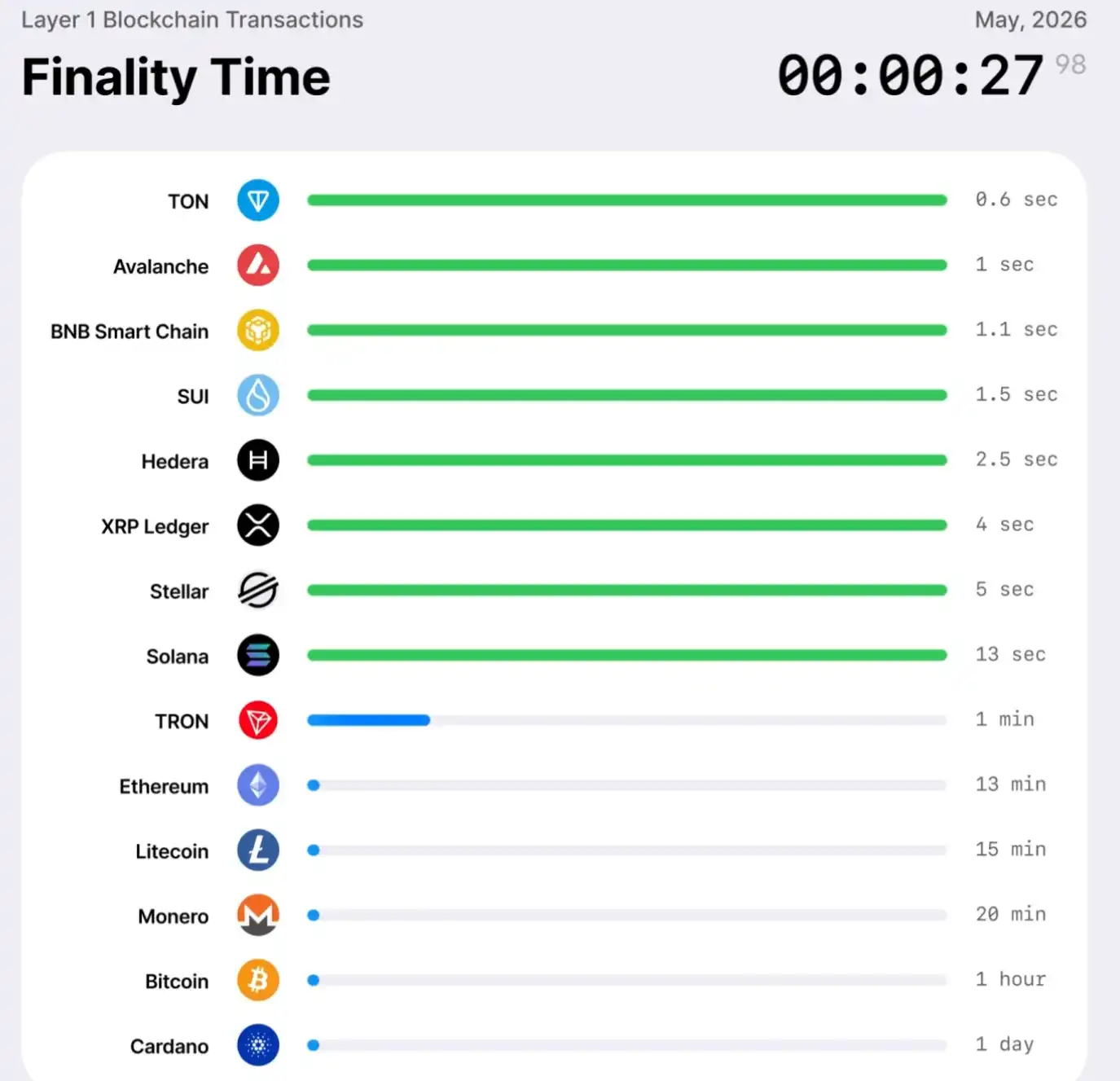
Comparison of "Finality Time" Among Mainstream Public Chains

This also distinguishes TON from many other Layer1s. Its goal isn't solely to make DeFi trades faster or transfers cheaper; it aims to embed the chain into Telegram's daily use. Only when cost, waiting time, and wallet operations are minimized enough can TON potentially evolve from a Telegram-related public chain into the underlying network directly invoked by Telegram's application layer.

From Gateway to Validator, Telegram Begins Penetrating TON's Core

Telegram becoming TON's largest validator is the most significant step in this change. It means Telegram is no longer just providing TON with a gateway and brand endorsement but is entering the network's security and operational mechanisms. Previously, TON was driven by the Foundation and community, which offered greater openness but a relatively decentralized pace. Now, with Telegram directly involved, its products, wallet, Mini Apps, payments, and developer tools have the opportunity to be realigned.

Efficiency may increase, but controversy will also grow. Telegram replacing the TON Foundation as the main driving force and becoming the largest validator will inevitably lead to renewed external discussions about TON's centralization risks. In response, Pavel Durov stated that Telegram's participation would attract more large-scale participants into the validator pool, thereby enhancing decentralization. This logic is not without merit, but the final judgment will depend on results, not statements.

The truly important aspects going forward are whether the validator structure can become more diverse, whether governance information is sufficiently transparent, whether the Foundation and community retain independent space, and whether ecosystem projects can continue developing without relying on Telegram's will.

Therefore, Telegram's return is not a simple positive but a trade-off. For TON to enter the mainstream application layer, it needs Telegram's strong execution capabilities; but the more prominent Telegram's role, the more TON needs to prove it is not merely an internal settlement chain serving Telegram.

High Staking Rewards Retain More Tokens for TON

Pavel Durov subsequently emphasized that TON ranks first in annual staking rewards among the top 50 cryptocurrencies by market cap, with a high rate of 18.8%. Compared to fee reduction and speed increase, high staking rewards are more likely to mobilize capital sentiment and provide TON with another layer of holding rationale in the market's eyes.
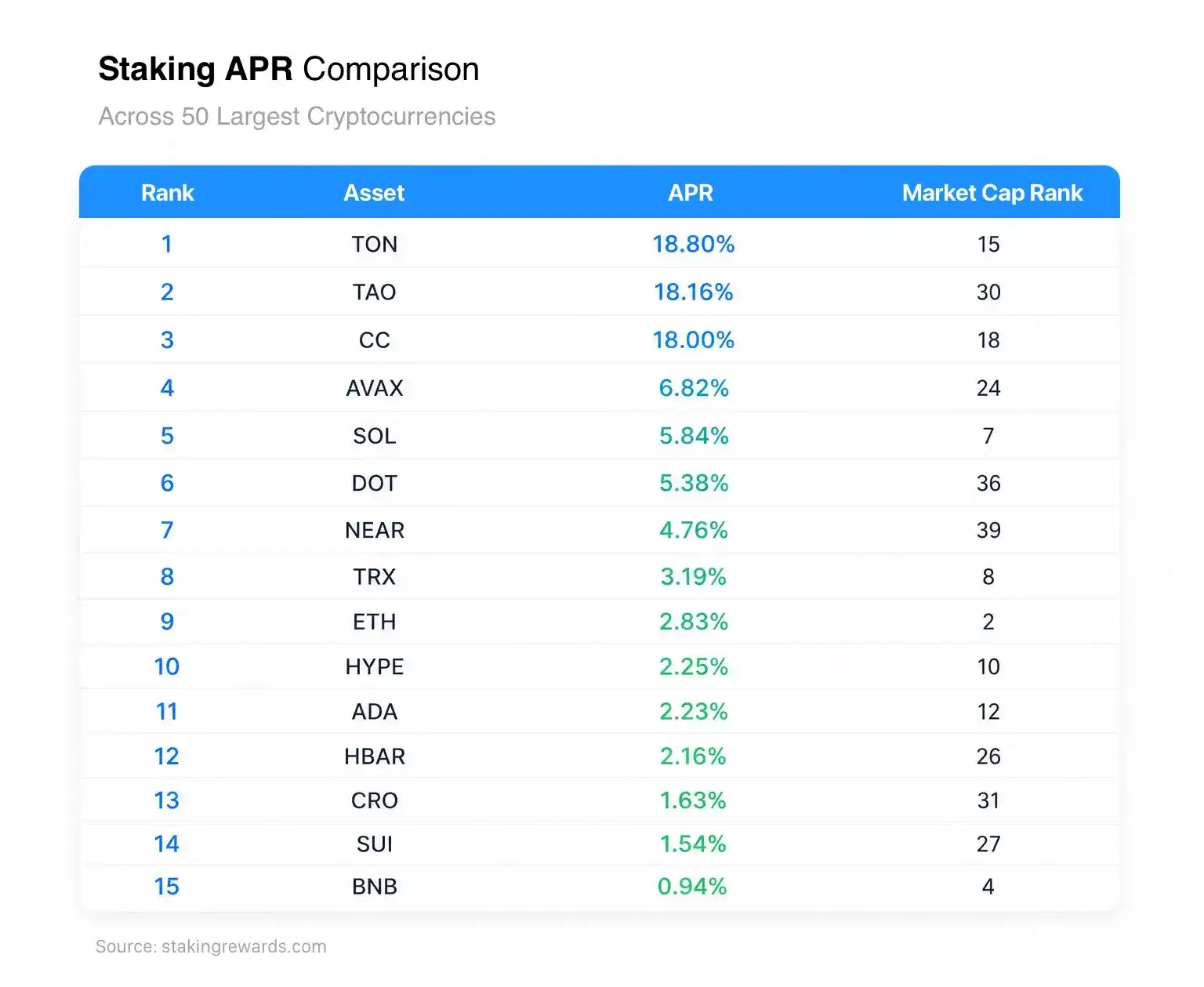
TON Annual Staking Rewards Rank First Among Top 50 Cryptocurrencies

This also makes TON's narrative somewhat more complete. It's not just relying on Telegram's user gateway to attract attention or improving experience through technical upgrades; it's also using staking rewards to keep capital within its ecosystem. The simultaneous presence of gateway, performance, validators, and rewards makes this change more substantial than a single positive factor.

Of course, high yield itself is not the end goal; it's more like buying TON a longer observation period. As long as subsequent developer tools and performance upgrades are delivered, and more capital is locked into the network, a positive feedback loop with real usage may form. For TON, the value of staking rewards isn't just about increasing holding returns but making the market willing to continue waiting for it to truly convert Telegram's gateway advantage.

TON's Return to Telegram Is Not the Finish Line, But a Tougher Challenge

The key for TON going forward is not to continue leveraging Telegram for traffic, but to truly become part of Telegram's application ecosystem. If Telegram's chat, payments, applications, creator economy, and automated interactions are gradually undertaken by TON, then TON's competitors will not just be other Layer1s, but all networks attempting to become the next-generation application infrastructure.

TON isn't just repeating the social traffic story; it's beginning to attempt to turn social traffic into on-chain order. The gateway is just the beginning; usage is the answer. Telegram can push TON to the forefront, but whether it stays there ultimately depends on whether TON can become the layer of infrastructure that operates behind user perception, within the functioning of applications.

If the past TON was still proving how close it is to Telegram, now it must prove how deeply integrated it can be within Telegram's daily use. True mainstream adoption isn't about making users aware they are using a chain, but about making the chain part of the application experience.

TON's opportunity lies here, and so does its pressure.

Pertanyaan Terkait

QAccording to the article, what is the new role that Telegram will assume in the TON network, as announced by Pavel Durov?

ATelegram will become the new core driver of the TON network, replacing the TON Foundation. It will also become the network's largest validator.

QWhat is identified as the key challenge TON needs to overcome, beyond just having access to Telegram's large user base?

ATON needs to transform its access and user reach into sustainable, long-term usage scenarios. It must convert Telegram's high-frequency social interactions into persistent on-chain activities.

QWhy are the reductions in transaction fees and improvements in speed particularly important for TON within the Telegram context?

ALow fees (approaching zero) and fast finality (0.6 seconds) are crucial to enable the small, frequent, and fragmented transactions typical of Telegram's daily use cases. They lower the barrier and reduce user friction, allowing the blockchain to operate seamlessly in the background of the app experience.

QWhat potential downside or concern is raised regarding Telegram becoming the core driver and largest validator of TON?

AThe move raises concerns about increased centralization risk and questions regarding the future independence of the TON Foundation and community projects. It represents a trade-off between stronger execution from Telegram and the need for TON to maintain network decentralization.

QHow does the article frame the high annual staking reward offered by TON, and what purpose does it serve?

AThe high staking reward (18.8% annually, ranked first among top 50 cryptocurrencies) is seen as a mechanism to attract and lock in capital within the TON ecosystem. It provides an additional incentive for holding TON and buys time for the network to realize its potential in converting Telegram's user base into active usage.

Bacaan Terkait

Pemburu Jadi Mangsa, MEV Bot yang Paling Cuan Diretas

Penyerang MEV Bot yang Terkenal, Jaredfromsubway.eth, Kehilangan Lebih dari $7,5 Juta dalam Serangan 'Perangkap Madu'. Alamat MEV Bot Ethereum yang terkenal dan sangat aktif, Jaredfromsubway.eth, mengalami serangan rantai yang sangat bertarget pada hari Sabtu, yang mengakibatkan kerugian lebih dari $7,5 juta. Menurut investigasi Blockaid, serangan ini bukanlah serangan phishing tradisional atau eksploitasi kerentanan kontrak pintar, melainkan serangan 'perangkap madu MEV balik' (counter-MEV honeypot attack) yang dirancang khusus untuk mengeksploitasi logika perilaku MEV Bot. Penyerang telah menyebarkan 66 kontrak token palsu dan kumpulan likuiditas palsu selama beberapa minggu sebelumnya. Aset-aset ini disamarkan sebagai aset stabil utama seperti WETH, USDC, dan USDT, dan membangun jalur perdagangan arbitrase yang tampak nyata. Rantai serangan berkembang: kumpulan likuiditas palsu menciptakan sinyal 'kesenjangan harga yang dapat diarbitrase'; bot MEV secara otomatis mengidentifikasi peluang dan mengeksekusi perdagangan; bot memberikan otorisasi ke kontrak bantu yang dikendalikan penyerang selama proses perdagangan; otorisasi ini tidak dicabut tepat waktu, menciptakan paparan izin yang terus-menerus; akhirnya, penyerang memanggil logika 'pintu belakang' yang telah dipasang sebelumnya dalam satu transaksi, secara langsung mentransfer aset ETH, USDC, dan USDT yang dipegang oleh alamat MEV bot tersebut. Jaredfromsubway.eth adalah salah satu bot MEV paling aktif dan menguntungkan di jaringan Ethereum, yang terkenal karena menjalankan serangan 'sandwich' secara sistematis untuk menangkap keuntungan dari pergerakan harga. Cointelegraph Research menunjukkan bahwa sekitar 70% dari sekitar 60.000 hingga 90.000 serangan sandwich bulanan di Ethereum antara November 2024 dan Oktober 2025 terkait dengan strateginya. Diperkirakan bot ini telah menghasilkan puluhan juta dolar AS. Peristiwa ini menjadi peringatan keras tentang meningkatnya ancaman keamanan di ekosistem crypto. Bahkan pemain tingkat atas seperti Jaredfromsubway.eth, yang biasanya berada di sisi 'predator', kini menjadi target dari serangan canggih yang mengeksploitasi logika operasional otomatis mereka sendiri. Selain itu, setelah peretasan, sebuah akun X tidak dikenal dengan 94.000 pengikut mengubah namanya menjadi Jaredfromsubway.eth dan secara palsu mengklaim akan menawarkan hadiah $1 juta untuk pengembalian dana, memicu peringatan dari pengembang agar pengguna tetap waspada terhadap kemungkinan penipuan.

marsbit29m yang lalu

Pemburu Jadi Mangsa, MEV Bot yang Paling Cuan Diretas

marsbit29m yang lalu

Pemburu Dikepung, MEV Bot yang Paling Bisa Hasilkan Uang Diretas

Alamat bot MEV terkenal di Ethereum, Jaredfromsubway.eth, baru-baru ini menjadi korban serangan yang sangat tersasar dan kehilangan lebih dari $7.5 juta. Serangan ini bukanlah phising atau eksploitasi kerentanan kontrak pintar biasa, melainkan serangan "counter-MEV honeypot" yang dirancang khusus untuk mengeksploitasi logika operasional bot MEV. Penyerang dengan sabar menyiapkan puluhan kontrak token dan pool likuiditas palsu selama beberapa minggu, yang menyamar sebagai aset seperti WETH, USDC, dan USDT. Mereka membuat sinyal arbitrase yang tampak menguntungkan. Saat bot Jaredfromsubway.eth mendeteksi dan mencoba mengeksekusi peluang arbitrase ini, bot tersebut secara tidak sengaja memberikan izin (approval) ke kontrak bantu milik penyerang. Izin ini kemudian dieksploitasi dalam satu transaksi untuk menguras aset ETH, USDC, dan USDT dari dompet bot. Jaredfromsubway.eth sendiri adalah salah satu bot MEV paling aktif dan menguntungkan di Ethereum, yang terkenal terutama karena sering melakukan "serangan sandwich" untuk mengambil keuntungan dari selisih harga. Peristiwa ini menunjukkan bahwa bahkan pemain yang biasanya berperan sebagai "predator" di ekosistem crypto pun rentan terhadap ancaman keamanan yang semakin canggih. Setelah serangan, muncul akun palsu di X yang mengaku sebagai Jaredfromsubway.eth dan menawarkan pengembalian dana, yang telah diperingatkan oleh pengembang sebagai potensi penipuan.

Odaily星球日报36m yang lalu

Pemburu Dikepung, MEV Bot yang Paling Bisa Hasilkan Uang Diretas

Odaily星球日报36m yang lalu

Kondisi Pembayaran di Amerika Latin Tak Sesuai dengan yang Anda Bayangkan

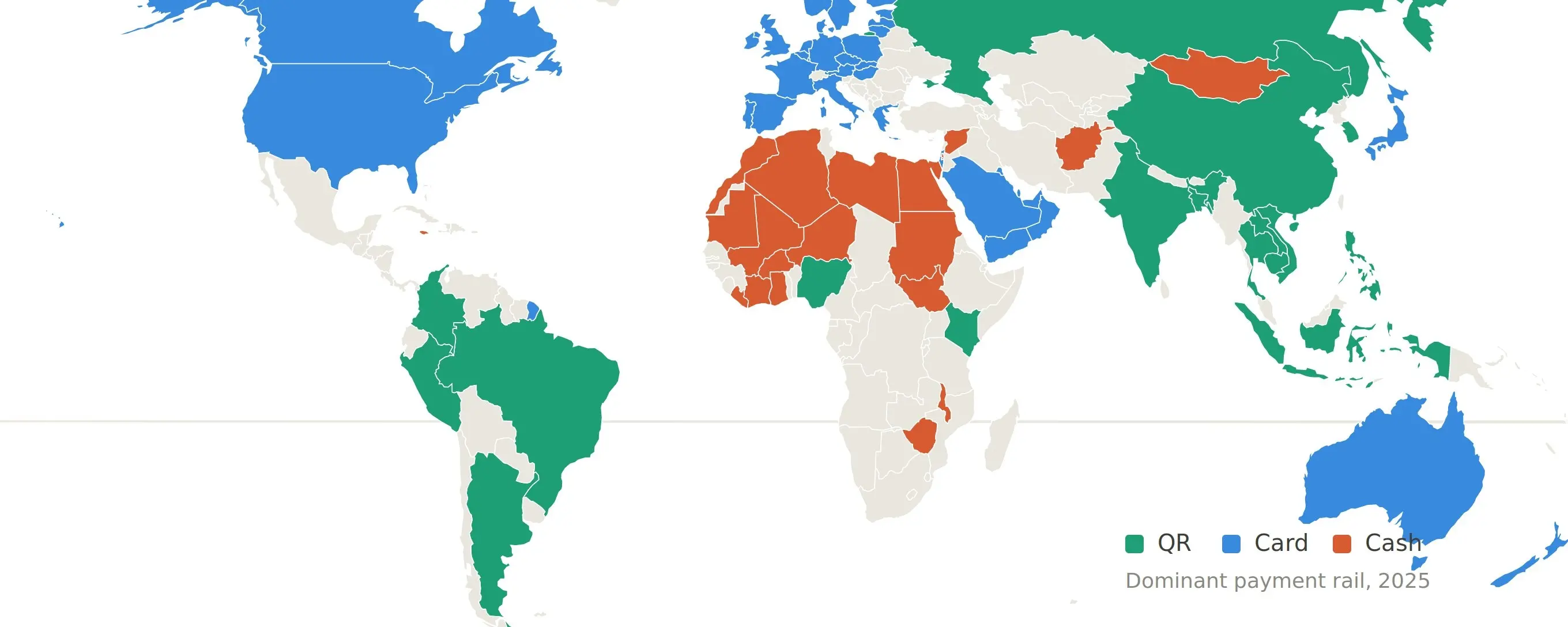
**Ringkasan: Kondisi Pembayaran di Amerika Latin Berbeda dari Bayangan Anda** Penulis menghabiskan hampir sebulan di Amerika Latin, melakukan riset lapangan selama 500 jam dan berbicara dengan lebih dari 100 pengguna lokal serta regulator. Temuannya mengejutkan dan berbeda dari narasi umum. 1. **Kartu Kripto**: Volume transaksi sebenarnya berasal dari profesional bergaji tinggi yang menerima gaji dalam dolar AS atau stablecoin (seperti USDT), lalu mengonversinya ke mata uang lokal via Pix (Brazil), bukan dari transaksi ritel kecil seperti membeli kopi. 2. **Dominasi QR Code**: Pembayaran QR sedang menguasai pasar pembayaran negara berkembang. Di Brasil, Pix memproses >60 miliar transaksi/bulan. Peta global menunjukkan negara berpenduduk padat (China, India, Brasil, dll) didominasi QR, sementara negara kaya (AS, Eropa Barat) masih bertahan dengan kartu. 3. **Peluang Besar**: Interoperabilitas internasional antar sistem pembayaran instan lokal (seperti Pix, UPI, CoDi) masih terpecah-pecah. Ini adalah peluang besar yang belum terbangun. 4. **Persaingan Bergeser**: Persaingan bukan lagi sekadar akuisisi pengguna, tetapi memperebutkan infrastruktur penyelesaian (settlement). Perusahaan pembayaran terkemuka mulai mengakuisisi bank untuk efisiensi biaya dan kepatuhan. 5. **Amerika Latin Bukan Satu Pasar**: Setiap negara (Brasil, Argentina, Meksiko, dll) memiliki dinamika mata uang, regulasi, dan pola ekonomi informal yang sangat berbeda. Memperlakukan mereka sebagai satu kesatuan adalah kesalahan. 6. **Neobank Beralih ke Valas**: Bisnis stablecoin untuk transfer lintas batas semakin kompetitif dengan margin yang menyusut cepat, mendorong perusahaan untuk menjadikannya produk pintu masuk ke layanan lain. 7. **Ekspansi Lintas Batas adalah Kunci**: Startup pembayaran generasi berikutnya perlu memiliki identitas merek dan teknologi yang dapat diskalakan secara internasional sejak hari pertama, bukan hanya fokus mendalam di satu koridor. 8. **Brasil & Meksiko Sudah Jenuh**: Koridor yang kurang diperhatikan seperti "Lima Negara yang Terlupakan" (Republik Dominika, Guatemala, Honduras, Nikaragua, El Salvador) justru menerima arus remitansi besar dengan kompetisi yang jauh lebih rendah. 9. **Segmentasi Pasar yang Tepat**: Misalnya di Brasil, setidaknya ada 5 segmen pengguna dengan aliran dana dan kebutuhan berbeda (turis, ekspatriat, digital nomad, pengguna dompet digital muda, pengguna kripto asli). Strategi pemasaran harus disesuaikan. 10. **Regulasi Lebih Maju**: Bertentangan dengan persepsi, regulator Amerika Latin (Brasil, Meksiko, Kolombia, dll) seringkali lebih progresif dan jelas dalam mengatur aset kripto dan pembayaran digital dibandingkan AS. Kerangka regulasi seringkali sudah ada. Penutup: Peluang sebenarnya bukan hanya pada saluran konversi mata uang/stablecoin, tetapi pada layanan nilai tambah yang dibangun di atasnya.

链捕手48m yang lalu

Kondisi Pembayaran di Amerika Latin Tak Sesuai dengan yang Anda Bayangkan

链捕手48m yang lalu

Trading

Spot
Futures
活动图片