Stablecoin Laws ‘Coming This Month,’ FDIC Acting Chair Reveals

bitcoinistDipublikasikan tanggal 2025-12-02Terakhir diperbarui pada 2025-12-03

Abstrak

According to prepared testimony from Acting FDIC Chair Travis Hill, the agency expects to publish a proposed rule that lays...

Trusted Editorial content, reviewed by leading industry experts and seasoned editors. Ad Disclosure

According to prepared testimony from Acting FDIC Chair Travis Hill, the agency expects to publish a proposed rule that lays out how stablecoin issuers will apply for federal oversight before the end of December 2025.

What The Draft Will Cover

Based on reports, the initial proposal will focus on the “application framework” — the paperwork, disclosures and standards firms must meet to seek approval as regulated stablecoin issuers.

The proposal is not the final set of bank-level rules; it will outline the process, while a second proposal that spells out capital, liquidity and reserve requirements is slated for early next year.

Market Reaction And Immediate Impact

Reports have disclosed that the GENIUS Act, the law behind this process, named the FDIC as a lead regulator for bank-related stablecoins and set deadlines for implementing agencies to act.
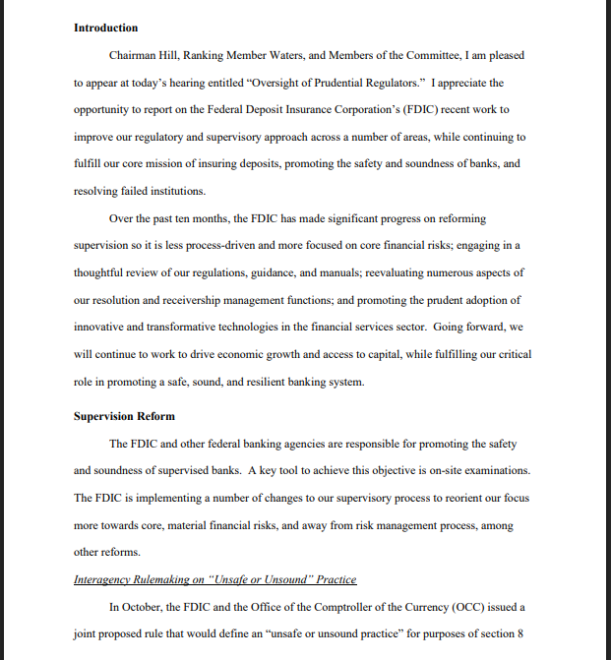
Statement by Travis Hill, acting FDIC chairman.

The move is expected to provide clearer guidance for firms that want to issue USD-pegged coins under federal supervision. Some firms could alter their timelines or pause launches until the rules are final.

Stablecoin: How The Law Got Here

The GENIUS Act was passed by Congress in mid-2025 and signed into law by US President Donald Trump on July 18, 2025. The Senate approved the bill by a 68–30 vote and the House backed it 308–122.

The statute lays out which agencies do what, and it requires a sequence of rulemakings, such as capital and liquidity standards, that regulators must implement.

BTCUSD currently trading at $86,844. Chart: TradingView

Public Comment Period

Officials say the FDIC’s first proposed rule will be followed by a public comment period, giving industry groups, banks and nonbank firms a chance to respond.

After that, prudential measures aimed at FDIC-supervised issuers — the rules that set minimum capital cushions and reserve asset standards — will be proposed early next year.

Analysts and industry observers will be watching closely to see whether the FDIC limits its oversight mainly to bank-sponsored stablecoins or seeks a broader scope.

They will also pay attention to how strict the capital and liquidity requirements will be when the rules are proposed in early 2026.

Coordination with other regulatory agencies will be another key focus, since the GENIUS Act assigns responsibilities across several federal regulators.

Featured image from Unsplash, chart from TradingView

Editorial Process for bitcoinist is centered on delivering thoroughly researched, accurate, and unbiased content. We uphold strict sourcing standards, and each page undergoes diligent review by our team of top technology experts and seasoned editors. This process ensures the integrity, relevance, and value of our content for our readers.

Christian, a journalist and editor with leadership roles in Philippine and Canadian media, is fueled by his love for writing and cryptocurrency. Off-screen, he's a cook and cinephile who's constantly intrigued by the size of the universe.

Bacaan Terkait

Menurunkan Ekspektasi untuk Bull Market Bitcoin Berikutnya

Artikel ini membahas penurunan ekspektasi penulis terhadap potensi kenaikan harga Bitcoin (BTC) pada siklus bull market berikutnya. Penulis, Alex Xu, yang sebelumnya memegang BTC sebagai aset terbesarnya, telah mengurangi porsi BTC dari full menjadi sekitar 30% pada kisaran harga $100.000-$120.000, dan kembali mengurangi di level $78.000-$79.000. Alasan utama penurunan ekspektasi ini adalah: 1. **Energi Penggerak yang Melemah:** Narasi adopsi BTC yang mendorong kenaikan signifikan di siklus sebelumnya (dari aset niche hingga institusi besar via ETF) sulit terulang. Langkah berikutnya, seperti masuknya BTC ke dalam cadangan bank sentral negara maju, dianggap sangat sulit tercapai dalam 2-3 tahun ke depan. 2. **Biaya Peluang Pribadi:** Penulis menemukan peluang investasi yang lebih menarik di perusahaan-perusahaan lain. 3. **Dampak Resesi Industri Kripto:** Menyusutnya industri kripto secara keseluruhan (banyak model bisnis seperti SocialFi dan GameFi terbukti gagal) dapat memperlambat pertumbuhan basis pemegang BTC. 4. **Biaya Pendanaan Pembeli Utama:** Perusahaan pembeli BTC terbesar, Stratis, menghadapi kenaikan biaya pendanaan yang memberatkan, yang dapat mengurangi kecepatan pembeliannya dan memberi tekanan jual. 5. **Pesaing Baru untuk "Emas Digital":** Hadirnya "tokenized gold" (emas yang ditokenisasi) menawarkan keunggulan yang mirip dengan BTC (seperti dapat dibagi dan dipindahkan) sehingga menjadi pesaing serius. 6. **Masalah Anggaran Keamanan:** Imbalan miner yang terus berkurang pasca halving menimbulkan kekhawatiran tentang keamanan jaringan, sementara upaya mencari sumber fee baru seperti ordinals dan L2 dinilai gagal. Penulis menyatakan tetap memegang BTC sebagai aset besar dan terbuka untuk membeli kembali jika alasannya tidak lagi relevan atau muncul faktor positif baru, meski siap menerima jika harganya sudah terlalu tinggi untuk dibeli kembali.

marsbit04/27 02:47

Menurunkan Ekspektasi untuk Bull Market Bitcoin Berikutnya

marsbit04/27 02:47

Trading

Spot
Futures
活动图片