Crypto Lending Rebuilds From The Rubble, Reaching $25B In New Activity—Study

bitcoinistDipublikasikan tanggal 2025-12-02Terakhir diperbarui pada 2025-12-02

Abstrak

Reports have disclosed that centralized crypto lending climbed to roughly $25 billion in outstanding loans in the third quarter, a...

Trusted Editorial content, reviewed by leading industry experts and seasoned editors. Ad Disclosure

Reports have disclosed that centralized crypto lending climbed to roughly $25 billion in outstanding loans in the third quarter, a figure that signals renewed activity among centralized platforms. Activity has picked up this year, and some firms that survived the recent shake-out are growing their loan books again.

CeFi Surges

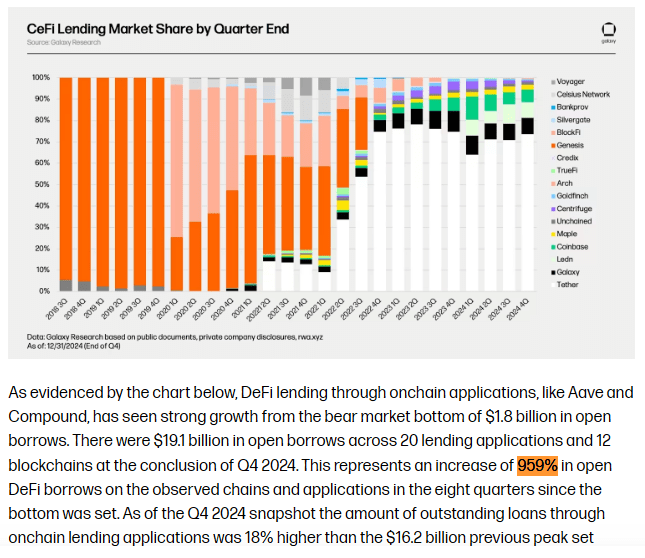
According to Galaxy Research, the broader crypto lending market totaled about $36.5 billion as of Q4 2024, down from a high of $64.4 billion in Q4 2021. That drop reflects the fallout from earlier platform failures and bankruptcies that cut into both supply and demand.

The makeup of the market has shifted. Based on reports, the largest centralized lenders — including Tether, Galaxy and Ledn — now account for a large share of CeFi loans. Those three together held close to $10 billion of CeFi outstanding loans, equal to roughly 88.6% of that segment by the end of last year. Tether alone represented the biggest single slice.
Source: Galaxy Research

DeFi Borrowing Sees A Strong Comeback

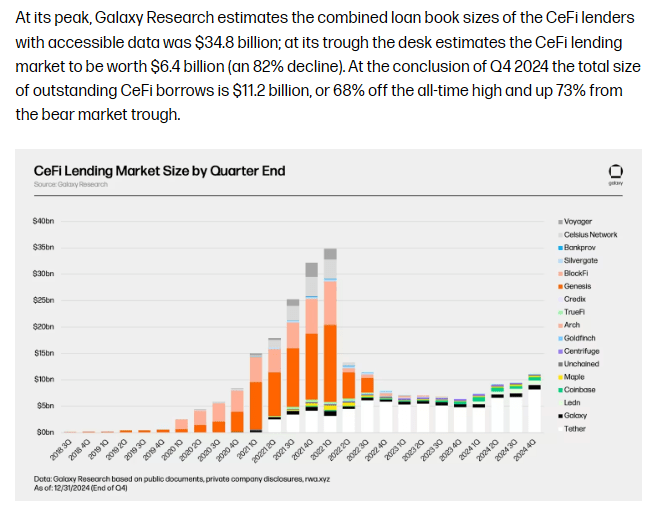
DeFi borrowing has recovered sharply from the lows of the 2022–2023 downturn. Open borrows on decentralized platforms climbed from about $1.8 billion in the trough to $19 billion by the end of 2024, an increase of 959% over the period. This shows many users moved back to on-chain solutions as centralized options contracted.
Source: Galaxy Research

Why Numbers Matter Now

Market watchers say the new totals matter because they reveal where activity lives today: more on chain, and concentrated among fewer centralized players. Some lenders appear to be operating with higher collateral levels and clearer reporting than some of the failed firms of past years. That has calmed some investors. Still, the total lending market is far below its 2021 size.

BTCUSD currently trading at $85,970. Chart: TradingView

Risks Remain

The concentration of CeFi loans in a handful of firms raises questions about single-point stress. If one large lender faces trouble, contagion could spread. Price swings in major cryptocurrencies also leave loans vulnerable to rapid liquidations. Regulators are watching the sector closely, and policy changes could reshape where and how loans are made.

What To Watch Next

Observers will be watching quarterly loan books, the pace of on-chain borrowing, and any signals of new capital flowing into lending desks. The market is rebuilding, but it is rebuilding in a changed form — smaller than the peak in 2021 and more split between centralized players and DeFi protocols.

Featured image from Unsplash, chart from TradingView

Editorial Process for bitcoinist is centered on delivering thoroughly researched, accurate, and unbiased content. We uphold strict sourcing standards, and each page undergoes diligent review by our team of top technology experts and seasoned editors. This process ensures the integrity, relevance, and value of our content for our readers.

Christian, a journalist and editor with leadership roles in Philippine and Canadian media, is fueled by his love for writing and cryptocurrency. Off-screen, he's a cook and cinephile who's constantly intrigued by the size of the universe.

Bacaan Terkait

‘Kami Berusaha Mempertahankan Bitcoin’: Mengapa Dukungan Komunitas terhadap BIP-110 Mulai Luntur

Proposal Perbaikan Bitcoin (BIP-110), sebuah usul soft fork yang kontroversial, kembali menjadi perbincangan. Adam Back, CEO Blockstream, menyatakan bahwa diskusi seputar BIP-110 dan kebijakan OP_RETURN didorong oleh kesalahpahaman tentang arsitektur Bitcoin. Ia mengakui bahwa banyak pendukung BIP-110 adalah pendatang baru yang bermaksud baik, tetapi menyesali kemungkinan mereka memisahkan diri tanpa memahami mengapa komunitas Bitcoin secara tegas menolak proposal tersebut. BIP-110 diimplementasikan pada Desember 2025 dengan tujuan mencegah data arbitrer, seperti inskripsi Ordinals yang mirip NFT, membanjiri jaringan dan mengganggu fungsi utama Bitcoin sebagai sistem kas peer-to-peer. Back mengakui spam adalah masalah nyata, namun berargumen bahwa Bitcoin sudah mengatasinya melalui mekanisme pasar seperti biaya transaksi, insentif penambang, dan konsensus terdesentralisasi, bukan aturan restriktif. Lebih lanjut, Back menyatakan BIP-110 bertentangan dengan sifat Bitcoin yang tanpa izin (permissionless). Ia menyimpulkan bahwa siapa pun yang tidak setuju dengan arah Bitcoin dapat melakukan fork dan menerapkan peraturan sendiri, tetapi fork berbasis BIP-110 kecil kemungkinannya berhasil karena kurangnya dukungan komunitas dan bertentangan dengan ide fundamental Bitcoin. Sentimen serupa diungkapkan oleh Michael Saylor dari MicroStrategy. Kritik ini muncul setelah hanya 10 dari 2.016 blok yang mendukung upgrade sementara pada 4 Juli. Aktivitas Ordinals juga telah turun ke level terendah sepanjang masa, dengan kurang dari 10.000 Ordinals ditambahkan per hari dalam sebulan terakhir. Harga Bitcoin sendiri telah turun 45% dalam setahun terakhir.

ambcrypto5j yang lalu

‘Kami Berusaha Mempertahankan Bitcoin’: Mengapa Dukungan Komunitas terhadap BIP-110 Mulai Luntur

ambcrypto5j yang lalu

Trading

Spot
活动图片