PayPal Expands PYUSD Stablecoin To 9 More Blockchains With LayerZero

bitcoinistDipublikasikan tanggal 2025-09-20Terakhir diperbarui pada 2025-09-20

Abstrak

PayPal's stablecoin PYUSD is now available on nine more blockchains, thanks to integration with LayerZero's interoperability protocol. PayPal's Stablecoin Now...

Trusted Editorial content, reviewed by leading industry experts and seasoned editors. Ad Disclosure

PayPal’s stablecoin PYUSD is now available on nine more blockchains, thanks to integration with LayerZero’s interoperability protocol.

PayPal’s Stablecoin Now On Tron, Avalanche, & Seven Other Networks

As announced by LayerZero in a blog post, PayPal USD (PYUSD) is getting a major expansion through integration with its Stargate Hydra system, allowing users to move the stablecoin to blockchains on which it is natively unavailable. This is made possible with PYUSD0, a new permissionless token that’s fully fungible with the original PYUSD.

Currently, PayPal’s stablecoin is natively issued by Paxos on Abritrum, Solana, Ethereum, and Stellar. With PYUSD0, it will now also be transferable to Abstract, Aptos, Avalanche, Ink, Sei, Stable, and Tron. According to LayerZero, more networks beyond these are also set to come.

Previously, PYUSD was already bridged to two other networks, Berachain (BYUSD) and Flow (USDF), and both will now be receiving upgrades to PYUSD0. This makes a total of nine networks on which the new token will be accessible.

“As the stablecoin market continues its rapid growth beyond $270 billion, innovations like this are essential for creating the seamless, interoperable financial infrastructure that users and developers demand,” says David Weber, Head of Ecosystem, PayPal USD.

PayPal launched its stablecoin back in 2023, becoming one of the first payment processing giants to embrace fiat-tied tokens. Since then, the firm has been taking measures to increase the reach of its coin, most recently with the Stellar version launch on Thursday.

Now, with the LayerZero integration, the company has taken another step toward its goal. “By working together, we will enable PYUSD to reach new markets faster while maintaining compliance and composability from day one,” notes Weber.

The PYUSD0 system is built on three pieces of infrastructure: PayPal’s stablecoin itself, Stargate Hydra, and LayerZero. Stargate, which was acquired by LayerZero last month, acts as the transfer interface, while LayerZero handles minting, burning, and deployment of PYUSD0 to the new blockchains.

“With PYUSD0, PayPal USD expands its reach and flexibility to work across today’s networks and tomorrow’s,” says Bryan Pellegrino, Co-Founder and CEO at LayerZero Labs. “Launches like this make it obvious that we are at the start of a global financial market that breaks down borders and works around the clock.”

Besides its stablecoin, PayPal has also been making developments in its cryptocurrency payments ecosystem lately. In late July, the payments processor firm unveiled a “Pay with Crypto” service to help merchants receive digital asset payments, and earlier this week, it also announced cryptocurrency integration into its peer-to-peer (P2P) payments system.

Bitcoin Has Seen A Pullback During The Past Day

Bitcoin recovered to $117,900 on Thursday, but the asset has since gone down as its price is back at $116,400. The below chart shows how the coin’s recent trajectory has looked.

Bitcoin Price Chart

The price of the asset seems to have overall moved sideways over the last five days | Source: BTCUSDT on TradingView

The pullback in Bitcoin and other digital assets has induced $133 million in long liquidations over the last 24 hours, according to data from CoinGlass.
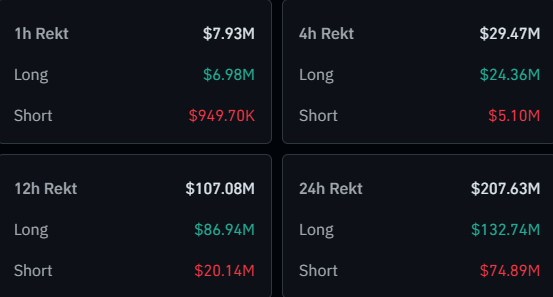
Bitcoin Liquidations

The data for the cryptocurrency liquidations during the past day | Source: CoinGlass
Featured image from Dall-E, CoinGlass.com, chart from TradingView.com
Editorial Process for bitcoinist is centered on delivering thoroughly researched, accurate, and unbiased content. We uphold strict sourcing standards, and each page undergoes diligent review by our team of top technology experts and seasoned editors. This process ensures the integrity, relevance, and value of our content for our readers.

Keshav is a Physics graduate who has been employed as a writer with Bitcoinist since June 2021. He is passionate about writing and through the years, he has gained experience working in a variety of niches. Keshav holds an active interest in the cryptocurrency market, with on-chain analysis being an area he particularly likes to research and write about.

Bacaan Terkait

Anda Akan Terkejut Betapa Berbedanya Arsitektur WeChat dan Telegram

**Ringkasan Perbandingan Arsitektur WeChat vs. Telegram** Pada kuartal kedua 2026, WeChat mencapai 1,428 miliar pengguna bulanan. Sebagai platform digital utama, arsitektur WeChat berbeda tajam dengan Telegram dalam beberapa aspek kunci: **Penyimpanan Data:** * **Telegram:** Menyimpan percakapan secara tak terbatas di cloud dengan sinkronisasi otomatis di semua perangkat. Versi desktop dapat berjalan mandiri. * **WeChat:** Riwayat chat disimpan secara lokal di perangkat. Transfer ke perangkat baru memerlukan migrasi manual via kode QR, dan versi desktop selalu membutuhkan konfirmasi dari ponsel. **Fitur Komentar & Diskusi:** * **Telegram:** Komentar di channel terintegrasi langsung dalam antarmuka yang sama melalui grup diskusi terpisah. * **WeChat:** Komentar di artikel akun resmi dimoderasi terlebih dahulu dan tidak memiliki sistem diskusi otomatis yang terikat ke artikel tertentu. **Platform Pengembang:** * **Telegram:** Bot API bersifat terbuka, gratis, dan dokumentasinya tersedia untuk publik. * **WeChat:** Mini-program beroperasi dalam ekosistem tertutup, memerlukan verifikasi, sertifikasi berbayar, dan seringkali lisensi bisnis untuk akses API. **Batas Pengiriman File:** * **Telegram:** Batas unggah 2 GB (umum) dan 4 GB (Premium), tanpa batas kecepatan. * **WeChat:** Batas umum 200 MB untuk file dalam chat. File lebih besar memerlukan "File Transfer Assistant" dan memiliki masa simpan terbatas di server. **Sistem Pembayaran & Ekosistem:** * **WeChat:** WeChat Pay terintegrasi sangat dalam di kehidupan sehari-hari di Tiongkok, menggantikan uang tunai di banyak aspek. * **Telegram:** Tidak memiliki sistem pembayaran fiat terintegrasi skala serupa. Fungsi keuangan lebih banyak melalui bot pihak ketiga dan berfokus pada pembayaran crypto. **Analisis Keamanan (Sudut Pandang AI):** Perbandingan juga menyoroti perbedaan dalam enkripsi. Telegram menawarkan enkripsi end-to-end untuk "Secret Chats", sementara WeChat tidak. Integrasi yang sangat erat antara chat dan pembayaran di WeChat (tanpa enkripsi end-to-end) dapat memperluas permukaan serangan. Misalnya, otoritas Singapura mencatat ratusan kasus penipuan terkait WeChat pada awal 2025. **Kesimpulan:** Kedua platform merepresentasikan filosofi berbeda: WeChat dibangun sebagai ekosistem tertutup yang terintegrasi sangat dalam dengan ekonomi nyata, sedangkan Telegram berfokus pada protokol terbuka, penyimpanan data fleksibel, dan hambatan rendah bagi pengembang. Pilihan arsitektur ini menentukan audiens dan skenario penggunaan masing-masing platform.

cryptonews.ru3j yang lalu

Anda Akan Terkejut Betapa Berbedanya Arsitektur WeChat dan Telegram

cryptonews.ru3j yang lalu

Trading

Spot
活动图片