WLFI's $75 Million Lending Game: Dolomite Depositors Deeply Trapped

marsbitPublié le 2026-04-10Dernière mise à jour le 2026-04-10

Résumé

Author: ChandlerZ, Foresight News. On April 9, CoinDesk reported that World Liberty Financial (WLFI), a crypto project co-founded by the Trump family, conducted multiple collateralized loans through the DeFi lending protocol Dolomite, raising market concerns about insider relationships, circular financing, and liquidity risks. WLFI used approximately 5 billion WLFI tokens as collateral on Dolomite to borrow around $75 million in stablecoins, with over $40 million transferred to Coinbase Prime, likely for fiat conversion or OTC trading. Between February and April, WLFI executed a series of transactions, including depositing its own stablecoin (USD1) and WLFI tokens into Dolomite to borrow funds, and directly sending USD1 to Coinbase. Dolomite’s co-founder, Corey Caplan, is also an advisor to WLFI, and WLFI’s lending platform is built on Dolomite, indicating potential conflicts of interest. WLFI now accounts for about 55% of Dolomite’s total supplied liquidity. The USD1 pool has a 93% utilization rate, leaving limited liquidity for other depositors. If WLFI’s token price drops significantly, forced liquidations could cause severe losses for ordinary users. This incident follows previous controversies, including a $500 million investment deal linked to an Abu Dhabi royal, sanctions-related associations, and a prior USD1 depegging event. WLFI responded that there is no liquidation risk and emphasized its business growth, but questions about governance and risk management remai...

Original Author: ChandlerZ, Foresight News

On April 9, CoinDesk reported that the crypto project World Liberty Financial (WLFI), co-founded by the Trump family, conducted multiple collateralized lending operations through the DeFi lending protocol Dolomite, sparking market concerns about insider relationships, circular financing, and liquidity risks. WLFI used approximately 5 billion WLFI tokens as collateral on the DeFi lending protocol Dolomite, cumulatively borrowing about $75 million in stablecoins, with over $40 million flowing to Coinbase Prime, suspected to be used for fiat currency exchange or over-the-counter (OTC) transactions.

Two Months, Five Transactions, One Complete Funding Chain

In specific operations, on February 8, the WLFI treasury deposited 14 million USD1 into Dolomite as collateral and borrowed 11.4 million USDC. Minutes later, 11.45 million USDC was transferred to a Coinbase Prime deposit address. Coinbase Prime is typically used for cryptocurrency-to-fiat exchanges or institutional OTC transactions.

Two days later, WLFI transferred 12.5 million USD1 directly from the treasury to another Coinbase Prime address. This funds transfer did not go through Dolomite lending but instead sent its own issued stablecoin directly to a fiat exit.

On February 20, WLFI tokens made their appearance. The treasury deposited 890 million WLFI into Dolomite and borrowed 20 million USD1. On March 24, an additional 1.1 billion WLFI was deposited. Combined, these two rounds of operations locked 19.9 billion WLFI as collateral in Dolomite, and the treasury cumulatively obtained approximately $31.4 million in stablecoins from the protocol.

In April, the scale escalated again. On April 2, the WLFI treasury transferred 2 billion WLFI to a Gnosis Safe proxy wallet (address 0x44a681DD); on April 7, another 1 billion was transferred. These 3 billion tokens are worth approximately $266 million at current prices but were not directly deposited into Dolomite, and their whereabouts remain unclear.

Combining all channels of borrowing and direct transfers, WLFI has mobilized approximately $75 million in stablecoins through Dolomite and Coinbase Prime.

The choice of this protocol was not accidental. Public information shows that Dolomite co-founder Corey Caplan also serves as an advisor to WLFI, and WLFI's lending platform, "WLFI Markets," is also built on the Dolomite protocol. In other words, WLFI used its own issued tokens as collateral on a protocol co-created by its advisor to borrow its own issued stablecoin.

In traditional finance, such related-party transactions require information disclosure and approval from the board of directors. In this case, these firewalls were almost non-existent.

Depositors' Liquidity is Squeezed

WLFI currently occupies about 55% of Dolomite's total platform supply liquidity of $458.9 million. The total platform supply is $835.7 million.

Specifically for the USD1 pool, out of a $180 million supply, $167.5 million has already been borrowed, representing a utilization rate of about 93%. Only about $12.5 million in available liquidity remains in the pool, making it difficult for large depositors to withdraw their funds in full. The utilization rate of this pool once reached 100%.

The USD1 supply interest rate is 16.24%, and the borrowing rate is 9.18%. This set of interest rates reflects concentrated lending activity dominated by a single large borrower, not broad organic demand.

Risks on the collateral side are equally prominent. The WLFI token has extremely limited market depth, with daily trading volume far below the collateral scale. If the price drops sharply and triggers Dolomite's liquidation mechanism, forced selling could crash the token price before the collateral is unwound, and the resulting bad debt would ultimately be borne by those ordinary depositors currently unable to exit.

This Is Not the First Time: From the 'Spy Prince' to Sanctions Associations

Dolomite lending is just the latest link in WLFI's chain of conflicts of interest.

According to The Wall Street Journal, related company documents and informed sources revealed that four days before Trump's inauguration, a close associate of an Abu Dhabi royal family member secretly signed an agreement with the Trump family to acquire a 49% stake in the Trump family's crypto project, World Liberty Financial, for $500 million. The buyer would prepay half, $187 million, flowing directly into Trump family entities.

This transaction was supported by Abu Dhabi Prince Sheikh Tahnoon bin Zayed Al Nahyan, who has been pushing the U.S. to allow him access to tightly controlled AI chips. Often referred to as the "Spy Prince," he is the brother of the UAE President and National Security Advisor and also leads the country's largest sovereign wealth fund, managing over $1.3 trillion in assets.

Documents show that in the first $250 million investment by Tahnoon-backed company Aryam Investment 1, $187 million went to two Trump family entities: DT Marks DEFI LLC and DT Marks SC LLC. Besides payments to Witkoff family entities, another $31 million flowed to entities associated with co-founders Zak Folkman and Chase Herro.

According to the agreement, Aryam would become World Liberty's largest shareholder and the only known investor besides the founders. The agreement also arranged for two Aryam executives (who are also executives at Tahnoon's G42 company) to join World Liberty's five-person board, whose members at the time included Eric Trump and Steve Witkoff's son, Zach Witkoff.

Steve Witkoff's wealth surged by 15% in 2025 to $2.3 billion, up from an estimated $2 billion when he first started working for the government. WLFI was a major driver, with the family cumulatively profiting at least $200 million from token sales and related transactions. According to disclosures by House Democrats, the Office of Government Ethics had not signed off on Witkoff's financial disclosure forms for 7 months.

Furthermore, WLFI's stablecoin USD1 had previously established a partnership with the Southeast Asian blockchain project AB DAO, which was previously linked to Cambodia's Prince Group. The head of Prince Group, Chen Zhi, was sanctioned by the U.S. and UK in November 2025, involving charges of large-scale online fraud. The U.S. Department of Justice seized approximately $12.7 billion in Bitcoin in related actions. WLFI responded that it was unaware of AB DAO's past associations.

On February 23, USD1 briefly depegged, falling to $0.994, triggering a panic outflow of $270 million. WLFI claimed it was a "coordinated attack," including hacking of co-founders' X accounts, hiring KOLs to spread panic, and shorting WLFI tokens, but never provided any technical evidence.

On-chain data also shows that WLFI transferred approximately 3 billion tokens to multiple addresses in early April, with a nominal value of about $266 million, and their destination remains unclear. With multiple controversies叠加 (piling up), the WLFI token price has currently fallen to $0.0858, the lowest since its launch.

WLFI's Response: No Liquidation Risk

On April 10, WLFI tweeted in response to market质疑 (queries) regarding its lending positions on WLFI Markets, stating that WLFI is currently one of the largest suppliers and borrowers on WLFI Markets, borrowing stablecoins using WLFI as collateral, but there is no liquidation risk, and collateral can be added at any time even if the market fluctuates significantly.

Data-wise, WLFI disclosed that USD1's current annualized revenue is approximately $159.5 million, and it has repurchased about 435 million WLFI on the secondary market over the past 6 months, totaling approximately $65.58 million. The project also stated that it will propose a governance proposal next week to discuss unlocking early locked tokens and upgrading USD1's functionality, including support for gas-free transfers and adaptation to AI payment infrastructure.

USD1 currently has a market capitalization of approximately $4.3 billion, ranking high in the stablecoin market. WLFI's response attempts to shift the narrative from "conflicts of interest" to "business growth," but it does not answer how WLFI, as the largest borrower in the lending pool, ensures that ordinary depositors will not suffer losses under extreme market conditions? When Dolomite's co-founder is also a WLFI advisor, who guarantees the risk control independence of this protocol?

Currently, neither Dolomite nor WLFI has provided an explanation regarding the governance process for related-party transactions.


Cryptos en tendance

Questions liées

QWhat is the main concern raised about WLFI's activities on the Dolomite protocol?

AThe main concern is that WLFI, using its own token as collateral, borrowed a large amount of its own stablecoin (USD1) on a protocol (Dolomite) where a co-founder is also a WLFI advisor. This creates significant risks of insider dealings, circular financing, and potential liquidity crises for other depositors if the collateral value drops.

QHow much stablecoin did WLFI borrow through Dolomite, and where did a significant portion of it go?

AWLFI borrowed a total of approximately $75 million in stablecoins through the Dolomite protocol. Over $40 million of this was sent to Coinbase Prime, which is typically used for converting crypto to fiat currency or for over-the-counter (OTC) trades.

QWhat specific risk do ordinary depositors in the Dolomite USD1 pool face due to WLFI's actions?

AOrdinary depositors face a high liquidity risk. The USD1 pool has a utilization rate of around 93%, meaning most of the funds are loaned out to WLFI. This leaves only about $12.5 million available, making it difficult for large depositors to withdraw their funds. If WLFI's collateral (its own token) experiences a sharp price drop and triggers a liquidation, the resulting bad debt could be socialized among the remaining depositors who cannot exit.

QWhat previous controversy involving WLFI's stablecoin, USD1, is mentioned in the article?

AThe article mentions that USD1 previously depegged to $0.994, causing a panic withdrawal of $270 million. WLFI claimed it was a 'coordinated attack' involving a hacked co-founder's Twitter account and fear-mongering by influencers, but provided no technical evidence. Furthermore, USD1 had a partnership with AB DAO, which was linked to the sanctioned Cambodia Prince Group.

QHow did WLFI respond to the market's质疑 (doubts) about its lending position on Dolomite?

AWLFI responded by stating there is no liquidation risk for its position, claiming it can always add more collateral even in volatile markets. It shifted the narrative to business growth, highlighting USD1's annualized revenue and token buybacks, but did not address concerns about conflict of interest or how it ensures the protocol's risk control independence given the advisor relationship.

Lectures associées

Le plus grand salon de l'investissement et du trading en Inde se tient à Mumbai

Le paysage du trading et de l'investissement en Inde évolue rapidement, s'étendant au-delà des métropoles vers les villes de second et troisième rang. Cette croissance, portée par une sensibilisation financière accrue et l'accès aux plateformes numériques, renforce le rôle des événements sectoriels. Reflétant cette transformation, le **Money Expo India 2026** revient pour sa **5e édition les 29 et 30 août 2026** au **Jio World Convention Centre de Mumbai**. L'événement réunira les principales plateformes de trading en ligne, les innovateurs fintech et les fournisseurs de services financiers, avec des conférences d'experts, des démonstrations et des opportunités de networking. Niyaz, Directeur Commercial chez HQMENA, a déclaré : *"L'écosystème financier indien dépasse les marchés traditionnels. Money Expo India est conçu pour connecter cette communauté grandissante avec des marques mondiales, des experts et des technologies innovantes."* Des acteurs industriels comme HDFC Securities, Alphabots et Tradomate ont salué la qualité du public, l'affluence record et l'énergie de l'événement. Money Expo India vise à combler le fossé entre l'innovation, l'éducation et la collaboration sectorielle, soutenant la prochaine phase de croissance du trading et de l'investissement en Inde. Il s'agit de l'une des principales expositions financières du pays.

TheNewsCryptoIl y a 9 mins

Le plus grand salon de l'investissement et du trading en Inde se tient à Mumbai

TheNewsCryptoIl y a 9 mins

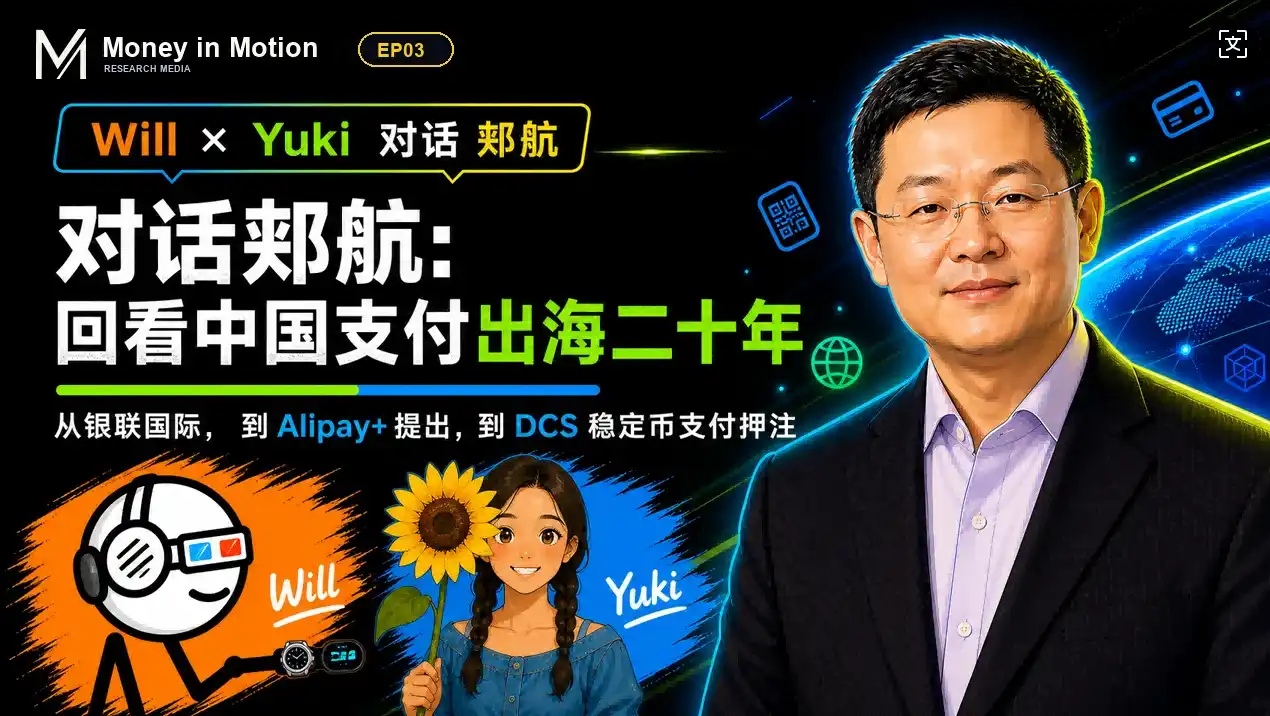
Dialogue avec Jia Hang | Regard sur vingt ans d'expansion internationale des paiements chinois

En vingt ans, l'expansion internationale des paiements chinois a exploré trois voies principales, toutes visant à répondre à une même question : comment construire le prochain réseau de paiement mondial et quelle est sa véritable barrière à l'entrée ? À travers l'expérience de Jia Hang, l'article retrace d'abord la tentative de China UnionPay de devenir un troisième réseau mondial de cartes, à l'image de JCB. La stratégie « carte du nord utilisée au sud » consistait à suivre les touristes chinois pour développer l'acceptation des cartes à l'étranger. Cependant, malgré des efforts considérables, UnionPay n'a pas réussi à résoudre le problème clé de l'émission locale de cartes en dehors de la Chine, restant dépendant du marché chinois. L'article souligne que la véritable forteresse des réseaux de cartes comme Visa et Mastercard n'est pas la standardisation technique, mais un mécanisme de gouvernance et de répartition des bénéfices qui crée un effet de réseau quasi imbattable, renforcé par leur couverture mondiale. Face à ces limites, Alipay+ d'Ant Group a tenté une approche différente : investir dans et interconnecter des portefeuilles numériques locaux à travers le monde pour créer un réseau mondial de paiements mobiles. Bien qu'innovante, cette initiative n'a pas atteint son objectif de couverture mondiale. La raison fondamentale est qu'elle restait, dans sa logique commerciale, le « même animal » que les réseaux de cartes, se battant pour les mêmes parts de marché sans apporter une proposition de valeur utilisateur véritablement disruptive ni un nouveau modèle de répartition des incitations. Aujourd'hui, l'émergence des stablecoins ouvre un nouveau chapitre. L'article soutient que les stablecoins ne remplaceront pas directement Visa ou Mastercard pour les paiements de détail, car ils dépendent encore de leurs réseaux d'acceptation (comme les cartes U). Leur véritable défi est plus profond : ils remettent en cause le système traditionnel des comptes bancaires et des flux de capitaux. En permettant des transferts rapides, peu coûteux et sans frontières, les stablecoins pourraient devenir l'épine dorsale d'une nouvelle infrastructure financière. La voie d'adoption pourrait passer par leur intégration progressive dans l'économie locale, comme le montre l'exemple hypothétique de Singapour où les utilisateurs pourraient préférer détenir et dépenser des stablecoins. En conclusion, le parcours de l'expansion des paiements chinois montre que la construction du prochain réseau mondial ne dépend pas seulement d'une nouvelle technologie, mais nécessite une nouvelle proposition de valeur, un nouveau mécanisme de gouvernance et une nouvelle répartition des bénéfices. Les stablecoins, en réorganisant potentiellement le réseau mondial autour des comptes plutôt que des cartes, représentent peut-être le début d'une réponse à cette quête de vingt ans.

marsbitIl y a 10 mins

Dialogue avec Jia Hang | Regard sur vingt ans d'expansion internationale des paiements chinois

marsbitIl y a 10 mins

L'action de Circle s'effondre de 76 %, un stablecoin lié au dollar hongkongais sera lancé d'ici deux semaines

Le cours de l'action de Circle (CRCL) a chuté d'environ 76% depuis son pic de juin de l'année dernière, atteignant environ 62 dollars le 19 juillet. Cette baisse reflète une réévaluation par le marché face à l'intensification de la concurrence et aux pressions sur les marges, malgré la confiance affichée par la direction dans la stratégie à long terme. Le président de Circle, Heath Tarbert, met en avant les atouts de l'entreprise, notamment l'USDC et ses 730 milliards de dollars de circulation. Cependant, de nouveaux défis émergent : l'alliance entre le nouveau stablecoin Open USD et la plateforme Visa Stablecoin Platform menace de fragmenter le marché. Parallèlement, Circle poursuit son expansion dans les paiements réels, comme en témoigne son partenariat avec JCB au Japon. Le paysage réglementaire ajoute à la complexité. Tether (USDT) dispose d'une période d'adaptation d'environ deux ans pour se conformer au GENIUS Act américain, ce qui pourrait nécessiter un important réajustement de ses réserves. À Hong Kong, le secteur entre dans une phase de concrétisation, avec Standard Chartered et l'entreprise Anchorage prêtes à lancer un stablecoin lié au dollar de Hong Kong (HKDAP) après avoir obtenu une licence. La chute du cours de Circle symbolise la transition du secteur des stablecoins d'une dynamique de "vainqueur unique" à un paysage concurrentiel multipolaire. La valeur attribuée par le marché aux avantages d'échelle est en cours de révision, et la capacité d'exécution des acteurs sera déterminante dans les deux prochaines années.

marsbitIl y a 21 mins

L'action de Circle s'effondre de 76 %, un stablecoin lié au dollar hongkongais sera lancé d'ici deux semaines

marsbitIl y a 21 mins

Sous le siège du capital, la décentralisation est la seule défense des chaînes publiques

L'auteur, Omid Malekan, professeur adjoint à la Columbia Business School, défend farouchement la décentralisation comme la caractéristique essentielle et non négociable des blockchains publiques. Il s'oppose à ceux qui privilégient la scalabilité, le business développement ou le financement abondant, estimant que ces priorités conduisent inévitablement à la corruption par le capital. Son raisonnement, qu'il qualifie de réaliste et machiavélique, repose sur la nature intrinsèquement opportuniste des entreprises et des institutions. Celles-ci chercheront toujours à s'approprier ou à neutraliser toute technologie menaçant leur position dominante. Le principal risque pour une blockchain n'est donc pas une attaque externe (comme une attaque à 51%), mais une prise de contrôle interne par des intérêts capitalistes. L'auteur illustre ce propos par l'exemple des blockchains de consortium ou "permissionnées". Ces systèmes, présentés comme des solutions pragmatiques, sont en réalité des outils pour préserver les oligopoles existants (comme Visa et Mastercard) en verrouillant l'accès à la concurrence. Pour lui, ces solutions hybrides et centralisées sont inefficaces et peu sûres à long terme. Il conclut que, malgré ses défauts et sa complexité, une blockchain comme Ethereum, avec son haut degré de décentralisation, reste la meilleure défense contre cette capture institutionnelle. C'est l'infrastructure la plus résistante pour construire un système financier véritablement ouvert et neutre, où les actifs finiront par affluer naturellement vers la sécurité la plus forte.

Foresight NewsIl y a 29 mins

Sous le siège du capital, la décentralisation est la seule défense des chaînes publiques

Foresight NewsIl y a 29 mins

Trading

Spot

Articles tendance

Comment acheter WLFI

Bienvenue sur HTX.com ! Nous vous permettons d'acheter Official World Liberty Financial (WLFI) de manière simple et pratique. Suivez notre guide étape par étape pour commencer votre parcours crypto.Étape 1 : Création de votre compte HTXUtilisez votre adresse e-mail ou votre numéro de téléphone pour ouvrir un compte sur HTX gratuitement. L'inscription se fait en toute simplicité et débloque toutes les fonctionnalités.Créer mon compteÉtape 2 : Choix du mode de paiement (rubrique Acheter des cryptosCarte de crédit/débit : utilisez votre carte Visa ou Mastercard pour acheter instantanément Official World Liberty Financial (WLFI).Solde :utilisez les fonds du solde de votre compte HTX pour trader en toute simplicité.Prestataire tiers :pour accroître la commodité d'utilisation, nous avons ajouté des modes de paiement populaires tels que Google Pay et Apple Pay.P2P :tradez directement avec d'autres utilisateurs sur HTX.OTC (de gré à gré) : nous offrons des services personnalisés et des taux de change compétitifs aux traders.Étape 3 : stockage de vos Official World Liberty Financial (WLFI)Après avoir acheté vos Official World Liberty Financial (WLFI), stockez-les sur votre compte HTX. Vous pouvez également les envoyer ailleurs via un transfert sur la blockchain ou les utiliser pour trader d'autres cryptos.Étape 4 : tradez des Official World Liberty Financial (WLFI)Tradez facilement Official World Liberty Financial (WLFI) sur le marché Spot de HTX. Il vous suffit d'accéder à votre compte, de sélectionner la paire de trading, d'exécuter vos trades et de les suivre en temps réel. Nous offrons une expérience conviviale aux débutants comme aux traders chevronnés.

727 vues totalesPublié le 2025.09.01Mis à jour le 2026.06.02

Comment acheter WLFI

Discussions

Bienvenue dans la Communauté HTX. Ici, vous pouvez vous tenir informé(e) des derniers développements de la plateforme et accéder à des analyses de marché professionnelles. Les opinions des utilisateurs sur le prix de WLFI (WLFI) sont présentées ci-dessous.

活动图片